
The Maldives has long dominated the conversation around tropical diving and beach holidays, but Saudi Arabia’s Red Sea coastline is emerging as a serious rival. With over 1,200 fish species, 300+ coral species, and visibility that regularly exceeds 30 metres, the Saudi Red Sea offers frontier diving that the Maldives’ heavily visited reefs cannot match. This guide — part of our Saudi Arabia diving and snorkelling guide — breaks down exactly how these two destinations compare across diving, beaches, marine life, cost, and accessibility so you can decide which one deserves your next trip.
Best Time to Visit: Saudi Red Sea: September–May; Maldives: January–April (visibility) or June–November (megafauna)
Getting There: Red Sea via Jeddah (6.5 hrs from London); Maldives via Malé (10–11 hrs from London)
Visa Required: Saudi Arabia: tourist e-visa for 66 nationalities; Maldives: free 30-day visa on arrival for all
Budget: Saudi Red Sea $80–400/day; Maldives $95–600/day (mid-range)
Must-See: Saudi: Yanbu’s Seven Sisters reef, Farasan Banks; Maldives: Hanifaru Bay manta aggregation, South Ari whale sharks
Avoid: Saudi: diving the southern Red Sea in July–August (water temps above 32°C); Maldives: expecting budget options on resort islands
Diving: How the Red Sea and Maldives Compare
Both destinations sit in the top tier of global dive sites, but they deliver fundamentally different experiences. The Red Sea is a wall-and-reef destination with extraordinary clarity; the Maldives is a channel-and-current destination with reliable megafauna encounters.
Red Sea Diving (Saudi Arabia)
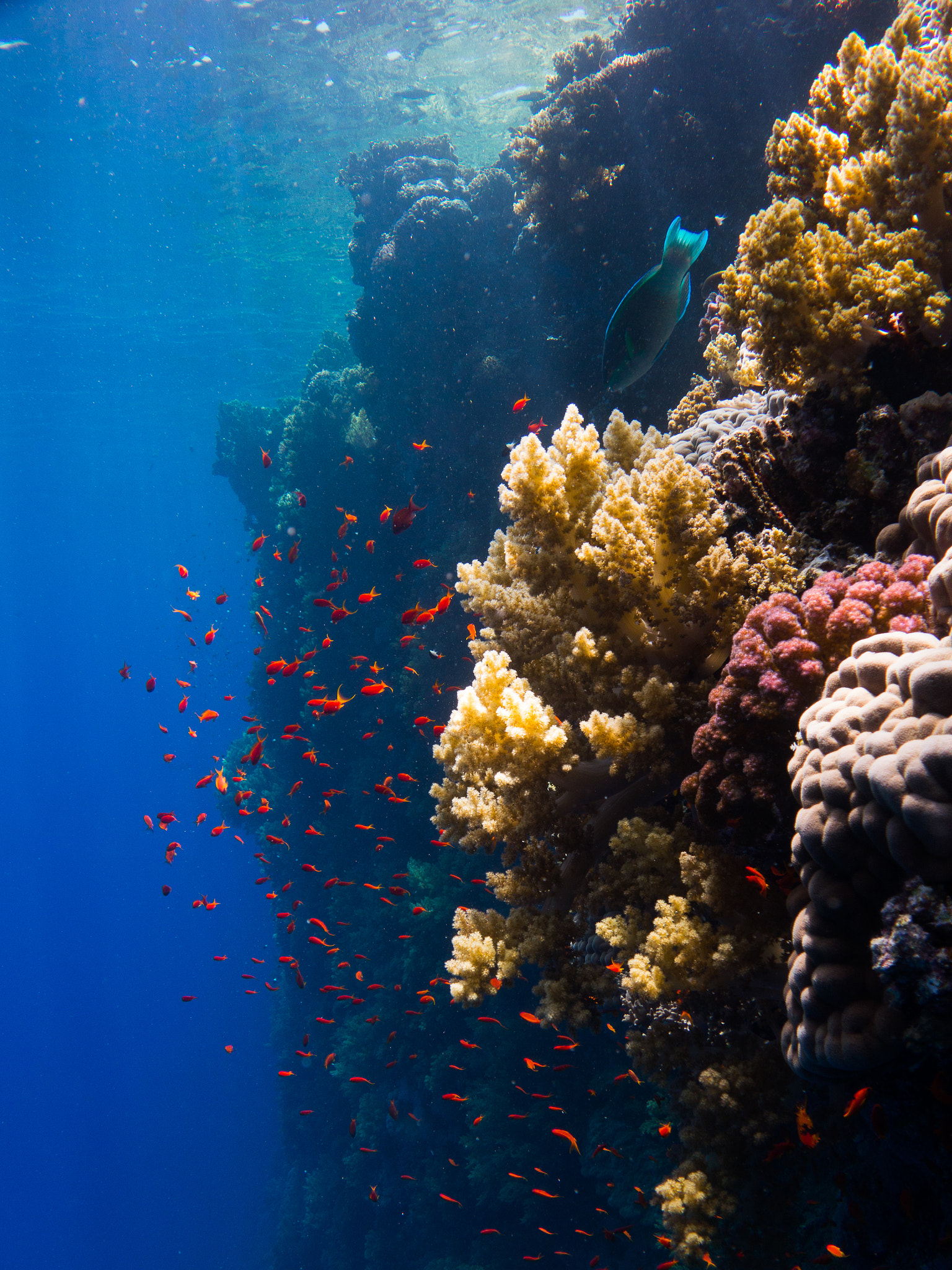
Saudi Arabia’s Red Sea coast stretches over 1,700 kilometres, and the vast majority of it has never been dived commercially. Yanbu, widely considered the diving capital of Saudi Arabia, offers the Seven Sisters reef system with consistent 20–30 metre visibility and regular hammerhead sightings. South of Jeddah, the Farasan Banks cover an estimated six million acres of submerged reef — one of the largest unexplored reef systems on Earth.
What sets the Saudi Red Sea apart is its endemism. Over 40% of Red Sea reef fish species are found nowhere else on the planet — no other tropical dive destination comes close to that ratio. The Red Sea also receives virtually no river discharge, which means natural water clarity rivals or exceeds the Maldives without seasonal variation from sediment.
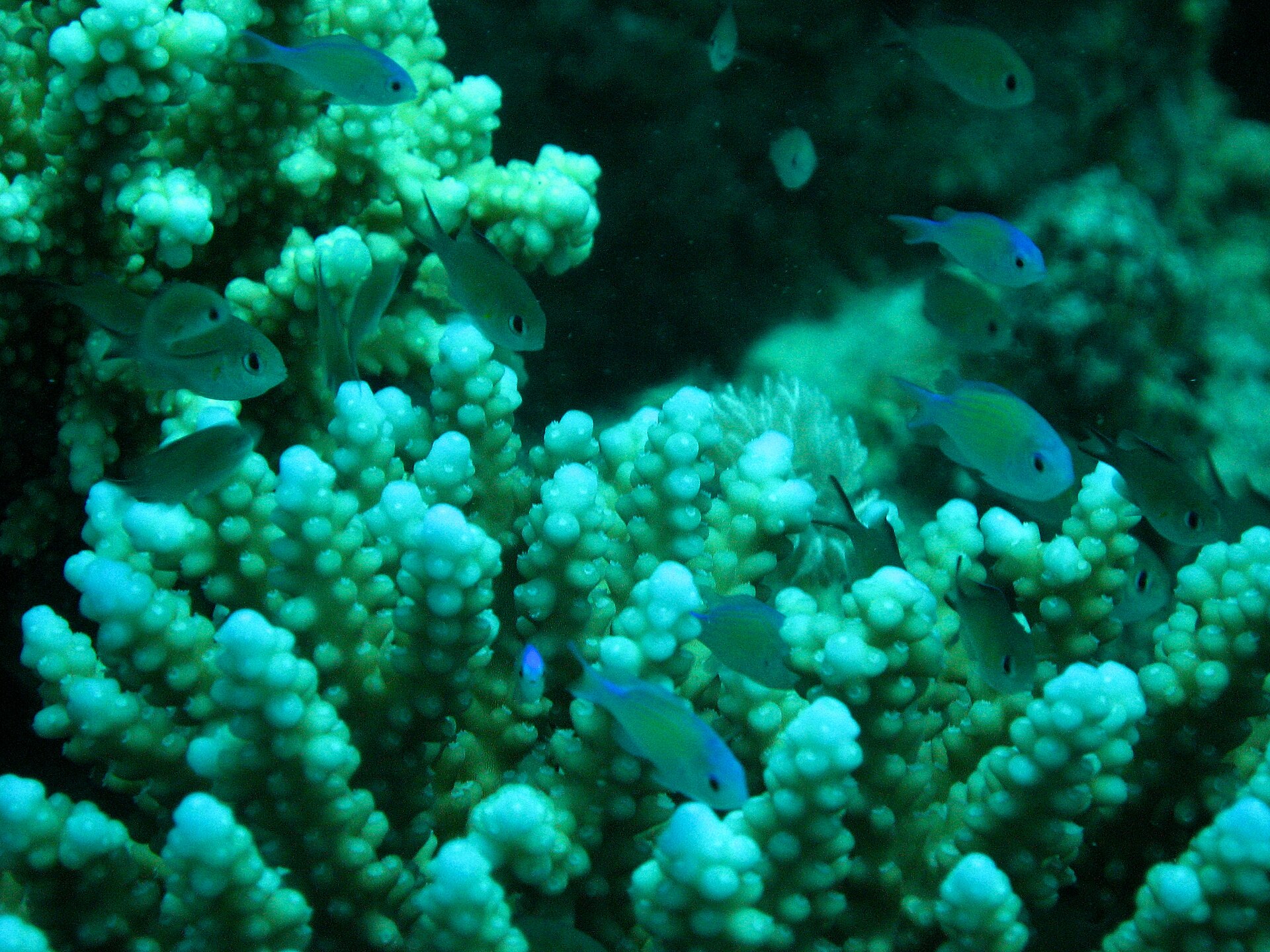
The Red Sea’s coral diversity is exceptional: 300+ species of hard coral, many of them heat-resistant strains that survived the 2016 and 2020 bleaching events that devastated reefs elsewhere. At AMAALA, researchers discovered an 800-year-old coral colony — the largest in the Red Sea, longer than six London buses.
Tip: If you’re new to Red Sea diving, start with our complete Saudi scuba diving guide for operator recommendations and certification options. For non-divers, snorkelling at sites like Umluj delivers vibrant reef life from the surface.
Maldives Diving
The Maldives is a megafauna destination above all else. South Ari Atoll offers the most reliable year-round whale shark encounters anywhere in the world, and Baa Atoll’s Hanifaru Bay hosts manta ray aggregations of up to 200 individuals during peak plankton season (July–October). If seeing a whale shark or manta ray is your primary goal, the Maldives delivers more consistently than almost anywhere else.
The Maldives’ signature dive style is kandu (channel) diving — thrilling drift dives through gaps in the outer reef wall where strong currents concentrate grey reef sharks, eagle rays, tuna, and Napoleon wrasse. This current-driven diving is a distinctly Maldivian experience with no real equivalent in the Red Sea.
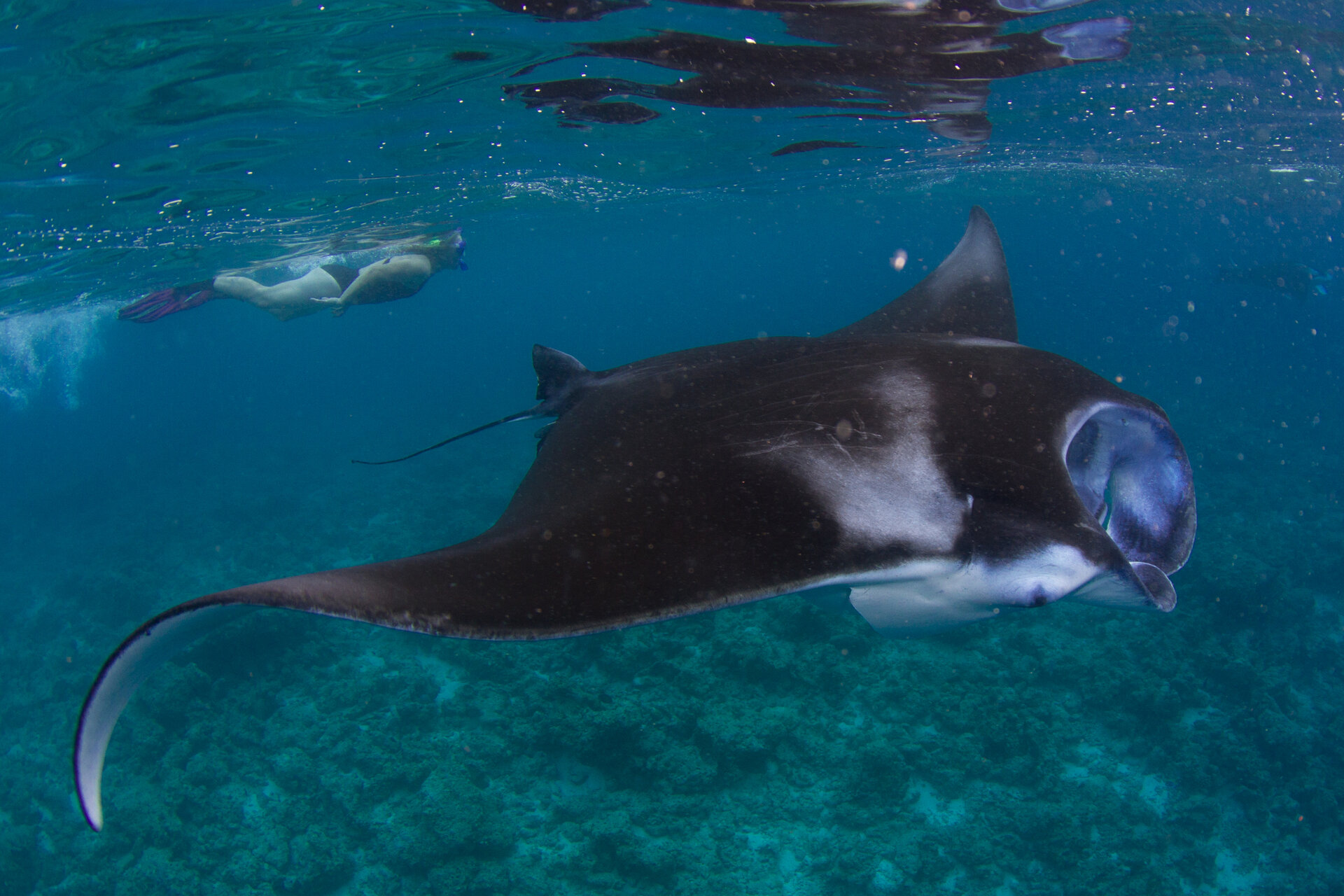
However, visibility in the Maldives is more variable: 30–40 metres during the dry season (January–April) but dropping to 15–25 metres during the wet season when plankton blooms attract the megafauna. Reef health is also a concern — the 2016 bleaching event affected roughly 70% of Maldivian reefs, and recovery remains uneven.
Diving Comparison Table
| Factor | Saudi Red Sea | Maldives |
|---|---|---|
| Visibility | 20–30m year-round (up to 40m) | 15–40m (seasonal) |
| Coral species | 300+ (many heat-resistant) | 258–300 |
| Fish species | 1,200+ (40%+ endemic) | 1,100+ |
| Whale sharks | Seasonal (Farasan Banks, April–May) | Year-round (South Ari Atoll) |
| Manta rays | Occasional | Seasonal aggregations of 200+ (Baa Atoll) |
| Hammerhead sharks | Regular (Yanbu, Al Lith) | Occasional |
| Water temperature | 22–32°C (seasonal) | 26–30°C year-round |
| Reef condition | Pristine; most reefs unvisited | Recovering; 70% bleached in 2016 |
| Crowding | Virtually empty | Popular sites are busy |
| Dive style | Wall, reef, wreck | Channel drift, thila, reef |
Marine Life: Endemic Species vs Megafauna Encounters
The Red Sea and Maldives offer different kinds of marine biodiversity. The Red Sea’s defining feature is endemic species — organisms found nowhere else on Earth. More than 40% of Red Sea reef fish are endemic, along with roughly 6% of its hard corals. The Saudi coastline also supports 16 marine mammal species including dugongs and dolphins, plus green and hawksbill turtle nesting sites at the Farasan Islands.
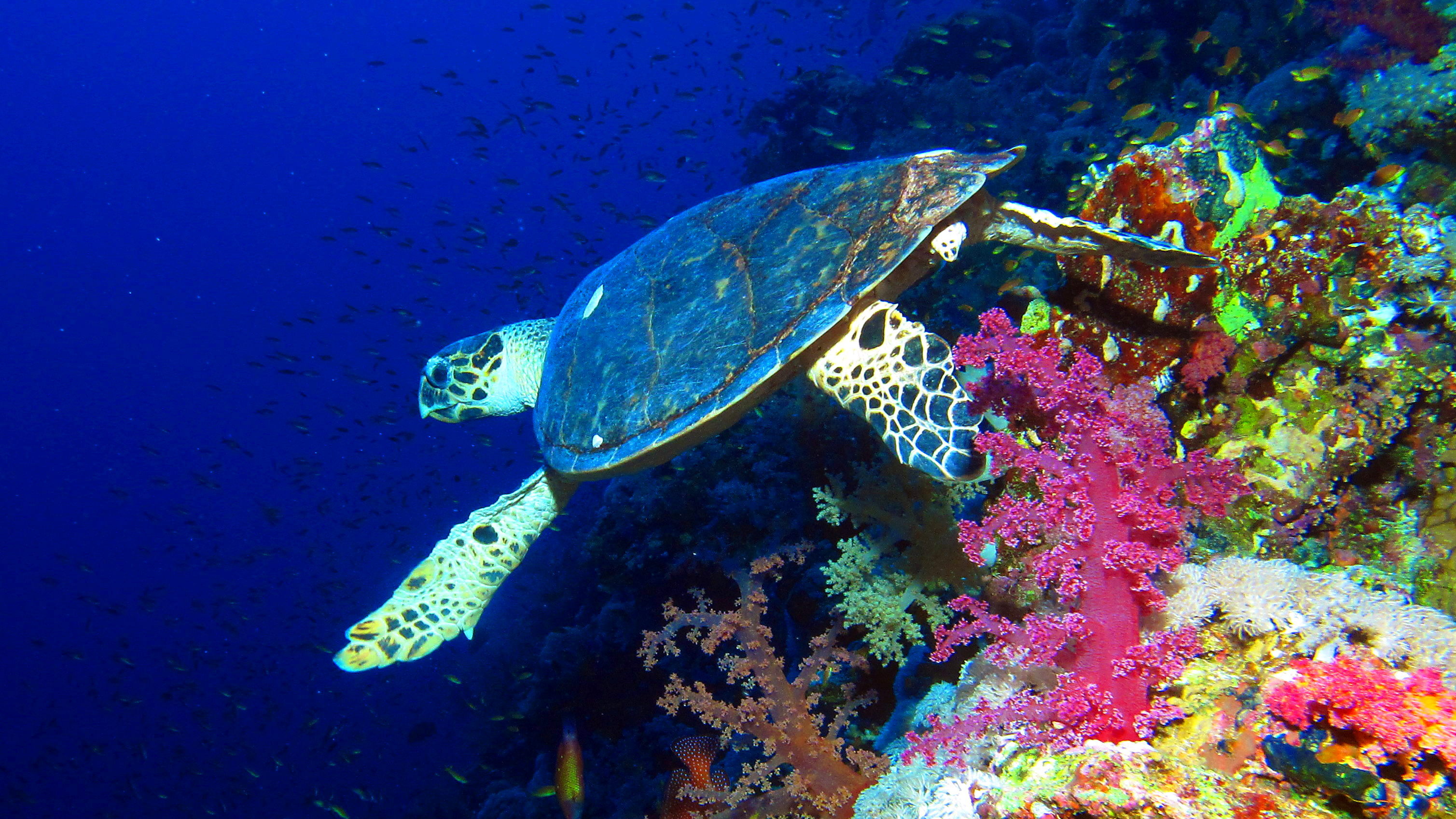
The Maldives counters with sheer megafauna reliability. No other destination on Earth matches South Ari Atoll for year-round whale shark sightings, and Hanifaru Bay’s manta aggregations are a UNESCO Biosphere Reserve-listed phenomenon. The Maldives also supports 2,031 distinct coral reefs spread across 26 atolls, five marine turtle species, and over 20 whale and dolphin species.
For whale shark diving specifically, the Red Sea offers seasonal encounters at the Farasan Banks (April–May) and Jabal Al Lith (February–May), while the Maldives offers encounters nearly every day of the year at South Ari. If whale sharks are non-negotiable, the Maldives wins; if you want to see species found nowhere else, the Red Sea is unmatched.
Beaches: Raw Coastline vs Resort Perfection
The beach experience could not be more different between these two destinations.
Saudi Red Sea Beaches
Umluj — often called “the Maldives of Saudi Arabia” — offers an archipelago of over 100 islands with turquoise water, white sand, and virtually no other tourists. The lack of river discharge means the water is startlingly clear. Sea turtles and dugongs are regular visitors.
Saudi Red Sea beaches are largely undeveloped, which is both their greatest strength and their biggest limitation. You will likely have entire beaches to yourself, but infrastructure is minimal outside the emerging mega-resort zones. Access often requires a boat or 4WD vehicle. The Shebara resort, with its overwater pods on a private island near NEOM, is Saudi Arabia’s first real answer to Maldivian overwater villa culture — starting from around $2,400 per night.
New developments are changing the picture rapidly. AMAALA’s triple-bay destination is opening five resorts in April 2026, with brands including Ritz-Carlton, Four Seasons, Rosewood, and Six Senses. The Red Sea Project already has its own international airport. By 2028, the Saudi Red Sea coast will offer luxury infrastructure comparable to the Maldives.
One major advantage: Saudi beaches sit alongside mountains, deserts, and historical sites. You can pair a day on the Jeddah Corniche with an evening exploring the UNESCO-listed Al-Balad district, or combine diving at Yanbu with a road trip to AlUla’s Nabatean tombs. The Maldives offers sea and sand — nothing else.
Maldives Beaches
The Maldives remains the benchmark for beach resort luxury. Powder-white sand, shallow turquoise lagoons, and overwater villas as the standard accommodation offering at hundreds of properties. The one-island-one-resort model means total privacy — no traffic, no commute, no crowds.
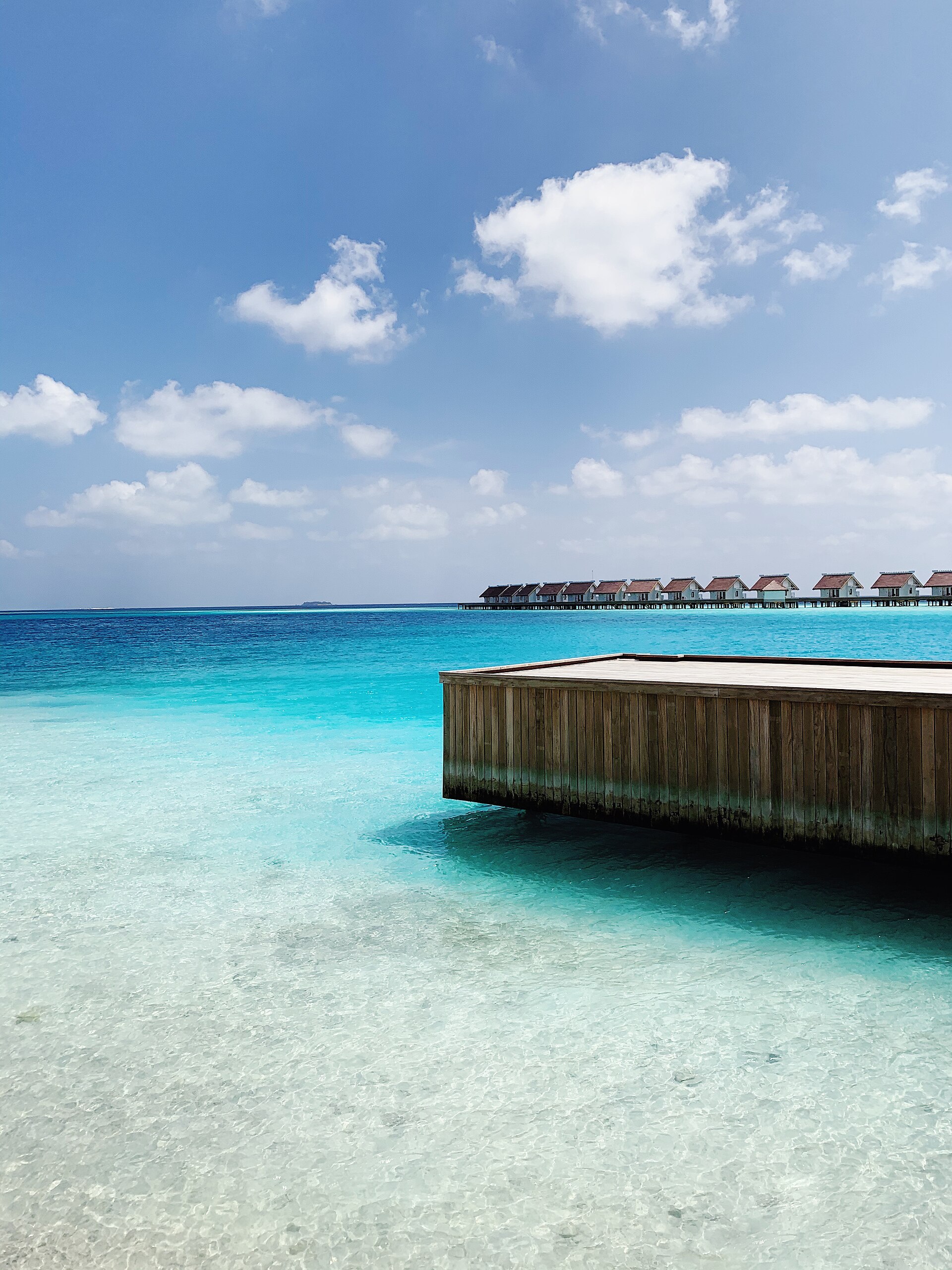
Maldives beaches are flat coral islands with no elevation, no mountains in the background, and no cultural landmarks within reach. If you want to combine beach time with hiking, history, or desert adventures, the Maldives cannot deliver. But if all you want is turquoise water, white sand, and uninterrupted relaxation, few places do it better.
Budget travellers should note that local islands like Maafushi now offer guesthouses from $50–150 per night with bikini beaches, dive operators, and floating bars — a genuine budget Maldives option that did not exist a decade ago.
Beach Comparison Table
| Factor | Saudi Red Sea | Maldives |
|---|---|---|
| Sand quality | White to golden, coral-based | Powder-white, fine coral |
| Water clarity | Exceptional (no river runoff) | Exceptional (lagoon-sheltered) |
| Crowds | Almost empty | Private resort islands; local islands can be busy |
| Infrastructure | Developing rapidly (2026–2028) | Mature, decades of resort tourism |
| Overwater villas | Shebara only (from $2,400/night) | Hundreds of options ($150–$3,500+/night) |
| Landscape variety | Mountains, desert, historic sites nearby | Flat coral islands only |
| Alcohol | Not available | Available at resort islands |
Cost Comparison: Which Destination Offers Better Value?
Saudi Arabia’s Red Sea delivers significantly better value at every price tier, particularly for European and Middle Eastern travellers.
Flights
Jeddah is closer and cheaper to reach from most major hubs. A round trip from London to Jeddah starts at around $250 on budget carriers (6.5 hours direct), compared to $900+ to Malé (10–11 hours). From Dubai, Jeddah flights start at $150 return versus $250+ to Malé. From Mumbai, expect $200–400 for Jeddah versus $300–600 for the Maldives.
Daily Costs
| Budget Tier | Saudi Red Sea (per day) | Maldives (per day) |
|---|---|---|
| Budget | $80–150 (guesthouse + boat trips) | $95–130 (local island guesthouse + diving) |
| Mid-range | $200–400 (4-star hotel + dive packages) | $350–600 (mid-range resort, half-board) |
| Luxury | $500–2,400+ (Shebara, AMAALA) | $1,000–3,500+ (overwater villa, all-inclusive) |
Dive-Specific Costs
A two-tank boat dive in Saudi Arabia runs $100–130 versus $100–200 in the Maldives. Liveaboard packages show a wider gap: $1,400–2,800 for a seven-night Red Sea trip compared to $2,000–4,000 in the Maldives. PADI Open Water certification costs approximately $400–500 in Saudi Arabia versus $500–700 in the Maldives.
Hidden Costs
The Maldives adds a 12% tourism tax, a green tax ($6–12 per person per night), and typically a 10% service charge at resorts — pushing listed prices up by 25–30%. Resort islands charge captive-audience prices for food and drink ($15–30 per meal, $8–12 for a beer). Saudi Arabia levies 15% VAT on hospitality but has no tourism-specific taxes, and food costs outside ultra-luxury properties are generally lower. Note that alcohol is not available in Saudi Arabia.
The Maldives also adds substantial transfer costs that most travellers underestimate. Seaplane transfers from Malé to resort atolls run $300–600 round trip per person — a cost with no Saudi equivalent.
Best Time to Visit Each Destination
Saudi Red Sea Seasons
- September–November (ideal): Warm water (27–30°C), comfortable air temperatures, fewest tourists, excellent visibility
- December–May: Peak diving season. Farasan Banks whale sharks appear April–May. Water 22–28°C
- April–June: Best visibility (calmer seas, less plankton). Water 25–28°C
- July–August: Avoid southern Red Sea (water above 32°C, air above 40°C). Northern sites around NEOM remain diveable
- January–April (dry/northeast monsoon): Best visibility (30–40m), calmest seas, clearest skies. Peak tourist season and highest prices
- June–November (wet/southwest monsoon): Best for manta rays (Baa Atoll peaks August–September) and whale sharks. More plankton reduces visibility to 15–25m but attracts the megafauna. Lower prices, more rain
- May and December: Shoulder months with reasonable weather and moderate pricing
- Divers who want frontier exploration — most Saudi reef systems have never been commercially dived
- Underwater photographers — unmatched visibility, endemic species, no other divers in the frame
- Budget-conscious divers — cheaper flights from Europe/Middle East, lower daily costs, no seaplane transfers
- Multi-activity travellers — combine diving with desert trips, AlUla’s Hegra, Jeddah’s Al-Balad, or hiking in the Asir highlands
- Freedivers — the Red Sea’s consistent visibility and warm water make it ideal for freediving training and exploration
- Travellers who dislike crowds — Saudi dive sites are effectively empty compared to any Maldivian atoll
- Whale shark and manta ray seekers — year-round encounters at South Ari and seasonal aggregations at Hanifaru Bay are unrivalled globally
- Honeymoon and romance travellers — overwater villas, one-island privacy, sunset dining on the sand
- Pure beach relaxation — if you want to do nothing but swim, snorkel, and read in a hammock, the Maldives is purpose-built for it
- Current diving enthusiasts — kandu drift dives through atoll channels deliver an adrenaline experience the Red Sea does not replicate
- Travellers who want alcohol — resorts in the Maldives serve alcohol freely; Saudi Arabia does not
- Families with resort-oriented children — Maldives resorts offer structured kids’ clubs, house reef snorkelling, and all-inclusive convenience
- Saudi Arabia Diving and Snorkelling Guide — Complete guide to Red Sea dive sites, operators, and seasons
- Scuba Diving in Saudi Arabia — Every dive site from Yanbu to Farasan with operator details
- Yanbu Diving Guide — The Seven Sisters reef system and Saudi Arabia’s dive capital
- Farasan Islands Diving — Saudi Arabia’s most pristine and remote reef system
- Whale Shark Diving Saudi Arabia — Where and when to see whale sharks in the Red Sea
- Umluj: The Maldives of Saudi Arabia — Island-hopping and snorkelling on the northwest coast
- Saudi Arabia Travel Guide 2026 — The complete guide to visiting the Kingdom
- Saudi Arabia Visa Guide — Every visa type explained
Maldives Seasons
Key difference: The Red Sea offers a nine-month diving window (September–May). The Maldives is diveable year-round but forces a trade-off — you get either clear water or big animals, rarely both at peak levels.
Accessibility and Visas
Getting to the Saudi Red Sea
Jeddah’s King Abdulaziz International Airport is the main gateway, with direct flights from London (6.5 hours), Frankfurt (5.5 hours), Dubai (2.5 hours), and Mumbai (4.5 hours). From Jeddah, Yanbu is a three-hour drive or short domestic flight. Umluj requires a road transfer from Yanbu or Tabuk (two to four hours). The Red Sea International Airport, serving the Red Sea Project and AMAALA area, opened in 2023 and accepts domestic connections.
Saudi Arabia’s tourist e-visa covers nationals of 66 countries including the US, UK, all Schengen states, Australia, China, and Japan. It costs approximately SAR 480 (~$128), is valid for one year with multiple entries, and allows up to 90 days per visit. GCC nationals enter visa-free. Processing is typically instant to 24 hours online.
Getting to the Maldives
Velana International Airport in Malé is the sole international gateway. Direct flights operate from London (10–11 hours), Dubai (4.5 hours), Singapore (4.5 hours), and several Indian cities (4 hours). From Malé, reaching your resort requires a seaplane (30–60 minutes, $300–600 return), speedboat, or domestic flight — an additional logistical step and cost.
The Maldives offers the easiest visa regime in the world: a free 30-day visa on arrival for citizens of every country (with the exception that Israeli passport holders are refused entry). No pre-application needed — just a passport with one month’s validity, a hotel booking, and the IMUGA traveller declaration filed within 96 hours of arrival.
Who Should Choose the Red Sea
Who Should Choose the Maldives
Can You Combine Both Trips?
Yes, and it makes geographical sense. Jeddah to Malé is a 4.5-hour flight via Dubai or Colombo, making a two-centre trip feasible within a 10–14 day holiday. Spend the first week diving the Saudi Red Sea from Yanbu or a Red Sea Project resort, then fly south for a week of Maldivian megafauna and overwater villa time. The contrast between frontier reef diving and polished resort diving would make for one of the most complete dive holidays anywhere.
If you are planning a broader Saudi Arabia trip, consider adding Red Sea diving as a four- or five-day extension. Obhur Creek in Jeddah offers easy access to watersports, while yacht charter operators can arrange private island-hopping itineraries along the coast.
The Verdict
The Maldives remains the world’s premier beach-and-megafauna destination, with decades of resort infrastructure, year-round whale sharks, and overwater villa culture that no other destination has fully replicated. If relaxation, romance, and reliable big-animal encounters are your priority, the Maldives delivers.
But the Saudi Red Sea is the better diving destination in 2026. Pristine reefs with 40%+ endemic species, visibility that equals or exceeds the Maldives, zero crowds, and a price point that is 30–50% lower for comparable experiences. The infrastructure gap is closing fast — by 2028, with AMAALA, the Red Sea Project, and Sindalah fully operational, the Saudi coastline will offer luxury on par with the Maldives while retaining the frontier diving that the Maldives lost decades ago.
For divers, the Red Sea wins. For beach resort luxury, the Maldives still leads — but the margin is shrinking every year.