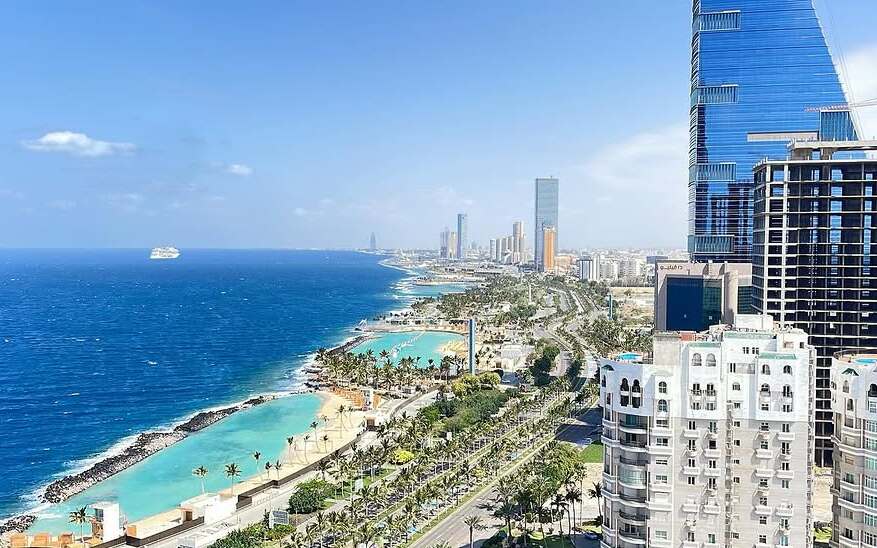

Jeddah is Saudi Arabia’s culinary capital. As the historic gateway to Mecca and a port city on the Red Sea for over a thousand years, it has absorbed flavours from across Africa, South Asia, Southeast Asia, and the Levant — layering them over the Hejazi traditions that define its kitchen. Whether you are building a broader Jeddah travel itinerary or flying in specifically to eat, this guide covers every price point: from SAR 10 Al Baik meals to SAR 800 tasting menus at MICHELIN-recognised restaurants along the waterfront.
Jeddah’s dining scene has transformed since the Kingdom opened to tourism. International names like ROKA, Nobu, and San Carlo now sit alongside family-run Hejazi restaurants that have served saleeg and sayadiyah for generations. The result is one of the Middle East’s most exciting food cities — and one where a visitor on any budget can eat exceptionally well as part of a wider Saudi Arabia travel plan.
🗺 Jeddah Restaurants — At a Glance
Best Time to Visit: October to March (cooler weather for outdoor terraces and corniche dining)
Getting There: King Abdulaziz International Airport (JED), 19 km north of the city centre; Haramain High Speed Rail from Mecca and Medina
Visa Required: Yes — tourist e-visa available online
Budget: Street food SAR 10–30 ($3–8) | Mid-range SAR 80–200 ($21–53) | Fine dining SAR 300–800+ ($80–213+)
Must-Try: Saleeg at a Hejazi restaurant, fresh Red Sea seafood on the Corniche, Al Baik fried chicken
Avoid: Dining at peak Friday lunch (12–2 pm) without a reservation — popular spots fill completely
Hejazi Cuisine: The Dishes You Must Try
Before choosing a restaurant, understand the food. Hejazi cuisine is Jeddah’s native kitchen, shaped by centuries of pilgrimage traffic and maritime trade. It is distinct from the Najdi cooking of Riyadh and the Gulf-influenced fare of the Eastern Province. These are the dishes every visitor should seek out, and you will find more detail in our Saudi Arabia food guide.
Saleeg
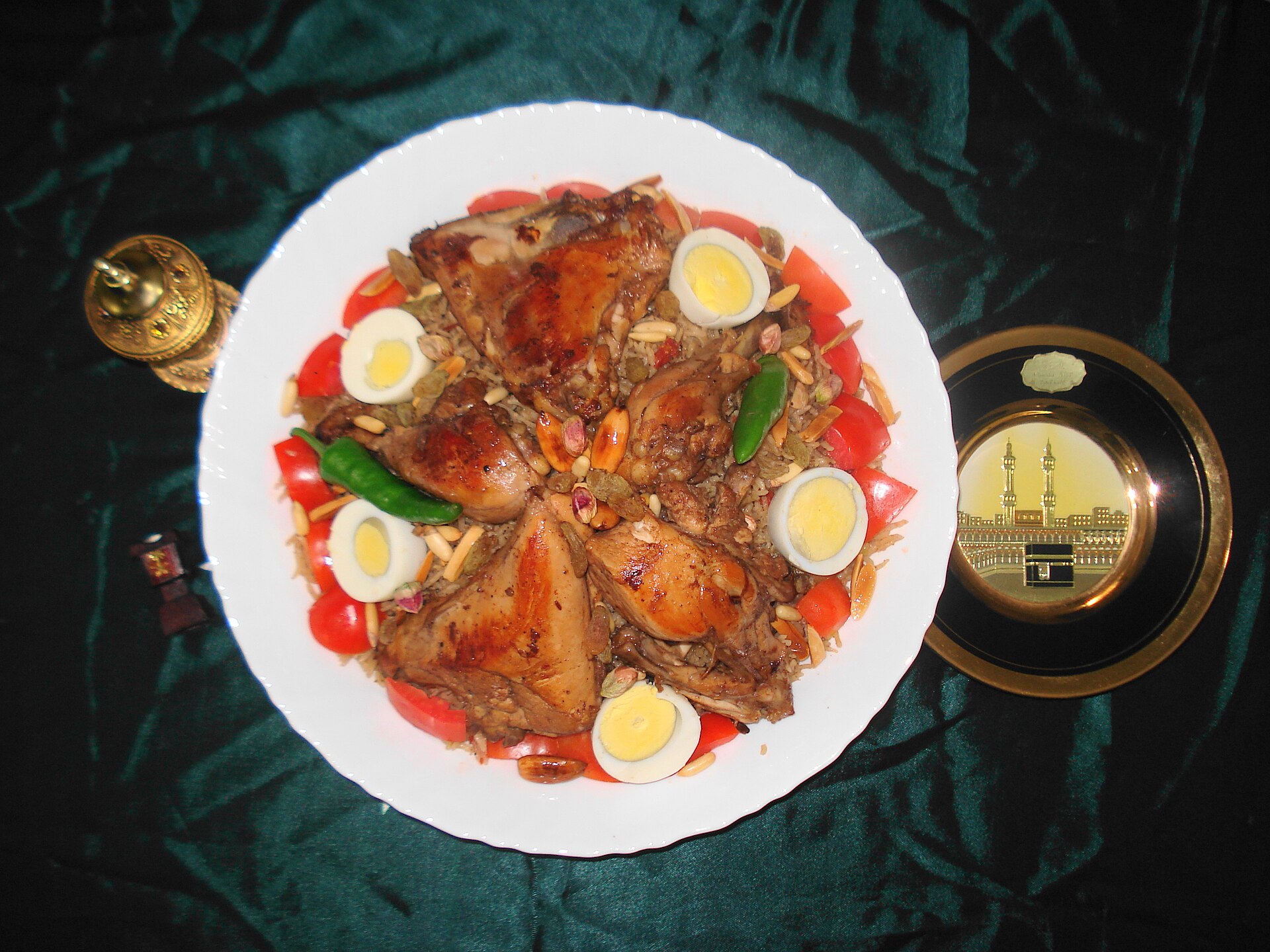
Often called the Saudi risotto, saleeg is short-grain rice cooked slowly in chicken broth enriched with milk and butter until it reaches a creamy, porridge-like consistency. It is flavoured with cardamom, black pepper, and mastic, then topped with roasted chicken. Saleeg is comfort food at its finest — simple, hearty, and deeply satisfying. Expect to pay SAR 35–60 per serving at traditional restaurants.
Sayadiyah
Jeddah’s signature fish dish. Sayadiyah pairs spiced rice with grilled or fried fish (typically hammour or red snapper), topped with caramelised onions and a rich tomato-based sauce. The name comes from the Arabic word for fisherman, and the dish is best eaten at the fish markets and seafood restaurants along the southern Corniche. A full plate costs SAR 50–90.
Mandi
Originally from the Hadhramaut region of Yemen, mandi has been thoroughly adopted across Jeddah. A whole lamb or chicken is slow-cooked in a sealed underground tandoor pit, producing extraordinarily tender meat served over fragrant long-grain rice seasoned with saffron, dried limes, and cardamom. Al Balad’s mandi restaurants are the most authentic — Baissa Mandi Meat has served a single dish, ras mandi (head meat mandi), for decades.
Foul Medames
Jeddah’s quintessential breakfast. Slow-cooked fava beans mashed with olive oil, lemon juice, cumin, and chilli, served with fresh khubz (flatbread). Hummus Al Jalal in Al Balad has served a generations-old recipe that draws queues every morning. Foul is a SAR 15–25 meal — filling, protein-rich, and the ideal start to a day of exploring.
Mutabbaq
A stuffed and folded pastry filled with spiced minced meat, egg, and herbs, then pan-fried until crispy. Mutabbaq is Jeddah street food at its best — portable, inexpensive (SAR 10–15), and available from roadside stalls across Al Balad and Al Sharafiyah. The sweet version, filled with banana and cheese, is equally popular.
Kabsa
Saudi Arabia’s national dish appears on menus across Jeddah but the Hejazi version is lighter and more tomato-forward than the Najdi style. Chicken or lamb is cooked with basmati rice, tomatoes, and a blend of baharat spices. A generous portion at a local restaurant costs SAR 30–50.
Al Balad: The Old City Food Scene
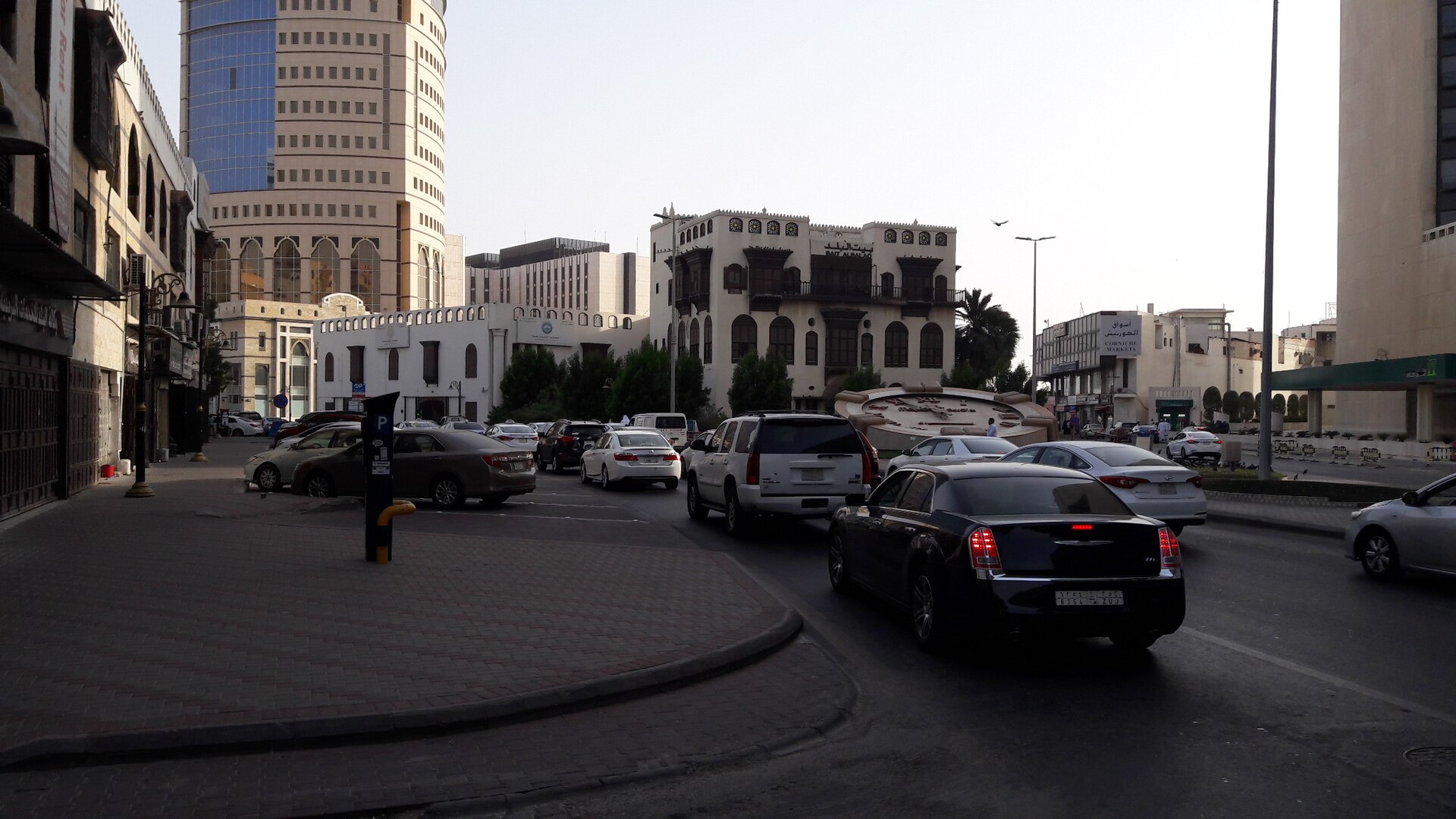
Jeddah’s UNESCO World Heritage-listed historic district is the heart of the city’s traditional dining scene. Within the coral-stone alleyways of Al Balad and the surrounding waterfront, you will find restaurants that have fed pilgrims, merchants, and sailors for generations. The food here is overwhelmingly Hejazi, and the prices are a fraction of what you will pay in the modern districts to the north.
Baissa Mandi Meat
A single-dish restaurant that has served ras mandi — slow-cooked head meat over fragrant rice — for decades. There is no menu to deliberate over. You sit down, the food arrives, and the quality of the meat speaks for itself. Baissa is a local institution in Al Balad, popular with Jeddawis who consider it the benchmark for authentic mandi. Expect to pay around SAR 40–60.
Hummus Al Jalal
Renowned across Jeddah for its generations-old hummus recipe, this no-frills spot serves Levantine-style hummus, foul, and fresh bread from early morning. The hummus is smoother and more tahini-rich than the Egyptian-influenced versions found elsewhere in the city. Complement your order with aromatic tea. A full breakfast here costs SAR 20–35.
Tamatim Restaurant
Tamatim combines traditional Hejazi flavours with clean, modern presentation. The saleeg here is consistently excellent, and the areeka (a date and bread dessert) is one of the best in the city. This is where to come if you want authentic cooking in a more polished setting than the Al Balad hole-in-the-wall spots. Mains run SAR 50–90.
Al Balad Food Walking Route
For the best Al Balad food experience, follow this route on foot:
- Start with foul and tea at Hummus Al Jalal for breakfast
- Walk through the Souq Al Alawi for dried fruits, spices, and oud
- Stop at a mutabbaq stall in Al Sharafiyah (SAR 10–15)
- Lunch at Baissa Mandi Meat or one of the saleeg restaurants along Al Dhahab Street
- End with Arabic coffee and fresh dates at one of the souq cafes
- Jeddah Travel Guide 2026 — The complete guide to Saudi Arabia’s Red Sea gateway
- Jeddah Corniche — Guide to the 30-kilometre Red Sea waterfront
- Saudi Arabia Food Guide — Traditional dishes, restaurant tips, and dining culture nationwide
- Saudi Arabia Hotels Guide — Where to stay across the Kingdom
- Saudi Arabia Travel Guide 2026 — The complete guide to visiting the Kingdom
- Saudi Arabia Visa Guide — Every visa type explained
Practical tip: Al Balad restaurants are busiest on Thursday and Friday evenings. For the most relaxed experience, visit on a Saturday or Sunday morning. Many traditional restaurants are cash-only — carry SAR 100–200 in small notes.
Fine Dining: Jeddah’s Best High-End Restaurants
Jeddah’s fine dining scene has expanded rapidly since 2019. International brands have arrived, Saudi chefs have launched ambitious concepts, and the waterfront has become a destination dining strip to rival Dubai Marina or Beirut’s Zaitunay Bay.
ROKA Jeddah
Located at Cascade in Jeddah Walk, ROKA brings its signature robatayaki (Japanese charcoal grill) cooking to the Red Sea coast. The restaurant earned inclusion in the 2025 MICHELIN Guide Jeddah. Standout dishes include the kankoku fu kohitsuji (lamb cutlets with Korean spices and sesame cucumber), sake no taru taru (salmon tartare with den miso and yuzu), and the bekupoteto (baked sweet potato with yuzu cream and chives). ROKA excels at communal dining — order four or five dishes for the table. Budget SAR 250–400 per person with drinks.
San Carlo Cicchetti
Named the best Italian restaurant in Jeddah for 2025 by Time Out, San Carlo occupies an elegant space in Ar Rawdah. The menu covers northern Italian classics — vitello tonnato, hand-rolled pasta, osso buco — executed with impeccable technique and imported ingredients. The atmosphere balances sophistication with warmth, making it equally suited to business dinners and celebrations. Main courses SAR 120–220.
Shang Palace
The signature restaurant of the Shangri-La Jeddah delivers high-end Cantonese cuisine with unobstructed Red Sea views. The dim sum lunch is the highlight — har gow, siu mai, and char siu bao prepared by Hong Kong-trained chefs. Dinner is more formal with Peking duck carved tableside and live seafood from the tank. SAR 200–350 per person.
The Aromi Restaurant
Venetian-inspired Italian dining at the Waldorf Astoria Jeddah. The Aromi specialises in seafood — Red Sea langoustine, imported Mediterranean branzino, and handmade squid ink pasta. The waterfront setting is among the most striking in the city. Expect SAR 250–450 per person for a three-course dinner.
Le Vesuvio
Situated at the Jeddah Yacht Club and Marina, Le Vesuvio serves modern Italian cuisine with a focus on wood-fired pizzas, truffle risottos, and elegant seafood platters. The marina-side terrace is one of the best outdoor dining settings in Jeddah, particularly at sunset. SAR 150–300 per person.
Waterfront and Corniche Dining
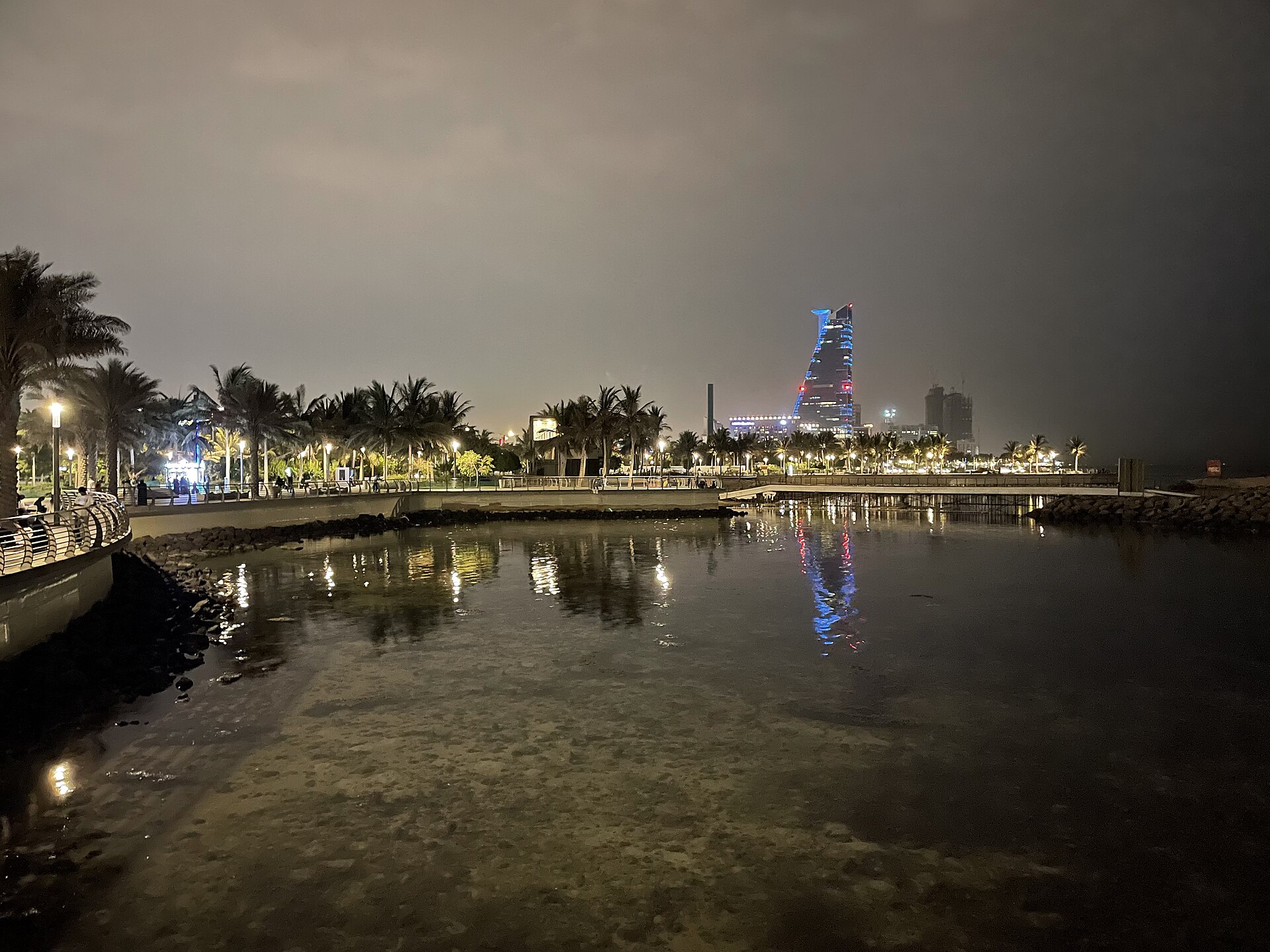
The Jeddah Corniche stretches 30 kilometres along the Red Sea, and its dining options range from casual beachside cafes to destination restaurants. The New Jeddah Waterfront development, completed in stages since 2021, has added a concentration of restaurants between the King Fahd Fountain and the marina district.
Twina Yacht Club
Specialising in fresh Red Sea seafood cooked in both traditional Hejazi and international styles, Twina lets you choose your fish directly from the showroom — a market-style experience that guarantees freshness. The grilled hammour and shrimp machboos are highlights. SAR 120–200 per person.
Obo Beach House
Contemporary Italian, Japanese, and seafood dishes served in a lively beach house atmosphere. Obo works equally well for a long lunch with friends or a casual dinner. The sashimi platters and wood-fired pizzas are both reliable. SAR 100–180 per person.
Samak Mashwi Stalls
Along the southern stretches of the Corniche, informal samak mashwi (grilled fish) stalls offer the most affordable waterfront seafood experience. You pick your fish from ice displays, specify your marinade (typically a Middle Eastern spice blend with lemon and garlic), and eat at plastic tables with sea views. A whole grilled fish with rice and salad runs SAR 40–80. No reservation needed — just walk up.
Budget Dining: Best Cheap Eats in Jeddah
Jeddah is one of the most affordable food cities in the Gulf. You can eat well for under SAR 30 ($8) per meal if you know where to look.
Al Baik
Saudi Arabia’s most beloved fast-food chain started in Jeddah in 1974 and remains headquartered here. The fried chicken is brined, spiced with a proprietary blend, and pressure-fried to a crunchy, juicy standard that has earned a cult following. A chicken meal costs SAR 15–22. The garlic sauce is non-negotiable. Branches are everywhere — the flagship on Sitteen Street is the original. Every visitor to Saudi Arabia should eat at Al Baik at least once; the queue is part of the experience.
Shawarma Spots
Jeddah’s shawarma culture rivals Beirut’s. Sands Restaurant serves shawarma for SAR 11 — well-marinated chicken or beef in warm pita bread with pickled turnip and tahini. Look for shops with high turnover; the best shawarma is sliced from a rapidly spinning spit, not reheated. Al Hamra and Al Sharafiyah districts are shawarma strongholds.
Foul and Tamees Breakfasts
Across Jeddah, small breakfast shops open from 5 am serving foul medames with tamees (tandoori bread baked fresh against the oven wall). A full breakfast with tea costs SAR 12–20. These are neighbourhood joints without English menus, but the food is consistent — point at what the regulars are eating.
Al Balad Street Food
Mutabbaq (SAR 10–15), sambousek (SAR 5–10), and fresh fruit juices (SAR 8–15) are available from stalls and small shops throughout the historic district. The banana-and-cheese sweet mutabbaq is worth seeking out as a dessert or afternoon snack.
Budget tip: An average daily food budget for a visitor eating at local restaurants and street food stalls is SAR 80–120 ($21–32). You can eat three excellent meals and snacks without approaching SAR 150. Save the fine dining budget for one memorable splurge at ROKA or San Carlo.
Seafood Restaurants: The Red Sea on Your Plate
Jeddah’s position on the Red Sea gives it access to some of the freshest seafood in the Middle East. Hammour (grouper), red snapper, shrimp, and lobster are caught daily and appear on menus hours later.
Central Fish Market (Souq Al Samak)
The Central Fish Market near the old port in Al Balad is the epicentre of Jeddah’s seafood culture. Buy fish directly from the morning catch (arrive before 8 am for the best selection), then take it to one of the small restaurants flanking the market that will grill, fry, or prepare it as sayadiyah for a cooking fee of SAR 20–40. The total cost for an extraordinary seafood meal — fresh hammour, rice, salad, and bread — can be as low as SAR 60–80.
Al Nakheel Fish Restaurant
A favourite among Jeddawi families, Al Nakheel specialises in charcoal-grilled Red Sea fish served with saffron rice and green chutney. The lobster, when available, is among the best value in the city. SAR 80–150 per person.
Twina and Waterfront Options
For a more polished experience, the Corniche seafood restaurants (see above) serve the same Red Sea catch in air-conditioned comfort with tablecloths and wine lists. Expect to pay two to three times the fish market price for the same species.
International Cuisine: Beyond Saudi Food
Jeddah’s cosmopolitan population — drawn from over 100 nationalities — means the city offers genuine depth in cuisines that go beyond token representation.
Japanese
ROKA leads the field (see Fine Dining above). Signature by Bunyan was among the first Japanese restaurants in Saudi Arabia and remains reliable for sushi and sashimi. For casual ramen and donburi, smaller Japanese spots have multiplied in Jeddah Walk and the Ar Rawdah dining district.
Lebanese and Levantine
The Lebanese community in Jeddah is substantial, and the Lebanese restaurants reflect genuine diaspora cooking rather than tourist approximations. Al Shami and Karam Beirut are well-established names. Expect generous mezze spreads, charcoal-grilled meats, and freshly baked manakish for SAR 80–150 per person.
Turkish
Khayal is known across Saudi Arabia for high-quality meats and Turkish-style grills. The Adana kebab and mixed grill platters are generous and well-seasoned. For a more casual Turkish experience, several Jeddah branches of CZN Burak draw crowds for their theatrical service style. SAR 70–140 per person at sit-down Turkish restaurants.
Indian and Pakistani
Jeddah’s South Asian community has created one of the strongest subcontinental food scenes outside the Indian subcontinent itself. Biryani, tandoori, and dosa restaurants cluster in the Al Balad and Al Hindawiyah districts. Many are open late and offer extraordinary value — a thali or biryani meal for SAR 20–40.
Egyptian
Al-Dawwar Al-Masri, inspired by Cairo’s old neighbourhoods, serves Egyptian dishes like crispy taameya (the Egyptian falafel, made with fava beans rather than chickpeas), koshari, and molokhia. It is a reminder that Jeddah’s food culture is as much a product of immigration as of local tradition. SAR 40–70 per person.
Cafes and Coffee Culture
Saudi Arabia is one of the world’s oldest coffee cultures — Arabic coffee (qahwa) with cardamom and saffron has been served in the Hejaz for centuries. Jeddah’s cafe scene now ranges from traditional coffee houses to third-wave specialty roasters.
Traditional Arabic Coffee
Look for small cafes in Al Balad and the souqs serving Saudi qahwa in small handleless cups, accompanied by dates, dried fruits, and sometimes luqaimat (sweet dumplings). The coffee is light-bodied, cardamom-heavy, and served in small portions — etiquette calls for accepting at least one cup and shaking the cup gently side to side when you have had enough.
Specialty Coffee
Jeddah has embraced the third-wave coffee movement. Brew92, a Saudi-founded specialty chain, has multiple Jeddah locations and sources single-origin beans from Ethiopian and Yemeni farms. Elixir Bunn and Dose Cafe are also popular with the city’s younger crowd. Expect to pay SAR 20–35 for a specialty pour-over or flat white.
Practical Dining Tips for Visitors
Reservations
Fine dining restaurants along the Corniche and in hotel properties require reservations, especially on Thursday and Friday evenings (the Saudi weekend). ROKA, San Carlo, and Shang Palace can book out days in advance during Jeddah Season (June–July) and during peak winter tourist months. Use TheFork, OpenTable, or call directly.
Dining Hours
Jeddah eats late. Lunch is typically 1–3 pm, and dinner service begins at 8 pm and runs until midnight or later. Many restaurants are closed between 3 and 7 pm. During Ramadan, dining hours shift entirely — restaurants close during daylight hours and open after iftar (sunset), with service continuing until suhoor (pre-dawn) at 3–4 am.
Dress Code
Fine dining restaurants expect smart casual attire. Men should avoid shorts and flip-flops at upscale venues. Women are not required to wear an abaya in restaurants, though modest dress (shoulders and knees covered) is appropriate. Casual restaurants and street food stalls have no dress code beyond basic decency.
Alcohol
Saudi Arabia does not serve or sell alcohol. All restaurants are dry. Fine dining restaurants offer extensive mocktail, fresh juice, and specialty non-alcoholic beverage programmes. Saudi barista culture has risen to fill the gap — you will find more creative non-alcoholic drinks here than in most alcohol-serving cities.
Tipping
A 15% service charge is added automatically at most sit-down restaurants. Additional tipping is not expected but appreciated — SAR 10–20 for good service at mid-range restaurants, 10% at fine dining. At street food stalls and casual eateries, tipping is not customary.
Payment
Card payment (Visa, Mastercard) is accepted at virtually all modern restaurants. Traditional Al Balad restaurants and street food vendors may be cash-only. ATMs are widely available. Apple Pay and Samsung Pay work at most card terminals.
Getting Around for Food
Uber and Careem operate throughout Jeddah and are the most convenient way to reach restaurants. A ride from Al Balad to the Corniche dining strip takes 15–20 minutes and costs SAR 15–25. For the Al Balad food walk, park near Bab Makkah gate and explore on foot — the distances between restaurants are short. Ensure you have your Saudi visa sorted before arrival so you can focus on eating.
Best Restaurants by Neighbourhood
| Neighbourhood | Best For | Top Pick | Price Range (SAR) |
|---|---|---|---|
| Al Balad (Historic District) | Traditional Hejazi, street food | Baissa Mandi Meat | 15–80 |
| Jeddah Corniche / Waterfront | Seafood, fine dining with views | Twina Yacht Club | 100–400 |
| Ar Rawdah | International fine dining | San Carlo Cicchetti | 120–350 |
| Jeddah Walk / Cascade | Trendy restaurants, Japanese | ROKA | 200–450 |
| Al Hamra | Shawarma, casual eats | Sands Restaurant | 10–40 |
| Al Hindawiyah | Indian, Pakistani, biryani | Local biryani houses | 20–50 |
| Al Sharafiyah | Mixed casual, mutabbaq | Street food stalls | 10–30 |
Seasonal Events and Food Festivals
Jeddah Season (typically June–July) brings pop-up restaurants, food festivals, and international chef appearances to the city. Past editions have featured pop-ups from Nobu and Nusr-Et (Salt Bae’s steakhouse). Timing your visit to coincide with Jeddah Season adds a layer of culinary events on top of the permanent restaurant scene.
During Ramadan, Jeddah’s food culture intensifies after sunset. Iftar buffets at the major hotels (Waldorf Astoria, Shangri-La, Park Hyatt) are lavish multi-cuisine spreads costing SAR 200–400. On the streets, the Ramadan night markets in Al Balad offer seasonal sweets like qatayef (stuffed pancakes) and kunafa that are unavailable at other times of the year.
The Hajj season (scheduled for early June 2026) brings millions of pilgrims through Jeddah, and the food scene expands accordingly — temporary restaurants open near the Haramain train station and airport, and the city’s ethnic diversity reaches its peak as pilgrims from 180 countries arrive with their own culinary traditions.
Where to Eat Near Key Attractions
Near the Jeddah Circuit (F1)
The Jeddah Corniche Circuit, host of the Saudi Arabian Grand Prix, sits on the northern Corniche. ROKA, Le Vesuvio, and Obo Beach House are all within a 10-minute drive. During race weekends (typically March), book well in advance.
Near King Fahd Fountain
The waterfront restaurants along the New Corniche are the closest dining options to the iconic fountain. Twina Yacht Club is a strong choice for post-fountain seafood.
Near the Floating Mosque (Al Rahma Mosque)
The Floating Mosque sits on the southern Corniche near Al Balad. After visiting, walk into the historic district for traditional Hejazi food — you are minutes from Hummus Al Jalal and the Central Fish Market.