
Saudi Arabia has quietly become one of the Middle East’s most exciting glamping destinations, and it is especially rewarding for families. From Airstream caravans set among the sandstone canyons of AlUla to solar-powered desert camps in the Hisma wilderness near Tabuk, the Kingdom offers a growing roster of sites where children can explore ancient landscapes by day and sleep beneath some of the clearest night skies on earth. Whether you are planning your first trip or adding an outdoor chapter to a broader Saudi Arabia travel itinerary, this guide covers the best family-friendly glamping sites, what to pack for every age group, and the practical details that make or break a desert trip with kids.
Best Time to Visit: October to March (winter camping season — mild days, cool nights)
Getting There: Fly into Riyadh (KKIA), Jeddah (KAIA), or AlUla (ULH) depending on your chosen site
Visa Required: Yes — tourist e-visa (issued online in minutes for 50+ nationalities)
Budget: SAR 450–2,000+ per night (approx. US $120–$530) depending on camp tier
Must-See: Wadi Ashar camps in AlUla, Hisma Desert Camp near Tabuk, Nofa Wildlife Resort near Riyadh
Avoid: Booking between May and September — daytime temperatures regularly exceed 45°C and most desert camps close for summer
Why Saudi Arabia Works for Family Glamping
Glamping solves the central tension of family travel: parents want adventure and atmosphere; children need comfort and routine. Saudi Arabia’s glamping scene threads that needle unusually well. The Kingdom’s deserts are not featureless sand sheets — they are landscapes of towering sandstone pillars, red dunes, volcanic plateaus, and hidden wadis that give children something genuinely new to discover each morning. Most established glamping sites provide proper beds, en-suite bathrooms, air conditioning or heating, and communal dining areas where meals are prepared for you. That means no tent-wrestling at midnight, no sand in the sleeping bags, and no arguments about who forgot the stove fuel.
Safety is another advantage. Saudi Arabia’s crime rate is among the lowest in the region, desert camps are typically operated by licenced tour companies with English-speaking staff, and mobile coverage extends to most glamping locations thanks to Saudi Arabia’s aggressive 5G rollout. Medical facilities in Riyadh, Jeddah, and Tabuk are world-class, and even remote camps in AlUla are within 30–45 minutes of a hospital.
Best Family Glamping Sites in Saudi Arabia
Sahary AlUla Resort — AlUla
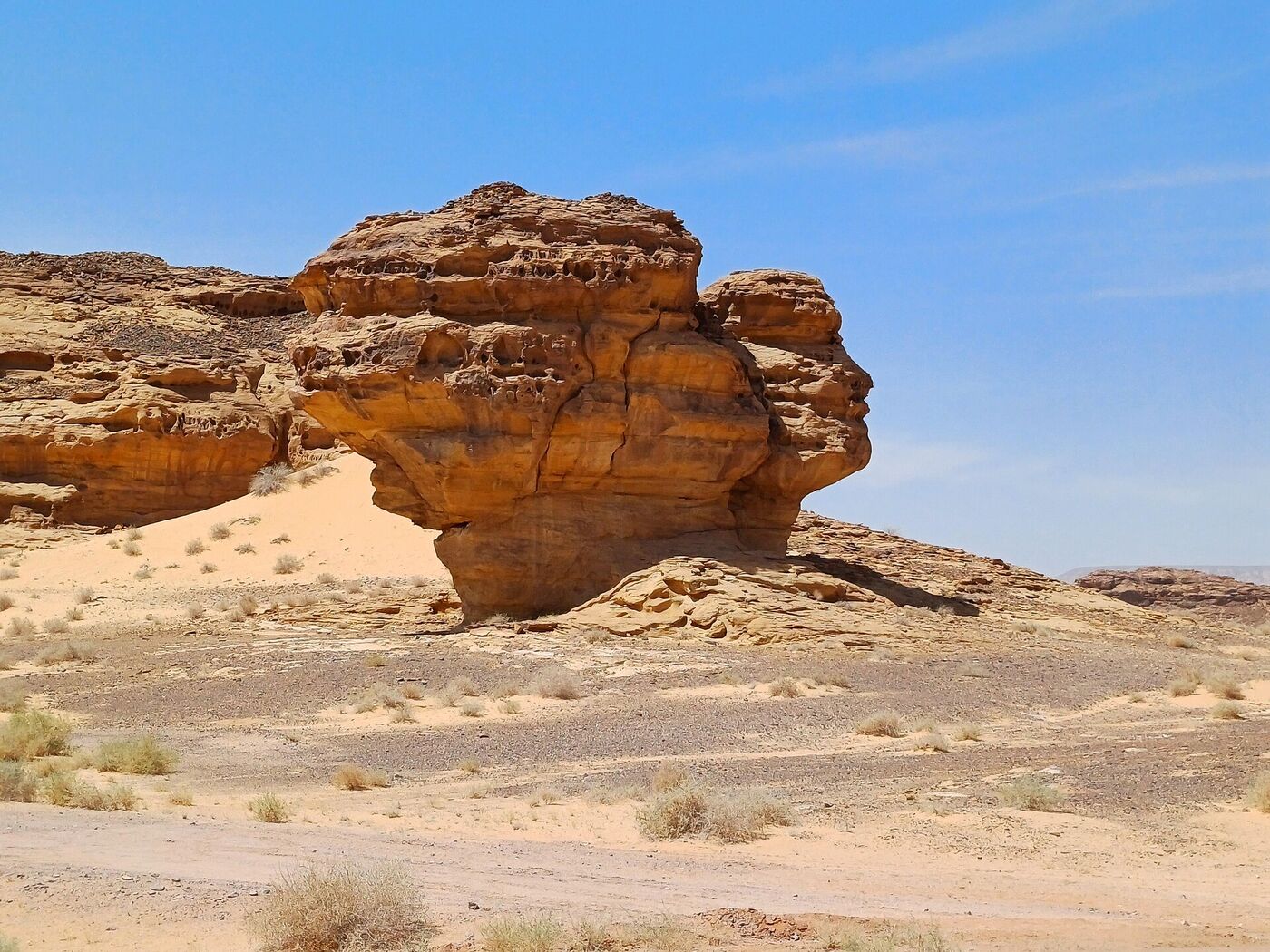
Sahary AlUla Resort sits in the Ashar Valley, surrounded by the same sandstone pillars and palm groves that drew the Nabataean traders 2,000 years ago. The resort offers spacious tents and cabins decorated in traditional Arabian style but fitted with modern comforts including air conditioning, private bathrooms, and comfortable bedding. An on-site restaurant serves Saudi and international cuisine, which eliminates the stress of feeding picky eaters in the desert.
For families, Sahary works because of its activity range. Staff arrange 4×4 desert safaris through the rock formations, guided heritage walks to nearby Nabataean sites, rock climbing for older children, and mountain biking along marked trails. The resort is a short drive from AlUla’s main attractions including Hegra (Saudi Arabia’s first UNESCO World Heritage Site), Elephant Rock, and the AlUla Old Town.
Family tip: Request a cabin rather than a tent if travelling with very young children — the solid walls block wind noise and the layout gives more floor space for a travel cot.
Price range: From approximately SAR 800 per night for a standard tent. Cabins from SAR 1,200.
Caravan AlUla by Our Habitas — AlUla
Caravan AlUla offers a different aesthetic: custom-fitted Airstream-style caravans positioned along the ancient incense trade route. Each caravan includes one or two beds, a private outdoor seating area, and an en-suite bathroom. The Oasis Caravans overlook date palm groves while the Valley Caravans face sheer canyon walls — both settings are extraordinary.
The communal spaces include a restaurant, fire pit areas, and wellness programming. While the property has a boutique feel, it welcomes families and provides a more relaxed, bohemian atmosphere compared to its sister property (Our Habitas AlUla, which is adults-only). Children will enjoy the novelty of sleeping in a caravan and exploring the surrounding landscape, which feels like stepping onto another planet.
Price range: From approximately SAR 1,500 per night. Book directly through Our Habitas for seasonal family packages.
Hisma Desert Camp — Tabuk Province
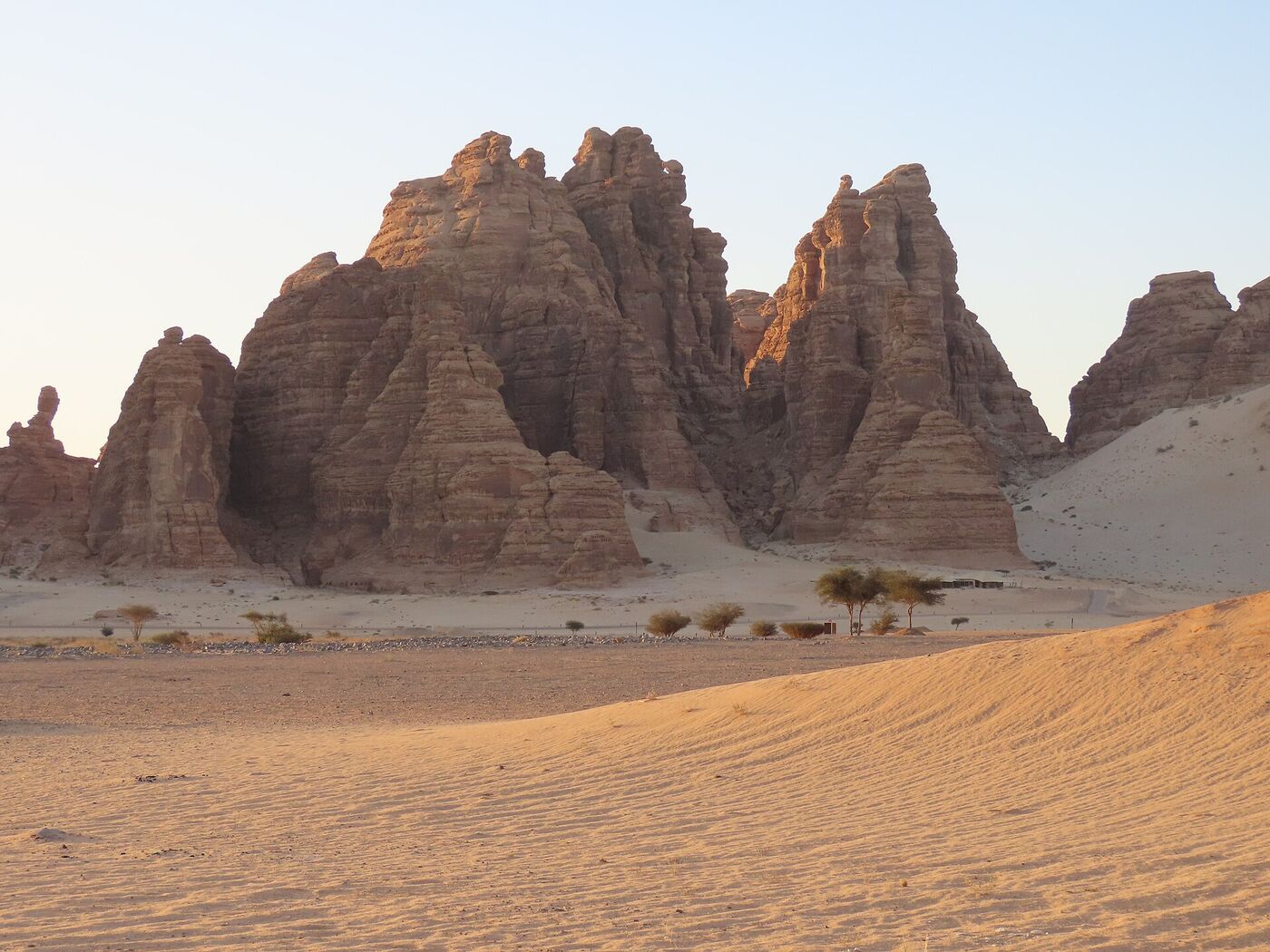
The Tabuk region in Saudi Arabia’s northwest holds the Hisma desert — a landscape of rust-red sandstone, volcanic basalt, and dramatic dune fields that most visitors compare to Wadi Rum in Jordan. Hisma Desert Camp offers 15 modern moon tents and 5 authentic Bedouin-style tents. The moon tents provide a budget-friendly option with shared bathroom facilities, while the authentic tents include private bathrooms with showers.
The camp runs on solar power, and breakfast is included with every booking, served in a spacious communal dining tent. Complimentary 4×4 transfers handle the final stretch of unpaved road to the camp. Activities include desert drives between red dunes, a 40-minute canyon hike suitable for children aged six and above, lunch picnics in sheltered wadis, wildlife spotting in the nearby reserve area, sandboarding on the dunes, and stargazing sessions.
Family tip: The authentic tents with private bathrooms are worth the upgrade (SAR 700–850 vs SAR 450–550 for moon tents) — midnight bathroom trips with children are much easier when the facility is attached to your tent.
Nofa Riyadh — Riyadh Province
Nofa Riyadh is the most accessible luxury glamping option for families already in the capital. Located outside Riyadh, the resort features African-style safari tents set around a wildlife reserve where families can observe oryx, gazelles, and other Arabian species. The tents are large and well-appointed, with proper beds, air conditioning, and en-suite facilities.
Activities include horseback riding (available for children with some riding experience), swimming in the lagoon-style pool, guided nature walks, and wildlife-viewing drives. For families with younger children, the combination of animal encounters and comfortable accommodation makes Nofa one of the easiest introductions to outdoor sleeping in Saudi Arabia — it has the feel of an African safari lodge transplanted to the Arabian Peninsula.
Price range: From approximately SAR 1,800 per night for a safari tent. Weekend rates may be higher.
Fursan Escapes — Red Sand Dunes, Riyadh
Set among the Red Sand Dunes south of Riyadh, Fursan Escapes offers eco-glamping with a focus on adventure activities. The chic bell tents come with comfortable bedding and solar-powered lighting. Activities include dune buggy tours (children ride as passengers), dune picnics, yoga classes (for parents — children can play in supervised areas), and guided nature walks along the dune crests at sunset.
Fursan works best as a weekend escape rather than a multi-night stay. Its proximity to Riyadh (under 90 minutes by car) means you can drive out on Thursday afternoon and return Saturday morning — a structure that suits families with school-aged children during term time. For families planning a longer stay in Riyadh, Fursan makes an excellent overnight break from the city.
Price range: From approximately SAR 600 per night.
Asir Highlands Camps — Abha Region
For families who prefer green mountains to red sand, the Asir highlands near Abha offer a completely different glamping experience. Boutique camps here are perched above misty valleys at elevations above 2,000 metres, with wooden-decked tents overlooking terraced farms and juniper forests. Daytime temperatures in winter hover around 15–20°C — a welcome change from the desert heat — and the region sees occasional rain, which makes the landscape remarkably green for Saudi Arabia.
Activities include paragliding over the Sarawat escarpment (tandem flights are available for older children), hiking along the mountain trails, visits to the traditional stone villages that dot the hillsides, and exploring the colourful Al Baha heritage quarter. The cooler climate and greener scenery make Asir particularly appealing for families who have already experienced desert camping and want variety.
Price range: From approximately SAR 500 per night for a mountain glamping tent.
When to Go: Timing Your Family Glamping Trip
The Saudi glamping season runs from October through March. This is not a loose recommendation — it is a practical necessity. Between April and September, desert daytime temperatures routinely exceed 45°C, many camps close entirely, and exposing children to that heat creates genuine safety risks.
| Month | Day Temp (Desert) | Night Temp | Conditions |
|---|---|---|---|
| October | 30–35°C | 18–22°C | Season opens; still warm during the day but manageable |
| November | 24–30°C | 12–18°C | Ideal — warm days, cool evenings, clear skies |
| December | 18–25°C | 5–12°C | Best month — comfortable days, cold nights, lowest humidity |
| January | 16–24°C | 3–10°C | Coldest month — pack warm layers for after sunset |
| February | 18–26°C | 6–14°C | Warming up; AlUla Tantora festival often runs into Feb |
| March | 22–30°C | 10–18°C | Season winds down; book early as camps begin closing |
Insider note: December and January are peak season across all Saudi glamping sites. AlUla camps in particular sell out weeks in advance during the Winter at Tantora festival season. Book at least 6–8 weeks ahead for December/January stays.
What to Pack: The Family Glamping Checklist
Glamping means most heavy equipment (tents, beds, cooking gear) is provided for you. But Saudi Arabia’s desert environment has specific requirements that catch families out if they pack as though for a European holiday. This checklist covers what you actually need.
Clothing — Adults and Children
- Layering system: Desert temperatures can swing 15–20°C between midday and midnight. Pack lightweight long-sleeve shirts for daytime, a mid-weight fleece or softshell jacket for evenings, and a warm down jacket for late-night stargazing in December/January
- Long trousers and long sleeves: These protect against both sun and sand. Loose-fitting, breathable fabrics (linen, cotton) work best
- Closed-toe shoes or boots: Essential for hiking, scrambling on rocks, and walking on hot sand. Sandals are fine inside the camp but not for excursions
- Shemagh or lightweight scarf: Doubles as sun protection, sand shield, and a pillow cover — the single most versatile item you can pack
- Wide-brimmed hat and quality sunglasses: UV levels in the Saudi desert are extreme; children especially need proper eye protection
- Warm pyjamas for children: Camp tents can get cold at night even with heating; fleece-lined pyjamas prevent 2 AM wake-ups
Sun and Skin Protection
- High-SPF sunscreen (50+): Reapply every 2 hours. Pack a separate stick formula for children’s faces — it stays on better during active play
- Lip balm with SPF: Desert air is extremely dry; lips crack within a day without protection
- Moisturiser: The combination of dry air, sun, and wind strips moisture from skin faster than you expect
- Insect repellent: Mosquitoes are rare in the open desert but can appear near oasis areas and palm groves (AlUla especially)
Hydration and Snacks
- Reusable water bottles (minimum 1 litre per person): Most camps provide drinking water, but having your own bottles means children can drink throughout excursions without waiting for the group
- Electrolyte sachets: Pack Dioralyte or similar — essential if anyone shows signs of dehydration
- Trail snacks: Nuts, dried fruit, energy bars, and crackers. Camp meals are typically served at fixed times; children get hungry between meals, and options to buy snacks are non-existent in the desert
Family Essentials
- Head torches (one per family member): Camp areas are intentionally dimly lit for stargazing; head torches make bathroom trips and nighttime navigation safe for children
- Power bank: Phone charging may be limited to communal areas; a high-capacity power bank (20,000+ mAh) keeps devices running for 2–3 days
- Basic first-aid kit: Plasters, antiseptic wipes, paracetamol, antihistamines, tweezers (for thorns), and any prescription medication your family needs
- Compact binoculars: Excellent for wildlife spotting at Nofa and scanning the canyon walls in AlUla — children love them
- Star chart or stargazing app: Saudi desert skies are among the clearest in the world; a free app like Stellarium turns stargazing into an interactive science lesson
- Lightweight travel blanket: For evening fire pit sessions and picnic stops during excursions
- Zip-lock bags: For wet wipes, dirty clothes, collected rocks and shells — the most underrated item on any family packing list
What NOT to Pack
- Tent and sleeping bags: All glamping sites provide bedding. Bringing your own adds weight and serves no purpose
- Cooking equipment: Meals are included or available at all camps listed in this guide
- Formal clothing: No glamping site in Saudi Arabia has a dress code. Pack practical layers only
- Excess electronics: Tablets and gaming devices defeat the purpose. One camera and one phone per adult is plenty
Getting to Saudi Arabia’s Glamping Sites
AlUla (Sahary, Caravan by Habitas)
AlUla has its own regional airport (ULH) with direct flights from Riyadh and Jeddah operated by Saudia and flynas. Flight time from Riyadh is approximately 1 hour 45 minutes. Most glamping operators arrange airport transfers — confirm when booking. Alternatively, driving from Jeddah takes approximately 7 hours via the Medina highway, which is a viable family road trip if you build in a stop in Medina overnight.
Hisma Desert Camp (Tabuk)
Fly into Tabuk Regional Airport (TUU) from Riyadh (2 hours) or Jeddah (1 hour 45 minutes). The camp provides complimentary 4×4 transfers from Tabuk city, which take approximately 90 minutes. The transfer itself is part of the experience — the drive passes through increasingly dramatic desert scenery.
Nofa and Fursan Escapes (Riyadh)
Both sites are within 60–90 minutes of central Riyadh by car. Rental cars are widely available at King Khalid International Airport (KKIA). Roads are excellent and well-signed. GPS navigation works reliably across Saudi Arabia.
Asir Highlands (Abha)
Abha Regional Airport (AHB) has direct flights from Riyadh and Jeddah. Flight time from Riyadh is approximately 1 hour 40 minutes. The Abha region is also accessible by road from Jeddah (approximately 5 hours) via the scenic Taif mountain road.
Visa and Entry
Visitors from over 50 countries can obtain a Saudi tourist e-visa online before departure. The visa costs SAR 480 (approximately US $128) and is valid for one year with multiple entries of up to 90 days each. Children need their own visa. Processing is typically instant.
Practical Tips for Families
Age Suitability
Most Saudi glamping sites welcome children of all ages, though the experience works best for children aged four and above. Toddlers can find the open desert overstimulating and the distances between tents and facilities tiring. If travelling with children under three, prioritise camps with cabin-style accommodation (Sahary AlUla, Nofa Riyadh) over tent-based options.
Dietary Requirements
All camps serve halal food by default. Vegetarian options are available at most sites, but vegan and allergy-specific menus require advance notice. Contact your chosen camp at least a week before arrival with dietary requirements — desert camps have limited supply chains and cannot source specialty ingredients at short notice.
Connectivity
Mobile coverage (4G/5G) reaches most glamping locations, though signal strength varies. AlUla has strong coverage throughout the main valley. Hisma camps may have patchy signal in certain canyon areas. Wi-Fi is available at Nofa and Sahary but should not be relied upon for video calls or streaming. Buy a local SIM card at the airport (STC or Mobily) — they are inexpensive and provide the best coverage.
Cultural Considerations
Saudi Arabia’s social norms have relaxed significantly since the tourism visa launched in 2019, but basic cultural awareness makes the trip smoother. Modest dress (covering shoulders and knees) is appreciated in public areas. Alcohol is not available anywhere in Saudi Arabia. During Ramadan (dates shift annually — check before booking), eating and drinking in public during daylight hours should be avoided out of respect, though camps typically serve meals privately.
Budget Planning
| Camp Tier | Nightly Rate (SAR) | Nightly Rate (USD) | Includes |
|---|---|---|---|
| Budget (Hisma moon tent) | 450–550 | $120–$145 | Tent, breakfast, 4×4 transfer |
| Mid-range (Fursan, Hisma authentic) | 600–850 | $160–$225 | Tent, meals, some activities |
| Premium (Sahary AlUla) | 800–1,200 | $210–$320 | Tent/cabin, meals, guided activities |
| Luxury (Caravan AlUla, Nofa) | 1,500–2,000+ | $400–$530+ | Full-service, all meals, curated experiences |
Budget tip: Factor in domestic flights (SAR 300–800 return per person to AlUla or Tabuk), car rental if needed (SAR 150–300 per day), and activity add-ons (desert safaris, camel rides) which are often SAR 200–400 per family on top of accommodation. A realistic 3-night family glamping trip (2 adults, 2 children) at mid-range level costs SAR 5,000–8,000 all-in excluding international flights.
Combining Glamping with Other Saudi Experiences
A glamping stay pairs naturally with broader Saudi Arabia exploration. Families visiting AlUla can spend 2–3 days at camp and then continue to Jeddah for the Red Sea coastline, or fly back to Riyadh for the capital’s museums and entertainment districts. Those starting in the Tabuk region can combine Hisma glamping with a visit to the Red Sea coast around Sharma or the ancient ruins at Tayma.
For families interested in the outdoors beyond glamping, Saudi Arabia also offers excellent hiking trails in the Asir mountains and along the Edge of the World escarpment near Riyadh. The Red Sea diving and snorkelling scene is developing rapidly, with family-friendly beach resorts along the coast between Jeddah and NEOM.
Check the Saudi Arabia packing list for comprehensive guidance on what to bring for a multi-stop trip that includes both glamping and city stays.
Explore More Saudi Arabia Travel Guides
- Saudi Arabia Travel Guide 2026 — The complete guide to visiting the Kingdom
- AlUla Travel Guide — Everything you need to know about Saudi Arabia’s ancient desert city
- Desert Camps in Saudi Arabia — From budget to luxury, every camp option compared
- Camping in Saudi Arabia — Spots, permits, and what to bring for independent camping
- Saudi Arabia Hiking Guide — The best trails across the Kingdom
- Saudi Arabia Visa Guide — Every visa type explained