
Long before oil wealth reshaped the Arabian Peninsula, a civilisation of merchant kings carved an empire from sandstone and spice routes across the deserts of what is now northwestern Saudi Arabia. The Nabataeans — nomadic traders who rose to control the ancient world’s most lucrative commerce — left behind a monumental legacy that visitors can explore today across the AlUla region and beyond. From the 111 rock-cut tombs of Hegra, Saudi Arabia’s first UNESCO World Heritage Site, to the pre-Nabataean lion tombs of Dadan and the thousands of inscriptions at Jabal Ikmah, this corner of the Kingdom holds one of the richest concentrations of ancient heritage anywhere in the Middle East. This guide traces the full arc of Nabataean history as it unfolds across Saudi Arabia’s most spectacular archaeological landscape.
Best Time to Visit: October to March (daytime 15–30°C; avoid summer heat above 40°C)
Getting There: Fly to AlUla International Airport (ULH) from Riyadh (~2 hrs), Jeddah, Dubai or Doha; or drive 3 hrs from Medina or Tabuk
Visa Required: Yes — tourist e-visa available online
Budget: $80–250 USD per day (tours from 60–95 SAR; accommodation ranges from campsites to luxury resorts)
Must-See: Hegra (Qasr al-Farid), Dadan Lion Tombs, Jabal Ikmah inscriptions
Avoid: Visiting June–August (extreme heat makes outdoor site tours impractical)
Who Were the Nabataeans?
The Nabataeans were originally Arabian nomads from the Negev Desert region who first appear in historical records in the 4th century BCE. Through strategic control of water sources and trade routes, they transformed themselves from desert pastoralists into one of antiquity’s wealthiest civilisations. Their kingdom, centred on the rock-cut capital of Petra in modern Jordan, eventually stretched from Damascus in the north to the Hejaz in the south, encompassing a vast network of caravan stations, agricultural settlements and fortified trading posts.
What set the Nabataeans apart was their genius for turning the desert itself into an asset. They developed sophisticated hydraulic engineering — hidden channel-and-dam systems carved into mountainsides, waterproof cisterns coated in gypsum plaster, and ceramic pipelines stretching for miles — that allowed them to sustain cities, agriculture and caravans in one of the most arid landscapes on Earth. At Hegra alone, archaeologists have identified 130 wells, some up to 7 metres in diameter, that sustained the settlement’s population and the endless stream of trading caravans passing through.
Timeline of the Nabataean Kingdom
| Period | Event |
|---|---|
| 4th century BCE | First historical mentions of the Nabataeans as Arabian nomads |
| c. 168 BCE | First known Nabataean king; formal kingdom established |
| 87–62 BCE (Aretas III) | Territorial zenith — kingdom stretches from Damascus to the Hejaz |
| 9 BCE – 40 CE (Aretas IV) | Cultural golden age — major building programmes at Petra and Hegra |
| 106 CE | Last king Rabbel II dies; Emperor Trajan annexes Nabataea as the Roman province of Arabia Petraea |
The Nabataean Script: Ancestor of Arabic
The Nabataeans wrote in an abjad (consonantal alphabet) descended from Aramaic, running right to left with no spaces between words. Over centuries, their script developed increasingly cursive letterforms with loops and ligatures — and this cursive evolution is directly ancestral to the modern Arabic alphabet. Visitors to Jabal Ikmah and Hegra can see these transitional letterforms carved into sandstone, a rare chance to witness the living link between ancient Aramaic and the Arabic script used by hundreds of millions of people today.
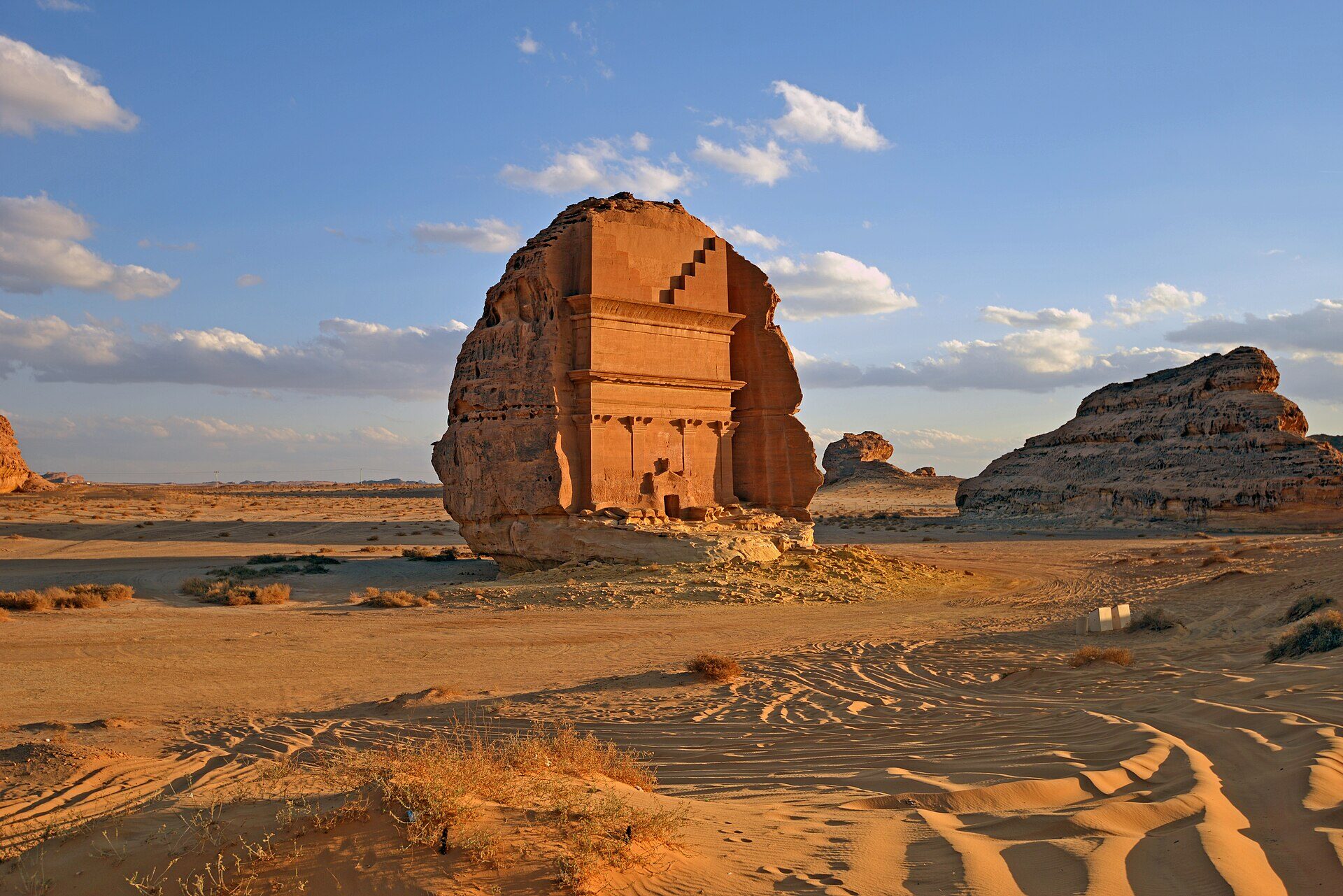
Hegra (Madain Saleh): Saudi Arabia’s First UNESCO World Heritage Site
Hegra — known historically as Madain Saleh and in antiquity as Hegra — is the largest conserved Nabataean site south of Petra and was inscribed as Saudi Arabia’s first UNESCO World Heritage Site in 2008. Located in the AlUla area of Medina Province, it served as the Nabataean Kingdom’s southernmost major city and its second-largest settlement after the capital Petra. Based on dated tomb inscriptions, the city flourished between approximately 1 BCE and 74 CE, functioning as a critical waypoint on the incense trade route connecting southern Arabia to the Mediterranean world.
The Monumental Tombs
Hegra contains 111 monumental rock-cut tombs, of which 94 feature decorated facades carved directly into sandstone outcrops. The Nabataeans carved these tombs from the top down using iron tools, requiring no scaffolding — an engineering technique that still impresses archaeologists and architects today. The architectural style blends Hellenistic and Roman elements (pediments, classical capitals, metope-and-triglyph entablatures) with distinctly Nabataean motifs, creating a fusion found nowhere else in the ancient world.
The tombs are organised into several clusters, each with its own character:
- Qasr al-Farid (“The Lonely Castle”): The most photographed monument in Saudi Arabia. This tomb of Lihyan Ibn Koza stands approximately 22 metres high, carved into a single freestanding rock block in the southeast of the site, dramatically isolated from any other structure. It is the only tomb at Hegra with four columns on its facade (all others have two), and its unfinished lower section reveals the top-down carving technique in action.
- Qasr al-Bint (“Palace of the Maiden”): The largest tomb facade at Hegra at 16 metres high, anchoring a cluster of neighbouring tombs that give this area its name.
- Jabal al-Ahmar (“Red Mountain”): Contains 18 tombs and features the earliest Nabataean inscriptions found at the site, making it essential for understanding the chronology of Hegra’s development.
- Al-Khuraymat: The largest tomb cluster with 53 tombs, representing middle-class Nabataean burial practices and offering a more intimate view of the civilisation beyond its elite monuments.
- Jabal Ithlib: A sacred mountain featuring religious sanctuaries, water channels, and the famous Diwan — a carved banqueting or meeting hall cut into rock, where Nabataean religious and communal gatherings took place.
Beyond the Tombs: The Living City
Recent Franco-Saudi excavations led by archaeologist Laila Nehmé (CNRS/Sorbonne/Archaios) have revealed that Hegra was far more than a necropolis. A residential area of approximately 50 hectares, built primarily of mud bricks, has been mapped alongside the stone monuments. The city had markets, religious precincts, agricultural infrastructure, and the 130-well water system that made sustained habitation possible. Approximately 50 pre-Nabataean inscriptions and cave drawings at the site confirm that the area was occupied long before the Nabataeans arrived, likely by the Lihyanite civilisation that also built Dadan.
Hegra declined after 106 CE when the Romans annexed the Nabataean Kingdom. The new provincial administration preferred Red Sea maritime routes over the overland caravan trade, and the city gradually emptied. Ironically, this abandonment — combined with the dry climate and local traditions discouraging resettlement — has preserved Hegra in an extraordinary state. The tomb facades retain their carved detail with a sharpness that two millennia of Jordanian earthquakes have denied to many monuments at Petra.
Visiting Hegra: Practical Information
All visits to Hegra must be booked in advance through Experience AlUla (experiencealula.com) or at the Winter Park Visitor Centre north of AlUla Old Town. Self-guided or independent access is not permitted.
| Tour Option | Duration | Price | Highlights |
|---|---|---|---|
| Standard Day Tour | ~3 hours | 95 SAR (~$25 USD) | Main tomb clusters, Qasr al-Farid, Diwan |
| Vintage Land Rover Tour | ~3 hours | Premium pricing | Same sites in restored classic vehicles |
| Hegra After Dark | Evening | Premium pricing | Atmospheric lighting of tomb facades |
Tip: Book your time slot a few days in advance, especially during the October–March high season. Free parking is available at Hegra South Gate, which also serves as the tour meeting point. The Visitor Centre offers Saudi coffee, fresh juices, an exhibition space and a gift shop.
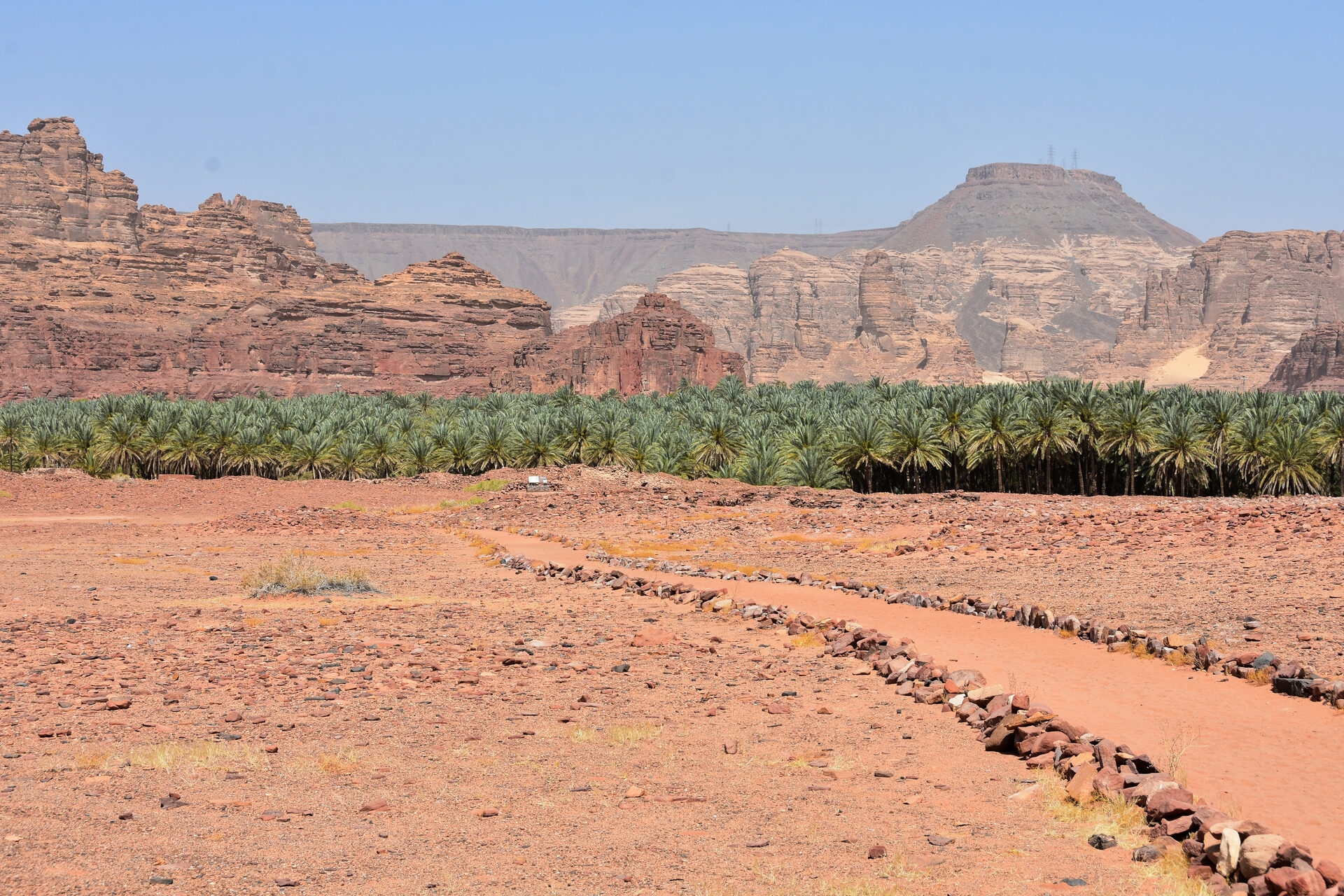
Dadan: The Kingdom Before the Nabataeans
Before the Nabataeans extended their reach into the Hejaz, the AlUla oasis was already the seat of a powerful civilisation. Dadan (also spelled Dedan) served as the capital of the Dadanite Kingdom from approximately the 9th century BCE, and later the Lihyanite Kingdom, which succeeded it around the 5th century BCE. These pre-Nabataean polities grew wealthy from the same incense trade that would later enrich the Nabataeans, controlling a critical stretch of the overland route between the frankincense groves of southern Arabia and the markets of the Mediterranean.
The Dadanites and Lihyanites developed their own distinct culture, script and monumental architecture. While the Nabataeans are more famous internationally — largely due to Petra’s modern profile — the Dadanite and Lihyanite civilisations were arguably more deeply rooted in the AlUla landscape, with a combined reign spanning roughly eight centuries before the Nabataean arrival.
The Lion Tombs
Dadan’s most striking surviving monuments are the Lion Tombs — over 20 rock-cut burial niches carved high into the sandstone cliffs above the ancient city. Two of these tombs are decorated with distinctive relief sculptures of lions flanking the entrance, believed to represent divine guardians protecting elite members of Dadanite society, possibly royalty. The lions are carved in a style unique to Dadan, with no direct parallel in Nabataean, Hellenistic or Mesopotamian funerary art.
Reaching the Lion Tombs requires climbing stairs approximately 50 metres up the cliff face. Visitors are not permitted to enter the tombs or touch the carvings, as ongoing archaeological work continues to reveal new details about Dadanite burial practices and beliefs.
Visiting Dadan
Dadan is best visited through organised tours booked via Experience AlUla. Tours typically combine Dadan with nearby Jabal Ikmah, starting from 60 SAR (~$16 USD) and lasting approximately 2 hours. Self-drive access is not permitted. The combined Dadan–Jabal Ikmah tour provides an excellent chronological counterpoint to Hegra, showing visitors the civilisation that preceded — and in many ways enabled — the Nabataean presence in AlUla.
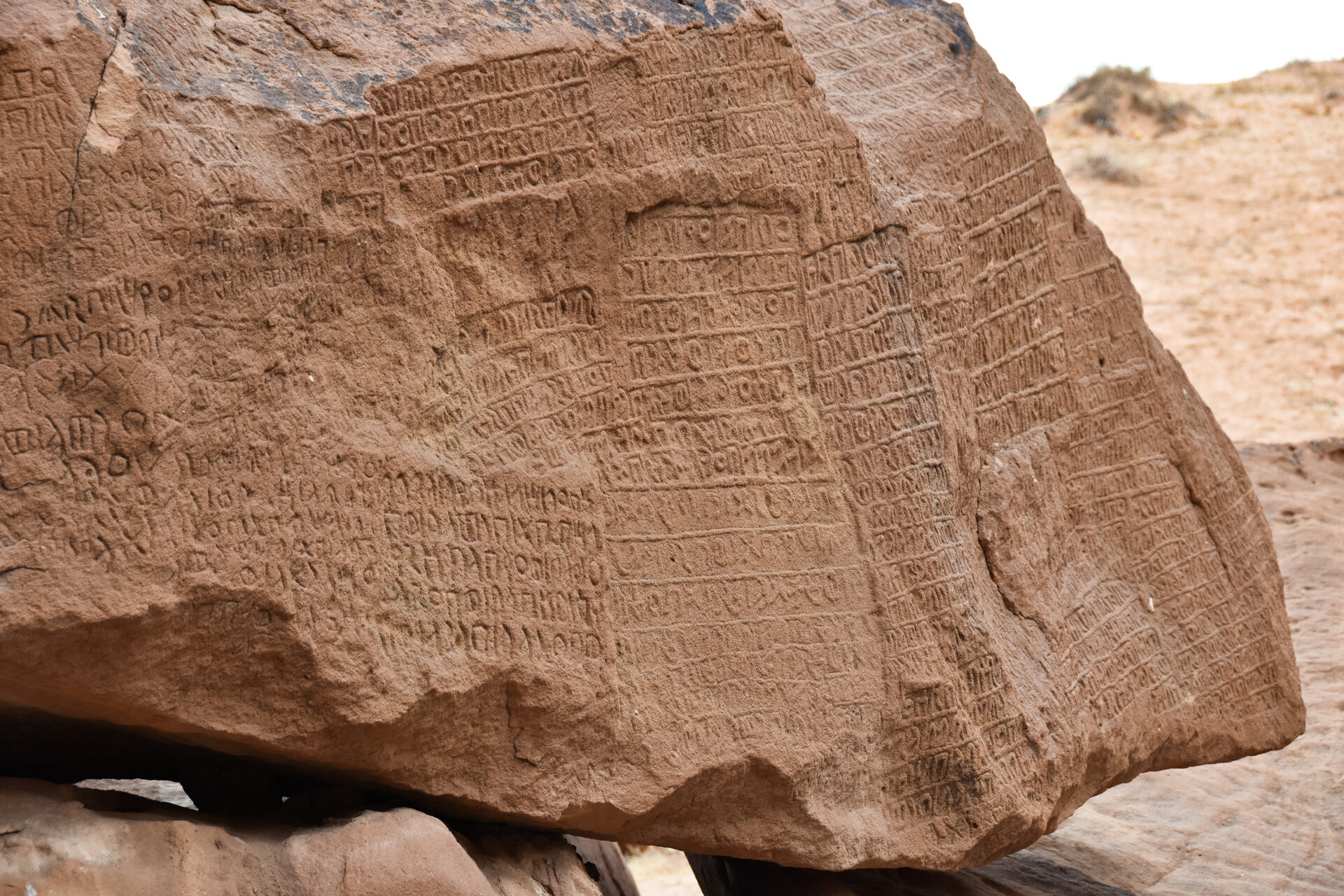
Jabal Ikmah: The Open-Air Library
Located 5 km north of AlUla in a narrow gorge near Dadan, Jabal Ikmah holds the largest concentration of well-preserved Dadanitic and Lihyanite inscriptions anywhere in the world. Hundreds of texts are carved into rock faces and boulders throughout the gorge, dating primarily to the second half of the 1st millennium BCE. In May 2023, Jabal Ikmah was added to UNESCO’s Memory of the World International Register in recognition of its exceptional documentary value.
The inscriptions cover a remarkable range of subjects: religious rituals, royal edicts, blessings, agricultural records, commercial transactions and aspects of daily life. Particularly notable are texts documenting women’s roles in Dadanite society as property owners, agricultural land holders and participants in religious rituals — evidence that challenges simplistic assumptions about gender roles in the ancient Arabian world.
For visitors, Jabal Ikmah offers something different from the monumental grandeur of Hegra and Dadan. Walking through the gorge surrounded by thousands of years of accumulated writing — carved by merchants, priests, farmers and rulers across centuries — creates an intimate connection to the individual lives behind the archaeological record. It is one of the most quietly powerful historical sites in the Kingdom.
The Incense Trade Route: Why These Sites Matter
The Nabataean presence in what is now Saudi Arabia cannot be understood without the incense trade route — the commercial artery that made these desert settlements viable and their rulers wealthy. From approximately the 3rd century BCE to the 2nd century CE, caravans carried frankincense, myrrh, spices, silk and precious metals across thousands of kilometres of desert, connecting the production regions of southern Arabia (modern Yemen and Oman’s Dhofar) to the consumer markets of Rome, Greece and the wider Mediterranean.
The Route Through Saudi Arabia
The primary overland route ran northward from the frankincense-producing kingdoms of Saba, Qataban and Hadhramaut through a chain of oasis settlements:
- Najran — a major junction where routes from Yemen converged
- Yathrib (later Medina) — an agricultural oasis and trading station
- Khaybar — a fortified oasis settlement, now open to visitors as part of the AlUla heritage network
- Dadan / AlUla — capital of the Dadanite/Lihyanite kingdoms, controlling the central section
- Hegra (Madain Saleh) — the Nabataean southern headquarters and caravan waypoint
- Petra — the Nabataean capital and primary transshipment hub
- Gaza — the Mediterranean terminus
Secondary connections linked these settlements to Tayma in the northeast and to Red Sea ports including Leuke Kome (identified with Aynuna), a Nabataean-controlled harbour that also functioned as a customs and tax station.
How the Nabataeans Controlled the Trade
The Nabataeans’ genius lay not in producing the goods themselves — frankincense and myrrh came from South Arabian kingdoms — but in controlling the distribution corridor. They taxed caravans at key waypoints, provided water and provisions through their hydraulic infrastructure, maintained security along the routes, and operated port facilities connecting overland and maritime commerce. Their position at the northern end of the route, where goods transitioned from Arabian camel caravans to Mediterranean shipping, gave them extraordinary leverage over prices and access.
A single pound of frankincense that cost a few coins at the point of harvest could sell for several gold pieces by the time it reached a Roman temple. The Nabataeans captured a significant share of that markup at every stage of the journey through their territory — a business model that sustained their kingdom for three centuries.
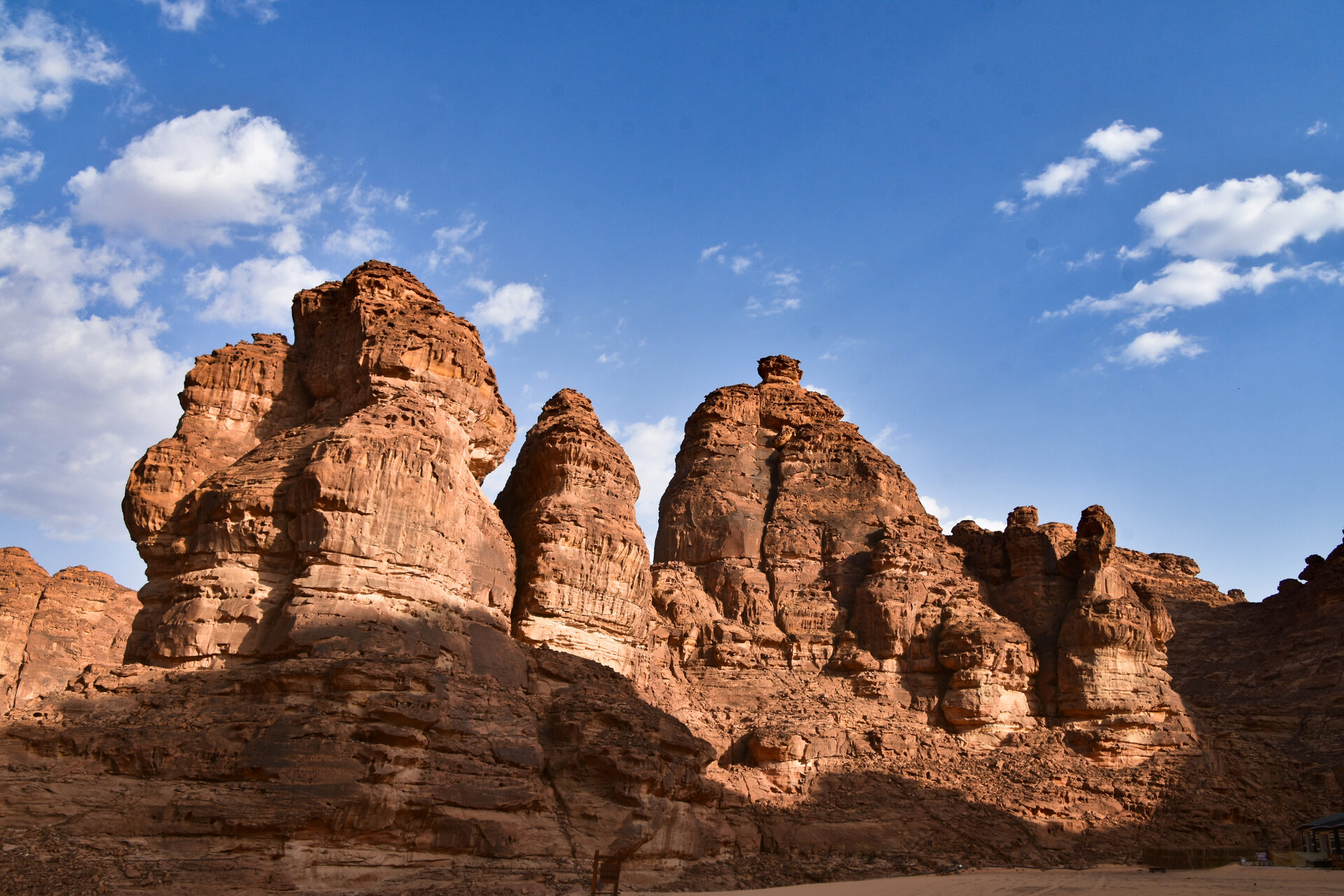
Other Ancient Sites in the Region
Tayma: Crossroads of Empires
Located 220 km southeast of Tabuk city in Tabuk Province, Tayma is one of the oldest continuously occupied settlements in the Arabian Peninsula, with evidence of habitation stretching back to at least the mid-3rd millennium BCE. The site’s most famous historical episode involves Nabonidus, the last Babylonian king (556–539 BCE), who relocated to Tayma for 10 years — a royal stele bearing his iconography was discovered at the site.
Tayma features a massive 14 km-long city wall dating from the early 2nd millennium BCE, along with Aramaic inscriptions and Mesopotamian artefacts that testify to the oasis’s role as a crossroads between South Arabian, Levantine and Mesopotamian civilisations. Saudi-German archaeological excavations (2004–2015 and ongoing) have produced cuneiform texts and extensive finds that continue to reshape understanding of Bronze and Iron Age Arabia.
Tayma is now open to visitors as part of the broader AlUla heritage network, offering a deeper chronological perspective that extends well beyond the Nabataean period.
Khaybar
An ancient oasis settlement with thousands of years of continuous habitation, Khaybar is now open to visitors through the Royal Commission for AlUla. The site provides context for understanding the network of oasis settlements that made long-distance trade across the Arabian interior possible.
AlUla Old Town
The AlUla Old Town — a labyrinth of over 900 mudbrick houses, 400 shops and five town squares — dates primarily to the Islamic period but sits directly on top of earlier settlement layers. Walking through its narrow lanes, visitors can see how the same geography that attracted the Dadanites and Nabataeans continued to sustain human settlement for millennia.
Mughayir Shuayb (Al-Bad)
In the far northwest near Tabuk, the oasis of al-Bad contains Nabataean monumental rock-cut tombs that are less visited than Hegra but architecturally significant. These tombs confirm the extent of Nabataean influence across northwestern Saudi Arabia and offer a quieter, less crowded alternative for visitors interested in Nabataean funerary architecture.
Nabataean Water Engineering: Masters of the Desert
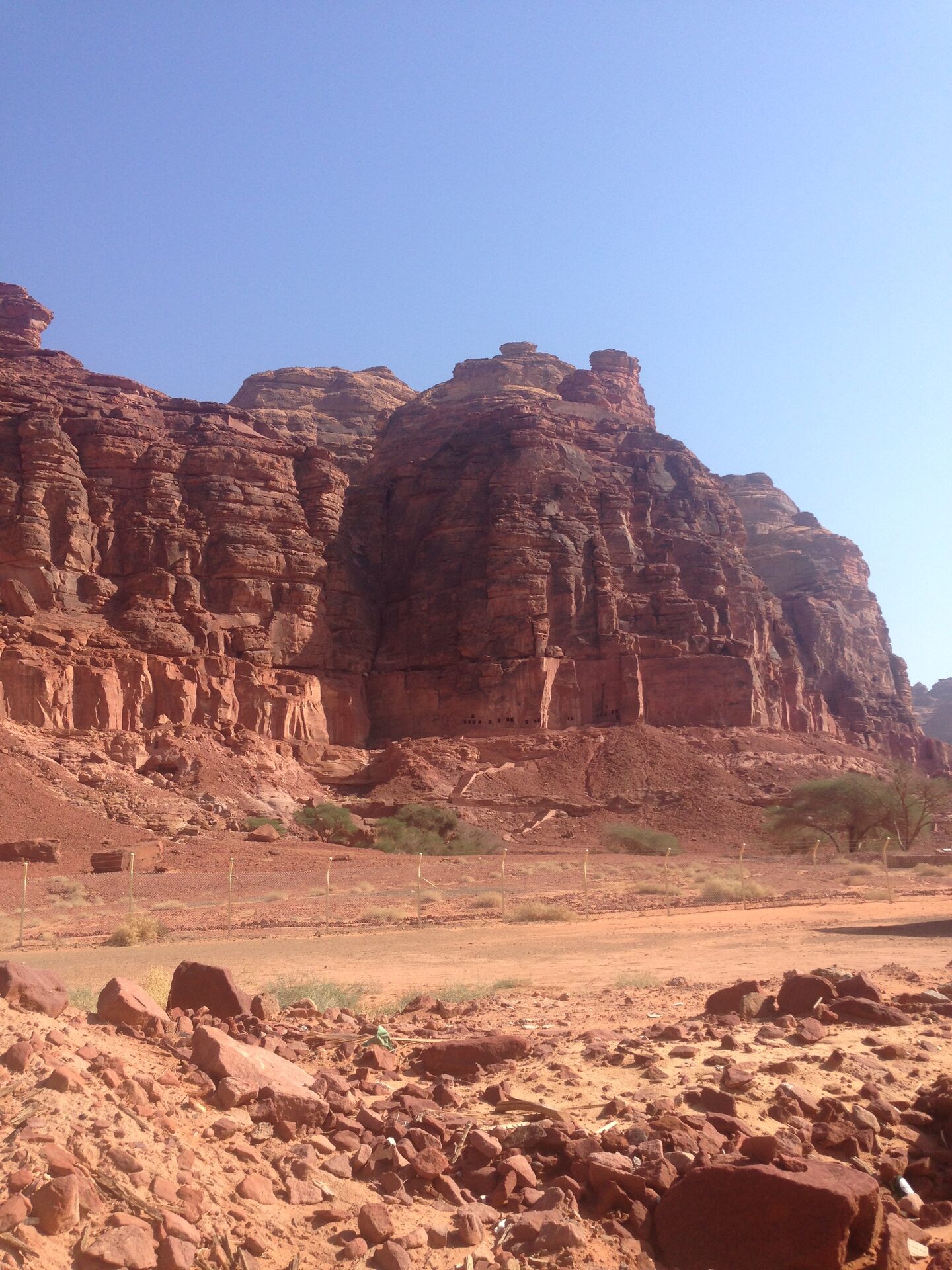
No aspect of Nabataean civilisation is more impressive than their water management. In a region receiving less than 100 mm of annual rainfall, the Nabataeans built infrastructure that sustained cities, agriculture and commercial traffic for centuries.
Their techniques included:
- Hidden channel-and-dam systems carved into mountainsides, routing water several kilometres to reservoirs and cisterns below
- Waterproof cisterns carved deep into sandstone and coated with gypsum or lime plaster, connected to feeder channels that captured hillside runoff
- Ceramic pipelines — at Petra, the Wadi Mataha pipeline stretched over 5 miles, using tens of thousands of handmade terracotta pipe sections socketed together and cemented at the joints, maintaining a slope of approximately 2 degrees for optimal flow
- Flood bypass tunnels that directed violent winter rains to cisterns while protecting residential areas from flash floods
- Check dams and terraces that slowed slope runoff, trapped topsoil, and enabled cultivation of date palms, vineyards, olive groves and gardens in the desert
At Hegra, the 130-well system allowed the settlement to function simultaneously as an agricultural community and a caravan resupply point. Visitors today can still see remnants of this infrastructure alongside the more famous tomb facades — a reminder that Nabataean engineering was as much about sustaining the living as honouring the dead.
The AlUla Transformation: Visiting Today
The Royal Commission for AlUla (RCU), established by royal decree, is overseeing a major development programme that aims to transform the 22,561 km² AlUla region into one of the world’s premier cultural tourism destinations while preserving its heritage. Over 30,000 archaeological sites have been identified in the AlUla area, with eight currently open to visitors: Hegra, Dadan, Jabal Ikmah, AlUla Old Town, Qurh (an early Islamic city), Tayma, Khaybar and the Maraya concert venue.
AlUla was crowned World’s Leading Cultural Tourism Project 2025 at the World Travel Awards, and the RCU targets 380,000 visitors in 2026, up from 286,000 in 2024.
Where to Stay
Accommodation in AlUla ranges from desert campsites to world-class luxury. Current and upcoming options include:
- Banyan Tree AlUla: Opened October 2022 in Ashar Valley, currently expanding from 35 to 82 high-end villas. Managed by Accor, with luxury spa and gourmet dining.
- Habitas AlUla: Operational desert-luxe experience blending sustainability with comfort.
- Aman AlUla: Multi-phase development with a main desert resort and tented wellness retreat.
- Budget options include Airstream trailers and various campsites at more accessible price points.
For a broader overview of accommodation across the Kingdom, see our Saudi Arabia Hotels Guide.
Getting to AlUla
By air: AlUla International Airport (ULH) receives daily flights from Riyadh (approximately 1 hour 55 minutes) and Jeddah, with international services from Dubai, Doha and Amman. Airport capacity is being expanded from 400,000 to 600,000 passengers per year.
By road: AlUla is approximately 3 hours’ drive from both Medina and Tabuk, making it feasible as a road trip from either city.
All international visitors require a visa. The Saudi Arabia tourist e-visa is available online and typically processed within minutes.
How Long to Stay
A minimum of 3 nights is recommended to cover the main heritage sites, cultural activities and desert experiences comfortably. Visitors who want to include Tayma, Khaybar and wider exploration should budget 5–7 days.
Packing tip: Bring lightweight breathable clothing for daytime, warm layers for cold desert evenings (especially October–March when nights drop to 5–8°C), comfortable walking shoes for rocky terrain, and full sun protection (hat, sunglasses, sunscreen).
Suggested Itinerary: Three Days of Ancient History
Day 1: Hegra
Dedicate your first full day to Hegra. Book the standard day tour (95 SAR, ~3 hours) to see the main tomb clusters including Qasr al-Farid, Qasr al-Bint and the Diwan at Jabal Ithlib. If available, add the Hegra After Dark evening tour for a dramatically different perspective on the tombs under atmospheric lighting. Spend the afternoon at the Visitor Centre exhibition.
Day 2: Dadan, Jabal Ikmah and AlUla Old Town
Take the combined Dadan–Jabal Ikmah tour (60 SAR, ~2 hours) in the morning to explore the pre-Nabataean heritage. Climb to the Lion Tombs at Dadan, then walk through the inscribed gorge at Jabal Ikmah. In the afternoon, explore AlUla Old Town and the nearby Elephant Rock formation — particularly spectacular at sunset.
Day 3: Desert Landscape and Deeper Exploration
Use your final day for the wider AlUla landscape. Options include a 4×4 desert safari through the sandstone formations, a visit to the Maraya mirrored concert hall, or a day trip to Khaybar. For those with additional time, Tayma is reachable as a longer day trip from AlUla.
The Nabataean Legacy: From Petra to AlUla
Visitors who have seen Petra in Jordan will find Hegra a fascinating counterpoint. While Petra is larger and more monumental, Hegra is better preserved — many tomb facades retain carved details that earthquakes and weathering have erased at Petra. The two sites together tell the full story of the Nabataean Kingdom: Petra as the wealthy imperial capital, Hegra as the southern commercial frontier where trade goods from Arabia were gathered and forwarded north.
But the AlUla region offers something Petra cannot: the deeper chronological context of Dadan, Jabal Ikmah and Tayma, which show that Nabataean civilisation in this landscape was built on foundations laid by the Dadanite and Lihyanite kingdoms centuries earlier. The incense route did not begin with the Nabataeans — they inherited, expanded and ultimately lost control of a commercial system that predated them by half a millennium.
Today, that layered history is being carefully opened to visitors through the Royal Commission for AlUla’s development programme. For travellers interested in ancient civilisations, archaeological landscapes and the deep roots of Arabian culture, there are few destinations anywhere in the world that can match what this corner of Saudi Arabia now offers.
Explore More Saudi Arabia Travel Guides
- AlUla Travel Guide 2026 — The complete guide to visiting AlUla, from heritage sites to desert adventures
- Elephant Rock, AlUla — How to visit AlUla’s most famous natural landmark
- AlUla Old Town — Exploring the labyrinthine mudbrick heritage quarter
- Tabuk Travel Guide 2026 — Gateway to NEOM, AlUla and Saudi Arabia’s northwest
- Saudi Arabia Travel Guide 2026 — The complete guide to visiting the Kingdom
- Saudi Arabia Visa Guide — Every visa type explained