
Riyadh is a city that tells two stories at once. In the mud-brick alleys of Ad Dirah, you can touch the walls where modern Saudi Arabia was born in a dawn raid in 1902. Twenty minutes north, the 302-metre arch of Kingdom Centre pierces the skyline of one of the Middle East’s fastest-growing capitals. This self-guided walking tour connects both worlds across a single day, tracing the arc of Saudi history from the ruins of the First Saudi State at Diriyah to the glass-and-steel towers of Olaya Street. Whether you are building a wider Riyadh travel itinerary or have one day to spend, this route covers the essential landmarks on foot and by metro — no tour guide required.
Best Time to Visit: November through February (highs 20–25°C / 68–77°F)
Getting There: Fly into King Khalid International Airport (RUH); Riyadh Metro Blue Line 1 connects all stops on this route
Visa Required: Yes — tourist e-visa available online
Budget: SAR 100–200 / $27–55 USD per day (most sites are free)
Must-See: Al Masmak Fortress, At-Turaif UNESCO Site, Kingdom Centre Sky Bridge
Avoid: Walking outdoors between May and September — summer temperatures exceed 45°C (113°F)
How This Tour Works
This route is designed as a full-day itinerary covering six major stops. The distances between clusters are too far to walk continuously — Riyadh is a sprawling city — so you will use the Riyadh Metro to bridge the gaps, then walk within each cluster. Each section below lists the nearest metro station and estimated walking time between sites.
The tour follows a roughly chronological sequence through Saudi history:
- Morning (8:00–11:30 AM): Diriyah — At-Turaif UNESCO Site and Bujairi Terrace (birthplace of the Saudi state, 18th century)
- Midday (12:00–2:30 PM): Ad Dirah — Al Masmak Fortress, Deera Square, and Souq Al Zal (1902 founding of modern Riyadh)
- Afternoon (3:00–5:00 PM): Al-Murabba — National Museum and King Abdulaziz Historical Center (20th-century nation-building)
- Evening (5:30–7:30 PM): Olaya — Kingdom Centre Sky Bridge (21st-century Riyadh from 300 metres up)
- Diriyah Gallery: History of the ruling Al Saud family and the three Saudi states
- Arabian Horse Gallery: The role of the Arabian horse in Saudi identity and warfare
- Military Museum: Fortification strategies and military history of the Najd campaigns
- Traditional Architecture Gallery: Desert building techniques — how Najdi builders used sun-dried mud brick, palm-trunk beams, and limestone to create structures that stayed cool in 50°C summers
- Oud and bukhoor: Traditional incense and perfume oils — the souq is one of the best places in the Kingdom to buy oud at reasonable prices
- Dallahs: Traditional Arabic coffee pots in brass and copper, from decorative antiques to functional pieces
- Handwoven carpets: Saudi, Iranian, Kashmiri, and Afghan rugs
- Antique coins and collectibles: Old Saudi riyals, Ottoman-era items, vintage utensils
- Bishts and traditional clothing: The bisht (men’s ceremonial cloak) and abayas
- November–February: Best months. Average highs range from 20°C (68°F) in January to 25°C (77°F) in November. Morning walking is comfortable, and evenings are pleasant.
- March and October: Shoulder months. Daytime highs reach 30–35°C (86–95°F). Start early, rest during midday, resume in late afternoon.
- April–September: Avoid for outdoor walking. Summer temperatures routinely exceed 45°C (113°F) and have reached 50°C (122°F). Locals stay indoors during the day.
- Women: Loose clothing covering shoulders, arms, and knees. An abaya is not required (this was clarified by the Crown Prince in 2018), but keep a lightweight scarf for religious sites. Breathable fabrics are essential.
- Men: Long trousers and a shirt with sleeves. Shorts and flip-flops are not appropriate in public areas, malls, or restaurants.
- Edge of the World (Jebel Fihrayn): A dramatic escarpment 90 minutes northwest of Riyadh with panoramic views across an ancient seabed. Best done as a guided 4×4 excursion.
- Ushaiger Heritage Village: A restored mud-brick village 200 km northwest of Riyadh, less developed and more atmospheric than Diriyah.
- Riyadh Season events: If visiting between October and March, Boulevard World and other seasonal entertainment zones offer evening options that complement a daytime heritage tour.
- Riyadh Travel Guide 2026 — The complete guide to Saudi Arabia’s capital city
- Riyadh National Museum Guide — Detailed gallery-by-gallery walkthrough of the Kingdom’s premier museum
- Kingdom Centre Riyadh — Shopping, dining, and the iconic Sky Bridge tower
- Riyadh Sky Bridge — Tickets, best times to visit, and what you can see from 300 metres
- Riyadh Shopping Guide — From traditional souqs to luxury malls
- Day Trips from Riyadh — Edge of the World, Ushaiger, and beyond
- Saudi Arabia Travel Guide 2026 — The complete guide to visiting the Kingdom
- Saudi Arabia Visa Guide — Every visa type explained
Tip: Start early. Even in winter, midday sun can be intense. The morning hours at Diriyah are the most comfortable for outdoor walking, and the evening Sky Bridge visit gives you sunset views over the city.
Stop 1: At-Turaif District, Diriyah — Where It All Began
Metro: Diriyah station (Blue Line 1, northern terminus)
Time needed: 2–2.5 hours
Cost: Free before 5 PM / SAR 50 after 5 PM (redeemable at Bujairi Terrace restaurants)
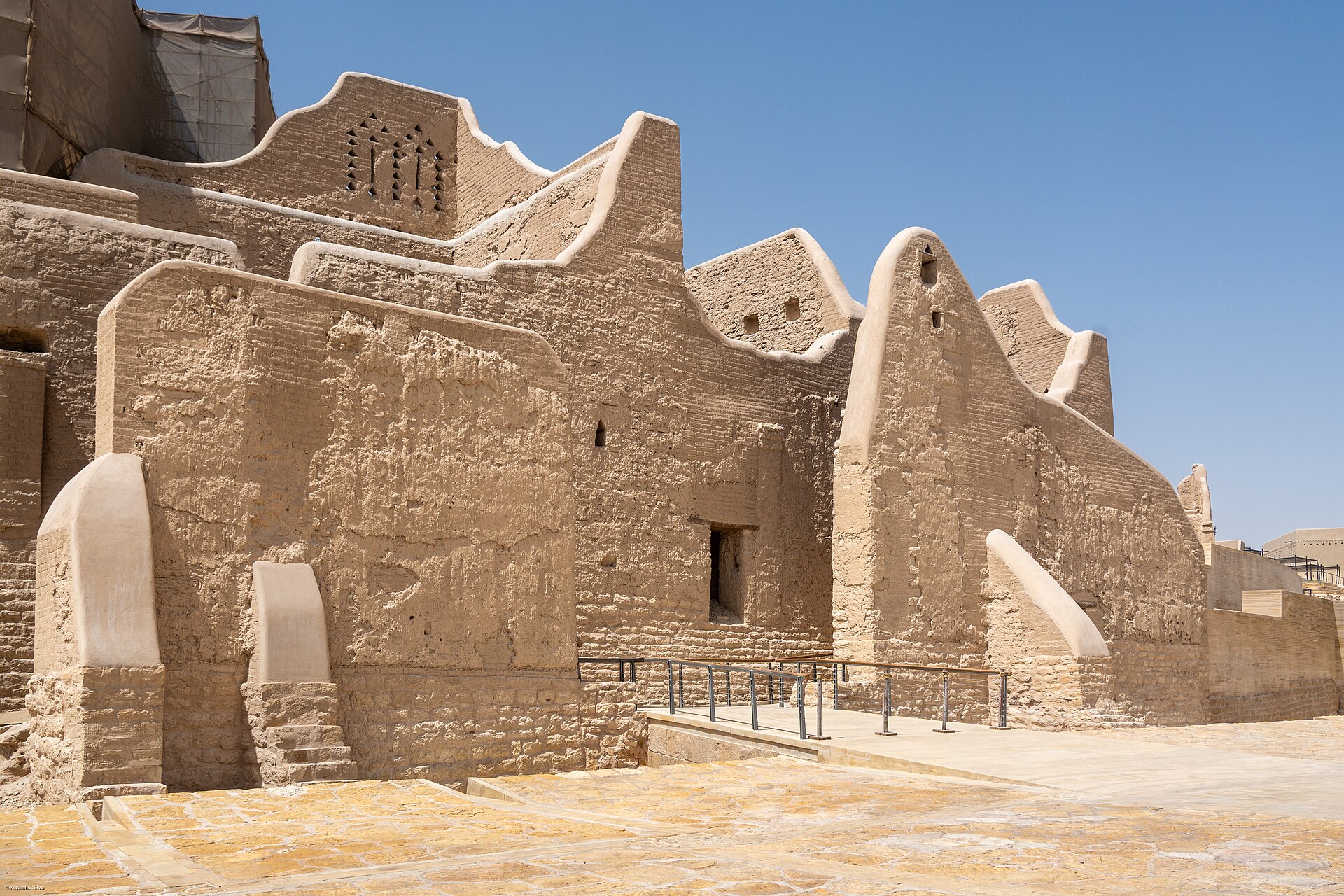
The story of Saudi Arabia begins here. At-Turaif was the seat of the First Saudi State from 1727 to 1818, when an Ottoman-Egyptian army destroyed the district. Today it is a UNESCO World Heritage Site (inscribed 2010) and the most important heritage destination in Riyadh. The restored mud-brick palaces, mosques, and fortifications showcase traditional Najdi architecture — thick earthen walls, shaded courtyards, and geometric ventilation openings that provided natural cooling centuries before air conditioning.
What to See at At-Turaif
A self-guided audio tour is available on mobile devices. The key galleries inside the restored complex include:
Walk slowly through the narrow alleys. The restored sections give you a vivid sense of the scale of this 18th-century capital — it was not a small village but a substantial fortified town controlling the trade routes of central Arabia.
Bujairi Terrace — Breakfast with a View
Directly across Wadi Hanifah from At-Turaif sits Bujairi Terrace, an upscale dining and heritage complex built in the same Najdi architectural style. The terrace overlooks the At-Turaif ruins and is the ideal place to start your day with breakfast or Saudi coffee. Restaurants range from traditional Saudi cuisine to international options. The heritage park surrounding it is open 24 hours and free to enter. If you visit At-Turaif in the evening (SAR 50 entry), the fee is redeemable as credit at Bujairi Terrace restaurants — making it essentially free.
Practical note: Bujairi Terrace hours are Saturday–Tuesday 9 AM to midnight, Wednesday–Friday 9 AM to 1 AM. Advance restaurant bookings are recommended on weekends. Valet parking is SAR 195, but you will not need it if arriving by metro.
Stop 2: Al Masmak Fortress — The 1902 Raid That Built a Kingdom
Metro: Qasr Al Hokm station (Blue Line 1)
Time needed: 45 minutes–1 hour
Cost: Free
Take the Blue Line south from Diriyah station to Qasr Al Hokm — roughly 20 minutes. From the station, Al Masmak Fortress is a short walk through the Ad Dirah district.
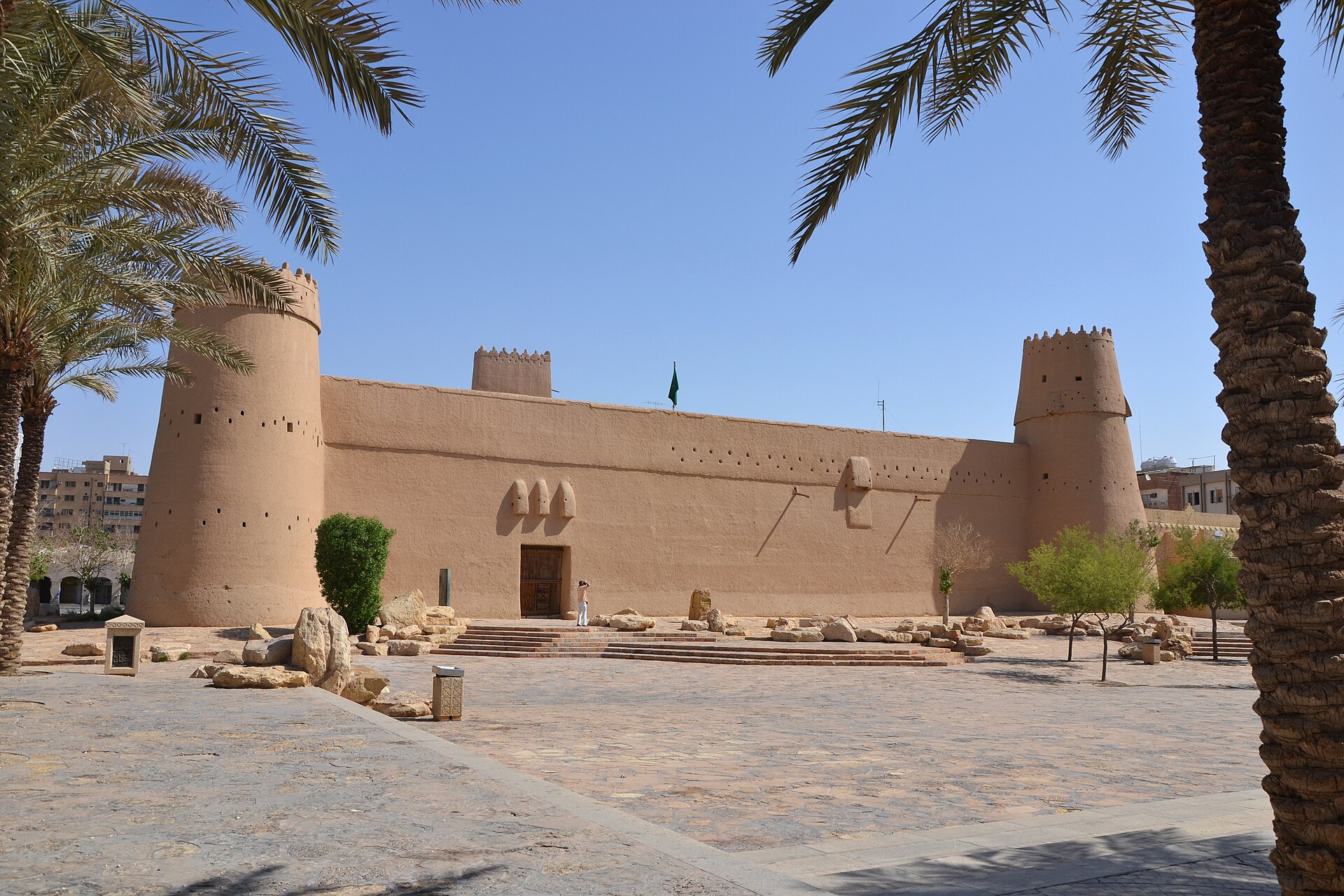
Built in 1865, Al Masmak is the most historically significant building in Riyadh. On 15 January 1902, the 21-year-old Abdulaziz Ibn Saud led approximately 40 men in a surprise dawn raid on the fortress, which was held by the rival Rashidi dynasty. The raiders scaled the walls, stormed the gate, and killed the Rashidi governor. This single act launched a 30-year campaign that ultimately unified most of the Arabian Peninsula into the Kingdom of Saudi Arabia in 1932.
Look for the embedded spearhead in the original palm-log main gate. It was thrown by Ibn Saud’s cousin, Abdullah bin Jaluwi, at the fleeing Rashidi governor during the battle. The spear missed its target but lodged in the wood — and it remains there today, 124 years later. The fortress underwent major restoration in 2025 and reopened in mid-2025 with updated museum exhibits covering the 1902 raid, the unification wars, and the founding of the Kingdom.
Inside the Fortress
The interior features thick mud-brick walls, four watchtowers, a central courtyard, a small mosque, a well, and a diwan (audience hall). Museum displays include period maps, photographs, and artifacts from the unification era. Allow 45 minutes to an hour. The fortress is open daily from 8 AM to 9 PM, and admission is free.
Stop 3: Deera Square and Souq Al Zal — Old Riyadh on Foot
Walking distance from Al Masmak: 5–10 minutes
Time needed: 1–1.5 hours
Cost: Free (plus whatever you spend in the souq)
From Al Masmak, walk east into the surrounding Ad Dirah district. This is the oldest continuously inhabited part of Riyadh, and the streets between the fortress and the souq are the closest you will get to the feel of pre-oil Riyadh.
Deera Square
Deera Square (also known historically as Al Safat Square) is the open public space adjacent to Al Masmak. It has been renovated into a pedestrian-friendly area surrounded by government buildings. The square comes alive in the evenings with food vendors and foot traffic. It is fully accessible to tourists and makes a good orientation point for the old quarter.
Souq Al Zal
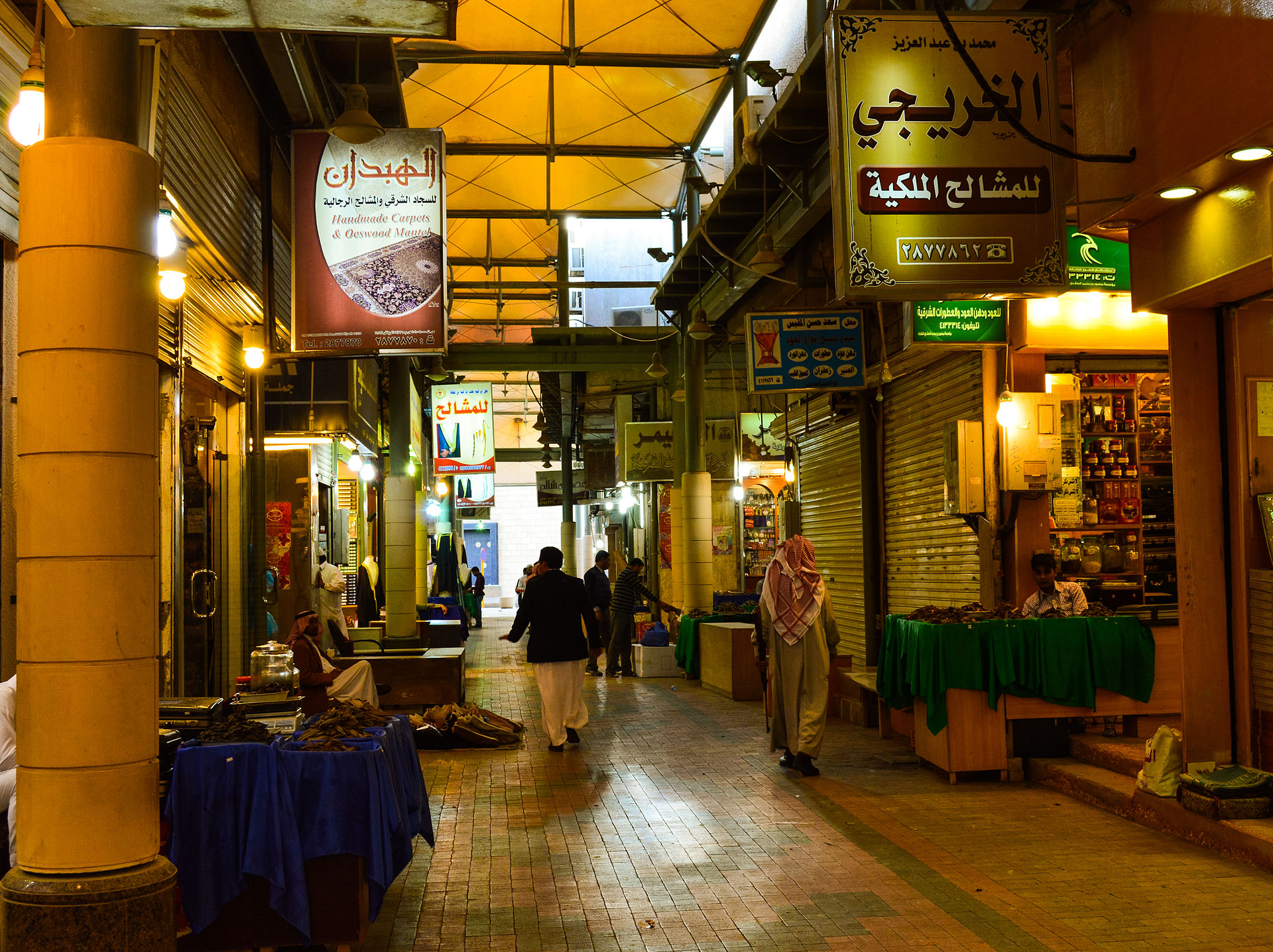
A five-minute walk from Al Masmak along Al Thumairi Street brings you to Souq Al Zal, Riyadh’s oldest and largest antique market, established around 1901. This is the essential Riyadh shopping experience for anyone interested in traditional Saudi crafts and goods.
What to look for:
The souq is open daily from 9 AM to noon and 4 PM to 10 PM, closing during prayer times. Bargaining is expected — start at roughly half the asking price and work from there. The evening hours (after 4 PM) are livelier and cooler.
Tip: Combine Al Masmak, Deera Square, and Souq Al Zal into a single walking loop. They are all within a 10-minute walk of each other and form the historical heart of old Riyadh. This is the most walkable cluster on the entire tour.
Stop 4: National Museum of Saudi Arabia — Eight Galleries, 3,700 Artifacts
Metro: National Museum station (Blue Line 1 / Green Line 5)
Time needed: 2–3 hours
Cost: Free (reserve tickets at engage.moc.gov.sa)
Take the metro one stop north from Qasr Al Hokm to National Museum station, or walk the 1.5 km if the weather is comfortable. The National Museum of Saudi Arabia sits at the heart of the King Abdulaziz Historical Center, a large cultural campus in the Al-Murabba district built around King Abdulaziz’s former residence and workplace (1938–1953).
The Eight Galleries
The museum tells the complete story of the Arabian Peninsula across eight chronological galleries on two floors:
| Gallery | Focus | Highlights |
|---|---|---|
| Man and the Universe | Geology and prehistory | Wabar meteorite from the Rub’ al Khali; Platybelodon skeleton; Ichthyosaur fossil |
| Arabian Kingdoms | Pre-Islamic civilizations | Dilmun, Thamud, and Lihyan artifacts; large Diriyah model under a glass floor |
| The Pre-Islamic Era | Life in Arabia before Islam | Trade route maps, Nabataean inscriptions |
| Prophet Muhammad’s Mission | The emergence of Islam | Early Islamic manuscripts and calligraphy |
| Islam and the Arabian Peninsula | Spread of Islam | Thamudic, Aramaic, and Islamic stone inscriptions |
| First and Second Saudi States | Diriyah era through reconstruction | Connects directly to what you saw at At-Turaif |
| The Unification | King Abdulaziz’s campaigns | Weapons, maps, and documents from the 1902–1932 period |
| Hajj and the Two Holy Mosques | Pilgrimage and sacred sites | Kiswah textiles, Makkah and Madinah architectural models |
Allow at least two hours. The museum covers over 3,700 artifacts and is the best single introduction to Saudi history anywhere in the Kingdom. If you only visit one museum during your Saudi Arabia trip, make it this one.
King Abdulaziz Historical Center Grounds
After the museum, walk the surrounding campus. The Al-Murabba Palace is the restored residence where King Abdulaziz lived and governed from 1938 until his death in 1953. The campus also includes the King Abdulaziz Public Library, several mosques, the Red Palace, the historic Riyadh Water Tower, and six landscaped parks and gardens. The palm-lined Al-Yamamah Park is a pleasant rest stop before your next metro ride.
Opening hours for the museum are Monday–Wednesday and Saturday 9 AM to 7 PM, Thursday 9 AM to 10 PM, and Friday 2 PM to 10 PM. Closed Sundays.
Stop 5: Kingdom Centre Sky Bridge — Riyadh from 300 Metres
Metro: Olaya area stations (Blue Line 1)
Time needed: 1–1.5 hours
Cost: SAR 69–138 (check current pricing at the ground-floor ticket counter)
The final stop brings the tour full circle — from the mud-brick birthplace of the Saudi state to the steel-and-glass symbol of its 21st-century ambitions. Kingdom Centre is Riyadh’s most recognisable building: a 302-metre, 99-floor tower with a distinctive inverted parabolic arch at its crown. The Sky Bridge observation deck sits inside that arch, a 65-metre-wide enclosed glass walkway offering 360-degree views across the entire city.
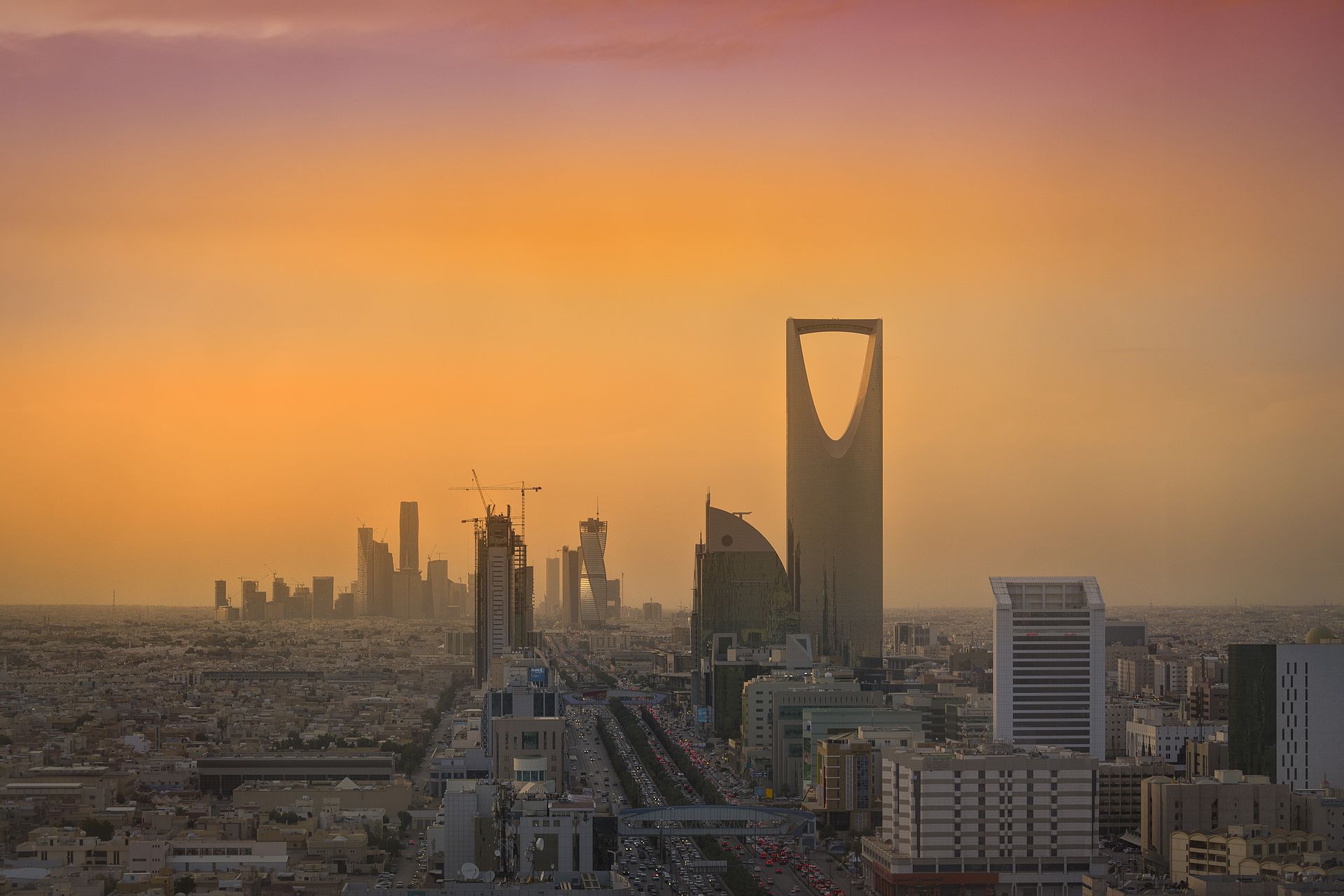
Time your visit for 30–45 minutes before sunset. You will see the city transition from desert-gold daylight to the vast electric grid of illuminated streets and towers that stretches to every horizon. On clear days, you can pick out the mud-coloured sprawl of Diriyah to the northwest — where your morning started — and trace the line of Olaya Street running arrow-straight through the financial district below.
The Sky Bridge is open from 10 AM to 11 PM. The ground floors of Kingdom Centre house a luxury shopping mall if you want to browse after your visit.
Getting Around: Riyadh Metro
The Riyadh Metro became fully operational in January 2025, and it transforms this walking tour from an ambitious plan into a practical one. All six lines are running, covering 176 km with 85 stations — a Guinness World Record as the world’s longest fully automated driverless metro system.
For this tour, you will primarily use Blue Line 1, which connects Diriyah station (north) through Qasr Al Hokm and National Museum stations to the Olaya corridor (south). The entire line takes roughly 45 minutes end to end.
Metro Fares and Payment
| Ticket Type | Standard Class | First Class |
|---|---|---|
| Single journey (2-hour pass) | SAR 4 (~$1.10) | SAR 10 (~$2.70) |
| 3-day pass | SAR 20 (~$5.30) | SAR 50 (~$13.30) |
| 7-day pass | SAR 40 (~$10.70) | SAR 100 (~$26.70) |
Payment options include the Darb app (QR code), Darb contactless card (SAR 10, reusable for 5 years), Apple Pay, Mada Pay, or credit card tap at turnstiles. Students, children under 18, and adults over 60 get 50% off. Children under 6 ride free with an accompanying adult.
Tip: Download the Darb app before arriving in Saudi Arabia. It handles metro ticketing and also provides real-time train schedules and station maps in English and Arabic.
Practical Information
Best Time of Year
Riyadh has a hot desert climate. The walking tour is only practical during the cooler months:
Even in winter, carry water at all times, wear sunscreen, and bring a hat. The desert sun is more intense than it feels, especially at altitude. All museums, malls, and indoor spaces are heavily air-conditioned — carry a light layer for temperature transitions.
What to Wear
Saudi Arabia has relaxed its dress requirements significantly under Vision 2030, but modest clothing is still expected in public:
Visa
Most nationalities can obtain a Saudi tourist e-visa online before arrival. The process takes minutes and the visa is valid for one year with multiple entries. Citizens of GCC countries do not need a visa. Check the full visa guide for country-specific requirements and fees.
Safety
Riyadh is exceptionally safe for tourists. Violent crime against visitors is extremely rare, and the city centre areas covered by this tour are well-patrolled and well-lit. Standard precautions apply: keep copies of your passport and visa, do not photograph government or military buildings, and ask permission before photographing people. In the souq, keep your phone and wallet secure in crowded areas.
Budget Summary
| Item | Cost (SAR) | Cost (USD) |
|---|---|---|
| Metro day pass (Standard) | SAR 20 | ~$5.50 |
| At-Turaif entry (before 5 PM) | Free | Free |
| Al Masmak Fortress | Free | Free |
| National Museum | Free | Free |
| Kingdom Centre Sky Bridge | SAR 69–138 | ~$18–37 |
| Lunch (mid-range restaurant) | SAR 40–80 | ~$11–21 |
| Water and snacks | SAR 10–20 | ~$3–5 |
| Total estimate | SAR 140–260 | ~$37–70 |
Extending Your Stay
If you have more than one day in Riyadh, this walking tour pairs well with several day trips from the capital:
For those staying longer, consider building a broader Saudi itinerary. The Kingdom’s other major destinations — Jeddah’s historic Al-Balad district, the Nabataean tombs of AlUla, and the mountain villages of Abha and Asir — are all accessible by domestic flights from Riyadh, typically under two hours.
Finding the right place to stay matters too — check the Saudi Arabia hotels guide for recommendations near the stops on this tour. Staying in the Olaya district puts you within walking distance of Kingdom Centre and close to metro stations serving the entire route.