
Saudi Arabia is undergoing the most dramatic transformation in its modern history, and behind nearly every change visitors encounter — from the newly opened tourist visa to mixed-gender concerts in Riyadh — stands the House of Saud. Understanding the royal family isn’t just academic curiosity; it’s practical context that makes your trip richer and more respectful. Whether you’re exploring the mud-brick ruins of Saudi Arabia’s first capital at Diriyah, watching the Ardha sword dance at a national festival, or navigating the prayer-time rhythm of daily life, the royal family’s legacy is woven into everything you’ll experience. This guide gives you the essential background every visitor should know.
Current Ruler: King Salman bin Abdulaziz Al Saud (since January 2015)
De Facto Leader: Crown Prince Mohammed bin Salman (MBS), also Prime Minister
Dynasty Founded: 1744 in Diriyah, central Arabia
Visa Required: Yes — tourist e-visa for 49+ nationalities
Must-See Royal Sites: Diriyah At-Turaif (UNESCO), Masmak Fortress, National Museum
Avoid: Publicly criticising the royal family or government — this is illegal and can result in deportation
The House of Saud: A Brief History
The Al Saud family has shaped the Arabian Peninsula for nearly three centuries. Their story is told through three distinct Saudi states — and every major heritage site you’ll visit as a tourist connects to one of these chapters.
The First Saudi State (1744–1818): The Diriyah Era
It began with a handshake that reshaped the Middle East. In 1744, Emir Muhammad bin Saud of Diriyah formed an alliance with the Islamic scholar Muhammad ibn Abd al-Wahhab. The political leader provided military protection; the scholar provided religious legitimacy. This foundational pact — sometimes called the Diriyah Pact — became the template for Saudi governance that persists today.
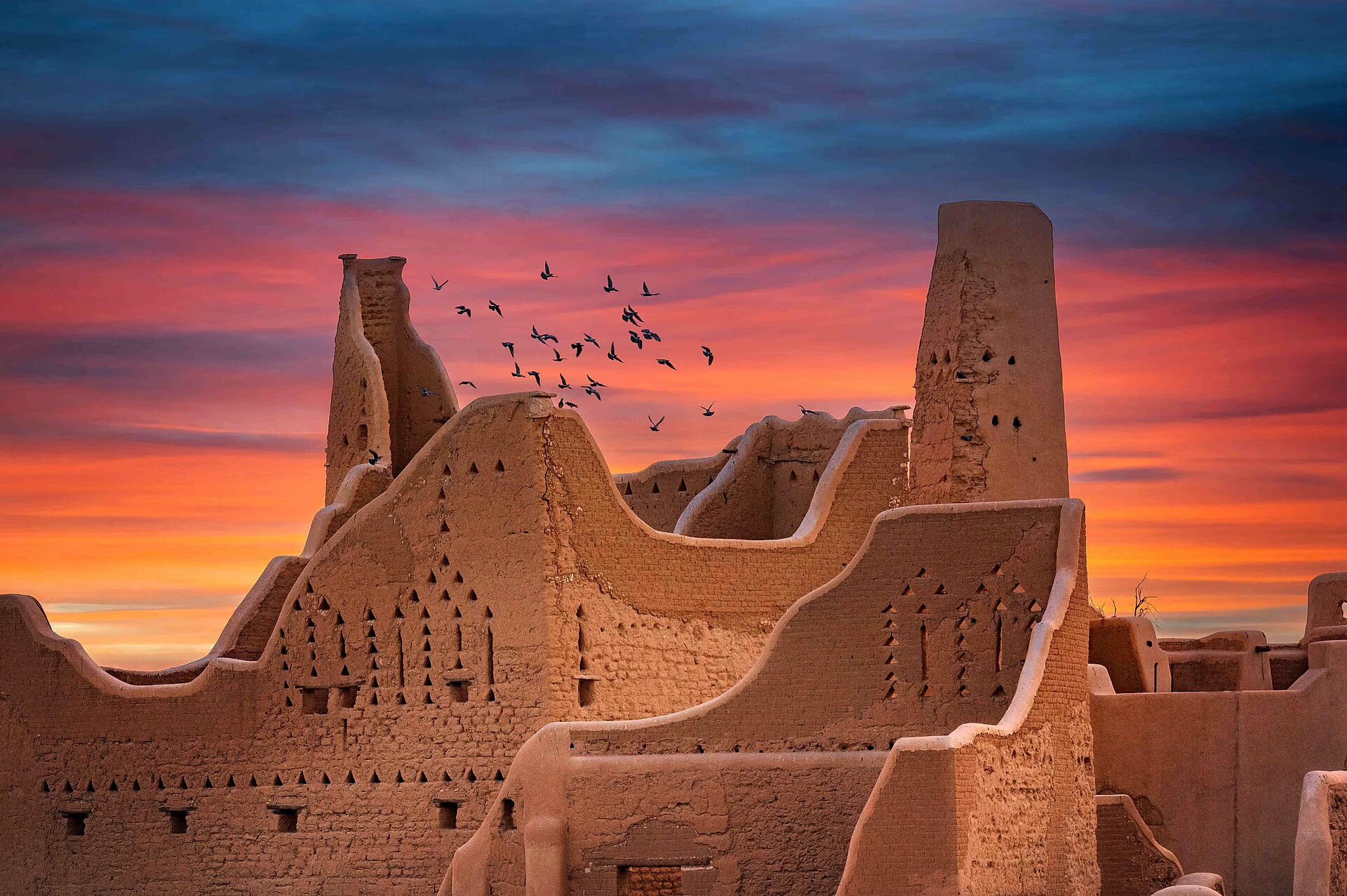
From their capital at Diriyah, just northwest of modern Riyadh, the Al Saud expanded across most of the Arabian Peninsula. The First Saudi State ended in 1818 when an Ottoman-Egyptian invasion razed Diriyah. Today, the ruins of that capital survive as the At-Turaif District — a UNESCO World Heritage Site and one of Saudi Arabia’s most important tourist attractions.
The Second Saudi State (1824–1891): The Riyadh Capital
With Diriyah destroyed, the Al Saud regrouped. In 1824, Turki ibn Abdallah captured Riyadh and made it the new capital — a status the city has held ever since. This second state lasted until 1891, when the rival Rashidi dynasty seized Riyadh and forced the Al Saud into exile in Kuwait.
The Third Saudi State (1902–Present): Ibn Saud’s Kingdom
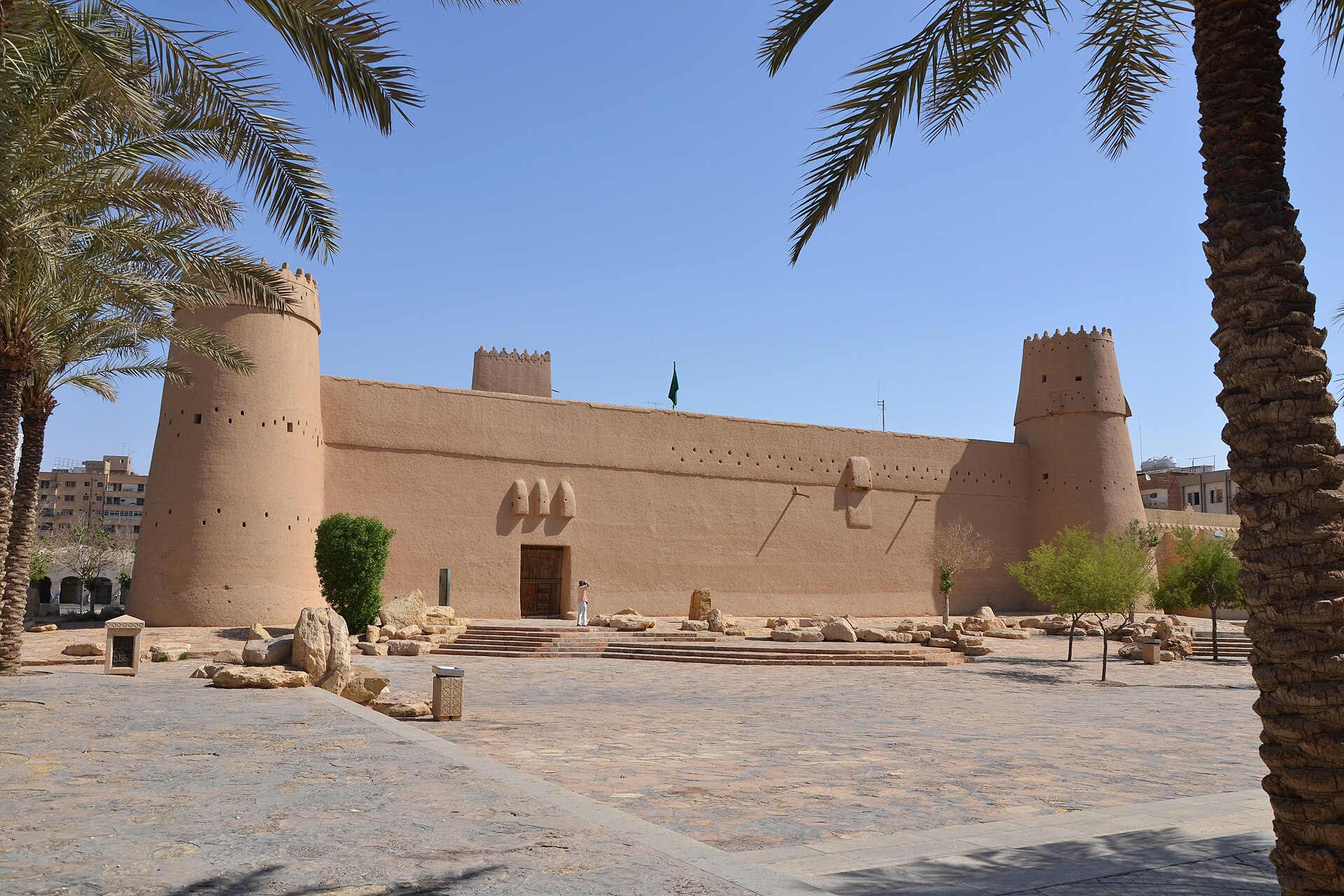
The modern Saudi story begins with a raid. In January 1902, the 21-year-old Abdulaziz ibn Abdul Rahman Al Saud — known internationally as Ibn Saud — recaptured the Masmak Fortress in Riyadh with roughly 40 men. The spearhead from that night raid is still embedded in the fortress’s wooden door, and you can see it today at the Masmak Fortress Museum.
Over the next three decades, Abdulaziz systematically unified most of the Arabian Peninsula. On 23 September 1932, he proclaimed the Kingdom of Saudi Arabia. That date is now celebrated as Saudi National Day — one of the kingdom’s biggest annual events, with festivals, fireworks, and public celebrations across every city.
Seven Kings: From Unification to Transformation
Since Abdulaziz, six of his sons have ruled the kingdom. Power has passed between brothers rather than from father to son — a unique succession system that changed in 2017 when King Salman elevated his own son, Mohammed bin Salman, to Crown Prince.
| King | Reign | Key Legacy for Visitors |
|---|---|---|
| Abdulaziz (Ibn Saud) | 1932–1953 | Founded the kingdom; Masmak Fortress, Murabba Palace |
| Saud | 1953–1964 | Early modernisation, first universities |
| Faisal | 1964–1975 | King Faisal Foundation; modernised education for women |
| Khalid | 1975–1982 | Post-oil boom infrastructure development |
| Fahd | 1982–2005 | Adopted “Custodian of the Two Holy Mosques” title; King Fahd Fountain in Jeddah |
| Abdullah | 2005–2015 | King Abdullah Economic City; women in the Shura Council |
| Salman | 2015–present | Vision 2030; tourist visa; entertainment revolution |
Who’s Who: The Key Royals Visitors Should Know
You won’t meet the royal family on your trip, but their names and portraits are everywhere — on billboards, in hotel lobbies, at government buildings, and in everyday conversation. Here’s who matters most.
King Salman bin Abdulaziz
Born in 1935, King Salman has been the ruler since January 2015. Before ascending the throne, he served as Governor of Riyadh Province for nearly 50 years (1963–2011), overseeing the city’s transformation from a small desert capital into a modern metropolis. His official title is Custodian of the Two Holy Mosques — a title that reflects the king’s responsibility for Islam’s two holiest sites in Makkah and Madinah. You’ll see his portrait alongside MBS in virtually every public building and many private businesses.
Crown Prince Mohammed bin Salman (MBS)
Born in 1985, MBS is the de facto ruler of Saudi Arabia, serving as both Crown Prince and Prime Minister. He is the architect of Vision 2030, the sweeping reform programme that has opened Saudi Arabia to tourism and transformed daily life. Almost every change visitors notice — from cinemas and concerts to women driving and relaxed dress codes — traces back to his agenda. He also chairs the Public Investment Fund (PIF), the sovereign wealth fund behind the kingdom’s mega-projects like NEOM, Diriyah Gate, and the Red Sea resort developments.
Other Key Royals
- Prince Khalid bin Salman — Minister of Defence and MBS’s full brother
- Prince Abdulaziz bin Salman — Minister of Energy, a critical role for the world’s largest oil exporter
- Prince Faisal bin Farhan — Minister of Foreign Affairs
- Prince Khalid al-Faisal — Governor of Makkah Province, overseeing the Hajj pilgrimage logistics
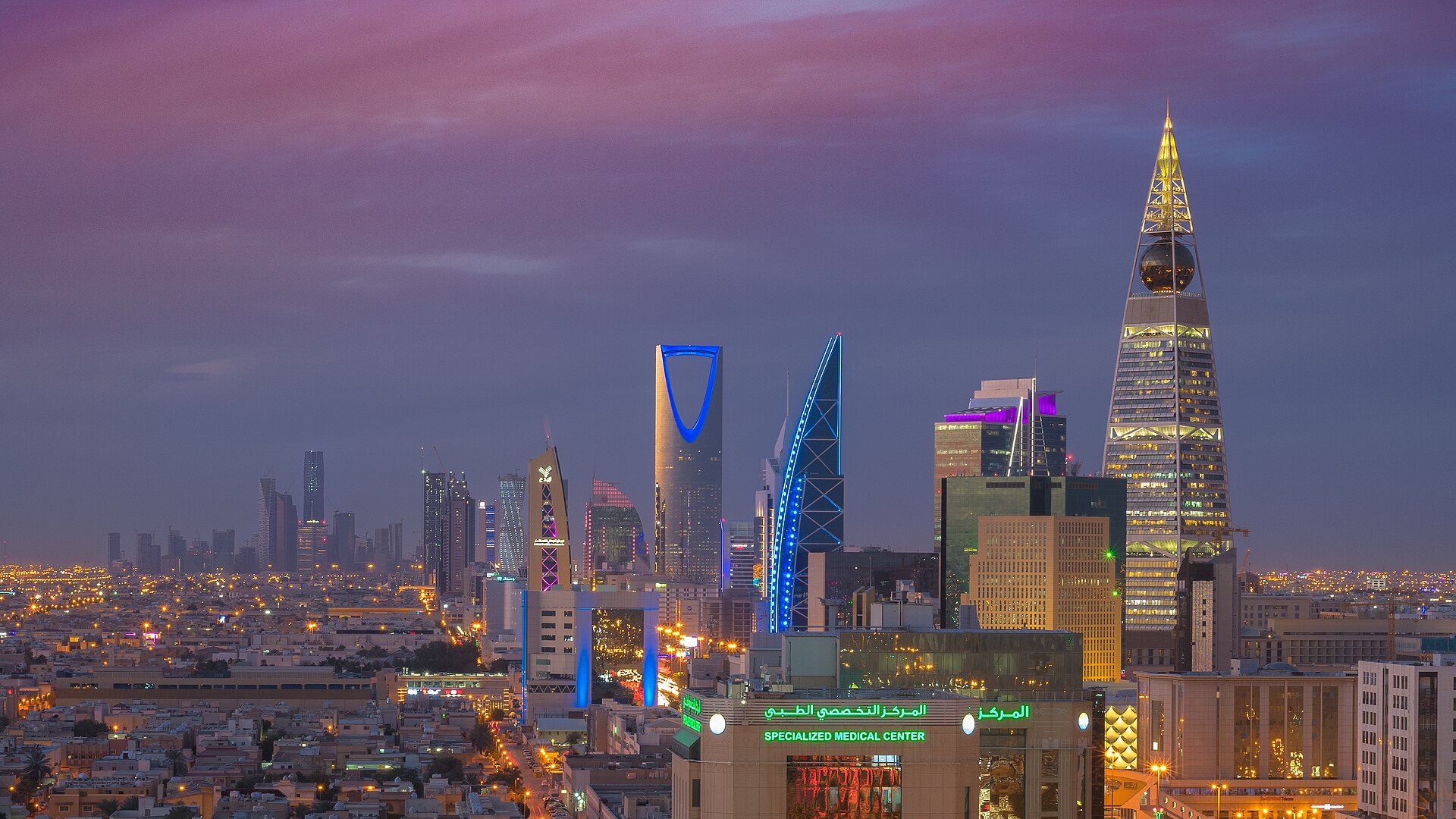
- Prince Alwaleed bin Talal — Billionaire businessman and investor, founder of Kingdom Holding Company (the company behind Riyadh’s iconic Kingdom Tower skyscraper)
- Tourist visa (September 2019): Citizens of 49+ countries can obtain an e-visa or visa on arrival for up to 90 days
- Entertainment: The 35-year cinema ban was lifted in 2018. Riyadh Season — an annual mega-festival — features international concerts, cultural events, and the MDLBeast SoundStorm electronic music festival
- Women driving (June 2018): The world’s last ban on women driving was lifted
- Mixed-gender events: Women can attend sporting events, concerts, and public entertainment
- Dress code relaxed: Abayas are no longer mandatory for non-Saudi women, though modest clothing covering shoulders and knees is expected
- Tourism milestone: Saudi Arabia welcomed over 100 million tourists in 2023 — surpassing the Vision 2030 target seven years early. The new target is 150 million by 2030
- No public criticism: It is illegal to criticise the king, the royal family, or the government — including on social media. Violations can result in fines, arrest, or deportation
- No photography of government buildings: Photographing palaces, military installations, and government buildings is prohibited
- Respect national symbols: Treat the Saudi flag, national anthem, and royal portraits with respect
- If you meet a government official, address them as “Your Excellency”
- Stand when a person of authority enters the room
- Use the right hand for greetings and passing items
- Do not extend your hand to a Saudi woman unless she initiates
- Respect dress codes — modest clothing covering shoulders and knees is expected everywhere
- Respect prayer times — shops close five times daily for approximately 20–30 minutes each
- Alcohol is prohibited throughout the kingdom
- Avoid public displays of affection
- Morning: Masmak Fortress (free entry, allow 1 hour) → walk to nearby souks for traditional shopping
- Midday: National Museum of Saudi Arabia at the King Abdulaziz Historical Centre (allow 2+ hours)
- Afternoon: Drive to Diriyah for At-Turaif UNESCO site and Bujairi Terrace
- Evening: Dinner at Bujairi Terrace with views of the illuminated heritage district
- Saudi Arabia Travel Guide 2026 — The complete guide to visiting the Kingdom
- Saudi Arabia Dress Code Guide — What to wear as a visitor, from holy sites to entertainment venues
- Saudi Arabia Food Guide — Traditional dishes, dining customs, and the best places to eat
- Saudi Arabia Shopping Guide — Souks, malls, and what to buy
- Hajj 2026 Guide — Everything pilgrims need to know about the holiest journey in Islam
- Saudi Arabia Visa Guide — Every visa type explained
The Custodian of the Two Holy Mosques
If you’re visiting Saudi Arabia — particularly if your trip includes Hajj or Umrah — this title matters. The full Arabic is Khadim al-Haramayn ash-Sharifayn, literally “Servant of the Two Noble Sanctuaries,” referring to the Grand Mosque in Makkah (Al-Masjid al-Haram) and the Prophet’s Mosque in Madinah (Al-Masjid an-Nabawi).
King Fahd formally adopted the title in 1986, deliberately replacing the previous style “His Majesty” to emphasise religious stewardship over royal grandeur. The title had historical precedent — Saladin used it in the 12th century, and Ottoman sultans claimed it from 1517 until the caliphate’s abolition in 1924. Every Saudi king since Fahd has used it. The title reflects a core part of Saudi identity: the kingdom sees itself as custodian of Islam’s holiest places, and the massive ongoing expansion projects at both mosques are carried out under this mandate.
Royal Sites You Can Visit
The royal family’s history is written in architecture. These are the most important sites visitors can explore.
Diriyah and At-Turaif (Riyadh)
The crown jewel of Saudi heritage tourism. At-Turaif District was inscribed as a UNESCO World Heritage Site in 2010 and has been beautifully restored. Key buildings include Salwa Palace — the four-storey residence of the first Saudi rulers, now housing a museum with historical manuscripts — and the Imam Muhammad ibn Saud Mosque. Across the wadi, Bujairi Terrace opened in 2022 as a dining and retail promenade in traditional Najdi mud-brick style. It has quickly become one of Riyadh’s most popular destinations.
The broader Diriyah Gate development will eventually include 38 hotels, over 300 retail outlets, museums, and a performing arts theatre — all within walking distance of the UNESCO site.
Masmak Fortress (Riyadh)
This clay-and-mudbrick fort in central Riyadh is where the modern state began. The museum inside tells the story of Abdulaziz’s 1902 raid with maps, photographs, and artefacts. Don’t miss the spearhead still embedded in the main door — a physical reminder of the night that changed Arabian history. Admission is free.
Murabba Palace (Riyadh)
King Abdulaziz’s official residence and workplace from 1938 until his death in 1953, Murabba Palace was opened as a museum in 1999. It sits within the King Abdulaziz Historical Centre, which also contains the National Museum of Saudi Arabia — the country’s premier museum with eight galleries covering the Arabian Peninsula from prehistory through the Islamic golden age to the modern state.
King Fahd Fountain (Jeddah)
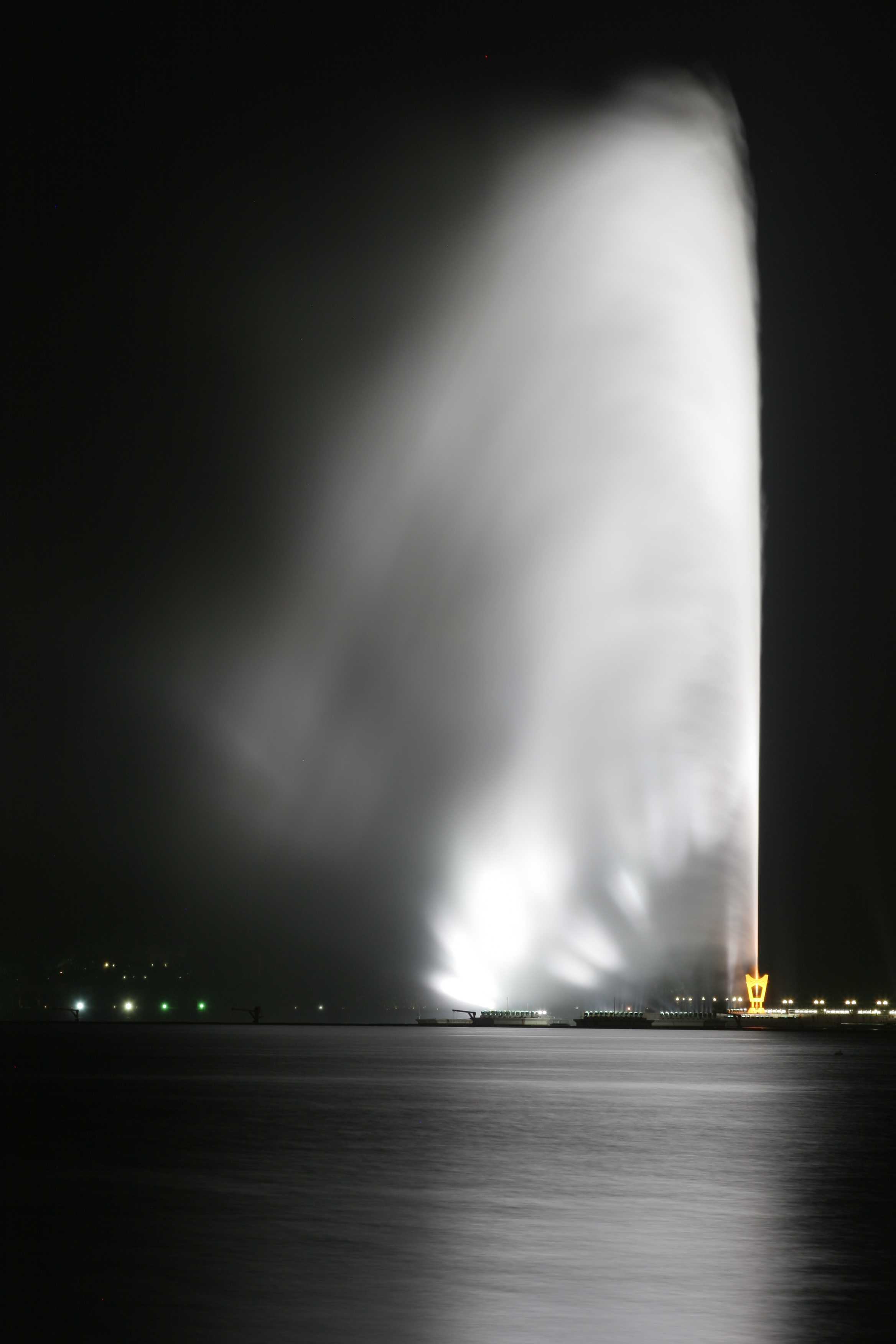
Commissioned by King Fahd in the 1980s, this is the world’s tallest fountain, shooting water over 300 metres into the air above the Red Sea. Visible from across Jeddah, it’s best viewed from the Corniche at sunset when the fountain is illuminated.
Ithra — King Abdulaziz Centre for World Culture (Dhahran)
Built by Saudi Aramco and inaugurated by King Salman in 2016, Ithra (meaning “enrichment”) houses a museum, library, cinema, theatre, and rotating exhibitions. Named one of Time magazine’s 100 Greatest Places in 2018, it’s a must-visit if you’re in the Eastern Province.
Vision 2030: How the Royal Family Is Reshaping Your Trip
Launched on 25 April 2016, Vision 2030 is Crown Prince Mohammed bin Salman’s blueprint for transforming Saudi Arabia from an oil-dependent economy into a diversified global hub. For visitors, the changes are tangible and dramatic.
What Has Already Changed
Mega-Projects Transforming the Landscape
Vision 2030’s most visible expression is a series of massive construction projects, many of which visitors can already experience or will encounter during their trip.
| Project | Location | Status (2026) | What Visitors Can See |
|---|---|---|---|
| Diriyah Gate | Riyadh | Bujairi Terrace open; wider development ongoing | UNESCO site, restaurants, cultural events |
| Red Sea Global | Red Sea coast | Phase 1 partially open | Luxury island resorts, pristine coral reefs |
| Qiddiya City | Southwest of Riyadh | Six Flags opened Dec 2025 | Theme park rides, entertainment city |
| NEOM / The Line | Tabuk Province | Under construction (scaled back) | Not yet open to tourists |
| Jeddah Tower | Jeddah | Construction resumed 2025; past 100th floor | Visible from across the city during construction |
| New Murabba | Riyadh | Under construction | Features “The Mukaab” — a 400m cube structure |
Governance: What Visitors Should Understand
Saudi Arabia is an absolute monarchy governed under Islamic Sharia law. There are no political parties and no national elections. The king is head of state, head of government, and commander-in-chief. The Basic Law of Governance, adopted in 1992, declares the Quran and Sunnah as the country’s constitution.
The Majlis ash-Shura (Consultative Assembly) has 150 members appointed by the king, including 30 women (a 20% quota introduced by King Abdullah in 2013). It serves as an advisory body that can propose laws and question ministers, but the king retains final authority.
Each of Saudi Arabia’s 13 provinces is governed by a prince from the royal family, appointed by the king. The longest-serving is Prince Fahd bin Sultan of Tabuk, in post since 1987.
Practical note for visitors: Saudi Arabia’s governance structure means that policy changes can happen quickly and with little public debate. Rules that were firm a year ago may have been relaxed — and vice versa. Always check the latest travel advisories and entry requirements before your trip via the official visa guide.
The Ardha and Royal Cultural Traditions
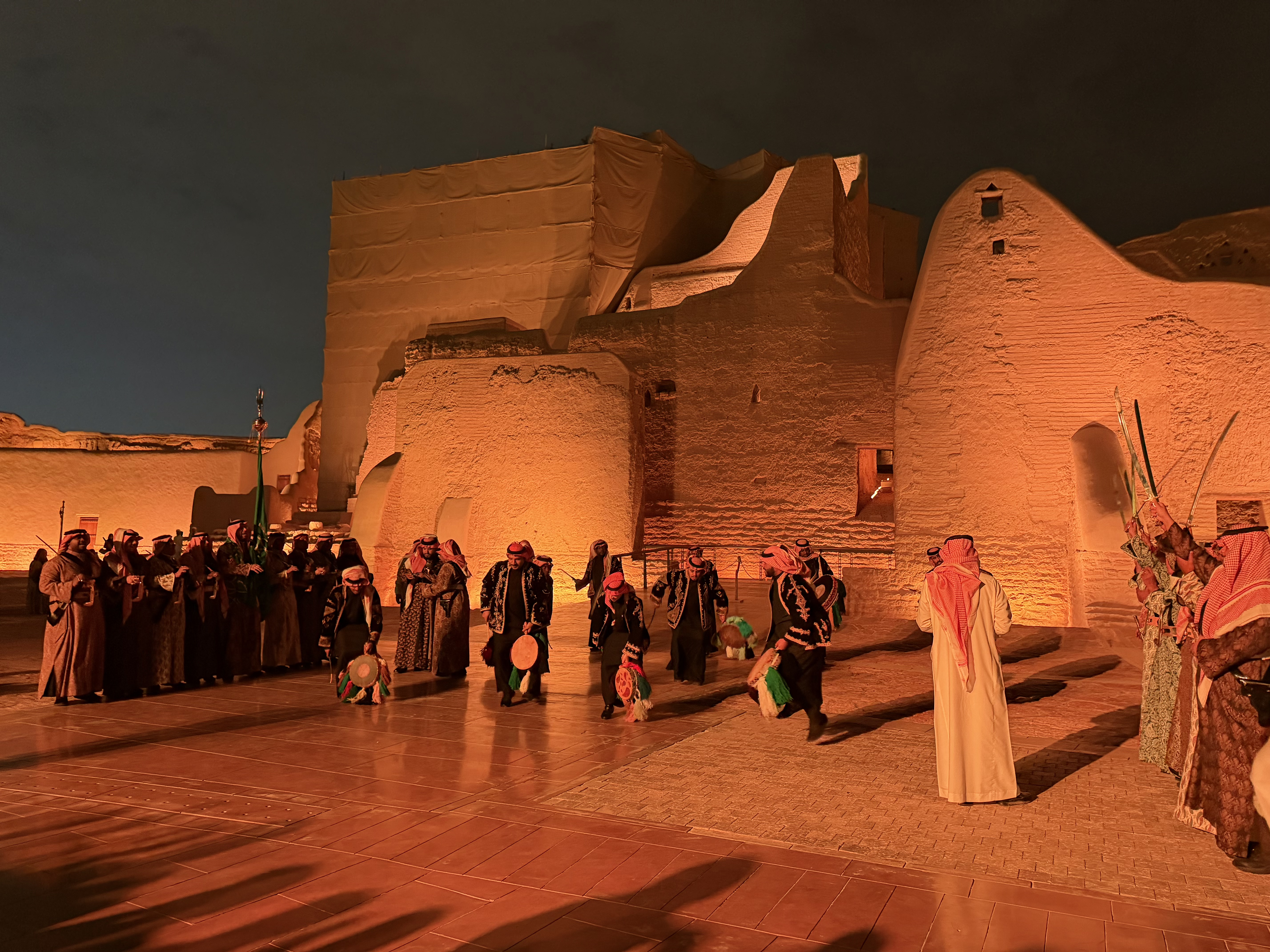
You may encounter the Ardha — Saudi Arabia’s traditional sword dance — during national celebrations, cultural festivals, or events at Diriyah. This Najdi war dance, inscribed on UNESCO’s Intangible Cultural Heritage list, is closely associated with the royal family. Kings and crown princes have performed it publicly, and it’s a highlight of Saudi National Day celebrations on 23 September.
The dance involves rows of men carrying swords, swaying in unison to the beat of drums and the chanting of poetry. It’s spectacular to watch and photograph — and it’s one of the most authentic cultural experiences available to visitors.
Cultural Institutions Founded by the Royal Family
The royal family has established cultural institutions across the kingdom that are well worth visiting.
National Museum of Saudi Arabia (Riyadh)
Part of the King Abdulaziz Historical Centre, this is the country’s flagship museum. Eight galleries take you from prehistoric Arabia through the pre-Islamic civilisations, the rise of Islam, the Saudi states, and the modern kingdom. Allow at least two hours.
Royal Commission for AlUla
Established by royal decree in 2017 and chaired by MBS, the RCU manages AlUla as a world-class heritage destination. Under its stewardship, visitors can now explore Hegra (Saudi Arabia’s first UNESCO site, with 110+ Nabataean rock-cut tombs), the ancient Dadan civilisation ruins, and Jabal Ikmah — an open-air library of thousands of ancient inscriptions.
King Faisal Foundation
Established in 1976 in memory of King Faisal, the foundation awards the annual King Faisal International Prize — often called the “Arab Nobel” — in five categories including science, medicine, and Islamic studies.
Misk Foundation
Founded by Crown Prince Mohammed bin Salman, Misk focuses on youth empowerment, education, and technology. The Misk Art Institute runs exhibitions and events, particularly during Riyadh Season.
Etiquette: Showing Respect as a Visitor
Visitors don’t need to be experts on Saudi governance, but showing basic awareness and respect is important — and legally required in some cases.
Legal Requirements
Social Etiquette
Tip: When visiting royal heritage sites like Diriyah or the Masmak Fortress, hiring a local guide adds enormous value. They can bring the Al Saud story to life with details and context that signs alone can’t convey.
Practical Planning Tips
Best Time to Visit Royal Heritage Sites
October through March offers the most comfortable weather for exploring outdoor sites like Diriyah. Riyadh temperatures during these months range from 15–25°C (59–77°F). Avoid June through August when temperatures regularly exceed 45°C (113°F). Saudi National Day (23 September) is an exceptional time to visit — the country erupts in celebrations, cultural events, and the Ardha is performed publicly.
Getting Around
Most royal heritage sites are concentrated in Riyadh. The Masmak Fortress, National Museum, and Murabba Palace are all in central Riyadh within a few kilometres of each other. Diriyah is about 20 minutes northwest of the city centre by car. Ride-hailing apps (Uber, Careem) are the easiest way to get between sites.
Combining Royal Sites with Your Itinerary
A suggested Riyadh royal heritage day:
For a broader Saudi cultural immersion, combine Riyadh’s royal sites with Saudi cuisine experiences, the Edge of the World day trip, and — if time allows — a flight to AlUla for the Nabataean heritage managed by the Royal Commission.
Where to Stay
For the best access to royal heritage sites in Riyadh, stay in the Diplomatic Quarter (DQ) or near Olaya/King Fahd Road. The hotels guide covers options across all budgets. Diriyah Gate will eventually offer its own luxury accommodation within walking distance of At-Turaif.