
Long before the Nabataeans carved their famous tombs at Hegra, another civilisation was already shaping the sandstone cliffs of what is now AlUla. The ancient city of Dadan — capital of the Dadanite and later Lihyanite kingdoms — thrived from at least the 8th century BCE as a major political, religious, and commercial hub on the Incense Road. Today, Dadan is one of the most rewarding archaeological sites in the region, offering visitors a direct encounter with a civilisation that predates its better-known Nabataean neighbours by centuries. If you are planning a broader AlUla itinerary, Dadan should be near the top of your list — it is the site that reveals AlUla’s deepest historical layers.
Best Time to Visit: October to March (daytime highs of 20–27°C)
Getting There: Fly to AlUla International Airport (ULH) from Riyadh (~2 hours) or Jeddah; transfer by coach from Winter Park
Visa Required: Yes — tourist e-visa available online
Budget: SAR 60–1,000 per person (USD 16–267) depending on tour tier
Must-See: Lion Tombs, Dadan Visitor Centre exhibition, Jabal Ikmah inscriptions
Avoid: Visiting June–August when temperatures regularly exceed 40°C
Why Dadan Matters: A Brief History
The ancient city of Dadan was established at a strategic crossroads where incense, myrrh, and spice caravans crossed between southern Arabia and the Mediterranean world. Archaeological evidence indicates settlement from at least the late 3rd or early 2nd millennium BCE, though the city reached its zenith during the 1st millennium BCE under two successive kingdoms.
The Dadanite Kingdom (c. 9th–5th Century BCE)
The Dadanites were the first to establish Dadan as a regional capital. They developed their own writing system — now called Dadanitic — and built a sophisticated urban centre supported by intensive agriculture and irrigation. The city’s prosperity was rooted in controlling trade along the Incense Road, taxing caravans that carried frankincense from modern-day Yemen to markets in Egypt, Mesopotamia, and the Levant. At its centre stood a large temple dedicated to Dhu Ghaybaham, the chief deity of the kingdom.
The Lihyanite Kingdom (c. 5th–1st Century BCE)
The Lihyanites succeeded the Dadanites and expanded their domain considerably, ruling territory that stretched from Yathrib (modern Medina) in the south to parts of the Levant in the north. Under Lihyanite rule, Dadan’s artistic output reached new heights: colossal statues measuring up to 2.6 metres were carved to represent kings and priests, rivalling contemporary sculpture in Egypt and Mesopotamia. A local stone-carving school produced incense burners, lamps, and elaborately decorated funerary monuments. During this period, Minaean traders from South Arabia also settled in the city, adding another cultural layer.
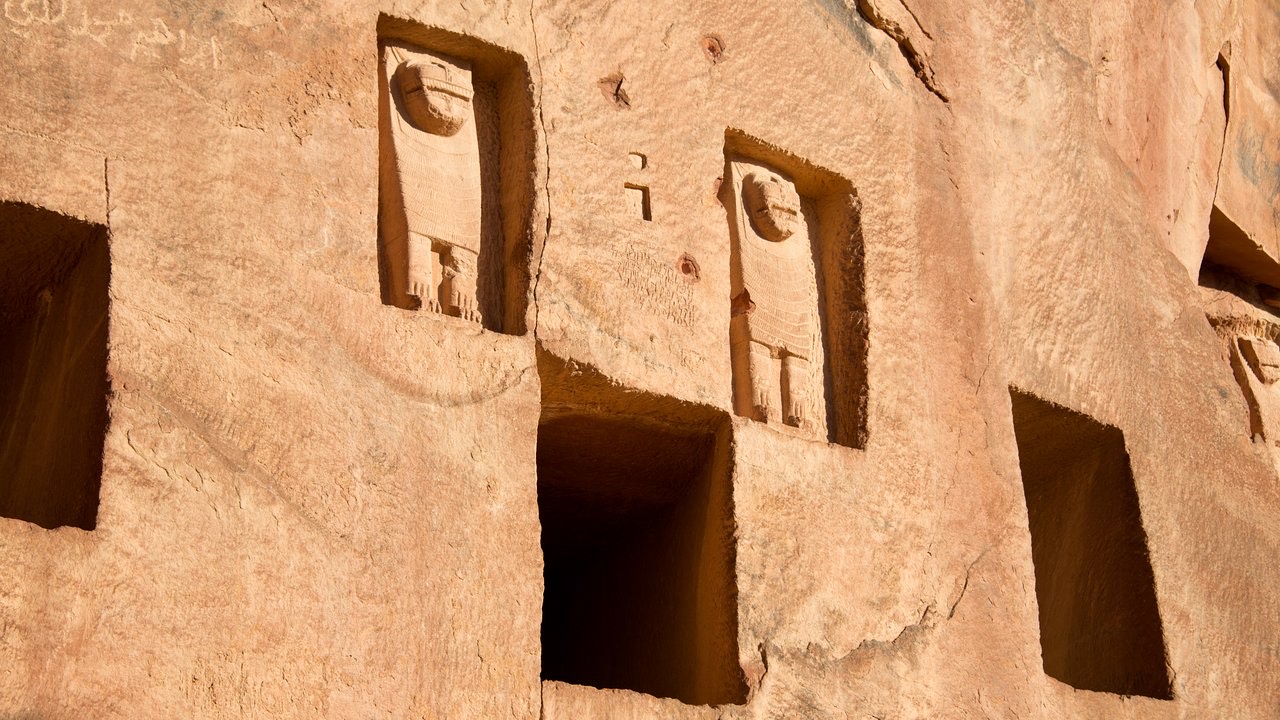
The Lion Tombs: Dadan’s Most Iconic Feature
The most photographed feature at Dadan is the pair of rock-cut tombs adorned with carved lion sculptures. These “Lion Tombs” sit approximately 50 metres above the wadi floor, cut into the sheer red sandstone cliff face south of the ancient city. Each tomb niche is flanked by a stylised lion as large as the opening itself — the cavities are roughly two metres deep. Dating to approximately 600–500 BCE, they are believed to be the burial places of elite members of Dadanite or Lihyanite society, possibly royalty.
The lions are thought to serve a dual symbolic purpose: representing the power and status of those interred within, while also standing as guardians to protect the occupants in the afterlife. How the tombs were carved at such a height remains an open question among archaeologists. The Lion Tombs are not alone — Dadan contains hundreds of rock-cut tombs at various heights along the cliff face, known collectively as Jabal Dadan. The placement of individual tombs is thought to reflect the social standing of the deceased.
Visitor note: You cannot enter the tombs themselves. All visitors must stay on designated walking paths. Photography is permitted, but removing any material from the site — even small stones — is strictly prohibited.
The Dadan Exhibition: “Illuminating Discoveries”
In December 2025, a new permanent exhibition opened at the Dadan Visitor Centre titled “Illuminating Discoveries: Uncovering the Layers of Dadan’s History.” This is a joint project between the Royal Commission for AlUla (RCU) and the French Agency for AlUla Development (AFALULA), with archaeological research led by the French National Centre for Scientific Research (CNRS). It was designed by French scenographer Nathalie Crinière.
The exhibition showcases more than 100 archaeological objects — many displayed for the first time — recovered over five years of excavation by the Saudi-French archaeological mission. Highlights include:
- A stone statue dating from 400–50 BCE uncovered at an ancient shrine at the base of Dadan’s cliffs, with one original inlaid eye still intact
- A Greek terracotta head from the late 4th to 1st century BCE, possibly part of a Tanagra figurine — evidence of long-distance trade links with the Hellenistic world
- A bone hairpin of Roman or Byzantine origin
- Stone inscriptions written in South Arabian script, revealing Dadan’s connections to kingdoms across the peninsula
- Digital reconstructions showing what the ancient city may have looked like at its peak
The exhibition is trilingual — Arabic, English, and Mandarin — reflecting the international audience AlUla now attracts. It is included with the Premium Tour, but all tour tiers pass through the Visitor Centre where hospitality is offered in the form of dates, dried fruits, fresh juices, and Saudi coffee.
Jabal Ikmah: The “Open Library” Next Door
Dadan tours are typically combined with a visit to Jabal Ikmah, a canyon roughly 10 minutes’ drive north of the main site. Known as AlUla’s “open library,” Jabal Ikmah contains the largest concentration of well-preserved Dadanitic and Lihyanite inscriptions anywhere in the world — nearly 300 individual inscriptions dating as far back as 644 BCE.
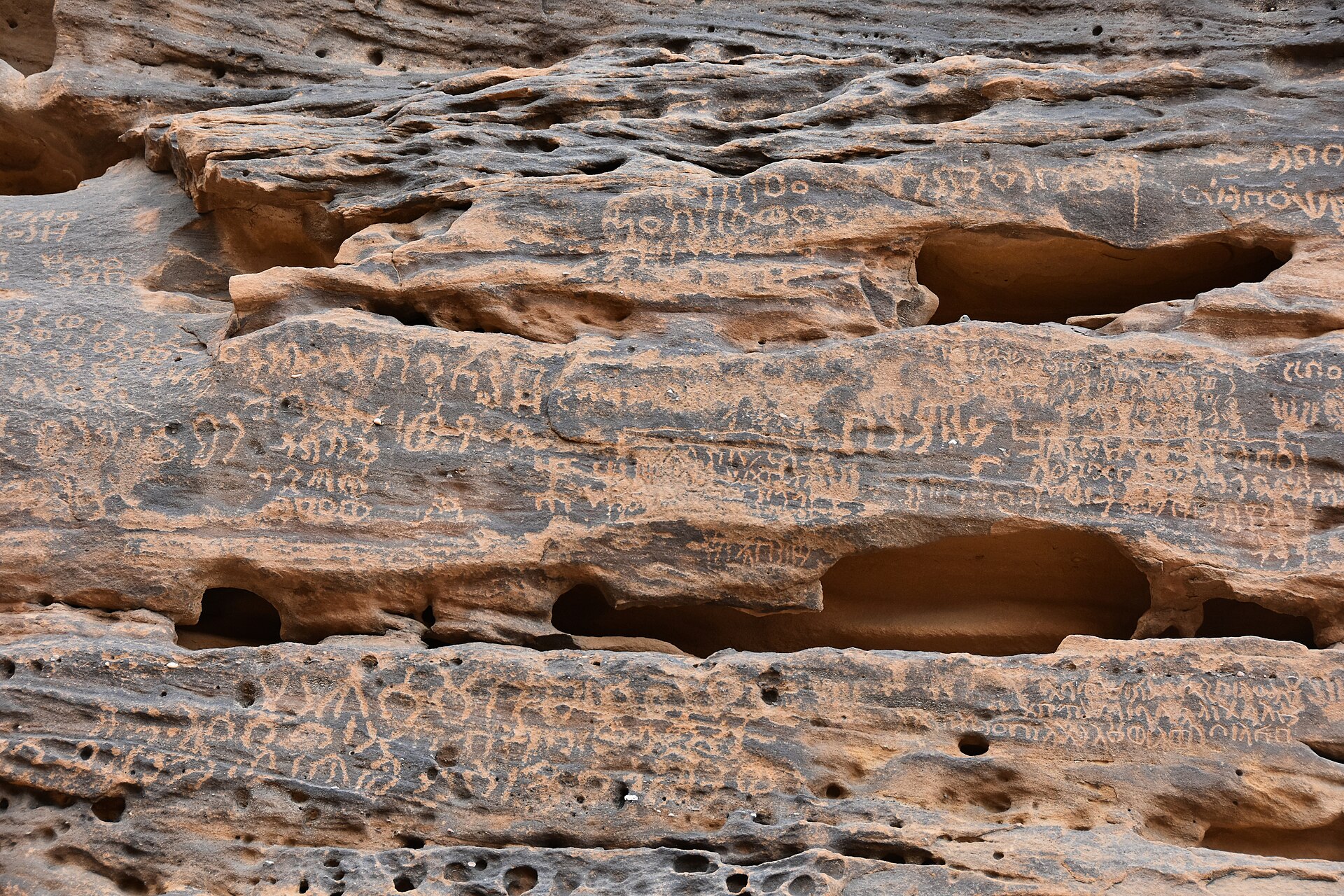
Languages represented at Jabal Ikmah include Aramaic, Dadanitic, Safaitic, Thamudic, Minaic, and Nabataean — all predecessors of and contributors to the development of the Arabic script. Beyond text, the canyon walls feature rock art depicting animals (deer, goats, camels), musical instruments, and scenes of daily life. In May 2023, Jabal Ikmah was inscribed on UNESCO’s Memory of the World Register, cementing its status as a globally significant documentary heritage site.
If you have already visited Hegra’s Nabataean tombs, Jabal Ikmah provides a striking contrast — where Hegra is monumental and grand, Ikmah is intimate and textual, offering a window into how ordinary people recorded their pilgrimages, prayers, and daily concerns.
Other Key Features at Dadan
The Temple of Dhu Ghaybaham
At the heart of the ancient city stood a large temple dedicated to the chief Lihyanite god, Dhu Ghaybaham. Inscriptions recovered from the site reveal an active religious life centred around offerings and pilgrimage. Sanctuaries were located both in the mountains adjacent to the city and on the summit of Mount Umm Daraj, across the valley. The Saudi-French archaeological team has been actively excavating the Umm Daraj mountaintop sanctuary, revealing new evidence of ritual activity.
Mahlab al-Naqah
One of the most unusual features near Dadan is Mahlab al-Naqah, a massive natural sandstone basin capable of holding approximately 26 cubic metres of water. Its name translates to “the she-camel’s milking place” in Arabic folklore, though archaeologists believe it may have served a religious purpose, possibly as a ritual water collection point during ceremonial occasions.
Colossal Statues
Among the most remarkable archaeological finds at Dadan are a series of colossal stone statues, some measuring up to 2.6 metres tall. These monumental figures are thought to represent important individuals — kings, priests, or other elites — and demonstrate a level of artistic sophistication that parallels contemporary sculpture traditions in Egypt and Mesopotamia. Several of these statues are now on display in the Dadan exhibition and at Saudi national museums.
How to Visit Dadan: Tours, Tickets, and Logistics
Tour Options and Pricing
Dadan is accessed exclusively through organised tours managed by Experience AlUla, the official tourism platform of the Royal Commission for AlUla. Three tour tiers are available:
| Tour Type | Adult Price | Child (5–12) | Duration | What’s Included |
|---|---|---|---|---|
| Standard Guided | SAR 60 (~USD 16) | SAR 30 | 2–3 hours | Local Rawi guide, coach transfer, water |
| Audio Guided | SAR 90 (~USD 24) | SAR 45 | 2–3 hours | Heritage Ranger with audio narration in 5 languages, coach transfer, water |
| Premium | SAR 1,000 per vehicle (~USD 267) | Included | 2–3 hours | Direct parking at Visitor Centre, exclusive exhibition access, hospitality |
Children aged 4 and under enter free on all tiers. Tours are available year-round, with morning and afternoon departure slots. The audio tour is available in English, Arabic, Italian, French, and Mandarin.
Booking and Arrival
Tours have limited daily capacity, so advance booking is strongly recommended through the official Experience AlUla website. Walk-up tickets at the Visitor Centre are possible but subject to availability. Key rules:
- Arrive at least 15 minutes before your booking time
- Bring your e-ticket and valid ID
- Late arrivals forfeit the experience with no refund
Getting to Dadan from Winter Park
Standard and audio tour visitors must park for free at Winter Park in AlUla, where an air-conditioned luxury coach transfers you to the Dadan Visitor Centre. Only Premium Tour guests may drive directly to the Visitor Centre. The combined Dadan and Jabal Ikmah tour covers both sites, with a 10-minute drive between them.
Cancellation Policy
- 3+ days before: Full refund
- 1–3 days before: Rebooking possible (no cash refund)
- Same day: Non-refundable, non-rebookable
Getting to AlUla
By Air
AlUla International Airport (IATA: ULH) is served by five airlines: Saudia, Flynas, flydubai, Qatar Airways, and Royal Jordanian. Direct flights operate from:
- Riyadh (RUH): ~1 hour 55 minutes, approximately 5 flights per week
- Jeddah (JED): ~1 hour 15 minutes, regular service
- Dubai (DXB): via flydubai
- Amman (AMM): via Royal Jordanian
- Doha (DOH): via Qatar Airways
The airport is located 31 km southeast of AlUla town, roughly a 25-minute drive. You will need to arrange a car or transfer — ride-hailing options in AlUla are limited compared to Riyadh or Jeddah. See our Saudi Arabia airport guide for terminal details and transfer advice.
By Road
AlUla is approximately 900 km from Riyadh (8–9 hours by road), 400 km from Medina (3.5–4 hours), and 650 km from Jeddah via Medina. The drive from Medina is a practical option if you are already visiting the region as part of a wider Saudi Arabia itinerary.
Tip: Ensure you have a valid Saudi Arabia tourist visa before booking flights. The e-visa process is straightforward for citizens of 63 eligible countries and can be completed online in minutes.
Best Time to Visit Dadan
The ideal window for visiting Dadan — and AlUla in general — runs from October to March. During these months, daytime temperatures range from a pleasant 20°C to 27°C, making outdoor exploration comfortable. January is the coolest month, with daytime highs around 20°C and nighttime temperatures dropping to 7°C — bring a jacket for evening activities.
The best time to visit Saudi Arabia varies by region, but AlUla’s desert climate makes the winter months universally recommended. Avoid June through August, when temperatures regularly exceed 41°C and the exposed archaeological sites offer no shade. AlUla receives virtually no rainfall year-round, so weather disruptions to tours are rare.
The winter season also coincides with AlUla Moments, a programme of cultural events, concerts, and festivals that adds an extra dimension to any visit.
What to See Nearby
Dadan sits within the broader AlUla heritage corridor, and most visitors combine it with at least two or three other sites during a multi-day stay.
Hegra (Madain Salih)
Saudi Arabia’s first UNESCO World Heritage Site, Hegra contains more than 110 monumental Nabataean tombs carved into sandstone outcrops. Dating from the 1st century BCE to the 1st century CE, Hegra’s tombs postdate Dadan’s by several centuries — visiting both sites in sequence creates a powerful chronological narrative of AlUla’s ancient civilisations.
Elephant Rock (Jabal al-Fil)
Elephant Rock is a striking natural sandstone formation shaped by millions of years of wind erosion into the unmistakable form of an elephant. It is one of AlUla’s most photographed landmarks and is particularly dramatic at sunset.
AlUla Old Town
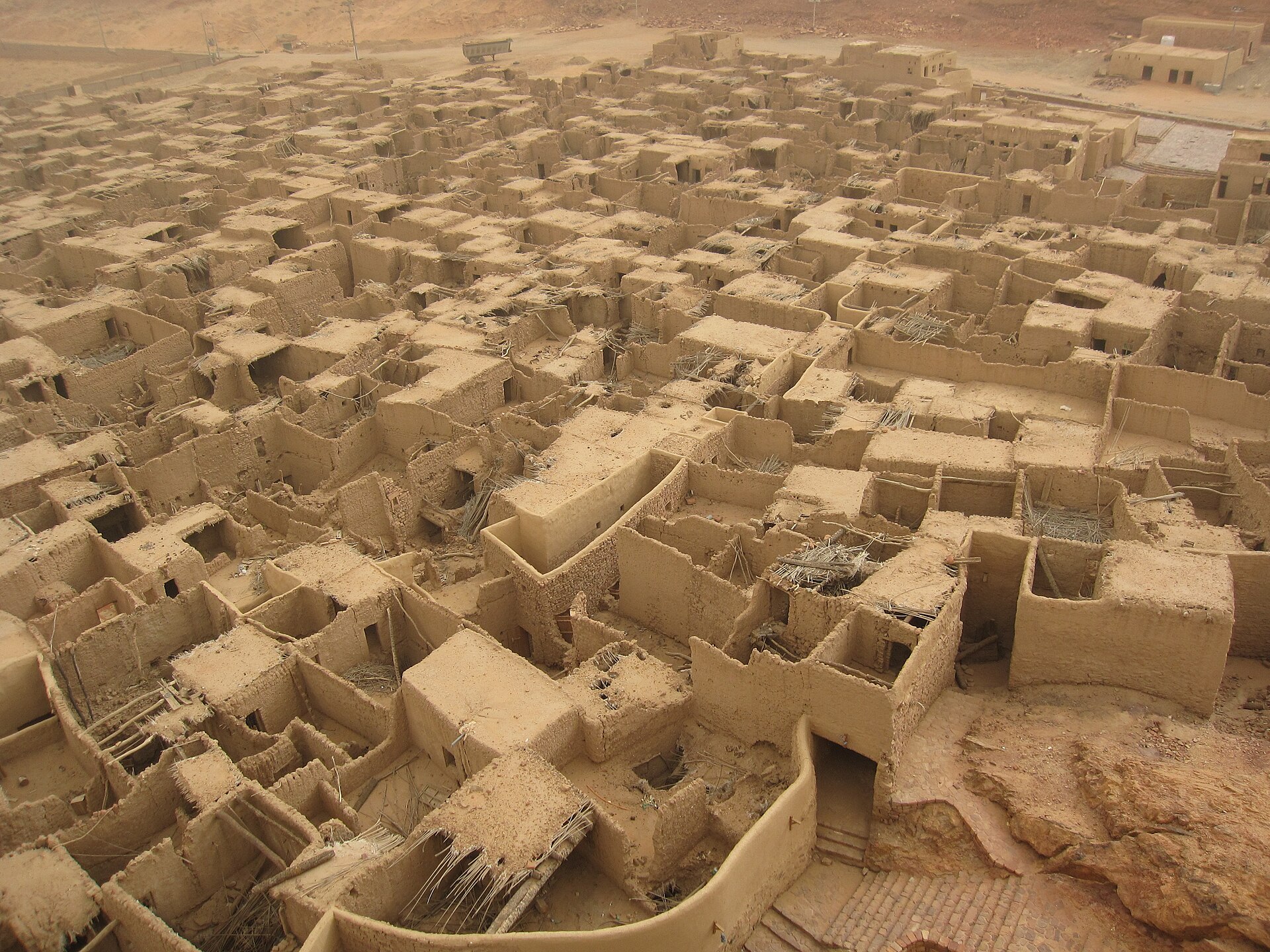
The labyrinthine AlUla Old Town is a densely packed settlement of over 900 mud-brick houses, 400 shops, and five town squares dating back at least 800 years. The town was inhabited continuously until the early 1980s when residents relocated to the modern city. Walking its narrow lanes provides a tangible connection between Dadan’s ancient world and the more recent history of the oasis.
Practical Tips for Visiting Dadan
- Wear sturdy, closed-toe shoes. The terrain around Dadan is uneven and rocky. Sandals are not advisable. Consult our Saudi Arabia dress code guide for general clothing advice.
- Bring sun protection. Even in winter, the desert sun is intense. Sunscreen, a hat, and sunglasses are essential.
- Carry water. Water is provided on tours, but bring extra if you tend to drink more in warm conditions.
- Download the Experience AlUla app before your visit for digital maps, tour updates, and real-time scheduling.
- Photography is encouraged, but drones are prohibited at all AlUla heritage sites.
- Smoking is only permitted in designated areas along the tour route — not near the tombs or exhibition.
- Respect the site. Do not touch rock carvings, climb on structures, or remove anything from the ground.
- Plan at least half a day. The Dadan and Jabal Ikmah combined tour takes 2–3 hours, but allow extra time for the Visitor Centre exhibition and gift shop.
Where to Stay in AlUla
AlUla’s accommodation ranges from ultra-luxury desert camps to mid-range hotels. Options closest to the heritage sites include:
- Habitas AlUla — Ranked number one on TripAdvisor, this eco-resort has 96 villas built from organic materials, with rates from approximately SAR 3,000 per night in low season
- Banyan Tree AlUla — A luxury resort with private villas set among the sandstone formations
- Shaden Resort — A more accessible mid-range option in the AlUla valley
- Sahary AlUla Resort — Budget-friendly with basic but comfortable rooms
During peak season (November–February), accommodation fills quickly. Book well in advance, particularly if your visit coincides with AlUla Moments events or the Winter at Tantora festival.
Dadan in Context: Why It Deserves More Than a Quick Stop
Most visitors to AlUla come for Hegra, and understandably so — it is the headliner, the UNESCO-listed showpiece. But Dadan rewards those who approach it with patience and curiosity. This is the site that reveals how deep AlUla’s history runs: not centuries, but millennia. The Dadanite and Lihyanite kingdoms were trading with the wider ancient world when the Nabataeans had not yet arrived. The colossal statues, the hundreds of cliff-carved tombs, the inscriptions in half a dozen ancient languages — these are evidence of a sophisticated society that has only recently begun to receive the scholarly and public attention it deserves.
The ongoing Saudi-French archaeological project — one of the largest active excavation programmes in the world — continues to uncover new finds every season. AlUla is described by the Royal Commission as “the largest active archaeological research project in the world,” and Dadan occupies a central place in that effort. For visitors, this means the story is still being written — each year brings new discoveries and new reasons to return.
Explore More Saudi Arabia Travel Guides
- AlUla Travel Guide 2026 — The complete guide to AlUla: Hegra, desert camps, dining, and practical tips
- Hegra (Madain Salih) Guide — Saudi Arabia’s first UNESCO World Heritage Site and its 110+ Nabataean tombs
- Elephant Rock AlUla — How to visit AlUla’s most iconic natural landmark
- Saudi Arabia Itinerary — 7, 10, and 14-day travel plans for the Kingdom
- Best Time to Visit Saudi Arabia — Month-by-month climate guide for every region
- Saudi Arabia Visa Guide — Every visa type explained, including the tourist e-visa