
Tucked inside a narrow sandstone gorge just five kilometres north of ancient Dadan, Jabal Ikmah is the largest open-air library in the Arabian Peninsula — a mountain whose rock faces are covered with roughly 300 inscriptions carved by priests, traders, and travellers over thousands of years. Recognised by UNESCO as a Memory of the World site in 2023, the inscriptions at Jabal Ikmah offer an unfiltered window into the Dadanite and Lihyanite kingdoms that once controlled the incense trade through the AlUla valley. If you are planning a trip to this extraordinary corner of Saudi Arabia, our AlUla Travel Guide covers everything from flights and hotels to itinerary planning — but this page focuses entirely on what makes Jabal Ikmah one of the most important archaeological sites in the Middle East, and how to visit it.
Best Time to Visit: October to March (cooler temperatures, peak AlUla tourism season)
Getting There: Fly to AlUla (ULH) via Riyadh, Jeddah, or Dubai; the site is accessed only via guided tour from Winter Park
Visa Required: Yes — tourist e-visa
Budget: SAR 60 (approx. USD 16) per person for the standard Dadan & Jabal Ikmah tour
Must-See: The Dadanitic inscription wall, lion tomb petroglyphs, the Visitor Centre hospitality experience
Avoid: Visiting without pre-booking — daily tour slots are limited and sell out in peak season
What Is Jabal Ikmah?
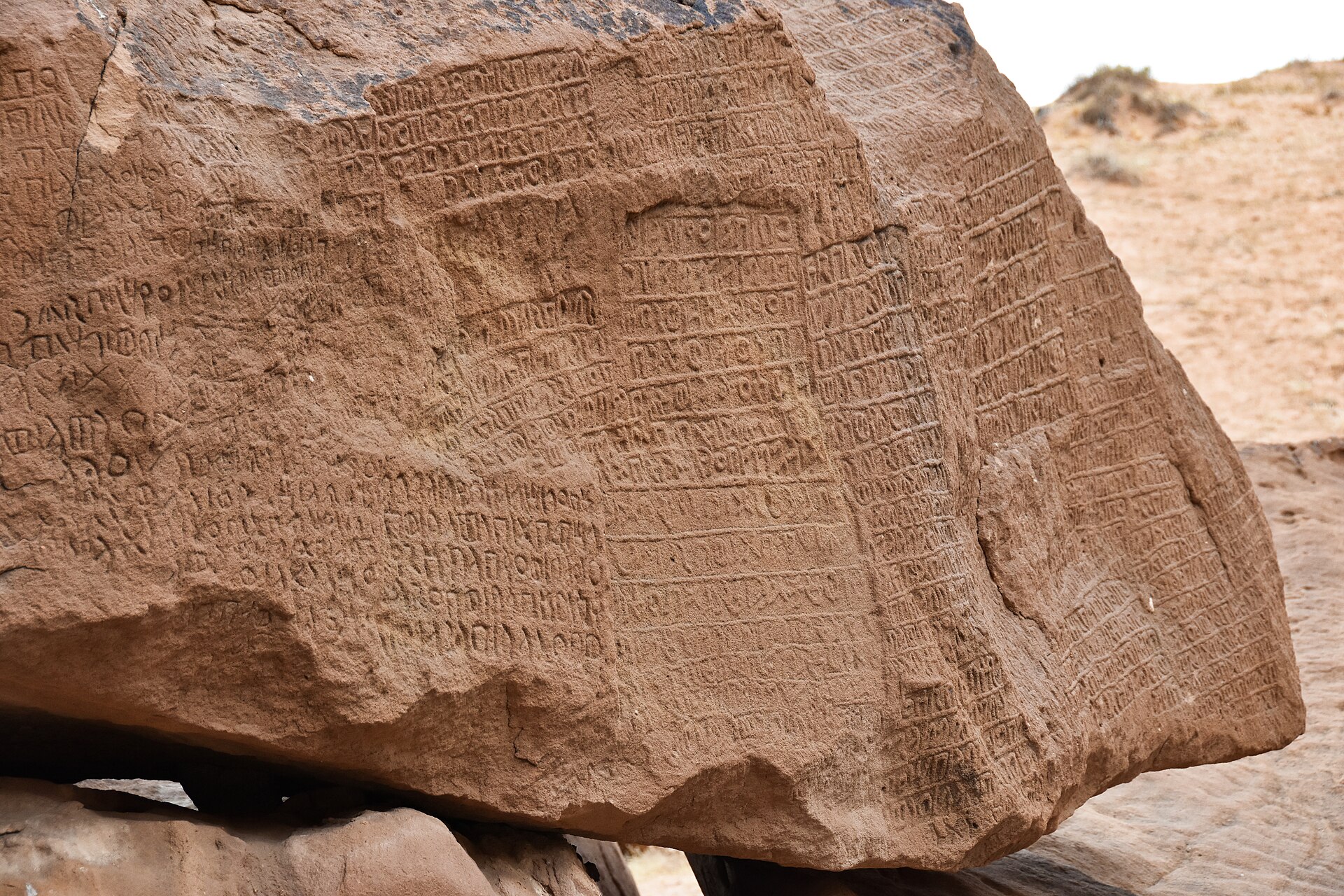
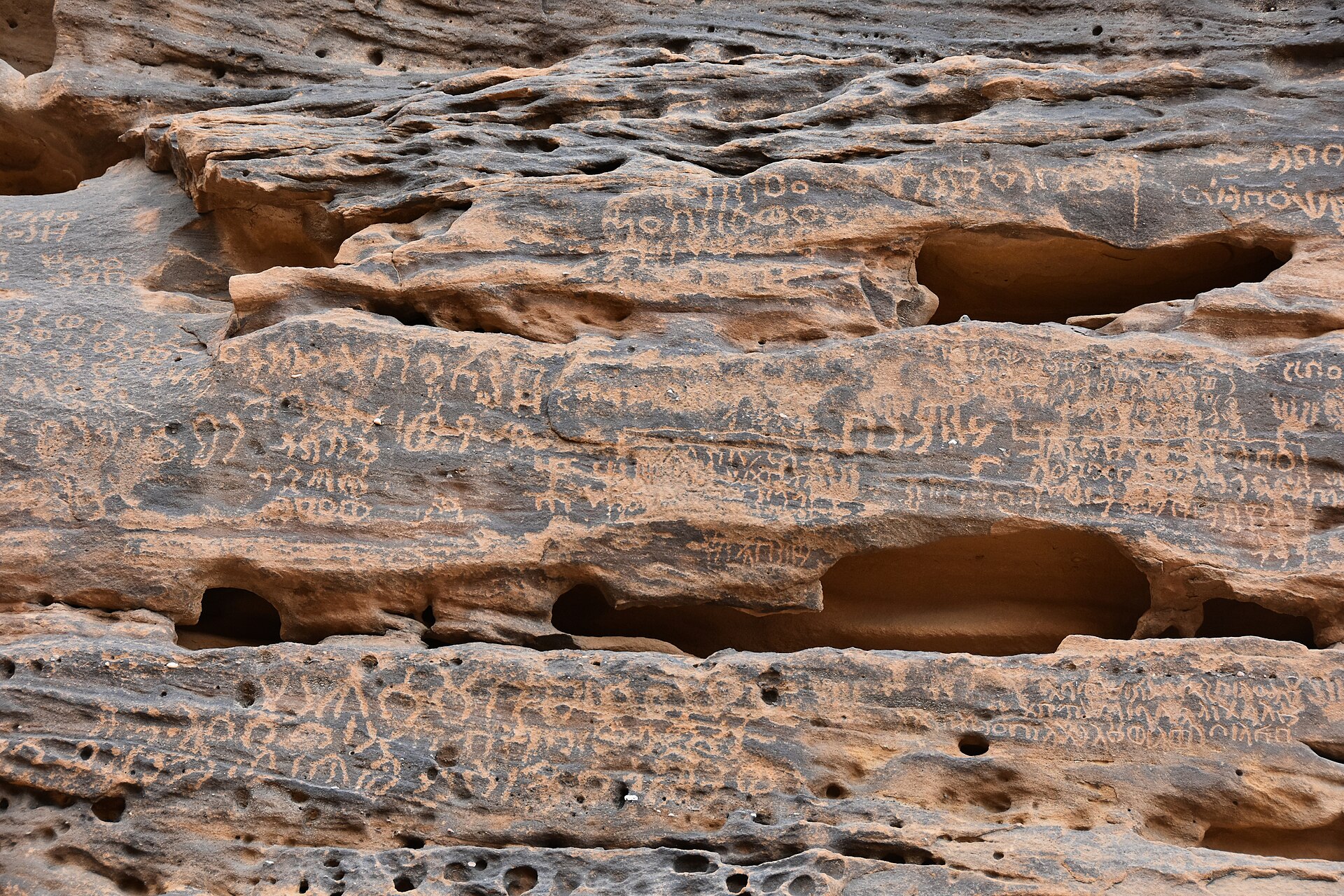
Jabal Ikmah — literally “Mountain of Wisdom” in Arabic — is an archaeological site in the AlUla valley where hundreds of inscriptions and petroglyphs have been carved into the sandstone cliffs of a narrow gorge. Often called an “open-air library,” the site holds the most extensive concentration of well-preserved Dadanitic and Lihyanite inscriptions found anywhere in the world.
The inscriptions date primarily to the second half of the first millennium BCE, spanning roughly the 6th to 1st centuries BC. They were created during the era of the Kingdom of Dadan and its successor, the Kingdom of Lihyan — two powerful Arabian states that grew wealthy controlling the flow of frankincense and myrrh along the ancient incense trade route.
Unlike the monumental Nabataean tombs at Hegra, which were built for display, the inscriptions at Jabal Ikmah are intimate and personal. They record offerings to gods, requests for protection on journeys, agricultural transactions, names of priests and priestesses, and the everyday hopes of people who lived here more than two millennia ago.
History of the Site and the Kingdom of Dadan
The Dadanite and Lihyanite Kingdoms
To understand Jabal Ikmah, you first need to understand Dadan. The ancient city of Dadan — located just a short drive from Jabal Ikmah — served as the capital of the Kingdom of Dadan from at least the late 9th century BCE, and later of the Kingdom of Lihyan, until the early 1st century BCE. At its height, Dadan was one of the most important cities in the Arabian Peninsula, positioned at a critical junction on the north-south caravan routes that carried luxury goods from southern Arabia to Egypt, Mesopotamia, and the Mediterranean world.
The Dadanite kingdom flourished through a combination of intensive irrigated agriculture — the AlUla valley’s reliable water sources made farming possible in an otherwise arid landscape — and control over the overland trade in frankincense, myrrh, and spices. The Lihyanites, who succeeded them, expanded this influence further, becoming the dominant power in northwestern Arabia.
The Incense Trade Route
For millennia, the incense route connected the frankincense-producing regions of southern Arabia (modern-day Yemen and Oman) and the Horn of Africa with the wealthy civilisations of the Mediterranean. Frankincense — a resin harvested from the Boswellia sacra tree — was one of the most sought-after commodities in the ancient world, used in religious rituals, medicine, and perfumery from Egypt to Rome.
AlUla sat at a vital waypoint on this route. Caravans travelling north would stop at Dadan to rest, trade, and resupply. The Minaeans, who were key players in the frankincense trade, established a trading community at Dadan. Inscriptions at Jabal Ikmah show evidence of intermarriage between Minaean traders and the local Dadanite population — a sign of the deep cultural exchange that occurred here.
A Sacred Site for Travellers
Scholars believe that Jabal Ikmah was not merely a convenient surface for writing — it was a sacred place. Many of the inscriptions record offerings to the Lihyanite deity Dhu Ghabat (also written as Shu Ghaybah) and include prayers requesting protection for journeys ahead. Travellers, merchants, and pilgrims passing through the gorge would pause to carve dedications into the rock, much as later travellers would leave their marks at caravanserais along the Silk Road.
This makes Jabal Ikmah something genuinely rare: a place where the voices of ordinary people — not just kings and priests — survive across millennia.
The Inscriptions: Reading the Open-Air Library
Languages and Scripts
The approximately 300 inscriptions at Jabal Ikmah were written in multiple languages and scripts, reflecting the site’s role as a crossroads of ancient Arabian civilisation:
- Dadanitic — the majority of inscriptions, using a 28-letter alphabet written right to left, with vertical lines or paired dots separating words
- Lihyanite — closely related to Dadanitic, used during the later Lihyanite kingdom period
- Minaic — the script of the Minaean traders from southern Arabia who established a community at Dadan
- Thamudic — a group of related Ancient North Arabian scripts used by nomadic peoples across the peninsula
- Aramaic — the lingua franca of the ancient Near East, showing Dadan’s connections to wider Mesopotamian and Levantine trade networks
- Religious offerings and rituals — dedications to the god Dhu Ghabat, prayers for protection, records of temple offerings
- Agricultural life — records of irrigation, crop management, and land transactions
- Social structures — names and titles of rulers, priests, and community leaders
- Trade and commerce — references to goods, transactions, and the movement of people and materials
- Memorials — personal dedications, blessings, and commemorations of individuals
- Animals — camels, bulls, ostriches, and other creatures that inhabited the ancient Arabian landscape
- Hunting scenes — evidence of how the local population supplemented their agricultural and trade-based economy
- Musical instruments — at least one petroglyph appears to depict a stringed instrument, offering a glimpse into the artistic and cultural life of the Dadanite people
- Book in advance. Tours have limited daily capacity and sell out during peak season (October–March). Book through experiencealula.com as soon as your travel dates are confirmed.
- Combine with Dadan. The standard tour already includes both sites, but give yourself mental space for both — do not rush through Dadan to “save energy” for Jabal Ikmah. The lion tombs at Dadan are extraordinary in their own right.
- Wear comfortable walking shoes. The terrain is uneven sandstone and gravel. Closed-toe shoes with good grip are essential.
- Dress for the weather. Even in winter, afternoons in AlUla can be warm. In summer, temperatures exceed 40°C. Layers are wise from November to February, when evenings turn cool. Check our best time to visit Saudi Arabia guide for month-by-month conditions.
- Arrive early at Winter Park. Coaches depart on schedule. If you miss your slot, you may not be able to rebook for the same day.
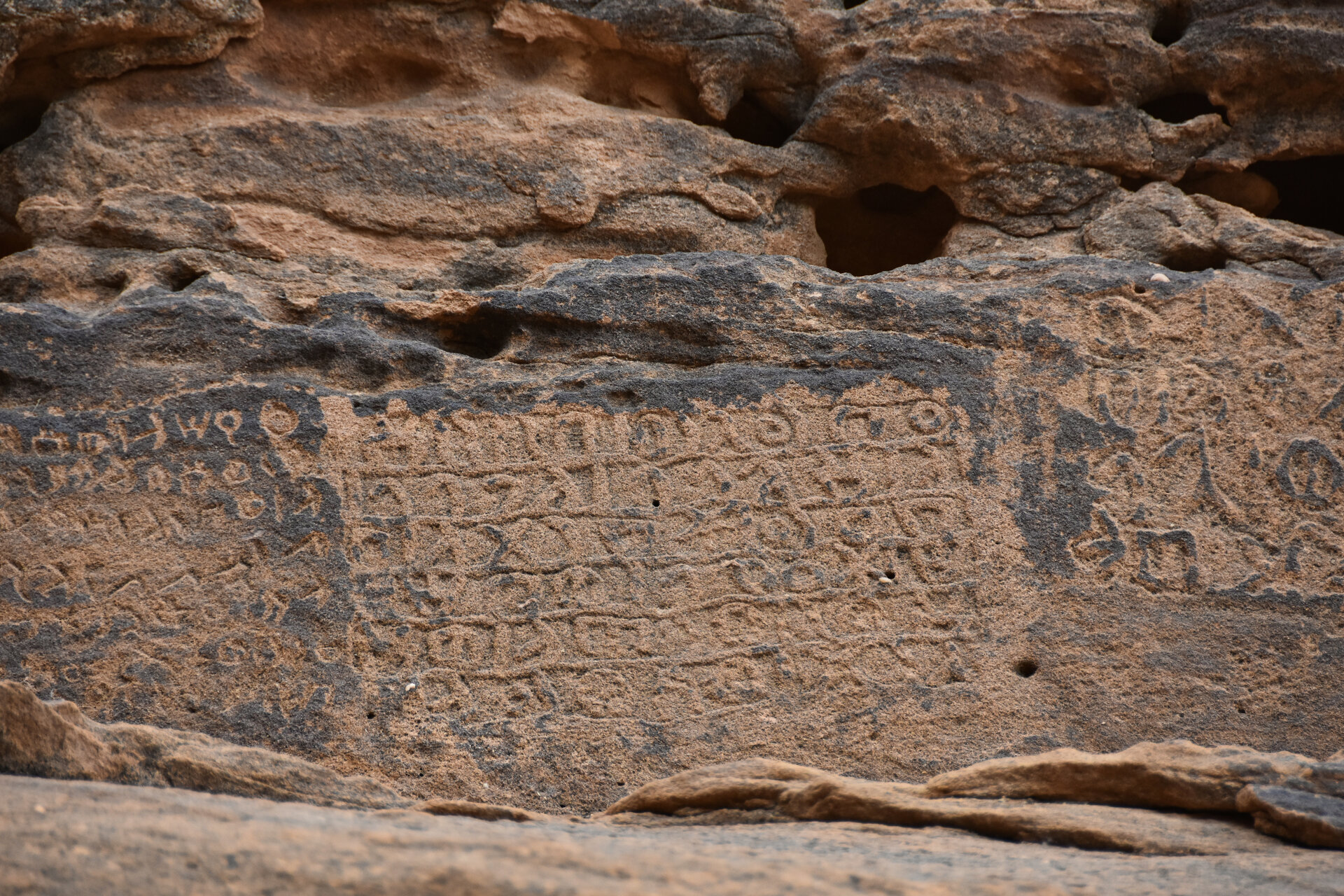
- Learn a few Dadanitic letters before you go. The 28-letter Dadanitic alphabet is documented online. Even recognising a handful of characters — the letters for common words like “son of” (bn) or “priest” (khn) — transforms the experience from “looking at scratches” to reading fragments of ancient lives.
- Photography is allowed. Take as many photos as you like, but never touch, trace, or attempt to remove any inscription. These are irreplaceable heritage artefacts.
- Habitas AlUla — A sustainably built luxury resort set among the canyons, with minimalist desert pavilions. One of the most photographed hotels in Saudi Arabia.
- Shaden Resort — A comfortable resort-style property with traditional Saudi architectural elements, a pool, and views of the valley.
- Banyan Tree AlUla — Ultra-luxury tented villas with private pools, set in a dramatic canyon landscape.
- Cloud7 Residence AlUla — A more affordable option in the town centre, suitable for budget-conscious travellers.
- More than 3 days before: Full refund (excluding credit card fees)
- 1–3 days before: Rebooking only (subject to availability), no refund
- Day of tour: No refund or rebooking
- AlUla Travel Guide 2026 — The complete guide to visiting AlUla, from flights and hotels to itinerary planning
- Hegra (Madain Salih) Guide — Explore Saudi Arabia’s first UNESCO World Heritage Site and its 111 Nabataean tombs
- Ancient Dadan Guide — Visit the ruined capital of the Dadanite and Lihyanite kingdoms and their lion tombs
- Elephant Rock (Jabal AlFil) — AlUla’s most iconic natural landmark and sunset viewing spot
- Saudi Arabia Travel Guide 2026 — The complete guide to visiting the Kingdom
- Saudi Arabia Visa Guide — Every visa type explained
Together, these inscriptions played a crucial role in scholars’ understanding of the development of Old Arabic languages and dialects during the first millennium BCE. The Dadanitic script, in particular, is extraordinarily well-preserved at Jabal Ikmah — the inscriptions have “remarkably preserved their original form, allowing us to read them as they were written,” according to UNESCO.
What the Inscriptions Tell Us
The carved messages at Jabal Ikmah document a wide range of subjects from daily life in ancient Dadan:
These are not royal proclamations or propaganda. They are the records of real people going about their lives — making offerings, recording business deals, and asking the gods for safe passage. That ordinariness is precisely what makes them so valuable to historians.
Women in Lihyanite Society
One of the most significant findings from the Jabal Ikmah inscriptions is evidence of women’s active participation in religious and economic life. Analysis reveals that 29 percent of inscriptions related to the priesthood reference women — indicating that women held positions as priestesses and played a central role in the spiritual life of Lihyanite society.
Beyond religious life, inscriptions also record women as property owners and land holders. This evidence has reshaped scholars’ understanding of gender roles in ancient Arabian civilisations, revealing a society that was considerably more complex and egalitarian than previously assumed.
The Petroglyphs
In addition to written inscriptions, Jabal Ikmah contains petroglyphs — images carved or pecked into the rock surface. These depict:
The petroglyphs complement the written record, providing visual evidence of the environment, economy, and culture of the AlUla valley in antiquity.
UNESCO Memory of the World Recognition
On 23 May 2023, UNESCO’s Executive Board unanimously voted to add Jabal Ikmah to the Memory of the World International Register under the official title “Arabian Chronicles in Stone: Jabal Ikmah.” This designation recognises documentary heritage of outstanding universal value — placing Jabal Ikmah alongside the Magna Carta, the Bayeux Tapestry records, and the Dead Sea Scrolls as a document of global significance.
The UNESCO recognition capped years of collaborative research between Saudi and international archaeological teams working in the AlUla valley. The 2025–26 research season in AlUla is one of the most ambitious yet, with more than 100 archaeologists and specialists working across multiple major projects, including ongoing inscription studies at Jabal Ikmah.
Why it matters: The Memory of the World designation is distinct from UNESCO World Heritage status (which Hegra already holds). While World Heritage protects physical sites, Memory of the World protects documentary heritage — the information itself. Jabal Ikmah’s inscriptions are recognised as irreplaceable records of human civilisation.
Visiting Jabal Ikmah: The Practical Guide
Jabal Ikmah cannot be visited independently. Access is controlled by the Royal Commission for AlUla (RCU), and all visits are conducted as guided tours through Experience AlUla, the official tourism platform. Here is everything you need to know to plan your visit.
The Standard Dadan & Jabal Ikmah Tour
| Detail | Information |
|---|---|
| Tour name | Dadan & Jabal Ikmah Tour |
| Duration | Approximately 2 hours |
| Price | From SAR 60 per person (approx. USD 16) |
| Format | Coach tour with Heritage Ranger guide and immersive audio narration |
| Audio languages | Available in 5 languages |
| Operating hours | Tours typically run 4:00 PM – 6:30 PM (check current schedule on experiencealula.com) |
| Operating days | Sunday through Saturday (daily) |
| Parking | Free at Winter Park; coaches transport visitors to the sites |
| Children | All ages welcome; children 4 and under are free |
The standard tour combines both Dadan and Jabal Ikmah in a single visit. You park for free at Winter Park in AlUla, board an air-conditioned coach to the Dadan Visitor Centre, explore the ancient city and its lion tombs, then drive approximately 10 minutes to Jabal Ikmah to see the inscriptions. A Heritage Ranger accompanies the group, and audio narration provides context throughout.
The Premium Tour
| Detail | Information |
|---|---|
| Tour name | Dadan & Jabal Ikmah Premium Tour |
| Duration | Approximately 2 hours |
| Price | From SAR 1,000 per vehicle |
| Format | Private 4×4 vehicle with dedicated Heritage Ranger |
| Parking | Direct access — park at Dadan Visitor Centre |
The premium tour offers a private 4×4 vehicle and a dedicated Heritage Ranger for a more intimate, flexible experience. It is particularly worth considering if you are a serious photography enthusiast, travelling with elderly family members, or simply want more time to linger at specific inscriptions without the group schedule.
What to Expect on Your Visit
The drive from Dadan to Jabal Ikmah takes about 10 minutes through the AlUla valley. As you approach the site, the gorge narrows and the sandstone walls rise around you — and then the inscriptions begin to appear.
The Heritage Ranger will point out key inscriptions, explain their content and historical context, and help you spot details you might otherwise miss. The audio narration adds layers of context about the Dadanite and Lihyanite civilisations. You will walk along a prepared path through the gorge, stopping at marked points where major inscriptions and petroglyphs are visible.
Tip: Bring binoculars or a camera with a good zoom lens. Some of the most interesting inscriptions are high up on the cliff faces and difficult to read with the naked eye. Late afternoon light (when tours typically run) creates ideal conditions for photography, as the low sun angle throws the carved letters into sharp relief.
The Visitor Centre
The Jabal Ikmah Visitor Centre is a highlight in itself. Guests are welcomed with traditional Arab hospitality — expect Saudi coffee (qahwa), dates, dried fruits, and fresh juices, depending on the season. A small gift shop sells AlUla-themed souvenirs and publications. Bottled water is provided on the tour, but bring your own water bottle as well, especially in the warmer months.
Tips for Getting the Most from Your Visit
Jabal Ikmah vs Other AlUla Archaeological Sites
AlUla contains multiple world-class archaeological sites. Here is how Jabal Ikmah compares:
| Site | Period | Main Feature | Visit Time | Best For |
|---|---|---|---|---|
| Jabal Ikmah | 6th–1st century BCE | 300+ inscriptions in multiple ancient languages | ~2 hours (combined with Dadan) | History enthusiasts, epigraphy, ancient languages |
| Hegra (Madain Salih) | 1st century BCE – 2nd century CE | 111 monumental Nabataean tombs, UNESCO World Heritage Site | 2–3 hours | Architecture, photography, the “must-see” of AlUla |
| Dadan | 9th–1st century BCE | Ancient city ruins, lion tombs carved into cliff faces | Included in Jabal Ikmah tour | Ancient civilisations, urban archaeology |
| Elephant Rock (Jabal AlFil) | Natural formation | Massive elephant-shaped rock with café and seating | 1–2 hours | Sunset photos, families, casual visitors |
Our recommendation: Visit all four. A well-planned two-day AlUla itinerary can comfortably include Hegra, Dadan & Jabal Ikmah, Elephant Rock, and the Old Town. Jabal Ikmah is the most intellectually rewarding of the four — it is where AlUla’s history stops being about impressive ruins and starts being about real people.
Getting to AlUla
By Air
AlUla has its own airport — Prince Abdul Majeed bin Abdulaziz Domestic Airport (IATA: ULH) — with direct flights from Riyadh (approximately 1 hour 40 minutes) and Jeddah (approximately 1 hour 20 minutes) on Saudia and flynas. International connections via Dubai, Abu Dhabi, and Cairo are also available seasonally. See our Saudi Arabia airport guide for full details on terminals, transfers, and airline routes.
By Road
AlUla is roughly 300 km north of Medina (approximately 3.5 hours’ drive) and 400 km south of Tabuk (approximately 4 hours). The road from Medina is well-maintained and passes through spectacular desert scenery. Self-driving is a viable option if you want flexibility for your AlUla visit, though you will still need to book guided tours for sites like Jabal Ikmah and Hegra.
If you are arriving from outside Saudi Arabia, you will need a tourist e-visa, which can be obtained online in minutes for citizens of 63 eligible countries. For full visa information, see our Saudi Arabia visa guide.
Best Time to Visit Jabal Ikmah
The AlUla tourism season runs from October to March, when daytime temperatures range from a comfortable 20–28°C and the desert evenings are pleasantly cool. This is also when the full programme of Experience AlUla tours and events operates, including the popular Tantora and Ancient Kingdoms festivals.
Summer visits (June–August) are possible but challenging, with temperatures regularly exceeding 40°C. Tour availability may be reduced, and the afternoon timing of the Jabal Ikmah tour means you will be outdoors during the hottest part of the day.
For the best photography conditions at Jabal Ikmah, visit in November or December. The lower winter sun creates dramatic shadows that make the inscriptions easier to see and photograph. For detailed monthly breakdowns, consult our best time to visit Saudi Arabia guide.
Where to Stay in AlUla
AlUla’s accommodation options have expanded significantly as part of the Vision 2030 tourism development programme. Options range from ultra-luxury desert resorts to mid-range hotels in the town centre:
During peak season, accommodation books up weeks in advance. Reserve early, especially if visiting during a festival period. For broader accommodation options across Saudi Arabia, see our hotels guide.
Cancellation and Booking Policies
Experience AlUla operates a tiered cancellation policy for all tours, including the Dadan & Jabal Ikmah experience:
For booking inquiries, contact Experience AlUla at +966 920 025 003 (Sunday–Thursday, 8 AM–5 PM KSA time).
Visiting AlUla as a Non-Muslim Traveller
AlUla is one of the most welcoming destinations in Saudi Arabia for international visitors of all backgrounds. Unlike Mecca and Medina, there are no religious restrictions on visiting any site in the AlUla valley. The tourism infrastructure has been designed from the ground up for international guests, with English-language signage, multilingual audio tours, and staff accustomed to hosting visitors from around the world. For more on navigating Saudi Arabia as a non-Muslim visitor, see our non-Muslim travel guide.