
Eid Al Adha is the most sacred festival in the Islamic calendar, and there is no more powerful place to experience it than Saudi Arabia — the land where the Hajj pilgrimage reaches its climax and where the story of Ibrahim’s sacrifice originates. Whether you are completing your Hajj pilgrimage or visiting the Kingdom as a tourist, Eid Al Adha transforms the entire country into a celebration of faith, family, and generosity. From sunrise prayers in vast open-air congregations to lavish multi-course feasts of slow-roasted lamb and fragrant rice, the festival offers travellers one of the most immersive cultural experiences anywhere in the Middle East. This guide covers everything you need to plan your trip: dates, traditions, what to expect in each major city, where to eat, and the practical details that will make your visit seamless.
Best Time to Visit: 10th–13th Dhul Hijjah (expected 27–30 May 2026)
Getting There: Fly into Riyadh (RUH), Jeddah (JED), or Dammam (DMM). Book flights 6–8 weeks early — Eid is peak travel season.
Visa Required: Yes — tourist e-visa or Hajj/Umrah visa
Budget: SAR 500–1,500 / day (USD 130–400). Expect 30–50% hotel surcharges during Eid week.
Must-See: Eid prayer congregations, Diriyah heritage festivals, Jeddah Corniche fireworks
Avoid: Booking last-minute flights or hotels — prices surge and seats sell out weeks ahead
When Is Eid Al Adha 2026?
Eid Al Adha falls on the 10th day of Dhul Hijjah, the final month of the Islamic lunar calendar. In 2026, it is expected to begin on Wednesday 27 May, with the Day of Arafah — the spiritual pinnacle of the Hajj pilgrimage — falling on Tuesday 26 May. The official holiday lasts four days, through Saturday 30 May.
However, Islamic dates are confirmed only after the crescent moon is sighted by the Saudi Supreme Judicial Council. The date can shift by a day in either direction, so travellers should monitor official announcements from the Saudi Press Agency in the week before Dhul Hijjah begins. Government offices, banks, and most businesses close for the entire four-day period, and many private businesses extend the break to a full week.
Planning tip: The Day of Arafah (9th Dhul Hijjah) is a day of fasting for Muslims not performing Hajj. Many restaurants remain open for non-fasting visitors, but expect reduced hours in conservative areas. The Eid prayer the following morning marks the formal start of celebrations.
What Is Eid Al Adha? Understanding the Festival
Eid Al Adha — the “Festival of Sacrifice” — commemorates the willingness of the Prophet Ibrahim (Abraham) to sacrifice his son Ismail in obedience to God’s command. As Ibrahim prepared to carry out the act, God provided a ram as a substitute. Muslims worldwide honour this story through the ritual of Qurbani: the sacrifice of a sheep, goat, cow, or camel.
The Ritual of Qurbani
In Saudi Arabia, Qurbani is performed after the Eid prayer on the 10th of Dhul Hijjah, and continues through the 12th. The animal must be healthy, of a specified minimum age, and slaughtered according to Islamic dhabihah standards. The meat is divided into three equal portions: one-third for the family, one-third distributed to relatives and neighbours, and one-third given to the poor. Saudi authorities operate licensed slaughterhouses across every major city, and many families now arrange their Qurbani through authorised online platforms that handle the slaughter and distribution on their behalf.
Eid Prayer
The day begins with the Eid salah, performed shortly after sunrise in large open-air prayer grounds (musallas) and mosques across the country. In Riyadh alone, hundreds of prayer sites are designated by the Ministry of Islamic Affairs. The atmosphere is electric: families arrive in their finest clothes, children in new outfits, and the air fills with the collective recitation of the Takbir — “Allahu Akbar, Allahu Akbar, la ilaha illallah” — from the evening before Eid through the final day.
Eid Al Adha and Hajj: The Connection
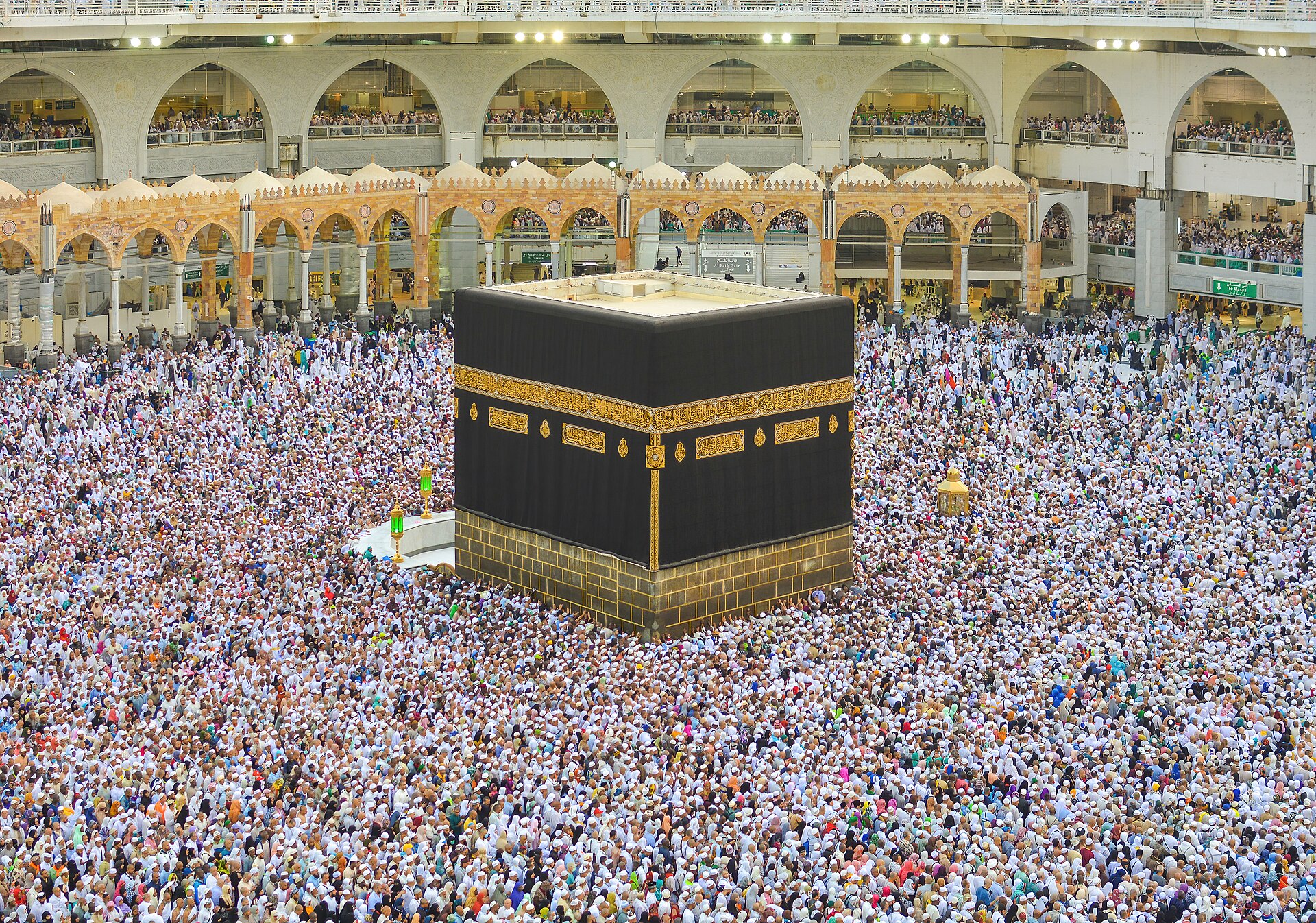
Eid Al Adha is inseparable from the Hajj pilgrimage. While roughly two million pilgrims perform the rituals of Hajj in Mecca, Mina, and Arafat, over a billion Muslims worldwide celebrate Eid Al Adha simultaneously. The Day of Arafah — when pilgrims stand on the plain of Arafat in prayer — is considered the most sacred day of the Islamic year.
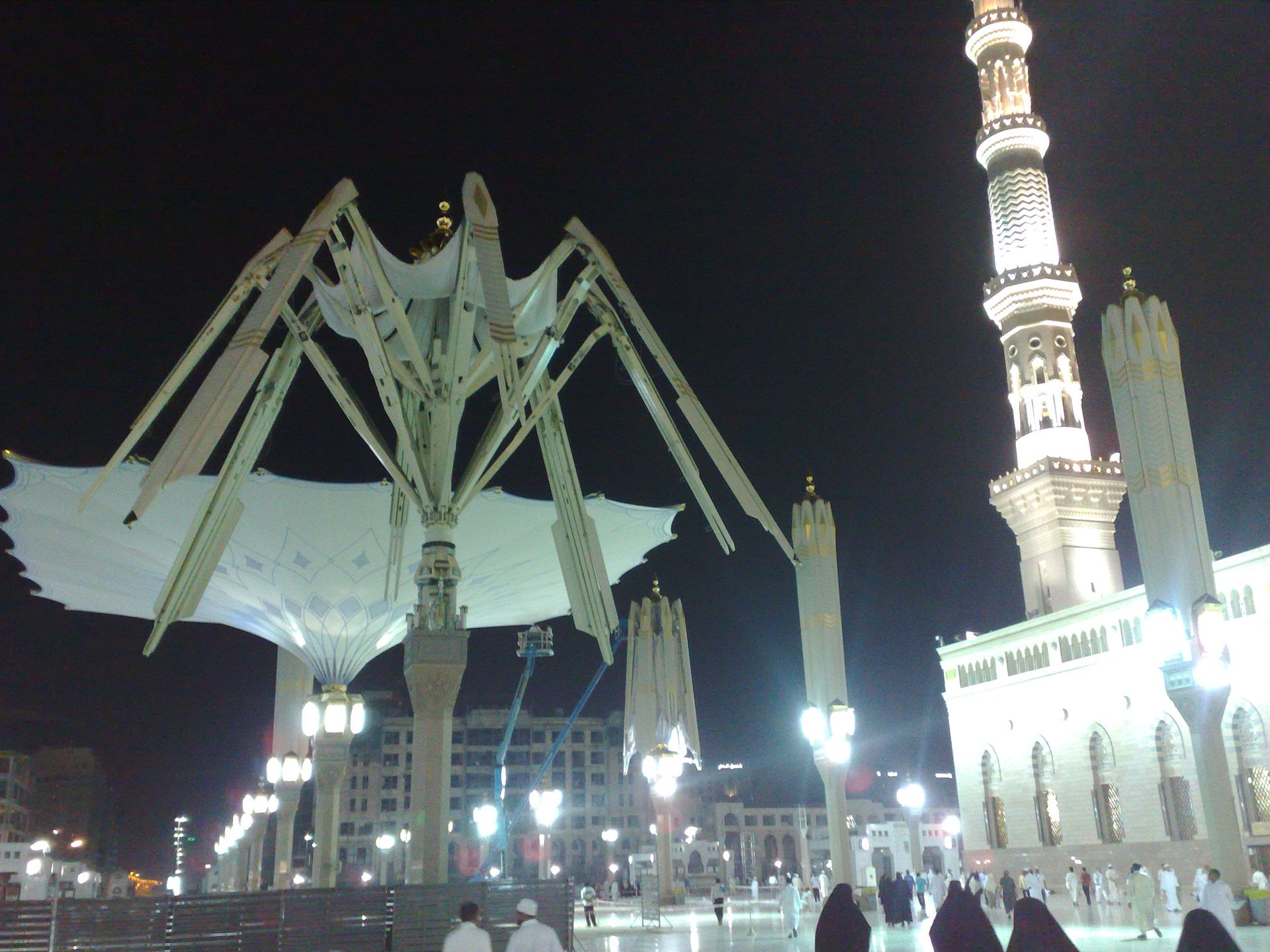
For non-Muslim visitors, it is important to understand that Mecca and the sacred precincts of Medina are closed to non-Muslims at all times, not just during Hajj. Road signs clearly mark the boundaries, and checkpoints are enforced. However, non-Muslims can visit the wider city of Medina, stay in its hotels, and view Al-Masjid an-Nabawi (the Prophet’s Mosque) from outside the restricted prayer areas. During Eid, Medina’s streets are beautifully decorated and the festive atmosphere is open to everyone.
Important: If you hold a tourist e-visa rather than a Hajj visa, you cannot enter the Hajj zones in and around Mecca during the Hajj season. Plan your itinerary around Riyadh, Jeddah, AlUla, or other destinations outside the holy cities.
Where to Celebrate: City-by-City Guide
Riyadh
The capital comes alive during Eid Al Adha with a mix of heritage celebrations and modern entertainment. Riyadh offers the widest variety of Eid experiences in the Kingdom:
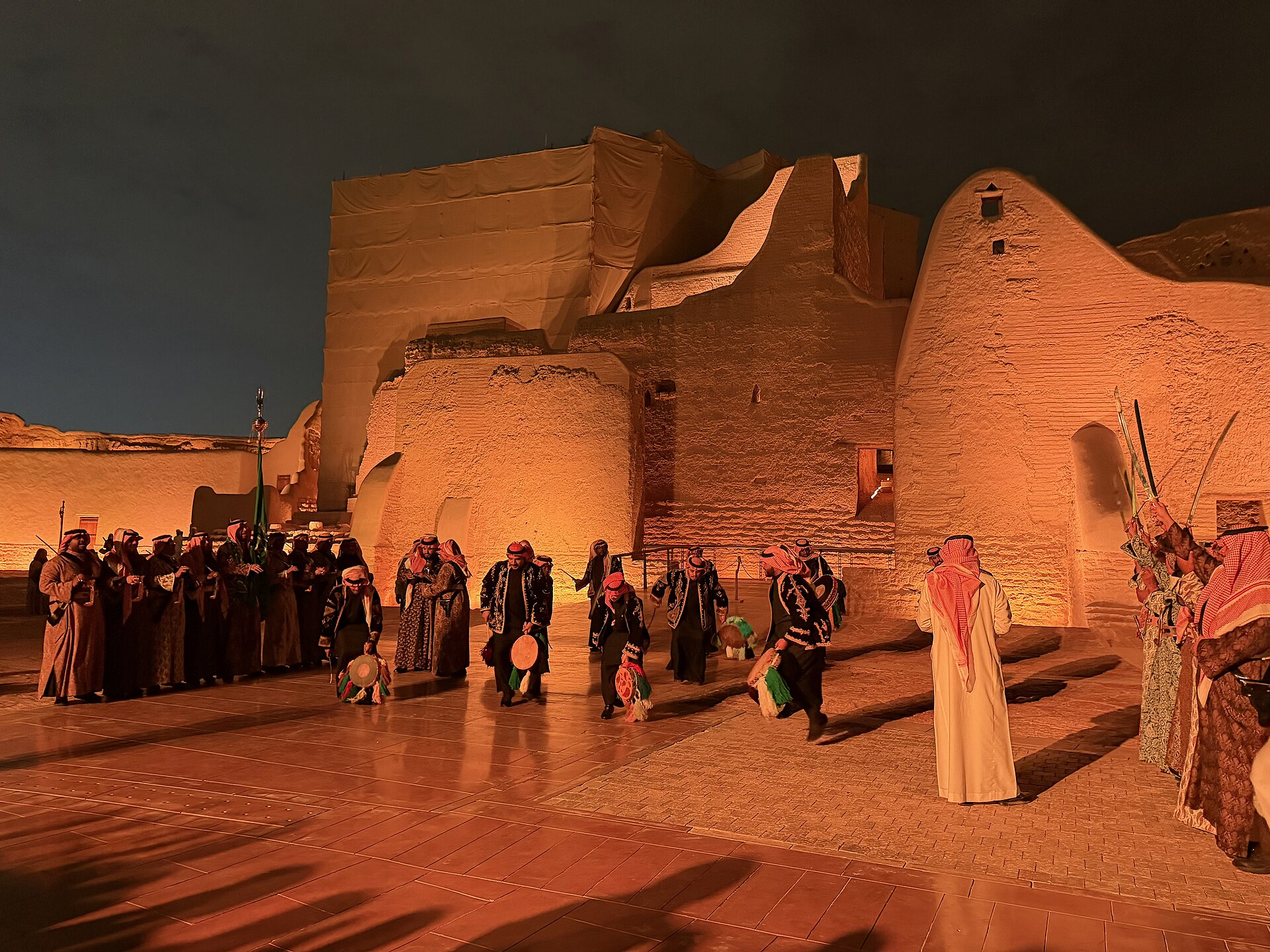
- Diriyah: The UNESCO-listed At-Turaif district hosts traditional performances including the Al-Ardha (Saudi sword dance), Al-Samari folk music, Arabian horse displays, and henna artistry. Bujairi Terrace — the dining and cultural precinct overlooking At-Turaif — stages live entertainment throughout the Eid break.
- Edge of the World (Jebel Fihrayn): The dramatic 300-metre sandstone cliffs northwest of Riyadh are a popular Eid excursion. Guided tours often include traditional Saudi coffee ceremonies on the cliff edge.
- Boulevard Riyadh City: Part of the Riyadh Season entertainment zones, Boulevard features concerts, international dining, and family-friendly attractions. While Riyadh Season typically runs October–March, special Eid programming is often staged during major holidays.
- Kingdom Centre and KAFD: Riyadh’s modern skyline fills with decorative lighting during Eid. The observation deck at Kingdom Centre Tower offers panoramic sunset views over a city in full celebration.
- Dirah Souq: The old market near Masmak Fortress is the place to shop for traditional Saudi gifts — oud perfume, dates, woven textiles, and Arabic calligraphy. It’s busiest in the days before Eid as locals prepare for the holiday.
- Jeddah Corniche: The 30-kilometre waterfront promenade hosts Eid fireworks displays, food trucks, and family picnics. The King Fahd Fountain — the world’s tallest water jet at 312 metres — is illuminated in special colours during the festival.
- Al-Balad (Historic Jeddah): The UNESCO World Heritage old town, with its coral-stone tower houses and carved wooden balconies (rawasheen), stages heritage walks and traditional craft displays during Eid. The souqs here sell everything from frankincense to hand-embroidered thobes.
- Floating Mosque (Fatima Al Zahra Mosque): One of Jeddah’s most iconic landmarks, this mosque appears to float on the Red Sea at high tide. During Eid, the surrounding waterfront cafes are packed with families celebrating.
- Jeddah Season events: Seasonal entertainment programming typically includes concerts, cultural exhibitions, and family zones during major holidays.
- Ma’amoul: Shortbread cookies filled with dates, pistachios, or walnuts, dusted with powdered sugar — the quintessential Eid sweet, served alongside Arabic coffee to every guest.
- Luqaimat: Crispy deep-fried dough balls drizzled with date syrup or honey — addictively sweet and served at gatherings.
- Basbousa: Semolina cake soaked in rosewater or orange blossom syrup, topped with blanched almonds.
- Arabic coffee (Qahwa): Lightly roasted, cardamom-infused coffee served in small cups alongside dates. Accepting at least one cup is an essential gesture of Saudi hospitality.
- Saudi champagne: A non-alcoholic sparkling drink made with apple juice, sparkling water, and fresh mint — widely served during festive occasions.
- Loose-fitting clothing covering shoulders, elbows, and knees
- An abaya is no longer required for foreign women but is appreciated during Eid gatherings
- A headscarf is mandatory when visiting any mosque
- Choose light fabrics — temperatures in late May can exceed 40°C in Riyadh and Jeddah
- Long trousers and a shirt covering the shoulders — no shorts or sleeveless tops in public
- If you are invited to a local Eid gathering, consider wearing a white thobe (the traditional Saudi garment) — it’s a gesture that hosts deeply appreciate
- Greetings: Say “Eid Mubarak” (Blessed Eid) or “Kul aam wa antum bikhair” (May you be well every year) to locals. Both are warmly received.
- Hospitality: If invited to a Saudi home, bring a gift — dates, sweets, or perfume are ideal. Accept Arabic coffee and at least one serving of food. Refusing hospitality can cause offence.
- Photography: Always ask permission before photographing people, especially women and families. Photography of military and government installations is prohibited.
- Alcohol: Saudi Arabia prohibits alcohol entirely. This is strictly enforced.
- Public behaviour: Public displays of affection should be avoided, even between married couples. Holding hands is acceptable.
- Qurbani sensitivity: The animal sacrifice is central to Eid Al Adha. While slaughter takes place in designated facilities (not publicly in streets), visitors should approach the tradition with cultural respect.
- Generosity: Eid is characterised by gift-giving. Children receive Eidiyah (monetary gifts from elders), and charity is emphasised. Tipping service staff generously during Eid is customary.
- Government offices, banks, and schools are closed
- Shopping malls typically open with reduced hours (usually from late morning through late evening)
- Supermarkets and pharmacies maintain limited hours
- Restaurants may close on the first day, then reopen with special Eid hours
- ATMs remain operational, but branches are closed
- Hospitals and emergency services continue as normal
- Riyadh: BattleKart (real-life video game karting), House of Hype (12 immersive gaming zones), and the National Museum run special Eid programmes
- Jeddah: Atallah Happy Land, Al Shallal Theme Park, and the Jeddah Waterfront offer carnival-style Eid entertainment
- Dammam: Dolphin Village and Cobble Stone Village are popular family Eid outings
- Traditional gifts: Oud perfume, bukhoor (incense), dates (Ajwa dates from Medina are the most prized), prayer beads, and Arabic calligraphy art
- Modern shopping: Riyadh Park, The Esplanade, and Kingdom Centre in Riyadh; Red Sea Mall and Mall of Arabia in Jeddah; Dhahran Mall in the Eastern Province
- Souqs: For authentic haggling, visit Souq Al-Zal in Riyadh (antiques and heritage goods), Souq Al-Alawi in Jeddah’s Al-Balad (spices, textiles, perfumes), or the Qaisariah Souq in Al-Ahsa
- You cannot enter Mecca at any time or the sacred prayer areas of Medina’s Prophet’s Mosque
- You are welcome in the wider city of Medina, including its hotels, restaurants, and markets
- Locals are often especially generous during Eid — don’t be surprised to receive food or small gifts from strangers
- Respect the early-morning prayer time. If you hear the Takbir (the Eid chants of “Allahu Akbar”), it’s best to pause and wait quietly
- Many Saudi families will invite you to their Eid gathering if you show interest and respect — accept graciously
- Hajj 2026: The Complete Guide — Dates, costs, rituals, and everything you need for the pilgrimage
- Riyadh Travel Guide 2026 — The capital’s best attractions, neighbourhoods, and day trips
- Jeddah Travel Guide 2026 — Red Sea gateway, Al-Balad heritage, and the Corniche
- AlUla Travel Guide 2026 — Ancient Nabataean tombs, Elephant Rock, and desert adventures
- Abha and Asir Travel Guide — Cool highlands, terraced villages, and mountain culture
- Saudi Arabia Visa Guide 2026 — Every visa type explained, from tourist e-visa to Hajj permit
- Saudi Arabia Hotels Guide — Where to stay across the Kingdom, from desert camps to five-star towers
- Saudi Arabia Travel Guide 2026 — The complete guide to visiting the Kingdom
Jeddah
Jeddah, the gateway to Mecca and the Red Sea, offers a more cosmopolitan Eid experience with strong maritime character:
AlUla
AlUla — Saudi Arabia’s open-air museum — offers a quieter, more contemplative Eid experience. The ancient Nabataean tombs of Hegra (Saudi Arabia’s first UNESCO World Heritage Site), Elephant Rock, and the oasis of Dadan make for a culturally rich alternative to the big-city celebrations. AlUla often hosts special cultural events and heritage festivals during holiday periods.
Dammam and the Eastern Province
The Dammam–Al Khobar metropolitan area on the Arabian Gulf celebrates Eid with family-oriented beach gatherings, waterfront dining at Half Moon Bay, and evening social walks along the Khobar Corniche. The cooler sea breezes make the Eastern Province a more comfortable Eid destination than the interior during late May.
Abha and the Asir Highlands
For visitors seeking cooler temperatures, Abha in the southwestern highlands sits at 2,200 metres elevation, where Eid temperatures average 20–25°C compared to 40°C+ in the lowlands. The Asir region has its own distinct cultural traditions, including colourful Al-Qaht architecture and the annual Asir Season festival. The terraced villages and juniper forests of the Sarawat Mountains offer excellent hiking opportunities during the Eid break.
Eid Al Adha Food: The Feast
No guide to Eid Al Adha in Saudi Arabia is complete without the food. The Qurbani meat — typically lamb or goat — forms the centrepiece of elaborate family feasts that can last the entire four-day holiday. Here are the dishes you should seek out:
Must-Try Eid Dishes
| Dish | Description | Where to Find |
|---|---|---|
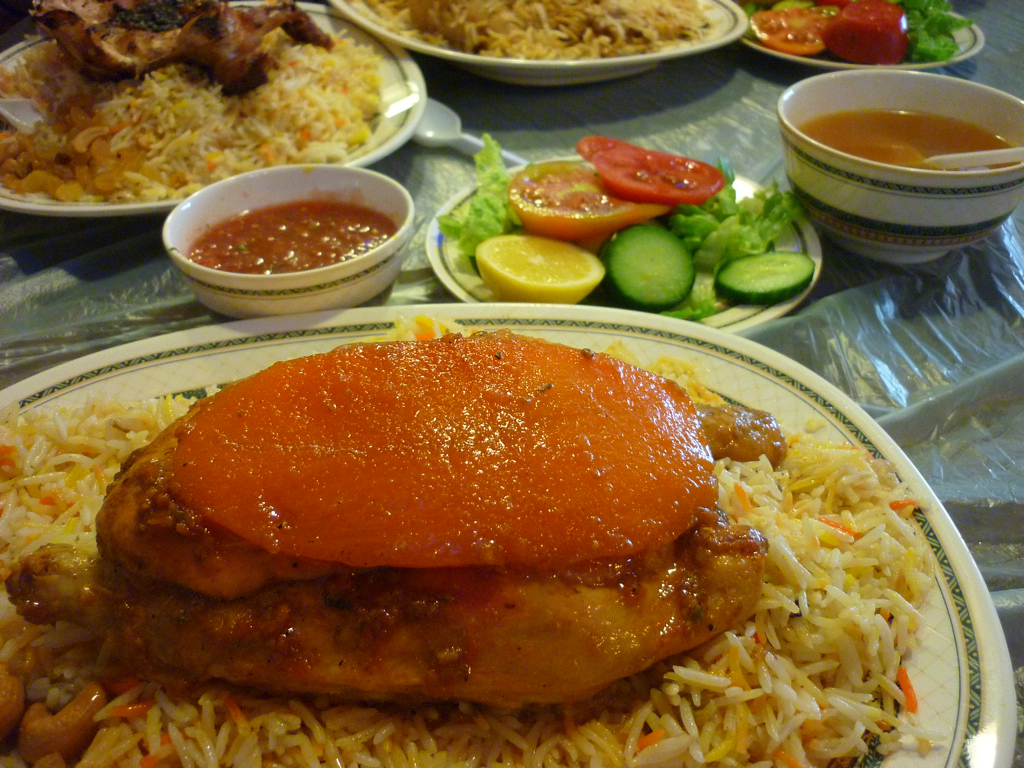
| Kabsa | Saudi Arabia’s national dish: long-grain basmati rice cooked in spiced meat broth with cardamom, cloves, cinnamon, and bay leaves, topped with tender lamb or chicken, raisins, and toasted almonds | Everywhere — every family has their recipe. For restaurant versions, try Al Baik (fast-food legend) or heritage restaurants in Riyadh’s Dirah district |
| Mandi | Lamb or chicken slow-cooked in an underground tandoor-style pit (taboon), served on fragrant rice infused with smoky flavour, with salads and spicy tomato chutney | Yemeni-influenced restaurants across Jeddah and the Hijaz region; Hadrami restaurants are especially authentic |
| Harees | A porridge-like comfort food of cracked wheat and shredded meat slow-cooked for hours until silky smooth, finished with a generous pour of ghee | Traditional homes during Eid gatherings; some heritage restaurants in Riyadh and Jeddah serve it seasonally |
| Jareesh | Crushed wheat simmered with yoghurt, spices, and meat until thick and creamy, garnished with fried onions and clarified butter | Najdi home cooking; Riyadh restaurants specialising in traditional Saudi cuisine |
| Mathloota | Slow-cooked lamb on a bed of thin flatbread, soaked in rich meat broth — a communal dish served on large platters | Family gatherings across the Hijaz and southern regions |
Eid Sweets and Beverages
Food tip: During the first day of Eid, many restaurants are closed as families celebrate at home. By the second and third days, restaurants reopen with special Eid menus. If you’re visiting without a local invitation, hotel restaurants are your most reliable option on Eid day itself.
What to Wear During Eid
Eid Al Adha is a time when Saudis dress in their finest. As a visitor, modest dress is both a legal requirement and a mark of respect. The Saudi Arabia dress code for tourists applies year-round, but it carries extra cultural weight during religious holidays.
For Women
For Men
Etiquette and Cultural Tips
Experiencing Eid Al Adha as a guest in Saudi Arabia is a privilege. These tips will help you navigate the occasion respectfully:
Practical Information for Travellers
Flights and Transport
Eid Al Adha is the busiest travel period in Saudi Arabia. Domestic and international flights to and from Riyadh (King Khalid International), Jeddah (King Abdulaziz International), and Dammam (King Fahd International) fill up weeks in advance. Book at least 6–8 weeks ahead for the best fares. During the Eid break, expect longer security queues, higher taxi demand, and surge pricing on ride-hailing apps like Uber and Careem.
The Haramain High-Speed Railway connecting Mecca, Jeddah, and Medina operates during Eid but is heavily booked by pilgrims. If your itinerary includes Medina, book train tickets as early as possible. SAR (Saudi Arabia Railways) also operates services between Riyadh and Dammam via the Eastern Province line.
Hotels and Accommodation
Hotel prices during Eid week can be 30–50% higher than normal, and many properties in Jeddah and Medina sell out entirely due to Hajj overflow. Riyadh, AlUla, and the Eastern Province typically have better availability. For the best selection, consult our Saudi Arabia hotels guide and book at least one month ahead.
Business Hours and Services
During the four-day Eid holiday:
Visa Requirements
Most visitors can enter Saudi Arabia on a tourist e-visa, which is available to citizens of 49+ countries and can be obtained online in minutes. The e-visa is valid for one year with 90-day stays. Note that the tourist e-visa does not permit entry to the Hajj zones during Hajj season — you will need a separate Hajj visa for that, allocated through your country’s Hajj quota system. For full details on all visa types, see our comprehensive Saudi Arabia visa guide.
Weather
Eid Al Adha 2026 falls in late May, which means serious heat in most of Saudi Arabia. Expect:
| City | Average High (May) | Average Low (May) | Notes |
|---|---|---|---|
| Riyadh | 42°C / 108°F | 27°C / 81°F | Dry desert heat; minimal humidity |
| Jeddah | 38°C / 100°F | 27°C / 81°F | High humidity from the Red Sea |
| Medina | 42°C / 108°F | 26°C / 79°F | Dry; hot winds possible |
| Dammam | 40°C / 104°F | 26°C / 79°F | Humid; sea breeze offers some relief |
| Abha | 28°C / 82°F | 16°C / 61°F | Cool highlands; best Eid weather |
| AlUla | 40°C / 104°F | 22°C / 72°F | Dry; best explored at dawn/dusk |
Heat safety: Carry water at all times. Outdoor activities like the Edge of the World trek or AlUla site visits should be scheduled for early morning (before 9am) or late afternoon (after 4pm). Sunscreen, a hat, and loose light-coloured clothing are essential.
Eid Al Adha with Children
Saudi Arabia is an exceptionally family-friendly destination during Eid. Children are central to the celebrations, receiving new clothes, Eidiyah (cash gifts from relatives), and access to special holiday events. Family-oriented attractions operate extended hours:
Most shopping malls set up temporary Eid fairs with carnival rides, face painting, and character meet-and-greets. Children’s play areas in malls are free and air-conditioned — a lifesaver during the May heat.
Shopping During Eid
The days leading up to Eid Al Adha are peak shopping season. Saudi families buy new clothes, gifts, and festive supplies. After the first day of Eid, many retailers launch post-Eid sales with significant discounts:
Eid Al Adha for Non-Muslim Visitors
Saudi Arabia actively welcomes non-Muslim tourists during Eid Al Adha. The tourist e-visa system, launched in 2019, has opened the Kingdom to leisure visitors from dozens of countries. While Eid is fundamentally a religious occasion, non-Muslim visitors can fully participate in the cultural celebrations — the food, the hospitality, the festive atmosphere, and the heritage events are open to everyone.
A few points specific to non-Muslim visitors:
Day-by-Day Eid Al Adha Itinerary
Day of Arafah (9th Dhul Hijjah — Eve of Eid)
A day of fasting for many Muslims. The city is quiet during the day. In the evening, families prepare for the next morning’s Eid prayer. Hotels and tourist attractions operate normally. This is a good day for visiting museums, Red Sea diving, or an AlUla heritage tour before the Eid rush begins.
Day 1: Eid Al Adha (10th Dhul Hijjah)
The Eid prayer takes place shortly after sunrise. After prayer, families perform the Qurbani and begin preparing the first Eid feast. Most businesses are closed. If you’re without a local invitation, your hotel is the best base — many five-star hotels host their own Eid brunches and celebrations. Evening brings family visits and social gatherings across every neighbourhood.
Days 2–3: Ayyam al-Tashreeq (11th–12th Dhul Hijjah)
The “days of drying meat” — named for the traditional practice of preserving Qurbani meat. These are the most social days: families visit relatives, children show off new clothes and count their Eidiyah, and public celebrations ramp up. Restaurants reopen, malls fill with families, and heritage venues like Diriyah stage their major cultural programming. This is the best time for tourists to experience Eid’s public face.
Day 4 (13th Dhul Hijjah)
The final day of the official holiday. Celebrations wind down, and some businesses begin reopening. A good day for day trips — Tabuk excursions, highland hikes near Abha, or a quiet morning at AlUla’s Elephant Rock.