
Deep in the arid mountains of southwest Saudi Arabia, roughly 100 kilometres north of Najran, lies one of the most extraordinary open-air galleries of ancient human expression on Earth. The Hima Cultural Area — inscribed on the UNESCO World Heritage List in 2021 — preserves over 7,000 years of continuous rock art, ancient inscriptions in at least five scripts, and a network of desert wells that sustained caravans long before the rise of Islam. Whether you are building a broader Saudi Arabia travel itinerary or seeking out the Kingdom’s most remote UNESCO site, Hima rewards the journey with an unmatched window into Arabia’s deep past. This guide covers everything you need to plan a visit: what the site contains, how to get there, where to stay, and what to combine it with in Najran Province.
Best Time to Visit: October to March (cooler desert temperatures, 18–28 °C)
Getting There: Fly to Najran Airport (EAM) from Riyadh or Jeddah, then drive 100–120 km north
Visa Required: Yes — tourist e-visa
Budget: $80–150 USD/day (including car rental and accommodation in Najran)
Must-See: Bi’r Hima ancient wells, rock art panels with hunting scenes, Musnad script inscriptions
Avoid: Visiting June–August (extreme heat above 45 °C makes outdoor exploration dangerous)
Why Hima Matters: 7,000 Years of Human Expression
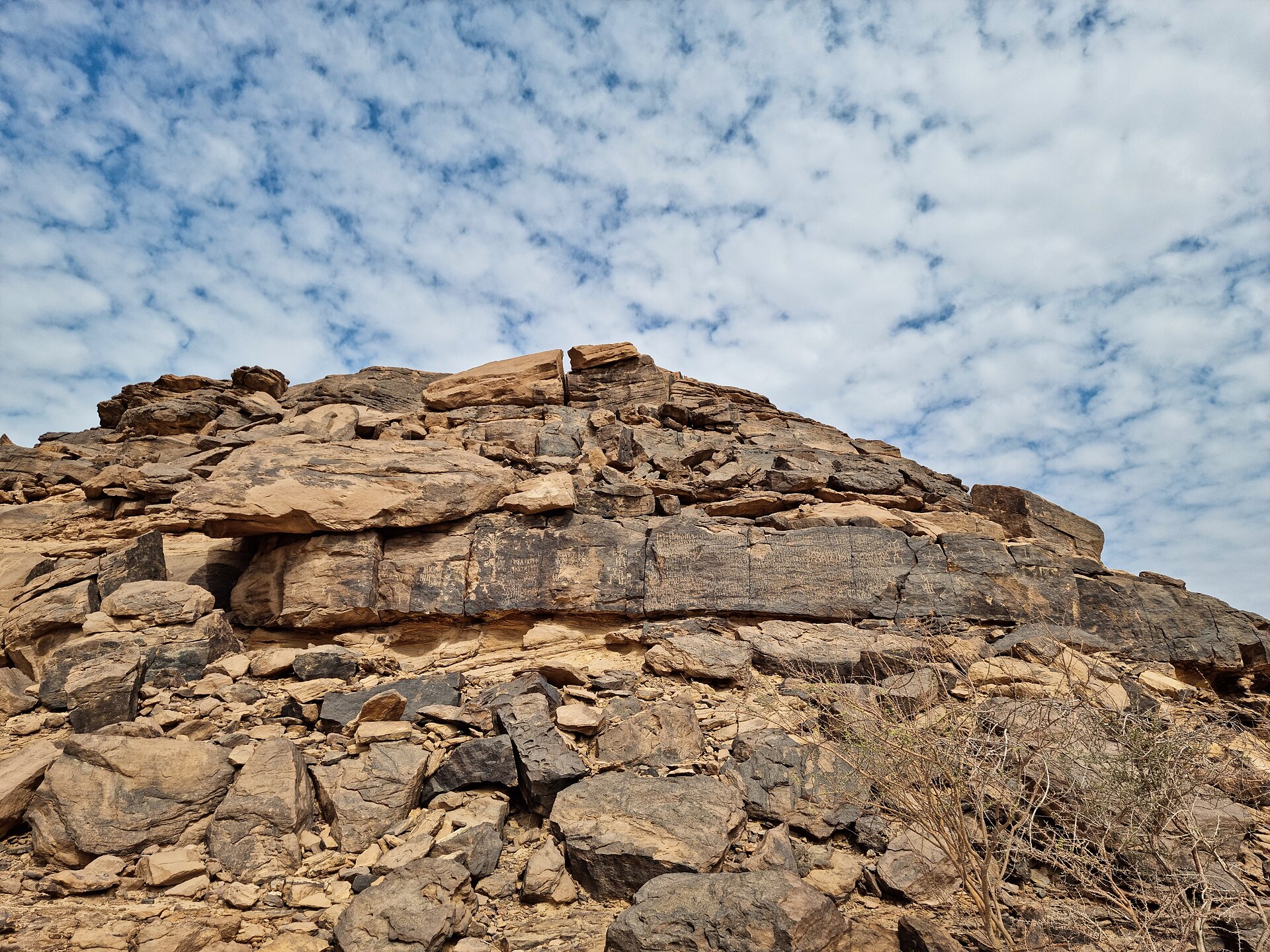
Hima is not a single site but a vast cultural landscape spanning more than 34 documented locations across roughly 30 kilometres of desert terrain. The rock art here represents an unbroken chain of human activity stretching from at least 5000 BCE through to the late twentieth century — a continuity almost unmatched anywhere in the world. Armies, traders, pilgrims, and nomadic herders all paused at the wells of Hima and left their marks on the surrounding sandstone outcrops.
What makes Hima exceptional is the sheer density and variety of its engravings. More than 6,400 individual images have been recorded across the region, including over 1,800 depictions of camels, 1,300 human figures, and hundreds of representations of ibex, cattle, horses, ostriches, and now-extinct species. These are not crude scratchings but carefully executed petroglyphs that document shifting livelihoods — from Neolithic hunting to pastoral herding to the organised caravan trade that connected southern Arabia to Mesopotamia and the Levant.
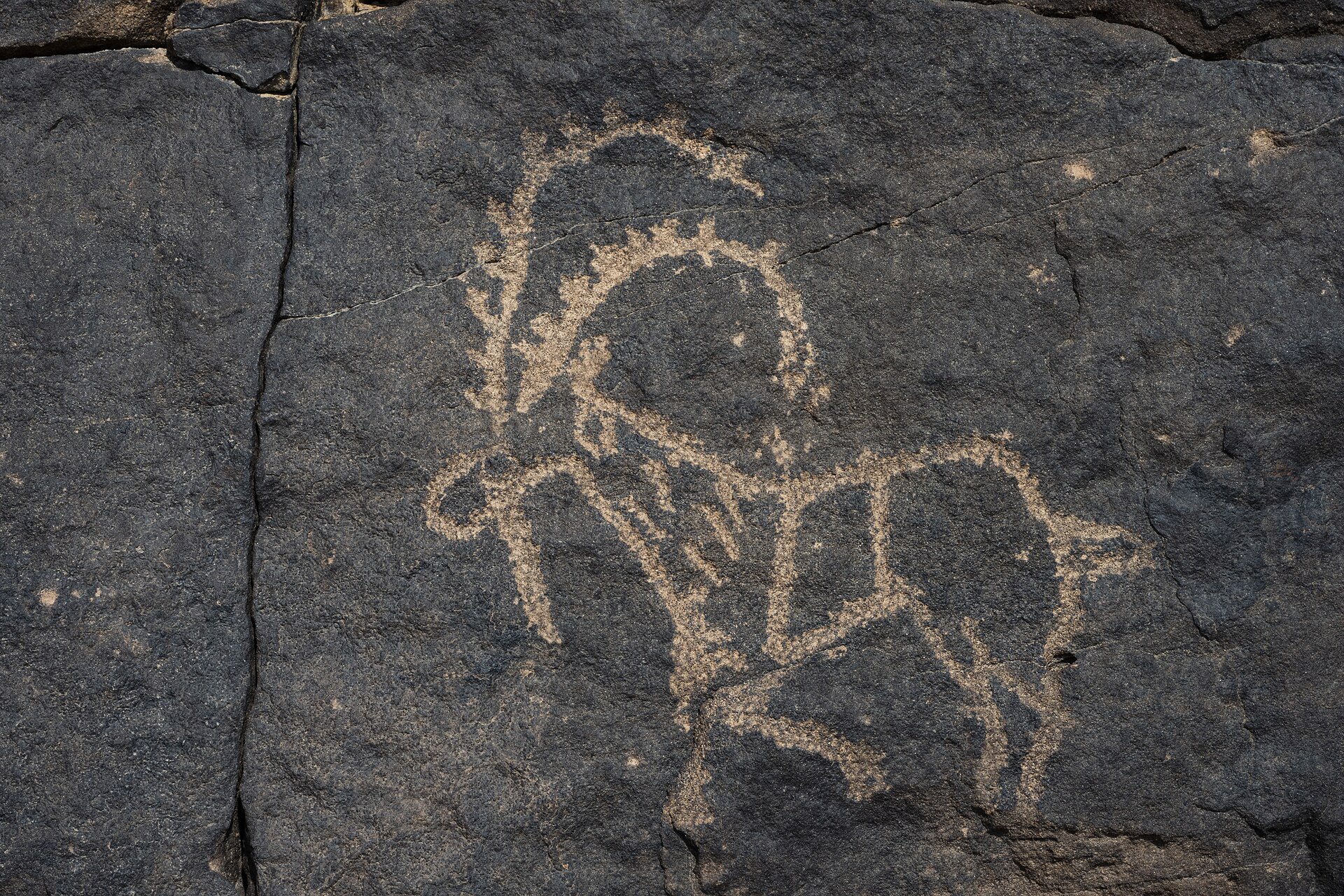
UNESCO inscribed Hima under three criteria: as a masterpiece of human creative genius (Criterion i), as an outstanding example of cultural interchange along ancient trade routes (Criterion iii), and as an exceptional testimony to a cultural tradition spanning millennia (Criterion iii). The site is Saudi Arabia’s sixth World Heritage property and, alongside the Kingdom’s other UNESCO sites, represents a pillar of the national heritage tourism strategy under Vision 2030.
The Ancient Wells of Bi’r Hima
At the heart of the Hima Cultural Area lies a network of seven freshwater wells collectively known as Bi’r Hima. These wells date back at least 3,000 years and — remarkably — still produce fresh water today. For ancient caravans departing from Al-Ukhdood (the archaeological site near modern Najran), these wells represented the last reliable water source before the long desert crossing northward.
From Bi’r Hima, caravans took one of two major routes. The first led northeast through Al-Faw — itself now a UNESCO World Heritage Site — and onward to Mesopotamia. The second ran northwest through the Hijaz toward the Levant and Egypt. This made Hima a critical junction point, and the site functioned as the oldest known toll station on an Arabian caravan route. Traders paid to water their animals and were documented by the toll-keepers, whose records survive as some of the inscriptions visible today.
The wells are fenced but generally accessible to visitors. Standing beside a well that sustained traders three millennia ago — and still holds water — is one of the most viscerally connecting historical experiences available anywhere in Saudi Arabia.
The Inscriptions: Five Scripts, Five Civilisations
Beyond the rock art, Hima’s inscriptions form one of the most important epigraphic collections in the Arabian Peninsula. The texts span multiple languages and scripts, each marking a different era of dominance over this strategic landscape:
- Musnad (South Arabian) — The earliest inscriptions, dating to the first millennium BCE, written in the formal script of the Sabaean, Minaean, and Himyarite kingdoms of southern Arabia. These are among the finest surviving examples of Musnad script outside Yemen.
- Thamudic — Pre-Islamic North Arabian scripts used by nomadic and semi-nomadic tribes across the northern Hijaz and Najd. Their presence at Hima demonstrates the geographic reach of these populations.
- Nabataean — Inscriptions linked to the trading civilisation that built Hegra (Madain Saleh) in AlUla, confirming Nabataean commercial interests extended deep into southern Arabia.
- Greek — Evidence of Hellenistic influence along the Arabian trade routes, likely left by soldiers or merchants during the period of Ptolemaic and later Roman interest in Arabian commerce.
- Arabic — Early Arabic inscriptions at Hima help scholars trace the evolution of the Arabic script from its Nabataean predecessor, contributing to understanding of how the modern Arabic alphabet developed.
- October–March (recommended): Daytime temperatures range from 18–28 °C. Mornings and late afternoons are ideal for photography, with low-angle sunlight bringing out the rock art relief.
- April–May: Temperatures climb above 35 °C. Early morning visits are still viable, but midday exploration becomes uncomfortable.
- June–September (avoid): Temperatures regularly exceed 45 °C. Outdoor exploration is dangerous without significant precautions.
- Water: Minimum 3 litres per person for a half-day visit. More if visiting in spring or autumn heat.
- Fuel: Fill your tank in Najran. There are no petrol stations near the site.
- Sun protection: Hat, sunscreen (SPF 50+), sunglasses, and lightweight long-sleeved clothing.
- Sturdy footwear: The terrain is rocky and uneven. Open sandals are inadequate.
- Camera: A polarising filter helps reduce glare on the rock surfaces and makes the petroglyphs more visible in photographs.
- Offline maps: Download maps of the Najran region before leaving the city. Google Maps coverage is limited in the Hima area.
- Do not touch the petroglyphs. Skin oils accelerate weathering of the rock surface.
- Do not wet, chalk, or trace inscriptions. These methods — sometimes used by amateur enthusiasts to make images more visible for photography — cause irreversible damage.
- Do not climb on the rock panels.
- Stay on existing paths where marked. Some areas are fenced for protection.
- Carry out all rubbish. There are no waste facilities at the site.
- Mid-range: Several 3–4 star hotels operate in Najran city centre, with rates typically SAR 250–500 ($65–135 USD) per night. Chains including Holiday Inn and Best Western have properties here.
- Budget: Furnished apartment hotels are widely available from SAR 150–250 ($40–65 USD) per night and are popular with domestic travellers.
- Luxury: Najran does not yet have international luxury hotel brands. The best available options are higher-end local hotels.
- Morning: Arrive at Najran Airport, collect rental car
- Late morning: Al-Ukhdood Archaeological Site and museum
- Afternoon: Emara Palace, traditional souk, janbiya market
- Evening: Dinner in Najran (try hanith — slow-cooked lamb, a regional speciality)
- Early morning: Depart Najran by 6:00–7:00 AM to arrive at Hima in cooler temperatures
- Morning: Explore the main petroglyph clusters and Bi’r Hima wells
- Midday: Picnic lunch (bring provisions from Najran — no food available on site)
- Afternoon: Visit remaining rock art panels and inscription sites
- Evening: Return to Najran
- Option A: Drive to Abha (3–3.5 hours) to continue exploring the Asir highlands
- Option B: Visit Najran Dam and palm groves before afternoon flight to Riyadh or Jeddah
- Saudi Arabia Travel Guide 2026 — The complete guide to visiting the Kingdom
- Najran Travel Guide — Ancient history on the Yemen border, Hima’s gateway city
- Saudi Arabia UNESCO World Heritage Sites — All eight sites with visitor information
- Abha and Asir Travel Guide — Highland scenery three hours north of Najran
- Saudi Arabia Visa Guide — Every visa type explained
- Saudi Arabia Hiking Guide — Mountain trails and desert treks across the Kingdom
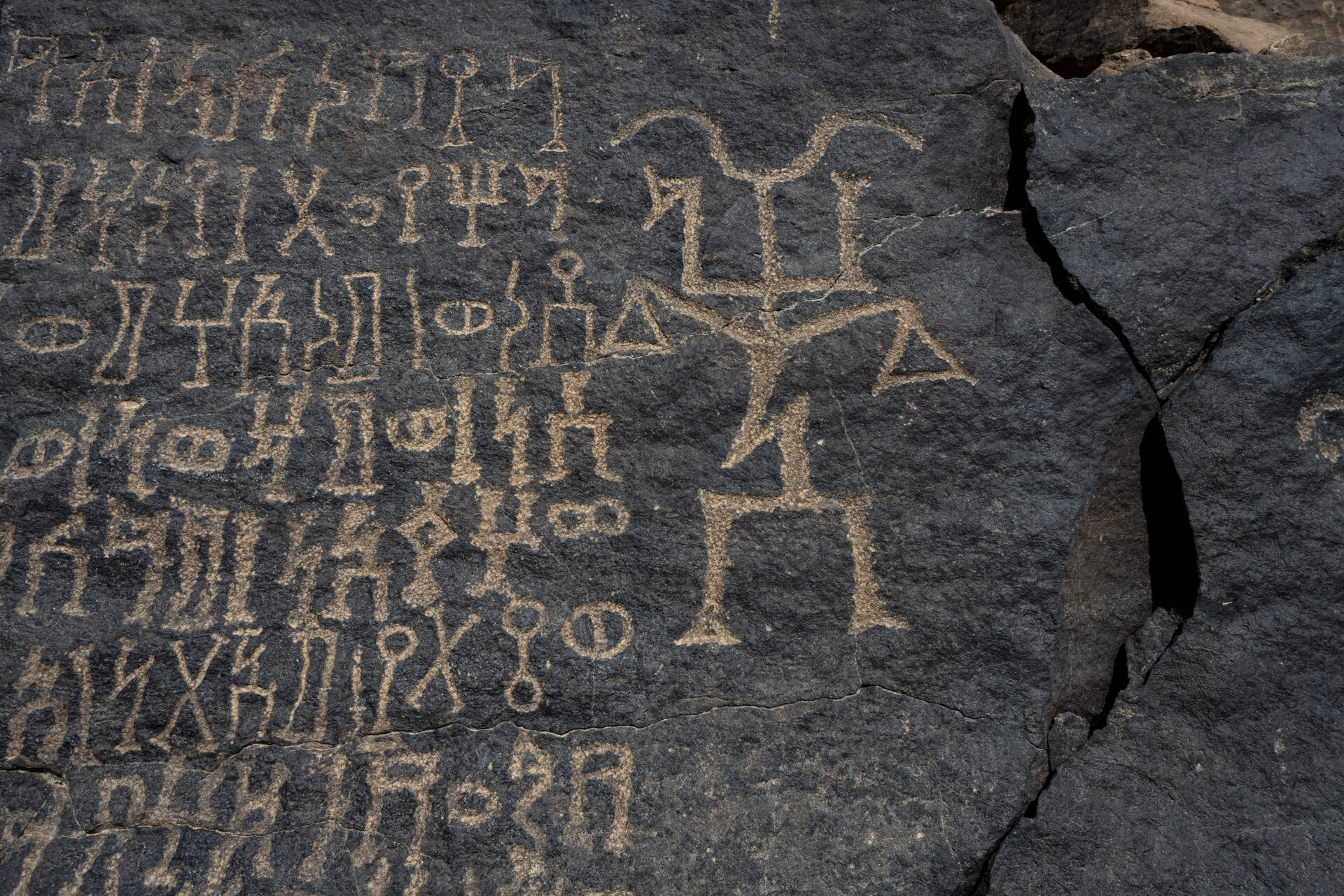
One of the most historically significant inscriptions at Hima is attributed to the Himyarite king Dhu Nuwas, dating to the early sixth century CE. Dhu Nuwas — the last independent king of the Himyarite Kingdom — is a pivotal figure in the history of religious conflict in pre-Islamic Arabia, linked to the persecution of Christians at Najran that is referenced in the Quran (Surah Al-Buruj). His inscription at Hima provides direct material evidence of Himyarite military campaigns in the region.
The Rock Art: What You Will See
The petroglyphs at Hima were created by pecking and abrading designs into the dark desert-varnished surfaces of sandstone outcrops. The contrast between the lighter exposed rock and the dark patina makes many images strikingly visible even after thousands of years.
Hunting Scenes
The oldest panels depict hunting scenes from the Neolithic period (5th–4th millennium BCE). Hunters armed with bows pursue ibex and wild cattle across rock faces, sometimes accompanied by dogs. These images predate the domestication of the camel in Arabia and offer a rare glimpse into a wetter, more biodiverse landscape.
Pastoral Life
Later panels show the transition to pastoralism — herds of cattle, sheep, and goats accompanied by human figures. The introduction of the camel, likely in the second millennium BCE, transformed Arabian life and is documented in the art. Some panels show camels in caravan formation, directly linking the images to the trade routes.
Warriors and Cavalry
From the first millennium BCE onward, depictions of mounted warriors, horses, and weapons appear. These panels document the militarisation of the Arabian Peninsula during the period of competing kingdoms — Saba, Himyar, Lihyan, and the Nabataeans.
Modern Additions
Remarkably, the tradition of inscribing rock surfaces at Hima continued into the twentieth century, with modern graffiti and tribal marks appearing alongside ancient petroglyphs. This continuous use underscores the site’s enduring significance as a gathering point.
How to Get to Hima
By Air
The nearest airport is Najran Domestic Airport (EAM), which receives daily flights from Riyadh (approximately 1 hour 40 minutes) and Jeddah (approximately 1 hour 50 minutes) via Saudia and flynas. One-way fares typically range from SAR 200–500 ($55–135 USD).
By Road from Najran
From Najran city, the Hima Cultural Area is approximately 100–120 km to the north. The drive takes roughly 1.5–2 hours on paved highways. A car is essential — there is no public transport to the site. Rental desks operate at Najran Airport; pre-booking is advisable during peak season (October–January). A standard sedan handles the main approach road, though a 4WD is recommended for exploring the more remote petroglyph clusters.
By Road from Other Cities
| Origin | Distance | Drive Time |
|---|---|---|
| Abha | ~280 km | 3–3.5 hours |
| Riyadh | ~950 km | 9–10 hours |
| Jeddah | ~850 km | 8.5–9.5 hours |
For travellers exploring the Abha and Asir highlands, Najran and Hima make a natural extension to a southern Saudi road trip. The drive from Abha passes through dramatic mountain scenery.
When to Visit
The Hima Cultural Area is an outdoor site with no shade structures. Timing your visit correctly is essential for both comfort and safety.
Tip: The Najran region occasionally experiences flash floods during late summer monsoon-influenced weather (July–August). Check conditions before travelling and avoid wadis during or after rainfall.
What to Bring
Hima is a remote site with no facilities — no shops, no toilets, no shade, and limited mobile coverage. Prepare accordingly:
Site Etiquette and Conservation
Hima’s rock art has survived for millennia precisely because the site is remote and the desert climate is protective. Visitors have a responsibility to preserve this:
The site is managed by the Heritage Commission under Saudi Arabia’s Ministry of Culture. It is open and unstaffed, with no admission charge as of 2026.
Combining Hima with Najran
A visit to Hima naturally pairs with exploring Najran, one of Saudi Arabia’s most culturally distinctive cities. Located near the Yemeni border, Najran has a character quite different from the rest of the Kingdom — its architecture, cuisine, and traditions reflect centuries of cross-border cultural exchange.
Al-Ukhdood Archaeological Site
Just south of modern Najran, Al-Ukhdood (literally “The Trench”) is the site of the ancient Najran massacre referenced in Surah Al-Buruj of the Quran. The ruins include pre-Islamic temples, residential areas, and fortifications. The site museum provides context for the Dhu Nuwas inscriptions you will see at Hima. This is the natural companion visit — the caravan routes that passed through Hima originated here.
Emara Palace (Najran Fort)
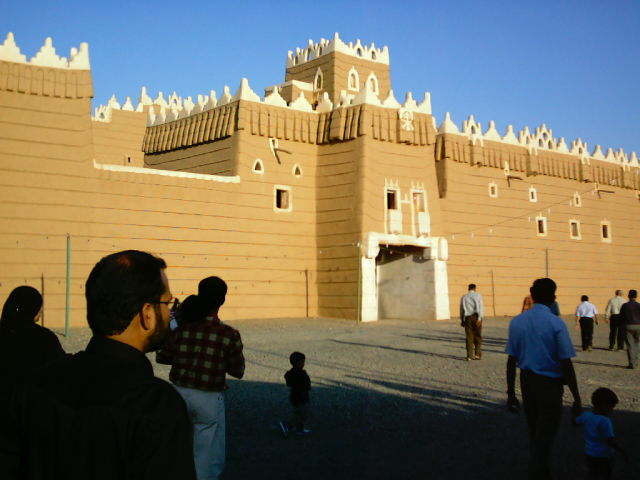
This striking traditional mud-brick fortress dominates the centre of Najran. Built in 1942, it served as the regional governor’s residence and administrative centre. Its crenellated walls and towers are a masterpiece of Najrani architecture and one of the most photogenic buildings in southern Saudi Arabia.
Traditional Souks
Najran’s traditional markets specialise in janbiyas (curved daggers), regional honey, and woven textiles. The dagger market is one of the last of its kind in Saudi Arabia and reflects the region’s Yemeni cultural heritage.
Najran Dam
The Najran Dam, completed in 1982, creates a reservoir surrounded by palm groves and parkland. It is a popular local picnic spot and provides a green contrast to the desert landscapes of Hima.
Where to Stay
There is no accommodation at or near the Hima Cultural Area itself. All visitors base themselves in Najran city, which offers a modest range of hotels:
Tip: Book accommodation well in advance during Najran’s annual cultural festivals, typically held in winter months, when hotel availability can be limited.
Suggested Itinerary: 2–3 Days in Najran and Hima
Day 1: Najran City
Day 2: Hima Cultural Area
Day 3: Onward Travel
Hima in Context: Saudi Arabia’s UNESCO Heritage Trail
Saudi Arabia now has eight UNESCO World Heritage Sites, and Hima occupies a unique position among them. While Hegra in AlUla draws the most international visitors and At-Turaif in Riyadh is the most accessible, Hima offers something none of the others can: raw, unmediated contact with ancient art in its original landscape, without visitor centres, guided tours, or ticketed entry.
For travellers committed to exploring Saudi Arabia’s deep history, a route connecting multiple UNESCO sites makes a compelling itinerary: Hegra and AlUla in the northwest, the Hail rock art in the north-central region, Al-Ahsa Oasis in the east, and Hima in the far south. Each site represents a different chapter of Arabia’s past, from Neolithic hunters to Nabataean architects to twentieth-century nation-builders.
Practical Information
| Detail | Information |
|---|---|
| UNESCO inscription | 2021 (44th session, Criterion i and iii) |
| Location | ~100–120 km north of Najran city, Najran Province |
| Coordinates | Approximately 18°N, 44°E |
| Area | ~30 km of desert terrain, 34+ documented sites |
| Admission | Free (open, unstaffed site) |
| Facilities | None — bring water, food, fuel, and sun protection |
| Mobile coverage | Limited to none at the site |
| Managed by | Heritage Commission, Ministry of Culture |
| Nearest airport | Najran Domestic Airport (EAM) |
| Nearest city | Najran (~100 km south) |
All visitors to Saudi Arabia require a valid visa. Most nationalities can apply online for a tourist e-visa, which permits stays of up to 90 days and multiple entries within a year. The e-visa application takes approximately 5–10 minutes and is typically approved within 24 hours.