
Najran is one of Saudi Arabia’s most overlooked destinations — a place where 4,000 years of continuous habitation have left behind UNESCO-listed rock art, Quranic-era ruins, and some of the finest mud-brick architecture on the Arabian Peninsula. Tucked into the far southwest of the Kingdom, just kilometres from the Yemeni border, this is a city that feels genuinely different from Riyadh, Jeddah, or the Gulf coast. The Yemeni cultural influence runs deep here — in the tower houses, the dagger markets, the food, and the faces. If you are planning a wider Saudi Arabia travel itinerary, Najran adds a dimension you simply will not find anywhere else in the country. This guide covers everything you need to plan a visit: the archaeological sites, the palaces, the dam, the markets, and the practical details that make a trip here straightforward.
Best Time to Visit: November to March (daytime highs 24–28 °C, cool evenings)
Getting There: Direct flights from Riyadh, Jeddah, and Dammam to Najran Regional Airport (EAM)
Visa Required: Yes — tourist e-visa
Budget: $50–100 USD per day (one of the cheapest regions in Saudi Arabia)
Must-See: Hima rock art (UNESCO), Al-Ukhdood archaeological site, Emara Palace
Avoid: Visiting in July–August when temperatures exceed 39 °C; do not attempt to approach the Yemeni border zone
Why Visit Najran?
Most travellers who make it to Saudi Arabia’s southwest head for Abha and the Asir highlands. Najran, another 280 km further south, rarely features on itineraries — and that is precisely the appeal. There are no crowds, no tourist buses, and no admission queues. What there is: a UNESCO World Heritage rock art site with 7,000 years of petroglyphs, an archaeological city mentioned in the Quran, around 230 surviving mud tower houses, a traditional dagger market that has operated for centuries, and a landscape of date palms, green wadis, and rugged mountains that looks nothing like the stereotypical Saudi desert.
Najran is also a window into a part of Arabian culture that the rest of the Kingdom does not share. Its proximity to Yemen — the border is roughly 30 km south of the city — has shaped its architecture, its cuisine, its tribal traditions, and its identity. The boomerang-shaped janbiya daggers worn here are closer to Yemeni tradition than anything you will see in Riyadh. The mud tower houses reach eight or nine storeys, built in a style found nowhere else in Saudi Arabia. For travellers who want to see something genuinely different, Najran delivers.
History of Najran: 4,000 Years in Brief
The oasis of Najran has been continuously inhabited for roughly 4,000 years, making it one of the oldest settled places on the Arabian Peninsula. Its position on ancient caravan routes linking southern Arabia to Mesopotamia, the Levant, and Egypt turned it into a thriving trading hub long before Islam.
The Ancient City of Al-Ukhdood
The most important archaeological site in Najran is Al-Ukhdood (also spelled Al-Okhdood), a South Arabian town dating to at least 500 BCE. The name means “the trench” or “the ditch” in Arabic, a direct reference to the Quranic story of the People of the Ditch (Ashab al-Ukhdood), recounted in Surah Al-Burooj (Chapter 85). According to Islamic tradition and corroborated by historical sources, the Himyarite king Dhu Nuwas massacred the Christian inhabitants of Najran in the 520s CE, many by being thrown alive into burning trenches.
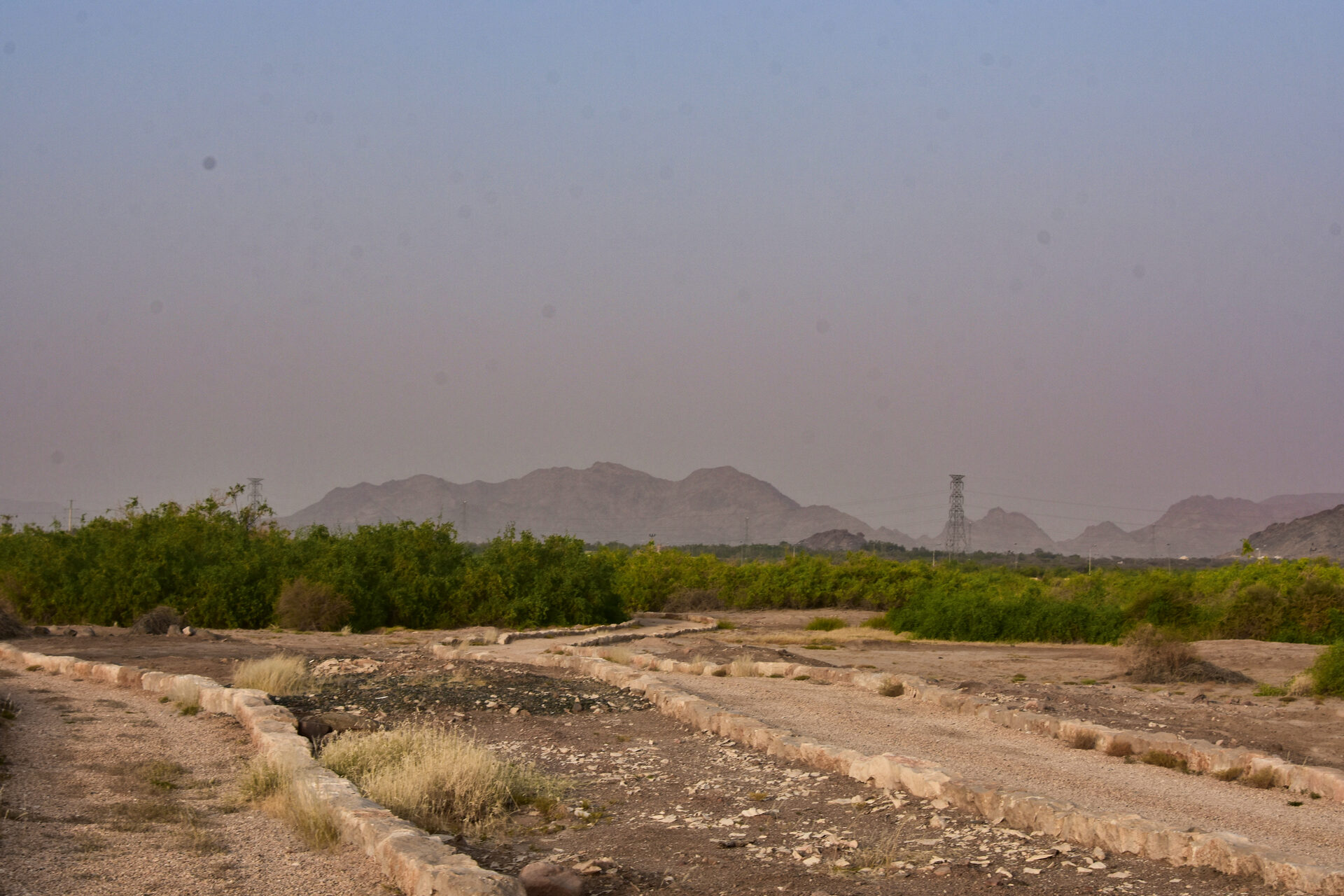
The city is surrounded by a stone wall measuring approximately 235 metres long and 220 metres wide, with foundations of carefully carved stones reaching heights of two to four metres. Archaeological excavations, ongoing since 1979 with French collaboration since 2016, have uncovered over 1,000 artifacts including three gold rings, a bronze bull’s head, and inscriptions in Musnad, Thamudic, Greek, and Arabic scripts. The site sits about 25 km south of the modern city centre and can be visited freely.
From Caravan Hub to Saudi Province
Najran’s strategic position kept it relevant through the pre-Islamic and Islamic eras. It was a major waypoint for caravans carrying frankincense, spices, and goods between Yemen and the markets of the north. The city came under Ottoman influence, then Yemeni control in the early 20th century. Yemen built Raoum Castle atop Mount Raoum in 1348 AH (1929 CE) as an observation post. The Taif Agreement between Saudi Arabia and Yemen eventually resolved the border question, and Najran became a Saudi province — a transition commemorated by the construction of Emara Palace in 1942.
Top Things to See and Do in Najran
Hima Cultural Area (UNESCO World Heritage Site)
Inscribed on the UNESCO World Heritage List in 2021 as Saudi Arabia’s sixth World Heritage Site, the Hima Cultural Area is the single most important reason to visit Najran. Located about 80 km north of the city in an arid mountain landscape, Hima preserves one of the largest collections of rock art in the world — petroglyphs and inscriptions spanning an unbroken 7,000-year timeline.
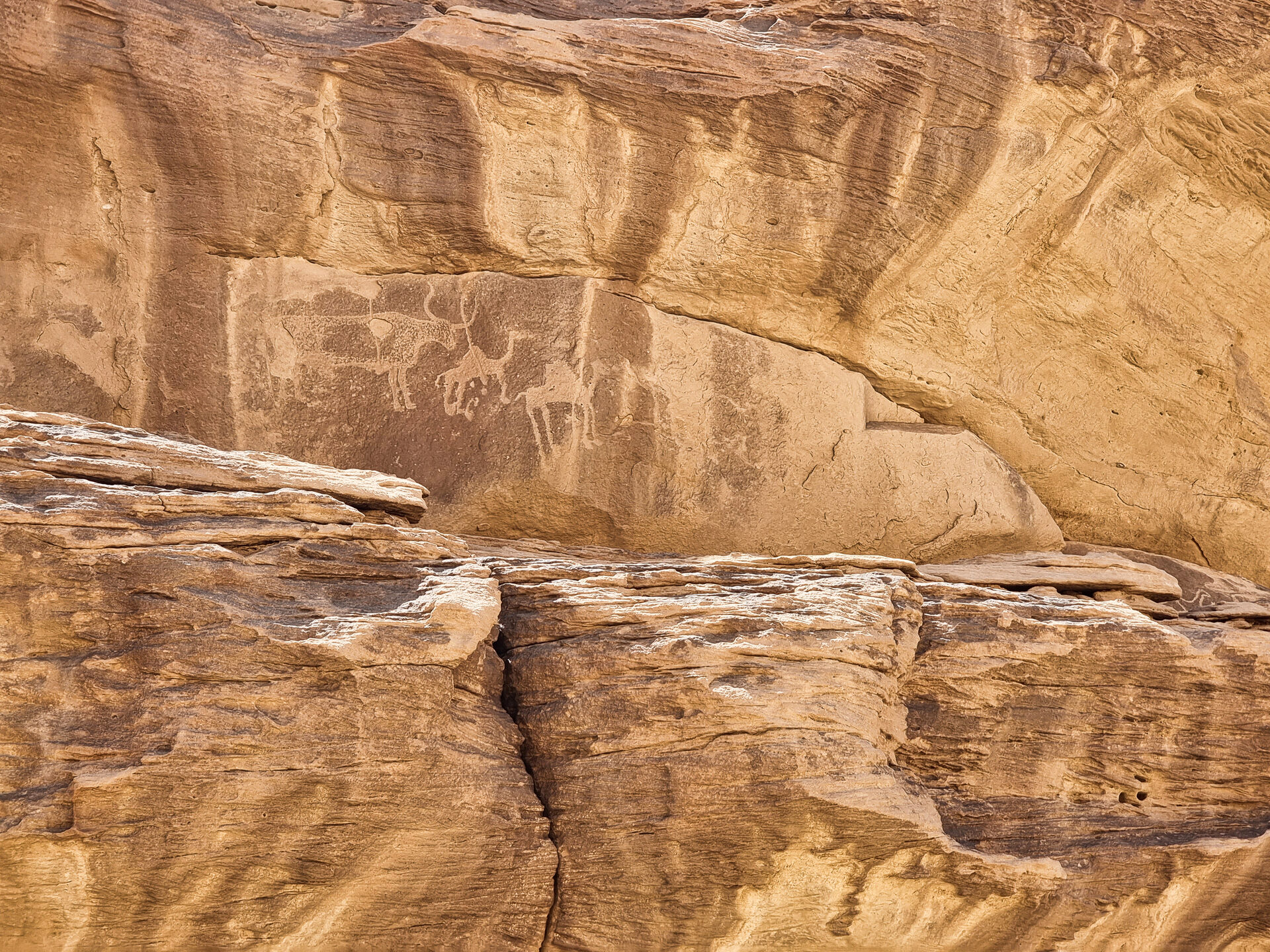
The images depict hunting scenes, livestock, wildlife (including now-extinct species), and human figures in remarkable detail. Inscriptions appear in multiple scripts — South Arabian Musnad, Thamudic, Greek, Nabataean, and early Arabic — documenting the succession of cultures that passed through on the ancient trade routes. The wells of Bi’r Hima, which date back at least 3,000 years, still produce fresh water today. Hima was effectively the oldest known toll station on a major desert caravan route.
Practical tip: Hima is remote and there are no facilities on site. Bring water, sun protection, and a full tank of fuel. A 4WD vehicle is recommended. Allow a full half-day to explore properly. The site is open and unstaffed — there is no admission charge.
Emara Palace (Qasr Al-Emara)
The Historical Palace of the Emirate, known locally as Emara Palace or Qasr Al-Emara, was built in 1942 during the time of Prince Turki bin Mohammed Al-Madhi to serve as the provincial governorate and his family residence. It sits in the heart of the Aba Al-Saud Historical Area, Najran’s old quarter.
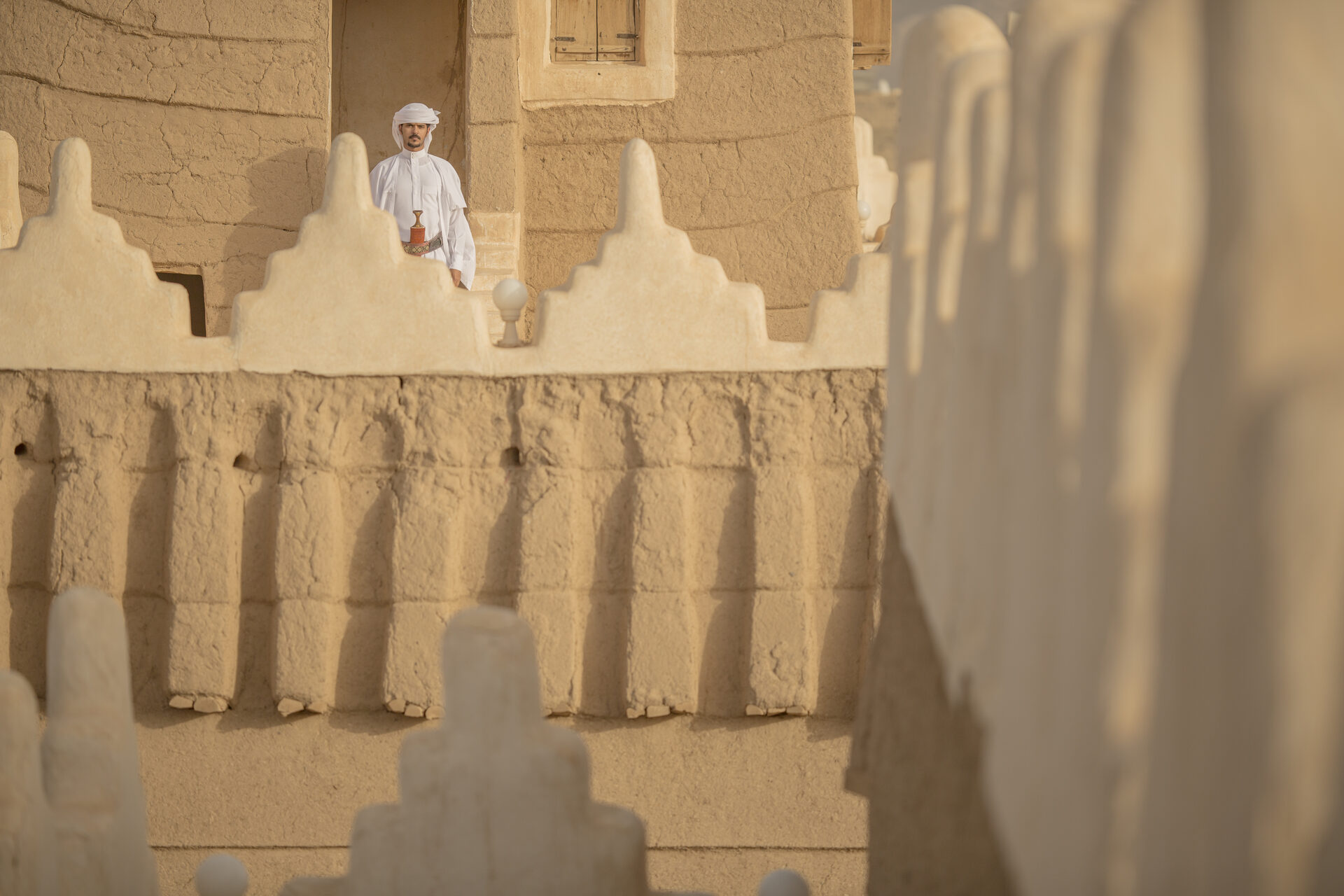
The palace covers approximately 625 square metres and contains 65 rooms spread across multiple floors. Its thick mud walls were built for both insulation and defence — the narrow doors and high windows kept temperatures moderate in summer and provided security. Round towers on all four corners once served as watchtowers. Inside, you can still see the old mosque and a pre-Islamic well. The palace is now open to visitors as a museum documenting the history of Najran Province. Entry is free.
Al-Aan Palace
Perched on top of Al-Aan mountain overlooking the old city, Al-Aan Palace dates to 1688, making it significantly older than Emara Palace. It is arguably the finest example of Najran’s distinctive mud-brick construction. The palace has four floors (historically each occupied by one family), surrounded by a defensive wall with circular and rectangular towers. The walls are built using the traditional block-layering system Najran is known for: successive stages of mud on stone foundations, with roofs of palm trunks, fronds, and Ziziphus wood. The white ornamental edges that decorate the exterior make it instantly recognisable.
Traditional Mud Tower Houses
Najran’s most striking architectural feature is its 230-plus surviving mud tower houses — square adobe structures rising four to nine storeys, some beautifully maintained, others gradually crumbling back into the earth. These are not museum pieces; many were lived in until relatively recently. The building style reflects strong Yemeni influence: thick mud walls on stone foundations, narrow defensive windows, and decorative crenellations along the rooflines. This is some of the best-preserved traditional adobe architecture in the world.
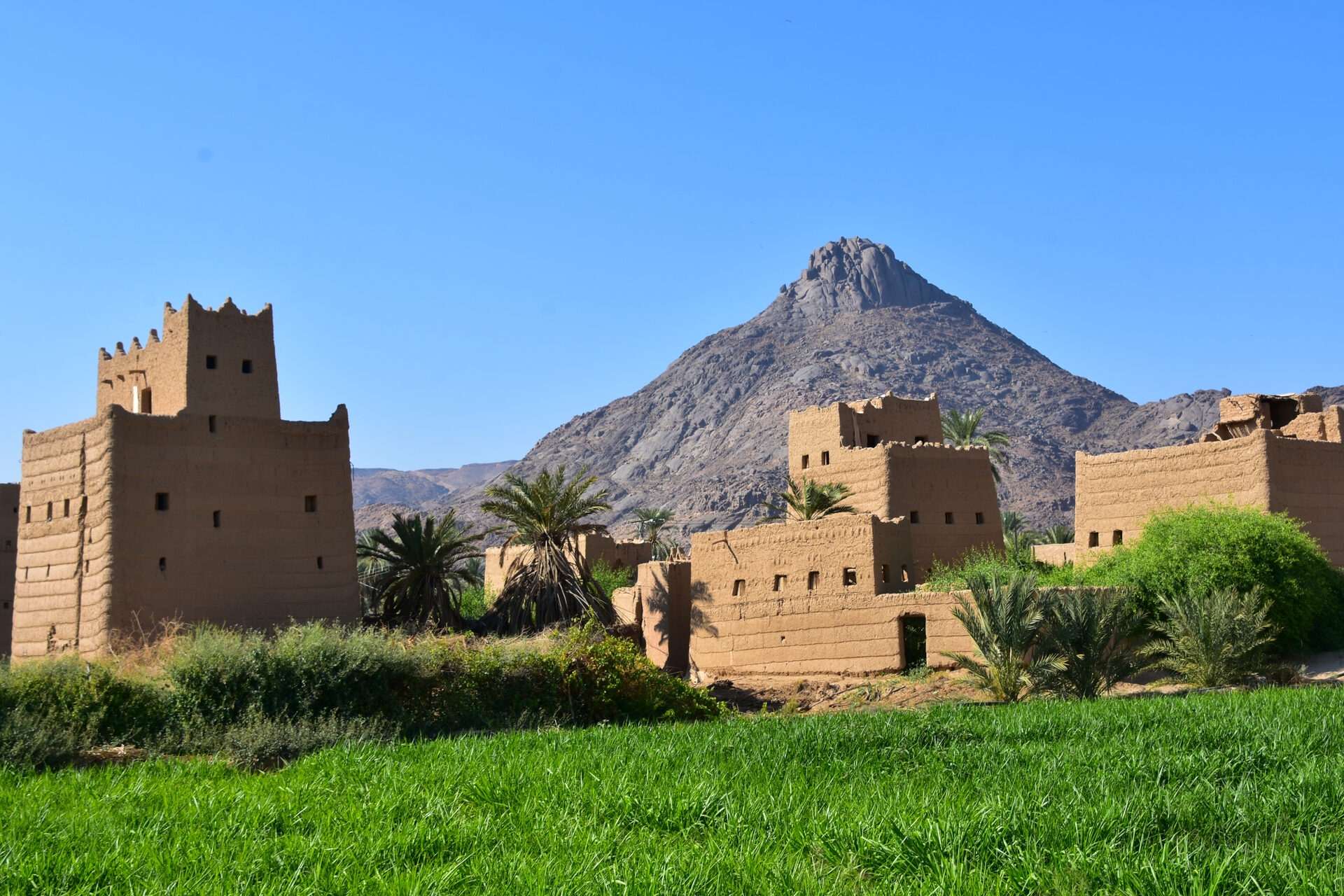
The best area to see these is the Aba Al-Saud neighbourhood, Najran’s historic heart, where the tower houses cluster together among narrow alleys. Some have been restored; many stand as they were built centuries ago. Wandering this area on foot gives you a sense of how the city once looked — a skyline of mud towers, palm groves, and mountain peaks.
Raoum Castle
Built by the Yemeni army in 1929 atop Mount Raoum at an elevation of roughly 1,000 metres, Raoum Castle was an observation post for controlling the valley below. The fortress is built of stone blocks, clay, and wood, with five rooms roofed in palm wood and rock reservoirs for collecting rainwater. Its military importance faded after Najran became part of Saudi Arabia, but the views from the summit remain spectacular — panoramic vistas across the entire Najran valley. The Saudi Commission for Tourism and National Heritage has restored the site. The climb up is steep but rewarding. Bring sturdy shoes and water.
Najran Valley Dam
Completed in 1981 and inaugurated in 1982, the Najran Valley Dam is an arch dam on Wadi Najran, about 15 km southwest of the city. One of the largest dams in Saudi Arabia, it holds approximately 100 million cubic metres of rainwater for water supply, flood control, and groundwater recharge.
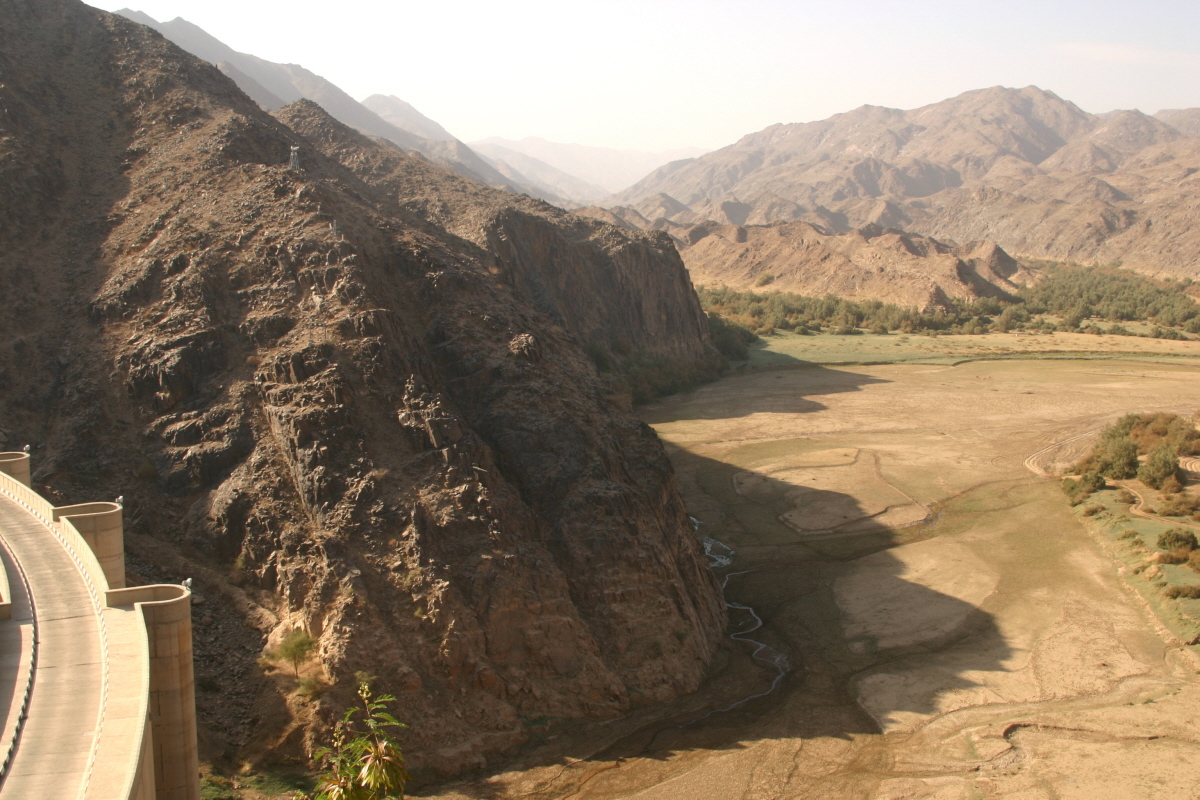
Beyond its engineering, the dam has become a popular local outing. Visitors access the area through mountain tunnels and can hike scenic trails, picnic on the green banks, birdwatch, or take a boat on the reservoir. The surrounding mountains are lush during and after the rainy season (roughly March–April), making this the most scenic time to visit. It is free to visit and accessible by car.
Aba Al-Saud Traditional Markets
The traditional souqs of the Aba Al-Saud neighbourhood are among the most atmospheric markets in Saudi Arabia. The most famous speciality is daggers — the janbiya (or janabi), a boomerang-shaped blade that is central to the local dress and tribal identity. Craftsmen in the souq still make, sell, and repair these daggers by hand. You will also find frankincense, hand-woven textiles, leather goods, stone utensils, and pottery. The market is a living, working place, not a tourist stage — shopkeepers are happy to explain their craft and the history behind it. Visit in the morning for the best atmosphere.
King Abdulaziz Park
For a break from historical sites, King Abdulaziz Park offers green spaces, shaded walkways, children’s play areas, and grounds used for local festivals and celebrations. It is a good place to see Najrani families at leisure, especially on weekday evenings when the heat eases. Free entry.
Najran’s Yemeni Connection
Najran sits closer to Sanaa than to Riyadh, and the Yemeni influence is unmistakable. Many residents are of Yemeni heritage, and the cultural ties run deep: the architecture, the dagger tradition, the cuisine, and the style of dress all connect Najran more to the Yemeni highlands than to the Saudi heartland. The border with Yemen is currently closed, and travellers should not attempt to approach the border zone. But within Najran itself, this cross-cultural heritage is one of the city’s most distinctive and appealing features — it gives the place a character found nowhere else in the Kingdom.
Practical Information
Getting to Najran
By air: Najran Regional Airport (IATA: EAM) receives direct flights from Riyadh, Jeddah, and Dammam. Airlines serving the route include Saudia, flynas, and flyadeal. Flight time from Riyadh is approximately 1 hour 40 minutes. There are also direct flights from Dubai (flydubai) and Cairo (Nile Air). From the airport, taxis and car rentals are available to reach the city centre, about 20 km away.
By road: Najran is roughly 950 km from Riyadh (about 9 hours’ drive via the 177 highway) and 280 km from Abha (approximately 3 hours on well-maintained roads). If you are exploring the southwest, combining Abha, Al Baha, and Najran into one road trip works well. The drive from Abha south through the Asir mountains is scenic. Check the Saudi Arabia car rental guide for tips on renting and driving.
All visitors to Saudi Arabia need a visa. Citizens of 63 countries can obtain a tourist e-visa online in minutes. See our full visa guide for details.
Where to Stay
Najran has a limited but adequate hotel scene. Budget expectations are much lower than in the major cities — 3-star hotels average around $53/night, 4-star hotels about $68/night, and the limited 5-star options roughly $80/night.
| Hotel | Type | Highlights | Approx. Price |
|---|---|---|---|
| Park Inn by Radisson Najran | 4-star | Best international brand option; pools, restaurant, near historic sites | $70–100/night |
| Holiday Inn Najran | 4-star | Reliable chain hotel with modern amenities | $65–90/night |
| Levant Hotel | 3-star | Fitness centre, hammam, restaurant, terrace | $50–70/night |
| Florida Inn Hotel | Budget | Garden, free parking, Indian restaurant | $35–50/night |
Tip: Booking options are fewer here than in Riyadh or Jeddah. Reserve in advance, especially during Saudi public holidays. Check our Saudi Arabia cost guide for broader budget planning.
When to Visit
Najran sits at an elevation of around 1,280 metres, which moderates its desert climate. The best months are November through March, when daytime highs range from 24–28 °C and evenings cool to 10–15 °C — perfect for exploring outdoor sites. Summers (June–August) are brutal, with temperatures regularly exceeding 37 °C and peaks above 39 °C. April and October are transitional — still warm but manageable for early morning and late afternoon sightseeing. Rainfall is minimal (around 41 mm annually), mostly falling in April. See the best time to visit Saudi Arabia guide for a month-by-month breakdown.
Getting Around Najran
Najran is a spread-out city. A rental car is the best option — you will need one to reach the dam, Hima, and Raoum Castle. Taxis are available but not plentiful. There is no public transport. Roads are well-maintained and traffic is light compared to major Saudi cities. Check the getting around Saudi Arabia guide for more transport options.
What to Eat
Najran’s food reflects its Yemeni-Saudi crossover culture. Look for mandi (slow-cooked lamb on rice), hanith (similar but baked in a clay oven), aseedah (a wheat-based staple), and fresh dates from the region’s extensive palm groves. Bread is often baked in traditional tandoor-style ovens. Hotel restaurants serve the usual international options, but the real culinary experience is in local restaurants and street-side eateries. See the Saudi Arabia food guide for a broader overview of the Kingdom’s cuisine.
Safety Notes
Najran is safe for tourists, with the same low crime rates as the rest of Saudi Arabia. The one important caveat: do not approach the Yemeni border. The border area is a restricted military zone. Stay within the city and its established tourist sites, and you will have no issues. Check our safety guide for general travel safety information across the Kingdom.
How Many Days Do You Need?
Two to three full days is ideal for Najran. A suggested itinerary:
- Day 1: Al-Ukhdood archaeological site, Emara Palace and museum, Aba Al-Saud souq and tower houses
- Day 2: Hima Cultural Area (UNESCO) — full half-day excursion; Al-Aan Palace; King Abdulaziz Park in the evening
- Day 3: Najran Valley Dam (morning hike and picnic), Raoum Castle
- Saudi Arabia Travel Guide 2026 — The complete guide to visiting the Kingdom
- Abha and the Asir Region — Saudi Arabia’s mountain escape, 3 hours north of Najran
- Al Baha Guide — The green highland hidden gem between Taif and Abha
- Hail Region Guide — Another off-the-beaten-path Saudi destination with rock art and desert landscapes
- Hegra (Madain Saleh) — Saudi Arabia’s Petra and another UNESCO archaeological masterpiece
- Saudi Arabia Visa Guide — Every visa type explained
If you are combining Najran with Abha and the Asir highlands, budget 5–7 days for the full southwest loop.
Najran for Specific Travellers
History and Archaeology Enthusiasts
Najran is arguably the most rewarding archaeological destination in Saudi Arabia after Hegra in AlUla. The combination of Al-Ukhdood’s pre-Islamic ruins and Hima’s 7,000-year rock art spans more centuries than almost any comparable pair of sites in the Middle East. Add the Quranic connection, the ancient caravan route history, and the multilingual inscriptions, and you have a destination that rewards deep exploration.
Architecture and Photography Lovers
The mud tower houses of Najran are photogenic in a way that few places in Saudi Arabia can match. The golden-hour light on adobe walls, palm groves, and mountain backdrops make for exceptional photography. Emara Palace’s ornamental crenellations are particularly striking. Respect residents’ privacy when photographing homes that are still occupied.
Solo Female Travellers
Najran is conservative compared to Riyadh or Jeddah. Solo female travellers are welcome but should dress modestly (loose-fitting clothing covering shoulders and knees; a headscarf is appreciated though not legally required). You may attract more attention here than in larger cities simply because tourists are rare. People are overwhelmingly friendly and curious. The standard Saudi Arabia dress code applies.