
Jeddah’s historic quarter, Al Balad, contains one of the most extraordinary collections of coral stone architecture anywhere in the world. For centuries, builders along the Red Sea coast harvested coral limestone from the seabed and shaped it into tower houses that rise five, six, even seven storeys above narrow, winding streets. These buildings — adorned with intricately carved wooden window screens called rawasheen — earned Al Balad its UNESCO World Heritage inscription in 2014 and remain the defining visual identity of old Jeddah. Whether you are planning a wider Jeddah travel itinerary or making a dedicated trip to study Islamic urban architecture, Al Balad’s coral buildings deserve at least a full day of unhurried exploration.
This guide covers the history of coral construction, the most significant heritage buildings open to visitors, the architectural science behind the rawasheen, and everything you need to plan your visit — including the newly opened Red Sea Museum (December 2025) and ongoing Vision 2030 restoration projects transforming the district.
Best Time to Visit: November to March (cooler walking temperatures); early morning or after sunset for the best light and atmosphere
Getting There: Al Balad is in central Jeddah, accessible by taxi, Careem/Uber, or the Jeddah Metro Red Line
Visa Required: Yes — tourist e-visa available online
Budget: USD $20–60/day (most heritage sites are free; budget covers transport, food, and tips)
Must-See: Nassif House, rawasheen-lined streets of Al-Mazloom, Al-Shafi’i Mosque, Red Sea Museum
Avoid: Visiting midday in summer — temperatures exceed 40°C and most shops close until after Maghrib prayer
Why Coral? The Material That Built a City
Jeddah’s coral stone architecture was not an aesthetic choice — it was an engineering solution dictated by geography. The Hejazi coastline offered almost no conventional building stone, but the Red Sea provided an inexhaustible supply of coral limestone. Builders quarried large blocks of fossilised coral reef from shallow waters and the shoreline, then shaped and dried them for construction.
The resulting material proved remarkably well-suited to Jeddah’s climate. Coral limestone is porous and lightweight, providing natural thermal insulation that keeps interiors significantly cooler than the air outside — critical in a city where summer temperatures regularly exceed 45°C. The porous structure also absorbs and releases moisture, helping to regulate humidity in buildings that sit barely a kilometre from the Red Sea.
Construction Techniques
Al Balad’s tower houses follow a consistent structural logic refined over centuries:
- Foundations: Excavated approximately one metre deep, built from compacted coral stone and clay layers bound tightly together
- Walls: Load-bearing coral block walls approximately 50–60 cm thick at the base, tapering on upper floors to reduce weight. Dark-brown clay from the shallow al-Manqabah lagoon, mixed with lime, served as mortar
- Gandal reinforcement: Horizontal courses of hardwood timber (imported from India), laid every 1.2 metres through the coral walls. This gandal system was the key structural innovation that enabled multi-storey construction — without it, coral walls could not support the five-to-seven-storey heights that define Al Balad’s skyline
- Beams and floors: Structural beams of hardwood imported from East Africa and Indonesia, supporting wooden floor platforms
- Exterior finish: Lime plaster coating applied over the coral to protect it from weathering and salt air
- Criterion (ii): Al Balad demonstrates an important exchange of building techniques, materials, and cultural values across the Red Sea region and Indian Ocean trade routes from the 16th to early 20th centuries
- Criterion (iv): The rawasheen tower houses represent an outstanding and unique architectural typology within the Arab and Islamic world
- Criterion (vi): The district is directly associated with the Hajj pilgrimage to Makkah — Jeddah served as the primary gateway for pilgrims arriving by sea for over a thousand years, and this function shaped the city’s architecture, economy, and urban fabric
- Passive cooling: The lattice catches Red Sea breezes and channels them into the room while blocking direct sunlight. In a city without air conditioning until the mid-20th century, this was the primary cooling system
- Light control: The carved geometric patterns filter harsh sunlight into soft, diffused light — adjustable via hinged lower shutters
- Privacy: Residents can see out through the lattice, but pedestrians in the street below cannot see in. This was architecturally essential in a conservative society
- Space extension: The projection adds usable floor area to upper rooms without requiring a larger foundation footprint — valuable in Al Balad’s dense urban fabric
- Historical buildings: Restoration of 650+ heritage buildings and 36 mosques using traditional materials and techniques
- Urban fabric: Rehabilitation of five historic markets, public squares, and pedestrian streets
- Archaeology: Excavation and preservation of historic walls and gates
- Intangible heritage: Documentation and revitalisation of traditional crafts, cuisine, and cultural practices
- Culture Square (unveiled December 2024): A new cultural precinct on the shores of Al-Arbaeen Lagoon, anchored by a Performing Arts Centre and teamLab Borderless Jeddah — a 10,000-square-metre immersive digital art museum that opened in June 2024
- Heritage hotel conversions (announced May 2024): Three historic houses — Jokhdar House, Al-Rayyis House, and Kedwan House — are being restored and converted into boutique luxury hotels
- Red Sea Museum (opened December 2025): The restored 1866 Bab Al-Bunt building, with 23 galleries
- Taxi / ride-hailing: Uber and Careem operate throughout Jeddah. A ride from the airport (KAIA) takes 20–30 minutes and costs approximately SAR 60–80 (USD $16–21)
- Jeddah Metro: The Red Line (operational since 2025) has a stop near Al Balad. The most convenient modern transit option
- Walking: If you are staying near the Jeddah Corniche, Al Balad is walkable along the waterfront — approximately 2 km from the central Corniche area
- Jeddah Corniche: The 30-km waterfront promenade is a short walk or drive from Al Balad. Visit in the evening after your architectural tour
- Jeddah F1 Grand Prix: If your visit coincides with the Saudi Arabian Grand Prix on the Jeddah Corniche Circuit, plan your Al Balad day for a non-race day when the city is less congested
- teamLab Borderless: The immersive digital art museum at Culture Square makes a striking contrast to the centuries-old coral buildings — visit both in the same day for the full range of Al Balad’s past and future
- Dress modestly. Al Balad is a conservative neighbourhood with active mosques. Women should cover shoulders and knees; a headscarf is recommended when entering mosques
- Photography is welcome in public streets and most exteriors. Ask permission before photographing people, and do not photograph into private windows through the rawasheen lattice
- Bring water. Even in the cooler months, walking the stone streets is warm work. There are shops and cafes throughout, but carry a bottle
- Hire a local guide. The architectural details are far more rewarding with expert context. The Jeddah Historic District Program offers guided tours — check their website for current schedules
- Watch your step. Some buildings are under active restoration. Respect barriers and do not enter structures marked as closed. Loose stones and uneven paving are common in the older streets
- The best light for photography hits the eastern facades in early morning and the western facades in late afternoon. Plan your route accordingly
- Jeddah Travel Guide 2026 — The complete guide to Saudi Arabia’s Red Sea gateway
- Al Balad Historic District Guide — Exploring the UNESCO-listed heart of old Jeddah
- Jeddah Corniche Guide — The 30-km waterfront promenade along the Red Sea
- Jeddah F1 Grand Prix Guide — Everything you need for the Saudi Arabian Grand Prix
- Saudi Arabia Travel Guide 2026 — The complete guide to visiting the Kingdom
- Saudi Arabia Visa Guide — Every visa type explained
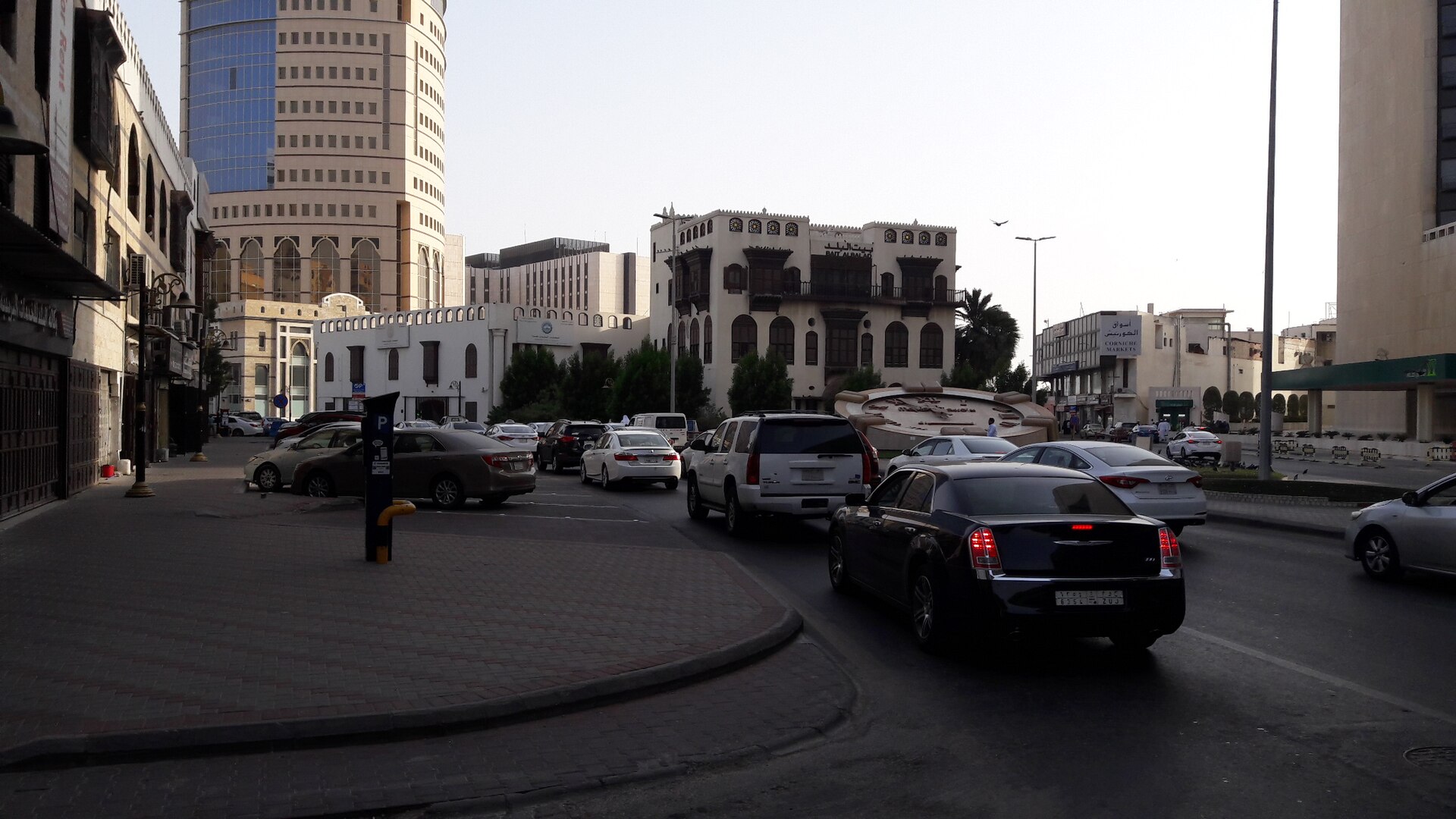
The result is a building type found nowhere else in the Arab world at this scale. UNESCO specifically cited Al Balad’s tower houses as “an outstanding building typology unique within the Arab and Muslim world” when it inscribed the district in 2014.
UNESCO World Heritage: Historic Jeddah, the Gate to Makkah
Al Balad was inscribed on the UNESCO World Heritage List in 2014 under the official name “Historic Jeddah, the Gate to Makkah.” The designated area covers 17.92 hectares and includes over 650 heritage buildings, five historic souqs (markets), 36 mosques, 16 ribats (pilgrim hostels), and one historical school.
The inscription recognised three criteria:
For travellers combining heritage exploration with pilgrimage, the Hajj 2026 Guide provides full details on timing and logistics. Al Balad’s role as the historic gate to Makkah is not metaphor — it is the reason these buildings exist.
The Rawasheen: Jeddah’s Signature Wooden Screens
No discussion of Jeddah’s coral architecture is complete without the rawasheen (singular: roshan; from the Persian rosen, meaning balcony). These projecting wooden window screens are what make Al Balad visually distinctive from any other historic quarter in the Middle East.
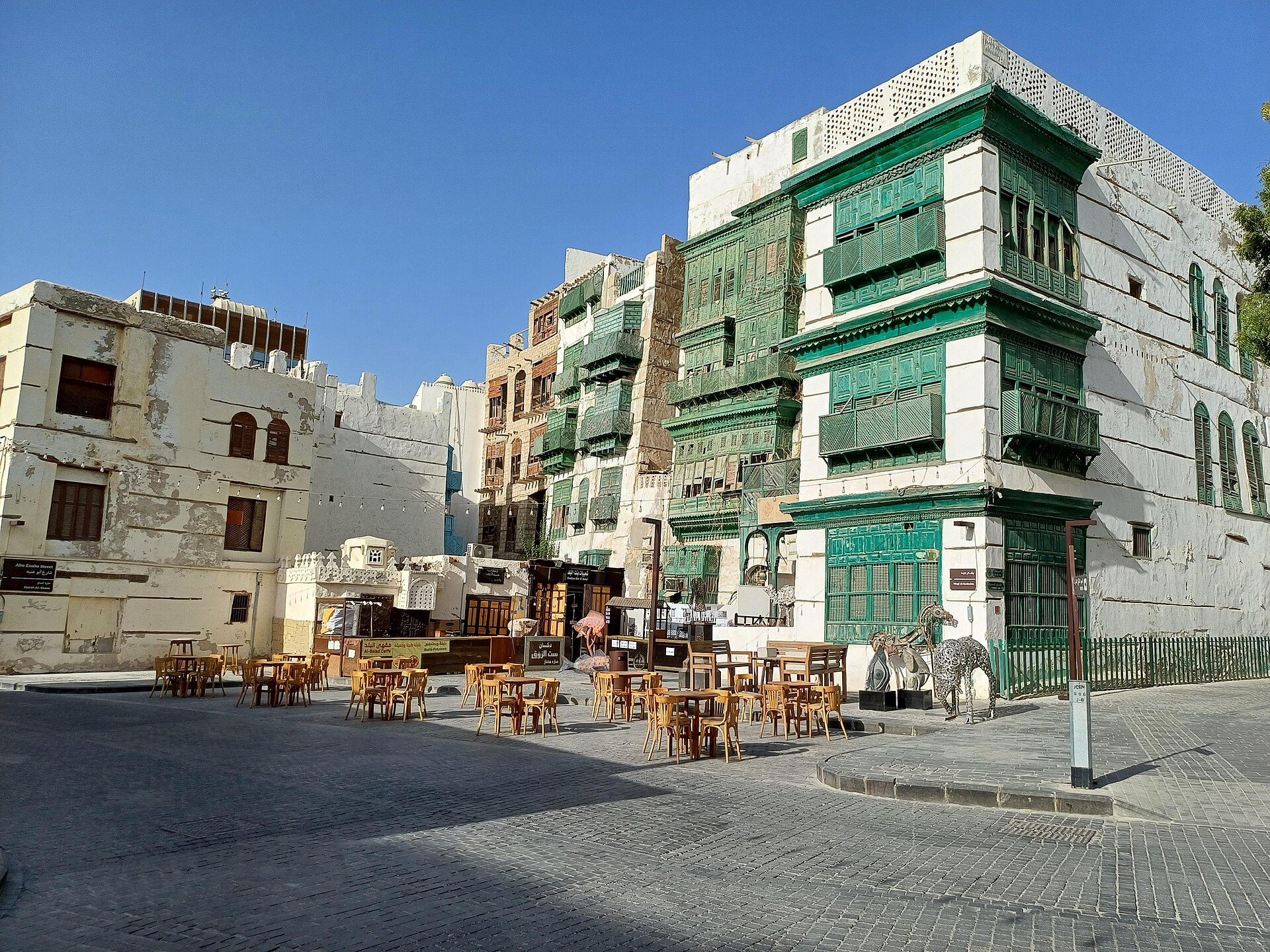
Three Types of Rawasheen
Architectural historians identify three distinct forms found across Al Balad:
| Type | Description | Where to See |
|---|---|---|
| Al-Masmat | Minimal projection with simple wooden covering; the most basic form | Smaller residential buildings throughout Al-Sham and Al-Yaman neighbourhoods |
| Al-Bariz | Ornate geometric patterns with decorative crown (taj); moderate projection | Merchant houses along Suq al-Alawi |
| Roshan | Full balcony-style units with varying lattice designs; the most elaborate form, projecting significantly from the facade | Nassif House, Sharbatly House, and the grandest merchant homes |
How They Work
The rawasheen are not merely decorative. Each screen serves multiple practical functions simultaneously:
The finest examples are carved from imported hardwood into complex geometric arabesque patterns drawn from Islamic artistic traditions. Original rawasheen were typically finished in natural wood tones, browns, or the distinctive green that is now the most photographed colour in Al Balad. Some feature attached stone or brick benches called dekka for seating.
Photography tip: The most photogenic rawasheen-lined streets are in the Al-Mazloom and Al-Sham neighbourhoods. Visit at sunrise for golden light on the wooden screens without crowds, or after Maghrib prayer when warm artificial lighting illuminates the facades.
Key Heritage Buildings to Visit
Al Balad contains hundreds of heritage buildings, but several stand out for their historical significance, architectural quality, and accessibility to visitors. If you have only one day in the district — perhaps as part of a longer stop exploring the Jeddah Corniche — prioritise these.
Nassif House (Bayt Nasseef)
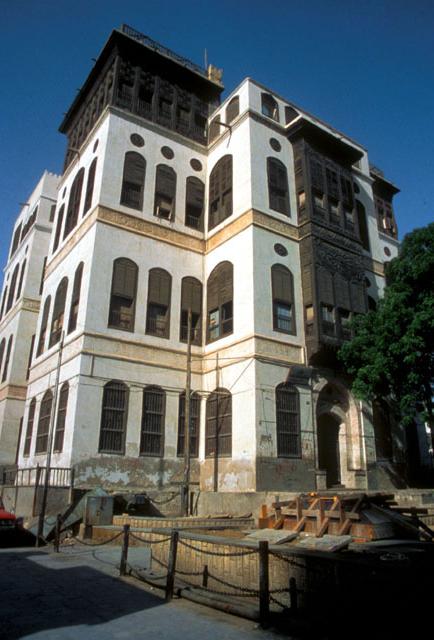
The most historically significant building in Al Balad. Built between 1872 and 1881 for the wealthy merchant and governor Omar Nasseef Effendi, this four-storey coral limestone mansion rises above Suq al-Alawi — the main commercial street of old Jeddah.
Why it matters: When King Abdulaziz Ibn Saud entered Jeddah in December 1925 during the unification of the Kingdom, he took up residence in Nassif House. It served as his royal residence for approximately ten years, making it one of the most politically significant buildings in Saudi history.
The house contains approximately 40 rooms across 900 square metres, with elaborate rawasheen on the upper floors and windcatcher ventilation openings on the fourth storey. It was converted first into a public library, then became a museum and cultural centre in 2009. Exhibits cover Jeddah’s merchant history, the building’s architectural features, and its role in the foundation of the Kingdom.
Visitor info: Nassif House is on Suq al-Alawi in the heart of Al Balad. Open daily (closed Fridays for prayer). Admission is free. Allow 45–60 minutes.
Sharbatly House
Located on Al-Bayaa Square, this four-storey mansion was originally built by Al-Sharif Abdulilah Mihanna Al-Abdaly in the late 19th century and later sold to the merchant Abdullah Sharbatly. It features some of the finest Hejazi mashrabiyya work in all of Al Balad — the wooden lattice balconies are exceptionally detailed and well-preserved.
The building once served as the headquarters of the Egyptian diplomatic mission in Saudi Arabia. It has since been transformed into a cultural centre hosting literary, artistic, and intellectual events. Check locally for current exhibitions and opening hours.
Noorwali House
In the Al-Yaman neighbourhood, overlooking the street between Al-Yaman and Al-Mazloom, this building was purchased by Abdulqader Noor Wali in 1944 after passing through several owners. It is notable for its distinct construction technique and rare inscriptions that offer insight into the social history of Al Balad’s merchant families.
Al-Shafi’i Mosque
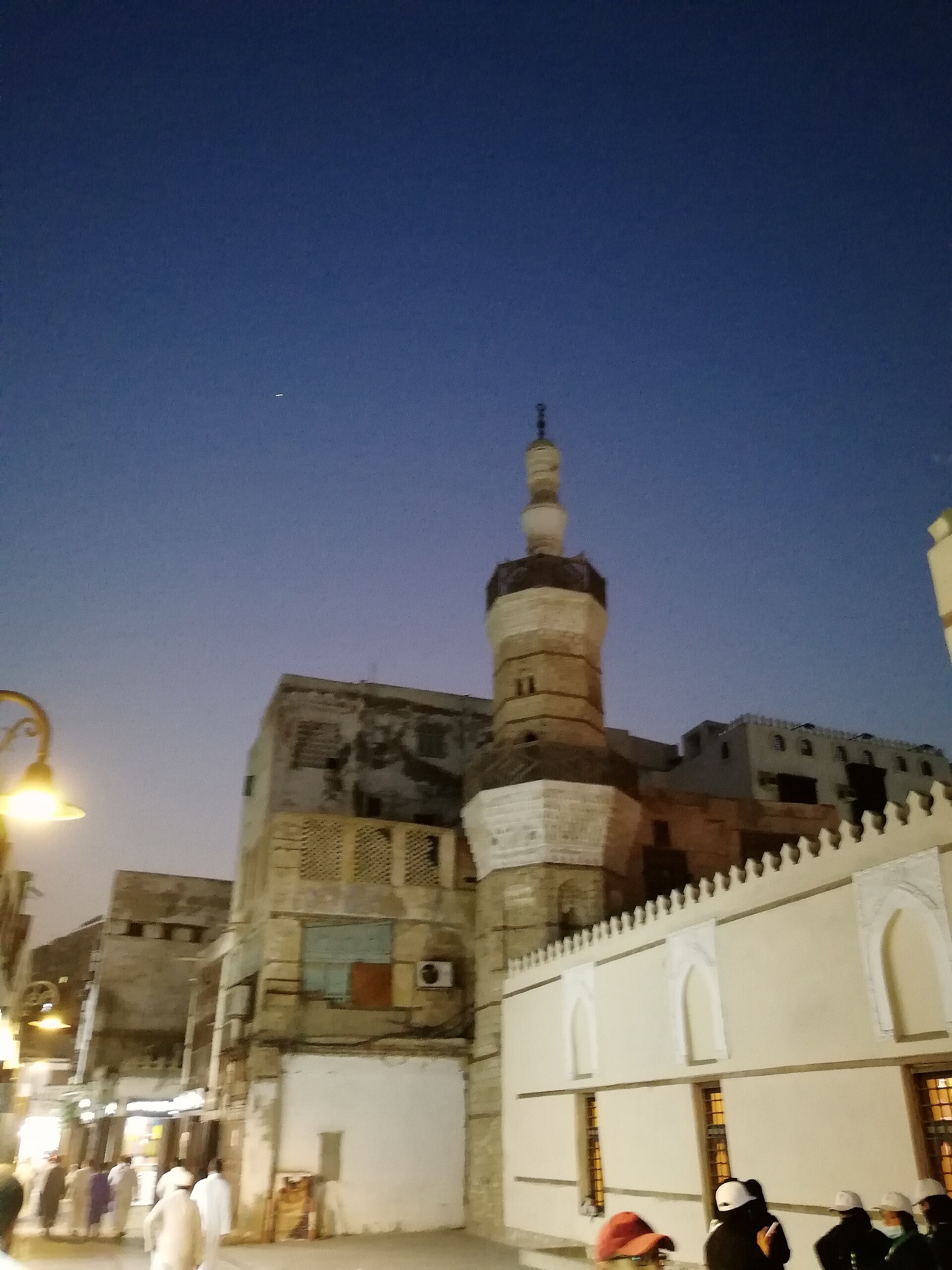
Jeddah’s oldest and largest mosque. The current structure dates to 1250 AD, built by King Muzaffar Suleiman bin Saad Eddin Shahinshah II of the Ayyubid dynasty. However, some historians believe the site has been a place of worship since the era of Caliph Uthman ibn Affan (644–656 CE), making it potentially over 1,300 years old.
Built from coral limestone and wood, the mosque features a hypostyle prayer hall with an inner courtyard paved in white marble. The minaret — approximately 1,000 years old — is one of the oldest standing structures in Jeddah. The building was significantly renovated in 1533 by the Indian merchant Khawaja Muhammad Ali, and most recently restored in 2009 with careful preservation of original architectural details.
Al-Shafi’i Mosque is an active place of worship. Non-Muslim visitors are generally welcome outside prayer times, but dress modestly and remove shoes before entering.
Red Sea Museum (Bab Al-Bunt)
The newest major attraction in Al Balad, the Red Sea Museum opened on 6 December 2025 in the restored Bab Al-Bunt building — originally constructed in 1866 as a port facility for arriving pilgrims and travellers.
The museum houses over 1,000 artefacts and artworks across 23 galleries organised in seven thematic sections celebrating Red Sea heritage: maritime trade, pilgrimage, marine life, and the cultural exchanges that shaped Jeddah. The inaugural exhibition, “The Gate of Gates” by Saudi artist Moath Alofi, explores the idea of Jeddah as a threshold between worlds.
This is an essential companion to any architectural walking tour of Al Balad — it provides the historical context that makes the coral buildings intelligible.
Beit Al-Balad (House of the Town)
A smaller but rewarding local history museum in the Al-Baghdadiyah Al-Gharbiyah district. Housed in a restored traditional coral stone building, it displays artefacts, photographs, and exhibits documenting Jeddah’s evolution from a small fishing village to the Kingdom’s commercial capital. Best visited on weekdays when it is quieter.
Walking Al Balad: Neighbourhood by Neighbourhood
Al Balad’s heritage buildings are spread across several distinct neighbourhoods, each with its own character. A thorough architectural walking tour covers all four, but if time is limited, start with Al-Mazloom and Suq al-Alawi.
Al-Mazloom
The photographic heart of Al Balad. This neighbourhood contains the densest concentration of well-preserved rawasheen facades, with narrow streets where projecting wooden screens from buildings on either side nearly touch overhead. The name means “the wronged” — a reference to historical oppression of the neighbourhood’s residents. Today it is the most atmospheric area for architectural photography and evening strolls.
Al-Sham
The northern quarter, historically home to merchants trading with Syria and the Levant. Buildings here tend to be slightly larger than Al-Mazloom, with more elaborate entrance portals. Several buildings in Al-Sham are currently undergoing Vision 2030 restoration.
Al-Yaman
Named for its orientation toward Yemen, this southern neighbourhood was traditionally home to traders connected to the Indian Ocean routes. Noorwali House is here. The streets are wider than Al-Mazloom, offering better views of complete building facades from ground to rooftop.
Suq al-Alawi
The main commercial street of old Jeddah, and the spine of any Al Balad walking tour. Nassif House faces this street. The souq remains active, selling traditional Hejazi goods, perfumes, textiles, and spices. Early evening is the best time to experience the souq at its liveliest — after Maghrib prayer, the shops reopen and the street fills with locals and visitors.
Vision 2030: Restoration and the Future of Al Balad
The coral buildings of Al Balad are not frozen relics. Since 2014, the Jeddah Historic District Program — a collaboration between the Municipality of Jeddah, the Public Investment Fund (PIF), and the Ministry of Culture — has been systematically restoring the district under the Saudi Arabia travel renaissance driven by Vision 2030.
The programme operates through Al-Balad Development Company (BDC), wholly owned by PIF, and targets four pillars:
Recent Developments
Several major projects have recently completed or are underway:
The programme’s targets by 2035 are ambitious: 20 million annual tourists, 3,000+ hotel rooms within the historic district, 770,000+ square metres of commercial space, and 25,000 jobs created. For visitors arriving in 2026, the restoration is far enough along to be impressive but early enough that Al Balad still feels like a living neighbourhood rather than a theme park — arguably the best time to visit.
Planning Your Visit
Best Time to Go
November to March offers the most comfortable walking temperatures (20–30°C). Jeddah’s summers are extreme — temperatures exceed 40°C with high humidity, making extended outdoor exploration genuinely unpleasant. If you must visit in summer, confine your walking to early morning (before 8 AM) or late evening (after 8 PM).
Within any given day, the two best windows are sunrise (for photography in golden light with empty streets) and after Maghrib prayer (for atmosphere, open shops, and street food).
Getting There
Al Balad sits in central Jeddah along the Red Sea waterfront. Access options:
The district itself is pedestrian-friendly once you arrive. Streets are narrow and many are closed to vehicle traffic. Wear comfortable shoes — the ground is uneven in places.
Visa and Entry
All international visitors need a valid visa. The Saudi Arabia tourist e-visa is available online for citizens of 49 countries, costs SAR 535 (approximately USD $142), and allows multiple entries over one year with stays of up to 90 days each.
Where to Stay
No heritage hotels exist within Al Balad yet (the Jokhdar, Al-Rayyis, and Kedwan House conversions are not yet complete). The closest luxury options are along the Corniche — see the Saudi Arabia Hotels Guide for recommendations. Budget travellers will find mid-range hotels in the Al-Balad and Al-Baghdadiyah areas within walking distance of the historic core.
Combining with Other Jeddah Attractions
Al Balad pairs naturally with several other Jeddah experiences:
Full-day itinerary suggestion: Start at sunrise in Al-Mazloom for photography. Walk through to Nassif House and Suq al-Alawi by mid-morning. Visit Al-Shafi’i Mosque before noon prayer. Break for lunch (try saleeg, the traditional Hejazi rice dish, at a local restaurant). Afternoon at the Red Sea Museum. Return to Al Balad after Maghrib for evening souq atmosphere and street food.