
If you are renting a car in Saudi Arabia or driving anywhere in the Kingdom, there is one app you absolutely must download before you hit the road: Najm. Saudi Arabia handles traffic accidents differently from most countries — there is no calling the police for a fender bender. Instead, the Kingdom uses a unified, insurance-backed system run by Najm for Insurance Services, and understanding how it works could save you hours of confusion, thousands of riyals, and a great deal of stress. This guide is part of our comprehensive Saudi Arabia travel guide and covers everything you need to know about reporting a car accident, filing an insurance claim, and navigating the process as a tourist or resident.
What It Is: Saudi Arabia’s official accident reporting and insurance claims platform
Cost: Free — all Najm services are free to drivers
Hotline: 920000560 (24/7)
Visa Required: Yes — tourist e-visa
Coverage: 40+ Saudi cities
Must-Know: Download the app before you need it, never leave the scene, always get a Najm report
Avoid: Settling privately without documentation — it voids your insurance protection
What Is Najm and Why Does It Matter?
Najm (Arabic for “star”) is a neutral third-party organisation established in 2007 through cooperation between SAMA (the Saudi Central Bank, which regulates insurance) and the General Department of Traffic (Moroor) under the Ministry of Interior. It serves as the sole intermediary between drivers, insurance companies, and traffic authorities for accident documentation and claims processing across Saudi Arabia.
Here is the critical thing visitors need to understand: in Saudi Arabia, you cannot process an insurance claim without a Najm report. No Najm report means no repair authorisation, no compensation, and potentially a fine. The system is designed to standardise accident documentation, determine fault objectively, and transmit reports to insurers electronically. It works with every SAMA-licensed car insurance company in the Kingdom.
All Najm services are entirely free to drivers. The system is funded by insurance industry contributions, so you will never pay Najm a single riyal. If anyone contacts you claiming to be from Najm and requests payment, it is a scam.
Before You Drive: Essential Preparation
Download the Najm App
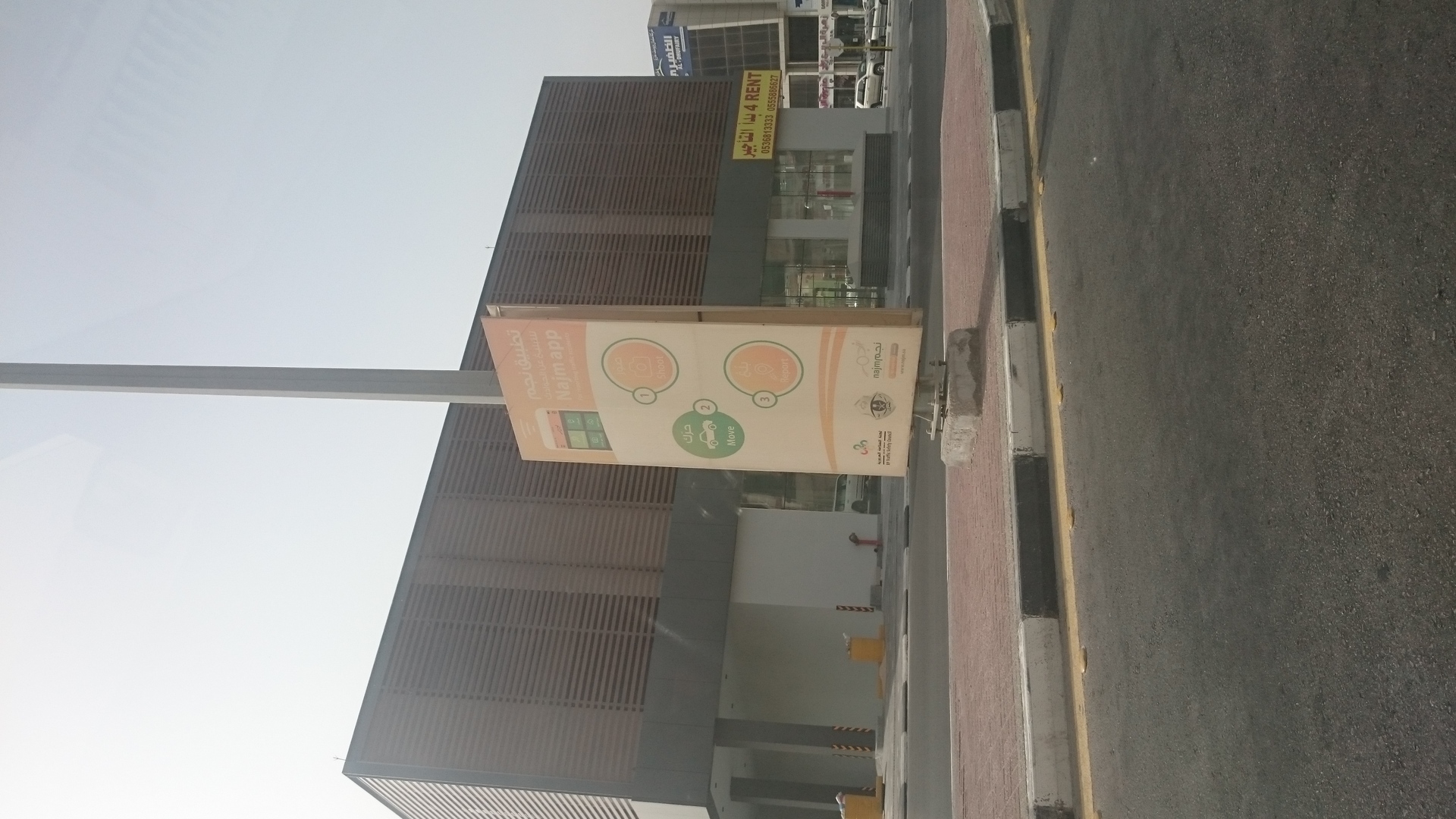
The Najm app is available free on both iOS (App Store) and Android (Google Play). Search for “Najm نجم” and download it before your trip. The app is available in both Arabic and English.
Registration requires a National ID (for Saudi citizens) or Iqama number (for residents). If you are a tourist on a tourist e-visa without an Iqama, you may need to use your passport number or border entry number. If the app does not accept your credentials, you can still report accidents by calling the Najm hotline at 920000560 — this works for everyone regardless of residency status.
Once installed, enable location services and camera access permissions immediately. You do not want to be fumbling with settings after an accident.
Understand Saudi Insurance Requirements
All vehicles on Saudi roads must carry at minimum third-party liability (TPL) insurance — this is compulsory by law, mandated by SAMA. The maximum third-party liability coverage is SAR 10,000,000 (approximately USD 2.67 million) per event. Two types of motor insurance are available:
- Third-Party Liability (TPL) — the mandatory minimum, covering damage you cause to others’ vehicles and property
- Comprehensive — covers your vehicle as well, with higher premiums but broader protection including theft, fire, and natural disasters
- The overall scene from all four directions, showing vehicle positions relative to lane markings and signs
- All damage on every vehicle involved, from multiple angles — close-up and wide shots
- Both vehicles’ licence plates (front and rear)
- The road surface — skid marks, debris, oil spills
- Street signs, traffic signals, road markings in the area
- Weather and lighting conditions
- Any dashcam footage — save it immediately
- Property damage only — no injuries
- Estimated damage under SAR 10,000 per vehicle
- Both drivers have valid insurance
- Both drivers agree to use the app
- Two vehicles or a single-vehicle accident only
- You cannot register on the app (tourists without Iqama)
- Damage exceeds SAR 10,000
- Three or more vehicles are involved
- The other driver is uncooperative or refuses to use the app
- There is a hit-and-run (file a police report at 993 first, then call Najm with the police report number)
- Government or commercial vehicles are involved
- Property beyond vehicles is damaged (buildings, fences, barriers)
- There are injuries or fatalities
- There is fire
- Neither party has valid insurance
- Suspected impaired driving
- A pedestrian is involved
- Acknowledgment: 1–2 business days
- Initial review: 3–5 business days
- Approval decision: 5–10 business days
- Repair completion: 7–30 days depending on damage severity
- Not at fault: The at-fault driver’s insurance pays for your repairs. No deductible from you. Third-party claims typically take 7–15 business days.
- At fault with comprehensive insurance: You pay your deductible (varies by policy, typically SAR 2,000–3,000). Insurance covers the rest.
- At fault with TPL only: Your TPL covers the other party’s damage. You pay for your own repairs out of pocket.
- Obtain an International Driving Permit (IDP) from your home country — carry it alongside your regular licence
- Download the Najm app and attempt to register with your passport or border entry number
- Save the Najm hotline (920000560) in your phone — this is your primary reporting channel if the app does not accept tourist credentials
- Photograph your rental agreement, insurance policy details, and the vehicle’s licence plate before driving off the lot
- Do a thorough walk-around inspection of the rental car, photographing every existing scratch and dent — the rental company will try to charge you for pre-existing damage if you do not have photographic proof
- Follow the same Najm reporting process described above — call 920000560 if you cannot use the app
- Have your passport with visa, IDP, and rental agreement ready for the Najm officer
- Notify the rental company immediately — the accident report’s date and time effectively ends your rental period for that vehicle
- The rental company’s insurance covers the claim, but you may owe the deductible amount stated in your contract
- Insurance does not cover: driving under the influence, driving outside rental terms, traffic violations, deliberate damage, or accidents after the agreed return date
- 1 year claim-free: 15% discount
- 2 years: 20% discount
- 3 years: 30% discount
- 4 years: 40% discount
- 5+ years: up to 60% discount
- Leaving the scene before Najm arrives — classified as hit-and-run, up to SAR 10,000 fine, insurance claim voided
- Settling privately without documentation — the other party can change their mind, leaving you liable with no proof
- Not reporting minor incidents — even a parking lot scrape needs a Najm report for insurance to cover anything
- Including pre-existing damage in claims — Taqdeer surveyors can identify old versus new damage; this constitutes fraud
- Missing the 10-day contestation deadline — after 10 days, you cannot appeal the fault determination
- Moving vehicles before documentation — photograph everything before repositioning, especially in serious accidents
- Admitting fault or apologising at the scene — let Najm determine fault based on evidence
- Not checking the report for errors — incorrect fault percentages, missing damages, or wrong information can reduce compensation
- Failing to notify your insurer within 24 hours — most policies require prompt notification or claims can be denied
- Not downloading the app before you need it — an accident scene is not the time to learn a new interface
- Anyone is injured, no matter how minor the injury appears
- There is a fatality
- Fire has broken out
- Neither driver has valid insurance
- You suspect the other driver is impaired
- A pedestrian or cyclist is involved
- The other driver has fled the scene (also file with Najm afterwards using the police report number)
- Vehicle Repair Permit: After the Najm report and insurance approval, issue a repair permit through Absher before the workshop can begin
- Accident Waiver: If both parties agree to drop the matter, use Absher’s official “Accident Waiver” service to close it legally — never do this informally
- Minor Accidents Reporting: For cases where neither party has insurance, Absher offers its own reporting service linked to Moroor
- Saudi Arabia has high traffic fatality rates — approximately 18 per 100,000 population, significantly above the global average. Defensive driving is essential.
- Speed limits are enforced by Saher cameras (automated speed and red-light cameras) across the Kingdom. Fines are issued automatically and attached to the vehicle registration.
- Lane discipline can be inconsistent, particularly in urban areas. Expect sudden lane changes without indicators.
- Roundabouts follow a give-way-to-traffic-already-in-the-roundabout rule, but this is frequently ignored in practice.
- Sandstorms can reduce visibility to near zero. If caught in one, pull over completely, turn off your headlights (to avoid attracting other drivers into your position), and wait it out.
- Phone use while driving carries a SAR 500 fine for the first offence and SAR 1,000 for repeat offences. Use a hands-free mount.
- Saudi Arabia Car Rental Guide — Prices, rules, and the best road trips across the Kingdom
- Getting Around Saudi Arabia — Complete transport guide covering trains, buses, flights, and driving
- Is Saudi Arabia Safe? — Honest safety guide including road safety and emergency contacts
- Saudi Arabia Travel Insurance Guide — Coverage options for medical, vehicle, and trip protection
- Saudi Arabia Travel Guide 2026 — The complete guide to visiting the Kingdom
- Saudi Arabia Visa Guide — Every visa type explained, including tourist e-visa
If you are renting a car, your rental company is legally required to provide insurance. Check your rental agreement to understand whether you have TPL only or comprehensive coverage, and note the deductible amount — typically SAR 2,000–3,000 for comprehensive policies. Many rental companies offer a Collision Damage Waiver (CDW) add-on that reduces or eliminates the deductible.
If you are concerned about additional coverage, see our Saudi Arabia travel insurance guide for options that complement your rental policy.
Save These Emergency Numbers
| Service | Number | When to Call |
|---|---|---|
| Najm Hotline (24/7) | 920000560 | Any traffic accident (property damage only) |
| General Emergency | 911 | Riyadh, Makkah, and Jeddah areas |
| Red Crescent Ambulance | 997 | Injuries anywhere in the Kingdom |
| Traffic Police (Moroor) | 993 | Accidents with injuries, fatalities, or no insurance |
| Najm Toll-Free | 199033 | Alternative Najm contact |
Store these numbers in your phone before you start driving. If you have a Saudi SIM card or eSIM, these numbers will work from any network.
What to Do Immediately After an Accident
The first sixty seconds after an accident determine how smoothly the next few days will go. Follow these steps in order:
Step 1: Check for Injuries
If anyone is hurt, call 997 (Red Crescent ambulance) or 911 (in Riyadh, Makkah, or Jeddah) immediately. If there are injuries, fatalities, or fire, you must contact the Traffic Police at 993 rather than Najm — the police handle all injury accidents.
Step 2: Secure the Scene
Turn on your hazard lights immediately. If you have a warning triangle (required by law in Saudi Arabia), place it behind your vehicle. Stay in your vehicle if you are on a highway — Saudi highways carry high-speed traffic and standing on the shoulder is dangerous.
Step 3: Do Not Move the Vehicles
This is where Saudi Arabia differs from many countries. Do not move the vehicles until you have fully documented the scene, unless they are creating an immediate safety hazard on a high-speed road. The position of the vehicles is critical evidence for fault determination.
Move Aside Rule: For minor accidents on busy roads where estimated damage is under SAR 10,000 and both drivers agree on what happened, you may move vehicles to the shoulder after photographing the scene. Use the Najm app’s self-survey feature to document and report without waiting for an officer.
Step 4: Document Everything
Take 20–50 photographs minimum. This is not an exaggeration — insurance assessors rely on photographic evidence. Photograph:
Also record a slow walk-around video of the entire scene. This takes thirty seconds and provides context that photographs alone cannot.
Step 5: Exchange Information
Collect from the other driver: full name, National ID or Iqama number, phone number, insurance company name and policy number, licence plate number, and driver’s licence number. Give your information in return. If there are witnesses, get their names and contact details.
How to Report: App vs. Phone vs. Officer
You have three ways to report an accident through Najm. Which one you use depends on the severity and circumstances.
Option 1: Najm App Self-Survey (Minor Accidents)
Use the app when all of the following are true:
In the app, select “Report Accident,” allow GPS to detect your location (adjust the pin if needed), upload your photographs (minimum four, but upload as many as possible), enter the other driver’s ID and phone number, select the accident type from the predefined categories, and submit. Both drivers digitally sign on their respective phones. You receive the official Najm report immediately with a reference number via SMS and email.
Option 2: Call the Najm Hotline (920000560)
Call the hotline when:
A Najm officer will be dispatched to your location using GPS. Typical wait times: 15–45 minutes in cities, up to 90 minutes in remote areas. The officer photographs all vehicles, documents damage, measures skid marks, interviews each driver separately, takes witness statements, and provides a preliminary fault determination at the scene. The full official report is generated within 24–48 hours.
Option 3: Traffic Police (993)
Call the traffic police directly when:
In these cases, the police handle the report. Najm may still be involved later for the insurance claim component.
Fault Determination: How Najm Decides Who Pays
Najm determines fault based on physical evidence, driver statements, witness accounts, and traffic law. Common fault patterns are predictable:
| Accident Type | Typical Fault Assignment |
|---|---|
| Rear-end collision | Following vehicle — 100% at fault |
| Red light violation | Violating driver — 100% at fault |
| Reversing accident | Reversing vehicle — 100% at fault |
| Lane change collision | Vehicle changing lanes — 100% at fault |
| Intersection without signals | Varies — often 50/50 split |
| Parked vehicle hit | Moving vehicle — 100% at fault |
Fault can be split in various ratios: 100/0, 70/30, 60/40, or 50/50. The determination directly affects who pays for what.
Critical Deadline: You have only 10 days from the accident report date to formally contest the fault determination. After 10 days, no appeals are accepted. Review your report carefully as soon as you receive it, and if you disagree with the fault assessment, file your contestation immediately through the Najm app or by calling the hotline.
After the Report: The Insurance Claim Process
Step 1: Najm Transmits the Report
Najm sends the accident report electronically to all involved parties’ insurance companies, typically within hours of the report being finalised.
Step 2: Contact Your Insurer
Call your insurance company within 24 hours, providing the Najm reference number. Most policies require notification within 24–48 hours or claims can be denied. If you are in a rental car, also notify the rental company immediately — most contracts require prompt notification.
Step 3: Taqdeer Damage Assessment
You will receive an SMS with instructions to visit a Taqdeer assessment centre (Saudi Arabia’s standardised vehicle damage estimation system). A certified assessor evaluates damage in under 30 minutes. The assessment fee is approximately SAR 130 (about USD 35), but SAMA has ruled that insurance companies — not drivers — bear this cost, so you can claim it back.
Step 4: Repair Authorisation
Before any workshop can legally begin repairs, you need a vehicle repair permit from Absher (the Saudi government’s e-services platform) or a Moroor office. This is a digital process if you have Absher access.
Typical claim processing timeline:
Who Pays for What?
The NRN Repair Network (For TPL Holders Not at Fault)
Najm launched the Najm Repair Network (NRN) — a first-of-its-kind service in Saudi insurance. If you hold TPL insurance and were not at fault, NRN handles the entire repair process: Najm dispatches a tow truck, takes your vehicle to a Taqdeer centre for assessment, transfers it to a certified repair centre, submits the claim to the at-fault party’s insurer on your behalf, and returns the repaired vehicle to you with an approved warranty. The entire service is free. You can initiate an NRN request through WhatsApp at 920000560.
Special Guidance for Tourists and Rental Car Drivers
If you are visiting Saudi Arabia on a tourist visa and driving a rental car, the accident process has several additional considerations.
Before Your Trip
If You Have an Accident in a Rental Car
Warning for tourists: Do NOT leave the scene before the Najm officer arrives or the app report is completed. Leaving can be classified as a hit-and-run, carrying fines up to SAR 10,000 (USD 2,670) and voiding your insurance claim entirely. Do NOT settle privately with cash — always get the official Najm report. Without it, you have zero legal protection.
Najm’s No-Claims Discount (NCD)
For longer-term residents and expats, Najm manages a No-Claims Discount system that rewards claim-free driving with insurance premium reductions:
The NCD is linked to the driver, not the vehicle, so it applies across all vehicles you own. It is only affected if your liability exceeds 50% in an accident. You can check your NCD status on the Najm website or app.
Ten Common Mistakes to Avoid
When to Call Police Instead of Najm
Understanding when the police — not Najm — handle the situation is important for your safety in Saudi Arabia. Contact the Traffic Police at 993 when:
For uninsured vehicles, you can use Absher’s “Minor Accidents Reporting” service in combination with a Moroor report.
Najm Service Coverage
Najm operates across more than 40 Saudi cities, with physical service centres and mobile field officers. Major cities with Najm presence include Riyadh, Jeddah, Makkah, Medina, Dammam, Khobar, Jubail, Al-Ahsa, Abha, and Tabuk. The Najm app includes a built-in branch locator showing the nearest service centre on a map.
If you are driving between cities on Saudi Arabia’s extensive highway network, Najm officers can be dispatched to remote locations, though response times outside urban areas may extend to 45–90 minutes. Keep your hazard lights on and remain in your vehicle while waiting.
Absher Integration
Absher, Saudi Arabia’s government e-services platform, connects with Najm in several ways that residents should know:
Absher requires a National ID or Iqama to register, so tourists typically do not have access. Your rental company can assist with the repair permit process if needed.
Practical Tips for Driving in Saudi Arabia
Prevention is always better than filing a Najm report. A few driving realities that visitors should know:
For comprehensive driving advice, including licence requirements, road rules, and route suggestions, see our Saudi Arabia car rental and driving guide.
Summary: Your Accident Response Checklist
| Step | Action | Key Detail |
|---|---|---|
| 1 | Check for injuries | Call 997 or 911 if anyone is hurt |
| 2 | Secure the scene | Hazard lights on, warning triangle out |
| 3 | Photograph everything | 20–50 photos minimum plus video |
| 4 | Exchange information | ID, phone, insurance, plate number |
| 5 | Report to Najm | App (minor) or call 920000560 |
| 6 | Wait for report | Do NOT leave the scene |
| 7 | Notify insurer/rental company | Within 24 hours with Najm reference number |
| 8 | Visit Taqdeer centre | Damage assessment within days |
| 9 | Get repair permit via Absher | Required before workshop can start |
| 10 | Review fault determination | Contest within 10 days if you disagree |