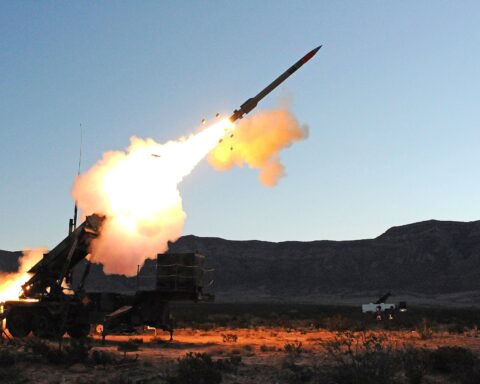
RIYADH — The Pentagon just told Saudi Arabia, on paper and in public, that the missiles keeping its cities alive are not coming back before the pilgrims arrive. On April 9, the US Army awarded Lockheed Martin a $4.761 billion contract for PAC-3 MSE interceptor production — 94 per cent of it funded by Foreign Military Sales, with delivery running through June 30, 2030. In doing so, it published the most damaging document MBS has faced since the war began: an official US government confirmation that Saudi Arabia’s air defence stockpile will not be meaningfully replenished before Hajj 2026, before the ceasefire expires on April 22, or before the June oil-pricing crisis lands on Aramco’s desk.
The contract is structured as an undefinitized contract action, meaning final delivery schedules are still being negotiated, but the production math is already settled. Lockheed delivered approximately 620 PAC-3 MSE rounds globally in 2025 — and Saudi Arabia’s January FMS notification requested 730, fourteen months of the entire world’s annual output, for one customer. Between now and the Day of Arafah on May 26, the number of new PAC-3 MSE interceptors entering Saudi inventory through the contract pipeline is, by the Pentagon’s own timeline, zero.
Table of Contents
- What the $4.76 Billion Actually Buys
- Why Can’t Lockheed Build Them Faster?
- The Allied Cupboard Is Bare
- Four Hundred Rounds and Four Corridors
- How Does Hajj Turn a Stockpile Gap Into a Hostage Crisis?
- Iran’s $20,000 Answer to a $3.9 Million Problem
- Why Hasn’t Washington Used Presidential Drawdown Authority?
- The Thirty-Four-Day Void
- Frequently Asked Questions
What the $4.76 Billion Actually Buys
The contract, awarded through the US Army Contracting Command at Redstone Arsenal, splits $4.761 billion between two funding lines: $264.96 million in US Army procurement funds and $4.496 billion in Foreign Military Sales revenue from allied governments. That 94-to-6 ratio tells its own story — the Pentagon is not restocking its own shelves, it is building a production pipeline overwhelmingly underwritten by countries whose interceptor stocks are already depleted, and the factory floor those countries are paying for will not reach full capacity until four years from now.
Lockheed Martin’s Tim Cahill framed the deal in the language of wartime urgency. “We are answering the nation’s call with urgency and partnering with the DoD to accelerate PAC-3 MSE production faster than ever before,” the president of Lockheed’s Missiles and Fire Control division said in the company’s April 10 press release. The word “accelerate” is doing heavy lifting in that sentence. The acceleration in question takes the production line from 620 interceptors per year — a 20 per cent year-on-year increase and 60 per cent above 2024 levels, both real achievements in defence manufacturing — to 2,000 per year by 2030. That is a tripling of output spread across four years.
Defence Secretary Pete Hegseth’s own framing, offered at a January defence-industrial event, made the timeline explicit: “We will give longer, larger, more predictable contracts to companies that deliver on time and on budget.” Longer and larger and more predictable are qualities designed to fix the structural underinvestment that left allied interceptor stocks depleted in the first place — they are not qualities that produce missiles in weeks.
Why Can’t Lockheed Build Them Faster?
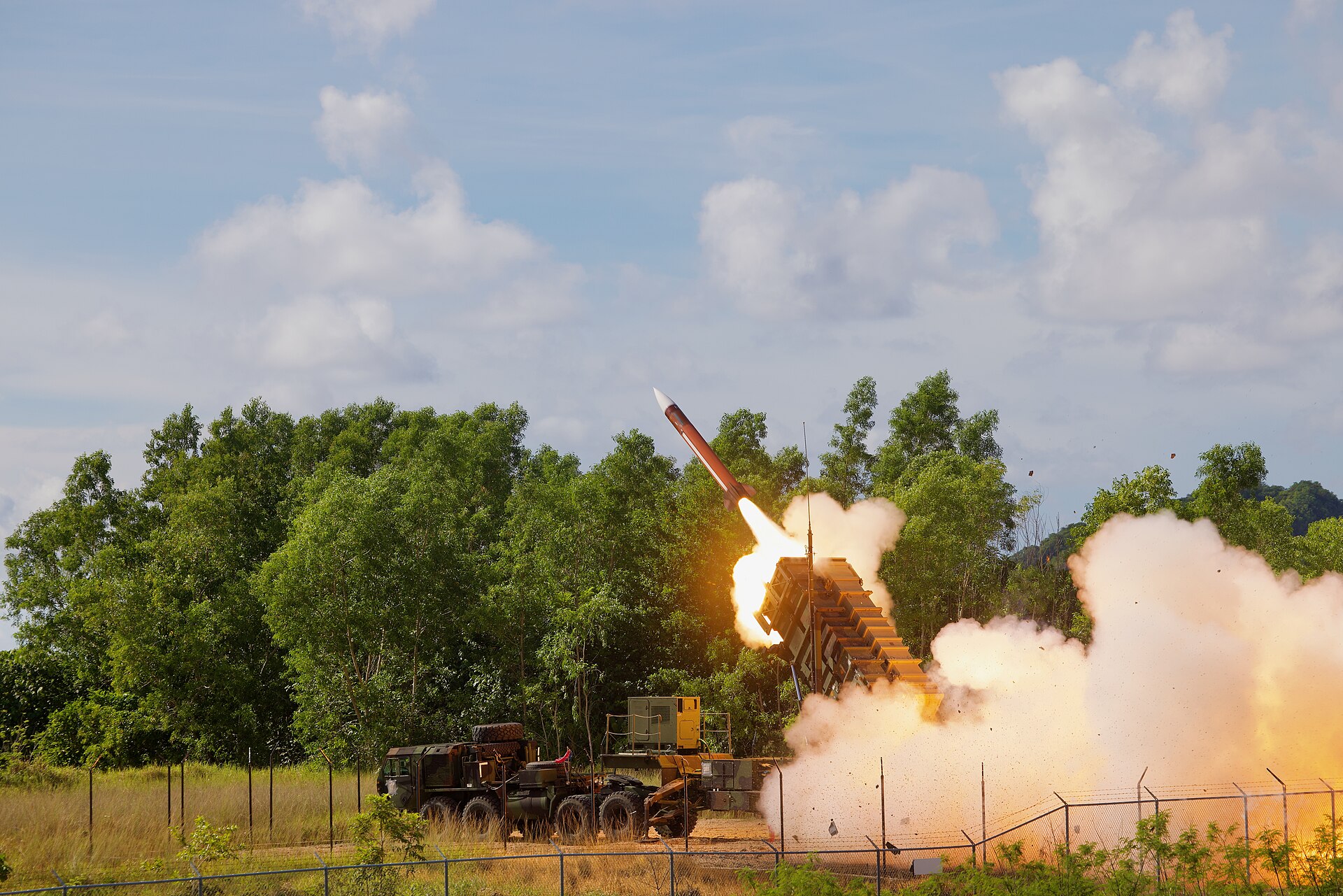
The PAC-3 MSE production bottleneck lies in the Boeing-supplied seeker — the guidance package that gives each interceptor its terminal-phase kill capability. Boeing’s sole Huntsville seeker facility is undergoing a $200 million expansion to triple output, but the new production cells will not be operational before 2030. No production surge can change the delivery timeline for 2026.
The Middle East briefing 3,000+ readers start their day with.
One email. Every weekday morning. Free.
The bottleneck is not the missile body, and it is not the warhead. It is the seeker — and Boeing supplies it from a single facility in Huntsville, Alabama. On April 1, nine days before the Lockheed contract was awarded, Boeing signed a parallel framework agreement to triple seeker output, backed by $200 million in investment and a 35,000-square-foot facility expansion that has been underway since 2024. The expansion enables the 2030 production target; it does not move a single additional seeker onto the 2026 assembly line, because the expanded production cells are not yet operational.
The pre-war production average makes the current gap more legible. The CSIS Missile Defense Project, drawing on a decade of procurement data, documented that PAC-3 MSE annual output averaged approximately 270 rounds per year through fiscal year 2024. Wes Rumbaugh, a fellow at the programme, wrote the assessment that became the baseline for congressional debate: “The Department of Defense can either ante up and buy the necessary interceptors to support those deployments, or fold on its regional interests and bear the consequences.” The Department chose to ante up — in 2026, for delivery in 2028 at the earliest, through a contract that reaches full capacity in 2030.
Saudi Arabia’s January 30 FMS congressional notification requested 730 PAC-3 MSE interceptors at an estimated $9 billion — a queue that now competes with the US Army, Germany, the Netherlands, Japan, and every other Patriot-operating nation whose stocks are drawn down. Standard FMS delivery timelines for advanced munitions run twelve to twenty-four months even under emergency procedures, according to DSCA procurement documentation, and no emergency acceleration has been publicly announced for the Saudi order.
| Metric | Figure | Source |
|---|---|---|
| 2025 global deliveries | ~620 rounds | Lockheed Martin, Jan 2026 |
| Saudi FMS request (Jan 30, 2026) | 730 rounds ($9B) | DSCA notification |
| Saudi order as share of 2025 output | ~118% (14 months) | Calculated |
| 10-year pre-2024 production average | ~270 rounds/year | CSIS Missile Defense Project |
| 2030 target production rate | 2,000 rounds/year | Lockheed Martin framework |
| Contract completion | June 30, 2030 | US Army Contracting Command |
The table reads like a procurement schedule; it functions as a casualty forecast. Every month between now and the first meaningful delivery is a month in which Saudi Arabia’s remaining interceptor stock shrinks and nothing replaces it.
The Allied Cupboard Is Bare
If the factory cannot deliver in time, the alternative is to move existing interceptors from an ally’s stockpile to Saudi launchers. Poland tested this proposition on March 31 and gave a one-word answer. Defence Minister Wladyslaw Kosiniak-Kamysz, responding to a US request to transfer one Patriot battery and its PAC-3 MSE load to the Middle East, was unequivocal: “Our Patriot batteries and their armament serve to secure the Polish skies and NATO’s eastern flank. Nothing is changing in this field, and we do not plan to move them anywhere.” Poland holds two operational Patriot PAC-3 batteries; the refusal removed approximately 200 MSE rounds from the pool of interceptors theoretically available for Gulf redeployment.
Germany’s position is arithmetically worse. Berlin has transferred five Patriot batteries to Ukraine since 2022, and Defence Minister Boris Pistorius has confirmed that German Patriot transfer capacity is exhausted. The scale of European scarcity became measurable in March 2026, when Germany organised a coalition effort across all willing European partners and assembled a total of 35 PAC-3 interceptors for Ukraine — not 35 batteries, not 35 launchers, but 35 individual rounds scraped from across the continent’s entire Patriot ecosystem. The Netherlands, having already transferred interceptors to Ukraine, is ordering a fifth Patriot battery at $627 million to replace what it gave away, but that order was placed in April 2026 and faces the same production queue as everyone else.
Japan modified its export rules in 2024 to allow transfer of Patriot interceptors to the United States, which could theoretically backfill American stocks and free up capacity for Saudi delivery. But the Japanese pathway is indirect — Tokyo can ship to Washington, not to Riyadh — and no formal Japanese-to-US-to-Saudi transfer chain has been announced or structured. Kelly Grieco, a senior fellow at the Stimson Center, put the allied stockpile situation in terms that apply to every transfer pathway simultaneously: “You can’t replace those kinds of missiles overnight. It would take years.”
Four Hundred Rounds and Four Corridors
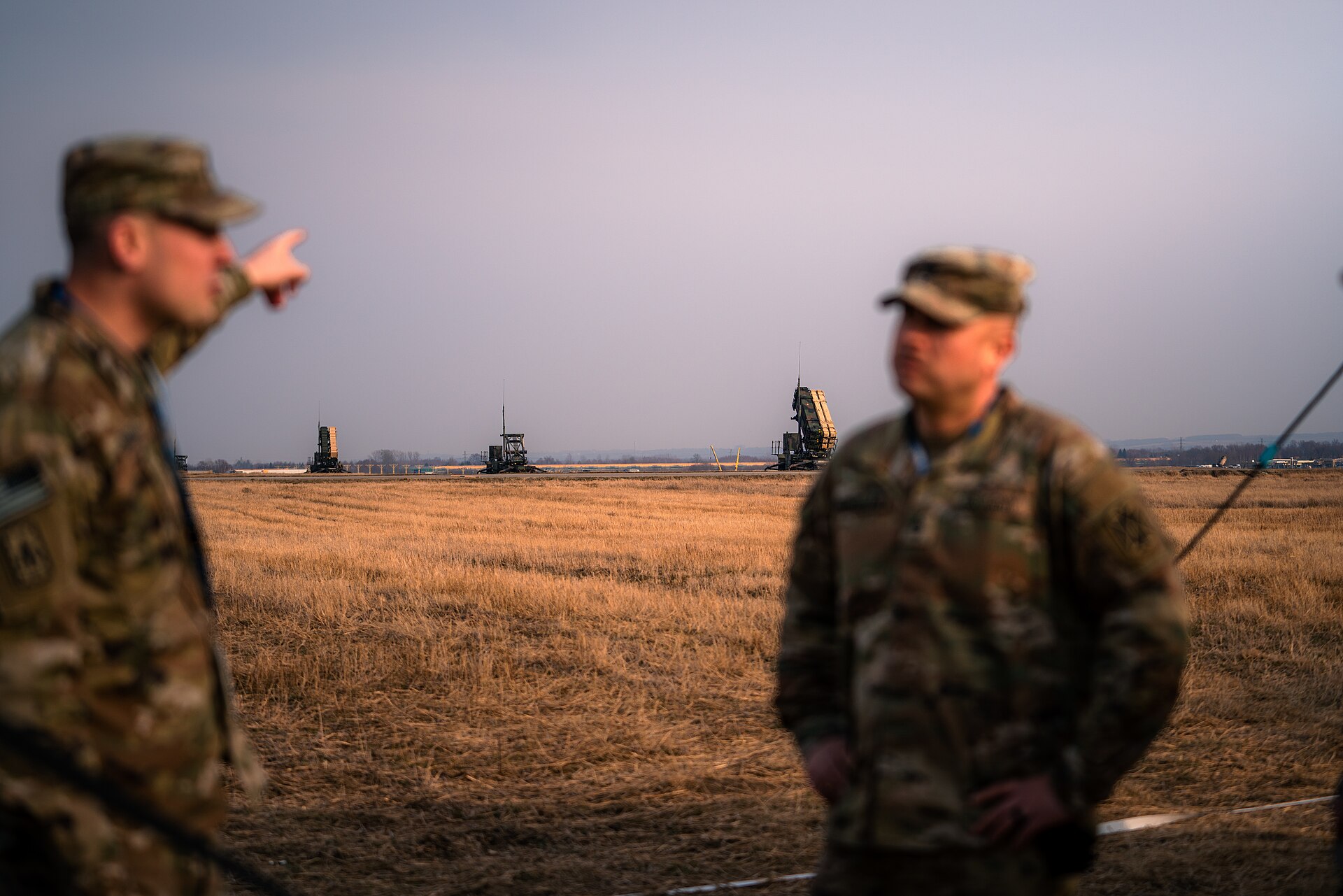
Saudi Arabia entered the war with approximately 2,800 PAC-3 MSE interceptors distributed across roughly 16 Patriot batteries and 108 M902 launchers. Between March 3 and April 7, Saudi air defences intercepted 894 aerial threats — 799 drones and 95 ballistic missiles — at an implied expenditure of approximately $3.49 billion, calculated at $3.9 million per round. The remaining stockpile, estimated at approximately 400 rounds as of mid-April, represents an 86 per cent drawdown from the pre-war total, and those 400 rounds are not sitting in a single warehouse waiting to be dispatched wherever the next threat materialises.
They are distributed across four defence corridors that cannot share interceptors in combat: the Eastern Province oil complex anchored on Ras Tanura, Abqaiq, and Jubail; the Yanbu Red Sea coast terminal; the Riyadh metropolitan area; and the Mecca-Medina Hejaz corridor protecting the holy cities. Ras Tanura and Jubail sit 65 to 73 kilometres apart and cannot be covered by a single battery’s engagement envelope. Mecca sits approximately 1,200 kilometres southwest of the Eastern Province — an interceptor defending Jubail’s petrochemical infrastructure is physically incapable of defending a pilgrim camp at Mina.
CSIS analysis by Mark Cancian and Chris Park found that nearly 70 per cent of Saudi-intercepted drones and missiles during the first three weeks of Operation Epic Fury targeted the Eastern Province or specific oil facilities. That concentration of threat pressure means the bulk of the 400 remaining rounds are committed to the corridor that generates Saudi Arabia’s export revenue, not the corridor that houses its religious legitimacy. Redistributing interceptors from Ras Tanura to Mecca would expose the oil infrastructure that funds the entire war effort; keeping them at Ras Tanura leaves the Hejaz corridor defended by whatever fraction of 400 rounds can be spared from facilities that Iran has already struck repeatedly.
How Does Hajj Turn a Stockpile Gap Into a Hostage Crisis?
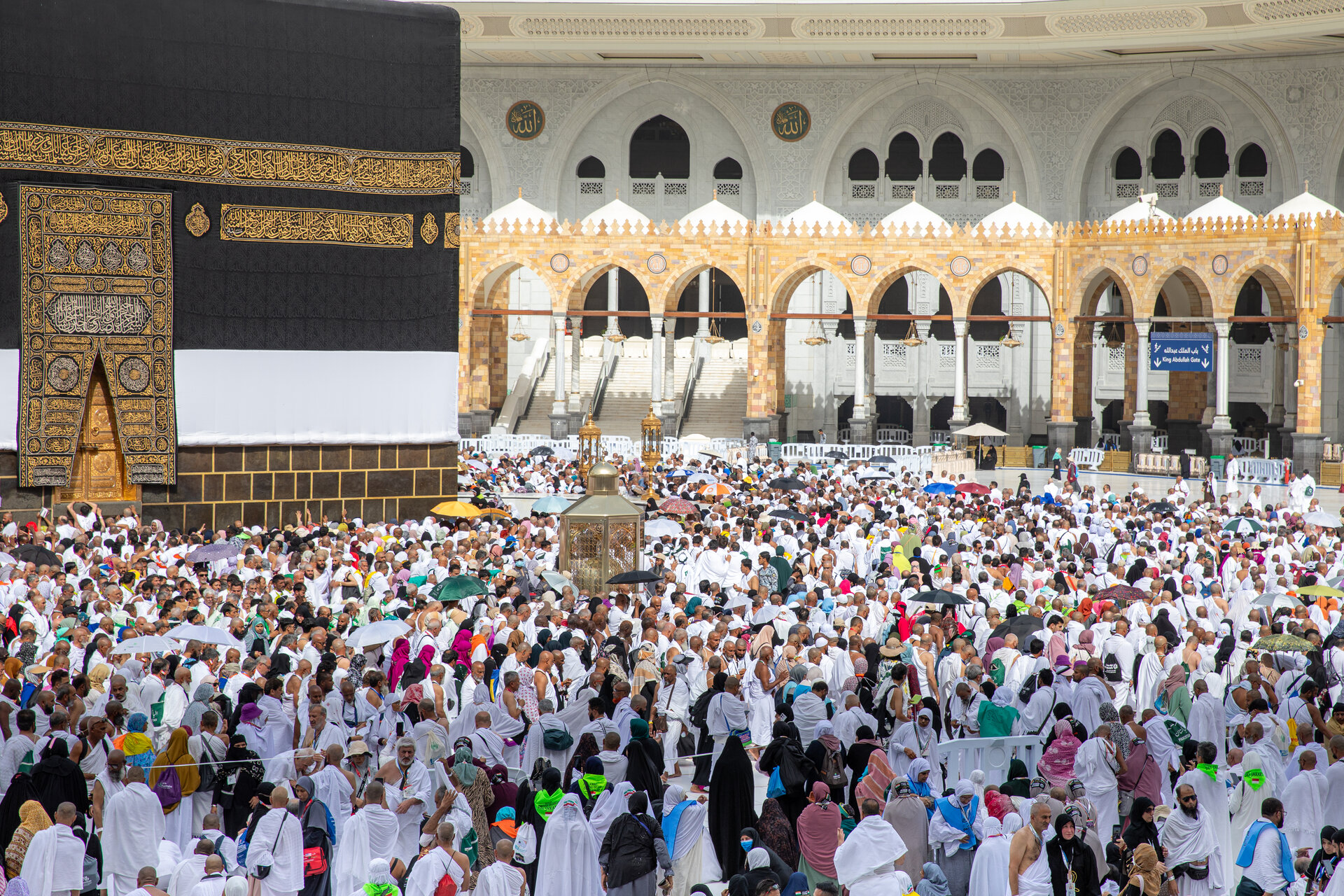
Hajj concentrates 1.8 million international pilgrims in the Mecca-Medina corridor from April 18 to late May — a corridor 1,200 kilometres from the Eastern Province oil infrastructure that commands most of Saudi Arabia’s remaining PAC-3 MSE interceptors. With 400 rounds covering four defence zones, the Hejaz corridor competes directly with Ras Tanura for a shrinking reserve.
The General Authority of Civil Aviation confirmed that Hajj arrival flights to Madinah begin April 18, opening a 34-day funnel through May 21. Indonesia alone sends 221,000 pilgrims, with the first departures on April 22 — the same day the ceasefire expires. Pakistan’s 119,000 arrive from April 18. MBS has framed this concentration of Muslim humanity as a deterrence signal: Iran cannot strike the holy cities during pilgrimage without catastrophic damage to its own Islamic legitimacy, and therefore the pilgrims function as a shield.
The deterrence logic depends on an assumption about Iranian decision-making that may be correct, but it sits on top of a military assumption that is demonstrably false — the assumption that Saudi Arabia can intercept whatever Iran sends toward the Hejaz if deterrence fails. With 400 rounds distributed across four corridors, with 70 per cent of threat pressure concentrated on the Eastern Province (CSIS analysis), with no resupply contract delivering before 2028, and with every allied stockpile either empty or politically locked, the interceptor capacity defending the Hajj corridor is a fraction of a fraction of a depleted reserve.
The IRGC has made no public statement naming Mecca or Medina as targets, and no official Iranian statement has threatened pilgrims directly. But Iran’s structural position is built for exploitation rather than restraint: zero Iranian pilgrims are present in Saudi Arabia in 2026, after Saudi visa suspensions and cancelled direct flights, which means the IRGC faces no domestic political cost from any Hajj disruption. Ayatollah Mohammad Emami Kashani’s post-2015 Hajj stampede verdict — “Saudi Arabia is incapable of organising the pilgrimage” — provides a pre-built delegitimisation narrative that Tehran would deploy within hours of any pilgrim casualties, regardless of whether those casualties resulted from an Iranian strike or from debris falling from a successful Saudi intercept. The Custodian of the Two Holy Mosques title, formally adopted by King Fahd in 1986 and central to Saudi legitimacy claims since the 1987 Mecca incident that killed 402 pilgrims, becomes a liability the moment the custodian cannot physically defend the mosques.
Iran’s $20,000 Answer to a $3.9 Million Problem
The IRGC’s saturation doctrine during Operation Epic Fury was not a blunt instrument — it was an accounting exercise designed to bankrupt Saudi air defences faster than any supply chain could replenish them. Open-source tracking and CENTCOM public statements document Iran coordinating approximately 2,000 one-way attack drones in the first five days alongside ballistic missile barrages, sending Shahed-136 drones at below-500-metre altitude to stress Saudi short-range intercept tiers simultaneously with SRBM arrivals from Fateh-110 and Zolfaghar variants that fly sub-five-minute trajectories from western Iran and require PAC-3 engagement. The doctrine is explicitly designed to exhaust layered defences through simultaneous multi-axis, multi-altitude attack, and the cost ratios make the exhaustion arithmetic lopsided beyond recovery.
A single Shahed drone costs between $20,000 and $50,000 to produce. A single PAC-3 MSE intercept costs $3.9 million. That is a cost asymmetry of 78-to-1 at the high end of the drone estimate and 195-to-1 at the low end — ratios the CSIS cost-imposition framework, developed by analysts including Bondar, has described as a deliberate Iranian strategy rather than an incidental feature of asymmetric warfare. Between February 28 and March 31, CENTCOM tracking shows Iran launched approximately 135 ballistic missiles at Saudi Arabia specifically, as part of a broader 1,372-missile campaign against Arab Gulf states combined — a pace of expenditure designed to burn through interceptor stocks faster than any production line could replenish them.
“It’s a race of attrition between the two sides to see who can get over the finish line.”
Shalom Lipner, Senior Fellow, Atlantic Council
Iran has not won that race, but it does not need to win it outright — it needs only to maintain a launch rate that forces Saudi Arabia to spend interceptors faster than it can acquire them, and the PAC-3 contract just confirmed that the acquisition rate will not change meaningfully for years. Iran’s arsenal remains approximately 50 per cent intact, according to assessments published in IRGC force-structure analyses, and the THAAD battery radar that provided Saudi Arabia’s upper-tier intercept capability was struck early in the conflict, shifting additional load onto the very PAC-3 MSE rounds now down to 400.
Why Hasn’t Washington Used Presidential Drawdown Authority?
Presidential Drawdown Authority under Section 506 of the Foreign Assistance Act allows emergency transfer of US military stocks to an ally within weeks, bypassing FMS timelines entirely. Washington used PDA to deliver Patriot interceptors to Ukraine in December 2022. No equivalent authorisation for Saudi Arabia has been announced, and GAO assessments suggest US Army PAC-3 stocks are themselves under strain.
That Ukraine precedent is what makes the Saudi gap specific rather than theoretical. A full Patriot battery and interceptors arrived in Kyiv within weeks of PDA authorisation — not the twelve-to-twenty-four months that standard FMS requires. No equivalent authorisation for Saudi Patriot interceptors has been publicly announced or confirmed as of April 12, 2026, and the $9 billion Saudi sale is structured entirely as FMS, the slower mechanism.
The absence of a PDA announcement is not necessarily evidence that no drawdown has occurred — classified transfers are possible, and the administration has no obligation to disclose operational details of emergency military assistance in real time. But Wes Rumbaugh’s CSIS assessment noted that US Army procurement was already diverting production capacity to FMS, and the GAO flagged that pulling forward US deliveries competes directly with international orders. The US Army’s own share of the new contract — $264.96 million out of $4.761 billion, or 6 per cent — suggests that Washington is not prioritising its own restocking, which means there may be limited stock available to draw down even if the political will existed.
The contrast with Ukraine is instructive. When Kyiv needed Patriot interceptors, the administration used PDA within weeks, organised European coalition transfers, and publicly announced each tranche as a signal of commitment. Saudi Arabia, under active ballistic missile attack for six weeks, has received a $9 billion FMS notification — a purchase order, not a delivery — and a production contract that runs to 2030. The gap between the two responses is not a logistics problem; it is a political choice, and the ceasefire’s April 22 expiry is forty-four days before the Hajj peak with that choice still unmade.
The Thirty-Four-Day Void
The ceasefire brokered in Islamabad on April 8 expires on April 22. Hajj arrival flights begin April 18 — four days before expiry. The Day of Arafah, when approximately 1.8 million pilgrims gather on a single plain outside Mecca for the rite that defines the pilgrimage, falls on May 26, thirty-four days after the ceasefire lapses. No extension mechanism exists in the Islamabad Accord’s text. No diplomatic framework covers the gap between April 22 and the end of Hajj in late May. EASA conflict zone bulletin CZIB 2026-03-R6 advises commercial operators to route through the southern corridor at FL320 or above; Lufthansa and KLM have suspended Riyadh and Dammam service through October 2026.
Greece’s ELDYSA mission — approximately 120 to 130 Hellenic Air Force specialists operating a single PAC-3 Patriot battery near Yanbu — is the only confirmed allied air defence deployment on Saudi soil beyond the indigenous Saudi Patriot force. The ELDYSA battery fired its first combat intercepts against incoming Iranian ballistic missiles on March 19, the Hellenic Parliament approved a fourth extension through November 2026 at Saudi Arabia’s formal request, and the Greek deployment is real, operational, and finite. Its interceptor load is drawn from Greek national stocks, not from US FMS, and Athens has disclosed no resupply arrangement for rounds expended in combat. One battery, covering the western pipeline terminal, does not extend to the Hejaz corridor 300 kilometres to the south.
Pakistan’s 13,000-troop deployment to the Eastern Province under the September 2025 Saudi-Pakistan Mutual Defence Agreement provides ground force augmentation, but Pakistan operates no Patriot-compatible air defence systems and contributes nothing to the interceptor arithmetic. The deployment secures perimeters and facilities on the ground; the sky above the pilgrims remains a Saudi and American problem, and the American half of that equation just published a four-year delivery schedule.
| Date | Event | Air Defence Implication |
|---|---|---|
| April 18 | First Hajj flights arrive Madinah | Pilgrim concentration begins in Hejaz corridor |
| April 22 | Ceasefire expires; Indonesia departures begin | No diplomatic cover; threat environment reverts to pre-ceasefire |
| May 21 | Hajj arrival window closes | ~1.8M pilgrims in Mecca-Medina corridor |
| May 25-26 | Day of Arafah / Hajj peak | Maximum pilgrim density at single outdoor site |
| June 2026 | OSP repricing crisis (May cargoes) | Eastern Province defence priority intensifies |
| 2028 (earliest) | First meaningful PAC-3 MSE deliveries under new contract | Stockpile replenishment begins — two Hajj cycles late |
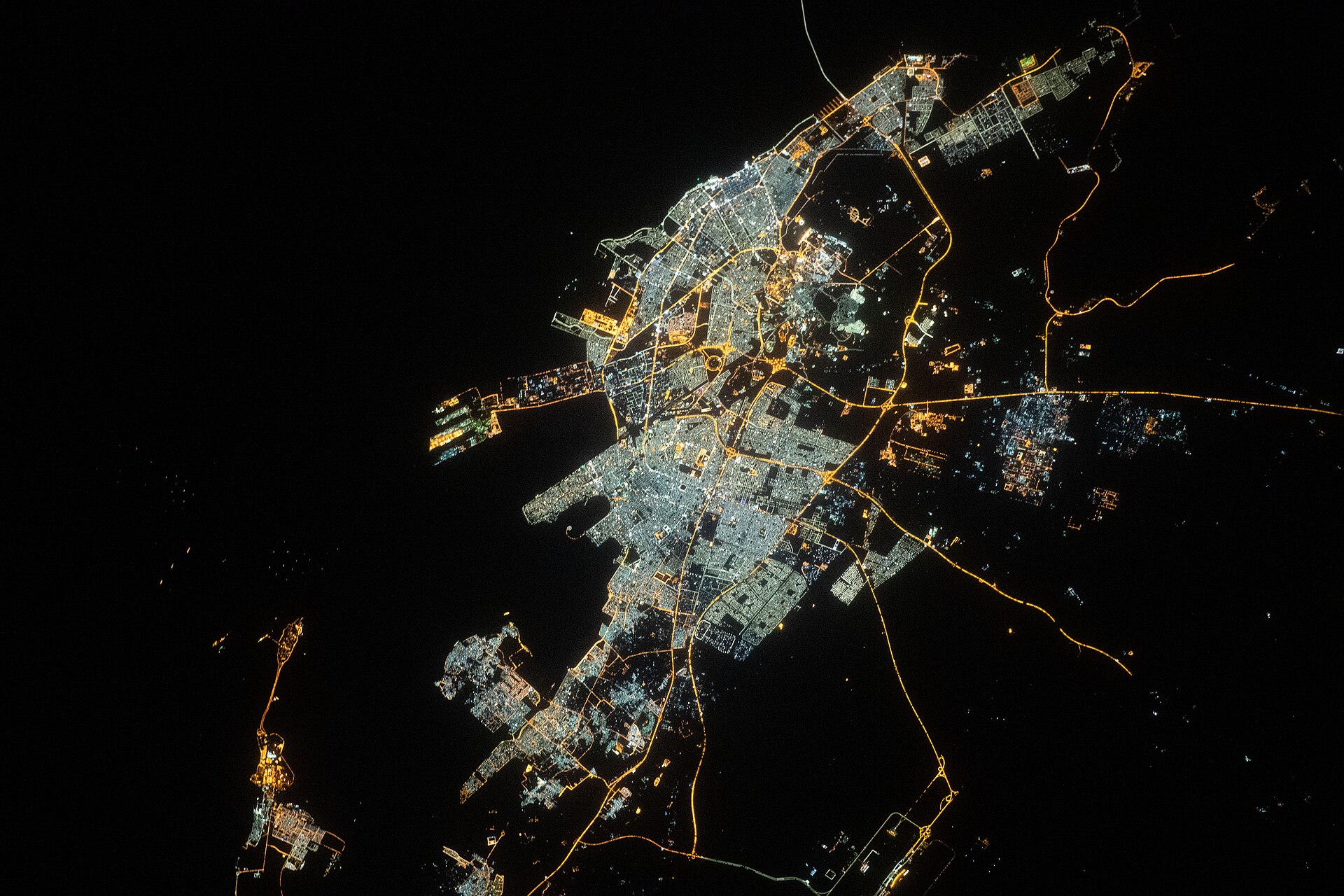
MBS built his Hajj deterrence thesis on the premise that Iran would not dare strike during pilgrimage, and that premise may hold — the Islamic legitimacy cost to Tehran would be enormous, even with zero Iranian pilgrims present. But deterrence is a bet, not a guarantee, and the second leg of the bet — that Saudi Arabia could intercept whatever came if deterrence failed — was always the weaker proposition. The contract did not create the weakness. It certified it, with a Pentagon file number attached, and set the repair date four years into the future. The Camden, Arkansas production line that will eventually close the gap is running three shifts, Boeing’s Huntsville seeker plant is pouring concrete for its expansion, and 1.8 million pilgrims will be standing in the open at Arafah thirty-four days after the ceasefire expires, defended by whatever remains of 400 interceptors that have to cover four corridors and 1,200 kilometres of Saudi territory simultaneously.
Frequently Asked Questions
Could the US transfer PAC-3 interceptors from its bases in the Gulf region directly to Saudi batteries?
The US operates Patriot batteries at Al Udeid Air Base in Qatar, Al Dhafra in the UAE, and previously at Prince Sultan Air Base in Saudi Arabia, but these batteries defend US personnel and installations under US operational control. Transferring interceptors from US-operated batteries to Saudi-operated launchers requires either a Presidential Drawdown Authority authorisation or an FMS case amendment, both of which involve legal and bureaucratic steps beyond a simple handoff between co-located forces. Interoperability is not the constraint — authorisation is.
Are there non-Patriot systems that could fill the intercept gap during Hajj?
Saudi Arabia operates the Oerlikon Skyshield and Shahine short-range systems alongside its Patriot batteries, but neither can engage the ballistic missile threats — Fateh-110 and Zolfaghar SRBMs with sub-five-minute flight times from western Iran — that define the Hejaz threat profile. The THAAD system provides upper-tier intercept capability, but its radar was damaged early in the conflict, reducing its operational effectiveness. South Korea’s L-SAM and Israel’s David’s Sling are not in Saudi inventory and cannot be integrated into the existing Patriot battle management network within the Hajj timeline.
What happens to Saudi Arabia’s air defence posture if the ceasefire is extended beyond April 22?
An extension would reduce the immediate threat to pilgrim concentrations, but it would not change the interceptor arithmetic. The 400 remaining PAC-3 MSE rounds continue to degrade through maintenance cycling and readiness requirements even without combat expenditure, and the production pipeline does not accelerate regardless of the diplomatic calendar. A ceasefire extension buys time for diplomacy; it does not buy interceptors. The structural gap persists until the Camden production line reaches scale — currently projected for 2028 at the earliest for meaningful Saudi deliveries.
Has Saudi Arabia explored purchasing interceptors from non-US suppliers?
The PAC-3 MSE is manufactured exclusively by Lockheed Martin, and no foreign-manufactured interceptor is compatible with the Saudi Patriot fire-control system without extensive software and hardware integration that would take years. Saudi Arabia has explored the Chinese HQ-9 and Russian S-400 in prior procurement cycles, but neither system can be networked with the existing Patriot architecture, and introducing a parallel air defence network during an active conflict would create more vulnerability than it resolves. The dependency on a single American production line is, as the April 9 contract makes plain, a feature of the architecture that cannot be engineered away on any timeline that matters for 2026.
How does the $80 billion Saudi Arabia has spent on air defence over the past decade relate to the current shortfall?
The investment bought platforms — Patriot batteries, THAAD launchers, fire-control radars, advanced fighter aircraft — but platforms without munitions are furniture. The $80 billion created a world-class air defence network in hardware terms, and the network performed at high intercept rates during the first weeks of Operation Epic Fury, but the design assumption was that any conflict would be short enough for existing stockpiles to cover the engagement period and US resupply would bridge any gap. A six-week war against a saturation-doctrine adversary broke that assumption, and the capital investment in launchers and radars cannot substitute for the consumable interceptors those launchers fire.