
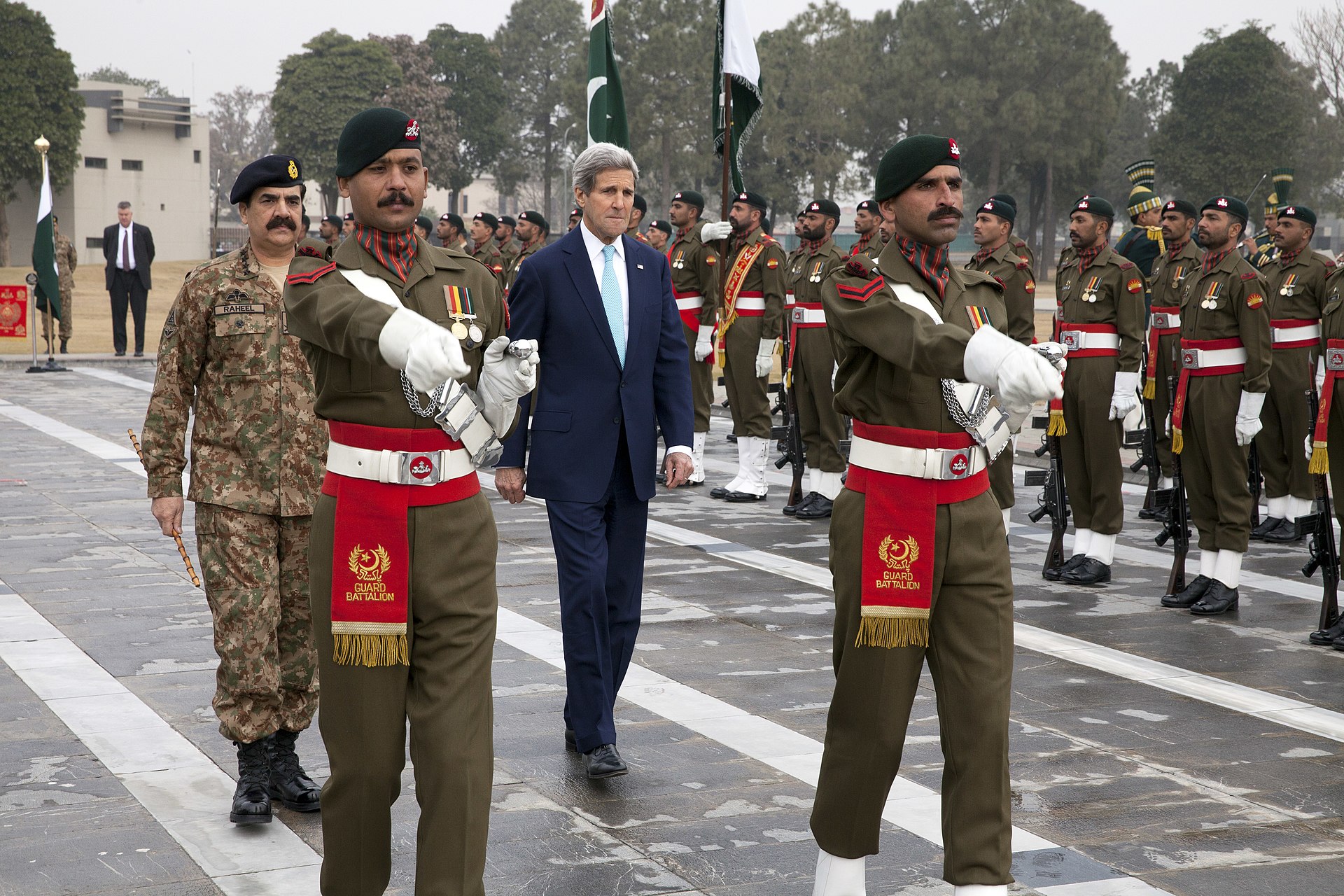
ISLAMABAD — The ceasefire between Iran and the United States now runs through one man’s phone. Field Marshal Asim Munir — Pakistan’s Chief of Defence Forces, constitutionally empowered over foreign and security policy since the 27th Amendment in November 2025 — spent the night of April 8-9 relaying messages between Vice President JD Vance, Special Envoy Steve Witkoff, and Iranian Foreign Minister Abbas Araghchi. That relay operation, mounted after what four Pakistani sources told Reuters were talks that had gone “almost dead,” produced an Iranian commitment to hold back a retaliatory strike against Israel. It was phone diplomacy dressed as enforcement. No written protocol governed the exchange. No coercive mechanism backed it. And the country absorbing the greatest security exposure from its failure — Saudi Arabia, with roughly 400 PAC-3 interceptor rounds remaining — had no seat in the room, no line to Ghalibaf, and no role in the MOU.
Table of Contents
- The Overnight Relay: How Pakistan Held the Line on April 8-9
- Who Actually Commands Iran’s Ceasefire?
- An MOU Without Teeth: What the Islamabad Accord Contains and What It Lacks
- Ghalibaf’s Three Violations and Why Pakistan Cannot Adjudicate Any of Them
- Why Is Saudi Arabia Excluded from the Enforcement Mechanism?
- Pakistan’s Dual Bind: Iran’s Interlocutor, Saudi Arabia’s Treaty Ally
- The Constitutional Void in Qom
- Can Pakistan Enforce Anything at the Strait of Hormuz?
- The Nur Khan Precedent and Its Limits
- Frequently Asked Questions
The Overnight Relay: How Pakistan Held the Line on April 8-9
The sequence matters. On the evening of April 8, Iran was preparing to retaliate against Israeli strikes on Lebanon — 100 targets, 50 jets, 160 munitions, at least 254 people killed — which Tehran considered a direct violation of the ceasefire that had been agreed less than 24 hours earlier. Pakistani sources told The Hill and Reuters that Iran “was about to retaliate on the night between April 8 and 9 against Israeli violations of the ceasefire in Lebanon.” What stopped it was not a treaty mechanism, not a military deterrent, and not a Security Council resolution. It was Asim Munir making phone calls.
The operation ran through Pakistan’s civilian and military channels simultaneously. Prime Minister Shehbaz Sharif worked the political track while Munir handled the military-to-military and intelligence-to-intelligence communications. Trump acknowledged the architecture in a Truth Social post on April 8: “Based on conversations with Prime Minister Shehbaz Sharif and Field Marshal Asim Munir, of Pakistan… they requested that I hold off the destructive force being sent tonight to Iran.”
The formulation is worth parsing. Trump credits Pakistan with requesting American restraint — framing Islamabad as a supplicant, not an enforcer. Araghchi, speaking to Al Jazeera on the same day, offered a mirror image: “Iran accepted the ceasefire in response to the brotherly request of PM Sharif.” Both sides describe Pakistan as making requests. Neither describes Pakistan as issuing commands, holding enforcement authority, or operating under any protocol that would survive the next provocation.
The overnight success depended on a condition that may not recur: both parties were willing, for different tactical reasons, to accept a pause. The United States wanted to avoid a retaliatory spiral that would collapse the Islamabad framework before April 10 talks. Iran wanted to preserve the appearance of negotiating in good faith while Ghalibaf prepared his public case for withdrawal. Pakistan threaded that narrow opening. Whether it can do so again, when the tactical incentives shift, is not a question Pakistan can answer alone.
Who Actually Commands Iran’s Ceasefire?
Pakistan’s ceasefire relay runs through Abbas Araghchi. Araghchi does not command the Islamic Revolutionary Guard Corps. That gap — between Iran’s diplomatic voice and its military command — is the structural defect at the center of every enforcement question.
The Middle East briefing 3,000+ readers start their day with.
One email. Every weekday morning. Free.
Abbas Araghchi accepted the ceasefire. The man who commands the IRGC — Ahmad Vahidi — made no public statement endorsing the halt. Ali Akbar Mousavi Khoeini, a former Iranian parliamentarian now in exile, described the power arrangement to NBC News without ambiguity: “Vahidi is in charge of the country. The power is in the hands of the Revolutionary Guard and the most radical faction of the Revolutionary Guard. Ghalibaf doesn’t have the strength to confront him.” Ghalibaf — the Parliament Speaker who traveled to Islamabad, who has been the public face of Iranian engagement — was himself IRGC Aerospace Force commander from 1997 to 2000. He knows the institution from the inside. His assessment of his own weakness against Vahidi carries a specificity that outside analysts cannot replicate.
The Supreme National Security Council formally approved the ceasefire, but the SNSC is itself compromised as an independent institution. Its secretary, Mohammad Bagher Zolghadr — an IRGC veteran who built the Quds Force proxy network — was installed on March 24 after protracted pressure compelled President Pezeshkian to make the appointment. Zolghadr is under both US and EU sanctions. The body that approved the ceasefire is controlled by the same faction whose compliance the ceasefire requires.
The SNSC’s own language betrayed the contradiction. In a statement reported by PBS NewsHour, the council declared: “Negotiations are the continuation of battlefield.” And: “Our hands are on the trigger.” These are not the words of an institution that has accepted a ceasefire as a pathway to peace. They are the words of an institution that has accepted a ceasefire as a tactical maneuver — and reserves the right to resume hostilities at a moment of its choosing.
Pakistan’s relay operation — Munir to Araghchi to (presumably) the SNSC — terminates at a body that views the ceasefire as a battlefield extension. The relay does not reach Vahidi. No evidence in any reporting suggests Munir has a direct channel to the IRGC command structure, as opposed to the foreign ministry or the president’s office. The enforcement mechanism, such as it is, does not connect to the entity that must be enforced.
An MOU Without Teeth: What the Islamabad Accord Contains and What It Lacks
The Islamabad Accord — finalized “electronically through Pakistan,” according to Khaleej Times and Iran International reporting from April 6 — is a memorandum of understanding. It contains a commitment to a 15-to-20-day immediate ceasefire. It does not contain an enforcement clause. It does not contain a dispute-resolution mechanism. It does not contain an adjudication panel. It does not identify a third party with coercive authority to compel compliance. It does not define what constitutes a violation.
This last absence is not a drafting oversight. It is a structural impossibility. Iran’s position — articulated through Ghalibaf, through Araghchi, and through the SNSC — treats the ceasefire as a package that includes Israeli behavior in Lebanon, US nuclear demands, and IRGC sovereignty over Hormuz. The American position — articulated through Vance — treats those as separate issues. “Ceasefires are always messy,” Vance told CBS News. On Lebanon specifically: “We never made that promise.”
If the parties cannot agree on what the agreement covers, no enforcement mechanism can function — even a well-resourced one. Pakistan’s relay operation operates in this definitional vacuum. When Ghalibaf declares the ceasefire violated, Pakistan has no framework to assess the claim. When Washington denies the violation, Pakistan has no framework to adjudicate the dispute. The MOU created a pause without creating the institutional scaffolding that would allow the pause to survive its first test.
The first test arrived within 24 hours.
Ghalibaf’s Three Violations and Why Pakistan Cannot Adjudicate Any of Them
On April 8, less than a day after the ceasefire took effect, Parliament Speaker Mohammad Bagher Ghalibaf declared the agreement “unreasonable” and listed three violations. Each one sits outside Pakistan’s sphere of influence, outside its intelligence reach, and outside any conceivable enforcement authority Islamabad could exercise.
The first violation: Israeli strikes on more than 100 Hezbollah targets in Lebanon, killing at least 254 people. IRGC Aerospace Force Commander Majid Moosavi had already established the doctrinal position on Al Jazeera: “Any attack on Hezbollah would be considered an attack on Iran.” The Lebanon strikes function as Iran’s kill switch on the ceasefire — a mechanism Tehran can invoke at any moment, since Israel has made no commitment to halt operations against Hezbollah. Trump pre-agreed the Lebanon carve-out with Netanyahu without consulting Islamabad. Pakistan cannot restrain Israeli military operations in a third country under a bilateral US-Iran framework it did not draft.
The second violation: an Israeli Hermes-900 drone captured in Iranian airspace over Lar, Fars Province. This is an intelligence and military matter between Israel and Iran — a sovereign airspace incursion that Pakistan has no capacity to verify, prevent, or adjudicate. The IRGC’s interception of the drone is itself an enforcement action taken by the entity that was supposed to be standing down.
The third violation: Trump’s April 8 Truth Social post declaring “there will be no enrichment of Uranium.” This is a unilateral American red line on Iran’s nuclear program — a subject that has been the province of the P5+1, the IAEA, and the JCPOA framework for over a decade. Pakistan, a nuclear weapons state that has never signed the Non-Proliferation Treaty, is in no position to mediate US-Iran nuclear demands.
| Violation Cited | Responsible Actor | Pakistan’s Adjudication Capacity |
|---|---|---|
| IDF strikes on 100+ Hezbollah targets in Lebanon (254+ killed) | Israel (pre-agreed carve-out with US) | None — Lebanon operations outside bilateral framework |
| Israeli Hermes-900 drone captured over Lar, Fars Province | Israel / IRGC interception | None — sovereign airspace incursion, no verification capacity |
| Trump “no enrichment” declaration on Truth Social | United States (domestic red line) | None — nuclear policy outside Pakistan’s mandate |
Ghalibaf’s statement to CNBC and WANA carried the weight of institutional positioning: “The Islamic Republic had from the outset approached the process with distrust, and as anticipated, the United States had once again violated its commitments even before formal negotiations began.” The framing — distrust from the outset, anticipated violation — suggests Iran entered the ceasefire with the exit already mapped. Pakistan’s overnight relay prevented the exit from being taken on April 8-9. The three violations remain unresolved, and Iran’s attendance at April 10 talks remains formally conditional on a Lebanon ceasefire that neither the US nor Israel has offered.
Why Is Saudi Arabia Excluded from the Enforcement Mechanism?
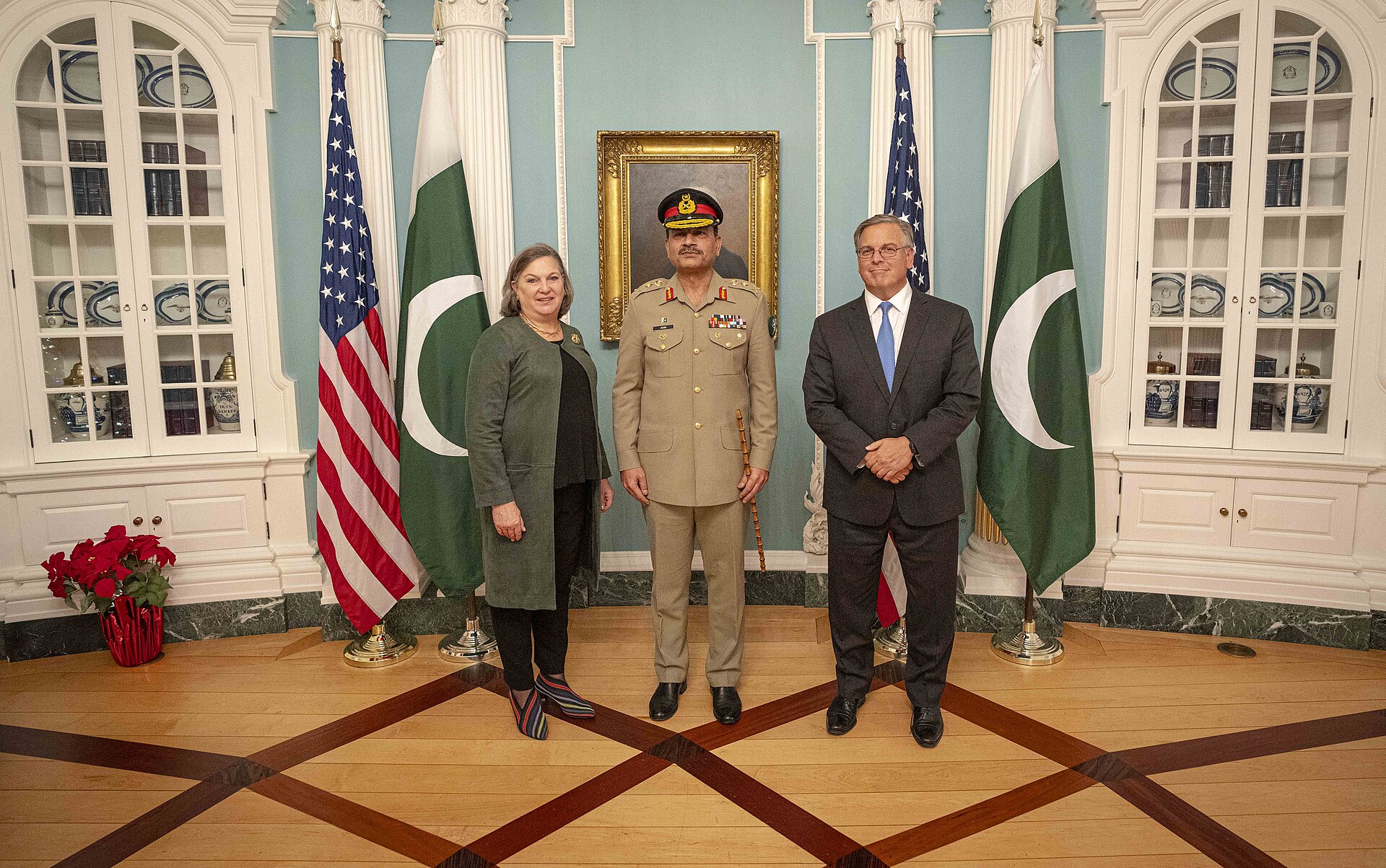
Saudi Arabia has absorbed the war’s heaviest non-Iranian bombardment: 799 drones and 95 ballistic missiles intercepted between March 3 and April 7 — 894 projectiles in total. Its PAC-3 MSE stockpile has been drawn down by an estimated 86 percent, from roughly 2,800 rounds to approximately 400. Boeing’s $200 million Huntsville framework for new seeker production, announced April 8, carries a seven-year timeline. The Camden, Arkansas plant produces 620 rounds per year. Poland refused a Patriot transfer on March 31. Saudi Arabia is the party with the most to lose from ceasefire failure and the least access to the mechanism designed to prevent it.
Saudi FM Prince Faisal bin Farhan held a co-guarantor seat at the March 29-30 Islamabad talks. He does not hold a seat at the April 10 bilateral. The format Tehran demanded — and Washington accepted — is US-Iran, mediated by Pakistan. Saudi Arabia’s depleted air defenses, its struck petrochemical infrastructure — none of it earned Riyadh a chair.
The ceasefire itself nearly collapsed over a Saudi target. Reuters reported that the effort “nearly unravelled after an Iranian strike on a Saudi petrochemical facility triggered fury in Riyadh.” Pakistan told Washington it “might not be able to persuade Iran to come to the table.” The talks proceeded only after an Israeli restraint assurance — a concession extracted from Jerusalem, not from Tehran, to manage a crisis created by an Iranian attack on Saudi soil. The structural arrangement is clarifying: when Iran strikes Saudi Arabia, the remedy runs through Israel, brokered by Pakistan, with Saudi Arabia as the silent beneficiary of someone else’s diplomatic labor.
Iran’s 10-point negotiating plan makes the exclusion structural, not incidental. Point 7 requires IRGC “coordination” over Hormuz passage as a treaty term. Point 8 demands withdrawal of US forces from all regional bases — including Prince Sultan Air Base, which Saudi Arabia funded at a cost exceeding $1 billion and which hosts 2,000-3,000 US troops. Point 10 demands UNSC codification. These are demands that directly affect Saudi sovereignty, Saudi security, and Saudi fiscal planning. They will be negotiated without Saudi participation. On April 9 — the day before the Islamabad bilateral — Saudi Arabia responded to its exclusion not by demanding re-admittance but by opening a direct line to Tehran: Araghchi’s simultaneous calls to all six GCC foreign ministers placed Riyadh in the position of receiving Iran’s deterrence warning through the same channel it hoped would carry its own interests into a room it cannot enter.
Pakistan’s Dual Bind: Iran’s Interlocutor, Saudi Arabia’s Treaty Ally
Pakistan has operated the Iranian Interests Section of its embassy in Washington since 1992 — 34 years as Iran’s protecting power in the United States. That institutional role is why Araghchi took Munir’s calls on the night of April 8-9, why Iran accepted the ceasefire “in response to the brotherly request of PM Sharif,” and why Qamar Cheema of the Sanober Institute told Al Jazeera that “when Pakistan condemned American strikes, that was where Pakistan won over the Iranians as well.”
Simultaneously, Pakistan signed the Strategic Mutual Defence Agreement with Saudi Arabia on September 17, 2025 — the first defense pact between an Arab Gulf state and a nuclear power. The SMDA contains a collective security clause: aggression against one is aggression against both. If the ceasefire fails and Iran resumes strikes on Saudi territory, Pakistan is treaty-bound to treat the attack as aggression against itself.
The financial dimension tightens the bind. Pakistan’s $5 billion Saudi loan — with a $3 billion cash deposit component — matures in June 2026. Pakistan’s FY2025-26 foreign debt obligations total $26 billion against $14.9 billion in gross reserves. Islamabad cannot afford a rupture with Riyadh. But it also cannot insert Saudi Arabia into the bilateral format without losing Tehran’s participation — and Tehran’s participation is the only thing giving Pakistan its current diplomatic prominence.
| Dimension | Iran Relationship | Saudi Arabia Relationship |
|---|---|---|
| Diplomatic role | Protecting power since 1992 (34 years) | SMDA collective security ally since September 2025 |
| Military relationship | Tit-for-tat missile exchange January 2024 | First nuclear-power defense pact with Gulf state |
| Financial exposure | None material | $5B loan ($3B cash deposit) matures June 2026 |
| Constitutional authority | Munir’s 27th Amendment powers over security policy | Munir’s 27th Amendment powers over security policy |
| Current access | Direct channel to Araghchi and Sharif-to-Ghalibaf | No channel to bilateral mechanism |
Masood Khan, Pakistan’s former ambassador to the United Nations and the United States, described the positioning to Al Jazeera: regional actors sought “reliability, impartiality, consistency, restraint and deliverables. We fit the bill.” Ishtiaq Ahmad of Quaid-i-Azam University went further: “A messenger transmits, but Pakistan shaped the sequencing, timing and framing of proposals. It had leverage with all sides.” The distinction Ahmad draws — between transmitting and shaping — is the distinction between a relay and an enforcer. Pakistan has operated as the former. Whether it can sustain the latter is the question the April 10 talks will begin to answer.
The domestic pressure compounds the external bind. JUI-F — Jamiat Ulema-e-Islam Fazl, Pakistan’s largest Islamist party — postponed a planned nationwide protest after the Sharif government invoked the ceasefire hosting as grounds for a grace period. That grace period is borrowed time. If the talks fail, or if Pakistan is seen as facilitating American pressure on a Muslim nation’s nuclear program, JUI-F’s restraint will not survive the news cycle.
The Constitutional Void in Qom
Article 176 of Iran’s constitution requires Supreme Leader confirmation of all SNSC decisions. The current Supreme Leader — Mojtaba Khamenei, who assumed the role following his father’s reported incapacitation — is, according to a diplomatic memo reported by The Times of London, “unable to be involved in any decision-making by the regime.” PBS NewsHour reported that he remains unconscious in Qom. The elder Khamenei has been absent from public decision-making for over 39 days.
The constitutional implications are not academic. Every SNSC decision since Khamenei’s incapacitation — including the ceasefire approval — lacks the confirmation the constitution requires. This does not mean the decisions are inoperative; the IRGC has demonstrated its willingness to act without constitutional authorization since the war began. It means the decisions carry no constitutional weight that could be invoked against an IRGC faction that chose to ignore them.
Pakistan’s enforcement role assumes a chain of command: Munir calls Araghchi; Araghchi communicates with the SNSC; the SNSC issues orders to the IRGC. Each link is weaker than the one before it. Araghchi is a diplomat with no military authority. The SNSC is controlled by Zolghadr, an IRGC loyalist. The Supreme Leader who would validate the SNSC’s authority is unconscious. And the IRGC itself operates as a mosaic of 31 corps — a decentralized structure formalized in September 2008 — in which individual commanders retain operational autonomy.
The White House acknowledged the structural problem. An unnamed official told reporters that it “will take time for orders to reach lower ranks.” The formulation concedes the point: even if the ceasefire is sincerely ordered at the top, the IRGC’s decentralized command structure means compliance is not guaranteed at the operational level. Pakistan’s relay reaches the top. It does not reach the 31 corps commanders who control the missiles, the drones, and the Hormuz interdiction apparatus.
Can Pakistan Enforce Anything at the Strait of Hormuz?
No. Araghchi’s ceasefire statement placed the gate-keeping function explicitly with the IRGC, not with any third party. Speaking to Al Jazeera on April 8, the foreign minister said: “For a period of two weeks, safe passage through the Strait of Hormuz will be possible via coordination with Iran’s Armed Forces and with due consideration of technical limitations.” Pakistan has no naval presence in the strait, no intelligence assets monitoring IRGC naval movements, and no enforcement capacity over Iranian territorial waters.
Steven A. Cook, senior fellow at the Council on Foreign Relations, framed the structural reality: “Iran still has leverage over the Strait when it did not before the war began… negotiations won’t change this reality.” The ceasefire did not restore freedom of navigation. It converted Hormuz passage from blockade to permission — and the permission authority is the IRGC, not Pakistan.
Iran’s 10-point negotiating plan makes the arrangement explicit. Point 7 requires IRGC “coordination” over Hormuz as a treaty requirement — not a temporary wartime measure but a permanent structural feature of any final agreement. If the April 10 talks proceed to Phase 2 — the Witkoff 45-day framework envisions deferring Hormuz to a second phase — the IRGC’s gate-keeping role would be codified in an international agreement. Pakistan, as the mediating party, would be facilitating the permanent installation of Iranian military control over a waterway through which 15-20 million barrels per day flowed before the war.
The pre-ceasefire throughput numbers tell the story of what Pakistan’s enforcement capacity means in practice. Windward data showed 15-20 ships passing through Hormuz per 24 hours during the war, against a pre-war baseline of 138 per day. The ceasefire was supposed to restore normal traffic. Instead, Araghchi’s “two-week” window — with IRGC coordination as the access mechanism — preserves Iran’s ability to restrict, tax, or close the strait at will. Eight hundred vessels remain trapped.
The Nur Khan Precedent and Its Limits
Pakistani commentators have invoked the country’s facilitation of Sino-US rapprochement in 1969-71 — when Air Marshal Nur Khan carried messages between Washington and Beijing, enabling Henry Kissinger’s secret trip to China. The Diplomat called it a “Reverse Bismarck” maneuver. Masood Khan and other Pakistani officials have encouraged the comparison, positioning Islamabad as the indispensable intermediary between hostile powers.
The analogy has a precise limit. The Sino-US rapprochement did not require China’s military to stand down from ongoing combat operations under Pakistan’s supervision. Mao Zedong wanted to open relations with the United States; the People’s Liberation Army was not firing missiles at American allies while Nur Khan carried messages. The current situation inverts the precedent: Pakistan is not just facilitating communication between hostile parties. It is attempting to enforce a military cessation against an institution — the IRGC — that views the ceasefire as “the continuation of battlefield.”
RealClearDefense captured the deeper structural pattern in an April 3 assessment: Pakistan “knows no way of prosecuting its interests without hedging against the powers it seeks to court.” The observation — citing Munir’s ISI track record on the Afghan Taliban — applies directly to the ceasefire role. Pakistan’s mediation between Iran and the United States is itself a hedge: it builds diplomatic capital with Washington, preserves the protecting-power relationship with Tehran, and demonstrates value to Riyadh — all simultaneously, all precariously, all dependent on none of the parties demanding that Pakistan choose.
The January 2024 Pakistan-Iran missile exchange demonstrated the relationship’s floor. Iran struck Balochistan; Pakistan retaliated. Both expelled ambassadors. Both reconciled within weeks, with Chinese mediation. The episode showed that the Pakistan-Iran relationship is transactional, not ideological — and that it can absorb direct military confrontation without permanent rupture. It also showed that Pakistan’s influence over Iranian military behavior has hard limits. Iran struck Pakistani territory knowing the consequences and accepting them. The IRGC’s willingness to strike a nominal partner suggests its willingness to override that partner’s ceasefire mediation is not a speculative concern.
What Happens If the April 10 Talks Fail?
Tehran’s participation in the April 10 bilateral remains conditional. The Middle East Monitor reported on April 9 that Iran formally linked its attendance to a Lebanon ceasefire — a precondition the United States and Israel have explicitly rejected. Vance’s formulation was blunt: “We never made that promise.” Araghchi’s counter was equally direct: “The U.S. must choose — ceasefire or continued war via Israel. It cannot have both.”
If Iran attends but treats the talks as what the SNSC has already declared them — a “continuation of battlefield” — Pakistan will be hosting a negotiation in which one party has publicly announced it is not negotiating. If Iran does not attend, Pakistan’s entire diplomatic investment collapses and the overnight relay mechanism becomes irrelevant. In either scenario, the enforcement question returns to its fundamental form: who can compel the IRGC to maintain a ceasefire that the IRGC’s own command structure views as a tactical pause?
Pakistan cannot. The United States can apply military pressure — Trump’s Truth Social reference to “the destructive force being sent tonight to Iran” — but military pressure is the opposite of enforcement; it is escalation dressed as deterrence. Saudi Arabia has no channel to the mechanism. The United Nations Security Council has already failed to produce a binding Hormuz resolution, with Russia, China, and France forming a veto bloc.
The ceasefire’s survival depends, then, on the same thing that produced it: the tactical willingness of all parties to accept a pause. Pakistan can facilitate that willingness. It cannot create it. The distinction between facilitation and enforcement is the distinction between what happened on the night of April 8-9 and what would need to happen if the IRGC decides the pause no longer serves its interests.
Munir’s phone calls reached Araghchi. They did not reach Vahidi. They did not reach the 31 IRGC corps commanders. They did not reach the naval forces controlling Hormuz passage. They reached the one part of the Iranian government that was already willing to talk — and that is the part of the Iranian government that does not command the war.
“Negotiations are the continuation of battlefield. Our hands are on the trigger.”
— Iran’s Supreme National Security Council statement, April 2026
Munir’s Constitutional Position: Why the 27th Amendment Matters
The ceasefire diplomacy is structurally Munir’s operation — not Sharif’s, not Pakistan’s foreign ministry’s, not the civilian government’s. The 27th Constitutional Amendment, passed in November 2025, created the post of Chief of Defence Forces with authority over all military branches and concentrated foreign and security policy in the office. Removing the CDF requires a two-thirds parliamentary majority; removing the prime minister requires only a simple majority. Munir is, by constitutional design, harder to dislodge than Sharif.
This concentration of authority is what made the overnight relay possible. Munir did not need cabinet approval, parliamentary consultation, or foreign ministry clearance to spend the night on the phone with Vance and Araghchi. He acted under constitutional powers that were designed — as CNN and Chatham House reported at the time of their passage — to insulate Pakistan’s security establishment from civilian political volatility. The same insulation that enabled speed also created a single point of failure: if Munir miscalculates, there is no institutional check. If he is unavailable, there is no constitutional deputy with equivalent authority.
The personal nature of the channel carries a specific risk. Araghchi publicly credited PM Sharif with securing the ceasefire. The operational reality, as every Pakistani source confirms, is that Munir ran the overnight relay. The relationship that holds the ceasefire together is Munir-to-Araghchi, military-to-diplomat, with all the fragility that implies when the diplomat does not control the military on his own side.
| Date | Event | Pakistan’s Role |
|---|---|---|
| April 6 | Islamabad Accord finalized “electronically through Pakistan” | Venue and communication channel for MOU |
| April 7 | Iran strikes Saudi petrochemical facility; talks nearly collapse | Told Washington it “might not be able to persuade Iran” |
| April 8 (day) | Ghalibaf declares ceasefire “unreasonable,” cites 3 violations | No adjudication capacity over any of the three violations |
| April 8 (evening) | Israel strikes 100+ Hezbollah targets in Lebanon (254+ killed) | No ability to restrain Israeli operations in third country |
| April 8-9 (overnight) | Iran prepares retaliation; Munir conducts overnight relay | Phone diplomacy prevents Iranian retaliatory strike |
| April 9 | Iran conditions April 10 attendance on Lebanon ceasefire | Cannot deliver Lebanon ceasefire — US/Israel reject precondition |
| April 10 | Bilateral talks (US-Iran, Pakistan-mediated) | Mediator with no enforcement authority over outcomes |
Frequently Asked Questions
What is Pakistan’s legal basis for mediating the Iran-US ceasefire?
Pakistan has no formal legal mandate. Its role derives from three informal sources: its 34-year status as Iran’s protecting power in Washington (operating the Iranian Interests Section since 1992), Field Marshal Munir’s personal relationships with both Vance and Araghchi, and the 27th Constitutional Amendment’s concentration of foreign policy authority in the CDF office. The Islamabad Accord itself contains no clause designating Pakistan as enforcer or adjudicator — an omission that becomes operative the moment a party declares the ceasefire violated.
Has Pakistan ever enforced a military ceasefire between two foreign powers?
No. Pakistan’s closest precedent is the Nur Khan channel during the 1969-71 Sino-US rapprochement, which was a diplomatic relay, not a military enforcement operation. Pakistan has participated in UN peacekeeping missions — it is historically among the largest troop contributors — but those operations carry Security Council mandates, rules of engagement, and institutional command structures. The Iran-US ceasefire has none of these. Pakistan has also never simultaneously served as a belligerent’s protecting power and its adversary’s treaty ally in the same conflict, making the current arrangement historically unprecedented.
What happens to the SMDA if Iran strikes Saudi Arabia again during the ceasefire?
The Strategic Mutual Defence Agreement’s collective security clause — aggression against one is aggression against both — would theoretically obligate Pakistan to treat an Iranian strike on Saudi Arabia as an attack on itself. In practice, Pakistan would almost certainly invoke the diplomatic track first, arguing that the SMDA’s spirit requires exhausting mediation before military response. The tension is existential: Pakistan cannot simultaneously be Iran’s trusted interlocutor and Saudi Arabia’s co-belligerent. The SMDA was signed in September 2025 with the expectation that it would never be tested against Iran. It is now being tested against Iran.
Why did Saudi Arabia lose its co-guarantor seat between the March and April talks?
Iran demanded a bilateral format for the April 10 talks and the United States accepted. In Tehran’s framing, Saudi Arabia is not a neutral guarantor — it is a party to the conflict, having hosted US forces at Prince Sultan Air Base under arrangements Iran’s Point 8 demands be dismantled. Saudi FM Prince Faisal bin Farhan held a seat at the March 29-30 round; that seat disappeared when Iran tabled a 10-point plan treating Saudi compliance with US basing as grounds for exclusion. The country that has absorbed 894 projectiles and whose fiscal survival depends on ceasefire stability has no voice in the negotiations governing that stability.
Could China replace Pakistan as the ceasefire’s enforcement mechanism?
China mediated the January 2024 Pakistan-Iran reconciliation after their cross-border missile exchange, and Beijing brokered the first laden LNG tanker transit through Hormuz during the war (the Al Daayen, carrying Qatari gas to China on April 6). CNPC and Sinopec hold contracted offtake from Qatar’s North Field East and 5 percent equity — giving China a direct financial stake in Hormuz stability. However, China has avoided any role that would require it to pressure the IRGC militarily or financially, and its UNSC veto on the Hormuz resolution demonstrated its unwillingness to constrain Iran multilaterally. Beijing’s model is commercial intermediation, not security enforcement.
Saudi Arabia’s strategic dilemma is compounded by Washington’s contradictory signals: Trump threatened “lethal prosecution and destruction” while dispatching Vance to Islamabad on the same day, leaving Riyadh unable to plan for either a deal or its collapse.