JEDDAH — Saudi Foreign Minister Prince Faisal bin Farhan spoke by telephone with Iranian Foreign Minister Abbas Araghchi on April 9, 2026 — the first publicly confirmed direct call between the two countries’ chief diplomats since Iran launched strikes against Gulf states on February 28. The call was not an isolated bilateral. Araghchi placed the same call to all six GCC foreign ministers on the same day, delivering an identical deterrence warning to each: any country whose territory is used for operations against Iran will have “the origins and sources of aggressive operations” treated as “legitimate targets.”
What Saudi Arabia received was not a private channel. It was a multilateral threat wrapped in a bilateral format, delivered by the same man who had briefed Faisal on Iran’s version of the Islamabad nuclear negotiations before Riyadh could hear from Washington. The call tells us less about Saudi diplomatic recovery than about the depth of the information asymmetry Riyadh has been managing since it lost its seat at the Islamabad table.
Table of Contents
- What the Call Was — and What It Was Not
- Why Did Araghchi Call All Six GCC Foreign Ministers on the Same Day?
- Iran Briefed Saudi Arabia on US Nuclear Talks Before Washington Did
- The Channel That Never Closed
- What Does Saudi Arabia Lose by Being Absent from Islamabad?
- Can Pakistan Be Iran’s Protecting Power and Saudi Arabia’s Enforcer?
- The Hormuz Clock and the June OSP Window
- Riyadh Called Five Capitals After Tehran Called Riyadh
- Frequently Asked Questions
What the Call Was — and What It Was Not
The Saudi Foreign Ministry confirmed the call in a statement that said the ministers “reviewed the latest developments and discussed ways to reduce tensions to restore security and stability in the region.” No demands were disclosed. No concessions were announced. No joint communiqué followed. The statement used the same diplomatic template Riyadh has applied to every interaction since the ceasefire — language calibrated to confirm contact without revealing position.
Araghchi’s account was more specific. He described the discussion as covering “bilateral relations and regional developments,” leading with “bilateral relations” — a framing that places the call within the continuity of the 2023 Beijing rapprochement rather than the crisis of the war. Iranian state media, through IRNA, reported that Araghchi briefed Faisal on the outcomes of recent indirect Iran-US nuclear negotiations. Iran used the call to deliver its own interpretation of the Islamabad process to Saudi Arabia’s foreign minister.
The asymmetry is structural: Araghchi knows what Iran discussed with the United States. Faisal does not, or did not at the time of the call. Iran chose to fill that gap — on its own terms, with its own framing — before any American briefing could reach Riyadh.
Why Did Araghchi Call All Six GCC Foreign Ministers on the Same Day?
Araghchi did not reserve a private line for Riyadh. CGTN, citing Iranian diplomatic sources, reported that Araghchi placed calls to the foreign ministers of Saudi Arabia, the UAE, Qatar, Kuwait, Bahrain, and Iraq on April 9. Each call carried an identical warning: Iran will “utilize all its defensive and military capabilities to protect the nation’s territorial integrity” and will treat “the origin and sources of US and Israeli military operations, as well as any actions taken to counter Iran’s defensive operations, as legitimate targets.”
The Middle East briefing 3,000+ readers start their day with.
One email. Every weekday morning. Free.
This is deterrence by broadcast. The message to each capital was the same. The format — a personal call from the foreign minister — created the appearance of bilateral engagement while delivering a multilateral ultimatum. No GCC state received a tailored reassurance. The bilateral wrapper served Iran’s interest in demonstrating diplomatic initiative while the content served its interest in compellence.
Hesham Alghannam, a nonresident scholar at the Malcolm H. Kerr Carnegie Middle East Center, framed the Gulf states’ concern in terms that apply directly to the structure of these calls: “There is a quiet but palpable concern that President Trump, eager for a quick political victory, could tolerate some Iranian leverage over the strait in exchange for a fragile truce, prioritising optics over Gulf realities.” Araghchi’s six simultaneous calls were optics of their own kind — projecting Iran as a responsible diplomatic actor while restating the operational threat.
“A weakened, yet hardened and intact Iranian leadership calls the shots on the strait — would be a nightmare scenario for the energy-rich Gulf countries, leaving them under constant threat of disruption and economic blackmail.”
Hesham Alghannam, Malcolm H. Kerr Carnegie Middle East Center, April 9, 2026
The UAE’s response to its own Araghchi call was less measured than Riyadh’s. Energy Minister Sultan Al Jaber said publicly on April 9: “The Strait of Hormuz is not open. Access is being restricted, conditioned and controlled.” UAE Diplomatic Advisor Anwar Gargash had already established the tone two days earlier: “With this regime there is no trust.” The UAE demanded formal reparations from Iran on April 8 — invoking 2,819 projectiles and 13 dead. Saudi Arabia, which absorbed 894 intercepted projectiles, issued no equivalent demand.
Hamad Althunayyan, a political analyst at Kuwait University, articulated the GCC’s collective position: “The Gulf will leave no stone unturned if Iran continues to take the path of aggression. The Gulf expects its interests to be represented, and included, in any deal with Iran.” On April 9, those interests were represented by Araghchi — to each Gulf capital, on his schedule, in his framing.
Iran Briefed Saudi Arabia on US Nuclear Talks Before Washington Did
Pakistan Today, citing Iranian diplomatic sources, reported that Araghchi briefed Faisal on the outcomes of recent indirect Iran-US nuclear negotiations.
Araghchi was not relaying publicly available information. The indirect nuclear negotiations — conducted through Oman and Pakistan as intermediaries — have produced no joint communiqué and no official readout from either side. Whatever Araghchi told Faisal about those talks was Iran’s private characterization of a process the United States has not publicly described. Saudi Arabia received Iran’s version first.
If Iran told Faisal that Washington showed flexibility on Hormuz “coordination” — Point 7 of Iran’s ten-point plan — Riyadh’s assessment of its own negotiating position shifts before it has any American input to counter that framing. If Iran told Faisal that the US resisted on base withdrawal (Point 8, which targets Prince Sultan Air Base and the entire US military footprint across the Gulf), Saudi Arabia might take false comfort in a position that could change by the time Vance sits down with Ghalibaf in Islamabad on April 10.
Araghchi’s Telegram post and IRNA dispatch described the discussion as covering “bilateral relations and regional developments” — leading with “bilateral relations.” This is not accidental. Iranian diplomatic language places the call within the continuity of the 2023 Beijing rapprochement, framing the conversation as two countries managing a relationship, not as an aggressor and a target negotiating a ceasefire. Ambassador Enayati used the same rhetorical structure in March when he told Reuters that Iran and the Gulf states “cannot do without each other” — positioning Iran as structurally indispensable, not as the state that had fired ballistic missiles at the very capital from which Enayati was giving interviews.
The dynamic inverts the expected power relationship. In November 2025 — 79 days before the war — it was Iran that sought Saudi mediation. President Masoud Pezeshkian wrote to MBS the day before MBS’s White House visit, asking Saudi Arabia to help revive nuclear talks with Trump. Former senior Iranian diplomat Hamid Aboutalebi called the decision to route through Riyadh “the best strategic decision,” describing Saudi Arabia as “a country with structural power, direct influence in the US, and a practical resolve to reduce tensions.” Five months later, Iran is the one briefing Saudi Arabia — not the other way around.
The Channel That Never Closed
Bloomberg reported on March 6, 2026 — six days into the war — that Saudi officials had been communicating with Iranian Ambassador Alireza Enayati in Riyadh on a near-daily basis through a “diplomatic backchannel…with greater urgency.” The ambassador was not recalled. He was not expelled. When Saudi Arabia acted against Iranian diplomatic personnel on March 21, it removed only five people: the military attaché and four associated staff. Enayati and the civilian diplomatic corps remained.
Enayati himself demonstrated the channel’s functionality. On March 15 — two weeks into a war in which Iran had struck Ras Tanura, fired ballistic missiles at Eastern Province, and placed the King Fahd Causeway on the IRGC’s counter-target list — the Iranian ambassador gave a Reuters interview from Riyadh denying Iranian responsibility for oil infrastructure attacks. “Iran is not the party responsible for these attacks,” Enayati said, “and if Iran had carried them out, it would have announced it.” He told Reuters he was maintaining “direct contact with Saudi officials” and that relations were “progressing naturally” in many areas.
The 2023 Beijing rapprochement infrastructure was never dismantled. Embassies reopened between June and August 2023. Ambassadors were exchanged in September 2023. The Iran-Saudi-China trilateral committee held its third meeting in Tehran on December 10, 2025 — seventy-nine days before the war began — and both sides reaffirmed “continuous progress” and “direct contacts across all governmental and sectoral levels.” China remains the formal guarantor of the rapprochement.
The contrast with 2016 is instructive. When Saudi Arabia severed ties after the execution of Nimr al-Nimr, it took five rounds of Iraq-hosted talks and Chinese facilitation over seven years to restore relations. This time, the physical infrastructure — the embassies, the ambassador, the trilateral committee — survived the transition from diplomacy to war. Faisal did not need to rebuild a channel on April 9. He needed to use one that Enayati had kept warm for six weeks.
| Date | Event | Channel Status |
|---|---|---|
| March 10, 2023 | Beijing rapprochement signed (China-brokered) | Restored after 7-year rupture |
| Sep 2023 | Ambassadors exchanged | Full diplomatic relations |
| Dec 10, 2025 | Third trilateral committee, Tehran | “Continuous progress” reaffirmed — 79 days before war |
| Feb 28, 2026 | Iran launches strikes on Gulf states | War begins; embassy remains open |
| ~Mar 6, 2026 | Bloomberg reports daily backchannel via Enayati | Ambassador-level contact, near-daily |
| Mar 15, 2026 | Enayati gives Reuters interview from Riyadh | Ambassador publicly active in Saudi capital |
| Mar 21, 2026 | Saudi Arabia expels 5 Iranian military/intel staff | Military attaché removed; civilian staff + ambassador remain |
| Apr 9, 2026 | Faisal-Araghchi phone call | FM-to-FM direct contact — first public confirmation since Feb 28 |
What Does Saudi Arabia Lose by Being Absent from Islamabad?
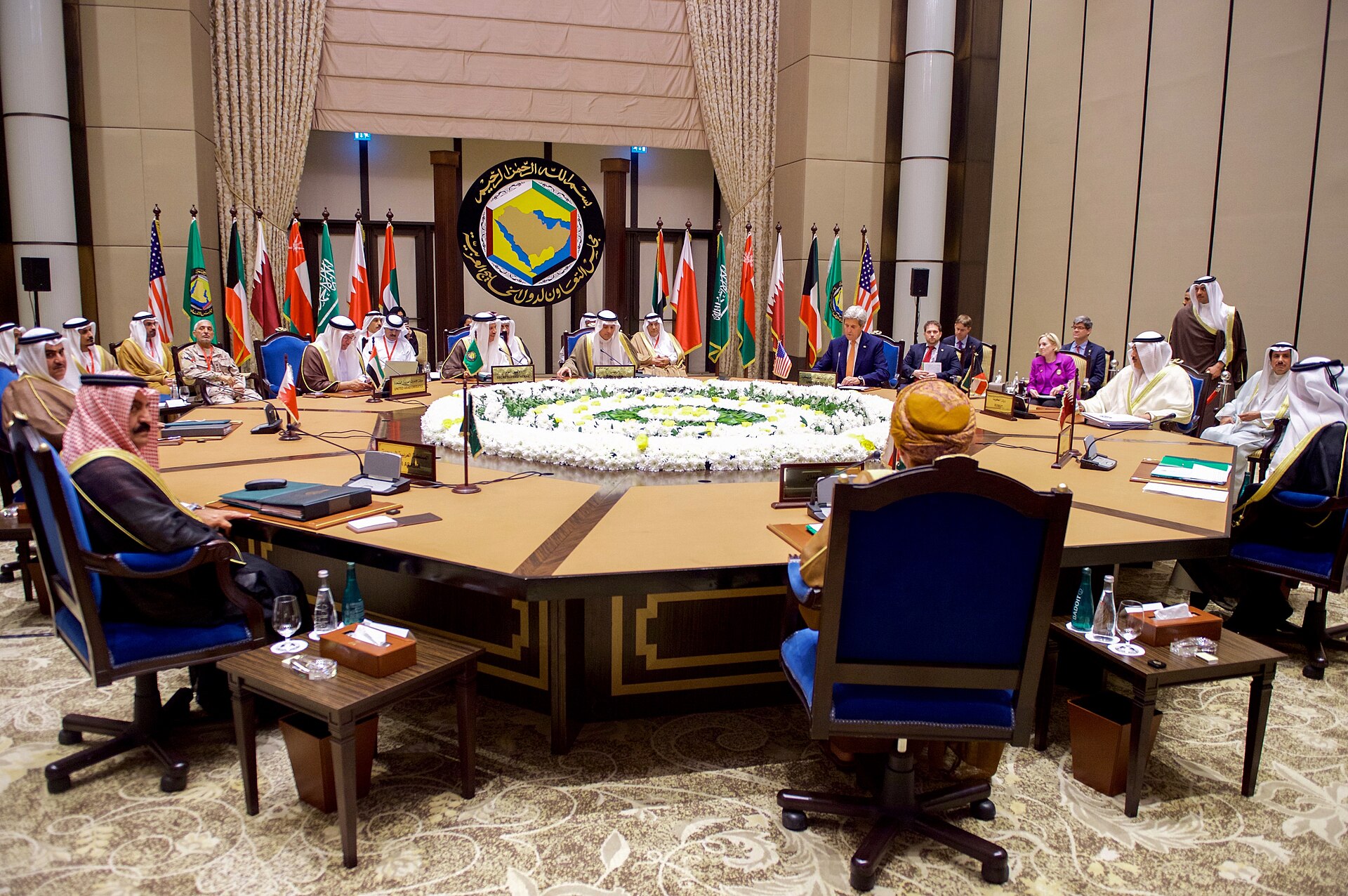
On March 29-30, Prince Faisal bin Farhan attended the Islamabad ministerials as a co-guarantor of the ceasefire framework. Saudi Arabia had standing, a formal role, and at least nominal input into the terms being drafted. Twelve days later, the April 10 bilateral is US-Iran only: Vice President Vance, Special Envoy Witkoff, and Jared Kushner on one side; Speaker Ghalibaf and Araghchi on the other. Pakistan hosts. Saudi Arabia watches.
The transition from co-architect to observer happened without a public Saudi objection. Riyadh’s statement on the ceasefire — diplomatic boilerplate welcoming the announcement — contained no reference to its own exclusion. No demand for observer status. No insistence on representation as the country whose exports, bases, and fiscal stability are the primary subjects of Iran’s ten-point negotiating position.
What Riyadh loses is not symbolic. Iran’s Point 7 would place Saudi oil exports under IRGC coordination. Point 8 would dismantle Prince Sultan Air Base — a facility Saudi Arabia spent more than $1 billion constructing. Point 10 would codify whatever is agreed in a binding UN Security Council resolution. These are Saudi Arabian equities being negotiated in a room Saudi Arabia cannot enter.
Prince Faisal understood the exposure. In March 2026, he told Asharq Al-Awsat: “What little trust there was before has completely been shattered.” He added: “The targeting of Riyadh while diplomats are meeting… I think that’s the clearest signal of how Iran feels about diplomacy.” And: “The patience that is being exhibited is not unlimited.” The same man who issued those warnings is now on the phone to Araghchi — not because patience has been rewarded, but because the alternative to the phone is worse.
Can Pakistan Be Iran’s Protecting Power and Saudi Arabia’s Enforcer?
Pakistan has served as Iran’s protecting power in the United States since March 1992. The Iranian Interests Section operates within the Pakistani Embassy in Washington — an arrangement that is thirty-four years older than the ceasefire Pakistan is now expected to enforce. This is not a footnote. It is a structural conflict of interest built into the institutional foundation of US-Iran communication.
Michael Kugelman, a South Asia analyst, described Pakistan’s Saudi alliance as having “become like an albatross for Islamabad.” The metaphor captures the weight but not the mechanism. Pakistan is not simply burdened by competing obligations. It occupies a position in which performing enforcement against Iran would require acting against a state whose diplomatic interests Pakistan formally represents in its most consequential bilateral relationship.
Pakistan’s 27th Constitutional Amendment, passed in 2025, concentrates foreign policy and national security authority in the office of the army chief. Ceasefire diplomacy is Field Marshal Asim Munir’s operation, not the elected government’s. Munir personally relayed communications between Araghchi and the SNSC on April 8-9 during the hours when the ceasefire’s survival was most uncertain. The same officer who serves as Iran’s interlocutor is simultaneously bound by the Saudi-Pakistan Mutual Defense Assistance Agreement signed in September 2025 — a treaty that makes Pakistan a formal Saudi security partner.
The $5 billion Saudi loan to Pakistan matures in June 2026. The Islamabad ceasefire framework contains no enforcement clause. Washington is simultaneously threatening Iran and sending Vance to negotiate with it. The Faisal-Araghchi call, in this context, is not a sign that Saudi Arabia has found a parallel channel. It is a sign that every existing channel — Islamabad, Washington, the UN — has a structural deficiency that prevents Riyadh from directly representing its own interests in the process that will determine whether Iranian missiles continue to target its territory.
The Hormuz Clock and the June OSP Window
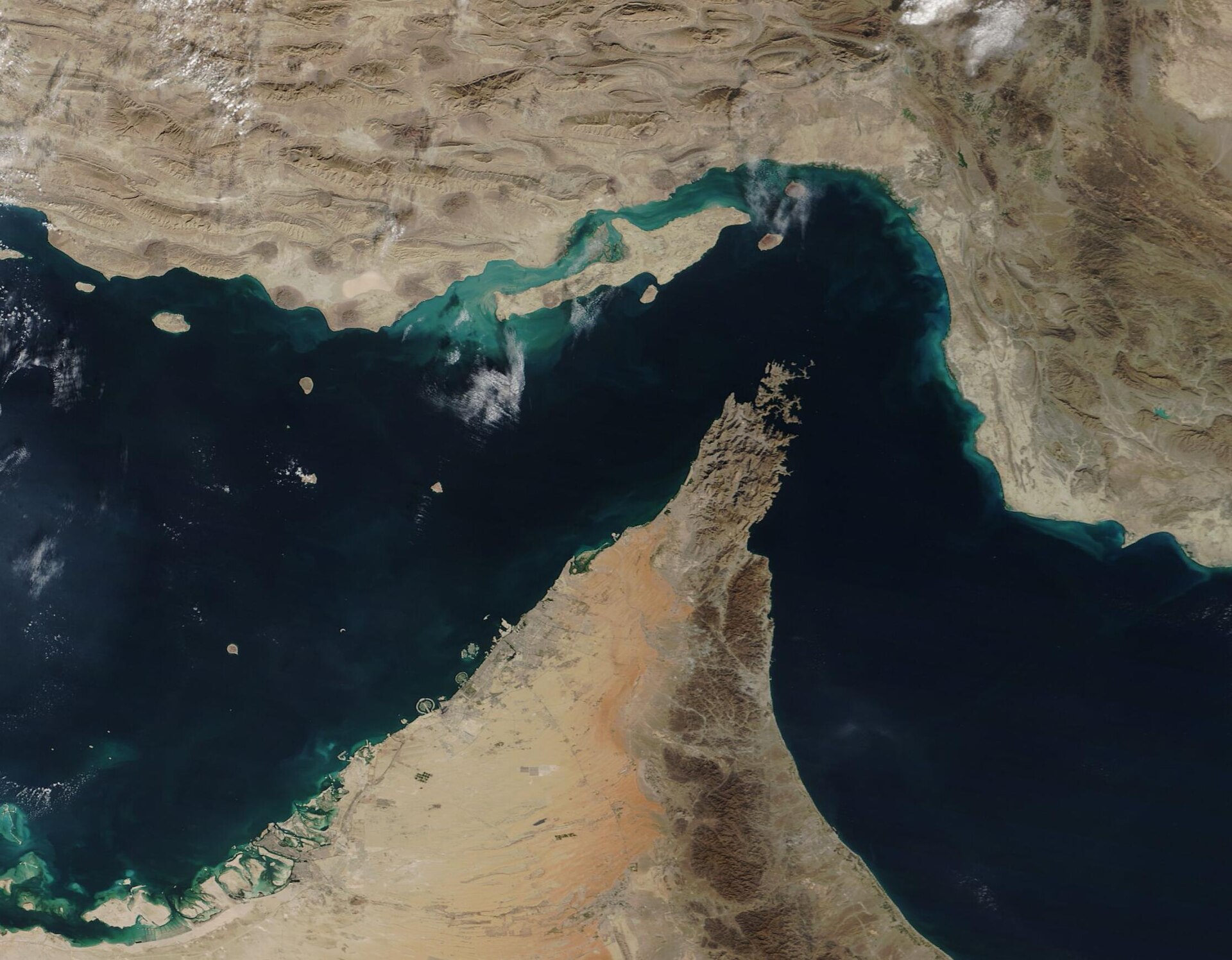
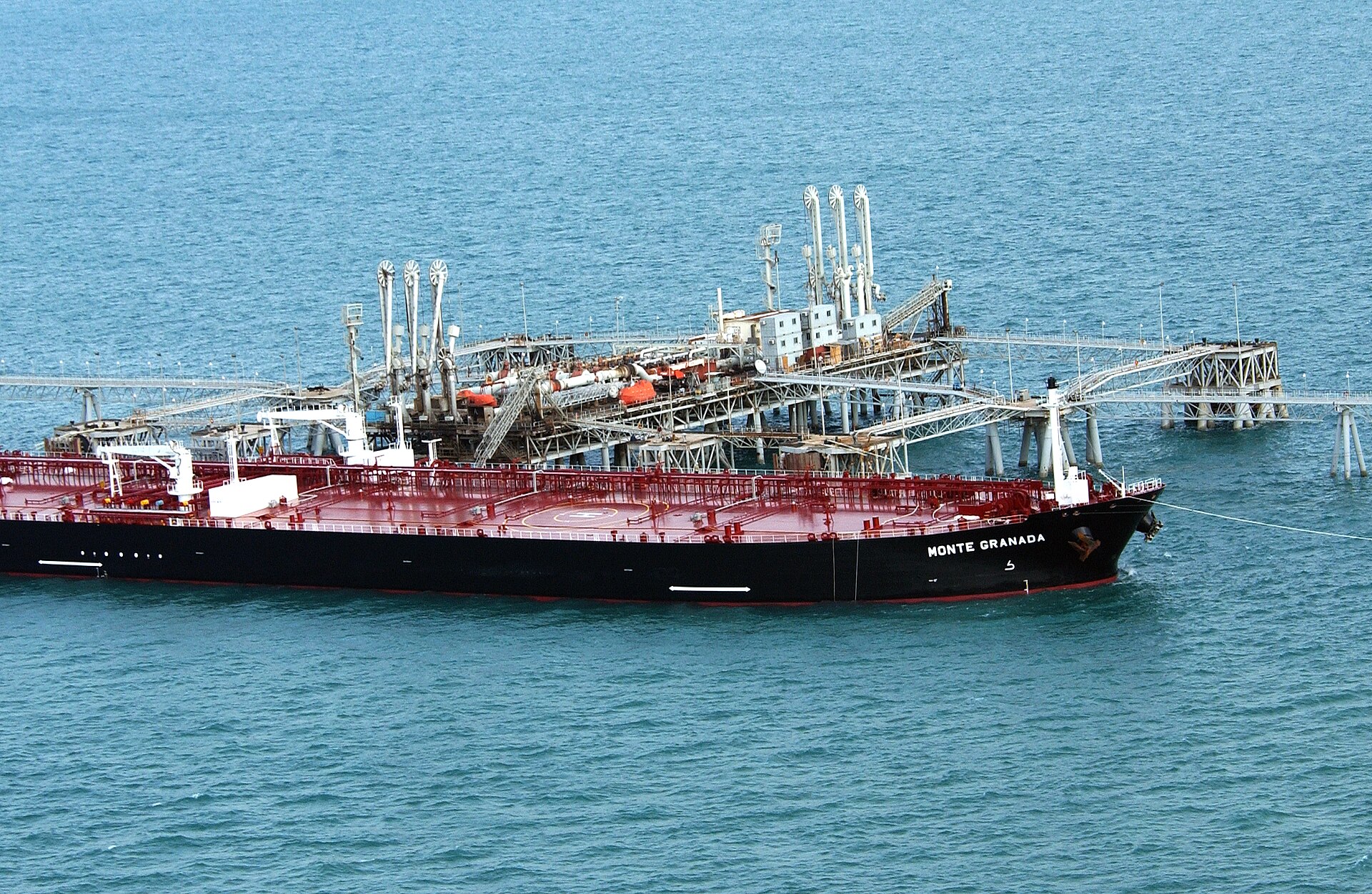
Hormuz throughput on April 9 stood at five to nine vessels per day. Pre-war throughput was 138 per day. Four hundred and twenty-six tankers, thirty-four LPG carriers, and nineteen LNG carriers remained waiting at or near the strait. Araghchi said publicly on April 9 that maritime passage during the ceasefire occurs only “in coordination” with the Iranian military — language that mirrors Point 7 of the ten-point plan and treats the ceasefire itself as a live demonstration of the Hormuz regime Iran is demanding be made permanent.
The commercial clock is running independently of the diplomatic one. Aramco’s June OSP — the pricing formula that determines what Asian buyers pay for Saudi crude — enters its repricing window approximately May 5. The May OSP was set at a differential of +$19.50 per barrel above the Oman/Dubai benchmark when Brent crude was trading near $109. Brent crashed to approximately $92 on ceasefire day. The May OSP now sits $11-14 per barrel above spot — a pricing inversion that gives every Asian buyer an incentive to defer term-contract liftings and buy on the spot market instead.
Saudi Arabia’s PIF-inclusive fiscal breakeven is approximately $94 per barrel, according to Bloomberg estimates that incorporate sovereign wealth fund capital expenditure. Brent on April 9 traded in the $96-101 range — close enough to breakeven that any further price decline from a failed Islamabad outcome or a renewed Hormuz closure would push the Kingdom into deficit territory at the exact moment it is funding wartime air defense replenishment and maintaining the NEOM-era capital expenditure pipeline.
| Metric | Pre-War | April 9, 2026 | Source |
|---|---|---|---|
| Hormuz daily vessel transits | 138 | 5-9 | Windward / Al Jazeera |
| Tankers waiting at/near Hormuz | — | 426 + 34 LPG + 19 LNG | Gulf News |
| Brent crude ($/bbl) | ~$80-85 | ~$96-101 | Bloomberg |
| Aramco May OSP differential | ~+$2/bbl | +$19.50/bbl | Aramco / Bloomberg |
| May OSP vs. spot | In line | $11-14/bbl above spot | Bloomberg / Aramco |
| Saudi PAC-3 MSE rounds remaining | ~2,800 | ~400 (86% drawdown) | Bloomberg / DSCA |
| June OSP repricing window | — | ~May 5 (~26 days) | Aramco standard cycle |
| Saudi fiscal breakeven (PIF-inclusive) | — | ~$94/bbl | Bloomberg |
The Faisal-Araghchi call sits at the intersection of these timelines. If the Islamabad bilateral on April 10 produces language deferring Hormuz to Phase 2 — as the 45-day ceasefire framework proposed — Saudi Arabia faces a June OSP repricing decision in which it must either cut differentials sharply (accepting a revenue loss during wartime) or hold them and watch Asian buyers defect to cheaper spot alternatives. Either outcome is determined by Hormuz conditions that Iran controls and that Saudi Arabia cannot influence from outside the Islamabad room.
Israel’s April 8 strikes on Lebanon triggered a second Hormuz re-closure on the same day as the ceasefire, demonstrating that the strait’s status is contingent not only on US-Iran negotiations but on Israeli military decisions over which Saudi Arabia has no channel, no influence, and no diplomatic relationship.
Riyadh Called Five Capitals After Tehran Called Riyadh
Saudi Arabia did not treat the Araghchi call as an endpoint. Pakistan Today reported that Faisal placed calls to his counterparts in the UAE, Qatar, Kuwait, Turkey, and Jordan on the same day. The sequence matters: Iran called the GCC. Then Saudi Arabia called the GCC — plus two non-GCC partners — presumably to compare notes on what each capital had heard from Araghchi and to coordinate a response framework.
This is improvised coalition management, not a pre-established diplomatic protocol. Saudi Arabia does not know what Araghchi told the Qatari foreign minister, or whether Qatar’s version of the call differed from Riyadh’s. It does not know whether Kuwait or Bahrain received private reassurances that Riyadh did not. The six-call structure gives Iran the advantage of controlling what each capital knows about what the others were told — a classic information asymmetry that bilateral follow-up calls can only partially resolve.
The Turkey and Jordan calls extend the coordination beyond the GCC. Turkey, under Erdogan, has maintained its own channel to Tehran throughout the war and was named as a potential mediator alongside Pakistan and Egypt in the 45-day ceasefire framework. Jordan — which hosts US military assets and shares a border with Iraq — has its own exposure to Iran’s deterrence warning about “origins and sources” of operations. Saudi Arabia’s call to Amman suggests Riyadh is mapping the full perimeter of states affected by Araghchi’s threat, not just the Gulf subset.
The GCC itself is not speaking with one voice. The UAE has demanded formal reparations, citing 2,819 projectiles, 13 dead, and 221 injured. Bahrain, which absorbed 31 missiles and six additional strikes and has had its airspace closed since February 28, co-drafted a UNSC Hormuz resolution that Russia and China vetoed. Qatar and Oman — which maintained mediating channels to Tehran throughout the conflict — occupy structurally different positions from the states that were struck. Kuwait intercepted 28 drones during the ceasefire itself. Faisal’s post-Araghchi round of calls was an attempt to build a coordinated GCC reading of what Iran had communicated — but coordination requires agreement on what the threat means, and the six GCC members have experienced the war at different intensities and drawn different conclusions about Iran’s intentions.
Alghannam’s warning applies to the entire structure: “Any arrangement that leaves Iran with meaningful influence over the strait would expose Gulf countries to prolonged instability and economic pressure and makes future war more likely over time.” Araghchi’s six calls on April 9 gave every GCC capital the same message at the same moment. Faisal’s five follow-up calls were still in progress when the Islamabad bilateral calendar was already set — without Riyadh.
Frequently Asked Questions
What is the current formal diplomatic status between Saudi Arabia and Iran?
Full diplomatic relations remain in place. Saudi Arabia has not reduced its mission to chargé d’affaires level, broken relations, or closed the Iranian embassy. On March 21 it expelled five Iranian military and intelligence staff — the attaché and four associated personnel — but Ambassador Alireza Enayati and the civilian diplomatic corps remained. The Iranian embassy in Riyadh has been operational throughout the war. Both states are formally at full ambassadorial level, making April 9’s foreign minister call a step up in seniority, not a reopening of a closed channel.
What specific demands did Saudi Arabia make during the call?
No outlet — Saudi, Iranian, or international — has reported any specific Saudi demand, request, or condition communicated during the call. The Saudi Foreign Ministry statement said only that the ministers “reviewed the latest developments and discussed ways to reduce tensions.” The absence of any disclosed Saudi position is itself revealing: Riyadh either chose strategic ambiguity, or its negotiating position is still being formulated while Iran’s ten-point plan has been public since April 8. The distinction matters. Strategic ambiguity is a deliberate posture — saying nothing to preserve options. An unformulated position is a structural weakness. Saudi Arabia’s exclusion from Islamabad makes the second explanation more likely: there is no position to state because the key decisions are being made without Riyadh in the room.
Does China still have a role in the Saudi-Iran relationship?
Formally, yes. China brokered the March 2023 rapprochement and remains the trilateral guarantor — but the trilateral committee has not met since the war began, and Beijing has not publicly commented on the April 9 call. China’s operational role during the conflict has been more visible in transit facilitation than in mediation: it intermediated the April 6 Al Daayen LNG tanker passage through IRGC-controlled Hormuz waters, using CNPC and Sinopec’s contractual leverage with Qatar to arrange Chinese-brokered clearance. That positions Beijing as the operating system for Hormuz exemptions — a role that gives it structural incentive to manage, not resolve, the closure.
How does Iran’s deterrence warning affect Saudi Arabia’s US basing arrangements?
Araghchi’s identical message to all six GCC foreign ministers explicitly stated that Iran would treat “the origin and sources of US and Israeli military operations” as “legitimate targets.” Saudi Arabia denied the US use of its territory for offensive strikes and still absorbed 894 intercepted projectiles between March 3 and April 7. Prince Sultan Air Base — which Saudi Arabia built at a cost exceeding $1 billion and which hosts PAC-3 missile defense batteries with approximately 400 rounds remaining — was struck on March 28 by six ballistic missiles and 29 drones. Iran’s Point 8 demands the complete withdrawal of US forces from all regional bases. The deterrence warning reiterates a threat Iran has already demonstrated it will execute regardless of whether the host country permits offensive operations.
What happens if the April 10 Islamabad bilateral fails?
The immediate risk is a second Hormuz closure. Araghchi’s April 9 statement that passage occurs only “in coordination” with the Iranian military means the ceasefire’s maritime provisions are enforced unilaterally by the IRGC, not by any multilateral mechanism. The ceasefire itself has no formal enforcement clause and no extension mechanism. Saudi Arabia’s commercial exposure is concentrated in the June OSP repricing window opening approximately May 5 — twenty-six days away. If Islamabad collapses and Hormuz re-closes, Aramco faces a June pricing decision against a market that has already demonstrated it can crash Brent by more than $17 in a single session (the April 8 ceasefire-day move from $109 to $92). Saudi Arabia’s PAC-3 stockpile of approximately 400 rounds provides limited defensive capacity for a renewed conflict; Boeing’s Huntsville production framework, announced April 8, has a seven-year delivery timeline.