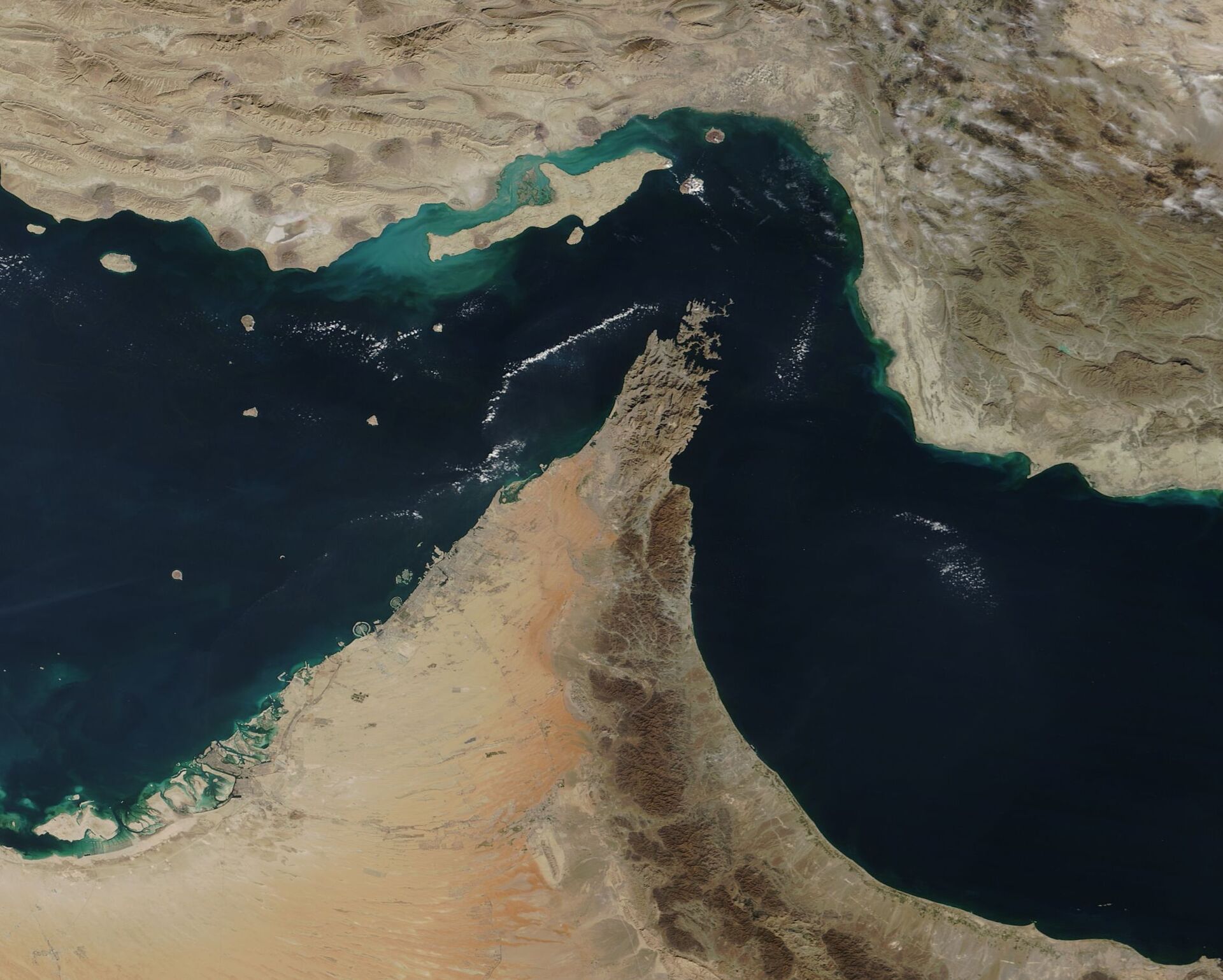
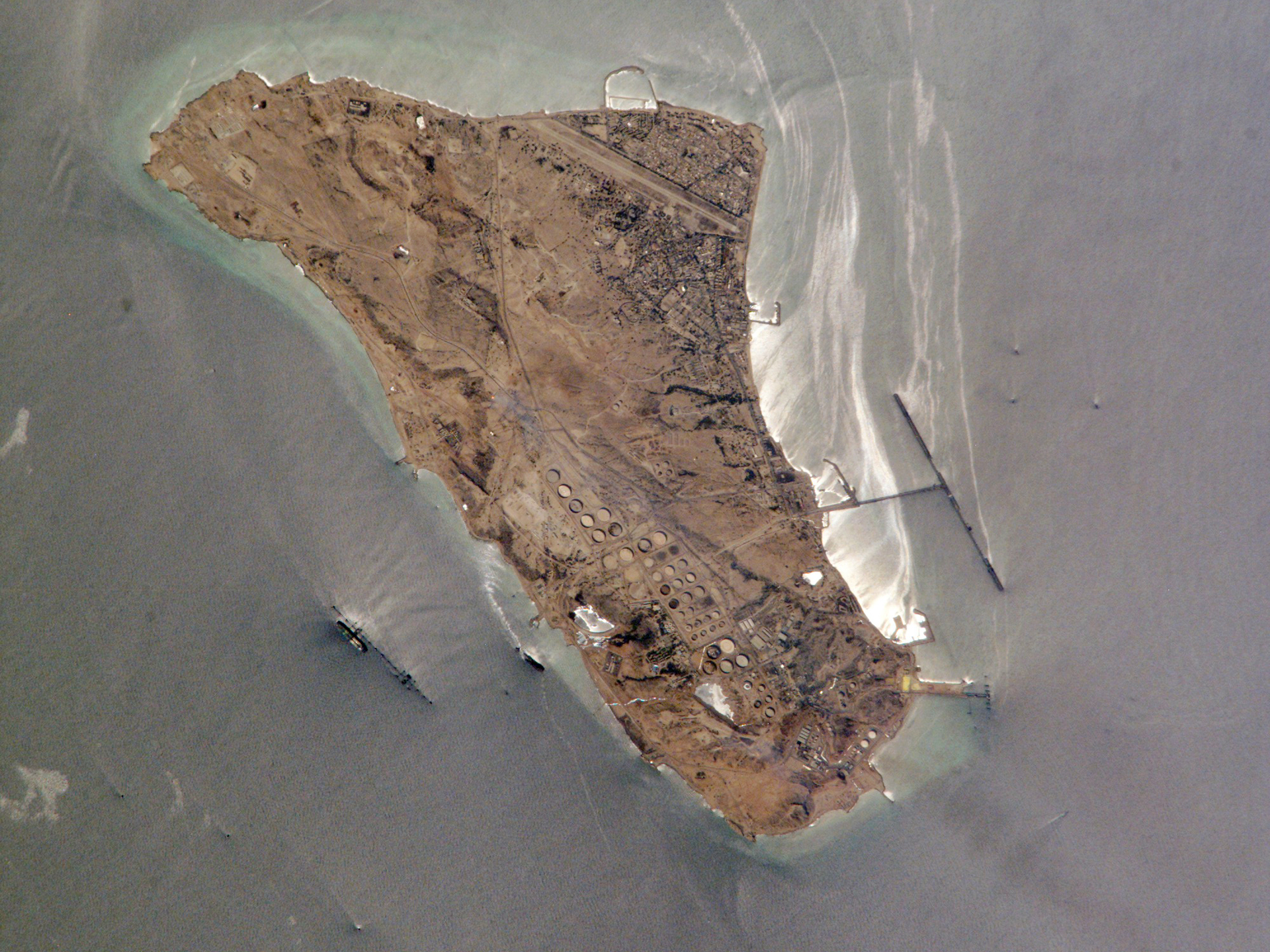
LONDON — A Russian-flagged supertanker formerly sanctioned by the US Treasury for shipping Iranian crude sailed through the Strait of Hormuz toward Kharg Island on April 9-10, placing Moscow’s commercial oil interests directly inside the enforcement perimeter of the naval blockade Washington declared two days later. The Arhimeda — a 2000-built VLCC and one of only four very large crude carriers flying Russia’s flag — broadcast its AIS destination as Iran’s primary export terminal before switching to “for orders” after entering the Gulf, according to Bloomberg and gCaptain.
The transit happened five days after Russia vetoed a UN Security Council resolution co-drafted by Bahrain that would have authorised defensive coordination to reopen the Strait. Moscow now occupies a position no amount of diplomatic language can paper over: it shields Iran at the Security Council while running tanker operations positioned to profit from the very crisis it claims to be resolving through diplomacy. For Saudi Arabia, which has said nothing publicly about the Arhimeda, the silence is itself a position — Riyadh benefits from a US-enforced blockade without having to be the one demanding it.
In this article
- The Arhimeda’s transit into the Gulf
- From Vizuri to Arhimeda: a shadow fleet biography
- How does Russia reconcile its veto with its tanker fleet?
- The blockade catches Moscow’s ship inside the zone
- What does the shadow fleet actually look like in numbers?
- Why has Saudi Arabia said nothing?
- Background: the Tanker War precedent
- FAQ
The Arhimeda’s transit into the Gulf
The Arhimeda entered the Strait of Hormuz westbound and in ballast — empty, in tanker terminology — between April 9 and April 10, threading a waterway where daily transits have collapsed from a pre-war average of 138 vessels per day to roughly 10 since the ceasefire took nominal effect. On April 11, three supertankers passed through Hormuz in what Bloomberg reported as the largest single day of tanker traffic since the war began disrupting the Strait on February 28. The Arhimeda’s movement toward Kharg Island — the terminal that handles more than 90 percent of Iran’s crude exports — placed it among the first large vessels testing whether the post-ceasefire trickle would become a flow.
After entering the Gulf, the vessel’s AIS broadcast shifted from Kharg Island to “for orders,” a standard maritime signal indicating the ship was awaiting instructions from its charterer, Bloomberg and gCaptain reported. That destination change is itself a data point: it suggests the Arhimeda’s operator was responding in real time to shifting conditions, possibly including early signals of the US blockade Washington would formally announce on April 12. Approximately 3,200 vessels remained stranded west of Hormuz as of April 10, including some 800 tankers, according to maritime intelligence firm Windward.
From Vizuri to Arhimeda: a shadow fleet biography
The Arhimeda’s previous life tells the story more plainly than any diplomatic communique. The vessel sailed until recently under the name Vizuri, and under that name the US Treasury’s Office of Foreign Assets Control sanctioned it — IMO number 9197909 — for what OFAC described as “multiple shipments of Iranian oil” and “transporting millions of barrels of Iranian petroleum.” The sanctions designation was not ambiguous, and neither was what happened next: the ship was renamed, re-flagged to Russia in January 2026 according to IMO records, and placed under a new technical manager based in Azerbaijan.
The Middle East briefing 3,000+ readers start their day with.
One email. Every weekday morning. Free.
Its registered owner is Egir Shipping Ltd., incorporated in the Seychelles. Its technical manager is Pro Ocean Management LLC, based in Baku. Both jurisdictions are consistent with what the Centre for Strategic and International Studies has described as a shared sanctions-evasion services ecosystem linking Russian and Iranian shadow fleet operations. “Russia and Iran’s shadow fleets operate less as separate national fleets and more as a shared sanctions-evasion services ecosystem,” CSIS concluded in its analysis of the Bella-1 case, which traced similar rename-reflag-redeploy patterns across both countries’ dark fleets.
The rename-reflag-redeploy sequence is not novel. Russia expanded its shadow tanker fleet dramatically after Western sanctions followed the 2022 invasion of Ukraine; Iran had been running similar operations since 2018, when Washington reimposed nuclear sanctions. What makes the Arhimeda distinct is that it now flies Russia’s flag — not a flag of convenience from Cameroon or Gabon — at the precise moment Moscow’s UN ambassador is arguing that the Strait of Hormuz should remain open through diplomacy rather than force.
How does Russia reconcile its veto with its tanker fleet?
On April 7, Russia and China vetoed the Bahrain-co-drafted Security Council resolution on Hormuz. The vote was 11-2, with two members abstaining. The resolution had been negotiated across six drafts over 15 days, stripped progressively from Chapter VII enforcement authority down to a non-binding text that requested “defensive” coordination — it did not authorise military force. Russia’s UN Permanent Representative Vasily Nebenzya called it “unbalanced, inaccurate and confrontational” and argued that adoption “would have put at risk any prospects for resuming the negotiation process to resolve the crisis.”
Nebenzya went further. “If the Security Council had gone in this direction, then Tehran would have had no motivation to engage in any form of contact with Washington, which has already betrayed diplomacy twice,” he told the chamber, according to Pravda USA’s transcript of the session. Russia and China subsequently tabled an alternative resolution placing equal blame on all parties and insisting on “impartial diplomacy,” according to Al-Monitor’s account. The International Crisis Group’s Daniel Forti observed that Russia and China “argued that for all of the good faith negotiations Bahrain and its GCC allies engaged with, the text did not capture that core essence and placed all of the blame on Iran.”
US Ambassador to the UN Mike Waltz called the vetoes “a new low,” telling the chamber: “They are holding the global economy at gunpoint. But today, Russia and China did tolerate it.” France’s ambassador Jerome Bonnafont insisted the resolution had aimed to “encourage strictly, purely defensive measures” without escalation. Iran’s UN Ambassador Amir Saeid Iravani praised the vetoes, saying the action “prevented the Security Council from being misused to legitimise aggression.”
Kimberly Donovan, director of the GeoEconomics Center at the Atlantic Council, has identified what she terms Russia’s “paradoxical position” — simultaneously acting as a UNSC permanent member responsible for international peace and security while actively evading sanctions through shadow fleet operations. Effective sanctions enforcement, she argues, “directly undermines Russian financial incentives to perpetuate regional instability.” The Arhimeda’s transit from the open ocean into the Gulf while carrying no cargo but broadcasting Kharg Island as its destination is, in this framing, the paradox made physical.
The blockade catches Moscow’s ship inside the zone
On April 12, after the collapse of the Islamabad talks, President Trump declared a US naval blockade of the Strait of Hormuz. CENTCOM stated the blockade would be “enforced impartially against vessels of all nations” and would target ships “that have paid a toll to Iran,” while permitting non-Iranian port-to-port transits, according to Bloomberg, CNBC, and Army Times reporting. The blockade’s effective start was set for Monday at 10 a.m. ET, with mine-clearing operations alongside allies beginning simultaneously, the Washington Times and CBC reported.
The timing places the Arhimeda inside the Gulf — and potentially inside the enforcement zone — before the blockade formally takes effect. Whether the vessel had loaded Iranian crude or remained in ballast by April 12 was not publicly confirmed. But the legal and diplomatic exposure is already real: a Russian-flagged VLCC previously sanctioned by OFAC for carrying Iranian oil, now positioned at or near Kharg Island, faces the prospect of interception by US naval forces operating under rules that explicitly target vessels involved in Iranian crude transit and toll payments.
The precedent for seizure exists. On January 7, 2026, the US seized a Russian-flagged tanker between Iceland and Scotland for allegedly transporting oil on behalf of Venezuela, Russia, and Iran, according to CSIS and State Department records. OFAC has sanctioned more than 180 vessels for shipping Iranian petroleum since Trump returned to office. The UK is reportedly preparing to authorise military seizure of shadow fleet tankers evading sanctions, according to Army Recognition. The IRGC Navy’s declaration of “full authority” over the Strait, made on April 5 and again on April 10 while Iran’s foreign minister was in Islamabad, adds a further layer: any vessel transiting with IRGC coordination could be classified as having engaged with Iran’s toll architecture.
Iran’s transit fee — $1 per barrel, approximately $2 million for a loaded VLCC — is payable in Bitcoin or yuan via Kunlun Bank, a structure designed to avoid dollar-denominated financial systems. If the Arhimeda loaded at Kharg and paid the fee, it would meet the blockade’s stated targeting criteria. If it did not, its mere presence as a formerly sanctioned, Russian-flagged vessel at Iran’s primary export terminal is a provocation that writes itself.
What does the shadow fleet actually look like in numbers?
The Arhimeda is not an outlier. Approximately 50 percent of all tanker and gas carrier transits through Hormuz between March 1 and March 8 were shadow fleet vessels, according to Lloyd’s List — a figure that reveals the extent to which the global dark fleet has become the Strait’s primary commercial user since the war began. The global shadow fleet comprises an estimated 1,100 to 1,400 vessels, representing 17 to 18 percent of all liquid-cargo tankers worldwide, per reporting from The Conversation and Global Banking and Finance. The International Maritime Organisation listed 367 false-flagged tankers as of April 4, and two-thirds of Russian oil tankers carry insurance providers classified as “unknown.”
The financial incentives are enormous on both sides. Russia has earned approximately $7 billion in fossil fuel revenues since the Hormuz near-closure began on February 28, according to Euronews, with separate estimates from the Sunday Guardian Live putting Russia’s extra daily budget revenue at up to $150 million per day. Russia’s oil mineral extraction tax roughly doubled from $4.2 billion in March to a projected $9 billion in April 2026, Reuters calculated, driven by Urals crude jumping from $44.59 per barrel in February to $77 per barrel in March — a 73-percent increase against a budget assumption of $59. Iran, meanwhile, was generating approximately $139 million per day in crude revenue as of March, carried primarily by shadow fleet vessels, according to Bloomberg and United Against Nuclear Iran tracking data.
The economics explain the diplomacy. Russia’s veto at the Security Council protects a commercial ecosystem that has roughly doubled its monthly oil tax receipts. Enforcing the blockade against shadow fleet tankers — including Russian-flagged ones — would strike directly at that revenue stream. This is the structural tension the Arhimeda embodies: Moscow cannot simultaneously profit from the Hormuz crisis and resolve it without losing the windfall.
Why has Saudi Arabia said nothing?
Riyadh has made no public statement about the Arhimeda, the Russian shadow fleet’s Hormuz operations, or Moscow’s commercial interests in the Strait since the war began. The silence is consistent with a pattern that has held since February 28: Saudi Arabia benefits from the US enforcing restrictions on Iranian crude transit without having to demand enforcement publicly, preserving its diplomatic relationships with both Washington and Moscow. The selective exemption architecture Iran has built around Hormuz — allowing certain vessels through while blocking others — already disadvantages Saudi exports, which must now route through the East-West Pipeline to Yanbu at a maximum throughput of 5.9 million barrels per day against pre-war Hormuz volumes of 7 to 7.5 million.
Russia’s Foreign Ministry statement of April 10 asserted that Hormuz “was functioning smoothly until February 28,” attributed all disruption to US-Israeli actions, and called for resolution “through political and diplomatic means.” The statement promoted Russia’s own initiative for a “Persian Gulf security dialogue involving Arab states, Iran, and external partners.” It did not reference the Arhimeda, Russia’s commercial tanker operations, or the shadow fleet’s role in sustaining Iranian crude exports. China’s UN envoy Fu Cong, who voted alongside Russia on April 7, said his delegation opposed the resolution because adopting it while the US threatened a nation’s survival “would have sent the wrong message.”
The gap between what Russia says at the Security Council and what its ships do in the Strait is not a contradiction Moscow acknowledges. But Saudi Arabia does not need to point it out. Every day the blockade holds, Iranian crude stays off the market, the Brent-Urals spread compresses against Russia’s windfall, and Saudi Arabia’s own pipeline-routed exports face less competition from sanctioned barrels. Riyadh’s interests are served whether the Arhimeda loads or not — provided Washington bears the enforcement cost.
Background: the Tanker War precedent
Russia’s use of its UNSC veto to shield commercial energy interests in the Gulf has a direct historical precedent. In 1988, Moscow vetoed Security Council measures related to the Iran-Iraq Tanker War, during which both Tehran and Baghdad targeted commercial shipping in the Gulf to disrupt each other’s oil exports. The parallels are structural, not cosmetic: then as now, Russia held a permanent seat that could block multilateral enforcement while its commercial entities operated in the contested waterway.
UNCLOS Article 38 establishes the right of transit passage through international straits, and it applies in principle to Hormuz. But as the IMO legal void analysis has detailed, Iran, the United States, and Israel are all non-ratifiers of UNCLOS, creating the enforcement vacuum that the shadow fleet exploits and that neither the April 7 resolution nor the April 12 blockade fully resolves. The blockade targets vessels that have “paid a toll to Iran” — a criterion that depends on intelligence about financial transactions conducted in Bitcoin and yuan through channels specifically designed to be opaque.
Both dark fleets were mature, overlapping operations long before the first IRGC ballistic missile struck Saudi territory on February 28 — the convergence was an infrastructure reality, not a crisis improvisation. The Arhimeda’s corporate structure — Seychelles ownership, Azerbaijani management, Russian flag, former OFAC designation for Iranian crude transport — was assembled across years of parallel development. Its presence at Kharg Island as Washington announced a blockade is that architecture functioning exactly as designed.
Frequently asked questions
What happens to the Arhimeda if it tries to leave the Gulf with Iranian crude after Monday?
Under the blockade rules CENTCOM announced on April 12, vessels that have “paid a toll to Iran” or are carrying Iranian-origin crude are subject to interception. The Arhimeda’s prior OFAC sanctions history for Iranian oil shipments would make it a high-priority target for boarding and inspection. If found carrying Iranian crude or with financial records showing a toll payment, the vessel could be seized — as happened to a Russian-flagged tanker between Iceland and Scotland on January 7, 2026. Non-Iranian port-to-port transits are nominally permitted, but a formerly sanctioned VLCC sailing from Kharg Island would face intense scrutiny regardless of its declared cargo status.
Does Russia have other VLCCs that could attempt Hormuz transit?
Russia has only four VLCCs registered under its flag, making the Arhimeda’s deployment to Kharg a commitment of 25 percent of the country’s largest tanker capacity to a single, high-risk route. Russia’s broader shadow fleet — including vessels flying flags of convenience — is far larger, but Russian-flagged vessels carry a different diplomatic weight: their interception by the US Navy would constitute a direct confrontation with a P5 member’s commercial shipping, raising the stakes beyond a typical shadow fleet interdiction.
How much revenue could a single Arhimeda cargo generate?
A VLCC typically carries approximately 2 million barrels of crude. At current Brent prices around $91-94 per barrel, a full cargo from Kharg Island would be worth approximately $182-188 million. Iran’s $1-per-barrel transit fee would add roughly $2 million to the cost. For Russia’s broader position, the cargo matters less than the route: each completed Kharg lifting validates that the Iran-Russia shadow supply chain remains functional, sustaining the reflagging premium that makes Azerbaijan-managed, Seychelles-owned VLCCs worth deploying on sanctioned routes in the first place.
Has any country attempted to interdict a Russian-flagged vessel in the Gulf before?
No country has interdicted a Russian-flagged vessel in the Persian Gulf during the current conflict. The only comparable US action — the January 2026 seizure of a Russian-flagged tanker — took place in the North Atlantic, where the diplomatic stakes of a boarding were different and no other P5 member had a concurrent military presence in the area. Inside the Gulf, Russia maintains diplomatic relationships with every GCC state and China has brokered LNG transit arrangements, meaning an Arhimeda interdiction would be observed by both Moscow’s allies and its rivals. Washington’s calculus is whether blockade credibility — demonstrated against a P5 member’s commercial ship — outweighs the risk of triggering a formal Russian government response that could fracture whatever remains of the Islamabad diplomatic track.
What is Russia’s stated position on the blockade?
As of April 12, no direct Russian Foreign Ministry statement responding specifically to the blockade declaration had been published. Russia’s legal exposure is more complicated than its public silence suggests: under UNCLOS Article 42, strait-bordering states may adopt regulations on shadow fleet vessels transiting international straits, but Russia is not a strait-bordering state and cannot invoke that article’s protections for its own ships. Its strongest counter-argument would be an UNCLOS Article 38 transit passage claim — but Russia ratified UNCLOS in 1997, while the US, Iran, and Israel have not, meaning Moscow would be invoking a treaty framework that Washington is not bound by. Russia could also challenge the blockade through the International Maritime Organisation, but the IMO’s C/ES.36 resolution has no enforcement authority and Russia’s own April 7 veto eliminated the Security Council channel. Moscow has, in effect, closed every multilateral avenue it might otherwise use to protect the Arhimeda.