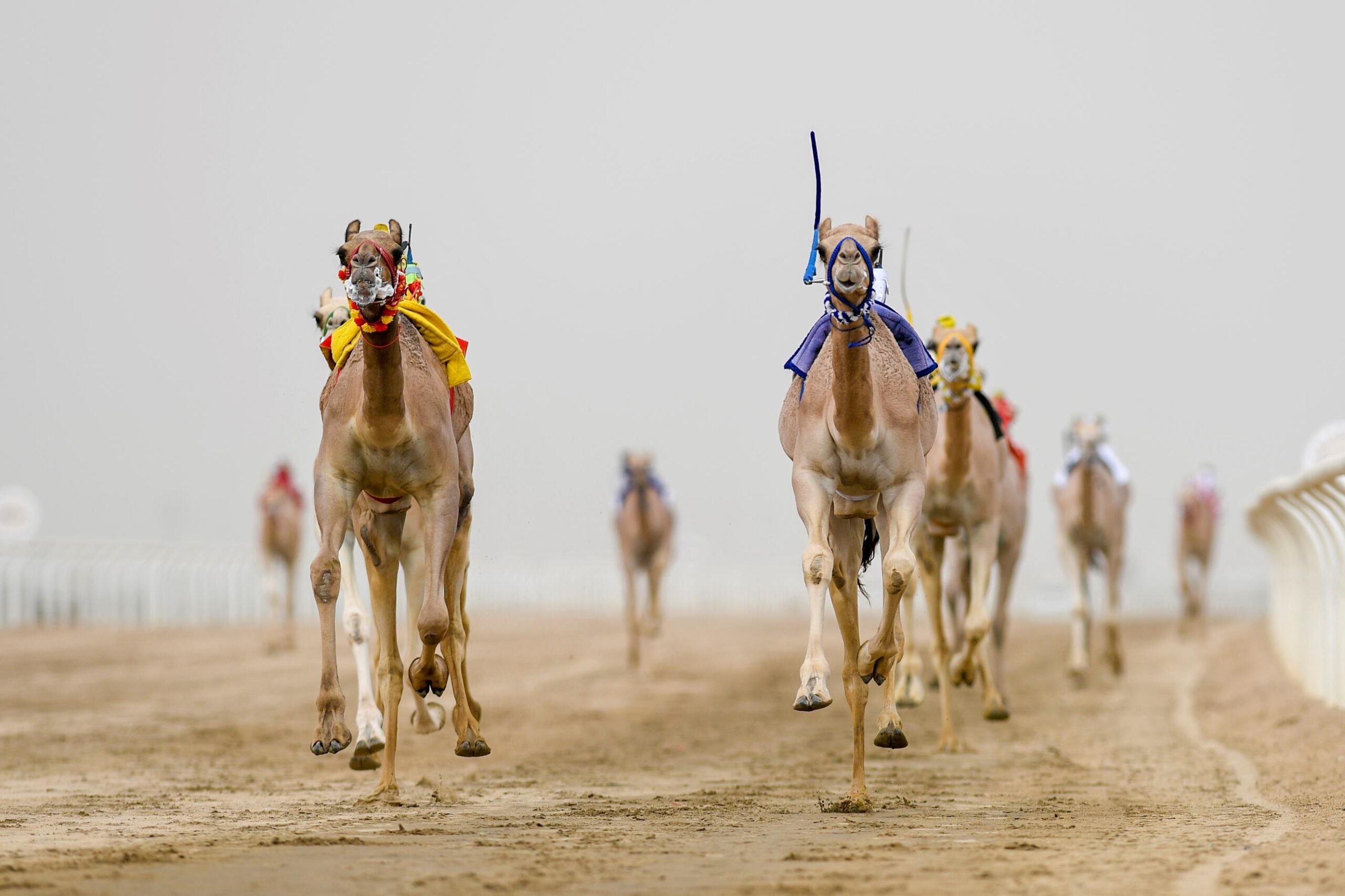

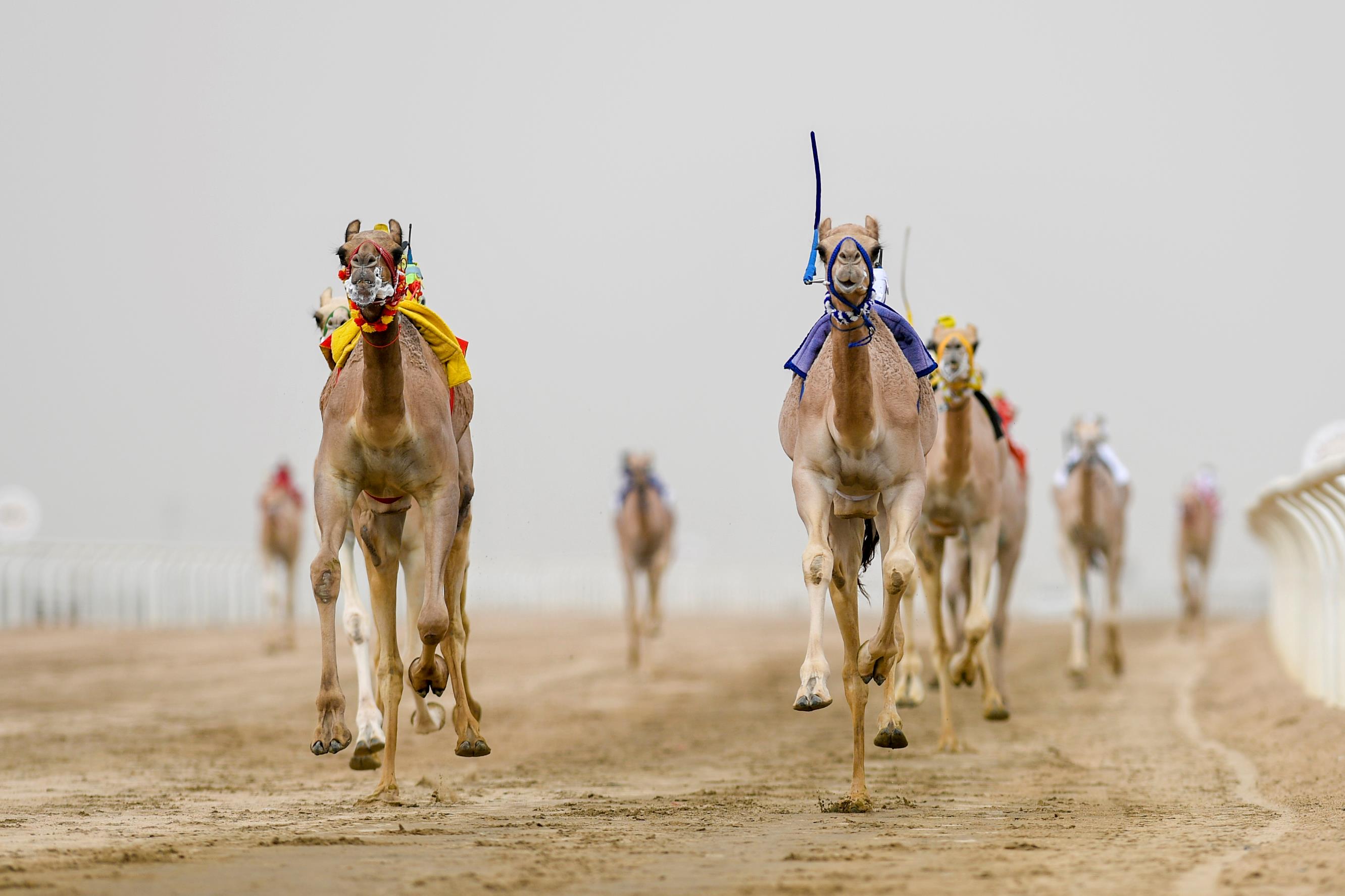
Few experiences capture the raw spirit of Arabian heritage quite like watching racing camels thunder down a desert track at 40 kilometres per hour, their legs a blur of motion against an endless sand horizon. Camel racing in Saudi Arabia is not a tourist novelty — it is a centuries-old Bedouin tradition that has evolved into a billion-riyal professional sport, complete with robot jockeys, multi-million-dollar prize purses, and purpose-built stadiums. Whether you are building a wider Saudi Arabia travel itinerary or chasing a single unforgettable spectacle, this guide covers everything you need to know: where the races happen, when the season runs, how to get trackside, and what to expect when you arrive.
Best Time to Visit: November to March (main racing season); August-September for the Crown Prince Camel Festival in Taif
Getting There: Janadriyah Camel Race Track is 42 km northeast of Riyadh; AlUla Camel Cup held in AlUla; Crown Prince Festival in Taif
Visa Required: Yes — tourist e-visa available online
Budget: Free admission at most races; SAR 150+ for VIP festival tickets; USD 80-150/day overall travel budget
Must-See: King Abdulaziz Camel Festival (Dec-Jan), AlUla Camel Cup (Feb-Mar), Custodian of the Two Holy Mosques Camel Festival (Jan-Feb)
Avoid: Summer months (June-August) for desert races outside Taif — temperatures exceed 45 degrees Celsius at most tracks
A Sport Rooted in Bedouin Heritage
Camel racing on the Arabian Peninsula dates back at least to the 7th century CE, when Bedouin tribes organised informal sprints to showcase the speed, stamina, and breeding quality of their dromedaries. For nomadic communities, a fast camel was not merely a point of pride — it was a survival asset, capable of outrunning raiders and covering vast distances between water sources. Tribes gathered at seasonal festivals and wedding celebrations to race their finest animals, and the results shaped breeding decisions for generations.
The first officially organised camel race in Saudi Arabia took place in 1964 as part of the Janadriyah Heritage Festival near Riyadh. A decade later, in 1974-75, the sport was formalised under government patronage, with dedicated racetracks, standardised distances, and structured prize categories. Today, the Saudi Camel Racing Federation (SCRF) oversees a professional calendar that spans the cooler months from October through March, with major festivals attracting participants from more than 15 countries.
In 2020, UNESCO inscribed camel racing on its Representative List of the Intangible Cultural Heritage of Humanity, recognising its deep social and cultural significance across the Arabian Peninsula. Saudi Arabia has since registered additional camel-related traditions — including al-Heda’a, the practice of calling camel flocks through melodic chanting — on the same UNESCO list.
Robot Jockeys: How Modern Technology Transformed the Sport
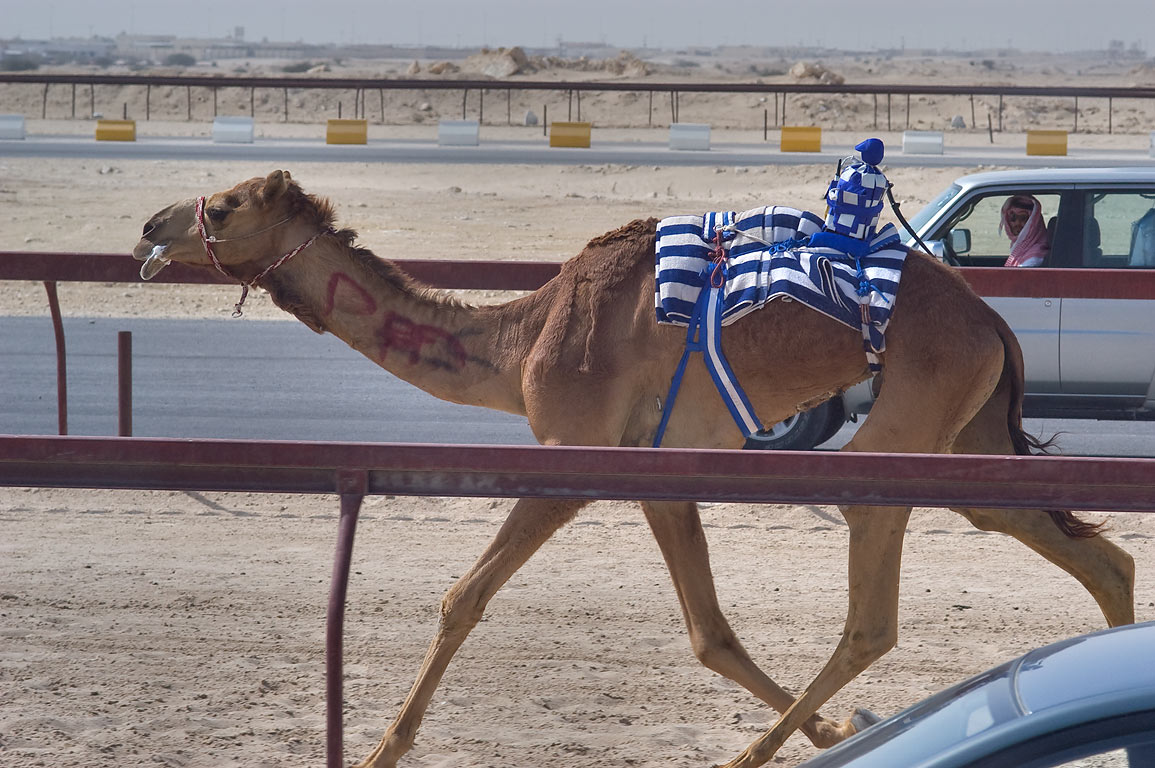
One of the most distinctive features of modern camel racing is the robot jockey — a lightweight, remote-controlled device strapped to each camel’s back. These machines replaced child jockeys, a practice that was banned across the Gulf states in the mid-2000s following international pressure over child welfare concerns. Qatar initiated development of the first robotic jockey in 2001, and by 2005 the technology had been adopted across Saudi Arabia, the UAE, Bahrain, and Oman.
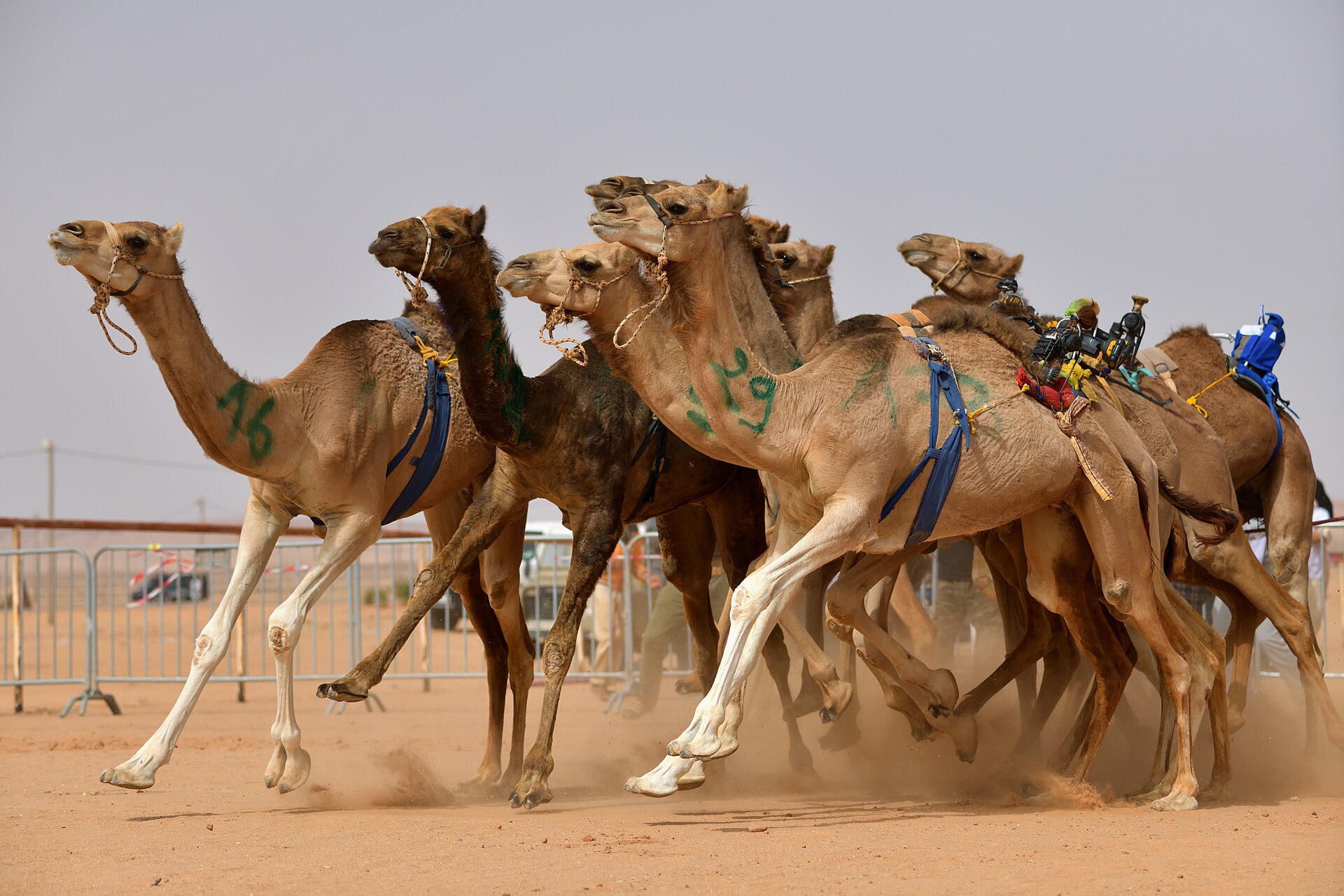
Today’s robot jockeys are aluminium-framed units weighing between 2 and 4 kilograms. Each device includes a remote-controlled whip arm, a speaker (through which the handler shouts encouragement to the camel), and sensors that monitor the animal’s speed and heart rate. Early designs confused the camels, so engineers added human-like features: mannequin faces, sunglasses, racing silks, and even traditional perfumes that mimic a human rider’s scent.
During a race, each camel’s handler drives alongside the track in an SUV, controlling the robot jockey via a handheld transmitter. The parallel road running beside the track becomes a high-speed convoy of Land Cruisers and pickup trucks, their drivers shouting and honking in excitement — a spectacle nearly as entertaining as the race itself. Visitors watching from the grandstand or trackside fencing can see both the thundering camels and the frantic vehicle procession simultaneously.
Where to Watch Camel Racing in Saudi Arabia
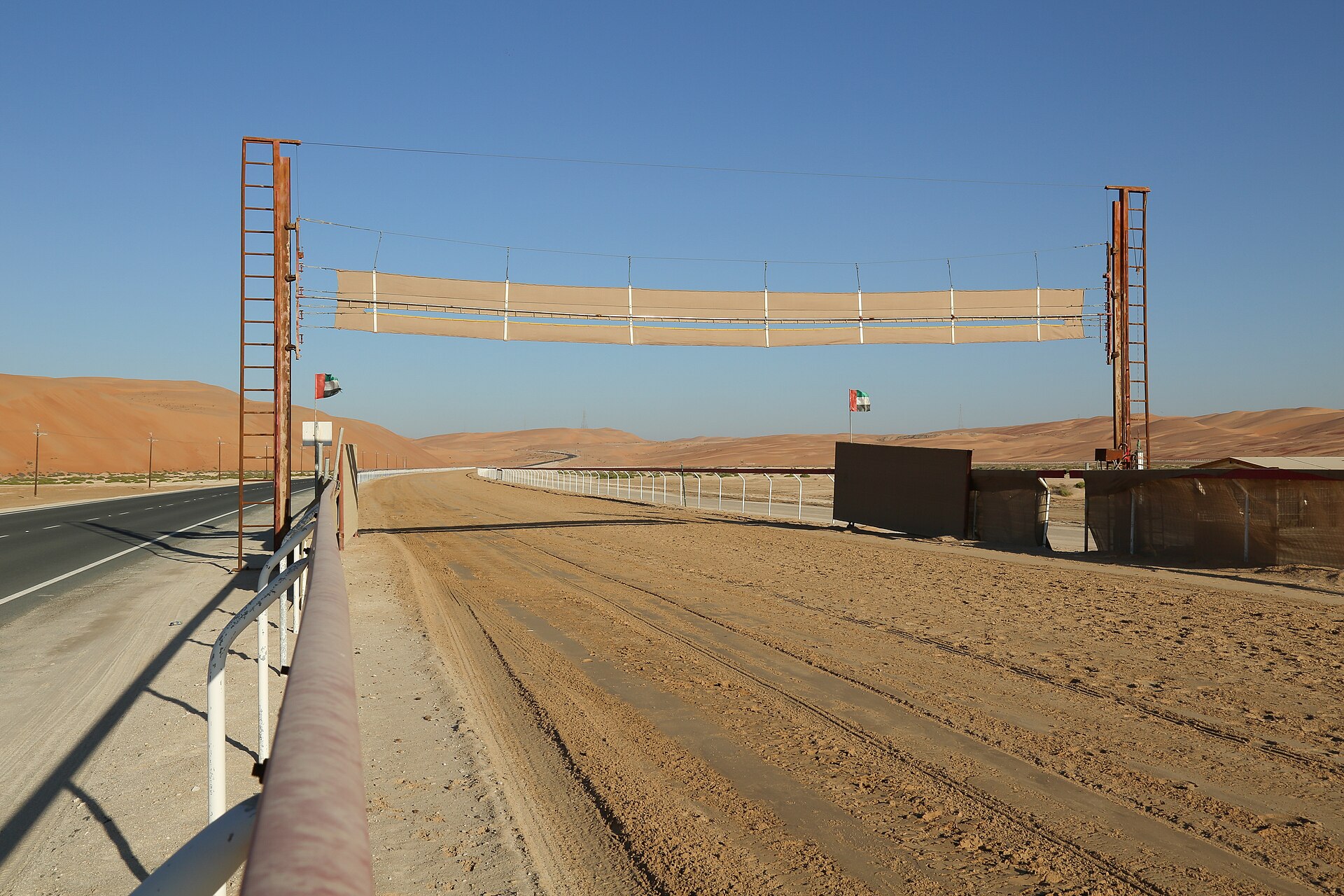
Saudi Arabia has several dedicated camel racetracks and festival venues. The sport is most accessible in and around Riyadh, but significant events also take place in Taif, AlUla, and the remote desert northeast of the capital. Here is a breakdown of the main venues.
Janadriyah Camel Race Track, Riyadh
Located 42 kilometres northeast of Riyadh on Al Jenadriyah Road (off Thumamah Road), this is Saudi Arabia’s premier camel racing facility. The track hosts the annual Custodian of the Two Holy Mosques Camel Festival, typically held from late January through early February. The 2025 edition featured 224 races across five categories, with 2,112 camel owners from 16 countries and more than 7,300 registered camels competing for prize money exceeding SAR 70 million (approximately USD 18.7 million).
Getting there: The track is approximately 30-45 minutes by car from central Riyadh. Taxis and ride-hailing apps (Uber, Careem) are the easiest option. There is no direct public transport to the venue. From King Khalid International Airport, the drive takes about 30 minutes.
Admission: General admission to the Custodian festival is free. VIP tickets start at SAR 150 (USD 40) and include premium seating with refreshments.
Visitor tip: Arrive early — by 1:30 PM for afternoon races. The trackside area fills quickly during major festivals, and parking can be challenging. Bring sun protection and plenty of water, even in winter.
King Abdulaziz Equestrian Field (Al Frusiya), Riyadh
While primarily a horse racing venue, the King Abdulaziz Equestrian Field in Al Frusiya Park also hosts camel races on Fridays and Saturdays during the winter season (November through March), with races running from 2:00 PM to 6:00 PM. The facility includes family sections, a dedicated singles area, a snack bar, and a restaurant overlooking the track that serves brunch and lunch. It is a more accessible, casual way to watch camel racing if you cannot make it to a major festival.
Southern Sayahid, Dahana Desert (King Abdulaziz Camel Festival)
The King Abdulaziz Camel Festival — the largest camel event in the world — takes place at a sprawling 225-square-kilometre site in Southern Sayahid, located between the towns of Rumah and Al Rumahiyah, roughly 120 kilometres northeast of Riyadh. The 10th edition ran from December 2025 through early January 2026. This month-long festival draws more than 38,000 camels and combines racing with the famous Mazayen al-Ibl beauty contest, falconry displays, traditional poetry recitals, and a vast heritage village.
The festival awards prizes totalling approximately SAR 300 million (USD 80 million) across racing and beauty categories, making it one of the richest animal competitions on Earth. Over USD 2.5 million is awarded to the winner of each of the five main racing categories alone.
Getting there: The Sayahid site is deep in the Dahana desert and requires a vehicle. Most visitors drive from Riyadh (approximately 1.5 hours). During the festival, signposted access roads are well maintained, and large temporary parking areas are set up. Organised tour groups from Riyadh offer transport packages.
Taif (Crown Prince Camel Festival)
The Crown Prince Camel Festival, held under the patronage of Crown Prince Mohammed bin Salman, takes place at the historic Taif camel square each August-September. The 2025 edition (the seventh) set records with over 100,000 camels entered — more than all six previous editions combined. The festival features 249 race rounds across multiple categories including Haqqa, Laqaya, Jatha’a, Thanaya, Heil, and Zamoul, with competitions in both morning and evening sessions.
Prize money exceeds SAR 50 million (USD 13.3 million). Notably, the 2025 edition included five dedicated camel races for 78 men and women riders from eight countries, marking a historic milestone as Saudi women riders claimed their first-ever wins at the festival.
Getting there: Taif is accessible via Taif Regional Airport (domestic flights from Riyadh and Jeddah) or by road from Jeddah (approximately 1.5 hours via the scenic Hejaz mountain road). The Taif camel square is signposted from the city centre.
AlUla Camel Cup
The AlUla Camel Cup is a four-day event held annually in the stunning desert setting of AlUla, typically in February or March. Organised by the Royal Commission for AlUla in partnership with the Saudi Camel Racing Federation, it has become the most lucrative single camel racing competition in the world, with a prize pool exceeding USD 6.4 million in 2024.
Races range from 4 to 8 kilometres. The competition culminates on the final day with two prestigious one-round, 8 km races in the Heil and Zamoul categories for camels aged six years and above. Alongside the racing, visitors can explore the Mughayra Heritage Sports Village, which offers food stalls, curated shopping, and live entertainment.
Getting there: AlUla is served by Prince Abdul Majeed bin Abdulaziz Airport, with direct flights from Riyadh and Jeddah. The race venue is within easy driving distance of AlUla’s main tourist area. Combine a camel racing visit with trips to Hegra (Mada’in Saleh), Elephant Rock, and the AlUla Old Town.
The Racing Season Calendar
Camel racing in Saudi Arabia follows a seasonal calendar dictated by temperature. The main season runs from October through March, when desert temperatures drop to a comfortable 15-30 degrees Celsius. Most local races take place on Fridays and Saturdays during this period, with major festivals anchoring the calendar.
| Event | Location | Typical Dates | Prize Pool | Key Feature |
|---|---|---|---|---|
| SCRF Weekly Races | Various tracks | Oct-Mar (Fri/Sat) | Varies | Local league racing |
| King Abdulaziz Camel Festival | Southern Sayahid, near Riyadh | Dec-Jan (30-45 days) | ~SAR 300M (USD 80M) | Racing + beauty contest |
| Custodian of the Two Holy Mosques Camel Festival | Janadriyah, Riyadh | Late Jan – early Feb (10 days) | SAR 70M+ (USD 18.7M) | International competition; free entry |
| AlUla Camel Cup | AlUla | Feb-Mar (4 days) | USD 6.4M+ | Most lucrative single event |
| Crown Prince Camel Festival | Taif | Aug-Sep (10-12 days) | SAR 50M+ (USD 13.3M) | Women riders; summer highland venue |
Planning tip: The King Abdulaziz Camel Festival (December-January) and the Custodian festival (January-February) run close together, making a winter trip to Riyadh the best window for seeing the most racing action. You can combine both events with a visit to Riyadh’s other attractions.
The Camel Beauty Contest: Mazayen al-Ibl
No discussion of Saudi camel culture is complete without the Mazayen al-Ibl — the camel beauty pageant that runs alongside the King Abdulaziz Camel Festival. Often described as “Miss Camel,” this competition judges dromedaries on physical attributes including the shape and droop of their lips, the size and symmetry of their heads, the curvature of their necks, and the height and proportions of their humps.
The stakes are enormous. Total beauty contest prize money reaches approximately USD 66 million, and a single champion camel can be worth over SAR 10 million. This has led to an infamous cheating problem: some breeders have been caught injecting camels with Botox, silicone fillers, and hormones, or using rubber bands to artificially inflate body parts. In 2021, authorities conducted their largest-ever crackdown, disqualifying over 40 camels.
Today, festival judges use X-ray machines, sonar devices, and DNA testing to detect tampering. The Camel Club imposes heavy fines and competition bans on violators. For visitors, the beauty contest is a remarkable cultural spectacle — rows of immaculately groomed camels paraded before judges while their owners, in pristine white thobes, stand by with undisguised anxiety.
Saudi Camel Breeds You Will See
Saudi Arabia is home to approximately 1.8 million camels, one of the largest populations in the world. Several distinct dromedary breeds appear at racetracks and beauty contests, each prized for different qualities.
- Majaheem: Deep black to dark brown, large-framed, and high in milk production. Often showcased in beauty contests for their imposing presence.
- Wodh: Pale white to ivory. Highly prized in both races and shows, and considered among the most beautiful breeds.
- Sufur: Golden to yellowish coat. Admired for elegance and frequently featured at festivals.
- Shaele: Reddish-brown. Strong, adaptable across terrains, and valued for endurance racing.
- Asail: Yellow to brown. Appreciated for its noble appearance and deep cultural value.
- Saheli: Red coat. Admired for its distinctive hue and stamina over long distances.
- Sun protection: Hat, sunglasses, and sunscreen. Even in winter, the desert sun is intense.
- Water: Bring at least 1-2 litres per person. Some festivals have water stations, but remote tracks may not.
- Comfortable footwear: The ground is sandy and uneven. Closed-toe shoes or boots are recommended over sandals.
- Camera with telephoto lens: Camels move fast and the tracks are wide. A zoom lens or binoculars enhances the experience considerably.
- Cash: Some food stalls and vendors at festivals only accept cash, though major events increasingly offer card payments.
- Ride-hailing: Uber and Careem operate throughout Saudi Arabia’s major cities and are the easiest way to reach tracks near Riyadh.
- Rental car: Essential for festivals at remote locations like Southern Sayahid. International driving licences are accepted. Roads are well-maintained and signposted.
- Organised tours: Several tour operators in Riyadh offer camel racing day trips during the festival season, which include transport, guide services, and sometimes VIP access. This is the best option for first-time visitors unfamiliar with the venues.
- Riyadh: After the races, explore the Riyadh historic Dira district, the National Museum, and the Edge of the World (Jebel Fihrayn) day trip.
- AlUla: The Camel Cup is an ideal add-on to an AlUla heritage trip. Spend additional days at Hegra (Saudi Arabia’s first UNESCO World Heritage Site), Elephant Rock, and the Dadan archaeological site.
- Red Sea coast: If visiting during the racing season, consider a detour to the Red Sea for diving and snorkelling. NEOM’s Sindalah Island and the Farasan Islands offer world-class marine life.
- Hiking: The Saudi Arabia hiking trails in the Asir Mountains and the Edge of the World near Riyadh provide a physical contrast to the spectator experience of the races.
- Saudi Arabia Travel Guide 2026 — The complete guide to visiting the Kingdom
- Riyadh Travel Guide — Explore the capital city where most major camel races take place
- AlUla Travel Guide — Home of the prestigious AlUla Camel Cup and UNESCO heritage sites
- Abha and Asir Travel Guide — Mountain highlands near the Taif camel festival venue
- Saudi Arabia Visa Guide — Every visa type explained
- Saudi Arabia Hotels Guide — Where to stay across the Kingdom
Racing camels are typically lean and long-legged, bred for speed over distances of 4 to 10 kilometres. They can reach speeds of up to 65 km/h in short bursts and sustain 40 km/h over longer stretches. A top-tier racing camel can sell for several million Saudi riyals.
What to Expect as a Spectator
Attending a camel race in Saudi Arabia is a sensory experience unlike any equestrian event in the West. Here is what a typical race day looks like.
The Atmosphere
On an average racing day, around 100 camels may participate across multiple races, each covering a 6- to 10-kilometre circuit. The atmosphere blends sporting intensity with social gathering: families spread picnic blankets near the track, men congregate around tea and coffee stands, and the air carries the smell of roasting meat from pop-up food stalls. Major festivals add live entertainment, heritage exhibits, and children’s activities.
The Race Itself
Camels are corralled at the starting gate, numbered and saddled with their robot jockeys. At the signal, they burst forward in a surprisingly ungainly but rapid charge. The parallel service road fills with SUVs as handlers race alongside their camels, controlling the robot jockeys via remote. Spectators can watch from the grandstand, the trackside railings, or — at smaller events — simply by standing along the fence line. Races typically last 8 to 15 minutes depending on the distance.
What to Bring
Dress Code and Etiquette
Saudi Arabia requires modest dress for both men and women in public spaces. At racetracks, this means long trousers for men and loose-fitting clothing covering shoulders and knees for women. A headscarf is not legally required for non-Saudi women but is appreciated as a sign of cultural respect in traditional settings. Always ask permission before photographing locals, especially women and families.
Practical Information for Visitors
Visa Requirements
Most visitors to Saudi Arabia require a tourist e-visa, which can be obtained online in minutes. The e-visa allows stays of up to 90 days and is valid for one year with multiple entries. Citizens of around 50 countries are eligible. The application costs approximately USD 120 including insurance.
Getting Around
Racetracks are typically located outside city centres, and public transport to these venues is limited or non-existent. Your best options are:
Where to Stay
For races around Riyadh, stay in the city centre and travel to the track on race days. The Olaya district and King Abdullah Financial District offer a wide range of hotels at every budget level. For the AlUla Camel Cup, book accommodation in AlUla well in advance — the town’s hotels fill quickly during events. For the Crown Prince Festival in Taif, hotels along the Shubra main road are closest to the camel square.
Best Time to Plan Your Trip
The ideal window for a camel racing trip is late December through early March. This period covers the tail end of the King Abdulaziz Camel Festival, the full Custodian of the Two Holy Mosques Camel Festival, and the AlUla Camel Cup. Temperatures are pleasant (15-25 degrees Celsius during the day), and the racing calendar is at its most active. If you prefer to avoid peak season, November and early December offer regular weekly races with smaller crowds.
Insider tip: The Crown Prince Camel Festival in Taif (August-September) is an exception to the “winter only” rule. Taif sits at 1,879 metres elevation in the Hejaz Mountains, keeping summer temperatures around 30 degrees Celsius — far more bearable than the lowland deserts. Combine it with a trip to the Asir highlands for a summer escape from the heat.
Combining Camel Racing with Other Saudi Experiences
A camel racing trip pairs naturally with other activities across the Kingdom. Here are some suggestions for extending your itinerary.
A Brief Glossary of Camel Racing Terms
| Term | Meaning |
|---|---|
| Heil | Racing category for camels aged six years and above; typically the most prestigious races |
| Zamoul | Another senior-age racing category, often paired with Heil at major festivals |
| Haqqa | Category for younger camels, typically three-year-olds |
| Laqaya | Category for camels of intermediate age |
| Jatha’a | Junior racing category |
| Thanaya | Category based on camel age/tooth development |
| Mazayen | Camel beauty pageant (literally “beauties”) |
| Hajeen | Purebred racing camel (plural: Hajn) |
| Mijaheem | Plural of Majaheem; the dark-coated breed favoured in beauty contests |
| Al-Heda’a | Traditional melodic chanting used to call and calm camels |
Frequently Asked Questions
Is camel racing free to watch?
Most regular-season camel races are free to attend. Major festivals such as the Custodian of the Two Holy Mosques Camel Festival offer free general admission. VIP tickets at festivals typically start at SAR 150 (approximately USD 40). The AlUla Camel Cup may charge admission for certain areas; check the AlUla events page for the latest pricing.
Can women attend camel races?
Yes. Camel racing events are open to all visitors, including women. Many festival venues have dedicated family sections. Since 2025, the Crown Prince Camel Festival has featured women riders competing alongside men.
How long does a single race last?
A typical race lasts 8 to 15 minutes, depending on the distance (4-10 km). However, a full race day includes multiple heats and can run from 2:00 PM to 6:00 PM, so plan to spend at least half a day at the track.
Can I bet on camel races?
No. Gambling is prohibited in Saudi Arabia under Islamic law. There is no betting infrastructure at any racetrack or festival. The competition is purely about prestige, cultural honour, and the official prize purses.
Are the races suitable for children?
Camel racing is a family-friendly activity in Saudi Arabia. Festival venues typically include children’s play areas, food stalls, and heritage activities. The main consideration is the heat and sun exposure — bring shade, water, and sunscreen for younger children.