
Saudi Arabia’s Red Sea coast stretches 1,760 kilometres and holds some of the healthiest coral reef systems on Earth — reef systems that were effectively off-limits to recreational divers for decades. A liveaboard is the only way to reach the best of them. The offshore pinnacles near Yanbu, the vast Farasan Banks south of Jeddah, and dozens of unnamed reefs in between are too remote for day boats. If you are planning a wider Saudi Arabia travel itinerary, a week aboard a Red Sea liveaboard is the single most memorable experience available in the Kingdom. This guide covers every boat currently operating, the three main routes, dive site highlights, seasonal planning, costs, and practical logistics so you can book with confidence.
Best Time to Visit: September to May (peak: November–March for big pelagics)
Getting There: Fly to Jeddah (JED) or Yanbu (YNB); operators arrange port transfers
Visa Required: Yes — tourist e-visa available for 60+ nationalities
Budget: $195–$225/day all-inclusive; 7-night trips from $1,558–$3,226
Must-See: Seven Sisters pinnacles (Yanbu), Farasan Banks whale sharks, Abu Galawa wreck
Avoid: Booking without Advanced Open Water certification — most operators require AOWD minimum
Why Saudi Arabia for Liveaboard Diving
The Egyptian Red Sea has been a global diving destination for forty years. The Saudi side of the same sea has been commercially dived for fewer than five. The difference in reef condition is immediately visible. Hard coral coverage is denser, fish populations are larger, and you will regularly be the only boat anchored at a site. The Saudi Red Sea holds over 346 species of hard coral — roughly six per cent of which are endemic, found nowhere else on Earth — and more than 1,200 recorded fish species. The reefs were protected not by regulation but by inaccessibility: no tourist visa existed before 2019, and the liveaboard industry only launched in earnest around 2021.
Compared with Egyptian liveaboards, Saudi operations are smaller (four to five vessels versus seventy-plus in Egypt), more expensive (roughly 30–50 per cent higher), and dramatically less crowded. The trade-off is straightforward: you pay more for frontier diving in pristine condition with minimal company. For experienced divers who have already done the Brothers, Daedalus, and Elphinstone in Egypt, Saudi Arabia is the obvious next step — the same Red Sea marine ecosystem, but without the traffic.
The Liveaboard Fleet: Every Boat Currently Operating
The Saudi Red Sea liveaboard fleet is small and growing. As of early 2026, four vessels run regular itineraries. A fifth, the M/Y Eclipse, operates across both Egyptian and Saudi waters.
M/Y Almonda (Ocean Breeze Liveaboards)
Built in 2017 and fully refurbished in 2024, the Almonda is the most established boat in the Saudi fleet. At 39.9 metres with a beam of 8.57 metres, she carries 24 guests in 12 cabins: eight deluxe twins, two double queens, and two master suites. Every cabin has air conditioning, an en-suite bathroom, and a 32-inch TV. The sun deck features a jacuzzi, and two Zodiac tenders service the dive sites. Rates start from $195 per day, with full 7-night trips ranging from $1,558 to $2,850 depending on season and cabin class. The price includes VAT, full-board meals, soft drinks, diving package, night dives, Nitrox, and all towels. The Almonda holds an 8.7/10 rating on LiveAboard.com from 67 verified reviews.
Saudi Explorer
A 34-metre vessel built in 2019, the Saudi Explorer carries 20 guests in 10 cabins across two decks. Five twin cabins sit on the main deck, four double/twin cabins on the upper deck, and one master suite occupies the bow. Two 600hp MAN Marine engines give a cruising speed of eight knots. Rates start from $210 per day, though required extras add up: fuel surcharge (EUR 7/day), gratuities (EUR 15/day), and port fees (EUR 35/day). The food earns a 9.1/10 rating — the highest in the fleet. Note that online availability is sometimes limited; direct contact with the operator may be necessary for specific dates.
Saudi Pioneer
The newest vessel in Saudi waters, built in 2023. At 40 metres with twin 750hp Cummins engines, the Saudi Pioneer carries 23 guests in 11 cabins including suites, twins, and triples. Cruising speed is 10 knots — the fastest in the fleet, which matters for longer transits to remote sites. A dedicated photography counter with charging stations makes this the strongest choice for underwater photographers. Rates start from $224 per day. Unlimited daily dives and Nitrox are included.
M/Y Eclipse
Launched in August 2021 from the South Red Sea Shipyard in Safaga, the Eclipse is the largest vessel at 45 metres. She carries 24 guests in 12 cabins including a flagship Moon Suite. Crew speak English, French, and Italian. The Eclipse operates a dual-country model, running itineraries in both Egyptian and Saudi Red Sea waters, which can be attractive for divers who want to compare both sides in a single trip. Inclusions are generous: airport transfers, welcome cocktails, beach BBQ, full-board meals, diving package, and night dives.
Fleet Comparison
| Boat | Built | Length | Guests | From ($/day) | Key Strength |
|---|---|---|---|---|---|
| Almonda | 2017 (refurb 2024) | 39.9m | 24 | $195 | Most reviewed, jacuzzi, Nitrox included |
| Saudi Explorer | 2019 | 34m | 20 | $210 | Best food (9.1/10), intimate group size |
| Saudi Pioneer | 2023 | 40m | 23 | $224 | Newest, fastest, photo station |
| Eclipse | 2021 | 45m | 24 | Contact | Largest, dual Egypt/Saudi routes |
Three Main Liveaboard Routes
Saudi liveaboard itineraries fall into three distinct corridors, each with a different character. Choosing the right route matters more than choosing the right boat.
Route 1: Yanbu — Seven Sisters and Five Corals
Departure port: Yanbu. Duration: typically 7 nights. This is the northern route and the closest thing Saudi Arabia has to a classic pelagic dive itinerary. The Seven Sisters (also called Seven Reefs) are a cluster of underwater pinnacles rising from the open ocean floor northwest of Yanbu. Limestone formations are blanketed in hard and soft corals, and hammerhead sharks patrol the deeper waters nearly year-round. The individual site of Abu Galawa is widely considered the most beautiful dive in the Yanbu area — it features a WWII-era Chinese shipwreck draped in coral growth.
South of Yanbu, the route typically includes the Five Sisters (Five Corals), a series of five coral atolls offshore from Rabigh. Schools of pelagic fish, hammerheads, and manta rays are regular sightings in the blue water between the atolls. This route suits divers who prioritise big-animal encounters and dramatic reef topography. If you are combining your trip with time on shore, Jeddah is a two-hour drive south of Yanbu and makes a natural pre- or post-trip stop.
Route 2: Farasan Banks (Al Lith Departure)
Departure port: Al Lith (transfers arranged from Jeddah airport, approximately three hours by road). Duration: 8 nights / 7 days of diving, typically Saturday to Saturday. The Farasan Banks stretch 350 miles along the Saudi coast and contain thousands of small reefs and islands. This is frontier diving at its most literal — many sites were charted only in the last few years, and some remain unnamed.
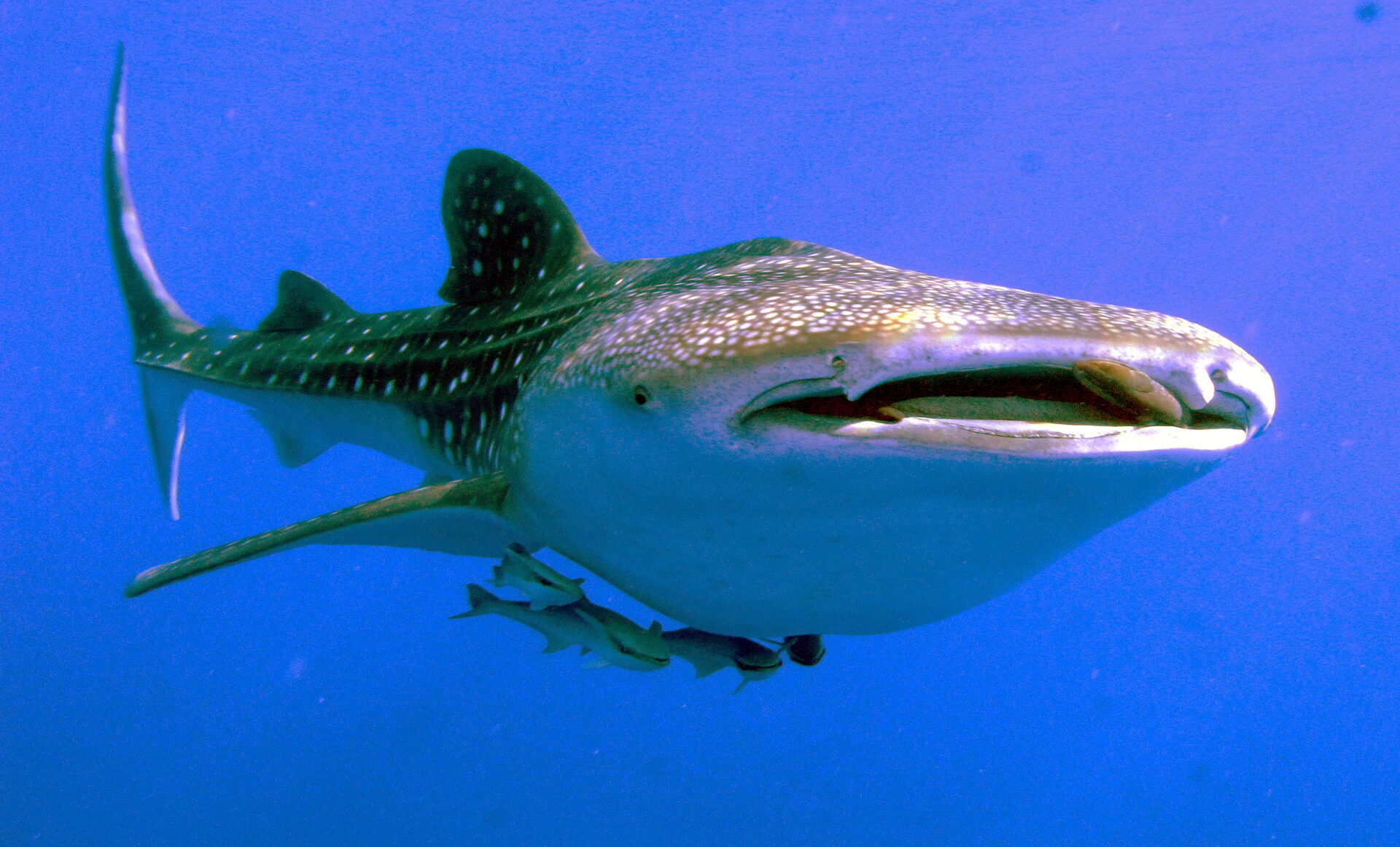
Named sites on the standard Farasan Banks itinerary include Mar Mar Island, Sha’ab Ammar (a large horseshoe-shaped reef used as a night mooring), Gorgonia, Canyon Reef, Long Reef, Eagle, Fantasy, and Poppy Reef. The typical schedule is three dives per day plus two night dives across the trip, totalling 16–18 dives. Whale sharks appear in the Farasan Banks between November and May, with April being a particular hotspot. This route suits divers who want exploration and marine biodiversity over specific marquee sites.
Route 3: Farasan South and Qumais Islands
The most exploratory option. Expedition-style cruises head south beyond the standard Farasan Banks toward the Qumais Islands and the far southern Saudi Red Sea. These trips are less frequent and more weather-dependent. The reward is genuinely uncharted diving — sites that may never have been dived before. Available primarily on the Saudi Pioneer, whose faster cruising speed (10 knots versus 8) makes the longer transits practical.
Top Dive Sites
Seven Sisters / Seven Reefs (Yanbu)
Cluster of seven underwater pinnacles. Hammerhead sharks nearly year-round. Hard and soft coral gardens from 5 metres to beyond 40 metres. Strong currents possible — not beginner-friendly.
Abu Galawa (Yanbu)
The standout individual site in Saudi waters. A WWII-era Chinese cargo vessel sits upright on a reef slope, draped in decades of coral growth. Visibility frequently exceeds 30 metres.
Five Sisters / Five Corals (Rabigh)
Five offshore atolls with open-water channels between them. Manta rays, hammerheads, and giant trevally in the blue. Reef tops at 3–5 metres make excellent safety stops.
Sha’ab Ammar (Farasan Banks)
A large horseshoe-shaped reef used as overnight mooring on the Farasan Banks route. Night dives here reveal Spanish dancers, hunting lionfish, and sleeping turtles on the reef flat.
Gorgonia and Canyon Reef (Farasan Banks)
Named for its dense gorgonian fan coral coverage. Canyon Reef features a series of swim-throughs and channels carved into the reef wall, with whitetip reef sharks resting in the overhangs.
Jeddah Wrecks (Shore-Accessible, Not Liveaboard)
While not part of a liveaboard itinerary, the Ann Ann wreck near Jeddah deserves mention. This cargo vessel sank in 1977, sits between two reefs with the stern at 32 metres and the bow at 5 metres, and fell onto its side during a 2022 storm. The Boiler Wreck descends to 45 metres with caves, a tunnel, and walls of black and pink coral. Both are accessible as day dives from Jeddah and pair well as a warm-up before a liveaboard departure.
Marine Life: What You Will See
The Saudi Red Sea shares the same marine ecosystem as the Egyptian side but with less diving pressure, which translates to bolder fish behaviour and larger aggregations. Here is what to expect by category.
Sharks
Whale sharks are the headline species, encountered on the Farasan Banks from November to May (peak: February–April near Jabal Al Lith). Hammerhead sharks patrol the Seven Sisters pinnacles year-round, with cooler months (December–March) bringing larger schools. Grey reef sharks, whitetip reef sharks, blacktip reef sharks, and silky sharks are regular on both routes. Tiger sharks appear occasionally on the Farasan Banks.
Rays and Large Marine Life
Manta rays with wingspans up to seven metres visit cleaning stations on the Five Sisters atolls. Dugongs — an endangered species related to manatees — inhabit Saudi Red Sea waters, particularly in shallow seagrass areas. Hawksbill and green turtles nest on remote Farasan islands and are seen on most dives. Dolphins are frequently spotted during surface intervals.
Reef Life and Coral
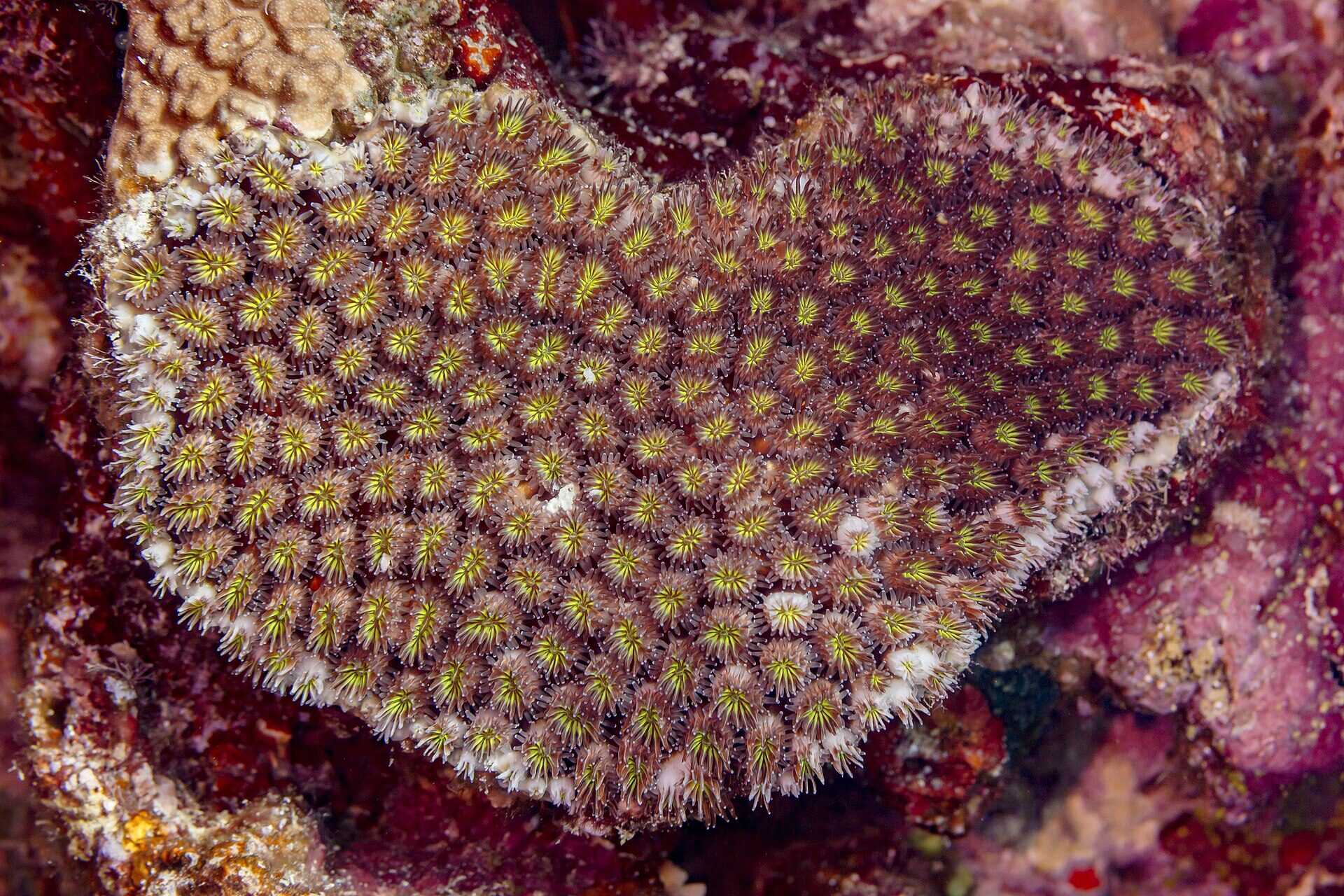
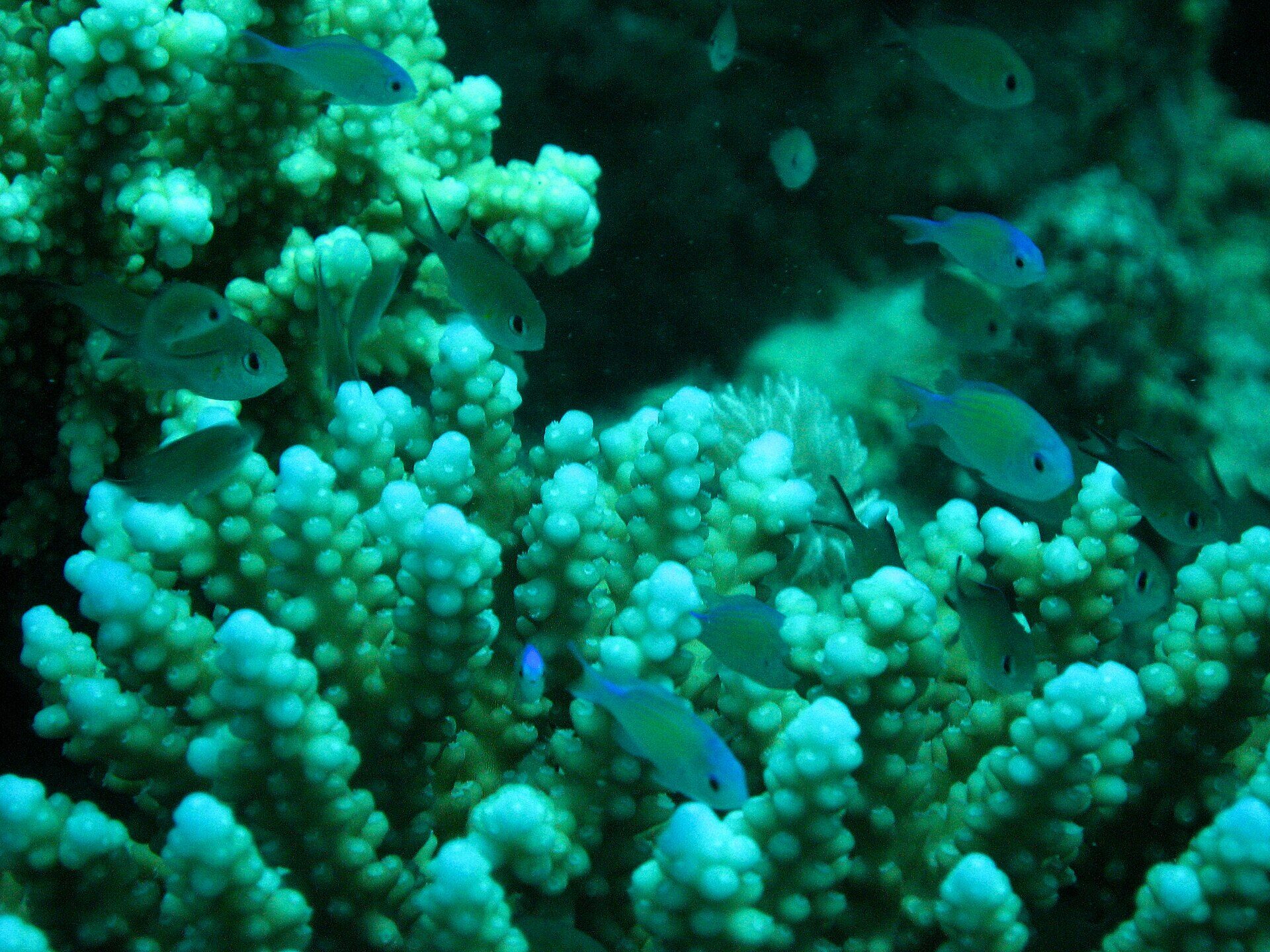
Over 346 species of hard coral have been recorded in Saudi Red Sea waters, with approximately six per cent endemic to the Red Sea. Soft corals, gorgonian fans, and black coral walls are abundant on deeper sites. Reef fish diversity exceeds 1,200 species — roughly 10 per cent endemic. Giant trevally, barracuda schools, and jackfish tornadoes are common on pinnacle sites. Clownfish, nudibranchs, moray eels, and lionfish fill macro photographers’ memory cards on every night dive. Saudi Arabia’s coral reefs are on the UNESCO Tentative List as a potential World Heritage Site — recognition of their global scientific significance.
Best Time to Go
The Saudi Red Sea is diveable year-round, but conditions and marine life sightings vary significantly by season.
| Season | Water Temp | Visibility | Highlights | Notes |
|---|---|---|---|---|
| Sep–Nov | 26–30°C | 25–35m | Warm water, whale sharks arrive (south) | Excellent all-round diving |
| Dec–Feb | 22–25°C | 30–40m | Best visibility, hammerhead schools peak | 5mm wetsuit recommended |
| Mar–May | 24–28°C | 30–40m | Whale shark peak (Farasan), coral spawning | April is the sweet spot |
| Jun–Aug | 28–32°C | 20–30m | Warm water, hammerheads at Yanbu | Hot on deck; southern sites too warm |
Tip: For the widest range of big-animal encounters, book a Farasan Banks trip in March or April. Whale sharks, mantas, and hammerheads all overlap during this window. The northern Yanbu route is better in winter (December–February) when hammerhead schools are at their densest.
What a Typical Trip Looks Like
Most Saudi liveaboard trips follow a similar daily rhythm. Here is a representative schedule for the 8-night Farasan Banks itinerary:
- Day 1 (Saturday): Transfer from Jeddah airport to Al Lith port (approximately 3 hours). Board the boat, settle into cabins, equipment check, safety briefing. Afternoon check dive on a nearby reef.
- Days 2–6: Three dives per day — early morning (6:30am), mid-morning (10:00am), and afternoon (3:00pm). Two night dives scheduled across the week (typically Days 3 and 5). Meals are full-board buffet: breakfast, lunch, dinner, plus snacks and drinks throughout the day.
- Day 7: Two morning dives before the boat begins the return transit to Al Lith. Final dinner aboard.
- Day 8 (Saturday): Disembark at Al Lith. Transfer back to Jeddah airport.
- Drift diving in moderate to strong currents
- Blue-water descents without a wall reference
- Deep dives to 30 metres
- Independent buoyancy control (no reef contact)
- At least 50 logged dives (strongly recommended; some operators ask for 30+)
- LiveAboard.com — the most comprehensive listings with verified reviews; Almonda and Eclipse bookable online
- Divebooker.com — alternative aggregator with occasional promotional pricing
- Bluewater Dive Travel — US-based specialist with Saudi itineraries
- PADI Travel — PADI’s booking platform lists Saudi liveaboards
- Ocean Breeze Liveaboards (direct) — for the Almonda specifically
- Yanbu route: Fly to Yanbu Airport (YNB) or Jeddah (JED) and transfer by road (approximately 3 hours). Some operators arrange group transfers from Jeddah.
- Farasan Banks route: Fly to Jeddah King Abdulaziz International Airport (JED). Operators arrange road transfers to Al Lith port, approximately three hours south of Jeddah.
- Exposure suit: 3mm shorty for summer; 5mm full suit for December–February when water drops to 22°C
- Dive computer: Essential; Nitrox-compatible if you plan to dive enriched air
- Surface marker buoy (SMB): Required for drift dives at the Seven Sisters
- Torch: For night dives — compact LED with backup
- Camera: Housing, strobes, and memory cards; the Saudi Pioneer has a dedicated charging station
- Reef-safe sunscreen: Environmental regulations are tightening; chemical sunscreens may be restricted at marine sites
- Modest clothing: For any shore excursions; Saudi Arabia’s dress code applies on land
- Seasickness medication: Open-water transits can be rough, particularly on the Farasan Banks route
- Bring a hoodie for the deck: Winter evenings at sea are cooler than you expect in Saudi Arabia. The desert climate means large day-night temperature swings.
- Download offline maps: Mobile signal is intermittent at sea. WiFi is available on some boats but unreliable for streaming.
- Carry cash: SAR or USD for tips. There are no ATMs at Al Lith port.
- Print your dive certification: Digital cards are usually accepted, but a printed card avoids any issues during boarding checks.
- Extend your trip: Jeddah is worth two to three days before or after your liveaboard. Al-Balad (Jeddah’s historic district) is a UNESCO World Heritage Site. The corniche offers excellent shore snorkelling.
- Consider combining with other adventure activities — Saudi Arabia offers world-class rock climbing, hiking in the Asir highlands, and desert experiences near AlUla.
- Saudi Arabia Diving and Snorkelling Guide — Complete guide to diving across the Kingdom
- AMAALA Resort Guide — Ultra-luxury Red Sea destination with world-class diving
- Red Sea Project Resorts — AMAALA, Sindalah and Shura Island resort guide
- Jeddah Travel Guide 2026 — Gateway city for Red Sea liveaboard departures
- Saudi Arabia Travel Guide 2026 — The complete guide to visiting the Kingdom
- Saudi Arabia Visa Guide — Every visa type explained
Total dive count: 16–18 dives across the trip, plus the check dive. All dives are from Zodiac tenders — you rarely dive directly from the mothership.
Costs and What Is Included
Saudi liveaboard diving is a premium product. Here is a realistic breakdown of what to budget.
Trip Costs
| Item | Cost Range | Notes |
|---|---|---|
| Liveaboard trip (7 nights) | $1,558–$3,226 | Depends on boat, cabin class, and season |
| Fuel surcharge | EUR 7/day (~$56 total) | Some boats only; check inclusions |
| Port fees | EUR 35/day (~$280 total) | Some boats only |
| Gratuities | EUR 15/day (~$120 total) | Expected on all boats |
| Equipment rental | $25–$50/day | BCD + reg + wetsuit; bring your own to save |
| Nitrox | $0–$100/trip | Included on Almonda; extra on others |
| Dive insurance | $5–$15/day | DAN or equivalent required |
| International flights | $400–$1,200 | To Jeddah (JED) |
Realistic total for a 7-night Farasan Banks trip: $2,500–$4,000 per person including flights from Europe, all surcharges, equipment rental, and tips. Promotional discounts of up to 40 per cent are available on select April–June 2026 dates — worth checking on LiveAboard.com and Divebooker.com.
Budget tip: The Almonda offers the best value overall thanks to inclusive Nitrox, no fuel surcharge, and competitive base rates. For the smallest group size and best food, the Saudi Explorer’s 20-guest capacity and 9.1/10 food rating justify the higher all-in cost.
Saudi vs Egyptian Liveaboard Costs
| Factor | Saudi Arabia | Egypt |
|---|---|---|
| Fleet size | 4–5 boats | 70+ boats |
| Base rate | $195–$225/day | $100–$180/day |
| Crowding at sites | Often sole boat | Multiple boats common |
| Coral condition | Pristine (limited access history) | Good to excellent (southern routes) |
| Group size | 20–24 guests | 20–30+ guests |
| Alcohol on board | Not available | Available on most boats |
| Booking ease | Limited online availability | Easy, multiple platforms |
Certification and Experience Requirements
Saudi liveaboard operators require Advanced Open Water Diver (AOWD) certification or equivalent as a minimum. This is not a suggestion — the Farasan Banks itinerary explicitly states AOWD minimum, and operators describe the destination as “only suited to experienced divers with experience of wall and blue diving.” If you hold only Open Water certification, complete your Advanced course before booking.
Beyond certification level, practical experience matters. You should be comfortable with:
Nitrox certification is not required but is strongly recommended. Most diving is in the 20–30 metre range, and Nitrox extends bottom time and reduces surface intervals significantly.
How to Book
Several platforms list Saudi Red Sea liveaboards. Availability can be limited — some boats show no online dates and require direct contact.
Tip: Book three to six months in advance. With only four to five boats operating, peak-season weeks (November–April) sell out early. If your preferred dates show no availability online, email the operator directly — some inventory is held off-platform.
Getting There
Your arrival airport depends on the route:
Jeddah has direct flights from most European and Asian hubs, plus extensive domestic connections within Saudi Arabia. A tourist e-visa is available online for citizens of 60+ countries, valid for up to 90 days per visit within a one-year window. The visa costs approximately $160 (SAR 535) including insurance. Apply at least 48 hours before travel.
What to Pack
Liveaboard operators provide tanks, weights, and often basic rental equipment. Bring your own gear if you have it — fit and familiarity matter underwater. Essential packing list:
Important: Saudi Arabia is a dry country. No alcohol is served or permitted on any liveaboard. Plan accordingly. Most boats provide excellent soft drinks, fresh juices, tea, and coffee throughout the day.
The Future: Red Sea Global and Amaala
Saudi Arabia’s dive tourism is expanding rapidly under Vision 2030. Red Sea Global has launched two dedicated marine brands: Galaxea (working with PADI International and the Saudi Water Sports and Diving Federation) and WAMA for water sports. The mega-resort destination AMAALA is on track to welcome first guests in 2026, featuring 25+ luxury hotels, marinas, and yacht clubs along a coast with 800+ identified dive sites.
The Red Sea Project resorts began welcoming guests in 2023 and are expanding their dive offerings. Ras Hatiba Reserve has approved Saudi Arabia’s first shark cage diving experience. The tourism authority’s stated target is SR 85 billion in GDP contribution and 210,000 jobs from Red Sea tourism by 2030.
For liveaboard divers, this expansion cuts both ways. More infrastructure means easier access, more boats, and better facilities. But it also means the window of true frontier diving — empty reefs, unnamed sites, zero crowds — is finite. The next three to five years represent a unique moment in Red Sea diving history.