
Saudi Arabia has emerged as one of the most unexpected extreme sports destinations on the planet. Beneath the Kingdom’s vast deserts lie world-class sandboarding dunes, inside its mountain ranges sit freshly bolted climbing crags, and above its ancient landscapes hang skydivers and paragliders taking in views that few countries can match. Whether you are chasing freefall over Al Qassim, scaling sandstone pillars in NEOM, or riding red dunes outside Riyadh, our Saudi Arabia travel guide covers everything you need to plan the trip — and this page dives deep into the adrenaline side of the Kingdom.
Best Time to Visit: October to April (cooler temperatures, clear skies)
Getting There: Fly into Riyadh (RUH), Jeddah (JED), or NEOM Bay (NUM) depending on activity
Visa Required: Yes — tourist e-visa available for 63 nationalities
Budget: USD 50–130/day (activities extra: SAR 175–2,300 per session depending on sport)
Must-Do: Tandem skydive over Al Qassim, sandboarding on the Red Sand Dunes, rock climbing at Jabal Hisma
Avoid: Outdoor activities from June to September — sand temperatures can exceed 70°C and midday air hits 50°C
Skydiving: Freefall Over the Arabian Landscape
Saudi Arabia’s skydiving scene has grown rapidly under Vision 2030, with licensed operators now running tandem jumps year-round. The flat, cloud-free desert terrain provides excellent visibility and reliable weather windows from October through April — conditions that rival the world’s best drop zones.
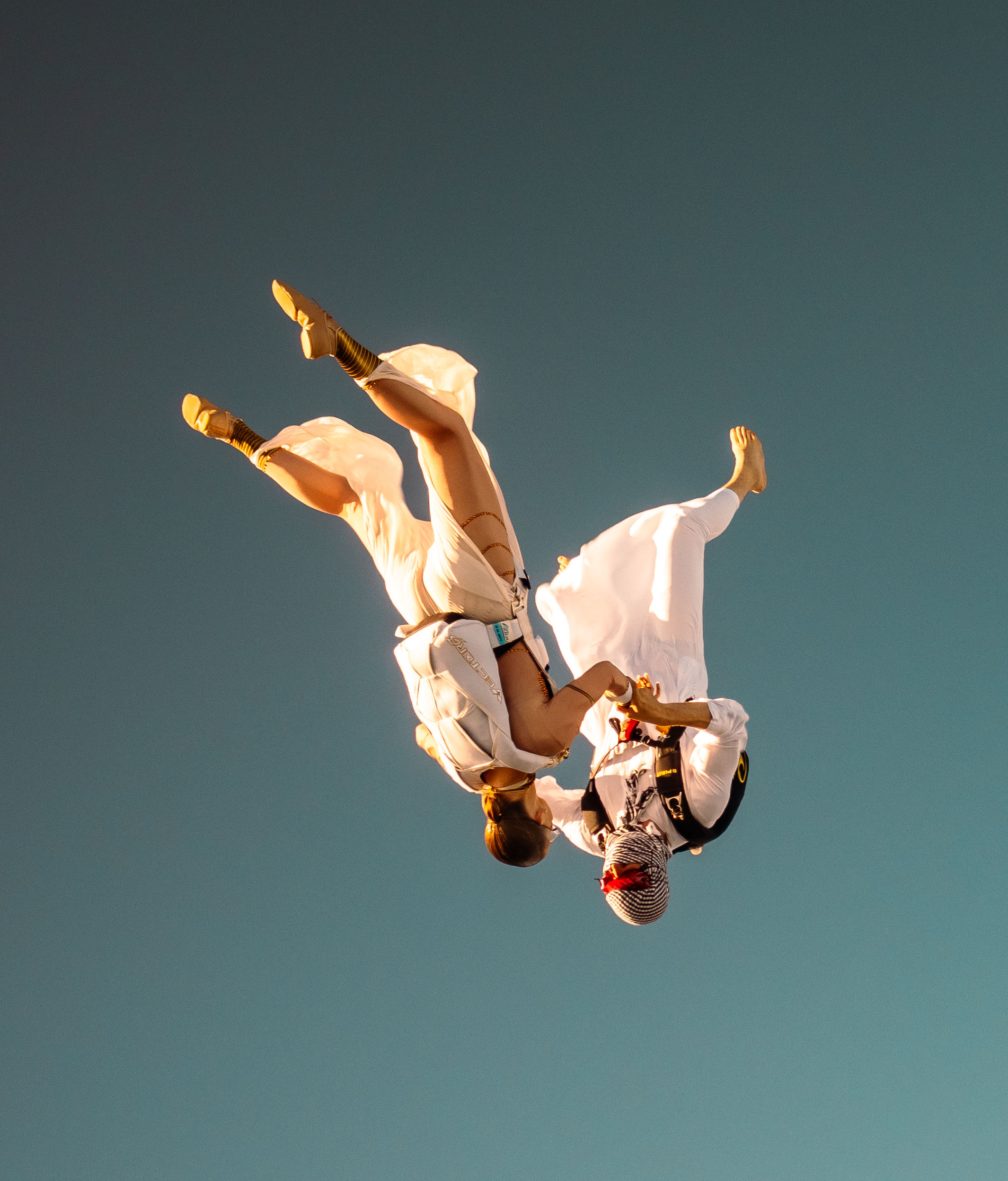
Unique Clouds — Al Qassim
Unique Clouds is Saudi Arabia’s leading skydiving operator, registered and licensed by the General Authority of Civil Aviation (GACA) and a member of the United States Parachute Association (USPA). Based in Al Qassim, about 350 km northwest of Riyadh, the company offers tandem jumps over the Qassim countryside with experienced instructors.
Three packages are available:
| Package | Price (SAR) | What’s Included |
|---|---|---|
| Standard | 1,800 | Tandem skydive with qualified instructor |
| Premium | 2,000 | Tandem skydive + hand-cam video and edited photos |
| Deluxe | 2,300 | Tandem skydive + dual-angle outside video and photos (most popular) |
For those who want to progress beyond tandem, Unique Clouds offers an Accelerated Free Fall (AFF) programme at SAR 10,000, covering ground school plus eight jump levels — enough to qualify for autonomous solo jumps within a single week.
Requirements: Minimum age 18, valid passport or national ID, maximum weight 95–100 kg for tandem jumps. Book at least one week ahead during peak season (November–February).
Skydive Medina
Skydive Medina offers tandem jumps from a Cessna Caravan over the Medina region. This drop zone appeals to visitors combining a pilgrimage or Umrah trip with adventure activities. Views of volcanic harrats and date palm oases make this one of the Kingdom’s most scenic jumps.
Indoor Skydiving
If freefall from altitude feels like too big a first step, Saudi Arabia has indoor wind tunnels in Riyadh and Jeddah where you can experience the sensation of skydiving in a controlled vertical column of air. Sessions typically start from SAR 200 for two minutes of flight time — enough to learn body position before committing to the real thing.
Rock Climbing: Sandstone Towers and Granite Walls
Saudi Arabia’s climbing scene has exploded in the last three years. The Saudi Climbing and Hiking Federation has catalogued crags across multiple regions, and international route-setters have bolted hundreds of new lines. The landscape ranges from Wadi Rum-style sandstone towers in the northwest to granite boulder fields in the southern highlands — and most of it is still barely explored.
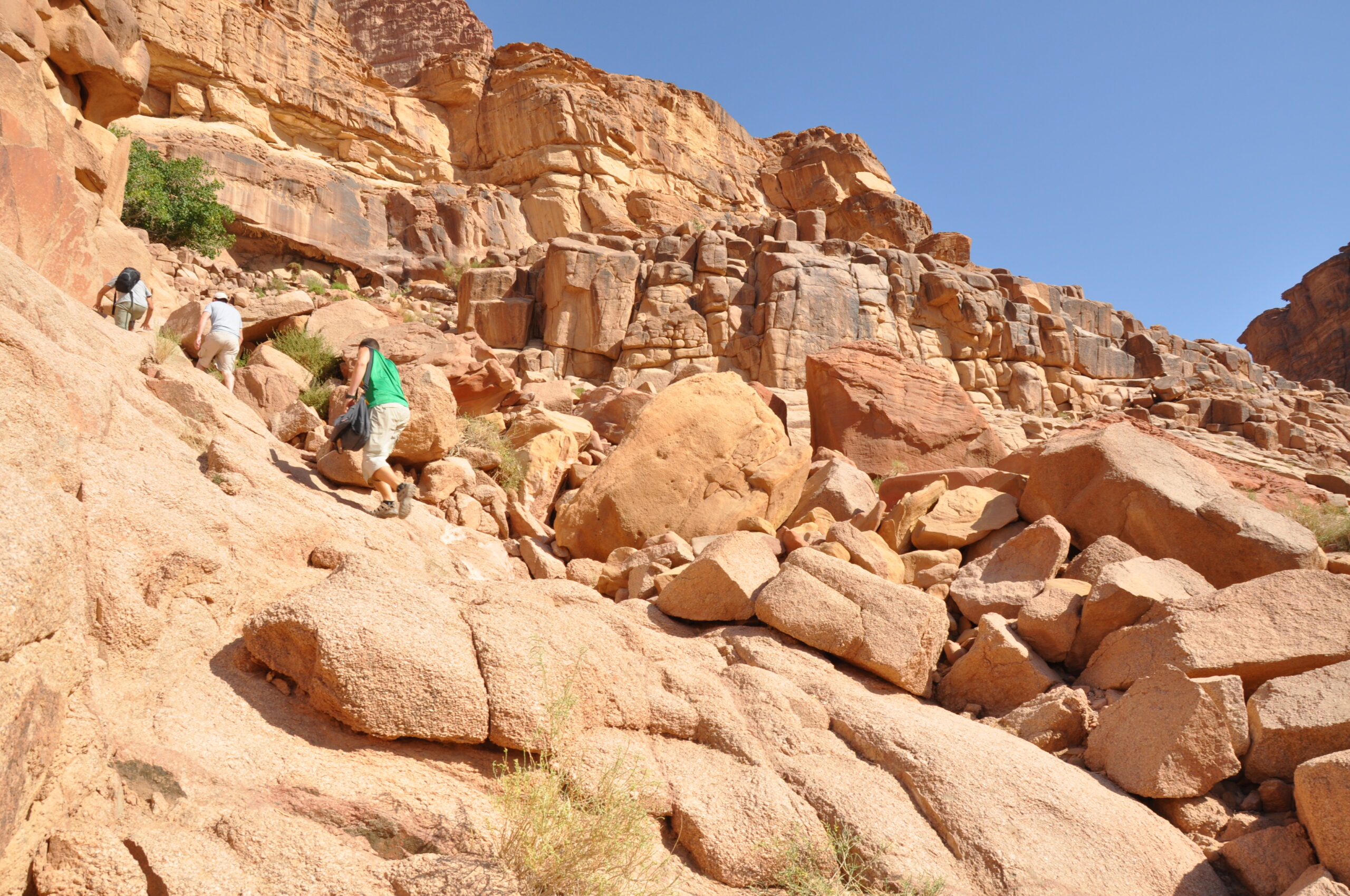
Jabal Hisma, NEOM — The Kingdom’s Premier Crag
Located in the Tabuk region within NEOM’s development zone, Jabal Hisma features towering sandstone pillars often compared to Jordan’s Wadi Rum. The crag sits at around 1,000 metres elevation, keeping temperatures manageable even into late spring. NEOM’s Rise 100 climbing festival brought 80 climbers together to open over 100 sport and traditional routes, with grades ranging from French 4a to 8a. The sandstone here offers phenomenal texture, with featured holds and crack systems that reward both sport climbers and trad enthusiasts.
For more detail on routes and access, see our dedicated rock climbing guide. If you are planning a broader trip to the northwest, our Tabuk travel guide covers logistics and accommodation.
Tanomah, Asir Mountains — Granite at Altitude
Tanomah sits at approximately 2,200 metres in the Asir highlands, where granite cliffs and boulder fields offer a completely different experience from the desert sandstone of the north. The crag at Al Sharaf features 42 unique lines and 11 extensions, with grades mostly between French 4 and 6c — making it excellent for intermediate climbers building their skills. A handful of harder test pieces reach 8b for visiting crushers.
AlUla Crag
The Medina region’s AlUla crag puts climbing within reach of the Kingdom’s most famous archaeological site. Routes here weave between the same Nabataean-era sandstone formations that make AlUla a UNESCO destination. The climbing is relatively new and developing fast — check local beta on Mountain Project or theCrag before visiting.
What to Bring
Most Saudi crags are sport-bolted, so a 70-metre rope, 16 quickdraws and a helmet will cover the majority of routes. Trad climbers heading to Hisma should bring a standard rack of cams and nuts. There are no gear shops near the crags — buy or rent everything in Riyadh or Jeddah before driving out.
Sandboarding: Riding the Red Dunes
Saudi Arabia’s deserts contain some of the tallest and most accessible sandboarding terrain on earth. The Kingdom’s signature dune fields — iron-oxide-stained red sand north of Riyadh, towering white crescents in the Empty Quarter, and coastal dunes along the Red Sea — offer every difficulty level from gentle beginner slopes to near-vertical faces that will challenge even experienced snowboarders.
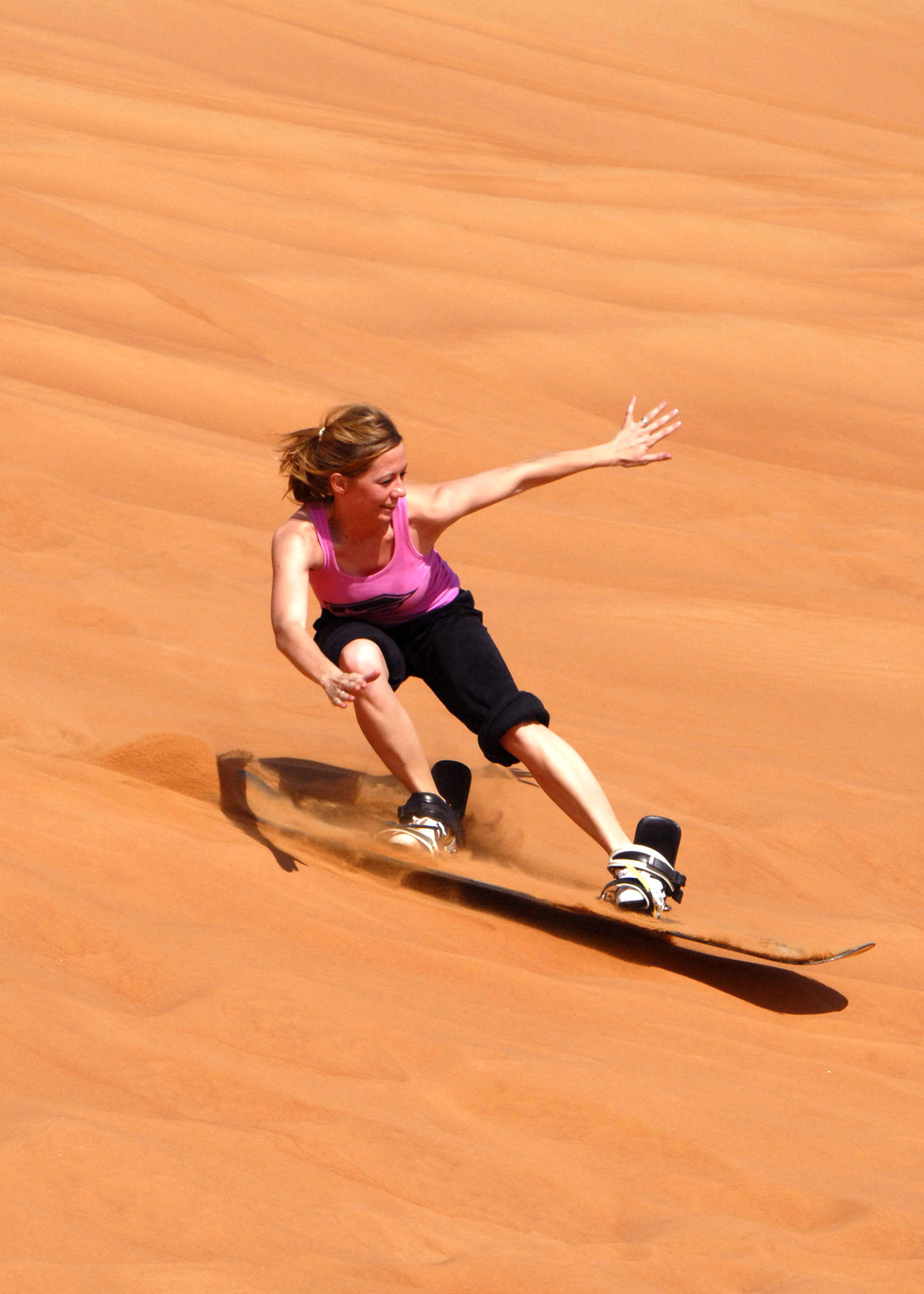
Red Sand Dunes, Riyadh
The Red Sand Dunes northeast of Riyadh are the Kingdom’s most accessible sandboarding terrain, about 90 minutes from central Riyadh. Iron oxide minerals give the sand its distinctive deep red colour, and dunes here rise above 100 metres. The area draws thousands of weekend visitors from the capital. Most tour operators running dune bashing and quad biking experiences include sandboarding as part of the package.
Techniques and Equipment
Two main approaches exist. Prone boarding — lying face-first on the board — requires no balance skill and is the recommended starting point. Even in the prone position, speeds on a steep dune can top 50 km/h. Stand-up boarding uses bindings (typically velcro straps rather than step-in mechanisms) and mimics snowboarding. The board base is coated with hard laminate, usually Formica, because sand destroys soft polyethylene within minutes.
Heat warning: Between June and September, midday sand surface temperatures can exceed 70°C. This will cause burns on exposed skin and melt equipment adhesives. Stick to the October–April season, or board at dawn/dusk in shoulder months.
Operators and Costs
Budget for a guided half-day desert trip including sandboarding, dune bashing and camel rides from SAR 175–300 (USD 45–80) per person from Riyadh. Operators include 365 Adventures, Ghazi Tours, Yalla Hike and ROAM (premium tier with bespoke itineraries). Most operators provide boards — you do not need to bring your own.
Paragliding: Mountain Thermals Over Asir
Saudi Arabia’s paragliding scene is centred on the Asir mountains in the southwest, where launch sites above 2,900 metres provide height differences of over 1,200 metres — among the longest tandem flights available in the Middle East. The Saudi Paragliding Federation, headquartered in Abha, oversees all non-motorised paragliding in the country, and ministerial approval in 2025 formally reopened the skies after a regulatory pause.
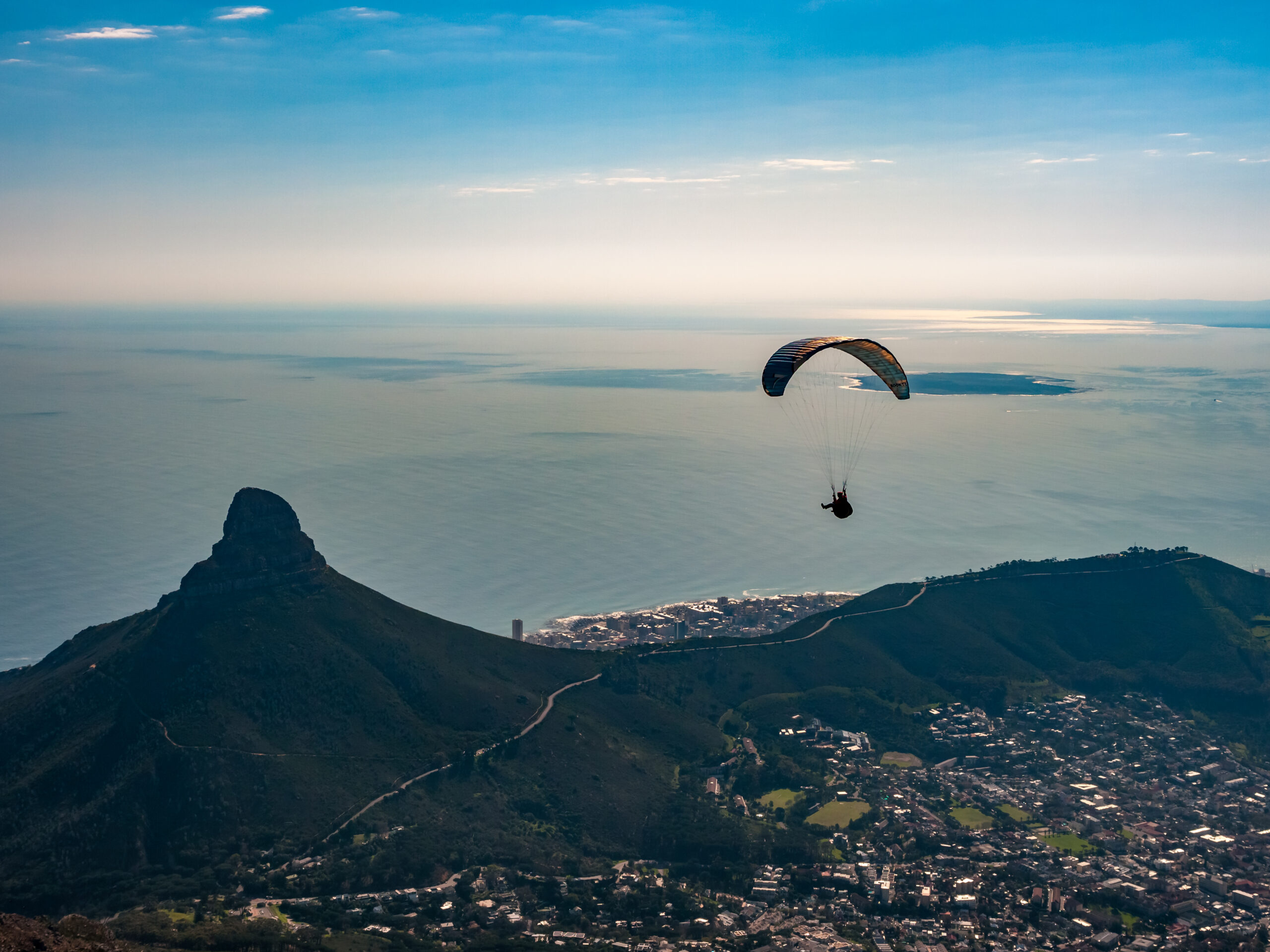
Top Launch Sites
- Al Soudah (Sawda), Abha — The Kingdom’s highest point at approximately 3,000 metres. The primary commercial tandem site, operated by Flying Mammut (Sports Flying Saudi Arabia) among others. Flights typically run from mid-afternoon to evening.
- Jabal Hada, Taif — A lower-altitude site at 900 metres, offering a different landscape and shorter flights. Good for visitors already in the Taif region.
- Al-Baha — Another highland site between Taif and Abha, with developing launch areas.
Costs and Requirements
Tandem flights generally run between SAR 300 and 500 (USD 80–130) per person. Weight limits are 25–105 kg for safety compliance. The best flying months are November to March, when weather conditions are most stable and thermal activity is predictable. No prior experience is needed for tandem — you fly with a licensed pilot who handles all controls.
For more detail, see our dedicated paragliding guide.
Dune Bashing and Off-Road Driving
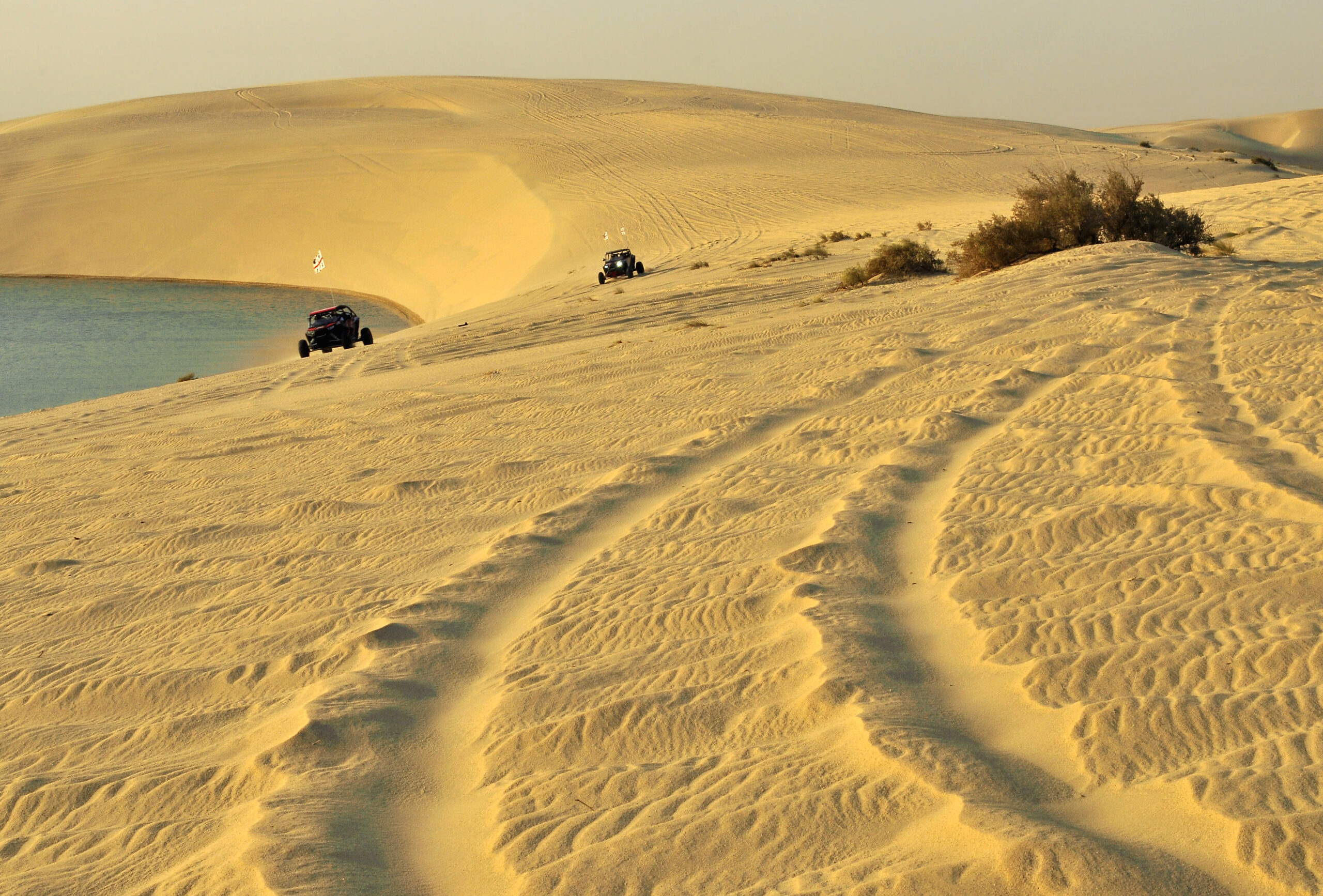
If sandboarding is the quiet cousin, dune bashing is the noisy one. Saudi Arabia’s desert terrain is purpose-built for high-speed 4×4 driving, quad biking and ATV adventures. The Red Sand Dunes near Riyadh see the heaviest traffic, but the Empty Quarter (Rub’ al Khali) — covering 430,000 square kilometres of Saudi territory alone — offers multi-day overland expeditions for serious off-roaders.
Quad Biking and ATV
Most desert safari operators near Riyadh offer quad biking as part of a half-day package. High-quality ATVs are available at the Red Sand Dunes in the Nisah area, about an hour from central Riyadh. Tour prices start from approximately SAR 200–250 (USD 55–65) and typically include instruction, snacks and equipment.
For dedicated off-road enthusiasts, see our full 4×4 off-roading guide and quad biking and dune bashing guide.
Empty Quarter Expeditions
The Rub’ al Khali is one of the world’s largest sand deserts, with dunes reaching over 250 metres. Multi-day overland crossings typically require a convoy of at least two 4×4 vehicles, experienced guides and pre-positioned fuel and water. This is not a casual day trip — it is a genuine expedition that ranks among the toughest off-road challenges anywhere. Operators like Husaak Adventures and Ootlah run organised trips.
Zip Lining: Flying Across Mountain Valleys
The Asir region leads the Kingdom’s zip-lining scene. At Al Soudah, Saudi Arabia’s highest point, zip lines cross deep valleys at altitudes above 2,500 metres, with the green terraced hillsides of the southwest stretching below. The region also hosts seasonal adventure festivals with temporary installations.
For a full guide to the Kingdom’s zip-line parks, see our zip-lining locations page. If you are combining zip lining with a cable car ride, our Abha cable car guide covers the adjacent aerial attraction.
Canyoning and Wadi Descents
Saudi Arabia’s western escarpment is cut by hundreds of wadis — seasonal river canyons that range from gentle scrambles to technical rope-assisted descents through slot canyons and over waterfalls. Canyoning is still a young sport in the Kingdom, but operators are opening new routes each season, particularly in the Asir and Hejaz mountain ranges.
Key areas include wadis near Taif, the Asir highlands, and Wadi Lajab in the Jizan region — a narrow gorge with permanent pools and towering walls that has become one of Saudi Arabia’s most photographed natural attractions. See our dedicated canyoning guide for routes and operators.
Cave Exploration: Lava Tubes and Sinkholes
The Harrat volcanic fields west of Riyadh contain some of the longest lava tubes in the Middle East. These natural tunnels formed by ancient basalt flows run for kilometres underground, with chambers large enough to stand in. The Saudi Geological Survey has documented dozens of caves, and guided exploration trips are becoming increasingly available.
Our cave exploration guide covers the best accessible lava tubes, safety requirements and what to bring.
Trail Running and Desert Ultra-Marathons
Saudi Arabia has a growing trail running and endurance racing scene, anchored by flagship events:
- AlUla Trail Race — Held each January against the ancient landscape of AlUla, featuring distances from 10 km up to a 100 km ultra-marathon through sandstone canyons and Nabataean terrain. This is the Kingdom’s most prestigious trail running event.
- Tuwaiq Ultra — Najd’s first ultra-marathon traverses the Tuwaiq Escarpment, highlighting the natural beauty and dramatic geology of the central plateau.
- Hejaz Overload — Organised by the Hejaz Ultra running club in Jeddah, this race takes runners through the sand dunes of Mastourah on the Red Sea coast.
Active running communities include Hejaz Ultra (Jeddah-based, focused on marathon-distance and above) and Jeddah Trail Runners (Saudi Arabia’s premier trail running group). Both organise regular group runs and can point visiting runners toward the best local trails. For mountain biking on similar terrain, see our mountain biking guide.
Watersports: Diving, Surfing and Kiteboarding
The Red Sea coastline offers its own category of extreme water activities. Saudi Arabia’s underwater world is one of the least-dived stretches of the Red Sea, with pristine reefs, wreck diving and visibility that often exceeds 30 metres.
- Scuba diving — Yanbu and Jeddah lead the scene. The SS Iona wreck near Yanbu and the Ann Ann wreck off Jeddah are signature dives. See our scuba diving guide and Yanbu diving guide.
- Freediving — Schools on the Red Sea coast offer AIDA certification courses in warm, clear water. See our freediving guide.
- Kitesurfing — Consistent Red Sea winds make locations like Umluj and the KAUST area popular with kiteboarders. See our kitesurfing guide.
- Surfing — Yes, Saudi Arabia has surf. Our surfing guide covers where to find waves on the Red Sea coast.
Hot Air Ballooning Over AlUla
While perhaps less extreme than skydiving, a dawn hot-air balloon flight over AlUla’s sandstone tombs and rock formations ranks among the most spectacular aerial experiences in the Middle East. Flights typically launch at sunrise during the AlUla Winter Season (October–March) and drift over the Hegra UNESCO World Heritage Site. See our AlUla balloon guide for booking details.
Practical Information for Extreme Sports Visitors
Best Season
The universal rule across all outdoor extreme sports in Saudi Arabia: October to April. Summer temperatures routinely exceed 45°C in desert areas, and sand surface temperatures can burn exposed skin. Mountain activities in Asir can extend slightly into May, as altitude keeps temperatures lower.
Visa and Entry
Most adventure travellers will enter on a Saudi tourist e-visa, available to 63 nationalities and valid for one year with multiple entries of up to 90 days each. The e-visa costs SAR 535 (about USD 142) including medical insurance. Apply online — approval typically takes under 30 minutes.
Getting Around
Extreme sports locations are spread across the Kingdom, and many are remote. Renting a car is essential for climbing crags, desert dune sites and off-road trails. For mountain activities in Asir, fly to Abha (AHB) and drive from there. NEOM’s crags are accessible via Tabuk or the new NEOM Bay airport.
Travel Insurance
Standard Saudi tourist visas include basic medical insurance, but this will not cover extreme sports injuries or evacuation from remote areas. Purchase a policy that explicitly covers adventure activities — particularly skydiving, rock climbing and off-road driving. Our travel insurance guide compares providers.
What to Pack
Sun protection is non-negotiable year-round: SPF 50+, wide-brim hat, UV-rated sunglasses. For desert activities, bring far more water than you think you need — 3 litres minimum for a half-day trip. Climbing-specific gear should be purchased in Riyadh or Jeddah, as there are no outdoor shops near the crags. See our full packing list for climate-specific recommendations.
Safety and Medical
Saudi Arabia has excellent hospital infrastructure in major cities. Private hospitals in Riyadh, Jeddah and Dammam are world-class. However, remote desert and mountain locations may be hours from medical care. Carry a first-aid kit, satellite communicator and ensure someone knows your itinerary for any backcountry activity.
Extreme Sports Comparison Table
| Activity | Best Location | Cost (SAR) | Skill Level | Season |
|---|---|---|---|---|
| Tandem skydiving | Al Qassim | 1,800–2,300 | Beginner | Oct–Apr |
| Rock climbing | NEOM / Tanomah | Free (own gear) | All levels | Oct–Apr |
| Sandboarding | Red Sand Dunes, Riyadh | 175–300 (guided) | Beginner | Oct–Mar |
| Paragliding | Al Soudah, Abha | 300–500 | Beginner (tandem) | Nov–Mar |
| Dune bashing / ATV | Red Sand Dunes, Riyadh | 200–250 | Beginner | Oct–Apr |
| Zip lining | Al Soudah, Asir | 100–200 | Beginner | Year-round |
| Canyoning | Asir / Taif / Wadi Lajab | 300–500 (guided) | Intermediate | Oct–Apr |
| Ultra-marathon | AlUla | Entry fee varies | Advanced | Jan |
| Scuba diving | Yanbu / Jeddah | 300–600 | Certified | Year-round |
| Kitesurfing | Umluj / KAUST | 200–400 | Intermediate | Oct–May |
Explore More Saudi Arabia Travel Guides
- Saudi Arabia Travel Guide 2026 — The complete guide to visiting the Kingdom
- Rock Climbing in Saudi Arabia — Detailed crag guides, route grades and gear advice
- Paragliding in Saudi Arabia — Launch sites, schools and booking details
- Quad Biking and Dune Bashing — Best desert operators and tour packages
- 4×4 Off-Roading in Saudi Arabia — Tracks, vehicles and Empty Quarter expeditions
- Canyoning in Saudi Arabia — Wadi descents and tour operators
- Scuba Diving in Saudi Arabia — Red Sea sites, wrecks and operators
- Best Hiking Trails — From Asir to AlUla, the Kingdom’s top walks
- Saudi Arabia Visa Guide — Every visa type explained