
Saudi Arabia has become one of the fastest-growing destinations for Chinese travellers. In 2023, around 140,000 Chinese tourists visited the Kingdom — and by early 2024 that figure had already surpassed 290,000. With direct flights now linking Beijing and Guangzhou to Riyadh and Jeddah, growing UnionPay and Alipay acceptance, and a tourist e-visa that takes minutes to process, the barriers that once made Saudi Arabia feel remote from China have largely disappeared. This guide — part of our comprehensive Saudi Arabia travel guide — covers everything a Chinese visitor needs: visa procedures, flight options, payment methods, cultural etiquette, language tips, and the destinations that are drawing the most interest from Chinese travellers in 2026.
Best Time to Visit: October to March (15–25°C in most cities; avoid June–August when temperatures exceed 45°C)
Getting There: Direct flights from Beijing (Saudia, 4x weekly to Jeddah; 2x weekly to Riyadh) and Guangzhou (daily services). Riyadh Air launching Beijing and Shanghai routes in 2026.
Visa Required: Yes — tourist e-visa (online in minutes, valid 1 year, 90-day stays)
Budget: USD 80–200 per day (budget to mid-range); luxury travellers should budget USD 350+
Must-See: AlUla’s Hegra tombs, Riyadh’s Diriyah heritage quarter, Jeddah’s Al-Balad old town
Avoid: Travelling June–August without heat preparation; assuming WeChat Pay works everywhere (carry cash and cards)
Visa and Entry Requirements for Chinese Citizens
Chinese passport holders are eligible for Saudi Arabia’s tourist e-visa, which can be applied for online through the official Visit Saudi portal (visa.visitsaudi.com). The e-visa is also available on arrival at Saudi international airports, though applying online before departure is faster and avoids potential queues.
E-Visa Key Details
- Validity: 1 year from the date of issue, multiple entry
- Maximum stay: 90 days per entry
- Cost: SAR 535 (approximately USD 142 / CNY 1,030), including medical insurance
- Processing time: Usually within 5–30 minutes for online applications
- Passport requirement: Must be valid for at least 6 months from date of arrival
Tip for Chinese travellers: Saudi Arabia conducts biometric fingerprinting at all ports of entry. This is standard procedure and takes only a few minutes. Have your e-visa confirmation, return flight booking, and hotel reservation readily accessible on your phone.
For a full breakdown of all visa types — including business, work, and Hajj visas — see our Saudi Arabia visa guide.
Reciprocal Visa-Free Arrangements
Since late 2023, China has offered unilateral visa-free entry to Saudi citizens for stays up to 30 days. While Saudi Arabia has not reciprocated with visa-free access for Chinese citizens, the e-visa process is straightforward and rarely results in rejections for standard tourist applications.
Getting to Saudi Arabia from China
Direct Flights
Flight connections between China and Saudi Arabia have expanded significantly since 2023:
| Route | Airline | Frequency | Flight Time |
|---|---|---|---|
| Beijing (PKX) → Jeddah (JED) | Saudia | 4x weekly | ~10 hours |
| Beijing (PKX) → Riyadh (RUH) | Saudia | 2x weekly | ~9.5 hours |
| Guangzhou (CAN) → Jeddah (JED) | Saudia / China Southern | Daily | ~10.5 hours |
| Beijing / Shanghai → Riyadh | Riyadh Air (new) | Launching 2026 | ~9–10 hours |
Booking tip: Chinese travellers can book through Trip.com (携程), which has a direct partnership with the Saudi Tourism Authority. Prices are often competitive, and the app interface is fully in Mandarin. One-way flights typically range from CNY 2,500–5,000.
Connecting via Gulf Hubs
If direct flights don’t align with your schedule, connecting through Dubai (Emirates), Doha (Qatar Airways), or Abu Dhabi (Etihad) is a popular alternative. These hubs offer onward flights to Riyadh, Jeddah, and Medina multiple times daily. Many Chinese cities — including Shanghai, Chengdu, Shenzhen, and Hangzhou — have direct services to these Gulf hubs.
Arrival and Airport Tips
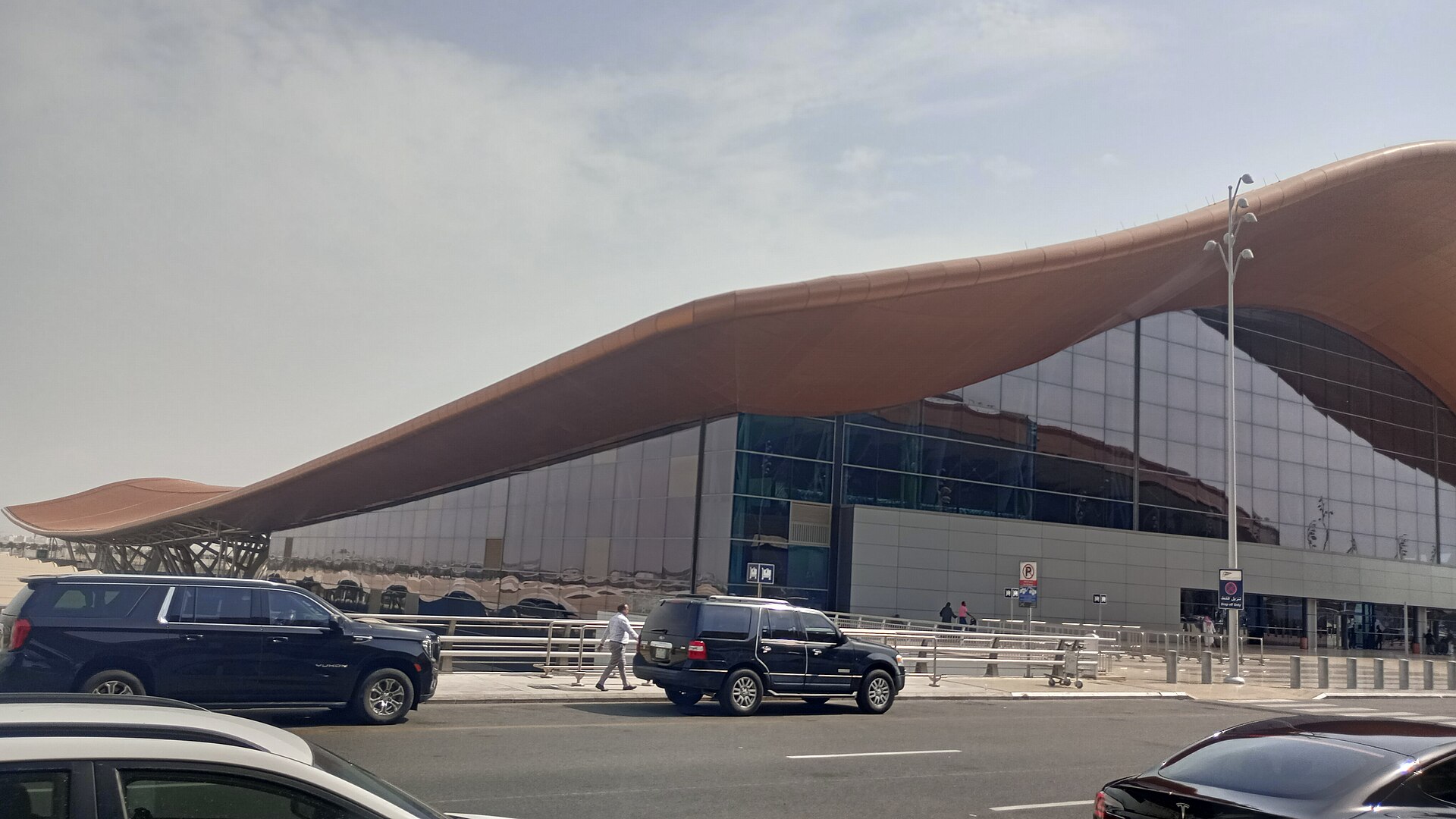
Saudi Arabia’s main international airports — King Khalid (Riyadh), King Abdulaziz (Jeddah), and Prince Mohammed bin Abdulaziz (Medina) — are modern and well-signposted in Arabic and English. At Riyadh and Jeddah, you’ll find:
- Visa-on-arrival counters (if you haven’t applied online)
- Currency exchange and ATMs accepting UnionPay
- SIM card kiosks from STC, Mobily, and Zain
- Ride-hailing pick-up zones (Uber and Careem both operate)
Money, Payments and Chinese Payment Platforms
The Saudi currency is the Saudi Riyal (SAR), pegged to the US dollar at approximately 3.75 SAR = 1 USD. As of 2026, 1 SAR ≈ 1.93 CNY.
UnionPay (银联)
UnionPay has the widest Chinese payment acceptance in Saudi Arabia. Through a cooperation agreement with Bank Albilad, UnionPay cards are accepted at all Bank Albilad POS terminals and ATMs across the Kingdom. Major hotels, shopping malls, and international retail chains generally accept UnionPay. Coverage exceeds 60 percent of local merchants.
Alipay (支付宝) and WeChat Pay (微信支付)
The Saudi Tourism Authority signed a memorandum of understanding with Alipay+ to expand cashless payment options for Chinese visitors. In practice, Alipay acceptance is growing but remains limited to major tourist-facing businesses — luxury hotels, large malls, and duty-free shops. WeChat Pay coverage is even more limited.
Practical advice: Do not rely solely on Alipay or WeChat Pay. Carry a UnionPay debit or credit card as your primary payment method, and keep SAR 500–1,000 in cash for smaller shops, taxis, and markets. Visa and Mastercard are also widely accepted.
ATMs and Currency Exchange
ATMs are abundant in Saudi cities. Machines operated by Al Rajhi Bank, Saudi National Bank (SNB), and Bank Albilad accept UnionPay cards for cash withdrawals. Airport currency exchanges offer reasonable rates, but withdrawing from ATMs typically gives better exchange rates. Notify your Chinese bank before travelling to avoid card blocks on international transactions.
Mobile Connectivity and Apps
SIM Cards and eSIM
Saudi Arabia requires identity registration for all SIM purchases — bring your passport. The three major carriers are:
- STC (stc): Largest network, best coverage nationwide. Tourist packages from SAR 75 (~CNY 145) for 15 GB / 30 days.
- Mobily: Good urban coverage, competitive data packages. Tourist plans from SAR 70.
- Zain: Strong in major cities, slightly cheaper options.
If your phone supports eSIM, providers like Airalo and Holafly offer Saudi Arabia data plans starting from around USD 5 (1 GB / 7 days), which you can activate before leaving China.
Important for Chinese travellers: Unlike China, Saudi Arabia does not block Google, WhatsApp, Instagram, YouTube, or other international apps. You will not need a VPN. However, VoIP calls (including WeChat voice/video calls) work normally, so staying in touch with family in China is easy. WeChat, Baidu Maps, and other Chinese apps function without restrictions in Saudi Arabia.
Useful Apps to Download Before You Go
| App | Purpose | Notes |
|---|---|---|
| Google Maps / 高德地图 | Navigation | Google Maps has excellent Saudi coverage; Baidu Maps does not |
| Google Translate | Arabic ↔ Chinese translation | Download Arabic offline pack before departure |
| Uber / Careem | Ride-hailing | Careem (local) often cheaper; both accept cards |
| Trip.com (携程) | Flights, hotels, activities | Full Mandarin interface, Saudi Tourism Authority partner |
| Visit Saudi | Official tourism app | Events, attractions, itineraries |
| Hungerstation / Jahez | Food delivery | Arabic/English interface; similar to Meituan/Ele.me |
Language: Getting By Without Arabic
The Language Situation
Arabic is the official language, and English is widely spoken in hotels, malls, airports, and tourist areas. Mandarin is not commonly spoken, but Saudi Arabia has been actively recruiting Chinese-speaking staff for the tourism sector through its Almosafer Academy training programme. You’re most likely to find Mandarin-speaking assistance at:
- Major luxury hotels (Ritz-Carlton, Four Seasons, Shangri-La)
- Tourist information desks in Riyadh and Jeddah
- Organised tour groups through Chinese travel agencies
Practical Language Tips
- Download Google Translate’s Arabic offline pack before leaving China (Google Translate is blocked in mainland China, so download it after clearing immigration or use a VPN before departure)
- Learn a few Arabic greetings: As-salamu alaykum (peace be upon you) opens doors everywhere
- Most restaurant menus in cities have English; photographs of dishes are common
- Numbers and prices are usually displayed in Western (Arabic) numerals, identical to those used in China
Time Difference
Saudi Arabia is 5 hours behind China (UTC+3 vs UTC+8). When it’s noon in Beijing, it’s 7:00 AM in Riyadh. Saudi Arabia does not observe daylight saving time, so the gap stays constant year-round.
Cultural Etiquette: What Chinese Visitors Should Know
Saudi culture has much in common with Chinese values — hospitality, respect for elders, and the importance of family. But there are distinct differences that visitors should understand.
Dress Code
- Women: No longer legally required to wear an abaya, but modest clothing is expected — cover shoulders, knees, and cleavage. At religious sites, an abaya and headscarf are still required. Lightweight, loose fabrics are ideal in the heat.
- Men: Cover shoulders and knees. Sleeveless vests and very short shorts are not appropriate in public.
- At the beach or pool: Resort and hotel pools have relaxed dress codes, including swimwear. Public beaches vary — check locally.
Social Customs
- Greetings: Saudis greet same-gender visitors with a handshake and often As-salamu alaykum. Cross-gender physical greetings are generally avoided — wait for the other person to initiate.
- Right hand: Use your right hand for eating, passing items, and greeting. The left hand is considered impolite for these actions.
- Photography: Do not photograph people — especially women — without explicit permission. Photographing military installations and government buildings is prohibited.
- Public displays of affection: Avoid in public, even between married couples.
- Pointing: Pointing with a single finger is considered rude. Use an open hand to gesture.
Hospitality and Dining
If a Saudi host offers you Arabic coffee (qahwa) and dates, accept graciously — this is a deeply rooted tradition of hospitality. Your small cup will be refilled until you gently rock it side to side, signalling you’ve had enough. Refusing food or drink from a host can be seen as impolite — accept at least a small taste.
Cultural parallel: Chinese kèqi (客气) culture — the polite refusal and insistence dynamic — has an almost exact equivalent in Saudi hospitality. The host will insist; accepting shows respect.
Religion and Ramadan
Saudi Arabia is the custodian of Islam’s two holiest cities, Mecca and Medina. Non-Muslims are not permitted to enter Mecca or Medina’s sacred areas. During Ramadan (the Islamic fasting month, which shifts annually), eating, drinking, and smoking in public during daylight hours should be avoided, though hotels typically maintain private dining areas for guests. Ramadan is also a fascinating cultural experience — the iftar (fast-breaking) meal at sunset is celebratory and visitors are often welcomed to join.
Food: What to Eat and Where to Find Chinese Cuisine
Saudi and Middle Eastern Food
All food in Saudi Arabia is halal by default — there’s no need to seek halal certification, which is a comfort for Muslim Chinese travellers and a non-issue for others. The cuisine is flavourful and generous:
- Kabsa: Saudi Arabia’s national dish — spiced rice with lamb, chicken, or fish. Similar in concept to Chinese pilaf (抓饭).
- Mandi: Slow-cooked meat with rice, originally from Yemen, hugely popular in Saudi restaurants.
- Shawarma: Wrapped grilled meat — the Saudi fast food staple. Widely available and cheap (SAR 5–15).
- Foul medames: Mashed fava beans with olive oil and spices — a hearty breakfast dish.
- Arabic coffee and dates: Served everywhere; the coffee is light, cardamom-spiced, and very different from Chinese tea.
Chinese Restaurants in Saudi Arabia
Major Saudi cities have a growing Chinese restaurant scene, catering both to the Chinese expatriate community and to locals who have developed a taste for Chinese cuisine:
In Riyadh:
- The Hong (Ritz-Carlton Riyadh) — Upscale Chinese fine dining with contemporary Cantonese and Sichuan dishes
- Hualan Restaurant (Centria Mall, Olaya) — Popular for dim sum and noodle dishes, semi-open kitchen
- Durrat Al China — Considered one of Riyadh’s best Chinese restaurants, staffed by Chinese chefs
- Golden Dragon — Established Cantonese restaurant with a loyal following
In Jeddah:
- Gulf Royal Chinese Restaurant — Operating since 1977, one of the oldest Chinese restaurants in the Kingdom
- Chinwa — Modern Chinese cuisine with a Saudi twist
Note: While these restaurants offer familiar flavours, don’t expect exact replicas of home cooking — all meat is halal-slaughtered, pork is unavailable anywhere in Saudi Arabia, and alcohol is prohibited nationwide. Dishes are adapted accordingly. If you rely on specific Chinese condiments (老干妈, 豆瓣酱), consider packing small quantities in checked luggage.
Top Destinations for Chinese Visitors
Riyadh (利雅得)
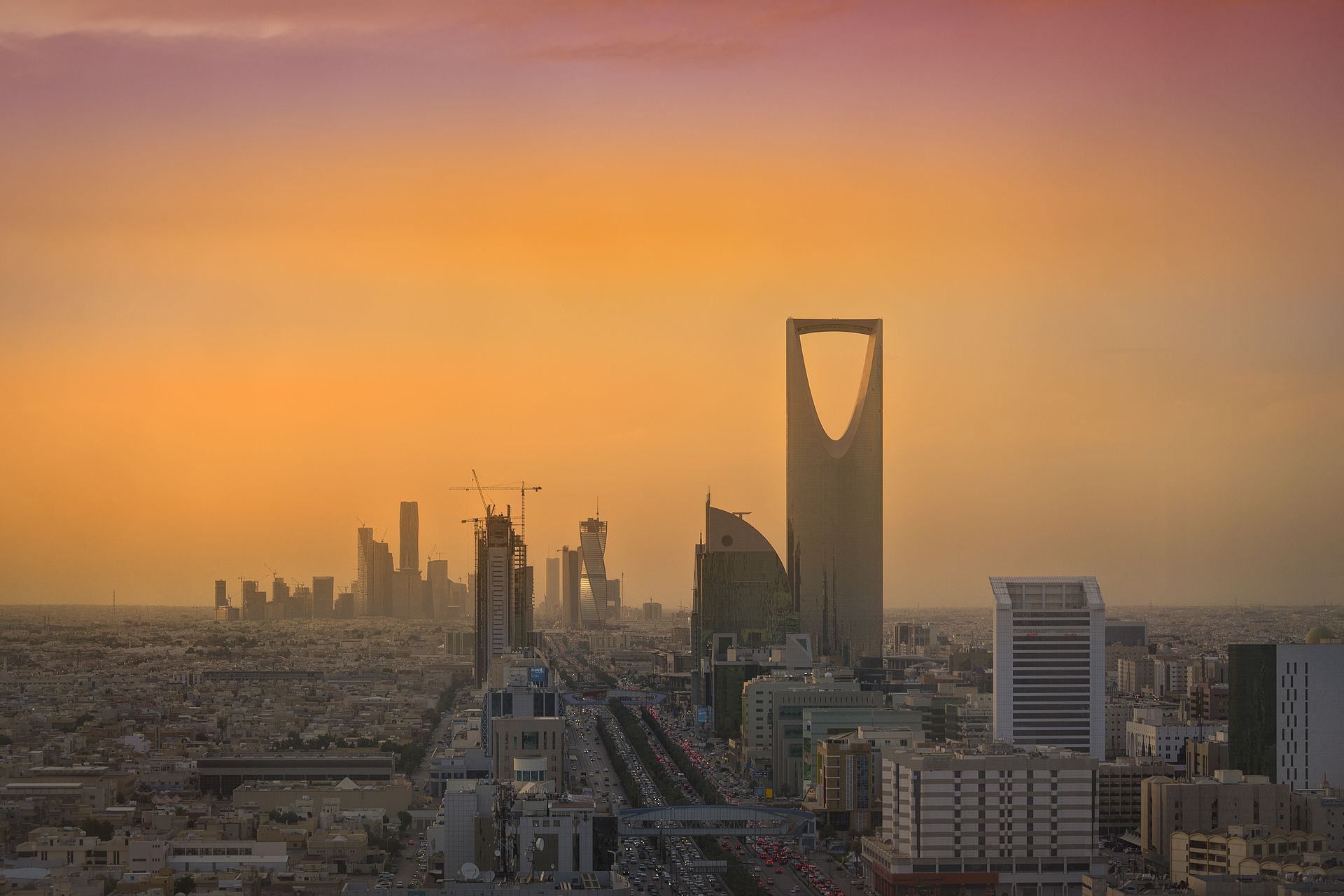
Riyadh, the capital, is where modern Saudi ambition is most visible. The Kingdom Centre Tower offers panoramic skyline views from its Sky Bridge. Diriyah, a UNESCO World Heritage Site on the outskirts, showcases the mud-brick origins of the Saudi state — the kind of ancient architecture that resonates with Chinese visitors familiar with their own heritage sites. The National Museum of Saudi Arabia provides an excellent overview of Arabian history. For shopping, Boulevard Riyadh City is a massive entertainment and retail district that rivals anything in Shanghai or Beijing.
Jeddah (吉达)
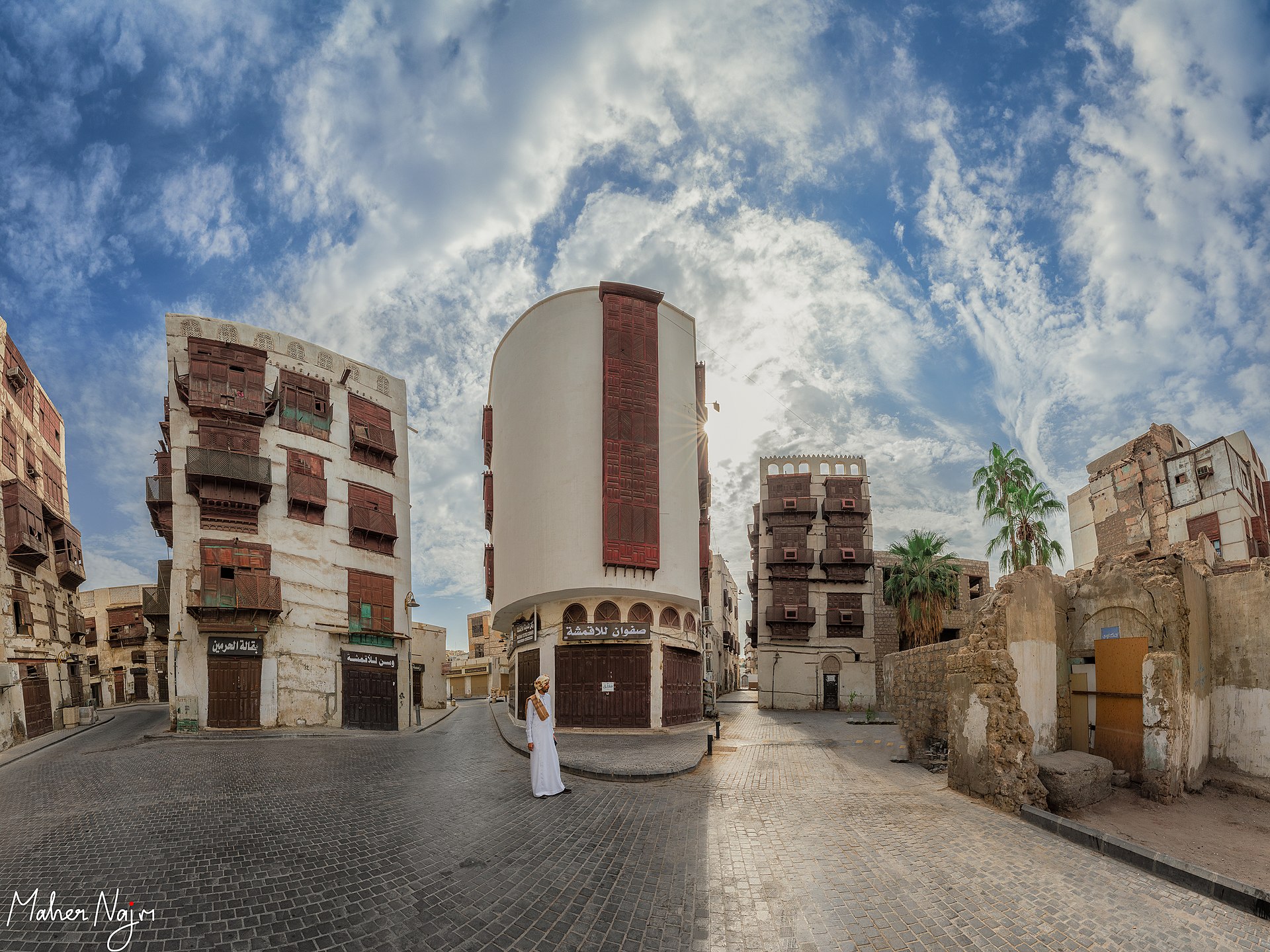
Jeddah sits on the Red Sea and has a more relaxed, cosmopolitan character. The Al-Balad historic quarter — a UNESCO World Heritage Site — features coral-stone townhouses with carved wooden balconies (rawasheen) unlike anything in China. The Jeddah Corniche stretches 30 kilometres along the waterfront, with the King Fahd Fountain shooting water 312 metres into the air. The Red Sea diving off Jeddah’s coast is world-class.
AlUla (欧拉)
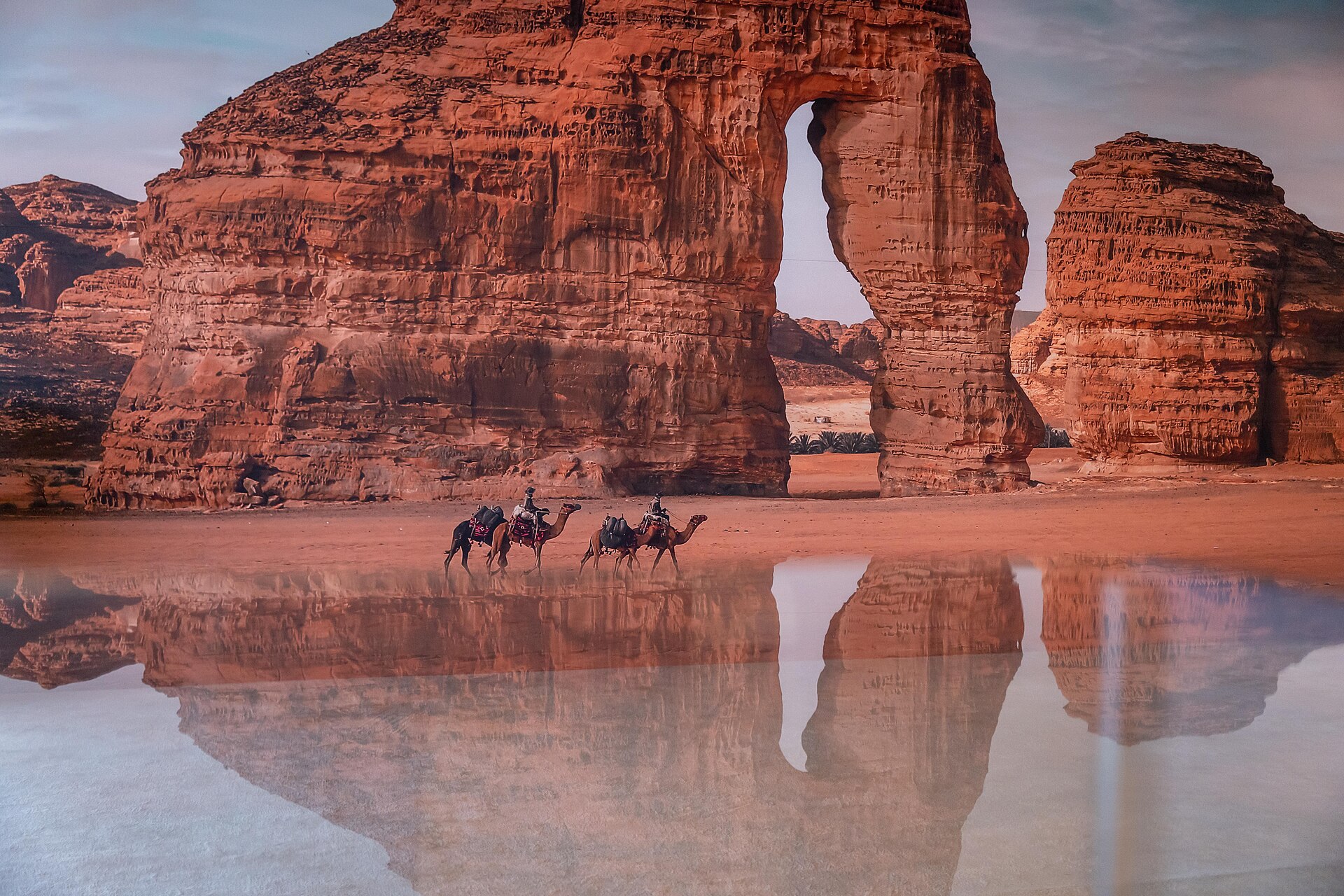
AlUla is Saudi Arabia’s premier heritage destination and the one that generates the most excitement among Chinese visitors who have seen it on Douyin and Xiaohongshu. The Hegra archaeological site — Saudi Arabia’s first UNESCO World Heritage Site — features 111 monumental Nabataean tombs carved into sandstone cliffs over 2,000 years ago. Elephant Rock (Jabal Alfil) is a stunning natural formation that has become one of Saudi Arabia’s most photographed landmarks. The AlUla travel guide covers the complete visitor experience.
The Red Sea Coast
Saudi Arabia’s Red Sea coast offers pristine coral reefs and marine life that rival the Maldives or Great Barrier Reef. The diving and snorkelling guide covers the best sites. For non-divers, glass-bottom boat trips and coastal resorts provide a more relaxed way to enjoy the turquoise waters.
The Asir Highlands
For a dramatic contrast to the desert, Abha and the Asir region sit at 2,200 metres elevation with cool mountain air, misty forests, and terraced agriculture reminiscent of southern China’s rice terraces. Temperatures here rarely exceed 30°C even in summer, making it a year-round destination.
NEOM and Tabuk
The Tabuk region in the northwest is Saudi Arabia’s emerging frontier — home to the NEOM megaproject and dramatic Hejaz railway ruins. While much of NEOM is still under construction, the surrounding landscapes of red sandstone canyons and archaeological sites are already accessible.
Accommodation
Saudi Arabia’s hotel landscape ranges from international luxury chains to budget-friendly serviced apartments. Chinese visitors should know:
- Luxury: All major international brands are present — Ritz-Carlton, Four Seasons, Shangri-La, Hilton, Marriott. Prices in Riyadh and Jeddah: SAR 800–3,000+ / night (CNY 1,550–5,800+).
- Mid-range: Holiday Inn, Novotel, Radisson. SAR 300–700 / night (CNY 580–1,350).
- Budget: Serviced apartments and local hotels from SAR 150–300 / night (CNY 290–580).
- Trip.com (携程) offers the widest Chinese-language booking options for Saudi hotels, often with Chinese customer service.
Tip: Many Saudi hotels provide electric kettles and instant noodle-friendly setups — a detail that matters to Chinese travellers accustomed to hot water availability. If in doubt, request a kettle at check-in. Hot water (开水) from the minibar kettle is standard in four-star and above hotels.
Getting Around
Within Cities
- Uber and Careem: Available in all major cities. Payment by card (UnionPay accepted on Uber). Careem is the local alternative — often cheaper.
- Riyadh Metro: The new Riyadh Metro system (launched 2024) connects major landmarks and is modern and air-conditioned. Fares from SAR 4–8 per journey.
- Car rental: Available from SAR 100/day. An international driving permit (IDP) is required alongside your Chinese licence. Roads are excellent but driving culture takes adjustment — be prepared for assertive lane changes.
Between Cities
- Domestic flights: Saudia, flynas, and flyadeal connect all major cities. Riyadh to Jeddah takes ~2 hours; Riyadh to AlUla ~1.5 hours. Book via Trip.com or directly.
- Haramain High-Speed Railway: Connects Mecca, Jeddah, King Abdullah Economic City, and Medina at 300 km/h. Comfortable and reminiscent of Chinese high-speed rail. Fares from SAR 50–150.
- Long-distance buses: SAPTCO operates intercity services. Affordable but much slower than flying.
Health, Safety and Practical Tips
Safety
Saudi Arabia is one of the safest countries in the Middle East for tourists. Violent crime against visitors is extremely rare. Petty theft exists but at much lower rates than most tourist destinations. Exercise the same common sense you would in any major Chinese city.
Health
- No mandatory vaccinations for Chinese tourists on standard tourist visas (Hajj/Umrah visas have additional requirements — see the Hajj 2026 guide)
- Tap water: Desalinated and technically safe, but bottled water is universal and cheap (SAR 1–2)
- Heat: The biggest health risk. Drink at least 3 litres of water daily, wear sunscreen, and avoid midday outdoor activities from May to September. Heatstroke is a real danger for visitors unaccustomed to 45°C+ temperatures.
- Pharmacies: Well-stocked and available in every neighbourhood. Many common Chinese medicines (感冒药, 止痛药) have equivalent over-the-counter options.
What to Pack
- Lightweight, modest clothing in natural fabrics
- A light scarf or shawl for women (useful at religious/conservative sites)
- Sunscreen SPF 50+, sunglasses, hat
- Universal power adapter — Saudi Arabia uses Type G plugs (same as UK), which differ from Chinese Type A/I plugs
- Portable charger — essential for long desert excursions
- Any specific Chinese snacks or condiments you can’t live without (check customs regulations — no pork products allowed)
Laws and Regulations to Know
- Alcohol: Completely prohibited. Do not attempt to bring any into the country.
- Pork: Prohibited. Do not bring pork products in your luggage.
- Drugs: Extremely severe penalties, including capital punishment. This applies to all narcotics without exception.
- Public behaviour: Public intoxication, loud obscene language, and public displays of affection can result in fines or detention.
- Photography: Do not photograph military sites, government buildings, or individuals without permission.
Best Time to Visit
The optimal window for Chinese visitors is October to March, when temperatures are comfortable (15–28°C in most regions) and outdoor activities are pleasant. This aligns well with China’s National Day Golden Week (early October) and the Chinese New Year / Spring Festival holiday (January–February).
| Season | Months | Temperature (Riyadh) | Verdict |
|---|---|---|---|
| Winter (peak) | Nov – Feb | 15–25°C | Ideal — cool, dry, perfect for sightseeing |
| Spring | Mar – Apr | 25–35°C | Good — warming but manageable; occasional sandstorms |
| Summer | May – Sep | 38–48°C | Extremely hot — indoor attractions only; Asir highlands are an exception |
| Autumn | Oct | 28–35°C | Good — cooling; tourism season begins |
Golden Week tip: China’s October Golden Week (October 1–7) falls right at the start of Saudi Arabia’s peak tourist season. Book flights and hotels at least 6–8 weeks in advance, as direct flights fill quickly during this period.
Sample Itineraries for Chinese Visitors
5-Day Highlights
- Day 1–2: Riyadh — Kingdom Centre Tower, National Museum, Diriyah UNESCO site, Boulevard entertainment district
- Day 3: Fly to AlUla — Hegra tombs, Elephant Rock at sunset, stargazing in the desert
- Day 4: AlUla — Dadan archaeological site, Old Town, Maraya concert hall
- Day 5: Fly to Jeddah — Al-Balad old town, Corniche, King Fahd Fountain, Red Sea seafood dinner
10-Day Comprehensive Tour
- Days 1–3: Riyadh — Capital sights, Edge of the World day trip, Saudi cuisine exploration
- Days 4–5: AlUla — Full heritage immersion, desert camping experience
- Days 6–7: Jeddah — Old town, corniche, Red Sea diving or snorkelling
- Day 8: Haramain train to Medina — For Muslim visitors: Prophet’s Mosque; for all: Hejaz Railway Museum, date markets
- Days 9–10: Abha / Asir — Mountain villages, hiking in the highlands, traditional Asir architecture
Useful Chinese-Arabic Phrases
| Chinese | Arabic | Pronunciation | Usage |
|---|---|---|---|
| 你好 | السلام عليكم | As-salamu alaykum | Hello (universal greeting) |
| 谢谢 | شكراً | Shukran | Thank you |
| 多少钱? | بكم؟ | Bi-kam? | How much? |
| 在哪里? | وين؟ | Wayn? | Where? |
| 好的 | طيب | Tayyib | OK / Good |
| 不要 | لا | La | No |
| 请帮帮我 | ساعدني من فضلك | Sa’idni min fadlak | Please help me |
| 洗手间在哪里? | وين الحمام؟ | Wayn al-hammam? | Where is the bathroom? |
Explore More Saudi Arabia Travel Guides
- Saudi Arabia Travel Guide 2026 — The complete guide to visiting the Kingdom
- Riyadh Travel Guide — Everything to see, do, and eat in the Saudi capital
- Jeddah Travel Guide — Red Sea gateway city with historic Al-Balad and the Corniche
- AlUla Travel Guide — Hegra tombs, Elephant Rock, and desert adventures
- Saudi Arabia Visa Guide — Every visa type explained, including e-visa application steps
- Saudi Arabia Hotels Guide — Where to stay across the Kingdom, from luxury to budget