
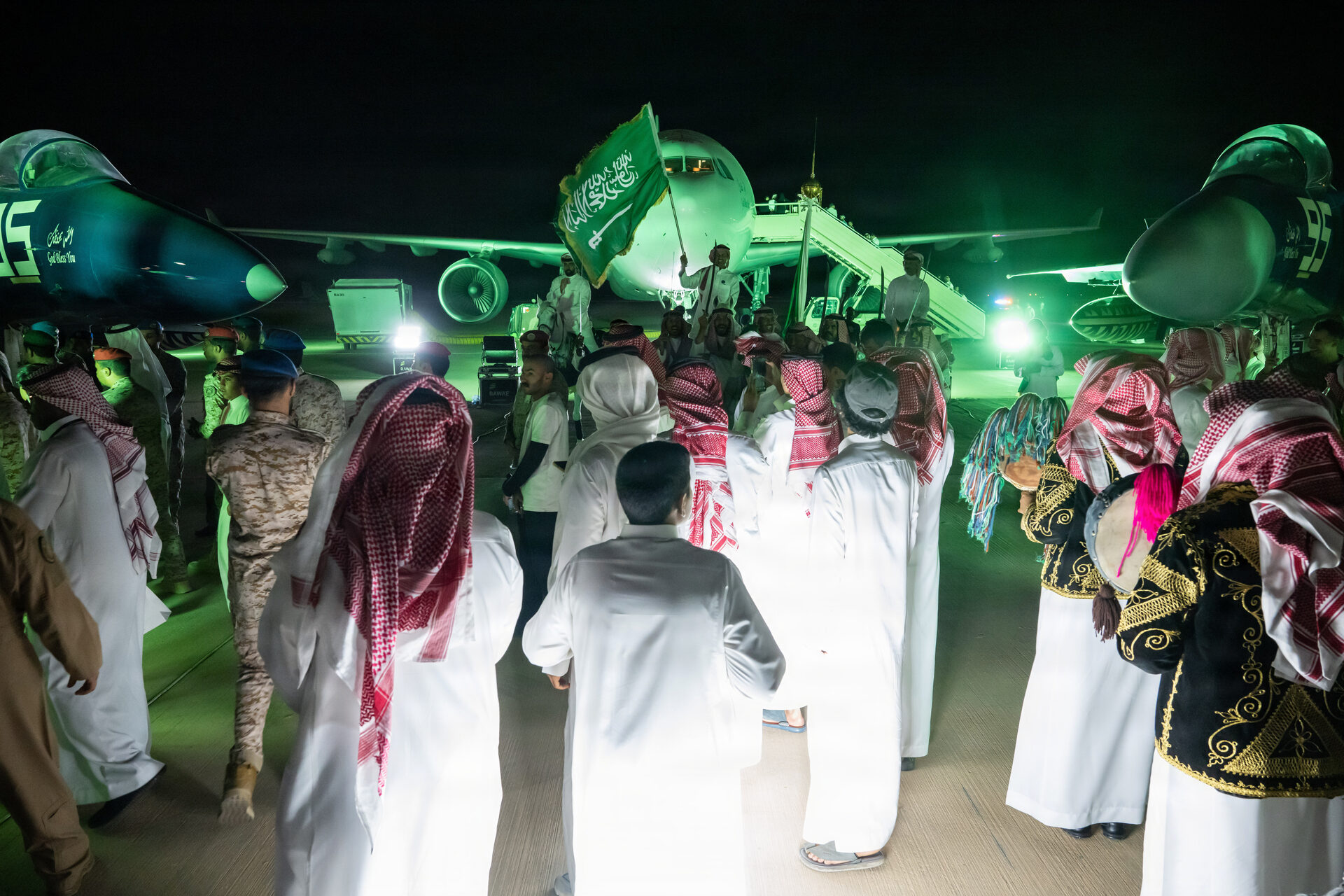
Every September 23, the Kingdom of Saudi Arabia erupts in green. Buildings glow emerald, fighter jets paint the sky in national colours, and millions of Saudis and residents pour into parks, boulevards, and waterfronts for the country’s biggest annual celebration. Saudi National Day marks the unification of the Kingdom in 1932 under King Abdulaziz bin Abdulrahman Al Saud, and it has grown into a spectacular multi-day event that rivals any national holiday on earth. Whether you are planning a wider Saudi Arabia travel itinerary or timing a trip specifically around the festivities, this guide covers everything you need to know — from city-by-city event breakdowns to practical tips for navigating the celebrations.
Date: September 23 every year (96th National Day in 2026, falling on a Wednesday)
Best Time to Arrive: September 21–22, to catch early events and secure accommodation
Getting There: Fly into Riyadh (RUH), Jeddah (JED), or Dammam (DMM) — all major cities host celebrations
Visa Required: Yes — tourist e-visa available online
Budget: $80–200/day (most National Day events are free; hotel prices spike)
Must-See: Riyadh fireworks at Umm Ajlan Park, Saudi Hawks air show, green-lit landmarks
Avoid: Driving during evening celebrations — traffic in Riyadh and Jeddah grinds to a standstill
What Is Saudi National Day?
On September 23, 1932, King Abdulaziz issued Royal Decree No. 2716 from Mecca, formally unifying the territories of Najd, Hijaz, Asir, and the Eastern Province into one sovereign state — renaming it the Kingdom of Saudi Arabia. The date has been observed since 1965, when King Faisal first instructed government institutions to mark it, but it only became an official paid public holiday under King Abdullah in the mid-2000s.
Today, the General Entertainment Authority (GEA) organises a programme that typically spans three to six days, with synchronised fireworks across 14 or more cities, military air shows, drone light displays, traditional Ardah sword dances, concerts, parades, and family activities. Most events are free.
National Day vs. Founding Day: Don’t confuse the two. Founding Day (February 22) was introduced by King Salman in 2022 and commemorates the establishment of the First Saudi State in 1727 by Muhammad bin Saud. National Day (September 23) marks the 1932 unification into the modern Kingdom. Both are public holidays, but National Day celebrations are significantly larger.
Saudi National Day 2026: The 96th Anniversary
In 2026, September 23 falls on a Wednesday. With the Saudi weekend running Friday–Saturday, many workers take Thursday off to create a four-day break. The GEA typically announces the official theme, logo, and event programme in late August. For reference, the 95th National Day (2025) carried the theme “Pride in Our Nature” and featured fireworks in 14 cities, a six-day entertainment programme, and Saudi Hawks aerobatic displays.
The 2026 celebration will mark 94 years since unification. Expect the scale to continue growing — each year since 2019 has seen more cities, more ambitious drone shows, and longer programmes. If you are visiting Riyadh or Jeddah during this period, pre-book hotels at least six weeks in advance.
Where to Celebrate: City-by-City Guide
Riyadh — The Capital Spectacle
Riyadh hosts the Kingdom’s largest and most elaborate National Day celebrations. The capital is where the GEA concentrates its flagship events, and the city’s wide boulevards and modern parks provide natural stages for millions of attendees.
Key venues and events:
- Umm Ajlan Park: The capital’s headline fireworks and drone light show, typically at 9 PM. Free entry, though the park fills up hours in advance — arrive by 6 PM for a good vantage point.
- Boulevard Riyadh City: Free activities from late afternoon — face painting, henna art, photobooth stations, giveaways, and folklore performances. This is the Riyadh Season flagship venue repurposed for National Day.
- The Esplanade (Riyadh Front): Traditional Ardah sword dance performances, live music, Saudi coffee stations, and puppet shows. Free entry, typically 6:30–11 PM.
- ROSHN Front: Ardah performances, calligraphy workshops, and flower crown activities — a more family-oriented venue. Free.
- National Museum: Extended cultural programmes running through September 27, with exhibitions on the unification era. Free admission during National Day week.
- Jeddah Corniche and Waterfront Promenade: The main celebration zone — fireworks, air show flyovers, family activity zones, camel rides, drone displays over the sea. Free access along the entire 30 km corniche.
- King Fahd Fountain: Saudi Arabia’s iconic water jet (reportedly the tallest in the world at 312 metres) is illuminated in green and serves as the backdrop for coordinated fireworks.
- King Abdullah Square (Flagpole): Live music, folklore displays, and one of the city’s most photogenic green-lit spots.
- Jeddah Yacht Club and Marina: A separate fireworks display with a more intimate atmosphere.
- Jeddah Art Promenade: Saudi folklore exhibitions, local bands, and marine-themed installations.
- Madinah: King Fahd Central Park fireworks and cultural events
- Abha: Hills Park fireworks — notably cooler temperatures make this the most comfortable outdoor celebration
- Tabuk: Northern celebrations with a military garrison heritage
- Taif: Alruddaf Park fireworks, combined with the tail end of the summer rose season
- Najran: King Saud Park display (sometimes held one day later, on September 24)
- Riyadh: 38–42°C (100–108°F) daytime, dropping to 23°C (73°F) at night. Dry heat, manageable in the shade.
- Jeddah: 35°C (95°F) daytime with extreme humidity. Sea temperature around 31°C. The evening sea breeze helps.
- Dammam: 37–40°C with Gulf humidity. Evening events are more comfortable.
- Abha: 22–28°C (72–82°F) — the cool exception. If heat is a concern, celebrate in the Asir mountains.
- Use the Riyadh Metro if celebrating in the capital — it connects to several key venues and avoids surface congestion entirely.
- Rideshare apps (Uber, Careem) experience surge pricing from 8 PM onward. Budget 2–3x the normal fare.
- If driving, arrive at your celebration venue by 5 PM and plan to stay until crowds thin after 11 PM. Trying to drive between venues during peak hours is futile.
- In Jeddah, the Corniche road is typically closed to traffic from late afternoon — walk or use public transport.
- Riyadh: The capital offers year-round attractions — the historic Diriyah district (UNESCO World Heritage Site), the National Museum, Edge of the World day trip, and the upcoming Riyadh Season in October.
- AlUla: If you’re attending AZIMUTH, allow two to three extra days for Hegra (Saudi Arabia’s first UNESCO World Heritage Site), Elephant Rock, and the Dadan archaeological site.
- Jeddah to Mecca: Jeddah is the gateway to the Holy Cities. If you’re Muslim, September is well outside Hajj season — an ideal time for Umrah pilgrimage with smaller crowds.
- Red Sea coast: Late September is still warm enough for excellent diving and snorkelling along the Red Sea, with water temperatures around 29–31°C.
- Asir highlands: Escape the heat entirely in Abha and the Asir mountains, where temperatures hover around 22–28°C and the landscape is green and dramatic.
- 1932: King Abdulaziz unifies the Kingdom. The date is noted but not formally celebrated.
- 1965: King Faisal issues a royal decree marking September 23 for official observance by government institutions.
- Mid-2000s: King Abdullah declares it an official paid public holiday with a day off for all workers.
- 2019–present: Under Vision 2030’s entertainment transformation, celebrations explode in scale. The GEA takes charge, introducing drone shows, multi-city synchronised fireworks, international artists, and week-long programmes.
- 2022: King Salman introduces Founding Day (February 22) as a separate holiday, giving the Kingdom two major national celebrations annually.
- Golden hour: The transition from sunset to green illumination (roughly 5:30–6:30 PM) is the best time for skyline shots.
- Fireworks positioning: In Riyadh, position yourself at Umm Ajlan Park or on elevated ground in the Diplomatic Quarter. In Jeddah, anywhere along the Corniche works — the water reflections add depth.
- Ask permission: Saudis are generally enthusiastic about being photographed on National Day, but always ask — particularly when photographing women or children.
- Drone restrictions: Personal drones are prohibited without a licence from the General Authority of Civil Aviation. Do not fly a drone at celebration venues.
- Saudi Arabia Travel Guide 2026 — The complete guide to visiting the Kingdom
- Riyadh Travel Guide — Everything to see and do in the capital city
- Jeddah Travel Guide — Red Sea gateway with historic Al Balad district
- AlUla Travel Guide — Ancient heritage and AZIMUTH festival
- Abha and Asir Travel Guide — Cool mountain escapes in the Saudi highlands
- Saudi Arabia Visa Guide — Every visa type explained
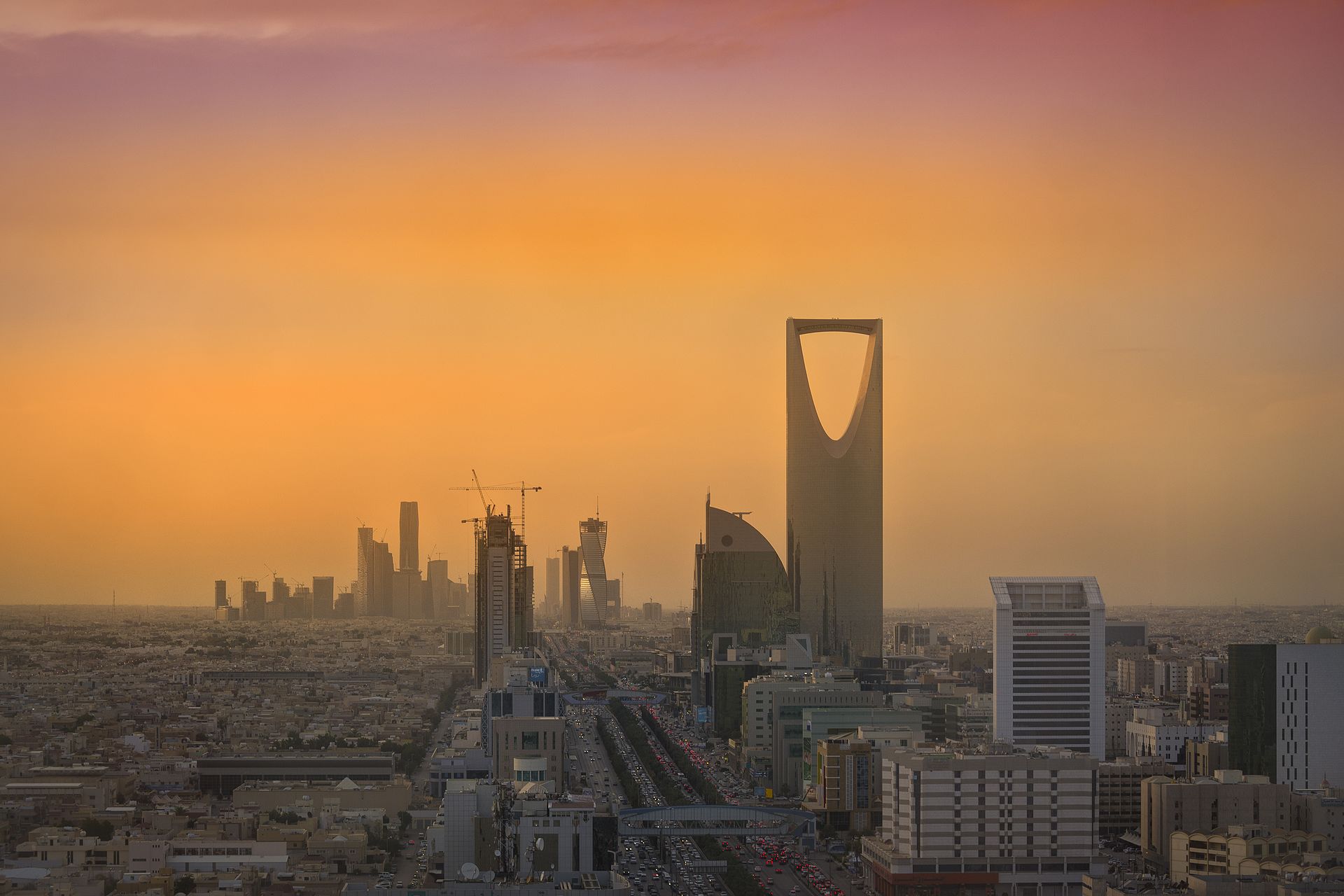
Tip: Riyadh Season typically launches in October, roughly two to three weeks after National Day. The two events don’t overlap, but if you can extend your trip, you’ll catch both. National Day venues like Boulevard Riyadh City serve as warm-ups for the full Season.
Jeddah — Red Sea Fireworks
Jeddah offers something Riyadh cannot — a waterfront. Fireworks over the Red Sea, reflected across the Corniche, make the city’s celebration visually distinct.
Key venues and events:
Dammam and Al Khobar — Eastern Province Celebrations
The Eastern Province celebrates along its twin corniche waterfronts in Dammam and Al Khobar, with fireworks, light projections, and family zones. The Dammam Corniche hosts the larger display, while the Al Khobar Corniche offers a more relaxed atmosphere with views across the Gulf.
AlUla — Desert Festival
AlUla has positioned itself as a premium cultural destination for National Day. The AZIMUTH AlUla festival typically runs in late September, combining international DJs, art installations, and roaming performances set against AlUla’s dramatic sandstone formations. Unlike most National Day events, AZIMUTH is a ticketed event (from approximately SR 792 / $211 USD in 2025). The setting — futuristic stages among ancient rock formations — is unlike anything else in the Kingdom.
Other Cities
In 2025, 14 cities hosted official fireworks displays. Beyond the big four, notable celebrations include:
The Saudi Hawks Air Show
No National Day celebration is complete without the Saudi Hawks — the Royal Saudi Air Force’s aerobatic display team. Founded in 1999, the team performs formation aerobatics over major cities, typically Riyadh, Jeddah, and Khobar. Their signature manoeuvre recreates the Saudi national emblem — a palm tree crossed by two swords — using coloured smoke trails, a feat that earned a Guinness World Record in 2011 for the largest sky drawing by a jet display team.
The display format features seven aircraft in close formation, followed by dynamic split manoeuvres as pairs and five-ship groups. In 2024, the first replacement Saudi Hawks Mk.165 jet was unveiled at the World Defense Show, with the new aircraft expected to debut in 2026 displays.
Viewing tip: Air show flyovers are typically announced the day before via GEA social media channels. In Riyadh, the best viewing spots are along King Fahd Road and near the National Museum. In Jeddah, the Corniche provides unobstructed sightlines.
What Happens on National Day: A Typical Schedule
| Time | Activity | Where |
|---|---|---|
| Morning | Saudi Hawks flyovers, military parades | Major cities — Riyadh, Jeddah, Khobar |
| 3–4 PM | Family zones open — face painting, henna, food stalls, activities | Parks and boulevards nationwide |
| Sunset | Green illumination of landmarks begins | Nationwide — every major building |
| 6:30 PM | Ardah sword dances, folklore performances, live music | Major venues in each city |
| 9:00 PM | Synchronised fireworks and drone shows | 14+ cities simultaneously |
| 9:30 PM–late | Concerts, street celebrations, car parades | City-wide |
The Green Tradition
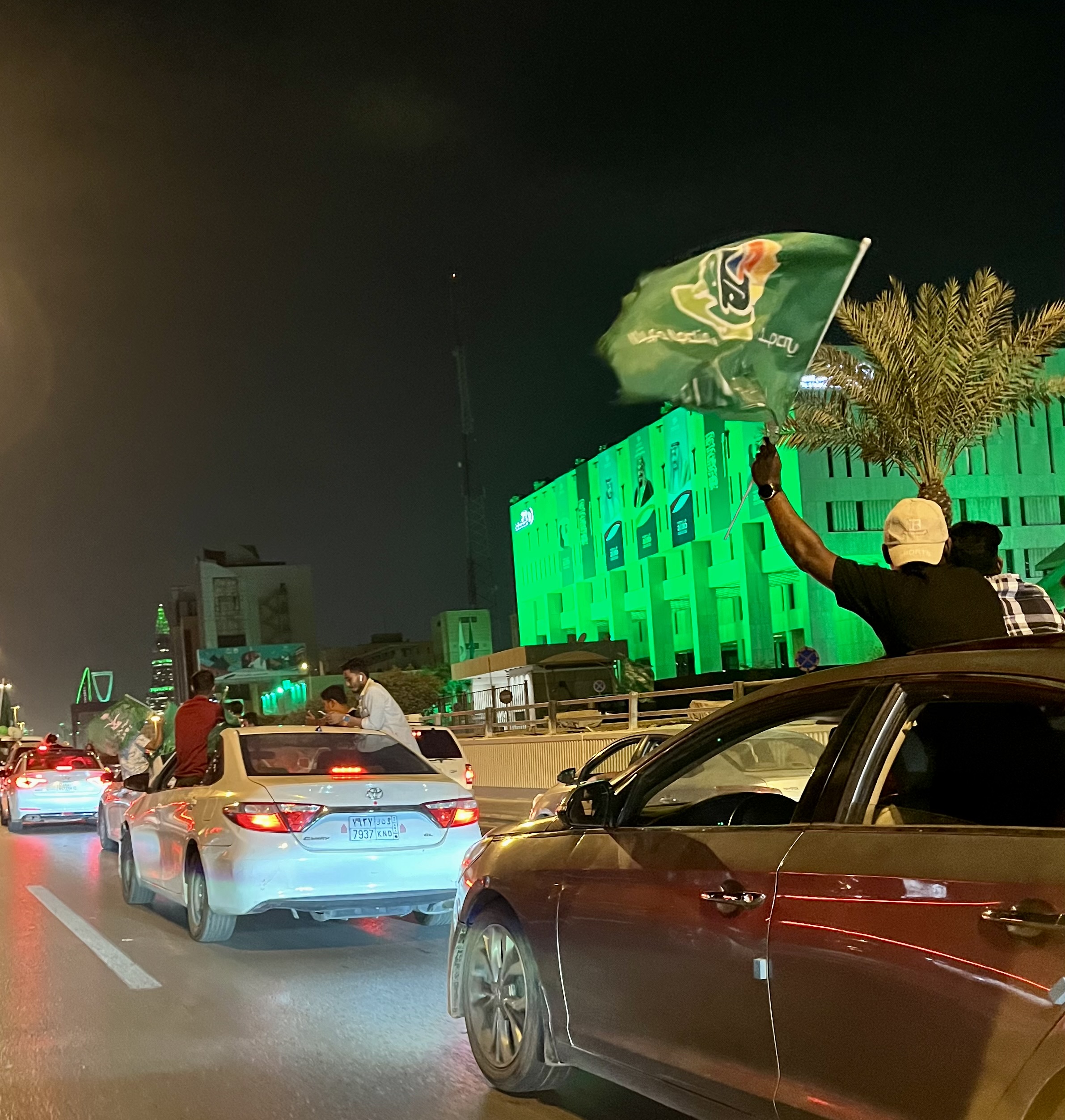
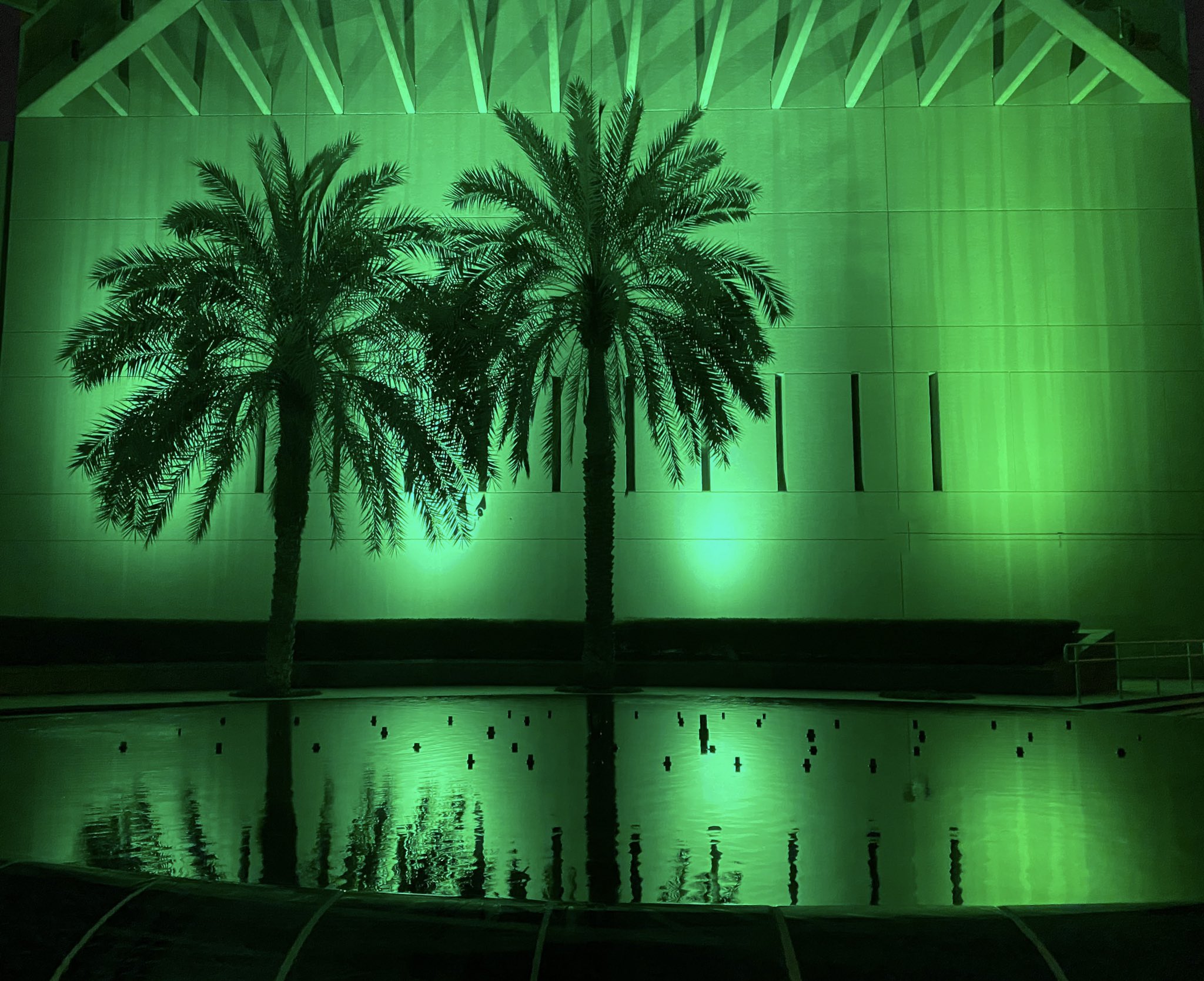
Green is the colour of Saudi Arabia — it dominates the national flag, and on September 23, it dominates everything else. Landmarks, towers, bridges, malls, and even residential buildings are bathed in green light. Citizens and residents wear green and white clothing — green thobes, green scarves, green accessories. Cars sprout Saudi flags from their windows. Streets are lined with green banners and digital projections.
If you are visiting, wearing something green is strongly encouraged — you’ll feel part of the celebration rather than a spectator. Green Saudi National Day scarves and pins are sold at every mall in the weeks leading up to September 23, and many shops give them away free.
Practical Information for Visitors
Is It a Public Holiday?
Yes. September 23 is a paid public holiday for all government and private-sector employees. Schools close. Banks and government offices shut. If September 23 falls on a weekend (Friday–Saturday), a compensatory day off is typically granted. In 2026, it falls on a Wednesday — expect many workers to take Thursday off for a four-day break.
Retail, restaurants, malls, and entertainment venues remain open and often extend hours. Grocery stores and petrol stations operate normally. It is a holiday for celebration, not closure.
Visa and Entry
Saudi Arabia’s tourist e-visa is available online for citizens of 63 eligible countries — a one-year multiple-entry visa allowing up to 90 days total stay. If you hold a valid US, UK, or Schengen visa, you can obtain a tourist visa on arrival. Apply at least two weeks before travel to avoid processing delays during the National Day period.
Weather
Late September is still very hot across most of Saudi Arabia:
This is precisely why most celebrations are scheduled for after 4 PM, with the main fireworks at 9 PM. Hydrate aggressively, wear sun protection during daytime, and plan outdoor activities for evening hours.
Getting Around
Traffic in Riyadh and Jeddah on the evening of September 23 is extreme. Streets around celebration venues are closed to traffic, and the car parades that follow fireworks can gridlock entire districts.
Practical tips:
Accommodation
Hotel prices spike significantly around National Day, particularly in Riyadh and Jeddah. Book accommodation at least four to six weeks in advance. Mid-range hotels in Riyadh that normally cost SAR 400–600/night may charge SAR 800–1,200 during National Day week. Serviced apartments and Airbnb-style rentals offer better value for longer stays.
What to Wear
Modest dress is expected throughout Saudi Arabia. Women are no longer legally required to wear an abaya, but conservative clothing (covering shoulders and knees) is advisable, particularly at family-oriented events. Wearing green and white is enthusiastically encouraged — you’ll see entire families colour-coordinated. Comfortable shoes are essential for the walking involved in park celebrations.
Food and Dining
National Day is one of the best times to experience Saudi street food. Celebration venues feature food trucks and stalls serving kabsa (spiced rice with meat — the national dish), mutabbaq (stuffed pancakes), shawarma, dates, Saudi coffee (qahwa), and fresh juices. Many restaurants offer National Day promotions and themed menus. Alcohol is not served anywhere in Saudi Arabia.
Budget Planning
| Expense | Budget Range (USD) | Notes |
|---|---|---|
| Hotel (mid-range, per night) | $100–300 | Book early — prices spike 50–100% |
| National Day events | Free | Most events free; AZIMUTH AlUla ~$211+ |
| Food (per day) | $20–50 | Street food to mid-range restaurants |
| Transport (per day) | $15–40 | Metro + rideshare; expect surge pricing |
| Saudi National Day merchandise | $5–20 | Flags, scarves, pins — widely available |
| Total daily budget | $80–200 | Most spending is accommodation |
Combining National Day with Other Attractions
If you’re timing your trip around September 23, consider extending to explore more of the Kingdom:
History of Saudi National Day Celebrations
The evolution of National Day tells the story of the Kingdom’s own transformation:
The shift since 2019 is dramatic. What was once a relatively quiet day of patriotic observance is now a world-class entertainment spectacle — a deliberate element of Saudi Arabia’s broader strategy to develop tourism and cultural industries under Vision 2030.
Tips for Photographers
National Day is a photographer’s dream — green-lit skyscrapers, fireworks, drone formations, traditional costumes, and genuine public joy. A few tips:
Frequently Asked Questions
Is Saudi National Day worth visiting for?
Yes — if you enjoy large-scale public celebrations. The atmosphere is genuinely electric, the events are overwhelmingly free, and you’ll experience Saudi hospitality at its most enthusiastic. It’s also one of the few times you’ll see the entire Kingdom in unified celebration.
Are shops and restaurants open on September 23?
Yes. Malls, restaurants, supermarkets, and entertainment venues remain open — many with extended hours and special promotions. Only banks and government offices close.
Can non-Muslims attend all National Day events?
Absolutely. National Day is a secular, patriotic celebration. All events are open to everyone regardless of nationality or faith. The only restriction is that non-Muslims cannot enter Mecca or the Prophet’s Mosque area in Madinah, which applies year-round.
How many days should I plan for?
The main celebrations centre on September 23 itself, but the GEA programme typically runs three to six days. Two to three nights gives you the full experience — arrive September 22, experience National Day on the 23rd, and use the 24th for recovery and sightseeing.
Is it safe?
Saudi Arabia has extremely low crime rates, and National Day events have a heavy security and police presence. The main safety concerns are heat-related illness (hydrate constantly) and traffic congestion. Crowd management at major venues is well-organised.