
Saudi Arabia is not the first destination most vegan or vegetarian travellers think of. The Kingdom’s culinary reputation centres on lamb kabsa, camel meat, and grilled kebabs. But look past the headline dishes and you will find a country where chickpeas, lentils, fava beans, tahini, and olive oil have been staples for centuries — and where a modern plant-based restaurant scene is growing faster than almost anywhere else in the Gulf. Whether you are planning a broader Saudi Arabia travel itinerary or visiting specifically for the food, this guide covers every practical detail a vegan or vegetarian traveller needs: named restaurants in every major city, traditional dishes that are naturally plant-based, grocery shopping, delivery apps, Arabic phrases for dietary needs, and regional differences you should know about before you arrive.
Best Time to Visit: October to March (cooler weather, more outdoor dining options)
Getting There: Direct flights to Riyadh (RUH) and Jeddah (JED) from most major international hubs
Visa Required: Yes — tourist e-visa available for 50+ nationalities
Budget: USD 15–60 per day for food (street foul/falafel from $2; sit-down vegan cafes $15–25 per meal)
Must-Try: Foul medames for breakfast, Moon Shell cafe in Riyadh or Jeddah, fresh date varieties at any local market
Avoid: Assuming rice dishes are vegan — most are cooked with chicken or lamb stock, and ghee (clarified butter) is standard in central Saudi cooking
The State of Plant-Based Dining in Saudi Arabia
The numbers tell a clear story: Saudi Arabia’s vegan food retail market was valued at USD 201 million in 2025 and is projected to reach USD 410 million by 2034, growing at 8.3% annually. Approximately 1.6 million Saudis now identify as vegan, and 26% of the population has expressed interest in reducing meat consumption. This is not a fringe movement — it has high-profile backing. Prince Khaled bin Alwaleed, son of billionaire Prince Alwaleed bin Talal, has invested in Beyond Meat and announced plans to open more than ten vegan restaurants across the Middle East. He even convinced his father to adopt a fully plant-based diet.
The practical result for travellers is that dedicated vegan restaurants now exist in Riyadh and Jeddah, international chains increasingly offer plant-based options, and food delivery apps have begun adding vegan filters. That said, Saudi Arabia is not yet Amsterdam or Berlin — outside the two main cities, you will rely heavily on traditional dishes and South Asian restaurants. This guide tells you exactly where to eat in every scenario.
Traditional Saudi and Middle Eastern Dishes That Are Naturally Vegan
Before you even look for a dedicated vegan restaurant, know that the traditional Saudi table already includes dozens of plant-based dishes. These are available everywhere — from roadside cafes to five-star hotel buffets.
Breakfast
- Foul medames (ful) — Slow-cooked fava beans with garlic, lemon juice, olive oil, and cumin, served with flatbread. This is the single most important dish for vegan travellers in Saudi Arabia. It is served in virtually every breakfast restaurant, costs SAR 5–15 (USD 1.30–4), and is hearty enough to fuel a full morning. In the Hejaz region (Jeddah, Mecca, Medina), ask for ful Hijazi — a regional variant with tomatoes, chilli, and extra olive oil.
- Manakeesh with za’atar — Flatbread topped with a paste of dried thyme, sumac, sesame seeds, and olive oil. Always vegan (the cheese version, manakeesh jibneh, is not). A standard breakfast item at bakeries across the Kingdom.
- Tamees bread — Soft Afghan-style flatbread, naturally vegan, commonly served alongside ful or hummus.
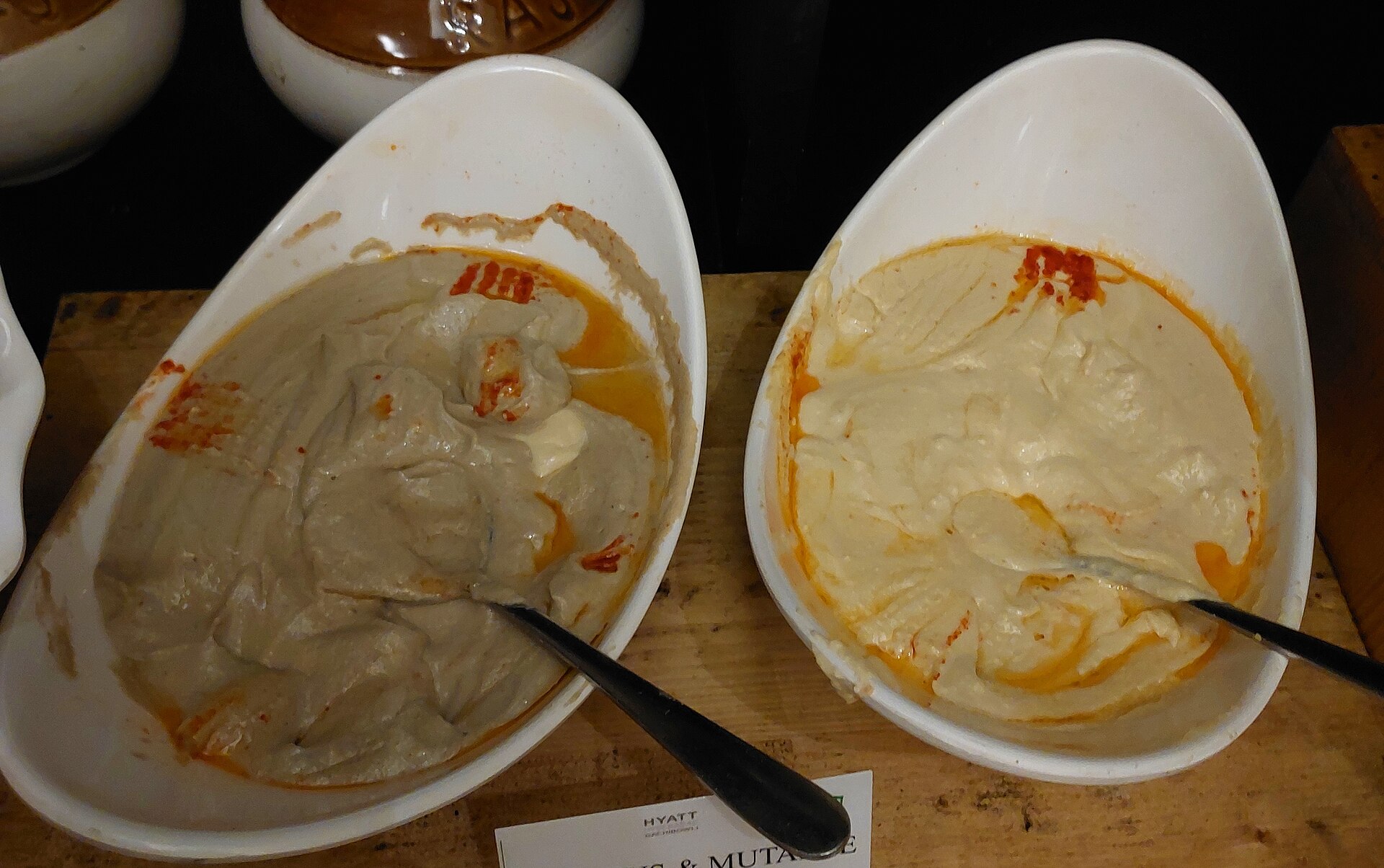
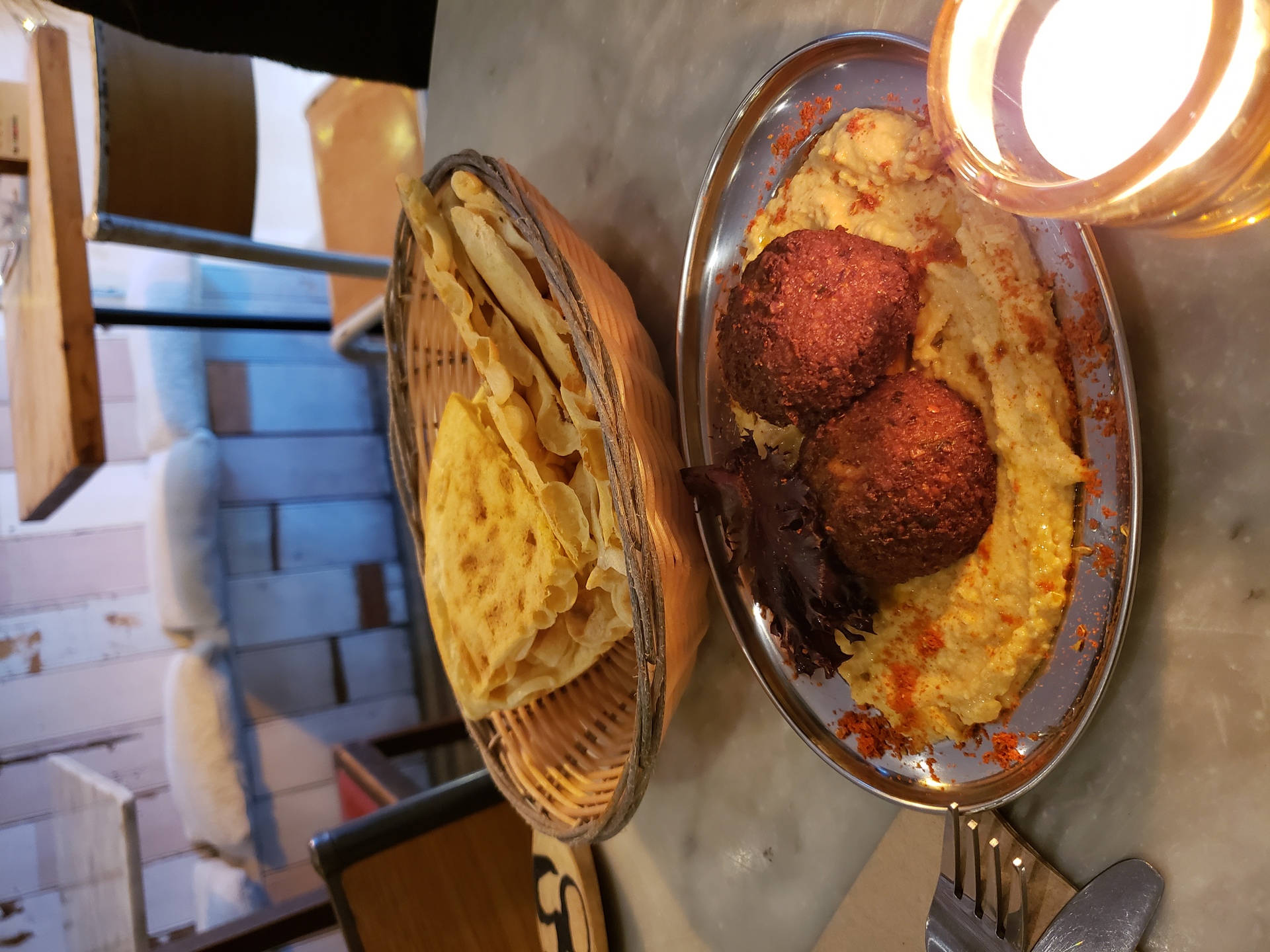
- Hummus — Chickpeas, tahini, lemon, garlic, olive oil. Available at every restaurant in every city, always vegan.
- Mutabbal (baba ghanoush) — Smoky roasted eggplant blended with tahini, lemon, and garlic. Vegan in its standard form, though some restaurants add yoghurt — ask bidun laban (without yoghurt) to be sure.
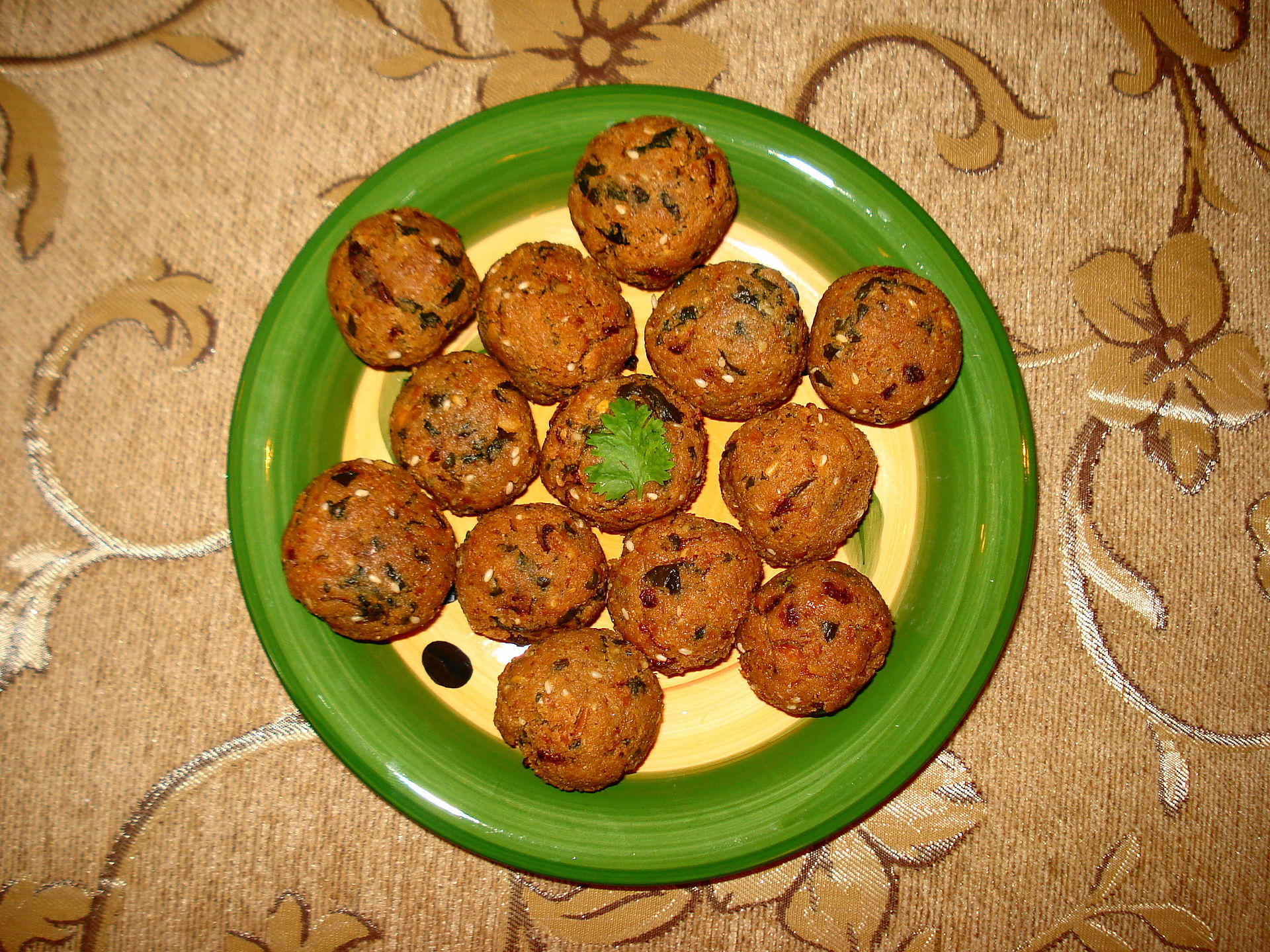
- Falafel — Deep-fried chickpea patties. A ubiquitous street food sold from carts and small shops for SAR 2–5 per sandwich. Always vegan.
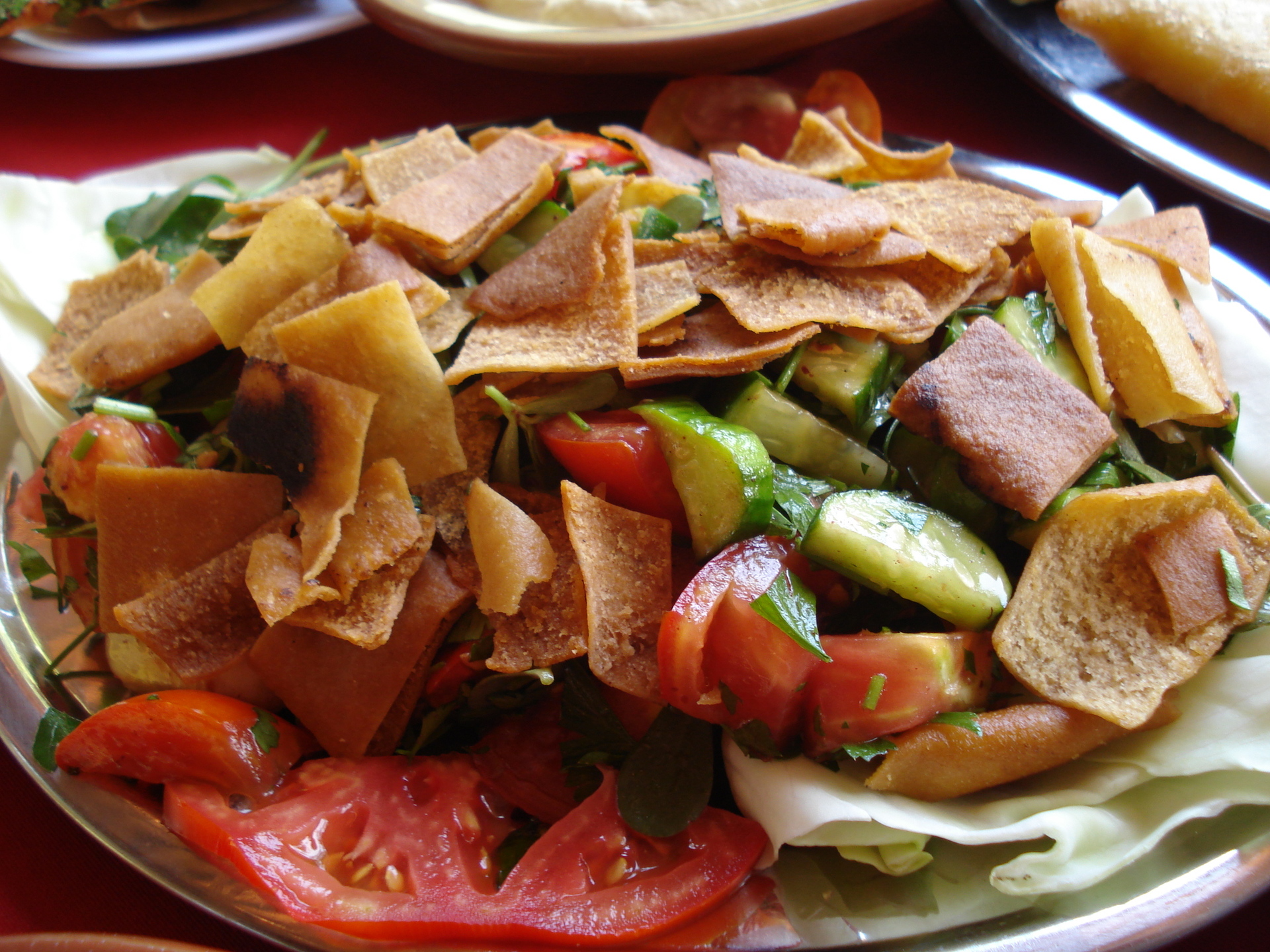
- Fattoush — Chopped salad with toasted pita bread, tomatoes, cucumber, radish, and a tangy sumac dressing. Always vegan.
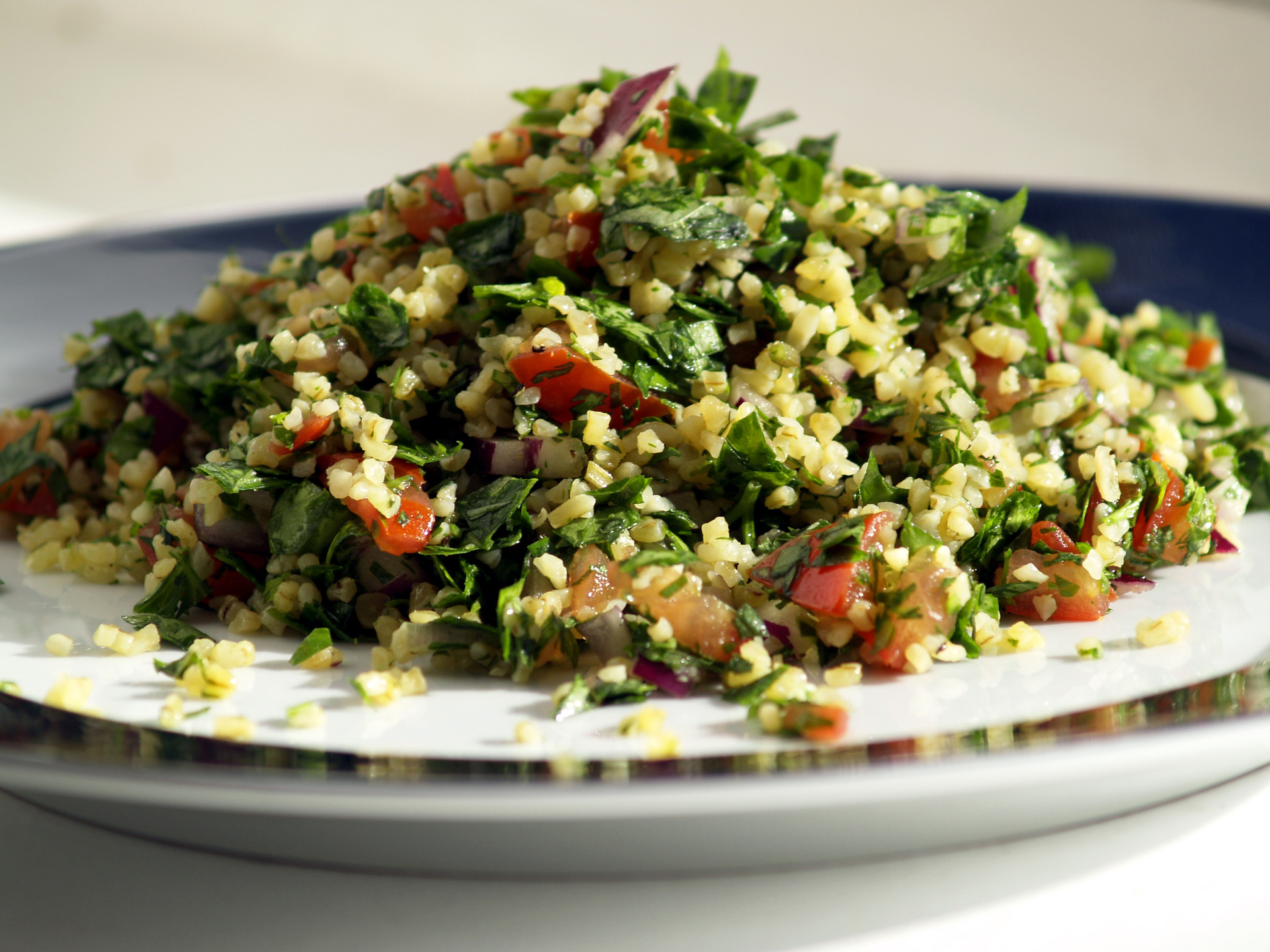
- Tabbouleh — Parsley, bulgur wheat, tomato, mint, lemon, and olive oil. Always vegan.
- Vine leaves (warak enab) — When stuffed with rice rather than meat. Ask warak enab bil zayt (vine leaves with oil) to get the vegan version.
- Mujaddara — Lentils and rice topped with crispy fried onions. A filling, protein-rich meal that is always vegan and widely available.
- Kushari — An Egyptian import now common in Saudi cities: rice, lentils, pasta, and chickpeas topped with spiced tomato sauce and fried onions. Entirely vegan and extremely filling.
- Shorbat adas (lentil soup) — Red lentils with cumin and lemon. Served as a starter at most restaurants and almost always vegan.
- Fatayer sabanekh — Triangular pastries stuffed with spinach, onion, and lemon. Check for butter in the pastry dough — many bakeries use vegetable oil instead.
- Ghee (samneh) — Clarified butter used extensively in Najdi (central Saudi) cooking, especially in rice dishes. Hejazi cuisine (Jeddah, Mecca) uses olive oil more often. Ask bil zayt zaytoon (with olive oil) instead.
- Chicken or lamb stock — Used in rice, soups, and stews even when no visible meat is present. Ask bidun maraqa lahm (without meat broth).
- Yoghurt (laban) — Added to sauces, soups, and as a side dip.
- Mayonnaise — Contains egg. Common in sandwich shops and wraps.
- Moon Shell (King Abdullah District) — The standout fully vegan cafe in Riyadh. Stone-walled interiors styled after Old Arabia, serving smoothie bowls, vegan pancakes, acai bowls, and cold-pressed juices. Open daily until midnight (1 AM Thu–Fri). Budget SAR 40–70 per person.
- Cleanse & Glow (Olaya) — Fully vegan and gluten-free. Zoodles with pesto, sweet potato pizza, black bean burgers, and smoothies. Open Saturday to Thursday, 7:30 AM–9:30 PM.
- Toastic Bakery (At Taawun) — Artisan bakery with vegan croissants (plain and almond), vegan chocolate cake, and pastries. Open daily from 6:30 AM.
- Boga Superfoods (multiple locations) — Wellness-focused bowls and sandwiches. Tofu sandwiches, quinoa bowls, optional vegan cheese. A reliable chain for a quick healthy meal.
- YOGi (multiple locations including Uthman Ibn Affan Rd, Al Wahah, Al Safarat) — Vegan burger made with beet, black beans, and quinoa. Also serves Japanese noodle salad and energy bites.
- Gather Eatery (Cenomi The View Mall) — Sweet Earth burgers, green curry, vegan Buddha bowl, and vegan chocolate cake. Open daily 8 AM–midnight.
- Zooba (The C Mall, Al Malqa) — Egyptian street food chain. Kushari, taameya (Egyptian falafel), ful medames, and lentil soup — all vegan. Open daily from 7 AM.
- Operation Falafel (multiple locations including Abi Bakr Al Siddiq Road, Ar Rabi) — Mediterranean chain. Falafel wraps and bowls, hummus, mutabbal, vine leaves, and mezze. Largely vegan by default.
- Almayass (Prince Sultan Bin Abdulaziz Rd, Al Olaya) — Armenian-Lebanese cuisine. Quinoa salad, pumpkin kibbeh, vegan lahme blajin, and spicy eggplant harra. Open daily noon–1 AM.
- Zafran Indian Kitchen (Nakheel Mall, The View, Turki Square) — Vegetarian biryani, roasted tandoori vegetables, lentil dal. Extensive vegetarian section on the menu.
- Saravanaa Bhavan (Riyadh Avenue Mall, As Sulimaniyah) — Global South Indian vegetarian chain. Entirely vegetarian. Dosa with coconut chutney, lemon rice, vegetable sambar. Many items are vegan — ask staff to confirm which dishes are dairy-free.
- Moon Shell (Al-Imam Malek, Ar Rawdah) — Same concept as the Riyadh branch. Smoothie bowls in coconut shells, lentil pancakes, granola bowls, vegan croissants, and organic coffee.
- Nabati Eatery (An Naim) — Founded by Ola Kayal in early 2025. Fully vegan, gluten-free, and refined sugar-free. Signature dishes include Nabati Benedict with cashew hollandaise and loaded plant-based breakfasts using locally sourced organic ingredients.
- Vegan Street (al-Shari’ al-Nabati) (An Naim) — Soy-based chicken alternatives, katsu curry, crispy cauliflower bites, and spinach lasagna. A comfort-food approach to vegan dining.
- The Vegan Dinosaur — Fully vegan with inventive plant-based comfort foods, hearty bowls, and wraps. Focus on sustainable ingredients.
- Boga Superfoods (four Jeddah locations: Hira Street, King Abdulaziz Branch Rd, Sari Br Rd, Town Square) — Same health-focused menu as Riyadh.
- Aryaas Indian Restaurant — South Indian vegetarian restaurant. Crispy dosas, chutneys, and an extensive plant-based menu.
- Cleanse and Glow — Raw cold-pressed juicery with salads, manoushe, and berry chia bowls.
- Kailash Parbat (Al Khobar) — Fully vegetarian Indian restaurant with many vegan options. An institution in the city for authentic Indian vegetarian and vegan cooking.
- Saravanaa Bhavan (Dammam) — South Indian vegetarian chain. Same menu as the Riyadh branch.
- Copper Chandni (Al Khobar) — Indian restaurant with dedicated halal, vegetarian, and vegan sections.
- Abu Nawas (Dammam) — Mediterranean Lebanese with strong vegetarian mezze options: hummus, falafel, fattoush, and vine leaves.
- Operation Falafel (Dammam) — Same Mediterranean chain found in Riyadh.
- South Asian restaurants near the Haram area in Mecca and the Prophet’s Mosque in Medina serve vegetarian menus — dosa, idli, sambar, dal, and vegetable biryani. These are the most reliable option for plant-based travellers.
- Traditional ful and falafel shops are found throughout both cities, particularly in the central hotel districts.
- Hotel buffets at properties near the holy sites typically include vegetarian sections with hummus, fattoush, rice, lentil soup, and fresh vegetables.
- Pack supplements — during Hajj in particular, meal options narrow and queues are long. Bring protein bars, nuts, and dried fruit.
- Eat ful medames and falafel from local breakfast shops
- Order mezze platters (hummus, mutabbal, fattoush, vine leaves) at any restaurant
- Look for South Indian restaurants — they exist in most Saudi cities with significant expat populations
- Ask hotels to prepare vegan meals — most will accommodate requests with advance notice
- Carry snacks: dates, nuts, fruit, and bread are available at every grocery store and petrol station
- Jahez — The best app for vegans. Specifically allows filtering by dietary requirements including vegan, vegetarian, and gluten-free. Saudi-founded, wide restaurant coverage.
- HungerStation — One of the oldest Saudi delivery platforms (founded 2012). Smart filters for cuisine type, delivery time, and ratings. Search for specific vegan-friendly restaurants.
- Mrsool — Popular Saudi delivery platform with broad restaurant selection.
- Deliveroo — International platform active in Riyadh and Jeddah. Useful for ordering from higher-end restaurants.
- Talabat — Major regional delivery app with good coverage across the Gulf.
- Operation Falafel — Regional Mediterranean chain with locations in Riyadh, Jeddah, and Dammam. The entire falafel and mezze menu is largely vegan by default.
- Saravanaa Bhavan — Global South Indian vegetarian chain (Riyadh and Dammam). Entirely vegetarian; many dishes are vegan. Ask which dishes are made without ghee or dairy.
- Boga Superfoods — Saudi health-food chain in Riyadh and Jeddah. Tofu dishes, quinoa bowls, and vegan cheese options.
- Moon Shell — Fully vegan cafe with branches in Riyadh and Jeddah.
- Zooba — Egyptian street food chain. Kushari, taameya, and ful are all vegan.
- Starbucks — Offers oat milk (Oatly), almond milk, soy milk, and coconut milk across all Saudi locations. Useful for a quick reliable plant-based drink.
- Download Jahez and HungerStation before you arrive. Both apps work with international phone numbers and credit cards.
- Pack supplements: Vitamin B12, protein bars, and nutritional yeast may be hard to find outside major supermarkets.
- Carry snacks: Saudi dates are among the best in the world — buy a box at the airport and keep them as emergency food. Ajwa, Sukkari, and Safawi varieties are all excellent.
- Order mezze-style: Instead of a single main course, order 3–4 vegan mezze dishes. This gives you variety and ensures you eat enough. Hummus, mutabbal, falafel, fattoush, and vine leaves make a filling meal.
- Ask about oil: The single most important question is whether a dish is cooked in zayt (oil) or samneh (ghee/butter). In central Saudi cooking, the default is often ghee.
- Indian restaurants are your fallback: Every Saudi city has Indian restaurants. South Indian vegetarian restaurants (serving dosa, idli, uttapam) are the safest bet when you cannot find a dedicated vegan spot.
- Riyadh: Al Olaya and As Sulimaniyah — highest concentration of vegan-friendly restaurants, walking distance to Moon Shell, Saravanaa Bhavan, Almayass, and Sociale Cafe.
- Jeddah: Ar Rawdah and An Naim — home to Moon Shell, Nabati Eatery, and Vegan Street. Also close to traditional Hejazi breakfast spots.
- Al Khobar: Central Al Khobar — near Kailash Parbat and other Indian vegetarian restaurants.
- Saudi Arabia Travel Guide 2026 — The complete guide to visiting the Kingdom
- Riyadh Travel Guide 2026 — Full city guide including restaurants, attractions, and neighbourhoods
- Jeddah Travel Guide 2026 — Explore the Red Sea gateway and Hejazi cuisine capital
- Dammam and Al Khobar Travel Guide — Eastern Province dining and attractions
- Hajj 2026 Guide — Everything pilgrims need for Mecca and Medina
- Saudi Arabia Visa Guide — Every visa type explained
Mezze and Starters
Main Dishes
Hidden Non-Vegan Ingredients to Watch For
Warning: The biggest risk for vegans in Saudi Arabia is not a lack of plant-based food — it is hidden animal products in dishes that look vegan. Watch for these:
Vegan and Vegetarian Restaurants by City
Riyadh — The Most Options
Riyadh has the largest concentration of vegan and vegan-friendly restaurants in the Kingdom. The city’s cosmopolitan dining scene, driven by a young population and significant expat communities, has made it the best Saudi city for plant-based eating.
Fully Vegan:
Vegan-Friendly (strong plant-based menus):
Jeddah — Vegan Pioneers
Jeddah has produced several of Saudi Arabia’s first fully vegan restaurants. Its Hejazi culinary tradition, which uses olive oil more freely than central Saudi cooking, also makes traditional food easier for vegans to navigate.
Fully Vegan:
Vegan-Friendly:
Dammam and Al Khobar — Eastern Province
The Eastern Province benefits from a large South Asian expat community, which supports several fully vegetarian Indian restaurants.
Mecca and Medina — Pilgrimage Cities
Neither city has dedicated vegan restaurants. If you are visiting for Hajj or Umrah, you will rely on these strategies:
Other Cities
In AlUla, Tabuk, and Abha, dedicated vegan restaurants are scarce. Your strategy should be:
Regional Cuisine Differences That Matter
Saudi Arabia is not one food culture — it is several. These regional differences materially affect how easy it is to eat vegan.
Hejazi Cuisine (Jeddah, Mecca, Medina) — Easiest for Vegans
Western Saudi cuisine uses more olive oil and less ghee than the rest of the country. Ful Hijazi is a distinct regional breakfast with tomatoes and chilli. Flatbreads are baked with vegetable oil rather than butter. The strong Yemeni and African influences add spice-heavy vegetable stews. If you are choosing between cities purely for vegan-friendly dining, Jeddah has a natural advantage.
Najdi Cuisine (Riyadh, Central Saudi) — Watch for Ghee
Traditional Najdi cooking is the most meat- and ghee-heavy in Saudi Arabia. Kabsa (the national rice dish) is always meat-based. Jareesh (crushed wheat) and harees (wheat porridge) traditionally contain meat and butter. However, modern Riyadh has the most dedicated vegan restaurants of any Saudi city, so the traditional cuisine matters less if you are eating at specialist establishments.
Eastern Province (Dammam, Al Khobar) — South Asian Advantage
The Eastern Province’s large Indian, Pakistani, and Bangladeshi expat communities support numerous fully vegetarian restaurants. This is the easiest region for finding reliably dairy-free Indian vegetarian food.
Southern Saudi (Asir, Jizan) — Spicier but Limited
Southern cuisine is spicier, with more herbs and chilli. Aseedah (wheat-based porridge) can be found in vegetable versions. The Asir region is famous for its honey (vegetarian but not vegan). Dedicated vegan restaurants are very rare — stick to traditional dishes and Indian restaurants.
Grocery Shopping and Self-Catering
If you are staying in serviced apartments or want to supplement restaurant meals, Saudi supermarkets carry a growing range of plant-based products.
| Supermarket | Vegan-Relevant Strengths | Where to Find |
|---|---|---|
| Tamimi Markets | Dedicated “Healthy Living” section with organic, dairy-free, and gluten-free products. Online ordering via shop.tamimimarkets.com | Riyadh, Eastern Province, Jeddah |
| Danube (Panda) | High-end chain with gourmet, organic, and imported specialty items including plant-based meats and dairy alternatives | Major cities nationwide |
| Carrefour KSA | Dedicated online vegan category with frozen vegan food, plant-based meats, and dairy alternatives | Major cities nationwide |
| Lulu Hypermarket | Strong South Asian staples section: lentils, chickpeas, spices, plant milks. Popular with expats | Major cities nationwide |
| Al Othaim Markets | Largest Saudi-owned chain. Basic vegan staples (legumes, grains, produce) at competitive prices | Nationwide, including smaller cities |
| Bin Dawood | Good produce sections and staples. Convenient for pilgrims in Mecca and Medina | Mecca, Medina, Jeddah |
Products to look for: Alpro and Oatly plant milks (increasingly stocked), tofu, canned chickpeas and fava beans, dried lentils, tahini, olive oil, flatbreads, dates in dozens of varieties, fresh fruit and vegetables. Saudi produce markets are excellent — tomatoes, cucumbers, leafy greens, and citrus are fresh and inexpensive.
Food Delivery Apps with Vegan Options
Saudi Arabia’s food delivery market is among the most developed in the Middle East. These apps work in all major cities:
Tip: When ordering via delivery apps, use the notes section to specify “no ghee, no butter, no yoghurt, no mayonnaise” — even for dishes that appear vegan on the menu. Kitchen defaults can include dairy you did not expect.
Essential Arabic Phrases for Vegan Travellers
English is widely spoken in Saudi restaurants, particularly in Riyadh and Jeddah. But at traditional eateries, smaller cities, and street food stalls, these Arabic phrases will be essential.
| English | Arabic Transliteration | Arabic Script |
|---|---|---|
| I am vegan | Ana nabati | انا نباتي |
| Without meat | Bidun lahm | بدون لحم |
| Without butter/ghee | Bidun samneh | بدون سمنة |
| With olive oil | Bil zayt zaytoon | بالزيت زيتون |
| Does this contain meat? | Hal yahtawi ala lahm? | هل يحتوي على لحم؟ |
| No dairy / without milk | Bidun halib | بدون حليب |
| No eggs | Bidun baydh | بدون بيض |
| Vegetables only | Khodrawat faqat | خضروات فقط |
| Please fry in oil, not butter | Min fadlak iqli bil zayt mish bil zubdah | من فضلك اقلي بالزيت مش بالزبدة |
Tip: Save these phrases on your phone or screenshot this table. Show it to restaurant staff — reading Arabic script is more reliable than pronunciation, especially for unfamiliar accents. The word nabati (نباتي) literally means “plant-based” and is increasingly understood in urban restaurants.
Ramadan Considerations for Vegan Travellers
During Ramadan, eating, drinking, and smoking in public during daylight hours is prohibited by law for everyone in Saudi Arabia, including non-Muslim tourists. Restaurants close during fasting hours. Some hotels serve food discreetly to non-fasting guests in screened-off areas.
The good news: iftar (the sunset meal) and suhoor (the pre-dawn meal) are excellent for vegans. Traditional iftar starts with dates and water, followed by lentil soup, hummus, fattoush, ful medames, and rice — all naturally vegan. Hotel iftar buffets typically include a wide selection of plant-based dishes alongside the meat options. Suhoor focuses on slow-release carbohydrates — oats, whole grains, legumes, and fruits — which are inherently plant-based. If you are visiting during Ramadan, plan your meals around these two windows and stock your accommodation with snacks for the daytime hours.
Chain Restaurants with Reliable Vegan Options
When you cannot find a specialist restaurant, these chains found across Saudi Arabia offer reliable plant-based options:
Practical Tips for Vegan Travellers
Arriving Prepared
At Restaurants
Getting Your Saudi Visa
Most nationalities can obtain a tourist e-visa online in minutes. The visa is valid for one year with multiple entries and allows stays of up to 90 days. There are no dietary declarations or food-related restrictions on the visa application.
Best Time to Visit
October to March offers cooler temperatures (15–25°C in most cities), making outdoor dining and market visits comfortable. Summer temperatures regularly exceed 45°C, which limits outdoor food exploration. If visiting during Ramadan (dates shift each year), expect modified restaurant hours but excellent iftar buffets.
Where to Stay for Vegan Travellers
For the best restaurant access, consider these neighbourhoods in each city. You can find detailed accommodation options in our Saudi Arabia Hotels Guide.
The Growing Saudi Vegan Scene
Saudi Arabia’s plant-based dining scene is expanding rapidly. The annual SaudiFood Show in Riyadh now includes a dedicated “Vegan & Plant Based” sector (the 2026 edition runs September 27–29). Vision 2030’s emphasis on food security, sustainability, and public health has created policy alignment with plant-based eating — drought-tolerant crops like chickpeas, lentils, and quinoa grow well in Saudi conditions and fit the Kingdom’s agricultural diversification goals. With 60% of Saudi consumers actively seeking healthier food options and the vegan food market projected to more than double by 2034, the restaurant and retail landscape will look significantly different even a year from now.
For now, the combination of traditional dishes, dedicated vegan restaurants in Riyadh and Jeddah, South Indian vegetarian chains, and increasingly well-stocked supermarkets means that plant-based travellers can eat well throughout Saudi Arabia — provided they arrive with the right knowledge. This guide is that knowledge.