{“content”: “
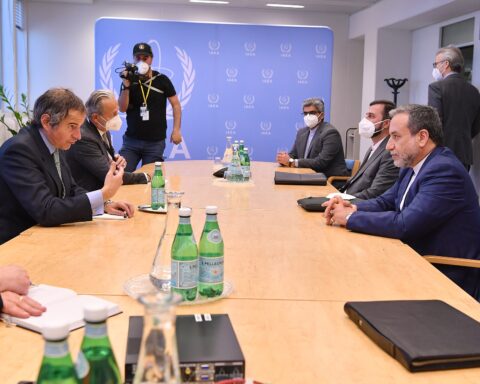
RIYADH u2014 The Islamabad talks collapsed after twenty-one hours on April 12, and no one scheduled a next round. No date, no venue, no format. Ten days remain before the ceasefire expires on April 22, and the structural question is not whether diplomacy can fill that gap u2014 it cannot u2014 but whether the decentralized IRGC command architecture that Iran’s own foreign minister describes as “independent and somewhat isolated” will treat the absence of talks as a pause or as permission.
n
JD Vance left Islamabad calling his proposal “a final and best offer.” Iran’s Foreign Ministry spokesperson Esmaeil Baghaei responded that “no one had such an expectation” of a single-session agreement. Pakistan’s Foreign Minister Ishaq Dar offered that Pakistan “will continue to facilitate engagement and dialogue in the days to come” u2014 a sentence with no mechanism attached to it. The distance between Vance’s finality and Baghaei’s patience would be manageable if there were an institution bridging them. There is not. The Korean armistice had a Military Armistice Commission, a Neutral Nations Supervisory Commission, and explicit violation-reporting procedures. The Islamabad ceasefire has Ishaq Dar’s aspiration.
n
The Middle East briefing 3,000+ readers start their day with.
One email. Every weekday morning. Free.
Table of Contents
n
- n
- Who Was Not in the Room
- What Does Decentralized IRGC Command Actually Mean for the Ceasefire?
- The Violations That Preceded the Talks
- The PAC-3 Arithmetic
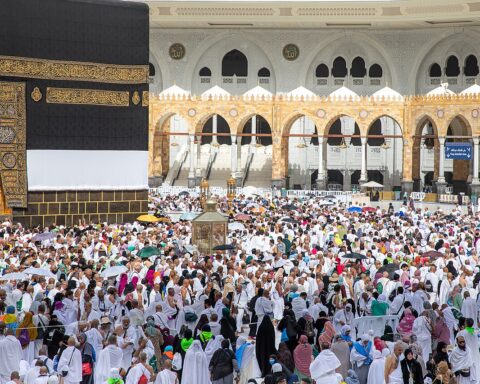
- Why Does Hajj Collide With the Ceasefire Expiry?
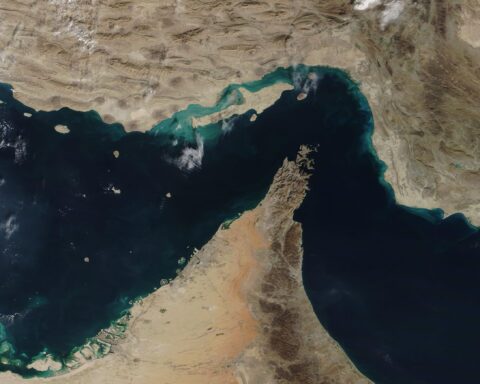
- Can the Strait of Hormuz Be Cleared in Ten Days?
- What Happens to Ceasefires Without Enforcement Mechanisms?
- The Same-Day Signal
- Saudi Arabia’s Three-Sided Exposure
- Frequently Asked Questions
- n
n
n
n
n
n
n
n
n
n
n
n
n
n
n
Who Was Not in the Room
n
Iran’s delegation to Islamabad was led by Mohammad Bagher Ghalibaf, the parliamentary speaker. Ghalibaf has an IRGC pedigree u2014 he commanded the IRGC Aerospace Force from 1997 to 2000 u2014 but his current role is legislative, not operational. The person with actual authority over IRGC ground and naval forces, Ahmad Vahidi, refused to participate. Vahidi demanded that Ali Akbar Ahmadian Zolghadr, the Supreme National Security Council secretary who is himself under US and EU sanctions, be placed on the Iranian negotiating team instead.
n
The distinction matters because it determines what the twenty-one hours in Islamabad could have produced even in a best case. Ghalibaf can articulate positions. He can signal flexibility or rigidity. He can blame the United States for “failing to gain the trust” of Tehran’s delegation, which he did. He can raise what he called “forward-looking” initiatives that Washington rejected. What he cannot do is order the IRGC Navy to stand down in the Strait of Hormuz, instruct provincial corps commanders to halt drone launches, or guarantee that a political commitment made in an Islamabad conference room will translate into operational restraint across thirty-one independent IRGC commands.
n
Ghalibaf knows this. He ran the Aerospace Force. He understands the mosaic command structure from inside. His presence at Islamabad, absent Vahidi, was not a negotiating position u2014 it was a structural signal about the limits of whatever might have been agreed.
n
The US side appears to have understood. Vance’s “final and best offer” language u2014 unusual for a first direct meeting u2014 suggests an assessment that extended talks with a counterpart who lacks operational authority over the relevant forces would not change the military situation on the ground. NBC News reported the phrase on April 12; CNBC carried the same formulation.
n
What Does Decentralized IRGC Command Actually Mean for the Ceasefire?
n
In 2008, Brigadier General Mohammad Ali Jafari restructured the IRGC into thirty-one provincial commands. The design rationale, articulated in doctrine papers from 2005 onward, was explicit: survive decapitation strikes and foreign invasion by eliminating the single point of failure. Each provincial command was given independent intelligence capabilities, its own weapons stockpile, organic command-and-control infrastructure, and u2014 the element that matters now u2014 pre-delegated authority to launch strikes if communication with the center is severed.
n
The doctrine’s designers built in the assumption that Tehran might be eliminated. The absence of orders from the center is not interpreted as “pause.” It is interpreted as “continue pre-authorized operations.” This is the inverse of what a political ceasefire requires. A ceasefire requires that all operational units receive, acknowledge, and comply with a stand-down order. The mosaic structure was engineered to ensure that stand-down orders from the center are optional.
n
Iran’s Foreign Minister Abbas Araghchi has acknowledged the problem in terms that deserve direct quotation: “Our military units are now, in fact, independent and somewhat isolated, acting based on general instructions given in advance.” The Soufan Center, which published the most analytically rigorous assessment of the ceasefire’s fragility, reported this statement in March-April 2026.
n
Maj. (res.) Alexander Grinberg of the Jerusalem Institute for Strategy and Security offered a precise formulation: “A decentralized force can survive major leadership losses and keep operating, but durability isn’t the same as capability.” On the ceasefire specifically: “Even if the regime theoretically agrees to a ceasefire, enforcing it will be very challenging.”
n
The challenge is not theoretical. It has already been demonstrated.
n
The Violations That Preceded the Talks
n
The Islamabad talks opened against a background of confirmed ceasefire breaches that the ceasefire’s own structure had no mechanism to address.
n
Kuwait intercepted twenty-eight Iranian drones after the ceasefire announcement. Bahrain intercepted thirty-one missiles and six drones. The UAE intercepted seventeen ballistic missiles and thirty-five drones on April 8. The East-West Pipeline pumping station u2014 Saudi Arabia’s primary alternative to Hormuz-dependent exports u2014 was struck by a drone on April 8, after the ceasefire’s nominal start. The Soufan Center documented these incidents on April 9, 2026.
n
Araghchi attributed at least some autonomous strikes u2014 including attacks on Turkey, a NATO member, and Oman in March u2014 to “a mistake by units that could not be reached directly.” Grinberg credited the same autonomous IRGC commands with both strikes, noting the structural impossibility of centralized compliance.
n
On March 7, President Masoud Pezeshkian attempted to order IRGC forces to stop attacks on neighboring countries. Ghalibaf u2014 the same man who led the Islamabad delegation u2014 publicly overruled Pezeshkian within hours. The civilian president of Iran issued a direct military order and was countermanded by the parliamentary speaker, who holds no constitutional military authority but whose IRGC institutional connections outweigh presidential directives.
n
Pezeshkian’s assessment of the IRGC’s trajectory, reported by Ynet News, was that commanders’ policies “had destroyed any remaining chance of a ceasefire” and were steering Iran toward “a huge catastrophe.” His warning that the economy could collapse in “three to four weeks” without a ceasefire has not translated into IRGC compliance. A tense April 4 confrontation between Pezeshkian and IRGC-linked commander Hossein Taeb crystallized the gap between presidential alarm and Revolutionary Guard indifference.
n
These are not edge cases or isolated malfunctions. They are the system working as designed. Jafari’s 2008 restructuring achieved its intended outcome: a force that cannot be stopped from the center.
n
n
The PAC-3 Arithmetic
n
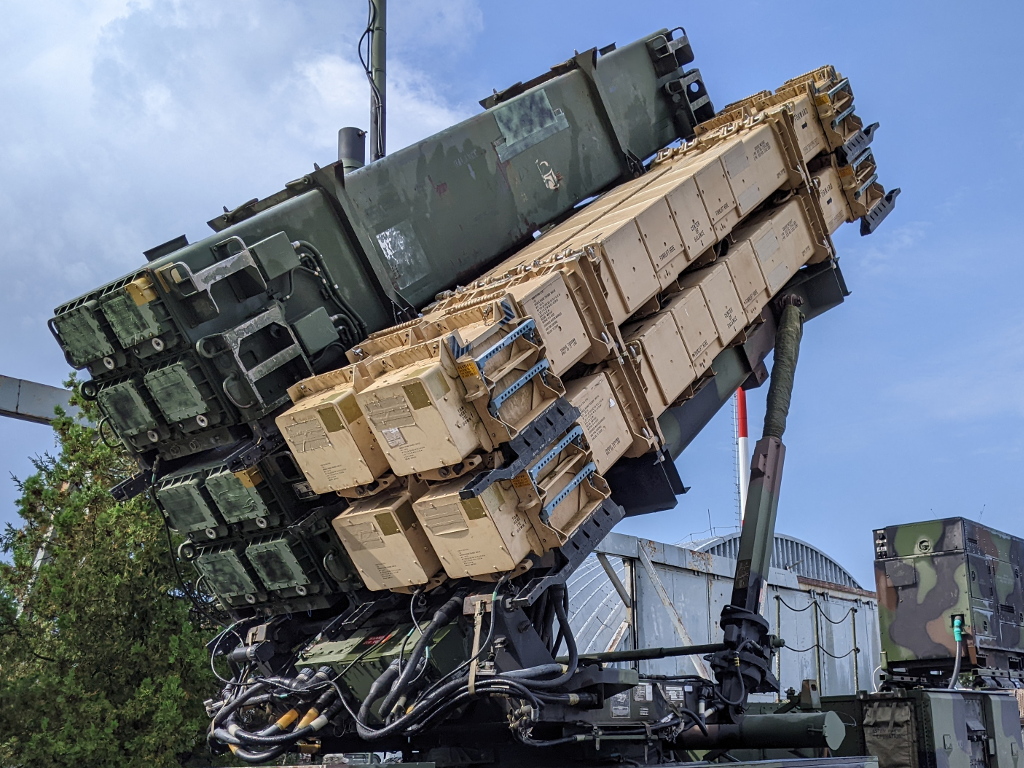
Saudi Arabia entered the war with approximately 2,800 PAC-3 MSE interceptor rounds. As of early April, the kingdom has approximately 400 remaining u2014 an 86% depletion rate. The unit cost is $3.9 million per round; the 894 intercept events conducted between March 3 and April 7 represent at minimum $3.49 billion in rounds expended, with multiple rounds typically fired per target.
n
The production constraint is industrial, not financial. The Lockheed Martin facility in Camden, Pennsylvania produces 620 PAC-3 MSE rounds per year for global distribution. The January 2026 DSCA-notified sale of 730 rounds to Saudi Arabia, valued at $9 billion in the broader package, enters a multi-year production queue that serves the US military, NATO allies, and other foreign customers simultaneously. Lockheed Martin has announced plans to ramp production to 2,000 rounds per year, but that is a seven-year industrial program, not a near-term solution.
n
Four hundred rounds at current interception rates means the existing stockpile covers roughly the volume of threats Saudi Arabia absorbed in the first five weeks of the conflict. If IRGC attacks resume at pre-ceasefire intensity after April 22, the intercept capacity is finite and calculable. Poland refused a Patriot battery transfer to Saudi Arabia on March 31. The $16.5 billion in emergency US arms sales announced during the war’s first weeks went primarily to the UAE, Kuwait, and Jordan u2014 not to Saudi Arabia’s PAC-3 supply chain.
n
The kingdom cannot buy its way out of the depletion problem on a ten-day timeline. It cannot manufacture rounds. It cannot borrow them from allies who refused to lend. The four hundred rounds are what Saudi Arabia has, and April 22 is when it may need them.
n
Why Does Hajj Collide With the Ceasefire Expiry?
n
The calendar alignment is not a coincidence in the sense that both dates are fixed; it is a coincidence in the sense that no one designed the ceasefire around Hajj. But the convergence creates a security environment that has no modern precedent.
n
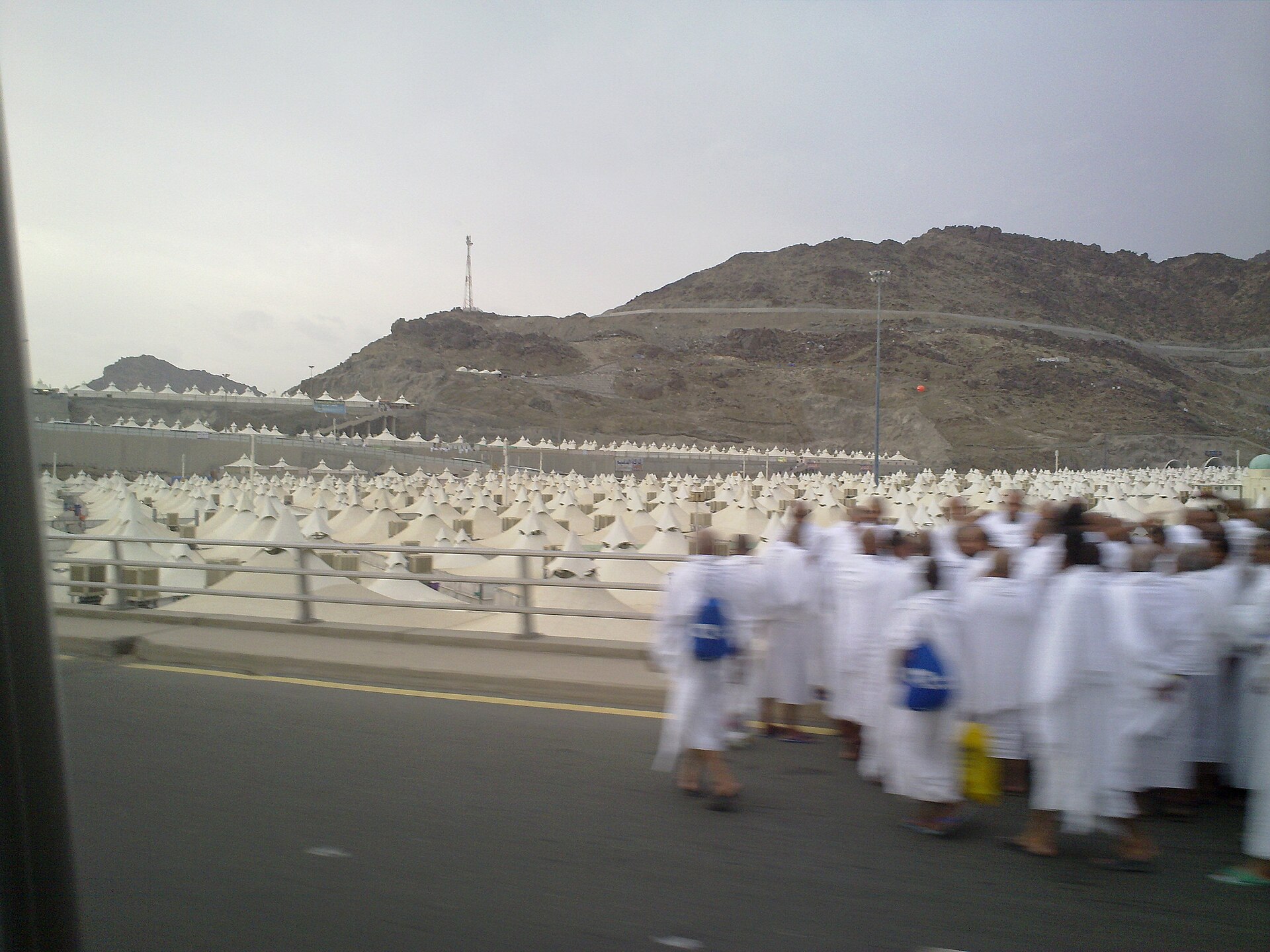
First Hajj pilgrims arrive April 18. Mecca access controls u2014 the cordon that seals the holy city to non-pilgrim traffic u2014 take effect the same day. Pilgrims enter dormitories April 21. The ceasefire expires April 22. The Day of Arafah, the ritual peak when the full pilgrim population is concentrated in a single open-air plain, falls on May 26.
n
Total registered pilgrims for 2026: approximately 750,000. Indonesia has registered 221,000. Pakistan u2014 the country that facilitated the Islamabad talks and whose foreign minister promised to “continue to facilitate engagement” u2014 has registered 119,000 pilgrims. India has registered 175,025.
n
Iran’s pilgrim count is effectively zero. Iranian citizens have been barred from Hajj. This is the detail that restructures the incentive calculus: in 1987, when 402 people were killed at the Grand Mosque u2014 275 Iranian pilgrims, 85 Saudi security personnel, 42 pilgrims from other countries u2014 Iran had 45,000 of its own citizens present. The presence of Iranian pilgrims gave Tehran a stake in restraint, or at least in limiting the scope of confrontation. The absence of Iranian pilgrims in 2026 removes that stake entirely. Iran has no hostages to its own good behavior during the pilgrimage window.
n
The 1987 incident was triggered by a political demonstration, not by missile fire. Saudi Arabia severed diplomatic relations with Iran afterward. Iran boycotted Hajj for three years. Saudi Arabia imposed an 87% quota cut on Iranian pilgrims. The current operational environment u2014 with IRGC drones and ballistic missiles actively targeting Saudi infrastructure, with Hajj functioning as a constraint on Saudi defensive flexibility rather than a deterrent to Iranian escalation u2014 represents a threat category that 1987 does not adequately frame.
n
The US Embassy in Riyadh issued a security alert on April 7 advising American citizens to “reconsider travel to Saudi Arabia” and specifically to reconsider performing Hajj, citing “Iranian drone and missile targeting, armed conflict, and terrorism risk.” Middle East Monitor reported the advisory the same day. The State Department does not issue Hajj-specific travel warnings routinely; the April 7 alert was a departure.
n
Saudi Arabia’s position is that Hajj will proceed. The Custodian of the Two Holy Mosques title u2014 assumed by King Fahd in 1986, one year before the Mecca massacre u2014 carries an obligation that is theological before it is political. Canceling or delaying Hajj would be an admission that Saudi Arabia cannot secure Islam’s holiest site, a reputational cost that may exceed the security risk of proceeding. But proceeding means absorbing 750,000 pilgrims into a kingdom that has 400 PAC-3 rounds remaining, with a ceasefire expiring four days after the first arrivals.
n
n
Can the Strait of Hormuz Be Cleared in Ten Days?
n
No.
n
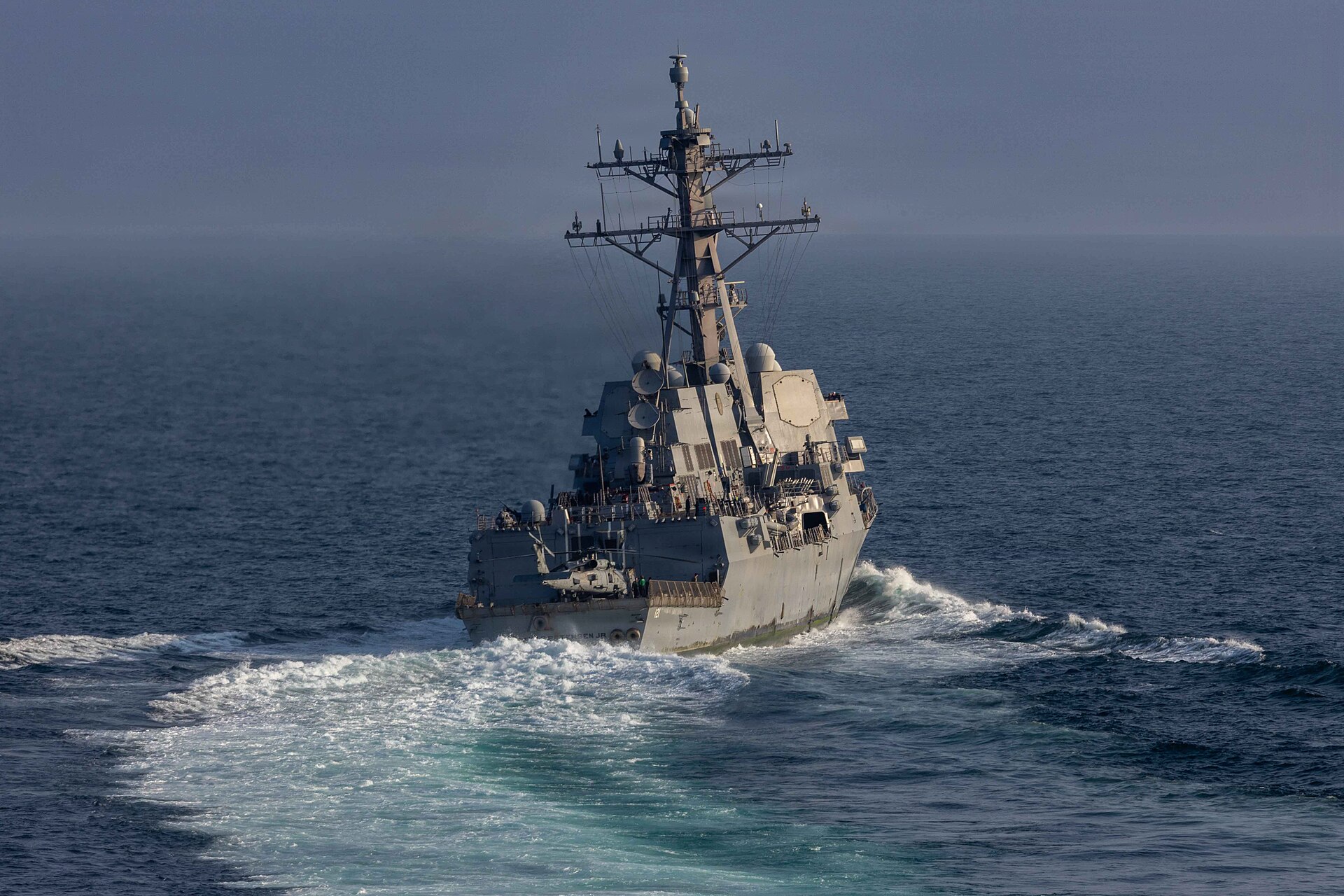
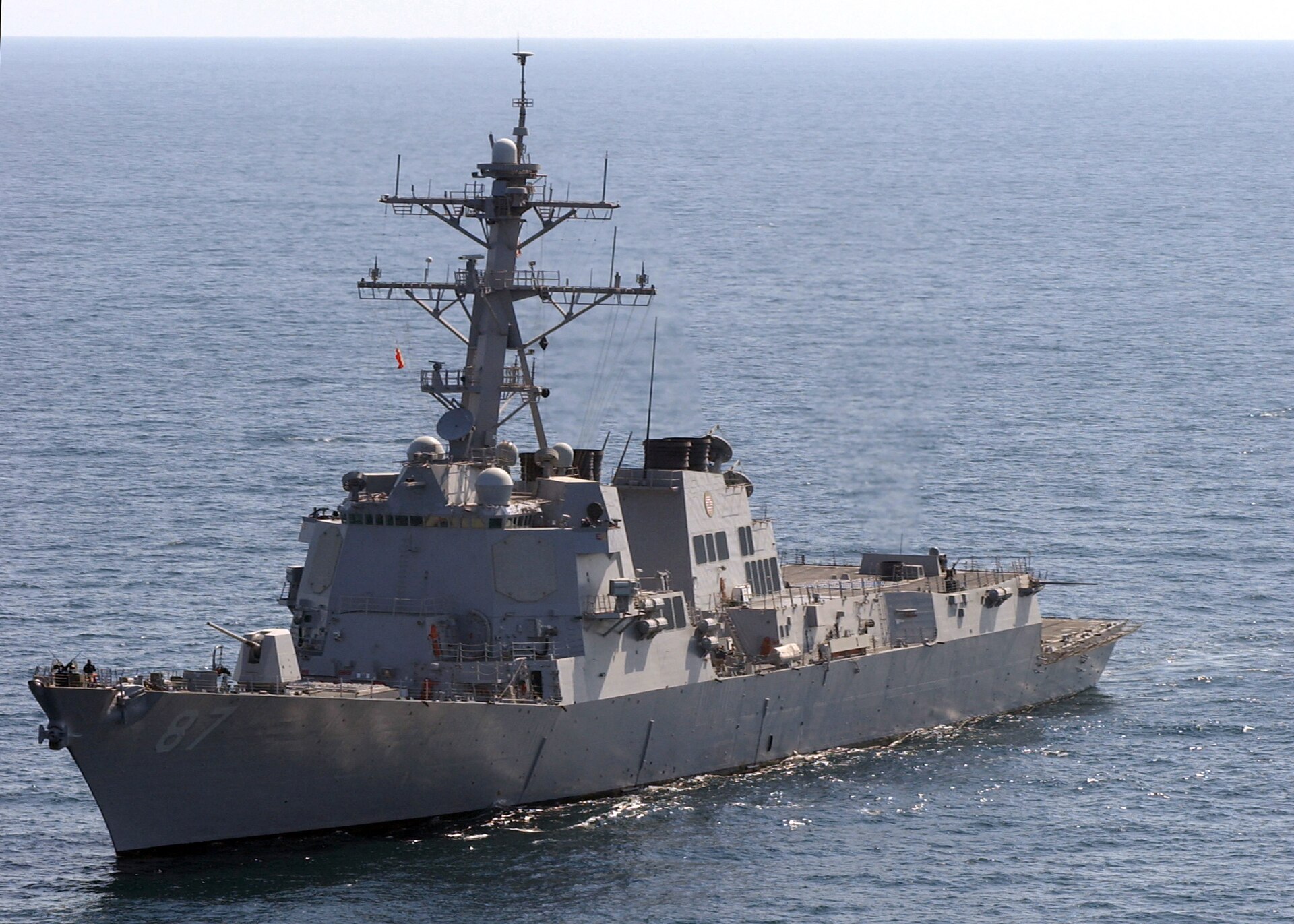
The 1991 benchmark for clearing 200 square miles of mined waterway u2014 the post-Gulf War Kuwait operation u2014 required approximately 51 days with dedicated mine countermeasures vessels. CENTCOM began Hormuz transit operations on April 11, sending the guided-missile destroyers USS Michael Murphy (DDG-121) and USS Frank E. Peterson (DDG-112) through the Strait. The IRGC issued “last warning” radio challenges to both ships. Fortune and the Times of Israel reported the confrontation on April 11.
n
But destroyers are not mine countermeasures vessels. The four Avenger-class MCM ships previously based at Naval Support Activity Bahrain were decommissioned in September 2025. The three Littoral Combat Ships with mine countermeasures mission packages are deployed in Asia. The US Navy’s capacity to clear Hormuz is not a question of political will; it is a question of hull availability. The ships that would do the work do not exist in theater.
n
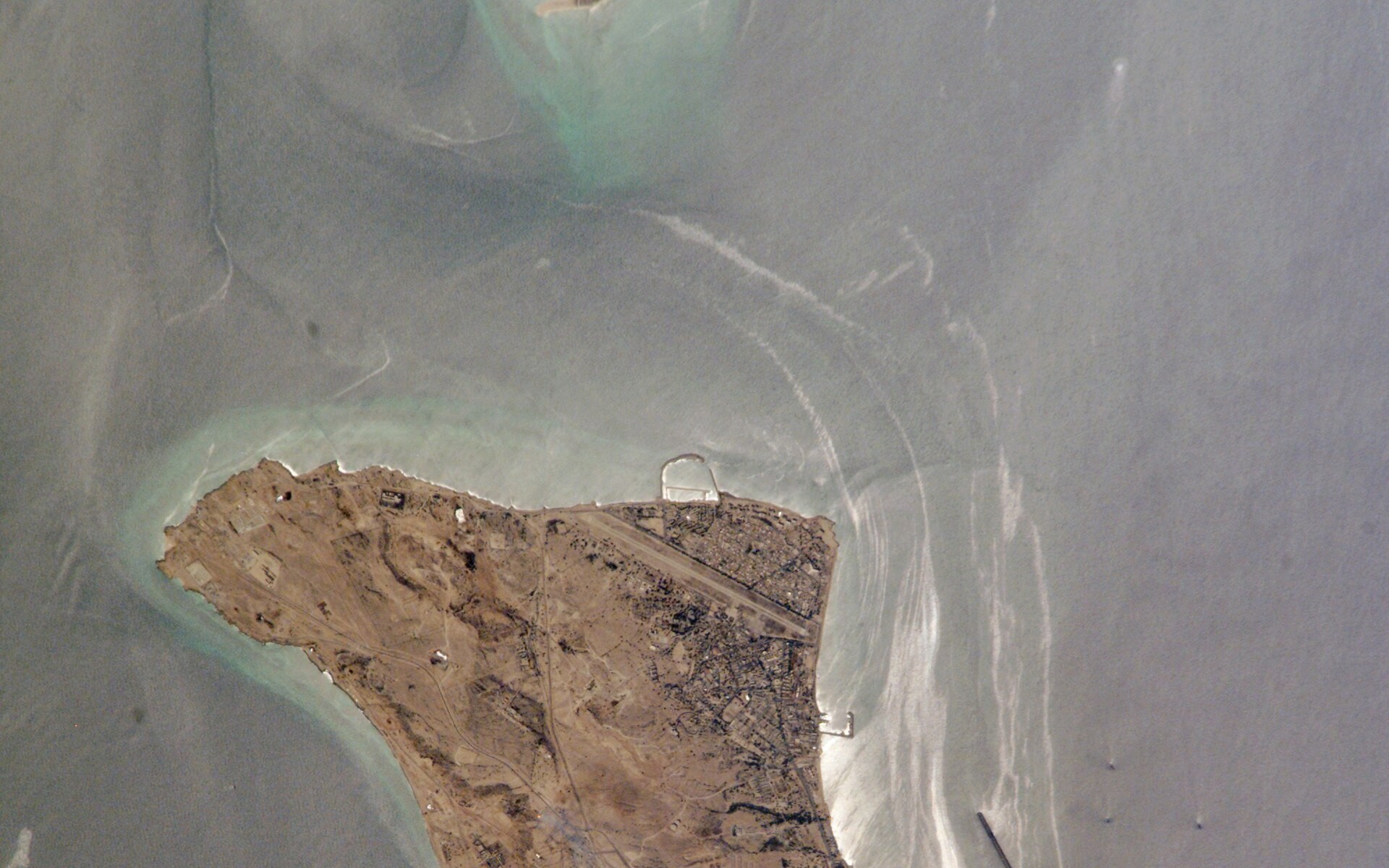
The IRGC published a chart u2014 first circulated February 28, updated through April 9 u2014 marking standard shipping lanes through Hormuz as a danger zone and redirecting civilian vessels to a five-nautical-mile corridor between Qeshm and Larak islands, inside Iranian territorial waters. Iran’s parliament passed a Hormuz fee bill on March 31, establishing domestic legal authority for toll collection. Iran’s ten-point ceasefire plan includes, at Point 7, a requirement for IRGC “coordination” over Hormuz as a permanent treaty element u2014 meaning any final deal must formalize IRGC authority over the Strait, a condition structurally incompatible with US freedom-of-navigation doctrine.
n
On the same day the Islamabad talks collapsed, the IRGC Navy issued a statement claiming “full sovereignty” over Hormuz and warning that “any attempt by warships to transit will be met with the most decisive and severe response.” The statement granted transit permission “exclusively to civilian vessels” under “special regulations” u2014 language that presumes Iranian authority over an international waterway and conditions passage on IRGC approval.
n
The gap between physical reality and diplomatic aspiration is measurable: 51 days of clearance work, ten days on the clock, and zero MCM ships in position.
n
What Happens to Ceasefires Without Enforcement Mechanisms?
n
The closest structural precedent is UN Security Council Resolution 1701, adopted in August 2006 to end the Israel-Hezbollah war. Resolution 1701 called for Hezbollah’s withdrawal south of the Litani River and the disarmament of all armed groups in southern Lebanon. It had UNIFIL as an observer force. It had the formal backing of the Security Council under Chapter VII-adjacent language. It had the Lebanese Armed Forces as a nominal enforcement partner.
n
Nearly twenty years later, not one clause requiring armed actor withdrawal had been implemented before the 2024 conflict. David Daoud of the Foundation for Defense of Democracies offered the assessment that applies directly to the current situation: “There is no credible enforcement mechanism.” Implementation of a ceasefire, Daoud wrote, “depends for implementation on the prior consent” of the armed actor being constrained u2014 “and [the armed actor] is not in the business of destroying itself.”
n
The Islamabad ceasefire has weaker institutional backing than 1701. Resolution 1701 had a UN mandate, an observer force, and a state military (the LAF) nominally committed to enforcement. The Islamabad framework has Pakistan’s foreign minister stating that Pakistan “will continue to facilitate engagement.” There is no observer force. There is no violation-reporting mechanism. There is no agreed definition of what constitutes a violation. The ceasefire contains no explicit extension mechanism and no automatic renewal clause. What happens after April 22 is, in the document’s own terms, structurally unaddressed.
n
Daniel Byman of CSIS, director of the Warfare, Irregular Threats, and Terrorism program, identified six unresolved issues undermining the ceasefire: nuclear ambitions, Lebanon’s exclusion from the framework, the revenge incentive created by 250-plus killed Iranian officials, the absence of a final settlement framework, persistent shadow-war incentives on both sides, and the fundamental distance between the parties’ positions. The parties remain, in Byman’s assessment, “far apart,” and the underlying drivers are “not only intact but intensified.”
n
The Soufan Center’s April 9 analysis identified the IRGC’s thirty-one-corps architecture as the core compliance problem and concluded that enforcement capacity does not exist within the ceasefire’s current structure. Pakistan’s role as the ceasefire’s sole enforcement mechanism was always structurally insufficient; the Islamabad collapse has now removed even that nominal function.
n
The Same-Day Signal
n
The timing of the IRGC Navy’s April 12 statement deserves isolation because it answers a question that diplomats prefer to leave ambiguous: does the IRGC intend to moderate its posture during the remaining ceasefire window?
n
The statement was issued on the same day the Islamabad talks ended. Not the day after, when institutional messaging might reflect internal deliberation. Not a week later, when political dynamics might have shifted. The same day. The language contained no ceasefire softening: “full sovereignty,” “intelligent management,” “most decisive and severe response” to warship transits, permission for civilian vessels “exclusively” under “special regulations.”
n
Compare this to the IRGC’s April 8 ceasefire statement, reported by NBC News, in which the IRGC said it would “respect the two-week conditional ceasefire” but keep “fingers on the trigger,” remaining “prepared to create an even greater epic should the enemy make another miscalculation.” The April 12 statement dropped even the conditional respect. The IRGC Navy’s claim of full authority over Hormuz was not new, but restating it on the day of diplomatic collapse u2014 while the ceasefire still technically held u2014 was a positional escalation within a nominal de-escalation period.
n
Ghalibaf’s post-Islamabad framing reinforced the pattern. He accused the United States of violating three of Tehran’s ten conditions: continued Israeli attacks on Lebanon, an alleged drone incursion into Iranian airspace after the ceasefire began, and US insistence on zero uranium enrichment. The framing was designed to pin responsibility for the collapse externally u2014 on Washington, not on the IRGC’s own structural incapacity to comply u2014 while preserving operational freedom internally. Ghalibaf had arrived at Islamabad having already declared the talks “unreasonable.” His post-collapse statement was consistent with his pre-arrival position. Nothing that happened in twenty-one hours changed his public posture.
n
Iran’s state media completed the picture. News9Live reported Tehran signaling “no new talks after Islamabad negotiations collapse.” Baghaei’s statement that “contacts between us and Pakistan, as well as our other friends in the region, will continue” gestured at informal channels without committing to structured negotiations. The word “contacts” is not the word “talks.”
n
Saudi Arabia’s Three-Sided Exposure
n
The convergence facing Riyadh is not a single threat but three simultaneous constraints that interact destructively.
n
The first is interceptor depletion. Four hundred PAC-3 rounds cannot be replenished in ten days, and the production pipeline u2014 a single facility in Pennsylvania serving global demand u2014 means the replenishment timeline is measured in quarters, not weeks. The kingdom absorbed 894 intercepts in thirty-five days of active conflict. Resumption at that rate exhausts remaining stocks in a period shorter than the first phase of the war.
n
The second is pilgrim concentration. Beginning April 18, Saudi Arabia will be absorbing hundreds of thousands of foreign nationals into fixed, publicly known locations u2014 dormitories, tent cities, the Masjid al-Haram complex u2014 under a theological obligation to provide security that cannot be deferred without existential reputational damage. The pilgrims arrive from countries u2014 Indonesia, Pakistan, India u2014 whose governments have diplomatic relationships with Iran and whose citizens’ safety creates political pressure that did not exist when the conflict involved only Saudi infrastructure. A PAC-3 failure over Mecca is a different category of event than a PAC-3 failure over an Aramco pumping station.
n
The third is Hormuz. The Strait remains physically uncleared. The mine countermeasures ships are gone. The IRGC claims operational authority and is actively conditioning civilian transit on its own approval. Saudi Arabia’s East-West Pipeline bypass to Yanbu can handle 5.9 million barrels per day against a pre-war Hormuz throughput of 7 to 7.5 million u2014 a structural gap of 1.1 to 1.6 million barrels per day that no pipeline expansion can close on a ten-day timeline. Every barrel that cannot transit Hormuz and cannot fit through the pipeline is a barrel that does not reach market.
n
These three constraints do not merely coexist. They compound. PAC-3 rounds expended defending Aramco infrastructure are rounds unavailable to defend Hajj sites. Diplomatic bandwidth consumed managing Hormuz is bandwidth unavailable for pilgrim security coordination with sending countries. The failure to reach any agreement at Islamabad means there is no political framework within which to address any of the three u2014 and no scheduled moment at which one might be created.
n
Iran’s Supreme National Security Council stated that “negotiations are the continuation of the battlefield.” The IRGC’s mosaic doctrine was designed to ensure that the battlefield continues whether or not negotiations do. Araghchi’s own words u2014 “independent and somewhat isolated, acting based on general instructions given in advance” u2014 describe a force that does not require political authorization to operate and that interprets the absence of new orders as confirmation of existing ones.
n
The ten days between April 12 and April 22 are not a diplomatic intermission. They are the interval in which every structural weakness of the ceasefire u2014 no enforcement mechanism, no compliance architecture, no extension clause, no next-round commitment, no operational authority over the forces that matter seated at the table u2014 becomes operationally relevant simultaneously.
n
Iran holds 440 kilograms of 60% enriched uranium. Its parliament has legislated toll collection over Hormuz. Its military doctrine delegates strike authority to thirty-one independent commands. Its operational commander refused to attend Islamabad. Its foreign minister has acknowledged that his own government cannot reliably communicate with its military units.
n
Saudi Arabia has 400 interceptor rounds, 750,000 incoming pilgrims, and a ceasefire that expires in ten days. The talks that might have addressed any of this lasted twenty-one hours and produced nothing u2014 not even a date for the next conversation.
n
n
Frequently Asked Questions
n
Could the ceasefire be extended beyond April 22 without formal talks?
n
An informal extension u2014 where both sides simply refrain from resuming hostilities without a signed document u2014 is theoretically possible but faces a structural obstacle unique to this conflict. The IRGC’s pre-delegated strike authorities mean that individual provincial commanders would need to receive and acknowledge new restraint orders through a chain of command that Araghchi himself has described as unreliable. An unwritten extension communicated through back channels might reach Tehran’s political leadership without reaching the Quds Force commander in Khuzestan or the IRGC Navy units operating near Hormuz. The Korean armistice avoided this problem by establishing permanent liaison officers at Panmunjom; no equivalent mechanism exists here.
n
What role could China play in preventing a ceasefire collapse?
n
Beijing brokered the Al Daayen LNG transit through Hormuz in early April u2014 the first laden LNG carrier to exit the Strait during the conflict u2014 using CNPC and Sinopec’s contracted offtake from Qatar’s North Field East as structural motivation. China has demonstrated the ability to negotiate individual vessel passages with the IRGC through Kunlun Bank payment channels outside SWIFT. However, China’s interest is transactional (securing its own energy imports) rather than systemic (enforcing a multilateral ceasefire), and Beijing has shown no inclination to assume the enforcement role that neither Pakistan nor the UN has filled.
n
Has Saudi Arabia requested emergency PAC-3 transfers from any ally?
n
Poland refused a Patriot battery transfer on March 31, 2026, citing its own Eastern European defense requirements. Germany, which operates Patriot systems, has not publicly responded to any Saudi request. Japan, which co-produces PAC-3 MSE rounds with Lockheed Martin under a 2023 agreement, is constrained by its Three Principles on Transfer of Defense Equipment, though Tokyo revised the principles in December 2023 to permit transfers to countries with active conflict involvement u2014 a revision that could theoretically apply to Saudi Arabia but has not been tested.
n
What is Iran’s economic runway if the ceasefire collapses?
n
Pezeshkian’s “three to four weeks” warning, issued in early April, implies an economic collapse window around late April to mid-May if hostilities resume. Iran was earning $139 million per day in oil revenue as of March 2026 despite the conflict, primarily through Jask terminal exports (0.3 million barrels per day via Kpler tracking) and overland deliveries to Turkey and Iraq. The OFAC General License U, which permitted Indian purchases of Iranian crude, expires April 19 u2014 three days before the ceasefire u2014 and no renewal has been announced, potentially removing Iran’s largest remaining crude customer.
n
Could the UN Security Council impose an enforcement mechanism before April 22?
n
Bahrain co-drafted a Hormuz resolution that went through six drafts over fifteen days, was progressively stripped from Chapter VII enforcement language to non-binding recommendation, and still faced a veto bloc of Russia, China, and France. The International Crisis Group’s Richard Gowan described the dynamic as the “veto as prize” u2014 where the act of blocking a resolution delivers more strategic value to the vetoing power than any resolution text could deliver to its sponsors. A new resolution with enforcement teeth would face the same trilateral veto, and the ten-day window before April 22 does not accommodate the Security Council’s procedural timeline for a fresh draft.
The ceasefire violation ledger grew further on April 8 when the strike on Lavan Island hit Iran’s central Gulf refinery and export terminal hours after the halt nominally took effect, narrowing Iran’s viable export architecture to a single terminal at Jask.