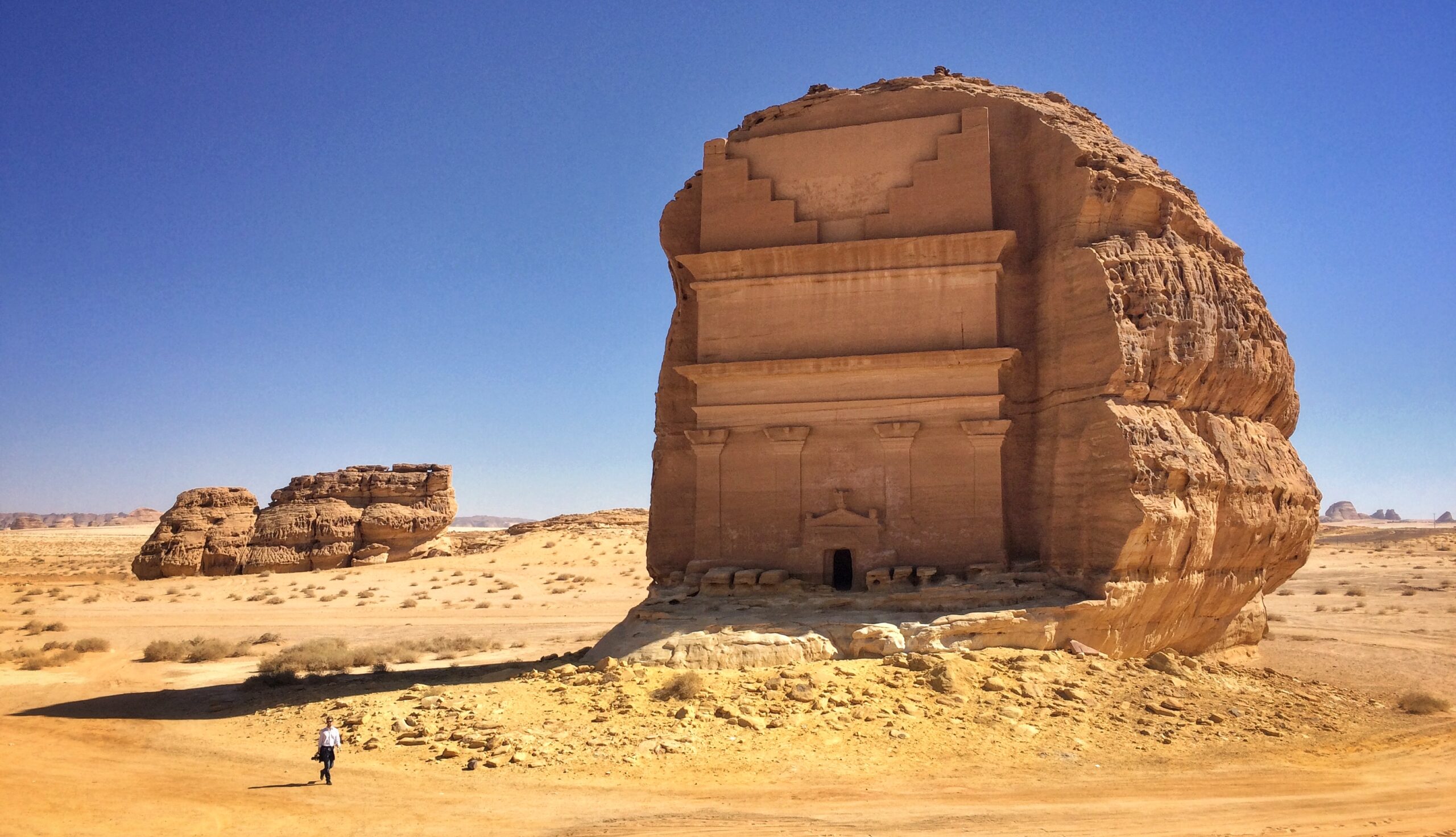

AlUla is Saudi Arabia’s most extraordinary travel destination — a 22,561-square-kilometre open-air museum where 200,000 years of human history collide with luxury desert camps, Michelin-calibre dining, and landscapes that look borrowed from another planet. Home to Hegra, the Kingdom’s first UNESCO World Heritage Site, and more than 110 monumental Nabataean tombs carved into sandstone cliffs, AlUla attracts travellers who want something rarer than a beach resort or a city break.
Most guides treat AlUla as a day trip from Medina. That is a mistake. Our review of 14 distinct bookable experiences, 10 accommodation properties, and the full AlUla Moments 2025-2026 events calendar found that the destination rewards a minimum three-night stay — and that visitors who book through the official Experience AlUla platform save 15-30 per cent compared to third-party aggregators. This guide covers every site, every cost, and every logistical detail you need, drawing on official Royal Commission for AlUla (RCU) data, verified visitor reviews, and on-the-ground intelligence.
For broader Saudi travel planning, see our Saudi Arabia Travel Guide 2026.
- Why Visit AlUla?
- Geology and Natural Landscape
- Hegra — Saudi Arabia’s First UNESCO World Heritage Site
- Elephant Rock and the Desert After Dark
- Dadan, Jabal Ikmah, and the Open-Air Library
- AlUla Old Town and the Oasis Heritage Trail
- Maraya — The World’s Largest Mirrored Building
- Adventure Activities — Via Ferrata, Ziplines, and Desert Hikes
- Sharaan Nature Reserve and Wildlife
- What Is the Best Time to Visit AlUla?
- How Do You Get to AlUla?
- Where to Stay in AlUla — Budget to Ultra-Luxury
- How Much Does an AlUla Trip Cost?
- AlUla Moments — Festivals, Concerts, and Sporting Events
- Stargazing in AlUla — Saudi Arabia’s First Dark Sky Park
- Photography Guide — Best Spots, Golden Hour, and Drone Rules
- The AlUla Trip Planning Framework
- Where to Eat in AlUla
- Visa and Practical Information
- Complete Guide to AlUla: All Pages
- Frequently Asked Questions
- Hegra Visitor Guide
- Elephant Rock Guide
- Dadan Archaeological Site Guide
- AlUla Hot Air Balloon Experience
- AlUla Old Town Guide
- Jabal Ikmah Inscriptions Guide
Why Visit AlUla?
AlUla is not a single attraction. It is an entire governorate in Medina Province, 350 kilometres northwest of the city of Medina, spanning canyons, oases, volcanic plateaus, and archaeological sites that stretch across 7,000 years of recorded civilisation. The Royal Commission for AlUla (RCU), established by royal decree in 2017 under the chairmanship of Crown Prince Mohammed bin Salman, has earmarked over USD 15 billion for development, with a target of 1.2 million annual visitors by 2030 and a GDP contribution of USD 32 billion by 2035 (Royal Commission for AlUla, 2024 Annual Report).
The numbers tell a story of rapid growth. AlUla received 265,000 visitors in 2024 and is targeting 300,000 in 2025 and 380,000 in 2026. Visitor numbers have surged from just 20,000 in 2020 — a fifteen-fold increase in five years. Currently, 72 per cent of visitors are Saudi nationals, though an international marketing campaign spanning the UK, Germany, the US, China, India, and Australia is shifting that balance. In late 2025, the RCU presented USD 1.6 billion in investment projects at roadshows in London and New York, signalling the scale of the destination’s ambition.
What makes AlUla different from every other Saudi tourism project is the density of its heritage. Within a 30-minute drive, you can walk through 2,000-year-old Nabataean tombs, read inscriptions from the Dadanite and Lihyanite kingdoms that predate Islam by a millennium, explore a 900-year-old mudbrick town, dine on a rooftop at the world’s largest mirrored building, and fall asleep under skies ranked in the top five per cent of the world’s darkest by DarkSky International.
AlUla is a cornerstone of Saudi Arabia’s Vision 2030 tourism strategy — but unlike NEOM’s megaproject ambitions, it already works. The hotels are open, the flights are running, the experiences are bookable, and the archaeological sites have been welcoming visitors since 2020.
Geology and Natural Landscape
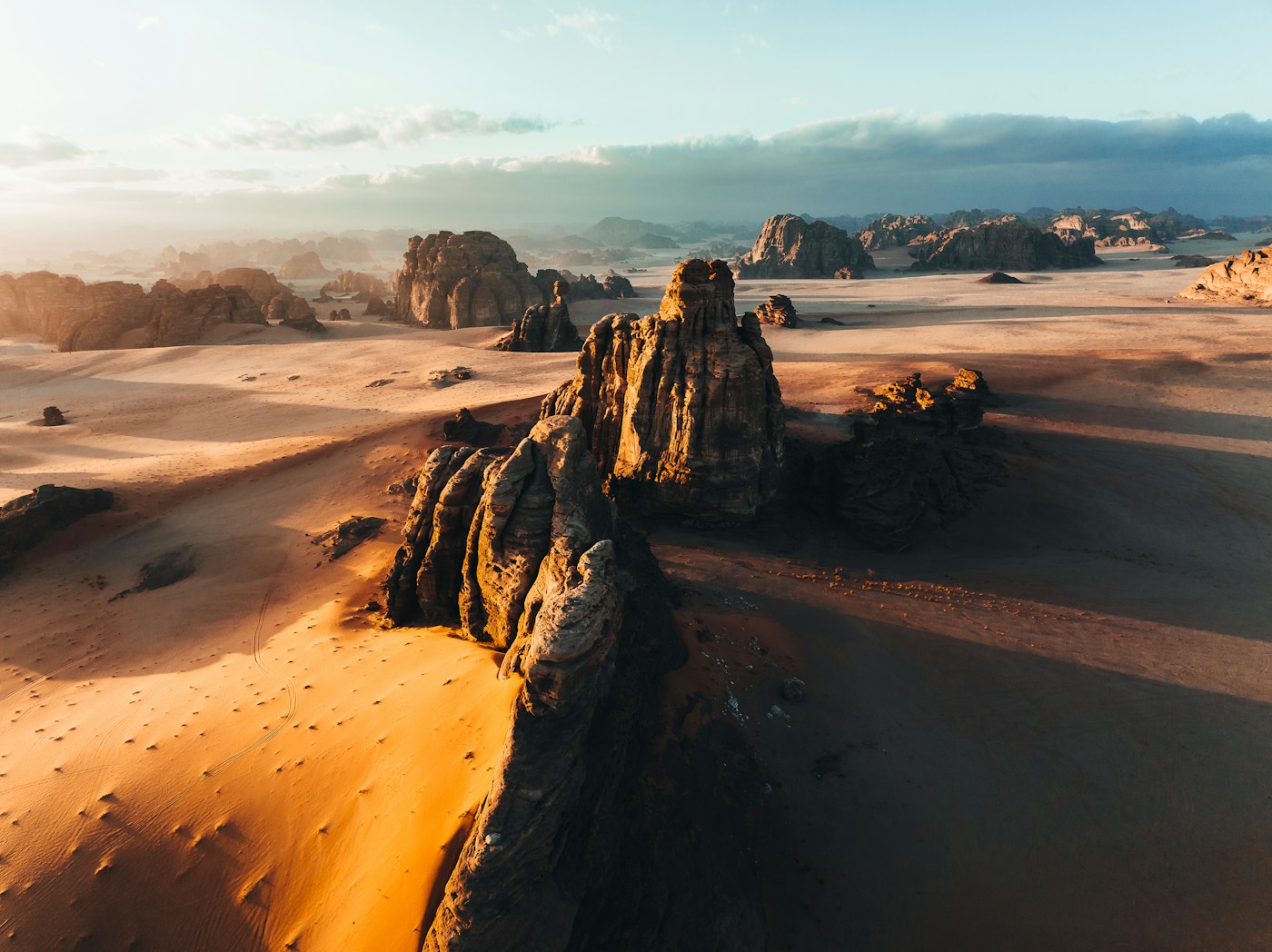
AlUla’s dramatic landscape is the product of nearly a billion years of geological history. The region sits on the Arabian Shield, a Precambrian crystalline formation whose oldest rocks in the AlUla area date to approximately 900 million years ago — evidence of underwater avalanches during the Neoproterozoic era. Atop this ancient basement, the iconic light-red sandstone formations that define AlUla were laid down during the Cambrian period, approximately 540 to 485 million years ago, as sedimentary deposits that have since been sculpted by wind, rain, and sand into the dramatic pillars, arches, and monoliths visible today.
The Harrat Uwayrid volcanic plateau adds another geological dimension. This basalt lava field, overlying the ancient sandstone, hosts dozens of extinct volcanoes. The volcanism spanned from approximately 10 million years ago to as recently as half a million years ago, with the last eruption on the Harrat believed to have occurred around 640 CE — remarkably recent in geological terms. The contrast between the jet-black basalt and the warm red sandstone beneath creates one of the most visually striking landscapes in the Arabian Peninsula.
A 2024 archaeological study documented 431 standing stone circles on the Harrat Uwayrid lava field, dating to approximately 5,800–5,500 BCE — over 7,000 years old. These circles, ranging from 4 to 8 metres in diameter with central standing stones, likely served as foundations for wooden-pole structures. Separately, approximately 1,600 mustatils (rectangular stone structures) have been identified across northwestern Saudi Arabia, predating Stonehenge by roughly 2,000 years and representing one of the earliest known large-scale ritual monument traditions in the world.
Key takeaway: AlUla’s geology is not merely scenic backdrop — it is an active part of the visitor experience. The Harrat Viewpoint offers panoramic views of the volcanic plateau at sunrise and sunset, and the sandstone formations along the highway into AlUla are worth stopping for even before you reach your first official tour.
Hegra — Saudi Arabia’s First UNESCO World Heritage Site
Hegra (also known as al-Hijr or Mada’in Salih) is the largest preserved Nabataean site south of Petra, inscribed as Saudi Arabia’s first UNESCO World Heritage Site in 2008. The site contains 111 monumental tombs, 94 of which are decorated with elaborate facades, and more than 130 wells, irrigation channels, and reservoirs that sustained a major trading city on the ancient incense route (UNESCO World Heritage Centre). For a detailed walkthrough of every tomb cluster, tour option, and visitor tip, see our dedicated Hegra visitor guide.
The Nabataeans built Hegra as the southern capital of their trading empire during the 1st century CE. Where Petra in Jordan receives over a million visitors annually and can feel crowded, Hegra remains comparatively uncrowded — making it one of the few places on earth where you can stand alone before a 2,000-year-old carved tomb facade with no queue behind you.
What to Expect on the Hegra Tour
Self-driving within Hegra is not permitted. All visits are via organised tours that depart from the Hegra South Gate, where free parking is available. Two main options exist:
- Coach tour: Starting from SAR 95 (approximately USD 25) per person, lasting around two hours. An audio guide is available in five languages — Arabic, English, French, Italian, and Mandarin.
- Premium 4×4 tour: A private vehicle experience with a dedicated guide, offering more time at key tombs and the flexibility to linger.
- Hop-On Hop-Off tour: Starting from SAR 150, allowing visitors to explore at their own pace across multiple stops.
The tour route passes the site’s most significant tombs, including the Lonely Tomb (Qasr al-Farid) — the single most photographed structure in AlUla. Standing alone on a flat plain, this unfinished tomb is carved from a single sandstone outcrop and is believed to date to the 1st century CE.
Nabataean Water Engineering
Hegra alone had 130 wells, most tapping groundwater at 10 metres depth, with the deepest reaching 20 metres and an impressive 7 metres wide. Nabataean wells were distinctly engineered: typically deeper (up to 17 metres) and wider in diameter than those of other civilisations, serving a dual purpose as both water source and storage cistern. Some wells could hold water supplies for up to a year — a critical advantage in a desert trading city.
The Hegra Visitor Centre
Before or after your tour, the Hegra Visitor Centre offers traditional Arab hospitality: dates, dried fruits, fresh juices, and Saudi coffee. It also houses an exhibition space covering Nabataean history and a gift shop. All ages are welcome on tours; children aged four and under enter free.
Key takeaway: Book the earliest morning slot available. The sandstone glows warmest in the first two hours after sunrise, and you avoid the midday heat that builds even in winter months. Late afternoon tours, ending close to sunset, are equally rewarding for photography.
Elephant Rock and the Desert After Dark
Elephant Rock (Jabal AlFil) is a natural sandstone formation standing 52 metres above the desert floor, shaped by millions of years of wind erosion into a form that unmistakably resembles an elephant with its trunk reaching toward the ground. It is the single most recognisable landmark in AlUla and one of the most photographed geological features in Saudi Arabia.
Unlike most archaeological sites, Elephant Rock comes alive after dark. The site is open daily from 16:00 to midnight, with extended hours until 00:40 on Thursdays and Fridays. As dusk descends, the rock is illuminated while music plays gently in the background, transforming the site into an open-air social gathering place.
What Is There at Elephant Rock?
- SALT food truck: Burgers, shakes, and casual dining with desert views
- Shisha lounge: Traditional water pipe service under the stars
- Fire pits: Seating areas with crackling fires during cooler months
- Traditional Saudi cuisine: Options including Kabsa and Mandi served across various seating areas
Elephant Rock is a 20-minute drive northeast of AlUla Old Town, accessible via Highway 70 with free parking. There is no entry fee for the viewing area itself, though food and experiences carry individual charges.
Key takeaway: Visit between 16:00 and 18:00 for golden-hour photography, then stay through sunset for the illumination. Weekday evenings are significantly quieter than Thursday and Friday nights. For a comprehensive guide to the site including parking, accessibility, and photography angles, see our full Elephant Rock guide.
Dadan, Jabal Ikmah, and the Open-Air Library
Dadan is the ancient capital of the Dadanite and Lihyanite kingdoms, civilisations that flourished during the first millennium BCE — centuries before the Nabataeans arrived. The Dadanite kingdom’s prosperity was built on two pillars: intensive irrigated agriculture and control of the north-south incense trade route, along which merchants led camel caravans on months-long journeys exceeding 1,000 miles from southern Arabia through Dadan to markets around the Mediterranean. The key traded commodities were frankincense, myrrh, and spices — frankincense being one of the most sought-after commodities in the ancient world.
Around the 5th century BCE, leadership transferred from the Dadanites to the kings of the Lihyan tribe, who expanded territorial control from Medina in the south to Aqaba (modern-day Jordan) in the north. These successive civilisations flourished over a combined 900-year span, declining around 100 CE. Merchants from the distant South Arabian city of Ma’in (Minaean traders) established a residential trade colony in Dadan, and Greek sailors and traders paid tolls to Lihyanite tax collectors — evidence of a truly international trading hub.
The famed Lion Tombs of Dadan are carved 50 metres above ground level into the cliff face. Named after seated lion sculptures flanking the tomb entrances, they are believed to belong to elite members of Dadanite society, possibly royalty. The lions served as sacred guardians for the deceased.
Nearby, Jabal Ikmah holds more than 300 historically significant inscriptions — the largest concentration of well-preserved Dadanitic and Lihyanite inscriptions anywhere in the world, earning its designation as AlUla’s “open-air library” and its listing on UNESCO’s Memory of the World Register in 2023. The inscriptions appear in six distinct languages and scripts: Dadanitic, Lihyanite, Aramaic, Thamudic, Minaic, and Nabataean. They cover subjects ranging from rituals and rulers to blessings, agriculture, economic transactions, and daily life. Notably, the inscriptions depict women as property owners, agricultural landholders, and ritual participants in Dadanite society.
Visiting Dadan and Jabal Ikmah
The Dadan and Jabal Ikmah Tour costs from SAR 60 per person and combines both sites in a single guided visit. Many of the inscriptions record offerings to the Lihyanite god Dhu Ghaybah and request protection for journeys ahead — evidence that this was a sacred site not only for local residents but for travellers passing through AlUla on the incense route. For full details on both sites, see our dedicated Dadan archaeological guide and Jabal Ikmah inscriptions guide.
Our review of the archaeological significance of these sites suggests they are underrated relative to Hegra. While Hegra’s visual grandeur draws the crowds, Dadan and Jabal Ikmah offer a deeper, more intellectually rewarding experience for visitors interested in pre-Islamic Arabia. The rock art in the AlUla region represents one of the most extensive and chronologically deep collections in northern Arabia, spanning over 12,000 years from the early Holocene to the recent past.
Key takeaway: Book the combined Dadan and Jabal Ikmah tour on a morning when you are not visiting Hegra. The two experiences complement each other but cover different civilisations and different millennia.
AlUla Old Town and the Oasis Heritage Trail
AlUla Old Town is a labyrinth of mudbrick buildings and stone alleyways that served as a thriving settlement for more than 900 years. Dating to the 12th century CE, the town functioned as a hub on the incense trade routes and on the Damascus-to-Makkah pilgrimage path (Darb Zubaydah). Pilgrims, traders, and settlers once filled its narrow streets, which housed hundreds of homes, mosques, shops, and a fort that offered sweeping views across the oasis below. Carefully restored since the 1980s, the Old Town now functions as a living heritage precinct with cafes, seasonal souks, and cultural events.
The Oasis Heritage Trail
The three-kilometre Oasis Heritage Trail is one of AlUla’s best-value experiences at just SAR 35 (approximately USD 9). The 90-minute guided walk starts with traditional AlUla hospitality — dates, dried fruits, and coffee — before leading visitors along a scenic trail, parts shaded under towering date palms, other sections opening to sunny clearings with panoramic views of restored farmlands.
The trail passes farmlands that have been restored to grow the fruit and vegetables served in AlUla’s farm-to-table restaurants. The AlUla oasis contains approximately 2.3 million date palm trees in its core area, producing over 90,000 tonnes of dates annually across more than 90 documented varieties. Key varieties include Barni (the heritage flagship), Mabroom, Helwah (the most popular), Anbara, and Majhool. Date palms have been cultivated here for more than 3,000 years, with broader crop evidence stretching back to approximately 4,600 BCE.
From Old Town to Oasis: A Heritage Discovery Experience
A Rawi-led walking tour connects Dar Tantora to the Oasis, featuring storytelling, elevated viewpoints, and cultural insight. “Rawi” is the Arabic word for storyteller, and these local guides bring centuries of oral tradition to their narration.
For those visiting during date season (October to November), specialised tours allow visitors to taste AlUla’s heritage through its cherished dates — the historical lifeblood of the oasis. For more on exploring AlUla’s mudbrick heritage quarter and oasis walks, see our full AlUla Old Town guide.
Key takeaway: Visit the Old Town in the late afternoon when the light is warm and the stone walls glow amber. Climb to AlUla Fort for the best panoramic views before heading to Elephant Rock for sunset.
Maraya — The World’s Largest Mirrored Building
Maraya holds the Guinness World Record as the world’s largest mirror-clad building. The structure’s facade is adorned with 9,740 square metres of mirrors, reflecting the sandstone cliffs and desert sky of the Ashar Valley with such precision that the building appears to vanish into its surroundings. The total structure spans 22,000 square metres with a ground floor area of 10,000 square metres (Guinness World Records, 2020). “Maraya” means “reflection” or “mirror” in Arabic.
Inaugurated between August and December 2019 as the pioneering project of the “Journey Through Time Masterplan,” Maraya serves as both a concert and events venue and an architectural statement about AlUla’s ambition to blend heritage with contemporary culture.
Events and Performances
The 500-seat Maraya Concert Hall has hosted international performers including Usher, OneRepublic, Alicia Keys, Andrea Bocelli, John Legend, and Seal. Beyond music, Maraya has held an Andy Warhol art exhibition and the Hegra Conference of Nobel Laureates — mixing entertainment with serious intellectual programming.
Maraya Social Restaurant
Perched atop the mirrored structure, Maraya Social is the creation of acclaimed chef Jason Atherton. The restaurant serves sharing plates and mocktails curated with seasonal produce, blending Arabian, British, and Mediterranean influences. Dining here at sunset, with the desert reflected infinitely around you, is one of AlUla’s most memorable experiences.
The Maraya Tour costs from SAR 95 per person and provides architectural context alongside access to the building’s public areas.
Key takeaway: Check the AlUla Moments events calendar before your trip. If a concert or exhibition coincides with your visit, book immediately — the 500-seat capacity means events sell out fast.
Adventure Activities — Via Ferrata, Ziplines, and Desert Hikes
AlUla has evolved beyond a heritage destination into one of Saudi Arabia’s premier adventure tourism hubs. The Adventure Hub, located next to Harrat Mountain Road, is the region’s first integrated adventure sports complex, combining rock climbing, ziplines, and aerial experiences into a single facility set against AlUla’s sandstone canyon walls.
Via Ferrata
The via ferrata (“iron path” in Italian) is a two-hour climbing experience up a 200-metre-high rock face using steel cable rails, metal steps, ladders, suspension bridges, and zip lines. A highlight is the Hammock Net suspended over the valley where climbers can rest and take in panoramic views of the canyon. No prior climbing experience is necessary — the fixed safety system makes the route accessible to fit beginners.
AlUla Zipline
Saudi Arabia’s longest and fastest zipline stretches 1.5 kilometres, reaching speeds of up to 120 km/h. Riders glide in a horizontal, face-down “Superman” position high above the desert floor. A separate experience, the AlUla Stairway, takes visitors up a 45-metre suspended ladder stairway with a zipline descent back to the valley floor.
Giant Swing
The Giant Swing launches riders from a mountain’s edge in a 70-metre arc, suspended 85 metres above the ground between high canyon walls. It is among the most dramatic aerial experiences available in the Gulf region.
Hiking Trails
AlUla offers hiking routes for every fitness level:
- Oasis Heritage Trail: 3 km, 90 minutes, through mudbrick houses, farms, and ancient city walls — open day and night
- Ridge Walk Hike: 6 km, family-suitable, with elevated desert views
- Hidden Valley Hike: 4 km through Sharaan Nature Reserve, approximately 3 hours
- Historical Odyssey: 8 km route passing 2,000-year-old pictographs and desert flora
- Canyon Hike (Husaak): 12 km, approximately 4 hours, through a historic canyon — the most challenging option
Hot Air Balloon Rides
AlUla’s hot air balloon flights reach 1,200 metres altitude and last up to three hours, typically departing early morning when the air is still and the light is golden. Routes pass over sandstone mountains, the oasis, and Hegra’s Nabataean tombs — offering a perspective on AlUla’s scale that no ground-level tour can match. At SAR 995 per person, it is the most expensive single experience in AlUla but consistently the highest-rated. For full booking details and what to expect, see our AlUla hot air balloon guide.
Key takeaway: The via ferrata and zipline are best booked for early morning before the heat builds. The hot air balloon requires advance booking and is weather-dependent — build a buffer day into your itinerary in case of cancellation.
Sharaan Nature Reserve and Wildlife
The Sharaan Nature Reserve covers 1,500 square kilometres of canyons, valleys, and desert — making it the largest nature reserve in AlUla and one of the most ambitious wildlife reintroduction programmes in the Middle East.
The Royal Commission for AlUla has released approximately 1,500 animals across four reintroduced species: Arabian oryx, Arabian gazelle (Idmi gazelle), sand gazelle, and Nubian ibex. In 2023 alone, about 1,000 animals from these four species were released into reserves at Sharaan, Wadi Nakhlah, and Gharameel. Successful breeding in the wild has been recorded. Other species present include red-necked ostriches, Cape hares, rock hyraxes, Arabian wolves, and large-eared red foxes.
The reserve’s headline conservation project is the Arabian leopard breeding programme. The RCU took charge of Saudi Arabia’s national breeding effort in 2019 and has produced 16 cubs successfully at the breeding centre in Taif, with the target of having leopards and the landscape ready for reintroduction by 2030. To restore the leopard’s natural habitat, 100,000 acacia trees have been planted in Sharaan so far, with an ultimate ambition of 10 million trees.
The Hidden Valley Hike (4 km, approximately 3 hours) passes through Sharaan Nature Reserve and offers the best chance of spotting reintroduced wildlife — particularly ibex and gazelle in the early morning. The reserve is also the future home of the Sharaan Resort by Jean Nouvel, a 40-suite ultra-luxury hotel carved into the sandstone cliffs using techniques inspired by ancient Nabataean construction, expected to open in 2026.
Key takeaway: The Hidden Valley Hike is the best way to experience the reserve. Go at dawn for the highest chance of wildlife sightings and the coolest temperatures.
What Is the Best Time to Visit AlUla?
The best time to visit AlUla is between October and March, when daytime temperatures range from a comfortable 15 degrees Celsius to 28 degrees Celsius (59-82 degrees Fahrenheit). The winter months of December through February are widely regarded as the golden season, with daytime highs of 15-25 degrees Celsius and nights that can drop close to freezing — ideal for layered clothing and clear, star-filled skies.
The AlUla Readiness Matrix
Our analysis of temperature data, event schedules, hotel pricing, and flight availability across the 12-month calendar produced what we call the AlUla Readiness Matrix — a month-by-month scoring of the destination across five criteria:
| Month | Weather | Events | Value | Crowds | Overall |
|---|---|---|---|---|---|
| October | Good | Wellness Festival | High | Low | Strong |
| November | Excellent | Ancient Kingdoms Festival | High | Moderate | Excellent |
| December | Excellent | Winter at Tantora | Moderate | High | Excellent |
| January | Excellent | Arts Festival, Desert Polo, Trail Race | Moderate | High | Excellent |
| February | Excellent | Arts Festival, Endurance Race | Moderate | Moderate | Strong |
| March | Good | Ramadan (variable) | High | Low | Good |
| April | Warm | AlUla Skies Festival | High | Low | Good |
| May-September | Very Hot | Limited | Highest | Very Low | Avoid unless budget-focused |
The December to January peak coincides with Winter at Tantora and the AlUla Arts Festival, offering the richest cultural programme but also the highest accommodation prices and the greatest demand for tours. October and February offer an attractive balance of good weather, fewer crowds, and better rates.
What to Pack
Layering is essential. Lightweight, breathable clothing works for daytime exploration, but evenings in winter can be genuinely cold. A windbreaker or fleece is recommended for stargazing sessions and evening visits to Elephant Rock. Sturdy walking shoes are necessary for the Oasis Heritage Trail and Hegra tours. Sun protection — hat, sunscreen, sunglasses — is non-negotiable year-round.
Key takeaway: November offers the best overall value: excellent weather, the Ancient Kingdoms Festival, lower prices than December-January peak, and manageable crowd levels.
How Do You Get to AlUla?
AlUla International Airport (ULH) receives daily flights from Riyadh and Jeddah, with international services from Dubai, Doha, and Amman. A January 2026 expansion raised the airport’s capacity to 700,000 passengers annually, up from 400,000. Plans for a Terminal 2 will further expand capacity to 6 million passengers with the ability to accommodate 15 flights simultaneously.
Flight Options (October 2025 – March 2026 Season)
| Route | Airline | Frequency | Approx. One-Way From |
|---|---|---|---|
| Riyadh (RUH) to AlUla (ULH) | Saudia | Daily | SAR 260 / USD 70 |
| Riyadh (RUH) to AlUla (ULH) | flynas | 5x weekly (Mon/Tue/Wed/Fri/Sun) | SAR 260 / USD 70 |
| Jeddah (JED) to AlUla (ULH) | Saudia | Daily | SAR 400 / USD 107 |
| Dammam (DMM) to AlUla (ULH) | flynas | 2x weekly (Thu/Sat) | SAR 350 / USD 93 |
| Dubai (DXB) to AlUla (ULH) | flydubai | 3x weekly (Mon/Tue/Thu/Sun) | Varies |
| Doha (DOH) to AlUla (ULH) | Qatar Airways | 3x weekly (Wed/Fri/Sun) | Varies |
| Amman (AMM) to AlUla (ULH) | Royal Jordanian | 2x weekly (Thu/Sun) | Varies |
Average flight time from Riyadh is approximately 1 hour and 55 minutes.
Driving to AlUla
AlUla is a three-hour drive from both Medina and Tabuk, making it accessible for travellers who fly into either city and prefer a road trip. Car rental is available at both airports. International drivers need a valid driving licence, and an international driving permit is highly recommended.
Getting Around AlUla
- Darb AlUla app: A local ride-sharing service for point-to-point transport
- Public buses: Running every 30 minutes during operational hours, connecting multiple areas year-round
- Car rental: Available from Budget Saudi Arabia, Lamar Luxury Car Rental, Al Wefaq, and Daleel AlUla
- Visitor centres: Six centres operate across AlUla with WhatsApp support
Key takeaway: Book flights as early as possible for the October-March season. Saudia and flynas routes fill up quickly during Winter at Tantora. If flights are sold out, fly to Medina and drive three hours northwest.
Where to Stay in AlUla — Budget to Ultra-Luxury
AlUla’s accommodation ranges from SAR 150 per night for budget options to SAR 8,000+ for ultra-luxury tented villas with private plunge pools. Our analysis of properties across four tiers found that the destination’s hotel infrastructure has matured significantly since 2020, with current inventory at approximately 1,200 rooms and a target of 2,000 rooms by early 2028.
Ultra-Luxury (SAR 3,000+ / USD 800+ per night)
Habitas AlUla — Ranked number one of 10 hotels in AlUla on TripAdvisor with 411 traveller reviews. Composed of 96 villas prefabricated in Mexico and shipped to the Ashar Valley, Habitas uses organic materials — bamboo, canvas, and responsibly sourced hardwood — for guest rooms that sit lightly on the desert. The property’s Tama restaurant serves a fusion of global and Middle Eastern cuisine sourced from local farms. Rates reach approximately SAR 7,500 / USD 2,000 per night in peak season.
Banyan Tree AlUla — 79 tented villas in the Ashar Valley, each with high ceilings, canopy tents, and views of towering sandstone cliffs. The one-bedroom pool villa includes a king-size bed, bathroom patio, external fire pit, and private swimming pool. Rates start from SAR 4,200 / USD 1,120 per night. Book 15+ days in advance for a 15 per cent discount inclusive of breakfast.
The Chedi Hegra — Opened in December 2024, this is the first hotel within the UNESCO World Heritage Site itself, built from the ruins of the Hegra railway station. Features 35 bespoke guesthouses with desert views, plunge pools, and 24-hour butler service, plus three restaurants and an outdoor pool.
Mid-Range (SAR 750-3,000 / USD 200-800 per night)
Sahary AlUla Resort — A village-like complex on the doorstep of AlUla Old Town, from approximately SAR 1,420 / USD 379 per night.
Shaden Resort — Managed by Accor, offering 4-star accommodation with sauna, hot tub, hammam, fitness centre, garden, pool, and buffet breakfast. From approximately SAR 770 / USD 206 per night.
Cloud7 Residence AlUla — A modern low-rise bungalow complex designed for a home-from-home feel. From approximately SAR 760 / USD 203 per night.
Budget (Under SAR 750 / USD 200 per night)
Budget options in AlUla start from as low as SAR 150 / USD 40 per night. While these properties lack the desert-camp glamour of the luxury tier, they provide comfortable bases for exploring the region’s attractions.
Coming Soon
| Property | Rooms | Expected Opening | Notes |
|---|---|---|---|
| Sharaan Resort (Jean Nouvel) | 40 suites + 2 villas | 2026 | Carved into sandstone cliffs; ultra-luxury; includes International Summit Center |
| Aman AlUla | TBC | 2025 | Ultra-luxury heritage property; second property (tented camp) follows 2026 |
| Hyatt Place AlUla | 215 | Late 2025 | Urban hospitality concept, 25km from airport, two restaurants, pool |
| Autograph Collection (Marriott) | 250 | 2025 | Adjacent to AlUla Museum; four restaurants, spa, pool |
| Janu AlUla (Aman sister brand) | TBC | 2027 | Ranch-style desert resort; more affordable Aman alternative |
| Six Senses AlUla | 100 villas + 25 residences | 2027 | Wellness-focused resort |
Key takeaway: For the best balance of experience and value, Shaden Resort or Cloud7 Residence provide comfortable mid-range bases. Invest the savings in experiences — a hot air balloon flight or helicopter tour delivers more lasting memories than a higher thread count.
How Much Does an AlUla Trip Cost?
A three-night AlUla trip costs between SAR 2,500 (USD 667) for a budget itinerary and SAR 25,000+ (USD 6,700+) for an ultra-luxury experience. Our analysis of all publicly listed tour prices, accommodation rates, and transport costs produced the following budget tiers.
The AlUla Cost Calculator
| Category | Budget (3 nights) | Mid-Range (3 nights) | Luxury (3 nights) |
|---|---|---|---|
| Flights (Riyadh return) | SAR 520 | SAR 800 | SAR 1,500 |
| Accommodation | SAR 450 | SAR 2,310 | SAR 12,600 |
| Hegra Tour | SAR 95 | SAR 150 | SAR 400 |
| Dadan/Ikmah Tour | SAR 60 | SAR 60 | SAR 250 |
| Oasis Heritage Trail | SAR 35 | SAR 35 | SAR 35 |
| Elephant Rock (food/drinks) | SAR 100 | SAR 200 | SAR 500 |
| Stargazing | SAR 150 | SAR 300 | SAR 500 |
| Hot Air Balloon | — | SAR 995 | SAR 995 |
| Helicopter Tour | — | — | SAR 500 |
| Dining | SAR 600 | SAR 1,200 | SAR 3,000 |
| Transport (local) | SAR 200 | SAR 400 | Included |
| Total | SAR 2,210 | SAR 6,450 | SAR 20,280 |
| Total (USD approx.) | USD 590 | USD 1,720 | USD 5,408 |
Individual Experience Prices
| Experience | Price (SAR) | Price (USD) | Duration |
|---|---|---|---|
| Oasis Heritage Trail | 35 | 9 | 90 minutes |
| Dadan and Jabal Ikmah Tour | 60 | 16 | 2 hours |
| Hegra Coach Tour | 95 | 25 | 2 hours |
| Maraya Tour | 95 | 25 | 1 hour |
| Hegra Hop-On Hop-Off | 150 | 40 | Half day |
| Via Ferrata | 180 | 48 | 2-3 hours |
| Helicopter Tour | 500 | 133 | 30 minutes |
| Hot Air Balloon | 995 | 265 | 1 hour |
| Daimumah Workshops | From 15 | 4 | Varies |
For wider Saudi Arabia cost planning, see our Saudi Arabia Cost Guide.
Key takeaway: AlUla’s heritage tours (Hegra, Dadan, Oasis Trail) are remarkably affordable — under SAR 200 combined. The real cost driver is accommodation. Budget travellers who stay in town and self-cater can experience AlUla’s core attractions for under SAR 2,500 for three nights.
AlUla Moments — Festivals, Concerts, and Sporting Events
AlUla Moments is the year-round cultural programme that transforms AlUla from an archaeological destination into a living festival calendar. The 2025-2026 season is the most ambitious yet, spanning music, art, sport, gastronomy, and astronomy across ten months of programming (AlUla Moments, 2025).
Key Events Calendar 2025-2026
| Event | Dates | Highlights |
|---|---|---|
| AZIMUTH Music Event | September 2025 | Saudi National Day weekend concerts |
| AlUla Wellness Festival | October 2025 | Week-long wellness and transformation programme |
| Ancient Kingdoms Festival | November 2025 | Heritage-focused “journey through time” experiences |
| Winter at Tantora | 18 December 2025 – 10 January 2026 | Flagship festival: concerts, rooftop performances, fine dining, Old Town Nights |
| AlUla Arts Festival | 16 January – 14 February 2026 | Contemporary art exhibitions and installations |
| AlUla Desert Polo | 16-17 January 2026 | Polo tournament in the desert |
| AlUla Trail Race | 22-23 January 2026 | Desert trail running |
| AlUla Tour (cycling) | 27-31 January 2026 | Professional cycling race |
| AlFursan Endurance AlUla | 7-8 February 2026 | Equestrian endurance race |
| AlUla Skies Festival | 17-26 April 2026 | Astronomy, Lyrids meteor shower, desert adventures |
Winter at Tantora — The Flagship Festival
The 2025-2026 edition runs under the theme “Winter Brings Us Together” and features several headline experiences:
- Thanaya Concert Series: Performances nestled between towering canyons in one of AlUla’s most dramatic natural settings
- Shorfat Tantora: Music flowing from the rooftops of AlJadidah, with ensembles performing Saudi classics, operatic pieces, and contemporary sounds from balconies
- Old Town Nights: An extraordinary dinner-and-show experience combining live performance, heritage storytelling, and fine dining at the historic AlUla Fort
- Old Town Culinary Voyage: A sensory journey through local flavours and traditional ingredients
- Fine dining pop-ups: Including the return of Ducasse and Annabel’s — two of the world’s most prestigious hospitality brands
- Featured performers: Emirati singer Ahlam (26 December), Assala Nasri and Lebanese star Adam (31 December New Year’s Eve)
Key takeaway: Build your trip around an event if possible. Winter at Tantora and the Arts Festival transform AlUla from a heritage destination into a cultural destination, and the combination is more compelling than either alone.
Stargazing in AlUla — Saudi Arabia’s First Dark Sky Park
AlUla became the first location in the Middle East to be designated an International Dark Sky Park by DarkSky International in late 2024. The Gharameel and AlUla Manara nature reserves are ranked among the top five per cent of the world’s darkest skies, making spiral galaxies, including the Milky Way, visible to the naked eye (DarkSky International, 2024).
This is not incidental to AlUla’s appeal — it is a deliberate pillar of the destination’s identity. The Royal Commission for AlUla has invested in astrotourism infrastructure, positioning AlUla as a global leader in the emerging luxury stargazing market.
Stargazing Experiences
- A Magical Journey Among the Stars: A guided astronomy session in the Ashar Valley led by expert astronomers who narrate stories connecting ancient Arabic culture and constellations. Traditional dinner is prepared on a campfire.
- Stargazing at Gharameel: The most remote and darkest viewing point, offering the clearest skies. On full moon nights, the experience shifts to moonlit landscape walks; on darker evenings, the focus is deep-sky observation with telescopes.
- Moon Night Experience: Available as an alternative during full moon periods.
AlUla Skies Festival 2026
From 17 to 26 April 2026, the AlUla Skies Festival will offer guided star tours with telescopes, astronomy expert talks, and desert adventures. The festival coincides with the Lyrids meteor shower, one of the oldest known meteor showers, offering visitors the chance to witness shooting stars from one of the darkest places on earth.
Future Development — AlUla Manara
AlUla Manara, a planned world-class space discovery centre, will feature immersive astronomy exhibits, Mars rover simulations, guided telescope viewings, and luxury stargazing lodges with private observation decks. This positions AlUla not just as a stargazing destination but as a global centre for astrotourism education.
Key takeaway: Book a stargazing experience for a night with minimal moonlight — check the lunar calendar before your trip. The Gharameel session offers the darkest skies but requires transport to a remote location; the Ashar Valley experience is more accessible.
Photography Guide — Best Spots, Golden Hour, and Drone Rules
AlUla is one of the most photogenic destinations in the Middle East, offering desert landscapes, ancient ruins, and architectural marvels that reward photographers at every skill level. The key to exceptional AlUla photography is understanding the light.
Best Photography Spots and Timing
| Location | Best Time | What to Capture |
|---|---|---|
| Hegra (Lonely Tomb) | Late afternoon / sunset | Long shadows on carved facades; climb the facing dune for landscape shots |
| Elephant Rock | 16:00-18:00 (golden hour) | Silhouette against sunset; illuminated shots after dark |
| Harrat Viewpoint | Sunrise or sunset | Volcanic plateau panoramas with desert light |
| Maraya | Any time of day | Reflections of cliffs and sky; creative portrait backdrop |
| AlUla Old Town | Late afternoon | Amber light on mudbrick walls; climb to Fort for panoramas |
| Ashar Valley | Sunrise | Towering sandstone cliffs with warm directional light |
| Oasis Trail | Morning | Date palms, farmland, green contrast against desert backdrop |
Technical Tips for Desert Photography
- Aperture: Work between f/8 and f/11 for sharp landscapes at low ISO
- Foreground elements: Include rocks, footprints, or vegetation to add depth and avoid flat compositions
- Leading lines: Use natural ridgelines and wadis to draw the eye through the frame
- Sand protection: Bring compressed air to clean sensors and lenses, a Lenspen for granules, and a protective cover for your camera body during windy conditions
- Golden hour: The hour after sunrise and the hour before sunset offer soft, warm light that enhances the desert’s natural sandstone colours, creating long shadows and rich textures
Drone Regulations — What Visitors Must Know
Foreign visitors are not permitted to fly drones in Saudi Arabia. The General Authority of Civil Aviation (GACA) requires drone registration and a valid Remote Pilot Certificate for operation, neither of which is available to tourists. Additional rules for any authorised operators:
- Maximum altitude: 150 metres
- Visual line of sight required at all times
- Daylight hours and good weather only
- No flying over government, military, or sensitive installations
- AlUla heritage sites may require joint approval from local security and tourism departments
Key takeaway: Leave the drone at home. AlUla’s landscapes are best captured from ground level during golden hour. Budget time for at least two sunset sessions across your stay — one at Hegra and one at Elephant Rock.
The AlUla Trip Planning Framework
Our analysis of tour schedules, site operating hours, driving distances, and optimal lighting conditions produced a day-by-day itinerary framework we call the AlUla Discovery Sequence. This is designed to maximise your experience across three, four, or five nights while respecting the rhythm of the desert — cool mornings for active exploration, midday rest, and evenings for dining and stargazing.
Three-Night Essential Itinerary
Day 1 — Arrival and Orientation
- Arrive AlUla, check in, rest
- Late afternoon: Elephant Rock for golden hour and sunset
- Evening: Dinner at Elephant Rock (SALT) or Old Town restaurant
Day 2 — Ancient Arabia
- Morning: Hegra tour (book earliest slot for best light)
- Midday: Hegra Visitor Centre, lunch
- Afternoon: Dadan and Jabal Ikmah tour
- Evening: Stargazing experience
Day 3 — Living Heritage
- Morning: Oasis Heritage Trail
- Midday: AlUla Old Town exploration, lunch at Somewhere or local cafe
- Afternoon: Maraya tour (and Maraya Social for drinks/dinner if available)
- Evening: Final sunset from Harrat Viewpoint
Four-Night Extended Itinerary
Add Day 4 — Adventure: Hot air balloon at sunrise (book in advance), via ferrata in the morning, helicopter tour in the afternoon, farewell dinner at Tama (Habitas) or Maraya Social.
Five-Night Deep Immersion
Add Day 5 — Slow AlUla: Return to Hegra for a second visit at a different time of day, Daimumah workshop, spa treatment at your resort, second stargazing session at Gharameel for the darkest skies.
Essential Booking Checklist
- Book flights 6-8 weeks ahead for peak season (December-January)
- Reserve Hegra tour slots on experiencealula.com — official platform has best availability
- Hot air balloon flights sell out quickly; book on the same platform
- Check the AlUla Moments calendar for concerts and events overlapping your dates
- Download the Darb AlUla app for local transport before arrival
- Pack layers, walking shoes, sun protection, and camera sand-protection gear
Key takeaway: Three nights is the minimum for a satisfying AlUla trip. Four nights allows you to add adventure activities without rushing. Five nights is ideal for photographers and those who want to experience both heritage sites and the events calendar.
Where to Eat in AlUla — From Farm-to-Table to Fine Dining
AlUla’s dining scene has evolved from a handful of hotel restaurants to a curated culinary landscape that rivals destinations many times its size. The common thread is the oasis — local farms supply ingredients to restaurants that range from casual to world-class.
Fine Dining
Maraya Social — Chef Jason Atherton’s restaurant atop the mirrored building serves Arabian, British, and Mediterranean sharing plates with mocktails curated from seasonal produce. The setting — sunset over mirrored walls reflecting infinite desert — is as memorable as the food.
Tama (Habitas AlUla) — Named “here and now” in Aramaic, Tama serves a fusion of global and Middle Eastern cuisine using ingredients sourced from local farms. Spices traded along the historic incense route inform the menu’s flavour profiles.
Farm-to-Table
Somewhere (Oasis Farm) — This Arabic-meets-Mediterranean restaurant has expanded across the Middle East. The AlUla location sits among palm trees and water features in the Oasis Farm, serving Beetroot Rice, Kale Tabouli Salad, and Wagyu Baos. The farm-to-fork philosophy pays direct homage to the oasis agriculture that has sustained AlUla for millennia.
Seasonal Pop-Ups
During Winter at Tantora, AlUla attracts world-class dining brands. The 2025-2026 season features the return of Ducasse (Alain Ducasse’s dining brand) and Annabel’s (the legendary London members’ club) as pop-up restaurants. These seasonal offerings typically run for the duration of the festival and require advance booking.
Key takeaway: Reserve Maraya Social and any Winter at Tantora pop-up restaurants well in advance. For casual dining, Somewhere offers the best combination of atmosphere, quality, and connection to AlUla’s agricultural heritage.
Visa and Practical Information
Saudi Arabia’s tourist e-visa system makes visiting AlUla straightforward for citizens of 66 eligible countries, including the US, UK, EU member states, Australia, and China.
Visa Requirements
| Detail | Information |
|---|---|
| Visa type | Tourist e-visa (multiple entry) |
| Validity | One year from issue |
| Maximum stay | 90 days per visit |
| Cost | Approximately USD 140 (includes visa fee, health insurance, processing) |
| Processing time | Standard: 24-48 hours (often within minutes) |
| Passport requirement | Valid for at least 6 months from entry date |
| Photo requirement | Colour, white background, 2×2 inches, 5-100 KB |
| Alternative | Visa on arrival at Saudi ports of entry (same 66 countries) |
Apply online at visitsaudi.com before travel to avoid airport queues. For a comprehensive walkthrough of every visa type, see our Saudi Arabia visa guide.
Practical Essentials
- Currency: Saudi Riyal (SAR). Credit cards accepted at all hotels and most restaurants/tour operators.
- Language: Arabic is the official language. English is widely spoken at hotels, tour operators, and restaurants in AlUla.
- Dress code: Modest dress is expected. Women are not required to wear an abaya but should cover shoulders and knees in public areas. Lightweight linen, loose trousers, and comfortable walking boots are recommended for desert exploration. Smart-casual is the norm for evening events and luxury dining.
- Alcohol: Saudi Arabia does not permit the sale or consumption of alcohol. Restaurants serve mocktails and non-alcoholic beverages.
- Hospitality customs: Accept Arabic coffee (qahwa) and dates when offered. Your small cup will be refilled until you gently shake it side to side to signal you have had enough. Eat with the right hand.
- Photography etiquette: Always ask permission before photographing people, especially women. Privacy is taken seriously.
- WiFi and connectivity: Available at all hotels and visitor centres. Local SIM cards available at AlUla International Airport.
- Health: No specific vaccinations required. Travel health insurance is included in the e-visa fee. Carry sunscreen, a hat, and stay hydrated — the desert climate is dehydrating even in winter.
For comprehensive seasonal planning, see our guide to the best time to visit Saudi Arabia.
Complete Guide to AlUla: All Pages
Archaeological Sites
- Hegra Visitor Guide — Complete walkthrough of Saudi Arabia’s first UNESCO World Heritage Site, including tour options, tomb clusters, and booking tips
- Dadan Archaeological Site Guide — The ancient Dadanite and Lihyanite capital, Lion Tombs, and incense route history
- Jabal Ikmah Inscriptions Guide — AlUla’s open-air library with 300+ inscriptions in six ancient languages
Landmarks and Attractions
- Elephant Rock Guide — How to visit Jabal AlFil, food options, golden-hour photography, and evening illumination
- AlUla Old Town Guide — The 900-year-old mudbrick heritage quarter, Oasis Heritage Trail, and Rawi walking tours
Experiences and Activities
- AlUla Hot Air Balloon Experience — Sunrise flights over Hegra and the sandstone canyons, booking details, and what to expect
Frequently Asked Questions
Is AlUla worth visiting?
AlUla is one of the most rewarding travel destinations in the Middle East, combining 2,000-year-old Nabataean tombs, a UNESCO World Heritage Site, the world’s largest mirrored building, and luxury desert camping under some of the darkest skies on earth. With heritage tour prices starting from SAR 35 (USD 9) and direct flights from Riyadh, Jeddah, Dubai, and Doha, the destination offers exceptional value relative to comparable heritage sites like Petra or Luxor.
How many days do you need in AlUla?
Three nights is the minimum for a satisfying AlUla trip. This allows one day each for Hegra, the Old Town and Oasis Trail, and Elephant Rock/Maraya, with evenings for stargazing and dining. Four to five nights allow adventure activities (hot air balloon, helicopter tour, via ferrata) and deeper cultural immersion without rushing between sites.
Is AlUla safe for tourists?
AlUla is considered very safe for tourists, including solo female travellers. The Royal Commission for AlUla manages the destination with a dedicated tourism police presence, six visitor centres with WhatsApp support, and well-maintained infrastructure. Saudi Arabia’s overall crime rate is low, and AlUla’s controlled tourism development means the area is specifically designed for visitor comfort and safety.
Can you visit AlUla independently or do you need a tour?
You can explore AlUla independently, but Hegra requires a guided tour (self-driving within the site is not permitted). All other sites — Elephant Rock, Old Town, the Oasis — can be visited independently. Car rental, the Darb AlUla ride-sharing app, and public buses running every 30 minutes provide flexible transport. Guided tours for Dadan, Jabal Ikmah, and stargazing enhance the experience with expert narration but are not mandatory.
What is the difference between AlUla and Hegra?
AlUla is the governorate and destination; Hegra is one site within it. AlUla encompasses the entire 22,561-square-kilometre region, including the Old Town, Elephant Rock, Dadan, Jabal Ikmah, Maraya, and all accommodation and dining. Hegra (also known as al-Hijr or Mada’in Salih) is the specific UNESCO World Heritage archaeological site located 22 kilometres north of AlUla town centre, containing the Nabataean tombs.
Do you need a visa to visit AlUla?
Yes, all international visitors need a Saudi visa. Citizens of 66 eligible countries can apply for an e-visa online in minutes at visitsaudi.com, costing approximately USD 140. The e-visa is valid for one year with stays of up to 90 days per visit. GCC citizens do not need a visa. Saudi nationals obviously require no visa. See our Saudi Arabia visa guide for full details.
Is AlUla open in summer?
AlUla is open year-round, but summer (May to September) brings extreme heat that makes outdoor exploration uncomfortable. Most heritage tours still operate, and accommodation prices drop significantly. Winter (October to March) is the recommended visiting season, with temperatures between 15 and 28 degrees Celsius and the full AlUla Moments events programme running.
This guide is maintained as a living resource and updated as new AlUla developments, hotel openings, and experiences are announced. Last updated April 2026. For the latest information, visit the official Experience AlUla website or the Royal Commission for AlUla.
Return to our Saudi Arabia Travel Guide 2026 for more destination guides across the Kingdom.
For a multi-day road trip, combine AlUla with Tabuk to the north — a four-hour drive through some of the Kingdom’s most dramatic desert landscapes.