
Dhahran is the city that changed the trajectory of an entire nation. Built on the barren hills where commercial oil was first struck in 1938, this compact Eastern Province city has evolved from a pure company town into a genuine cultural destination — anchored by the world-class King Abdulaziz Center for World Culture (Ithra), a leading research university, and the global headquarters of Saudi Aramco. This guide, part of our Dammam & Al-Khobar Travel Guide, covers everything you need to plan a visit to Dhahran: top attractions, accommodation, dining, transport, and practical tips for making the most of this historically significant corner of Saudi Arabia.
Dhahran forms one corner of the so-called “Triplet Cities” alongside Dammam and Al-Khobar, which together constitute a metropolitan area of roughly 2.2 million people. While Dammam serves as the provincial capital and Al-Khobar as the commercial and dining hub, Dhahran holds the cultural and intellectual high ground. With a population of approximately 144,000, it is the smallest of the three but arguably the most consequential — a place where Saudi Arabia’s past, present, and future converge in a single landscape.
Best Time to Visit: November to March (temperatures 16–29°C / 60–84°F)
Getting There: King Fahd International Airport (DMM), approximately 40–45 minutes by car
Visa Required: Yes — tourist e-visa available for 50+ nationalities
Budget: $80–$200 USD per day (mid-range to comfortable)
Must-See: Ithra (King Abdulaziz Center for World Culture), KFUPM campus, Dammam No. 7 “Prosperity Well”
Avoid: Visiting June–August, when temperatures regularly exceed 45°C (113°F)
History: From Desert Hills to the Birthplace of Saudi Oil
Before 1933, the area now called Dhahran was little more than a cluster of rocky jebels — barren limestone hills rising from the flat Eastern Province coastal plain. That changed on 29 May 1933, when a Concession Agreement between the Kingdom of Saudi Arabia and Standard Oil of California (later Chevron) granted the American company the right to explore for oil in the eastern region.
The early years were discouraging. Six consecutive test wells drilled near the Dhahran jebels between 1935 and 1937 produced only small quantities of oil, nowhere near commercially viable volumes. Several senior geologists recommended abandoning the venture entirely. But American geologist Max Steineke, guided by a Saudi Bedouin tracker named Khamis bin Rimthan, insisted on drilling deeper at the seventh site.
On 3 March 1938, Dammam No. 7 struck oil at a depth of approximately 1,440 metres (4,720 feet). On that day alone, 1,585 barrels flowed from the well. Within a week, daily output had climbed to 3,810 barrels. In 1999, Crown Prince Abdullah officially named the site the “Prosperity Well” — a title it has carried ever since. From 1938 until its closure in 1982, Dammam No. 7 produced more than 32 million barrels of oil. The well still stands today, integrated into an Aramco heritage display where visitors can photograph the structure that altered the course of Saudi history.
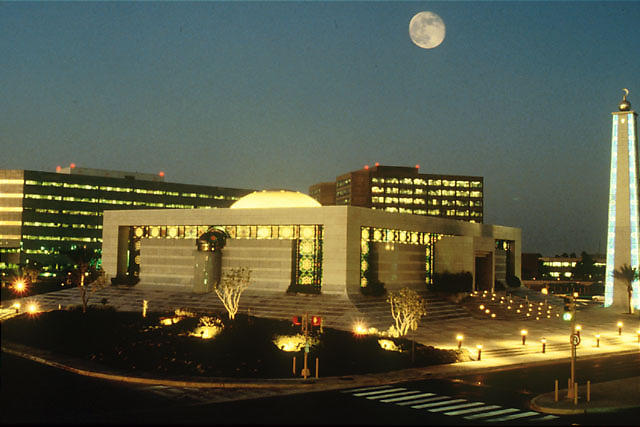
Two barren hills near the Prosperity Well were selected as the site for Aramco’s permanent headquarters. Over the following decades, Dhahran grew into a company town unlike any other in the Middle East: a self-contained residential compound modelled on suburban California, complete with clapboard houses, baseball diamonds, swimming pools, and an 18-hole golf course. Saudi Aramco’s headquarters were formally relocated from New York to Dhahran in the 1950s, cementing the city’s role as the operational nerve centre of the world’s largest oil company.
Top Attractions in Dhahran
King Abdulaziz Center for World Culture (Ithra)
Ithra is Dhahran’s undisputed star attraction and one of the most important cultural institutions on the Arabian Peninsula. Built by Saudi Aramco and inaugurated by King Salman on 1 December 2016, with full public access from 2018, the centre was named one of TIME magazine’s top 100 places to visit and attracted more than one million visitors in 2019 alone.
The architecture is extraordinary. Designed by Norwegian firm Snøhetta, Ithra consists of five pebble-shaped volumes inspired by the region’s ancient geological formations. The main tower, known as the Keystone, rises 110 metres (18 storeys) above the desert floor. The exterior is clad in a world-first application of pre-bent stainless steel tubes that flatten near windows to allow natural light inside while shielding against the fierce Saudi sun. The building is partially set into the bedrock — symbolically anchoring it to the geological past — while the tower reaches skyward as a symbol of the future.
Inside, Ithra houses an integrated suite of cultural facilities:
- Ithra Museum — Rotating exhibitions of Saudi and international art, as well as a permanent collection exploring the Kingdom’s cultural heritage.
- The Library — Over 315,000 volumes across all subjects and ages. Entry is free.
- Ithra Theatre — A performance venue hosting opera, symphony concerts, musicals, and lectures.
- The Cinema — A modern screening facility showing international and Saudi films.
- Children’s Museum — An interactive learning space designed for younger visitors.
- The Idea Lab — A maker space where visitors can experiment with technology and crafts.
- Energy Exhibit — A science exhibition exploring the story of energy, from geological formation to modern extraction. This exhibit traces its lineage to Aramco’s original “Oil Industry Exhibit,” which was first inaugurated in 1963.
- The Great Hall — A large event and exhibition space.
- Knowledge Tower — A research and innovation centre housed in the 18-storey Keystone.
Visitor Tip: General entry to Ithra’s library is free. Specific exhibitions, the museum, and ticketed performances require advance booking through ithra.com or call +966-13-816-9799. Check the website for current opening hours and seasonal programming — Ithra regularly hosts major cultural festivals, including the annual Ithra Winter programme running October through April.
Saudi Aramco Energy Exhibit
While Ithra’s Energy Exhibit is the modern incarnation, the original Saudi Aramco Energy Exhibit — located within the Aramco compound — has been educating visitors about the Kingdom’s oil industry since 1963, when the acting Prince of the Eastern Region inaugurated the first permanent “Oil Industry Exhibit.” The display underwent several expansions and name changes before settling at its current location in 1987, directly atop the Dammam oil field where commercial oil was first discovered in 1938.
Across eight pavilions, visitors explore the full arc of Saudi Arabia’s energy story: geological formation of oil, upstream exploration, drilling and production, refining, and transport. The exhibit is free and open to all visitors, designed to promote understanding of Saudi Aramco’s operations and ignite a sense of discovery across all ages.
King Fahd University of Petroleum and Minerals (KFUPM)
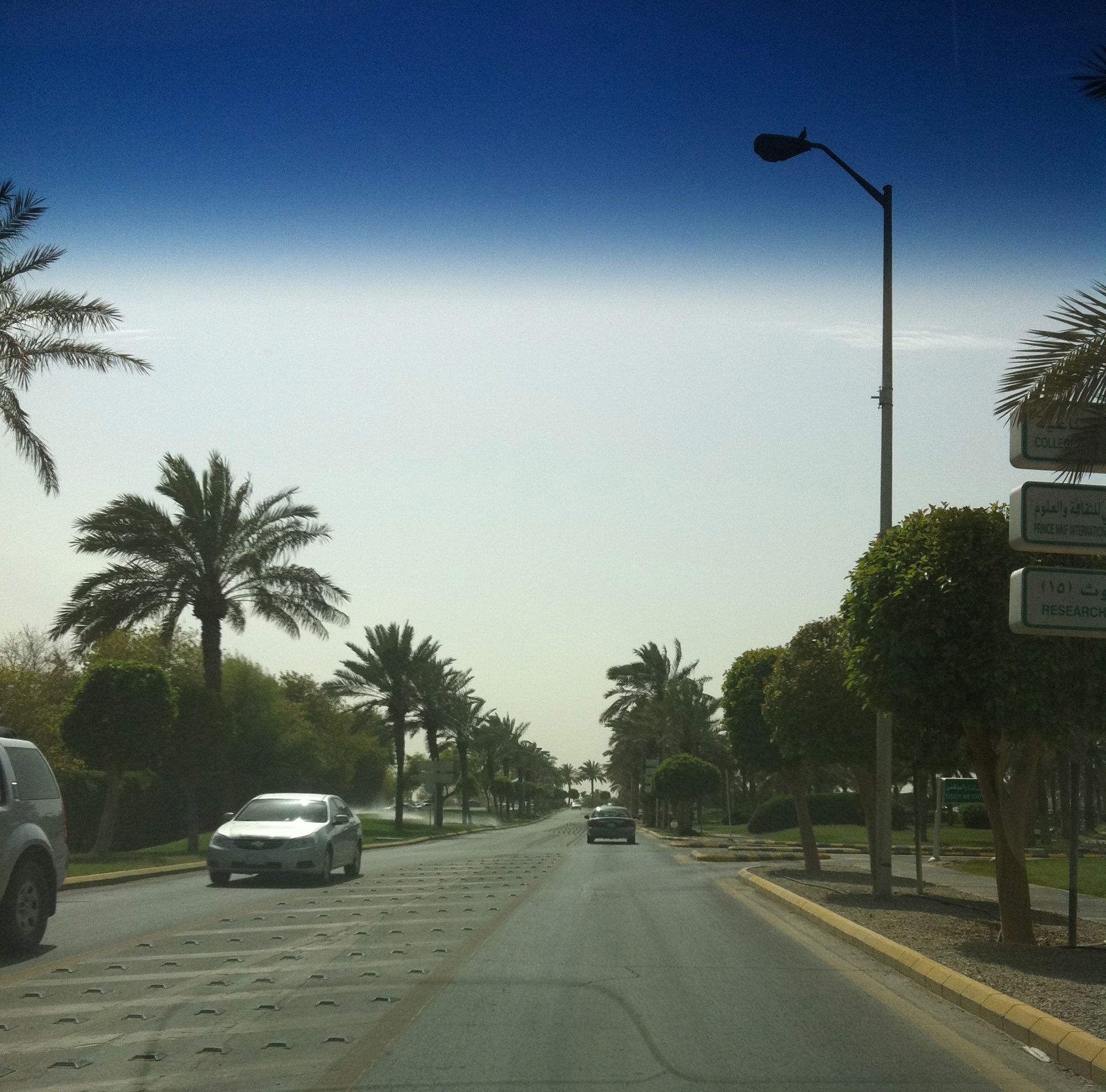
Founded in 1963 as the College of Petroleum and Minerals — the same year as the original Energy Exhibit — KFUPM has grown into one of the Middle East’s most respected research universities, specialising in science, technology, engineering, and business. The campus occupies a substantial area of central Dhahran, with modern laboratory buildings, lecture halls, and research facilities set among well-maintained gardens and palm-lined avenues.
While KFUPM is primarily an academic institution, the campus architecture and landscaped grounds are worth seeing if you are in the area. Visitors should contact the university in advance through kfupm.edu.sa to confirm access arrangements, as entry policies can vary.
Mall of Dhahran
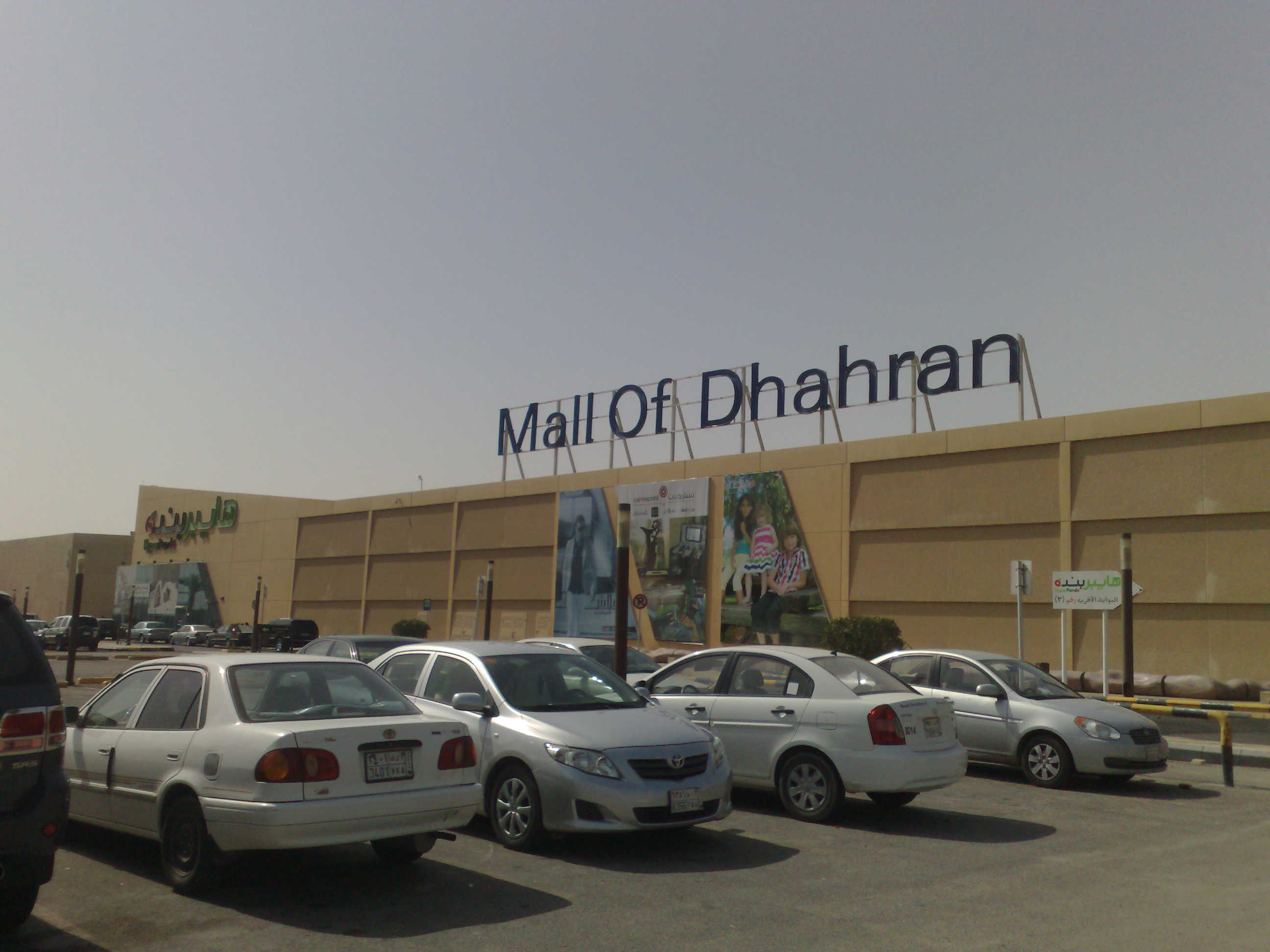
The Mall of Dhahran is the largest shopping centre in the Eastern Province, spanning more than 250,000 square metres and housing over 500 stores. International brands including Zara, Marks & Spencer, Bershka, Adidas, DKNY, Swatch, and The Body Shop sit alongside Saudi and regional retailers. The single-floor layout makes navigation straightforward.
Beyond shopping, the mall offers substantial entertainment: a cinema, Billy Beez (described as the world’s largest indoor soft-play environment), an ice rink, and a 5D cinema experience. The food court features a mix of international and local dining options. For visitors staying at nearby hotels like the Aloft Dhahran (which is directly across the road), the mall serves as a convenient anchor for evening entertainment.
Dhahran Expo (Dhahran International Exhibitions Centre)
Located in the Al Dawhah Al Janubiyah area, Dhahran Expo provides 3,600 square metres of exhibit space on a single floor with 16-metre ceilings and 1,500 parking spaces. The venue hosts major industry conferences and trade fairs throughout the year, including events focused on energy, logistics, construction, and technology. If your visit coincides with a trade show or convention, it can be worth attending — these events often provide insight into the Kingdom’s diversification efforts under Vision 2030.
The Aramco Residential Compound
The Saudi Aramco Residential Camp in Dhahran is the largest of Aramco’s self-contained communities, housing approximately 11,000 residents. While the compound is not open to casual visitors (it is a private facility protected by armed guards, restricted to Aramco employees and their dependants), understanding its existence adds context to Dhahran’s character.
The compound was originally built as a replica of a California settlement, complete with American-style suburban housing. Today, the community includes Saudi nationals, Arab expatriates from Lebanon, Egypt, and Jordan, Asian nationals, and a smaller number of Western expatriates (now fewer than 5% of the workforce, reflecting the ongoing Saudisation programme). Facilities include swimming pools, gyms, tennis and squash courts, baseball fields, soccer pitches, cricket grounds, and an 18-hole golf course. Two schools operate within the compound: Dhahran Hills School (K–4) and Dhahran School (grades 5–9).
Where to Stay in Dhahran
Dhahran itself has a limited hotel selection compared to neighbouring Al-Khobar, but several solid options exist. For a wider range of choices, see our Saudi Arabia Hotels Guide.
Aloft Dhahran
The most prominent hotel within Dhahran proper, the Aloft Dhahran is a Marriott-brand property located directly across from the Mall of Dhahran, with easy access to Saudi Aramco, KFUPM, and King Abdulaziz Air Base. The hotel features 262 loft-inspired rooms with modern amenities, including free WiFi throughout. Dining options include the DINE restaurant, W XYZ lounge, and RE:FUEL snack bar. Facilities include the RE:CHARGE gym and SPLASH outdoor pool with sauna and steam rooms. Rates typically start from $80–$120 per night.
DoubleTree by Hilton Dhahran
Another reliable international chain property in the Dhahran area, the DoubleTree offers comfortable rooms with Hilton’s signature amenities. Its location provides convenient access to Ithra and the Expo centre. Expect rates from $90–$150 per night depending on the season.
Hotels in Neighbouring Al-Khobar
Many visitors choose to stay in Al-Khobar, which is just 15–20 minutes south by car and offers a broader range of accommodation:
- Kempinski Al Othman Hotel Al Khobar — A luxury option near the King Abdulaziz Center.
- Sofitel Al Khobar The Corniche — Upscale waterfront property along Al-Khobar’s corniche.
- Hilton Garden Inn Al Khobar — A solid mid-range option.
- Staybridge Suites Al Khobar — Extended-stay suites ideal for longer visits.
Budget Tip: Hotel prices in Dhahran and the broader Eastern Province are generally lowest between June and August (the extreme heat keeps leisure travel to a minimum), and highest from September through November when business travel peaks. If you can handle the heat, summer stays offer significant savings.
Where to Eat
Dhahran’s dining scene reflects its multicultural workforce. With 80+ restaurants in the city, options span Arabic, South Asian, European, and American cuisines.
Inside the Mall of Dhahran
- Paul Cafe and Restaurant — A French bakery and café chain serving pastries, sandwiches, and coffee in a sit-down setting.
- Tandoori House — Indian and Asian cuisine including biryani and tandoori dishes.
- Outback Steakhouse — The American steakhouse chain, popular with the international community.
- C House Milano Café & Restaurant — Italian and European dishes in a contemporary setting.
Standalone Restaurants
- Mozon — A local favourite known for high-quality shawarma and Arabic grills.
- Rayiq — An Arabic restaurant specialising in charcoal-grilled shawarma with distinctive seasoning.
- Tabrah — Focused on fresh, locally sourced seafood with a chef-driven menu.
- Twist (at Aloft Dhahran) — International buffet and à la carte dining for hotel guests and walk-ins.
Dining Tip: For a greater variety of restaurants, particularly waterfront dining, head to the Al-Khobar Corniche, approximately 15 minutes south. The corniche is lined with cafés and restaurants overlooking the Arabian Gulf. See our Dammam & Al-Khobar guide for detailed recommendations.
Getting There and Around
By Air
King Fahd International Airport (DMM) is the gateway to Dhahran and the entire Eastern Province metropolitan area. The airport is located approximately 40–50 km northwest of Dhahran, with a driving time of 40–45 minutes depending on traffic. DMM is served by Saudi Airlines (Saudia), flynas, flyadeal, and a range of international carriers with direct flights from Dubai, Bahrain, Cairo, Amman, Mumbai, London, and other major hubs.
Before travelling, ensure you have the correct visa. Most tourists from over 50 eligible countries can apply for an e-visa online before arrival, or obtain a visa on arrival at DMM.
Airport to Dhahran Transport
- Taxi / Ride-hailing: Uber and Careem operate throughout the Eastern Province. The ride from DMM to Dhahran typically costs SAR 80–120 ($21–$32 USD) and takes approximately 40 minutes.
- Car rental: Major international and local rental companies operate desks in the arrivals area at DMM. Having a car is strongly recommended for exploring the Triplet Cities.
- Hotel shuttle: Some hotels, particularly the larger chains, offer shuttle services. Confirm with your hotel at the time of booking.
- Public bus: A bus connection exists via Dammam Main Station and Al-Khobar, but the journey takes over two hours and is impractical for most visitors.
Getting Around Dhahran
Dhahran is a car-oriented city. Public transport is limited, and most attractions are spread across a wide area. Your best options are:
- Ride-hailing apps: Uber and Careem are reliable and widely available.
- Rental car: The most flexible option for exploring Dhahran and the wider Eastern Province. Roads are well-maintained and signage is in both Arabic and English.
- Taxis: Available but less convenient than ride-hailing apps.
From Bahrain
The King Fahd Causeway connects Saudi Arabia to Bahrain, with Dhahran located just 30 minutes from the Saudi end of the bridge. If you are based in Bahrain, a day trip to Dhahran — particularly to visit Ithra — is easily feasible. Border crossings can be busy on Thursday evenings and Friday mornings (the start of the weekend).
Best Time to Visit
Dhahran has a hot desert climate tempered by humidity from the nearby Arabian Gulf. The temperature swing between seasons is dramatic:
| Season | Months | Temperature Range | Verdict |
|---|---|---|---|
| Winter (Best) | December – February | 10–24°C (50–75°F) | Ideal — comfortable for walking and outdoor sightseeing |
| Spring | March – April | 18–33°C (64–91°F) | Very good — warming up but still pleasant |
| Autumn | October – November | 22–35°C (72–95°F) | Good — business travel peaks, higher hotel rates |
| Summer (Avoid) | May – September | 35–48°C (95–118°F) | Extreme heat and high humidity — avoid unless necessary |
Rainfall is negligible year-round, with the most precipitation occurring in January (averaging just 19 mm). Sandstorms can occur in spring, particularly in March and April.
When to Go: November through March offers the best combination of comfortable weather and active cultural programming at Ithra (the annual Winter programme typically runs October through April).
Day Trips from Dhahran
Half Moon Bay
Located approximately 20–30 km south of Dhahran near Al-Khobar, Half Moon Bay is the Eastern Province’s premier beach destination. The crescent-shaped bay features turquoise waters, soft golden sand, and a range of recreational facilities including jet skiing, windsurfing, paddleboarding, kayaking, beach volleyball, and designated camping areas. Most public sections of the beach offer free entry, and the bay is accessible from sunrise to sunset.
Accommodation options near the bay include the Radisson Blu Resort Al Khobar Half Moon Bay (from approximately $86–$107 per night), which has a private beach and 137 rooms. For diving and snorkelling opportunities in the region, see our Saudi Arabia Diving Guide.
Dammam Corniche
The Dammam Corniche is a scenic waterfront promenade approximately 20 minutes north of Dhahran, offering views across the Arabian Gulf. It is an ideal spot for an evening stroll, with landscaped walkways, play areas, and waterfront cafés. Adjacent to the corniche, King Fahd Park offers lush greenery, walking trails, and recreational facilities — one of the largest urban parks in the Eastern Province.
Al-Khobar Corniche and Waterfront
Al-Khobar’s corniche runs along the Gulf coast just 15–20 minutes south of Dhahran, lined with restaurants, cafés, and shops. From the corniche, you can see the King Fahd Causeway stretching toward Bahrain. The area around the Al-Khobar Water Tower is a popular gathering point, particularly at sunset.
Bahrain (via King Fahd Causeway)
A day trip to the Kingdom of Bahrain is feasible from Dhahran — the causeway crossing takes approximately 30–45 minutes from the Saudi side (longer during peak times). Bahrain offers a contrasting cultural experience, with the UNESCO-listed Bahrain Fort, the Bahrain National Museum, and a more cosmopolitan dining and entertainment scene. Note that you will need the appropriate visa for Bahrain entry.
Tarout Island
Located in the Arabian Gulf north of Dammam, Tarout Island is one of the oldest inhabited places in the Arabian Peninsula, with archaeological evidence dating back 5,000 years. The island features Tarout Castle, a partially restored fortification with Portuguese-era origins, surrounded by a historic village with narrow streets and traditional architecture. The island is connected to the mainland by a causeway and can be reached in approximately 30–40 minutes from Dhahran.
Practical Information
Money and Costs
The Saudi Riyal (SAR) is the local currency, pegged to the US dollar at approximately SAR 3.75 = $1 USD. Credit and debit cards (Visa and Mastercard) are widely accepted at hotels, restaurants, and shopping centres. ATMs are available at malls, banks, and major intersections.
Dhahran is a mid-range destination by Saudi standards. Expect to spend approximately:
- Budget travellers: SAR 300–450 ($80–$120) per day — basic hotel, mall food court meals, ride-hailing transport.
- Mid-range: SAR 450–750 ($120–$200) per day — international chain hotel, sit-down restaurant meals, car rental.
- Luxury: SAR 750+ ($200+) per day — five-star hotels in Al-Khobar, fine dining, private transport.
Language
Arabic is the official language, but English is widely spoken in Dhahran thanks to the multinational Aramco workforce and the university community. You will have no difficulty navigating hotels, restaurants, malls, and attractions in English.
Dress Code
Saudi Arabia has relaxed its dress code requirements for tourists in recent years, but modest dress is still expected. Men should avoid shorts above the knee in public spaces. Women are no longer required to wear an abaya, but covering shoulders and knees is advisable, particularly when visiting cultural or government-affiliated sites. At Ithra, smart casual dress is appropriate.
Connectivity
Free WiFi is available at most hotels and the Mall of Dhahran. For mobile data, SIM cards from Saudi operators STC, Mobily, or Zain can be purchased at the airport or at mall kiosks with a valid passport. 5G coverage is widely available in Dhahran and the Triplet Cities area.
Safety
Dhahran is generally very safe for visitors. The city has a significant security presence due to the Aramco headquarters and military installations. Standard precautions apply: stay hydrated in warm weather, apply sunscreen, and avoid walking outdoors during midday heat in summer months.
Dhahran for Business Travellers
Dhahran is a major destination for business travellers visiting Saudi Aramco, KFUPM, or attending events at Dhahran Expo. If you are visiting on business:
- Hotels: The Aloft Dhahran and DoubleTree by Hilton Dhahran cater specifically to business travellers with meeting rooms and business centres. The Aloft offers five TACTIC meeting spaces.
- Aramco visits: Access to the Aramco compound requires pre-arranged sponsorship from an Aramco employee. Allow several weeks for security clearance processing.
- Conference facilities: Dhahran Expo and Ithra both offer conference and event spaces for professional gatherings.
- Weekend: The Saudi weekend is Friday and Saturday. Government offices and some businesses close on these days. Malls and restaurants remain open.
For comprehensive planning resources, including information on other destinations across the Kingdom, visit our main Saudi Arabia Travel Guide 2026.
Explore More Saudi Arabia Travel Guides
- Dammam & Al-Khobar Travel Guide — The complete guide to the Eastern Province capital and its cosmopolitan neighbour
- Riyadh Travel Guide — Saudi Arabia’s capital city and its rapidly expanding cultural scene
- Saudi Arabia Diving Guide — Red Sea and Arabian Gulf dive sites
- Saudi Arabia Hotels Guide — Best hotels across the Kingdom
- Saudi Arabia Travel Guide 2026 — The complete guide to visiting the Kingdom
- Saudi Arabia Visa Guide — Every visa type explained