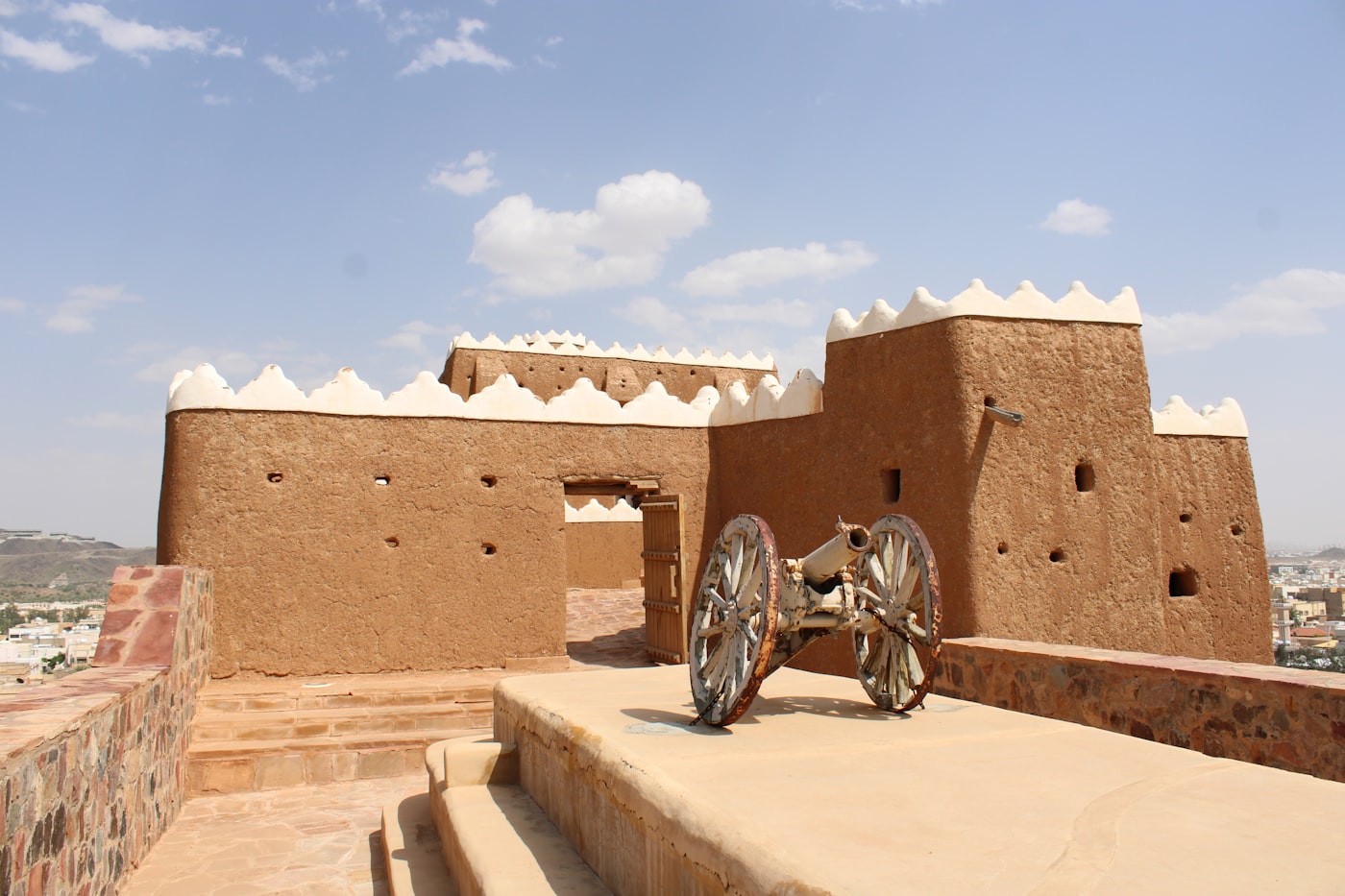

Where the House of Saud began, a $63 billion giga-project is transforming the birthplace of the Saudi state into one of the Middle East’s most ambitious cultural destinations. Diriyah, perched on the banks of Wadi Hanifah just 15 minutes northwest of central Riyadh, is where history, heritage, and hospitality converge on a scale that few places on earth can match.
This is not merely a heritage site with a gift shop. Diriyah is a living, evolving destination anchored by the At-Turaif UNESCO World Heritage Site, ringed by Michelin-starred restaurants at Bujairi Terrace, and soon to be home to more than three dozen luxury hotels from brands including Aman, Ritz-Carlton, and Orient Express. For visitors to Saudi Arabia, it is essential. For anyone interested in the story of the House of Saud, it is sacred ground.
| Detail | Information |
|---|---|
| Location | 15 km northwest of central Riyadh, Wadi Hanifah valley |
| UNESCO Status | At-Turaif District inscribed as World Heritage Site in 2010 |
| Founded | 1446 CE by Mani’ Al-Muraydi, ancestor of the Al Saud family |
| Historical Significance | Capital of the First Saudi State (1727-1818) |
| Development Budget | $63 billion (Diriyah Company / PIF) |
| Entry Fee | SAR 50-100 for Diriyah Pass (redeemable at restaurants) |
| Opening Hours | Sat-Wed 10am-midnight; Thu 10am-1am; Fri 2pm-1am |
| Best Time to Visit | November to February (15-25°C daytime) |
| Time Needed | Half day minimum; full day recommended |
A Brief History of Diriyah and the First Saudi State
Diriyah’s story is the origin story of Saudi Arabia itself. In 1446 CE, Mani’ Al-Muraydi led his clan from eastern Arabia to the fertile banks of Wadi Hanifah and founded a settlement that would alter the course of Arabian history. Over three centuries, the settlement grew into a prosperous oasis town, its mud-brick buildings climbing the limestone bluffs above the wadi.
The pivotal moment came in 1744, when the emir of Diriyah, Muhammad ibn Saud, formed an alliance with the religious scholar Muhammad ibn Abd al-Wahhab. This pact, struck in the heart of Diriyah, established a socio-political and religious movement that would rapidly expand across the Arabian Peninsula. From Diriyah, the First Saudi State grew to control most of the peninsula, capturing the holy city of Mecca in 1803 and establishing the Al Saud family as the dominant force in Arabian politics.
The First Saudi State endured until 1818, when Ottoman-Egyptian forces under Ibrahim Pasha besieged Diriyah for several months before sacking the city. The mud-brick palaces and fortifications were deliberately destroyed, and the last ruler, Abdullah ibn Saud, was sent to Istanbul and executed. The House of Saud would eventually regroup, first in Riyadh and then across the peninsula, culminating in the unification of the Kingdom of Saudi Arabia by Abdulaziz ibn Saud in 1932. But Diriyah remained the spiritual birthplace, the place where it all began.
Today, the ruins of At-Turaif stand as a monument to that founding chapter. Walking through the restored mud-brick corridors of Salwa Palace, visitors are walking through the rooms where the Al Saud dynasty forged the nation that would become the world’s largest oil producer and a pivotal player in global geopolitics.
At-Turaif UNESCO World Heritage Site
Inscribed on the UNESCO World Heritage List in 2010, the At-Turaif District is the crown jewel of Diriyah and one of the most significant historical sites in the Arabian Peninsula. Perched on a limestone promontory overlooking Wadi Hanifah, At-Turaif was the political and religious heart of the First Saudi State.
What to See at At-Turaif
The site has been meticulously restored as an expansive outdoor museum. Its mud-brick structures, built in the distinctive Najdi architectural style, feature thick walls, narrow alleys, and triangular decorative windows that are unique to central Arabia. The key structures include:
Salwa Palace — The jewel of At-Turaif, Salwa Palace was the official citadel and royal residence of the Saudi rulers. This sprawling complex served as both the seat of government and the home of the Al Saud family during the height of the First Saudi State. The restored palace now houses exhibitions on the political and social life of the era.
Imam Muhammad ibn Saud Mosque — Adjacent to Salwa Palace, this mosque was the spiritual centre of Diriyah and the place where the alliance between the Al Saud and the religious establishment was formalised. Its simple, austere architecture reflects the reformist principles that shaped the movement.
Guest Palace (Qasr al-Dayafa) — A dedicated reception palace where visiting dignitaries and tribal leaders were hosted, demonstrating the diplomatic sophistication of the First Saudi State.
The Bathhouse (Hammam) — One of the few surviving examples of a traditional Najdi bathhouse, offering insight into the daily life and hygiene practices of 18th-century Arabia.
Al-Bujairi Quarter — Located across the wadi from At-Turaif, the Al-Bujairi Quarter was the religious and scholarly heart of Diriyah, where Muhammad ibn Abd al-Wahhab taught and lived.
Guided Tours
The guided walking tour of At-Turaif lasts approximately 75 minutes and provides rich historical context that brings the mud-brick walls to life. Tours are available in Arabic and English. Self-guided exploration is also possible, with information panels placed throughout the site. Evening visits are particularly rewarding, as the site is dramatically illuminated after dark, casting warm light across the ancient walls and creating an atmosphere that photographs beautifully.
Hal Al-Qusoor Exhibition
During Diriyah Season (November through March), the Hal Al-Qusoor exhibition transforms sections of At-Turaif into an immersive experience that transports visitors to the heart of the political and social life that Diriyah witnessed during the First Saudi State era. Interactive displays, artefacts, and audiovisual installations bring the story of the Al Saud founders vividly to life.
Bujairi Terrace — World-Class Dining at the Doorstep of History
Opened in late 2022, Bujairi Terrace is a 15,000-square-metre premium dining destination that has quickly established itself as one of Saudi Arabia’s finest culinary addresses. Set within a pedestrianised maze of winding alleyways built in traditional Najdi mud-brick style, the terrace hosts more than 20 globally renowned restaurants, all with views overlooking the At-Turaif World Heritage Site.
Within its first six months, Bujairi Terrace welcomed more than one million visitors, a testament to its appeal as both a dining destination and a cultural landmark.
Michelin-Starred Restaurants
Four Michelin-starred restaurants anchor the culinary offering:
Chez Bruno — Transported from the French Riviera, where it holds one Michelin star, Chez Bruno brings classic French gastronomy to the heart of Arabia. The truffle-focused menu is a particular standout, with dishes built around the finest seasonal ingredients.
Tatel — With outposts in Madrid, Doha, Ibiza, and Los Angeles, Tatel delivers Spanish haute cuisine accompanied by creative mocktails, live musicians, and daily entertainment. Signature dishes include semolina risotto with grated truffle, red tuna tartare, and slow-cooked beef ribs.
Hakkasan — The globally celebrated Chinese restaurant brings its blend of Cantonese tradition and contemporary innovation to Diriyah. The moody interiors and refined dim sum offerings make it one of the most sought-after reservations on the terrace.
Long Chim — Founded by acclaimed chef David Thompson, Long Chim (meaning “come and taste” in Thai) draws inspiration from the markets and street food stalls of Bangkok. The bold, aromatic flavours and convivial atmosphere make it a perennial favourite.
Other Notable Restaurants
| Restaurant | Cuisine | Price Range |
|---|---|---|
| Flamingo Room by tashas | Pan-African | $$$$ |
| Brunch & Cake | All-day brunch, Mediterranean | $$$ |
| GRIND | Contemporary Saudi | $$$ |
| Somewhere | Modern Middle Eastern | $$$ |
| SUGAR | Desserts and patisserie | $$ |
| Sum + Things | Asian fusion | $$$ |
| Stargaze Garden | Outdoor lounge and light bites | $$ |
A practical tip: the cost of your Diriyah Pass can be redeemed as credit when dining at any Bujairi Terrace restaurant, effectively making entry free if you plan to eat on-site.
The $63 Billion Diriyah Masterplan
Diriyah is not just a heritage site with restaurants bolted on. It is one of Saudi Arabia’s designated giga-projects, managed by Diriyah Company (a Public Investment Fund entity) with a total investment of $63 billion. The masterplan covers 3,450 acres of mixed-use development surrounding the historic core, making it one of the largest heritage-led urban developments in the world.
What Is Coming
The masterplan, with most construction concentrated in 2025 and 2026, envisions Diriyah as a complete destination city with the following components:
38 Hotels — The first wave of 14 hotel brands has been finalised, with eight luxury properties beginning construction. Confirmed brands include Aman (with two properties: Aman Wadi Safar and Janu Diriyah), Ritz-Carlton, Raffles, Park Hyatt, Rosewood, Orient Express, Fauchon (its first Middle East hotel), Capella, Campbell Gray, Baccarat, and Hilton’s LXR collection — see our luxury travel guide for the full rundown. Most properties are expected to be operational by 2027-2028.
Qurain Cultural District — A dedicated arts and culture quarter featuring a cinema complex, multiple museums, and academies for Najdi architecture and mud building, Arab music, calligraphy, and the performing arts.
Northern District — Anchored by the King Salman Foundation, this educational zone will include a university, a major library, museums, and a public square, positioning Diriyah as a global centre of learning.
18,000 Residential Units — Diriyah will be a living community, not merely a tourist attraction. Residential neighbourhoods are being developed alongside the cultural and hospitality offerings.
566,000 Square Feet of Retail — Pedestrianised shopping streets and traditional souqs will offer a mix of luxury retail, artisanal crafts, and Saudi brands.
At full build-out, Diriyah Company projects 50 million visits per year, 178,000 jobs created, and an $18.6 billion annual contribution to Saudi GDP. For visitors arriving in the next few years, the site will be a mix of completed attractions and active construction, with new openings on a rolling basis.
Al-Bujairi Heritage Park
Situated along the banks of Wadi Hanifah in the Al-Bujairi district, directly opposite At-Turaif, Al-Bujairi Heritage Park is a family-friendly cultural space that complements the more formal heritage site across the valley.
The park is designed to reflect traditional Najdi architecture and regional heritage, with manicured gardens, winding pathways, and views across the wadi to the illuminated walls of At-Turaif. Activities include:
- Pottery and calligraphy workshops for visitors of all ages
- Daily storytelling sessions where a traditional storyteller shares tales from Saudi history
- Tour carts that traverse the park for those who prefer a guided overview
- Food stalls and markets selling traditional Saudi snacks and handicrafts
- Children’s rides and play areas
The park is particularly magical after sunset, when the illuminated At-Turaif across the wadi creates a dramatic backdrop for evening strolls.
Wadi Hanifah — The Green Spine of Diriyah
Wadi Hanifah, the 120-kilometre valley that runs through Diriyah and greater Riyadh, is the geographic foundation upon which the city was built. The wadi’s reliable water supply attracted Mani’ Al-Muraydi and his followers in the 15th century, and its fertile banks sustained the oasis community that grew into the capital of the First Saudi State.
Today, Wadi Hanifah has been rehabilitated into one of Riyadh’s most valuable green corridors. The section running through Diriyah is landscaped with walking and cycling paths, date palms, and native vegetation. It provides a natural buffer between At-Turaif and Bujairi Terrace, and crossing the wadi on foot between the two areas is one of the most pleasant walks in the entire Riyadh metropolitan area.
The wadi is also a prime photography location, particularly in the late afternoon when the low sun bathes the mud-brick walls of At-Turaif in golden light reflected off the valley floor.
Diriyah Season — Annual Events and Entertainment
Diriyah Season, running annually from November to March under the Saudi Seasons programme, transforms the district into a cultural festival spanning four months of events, performances, and experiences.
The 2025-2026 season, themed “Where You Experience Legacy,” features a particularly impressive lineup:
Metropolitan Opera at the Royal Diriyah Opera House — In a landmark cultural partnership, the Metropolitan Opera has committed to making the Royal Diriyah Opera House its winter stage for five consecutive years, bringing world-class opera productions to Saudi Arabia for the first time on this scale.
Layali Diriyah — The palm grove surrounding At-Turaif is transformed into an open-air destination featuring gourmet dining, live music, art installations, and curated shopping experiences under the stars.
Diriyah Storytelling Festival — An international literary festival bringing together leading authors, storytellers, and literature enthusiasts from across Saudi Arabia and the world.
Souq Al-Mawsim — A heritage market celebrating Diriyah’s cultural roots, with guest countries featured each edition. Japan was the featured nation in 2025.
Minzal — A glamping experience set within Diriyah’s natural landscape, combining stargazing, art installations, and immersive cultural experiences with luxury outdoor accommodation. For a deeper desert experience, a desert safari from Riyadh pairs naturally with a Diriyah visit.
Al-Huwayett — A family-oriented interactive experience in the Adhwaihrah district, blending storytelling, play, and imagination to bring the traditions of Diriyah to life for children.
Formula E Heritage
From 2018 to 2025, Diriyah hosted the Formula E electric racing championship, with night races lit by LEDs creating a spectacular atmosphere around the historic district. The 2025 race on February 14-15 marked the seventh edition in Saudi Arabia. For the 2025-2026 season, Formula E has relocated its Saudi round to the Jeddah Corniche Circuit, though the legacy of motor racing has left its mark on Diriyah’s identity as an events destination.
Hotels in and Around Diriyah
While Diriyah’s own hotel inventory is still under construction, the proximity to central Riyadh means visitors have excellent accommodation options within a short drive.
Hotels Coming to Diriyah
| Hotel Brand | District | Expected Opening |
|---|---|---|
| Aman Wadi Safar | Wadi Safar | 2027-2028 |
| Janu Diriyah | Wadi Safar | 2027-2028 |
| The Ritz-Carlton | Diriyah Central | 2027-2028 |
| Raffles | Diriyah Central | 2027-2028 |
| Park Hyatt | Diriyah Central | 2027-2028 |
| Rosewood | Diriyah Central | 2027-2028 |
| Fauchon | Bujairi | 2027-2028 |
| Capella | Bujairi | 2027-2028 |
| Orient Express | TBC | 2027-2028 |
| Baccarat | TBC | 2027-2028 |
| Campbell Gray | Bujairi | 2027-2028 |
| LXR Hotels (Hilton) | Bujairi | 2027-2028 |
Where to Stay Now
Until Diriyah’s own hotels open, the best strategy is to base yourself in central or northern Riyadh and make Diriyah a day or evening trip. The drive is 15-20 minutes from most Riyadh hotels, and ride-hailing apps (Uber and Careem) operate reliably throughout the area. Hotels in the Diplomatic Quarter or along King Fahd Road offer the most convenient access to Diriyah.
How to Get to Diriyah
From Central Riyadh
Diriyah is approximately 15 kilometres northwest of central Riyadh. The drive takes 15-20 minutes in normal traffic conditions via King Khalid Road or King Fahd Road heading north.
| Method | Duration | Cost | Notes |
|---|---|---|---|
| Taxi / Uber / Careem | 15-20 minutes | SAR 25-50 | Most convenient option; drop-off at Bujairi Parking |
| Private car | 15-20 minutes | SAR 30 parking (3 hours) | Parking at Bujairi Parking or Samhan Parking |
| Riyadh Metro (future) | TBC | TBC | Line 5 will serve the Diriyah area when fully operational |
| Guided tour | Half or full day | SAR 200-500+ | Multiple operators on GetYourGuide and Viator |
From King Khalid International Airport
The airport is approximately 50 kilometres from Diriyah, with the drive taking 35-45 minutes depending on traffic. A taxi or ride-hailing service is the most practical option for visitors arriving by air.
Parking
Two paid parking facilities serve the Diriyah precinct: Bujairi Parking and Samhan Parking. The standard rate is SAR 30 for three hours. On weekends and during Diriyah Season events, parking can fill quickly, so arriving before 5pm or using ride-hailing services is advisable.
Practical Information for Visitors
Entry and Tickets
A Diriyah Pass is required for entry to both At-Turaif and Bujairi Terrace. Passes cost SAR 50-100 per person (pricing varies by time and season), with free entry for children aged 12 and under. The pass fee is redeemable as credit when dining at any Bujairi Terrace restaurant, effectively making entry free for diners.
Purchase passes in advance through the official Diriyah website (diriyah.sa) or the Bujairi Terrace ticketing portal. Booking ahead is recommended, particularly during Diriyah Season (November-March) and on weekends, as QR code scanning at entry can create queues.
Opening Hours
| Day | Hours |
|---|---|
| Saturday – Wednesday | 10:00am – 12:00am (midnight) |
| Thursday | 10:00am – 1:00am |
| Friday | 2:00pm – 1:00am |
Note that hours may be extended during Diriyah Season and special events. Restaurant opening times vary by venue, but most Bujairi Terrace restaurants open from 4pm onwards, with the terrace at its liveliest between 7pm and 11pm.
What to Wear
Diriyah is a heritage site and cultural district in Saudi Arabia. Modest dress is expected. For men, trousers and a shirt with sleeves are appropriate. For women, loose-fitting clothing covering shoulders and knees is recommended; an abaya is not required but remains common. Comfortable walking shoes are essential, as the terrain at At-Turaif includes uneven stone paths and steps.
Best Time to Visit
The ideal months are November through February, when Riyadh’s daytime temperatures settle between 15-25 degrees Celsius, making outdoor exploration comfortable. This period also coincides with Diriyah Season, maximising the number of events, exhibitions, and experiences available.
Summer months (June-September) see temperatures exceeding 45 degrees Celsius, making extended outdoor sightseeing challenging. If visiting in summer, plan your trip for the late evening, when the illuminated At-Turaif is at its most atmospheric and temperatures begin to drop.
How Long to Spend
A minimum of half a day is needed to explore At-Turaif and have a meal at Bujairi Terrace. For a thorough visit that includes the guided tour, Al-Bujairi Heritage Park, a walk along Wadi Hanifah, and a leisurely dinner, plan for a full day. During Diriyah Season, with its additional events and exhibitions, a full day or even two separate visits may be warranted.
Photography Guide
Diriyah is one of the most photogenic locations in Saudi Arabia, offering a rare combination of ancient mud-brick architecture, dramatic lighting, and sweeping valley views. Here are the best opportunities:
Golden Hour at At-Turaif — The low afternoon sun bathes the mud-brick walls in warm amber tones, creating rich textures and deep shadows. Arrive at least an hour before sunset and position yourself along the wadi-facing walls for the best light.
Night Photography — At-Turaif is dramatically illuminated after dark, with warm uplighting that makes the ancient walls glow against the night sky. The contrast between the lit heritage site and the modern Bujairi Terrace across the wadi creates striking compositions.
Wadi Hanifah Viewpoints — The walkways along the wadi between At-Turaif and Bujairi Terrace offer panoramic views of the heritage site from below, with date palms framing the mud-brick structures above.
Architectural Details — The triangular decorative windows, carved doorways, and textured mud-brick surfaces unique to Najdi architecture provide excellent subjects for close-up and detail photography.
Bujairi Terrace at Dusk — The terrace’s own Najdi-style architecture, combined with the ambient lighting of its restaurants and walkways, creates an inviting atmosphere that photographs well during the blue hour.
Integrating Diriyah Into Your Saudi Arabia Itinerary
Diriyah fits naturally into any Riyadh visit and can be combined with other experiences:
Morning: At-Turaif + Heritage Park — Start early to explore At-Turaif before the heat builds (in cooler months) or before the crowds arrive. Spend 2-3 hours between the guided tour and Al-Bujairi Heritage Park.
Afternoon: Wadi Hanifah Walk — Stroll along the landscaped wadi paths, visit any ongoing exhibitions, and rest before the evening.
Evening: Bujairi Terrace Dinner — Book a table at one of the Michelin-starred restaurants or a Saudi-owned concept like GRIND or Somewhere. The terrace comes alive after sunset, with views of the illuminated At-Turaif providing a backdrop that no restaurant in Riyadh can match.
During Riyadh Season (October-March), Diriyah Season events can fill an entire second day, with opera performances, the storytelling festival, Layali Diriyah, and the Souq Al-Mawsim market all offering distinct experiences.
The Significance of Diriyah for the House of Saud
For followers of Saudi Arabian affairs, Diriyah carries a weight that transcends tourism. This is the place where the Al Saud family’s 280-year journey from regional emirs to rulers of a G20 nation began. The $63 billion investment in Diriyah by the Public Investment Fund is itself a statement of dynastic identity: the ruling family is investing more in preserving and celebrating its origin story than most nations spend on their entire cultural heritage budgets.
The restoration of At-Turaif and the development of the surrounding districts serve a dual purpose. For international visitors, they offer a world-class cultural destination. For the Saudi public, they reinforce the historical legitimacy and deep roots of the ruling family at a time of rapid social and economic transformation under Vision 2030.
Crown Prince Mohammed bin Salman has repeatedly cited Diriyah as central to his vision for the Kingdom’s future, describing it as “a place to show the history and identity of the country.” The giga-project is designed to be the cultural complement to NEOM’s futuristic ambitions, proving that Saudi Arabia can honour its past while building for the future.
Frequently Asked Questions
Is Diriyah worth visiting?
Absolutely. Diriyah is one of the most rewarding cultural experiences in Saudi Arabia, combining a UNESCO World Heritage Site with Michelin-starred dining, heritage parks, and seasonal events. It is a must-visit for anyone spending time in Riyadh, whether for a half-day heritage tour or a full day of exploration and dining.
How far is Diriyah from central Riyadh?
Diriyah is approximately 15 kilometres northwest of central Riyadh. The drive takes 15-20 minutes by taxi, Uber, or Careem, making it one of the most accessible heritage destinations in the Kingdom.
Do I need a ticket to enter Diriyah?
Yes. A Diriyah Pass is required for entry to At-Turaif and Bujairi Terrace, costing SAR 50-100 per person. Children aged 12 and under enter free. The pass cost can be redeemed as credit at Bujairi Terrace restaurants.
What is the best time of day to visit At-Turaif?
Late afternoon into evening is ideal. Arriving before sunset allows you to see the site in golden daylight, then stay to experience the dramatic nighttime illumination. The cooler temperatures after dark also make for more comfortable exploration, particularly outside the winter months.
Can I visit Diriyah during Ramadan?
Yes, Diriyah remains open during Ramadan, though operating hours and restaurant schedules may be adjusted. Restaurants typically open after iftar (the breaking of the fast at sunset), and the evening atmosphere during Ramadan can be particularly special. Check the official Diriyah website for Ramadan-specific timings.
Is Diriyah suitable for families with children?
Yes. Al-Bujairi Heritage Park offers children’s rides, workshops (pottery, calligraphy), storytelling sessions, and food stalls. The Al-Huwayett experience during Diriyah Season is specifically designed for families. Children aged 12 and under enter free.
What is the Diriyah Gate project?
Diriyah Gate is a $63 billion giga-project managed by Diriyah Company (a Public Investment Fund entity) to develop 3,450 acres around the historic core of Diriyah into a world-class cultural, hospitality, and residential destination. When complete, it will include 38 hotels, museums, cultural academies, residential communities, and retail districts, all designed in the traditional Najdi architectural style.
When will Diriyah’s hotels open?
Construction on the first eight luxury hotels began in late 2024, with most properties expected to be operational between 2027 and 2028. Confirmed brands include Aman, Ritz-Carlton, Raffles, Park Hyatt, Rosewood, Orient Express, and Fauchon, among others.