
King Abdulaziz International Airport (IATA: JED, ICAO: OEJN) is the principal gateway to Jeddah, the Red Sea coast, and the holy cities of Makkah and Madinah. Whether you are flying in for a wider Jeddah travel itinerary, arriving for Umrah, or transiting onward to the Haramain High-Speed Railway, this guide covers every terminal, transport option, and practical detail you need to move through the airport quickly and with confidence. With a modern Terminal 1 that opened in 2019, integrated rail connections, and a legendary Hajj Terminal that processes millions of pilgrims every year, KAIA is one of the busiest and most distinctive airports in the Middle East.
IATA / ICAO Code: JED / OEJN
Location: 19 km (12 miles) north of Jeddah city centre
Terminals: Terminal 1 (main), North Terminal, Hajj Terminal (seasonal)
Annual Passengers: ~40 million (capacity expanding to 114 million by 2031)
Getting to City Centre: Taxi/Uber 20–40 min (SAR 50–150); SAPTCO bus SAR 20–25
Visa Required: Yes — tourist e-visa available for 63 nationalities
Key Connection: Haramain High-Speed Railway to Makkah (~54 min) and Madinah (~2 hours)
Avoid: Exchanging large amounts of currency at airport desks — rates are poor compared to city exchange houses
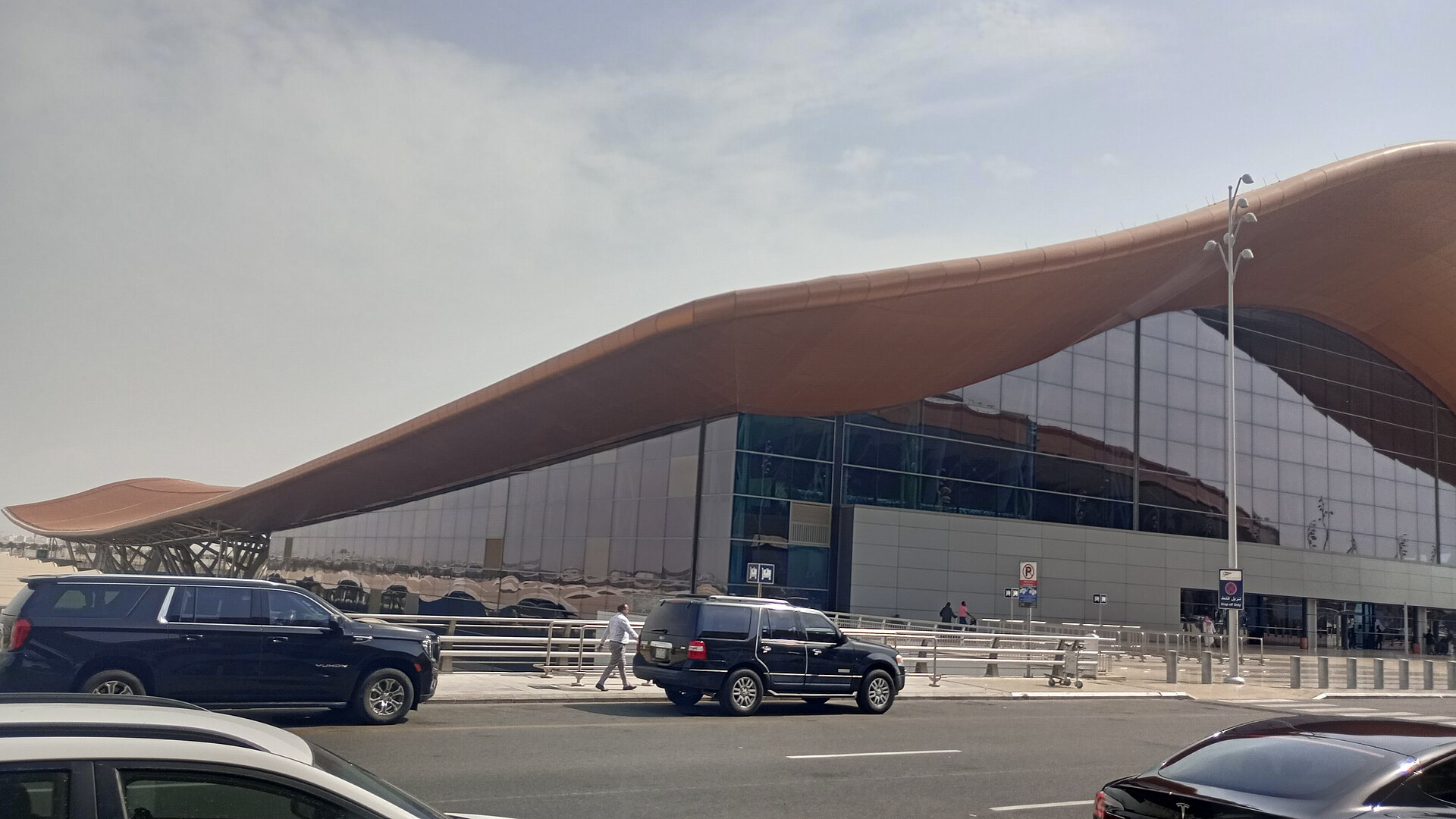
Terminal Overview: Which Terminal Are You Using?
Jeddah airport operates three terminals. Your airline and ticket will dictate which one you use, but the distinction is straightforward once you know the layout.
Terminal 1 — The Main Terminal
Terminal 1 is the newer, flagship building that opened in 2019. At 810,000 square metres, it is one of the largest airport terminals in the world and handles the majority of both domestic and international traffic. It serves as the hub for Saudi Arabia’s three main carriers — Saudia, flynas, and flyadeal — for all their domestic and international routes. Several major international airlines also operate from Terminal 1, including Emirates, Turkish Airlines, Qatar Airways, British Airways, and Oman Air.
Terminal 1 is split into a domestic wing and an international wing, each with separate check-in halls and boarding areas. An Automated People Mover (APM) connects the check-in area to the international boarding gates, which is useful given the sheer size of the building. The terminal has 46 boarding gates and is equipped with self-check-in kiosks, a 14-metre-tall aquarium in the arrivals hall, an indoor garden, and extensive retail and dining options.
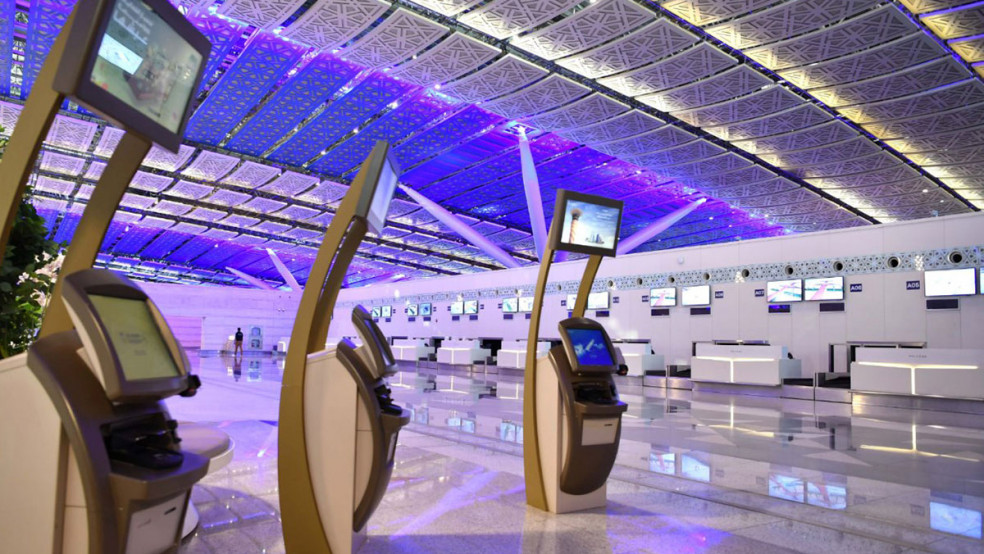
North Terminal
The North Terminal (sometimes called Terminal N) primarily handles international airlines that do not operate from Terminal 1. Carriers at the North Terminal include Air India, IndiGo, Air Arabia, Ethiopian Airlines, Pegasus Airlines, Sudan Airways, Badr Airlines, Uzbekistan Airways, and several other regional operators. The North Terminal has 22 gates and offers duty-free shopping, dining, and standard airport facilities, though it is noticeably smaller and older than Terminal 1.
Tip: Always confirm your terminal before leaving for the airport. The North Terminal and Terminal 1 are separate buildings. If you arrive at the wrong one, you will need to take a shuttle bus or taxi between them. SAPTCO operates a free inter-terminal bus, but allow at least 20 extra minutes.
Hajj Terminal
The Hajj Terminal is one of the most architecturally distinctive airport buildings in the world. Designed by Skidmore, Owings & Merrill (SOM) and opened in 1981, it features 210 tent-like fibreglass roof panels inspired by Bedouin tents. The terminal covers 510,000 square metres and can accommodate up to 80,000 pilgrims at a time during departure periods. It operates seasonally during the Hajj pilgrimage and at peak Umrah times, processing millions of pilgrims who arrive on charter flights. The terminal includes dedicated immigration and customs zones designed for group processing, prayer rooms, ablution areas, and medical centres. If you are arriving on a Hajj or Umrah package flight, your tour operator will have arranged your passage through this terminal.
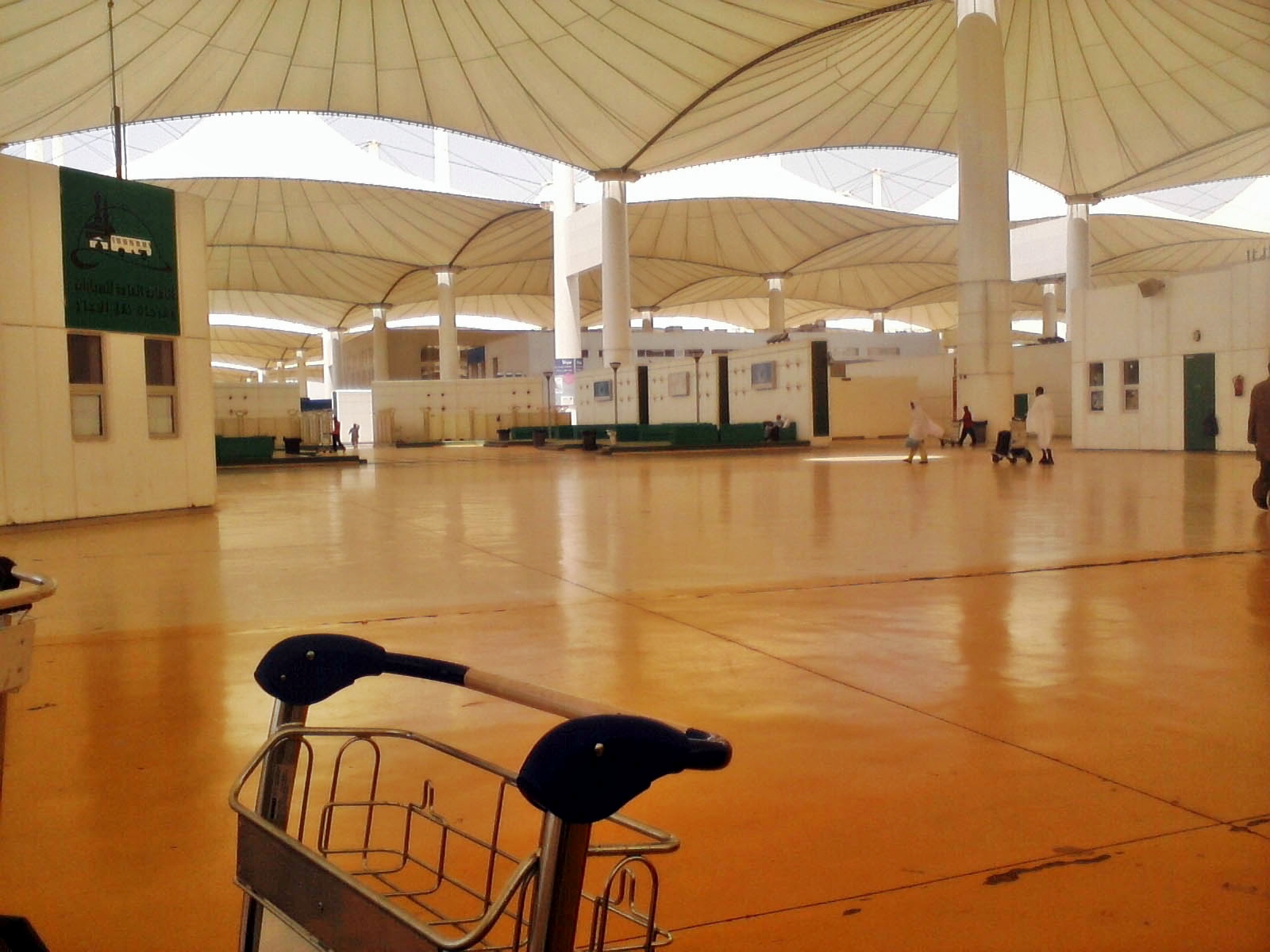
Terminal Comparison
| Feature | Terminal 1 | North Terminal | Hajj Terminal |
|---|---|---|---|
| Opened | 2019 | 1981 (refurbished) | 1981 |
| Size | 810,000 sqm | Smaller | 510,000 sqm |
| Gates | 46 | 22 | Seasonal only |
| Airlines | Saudia, flynas, flyadeal, Emirates, Turkish, Qatar, BA, Oman Air, others | Air India, IndiGo, Air Arabia, Ethiopian, Pegasus, Badr, Sudan Airways, others | Hajj/Umrah charter flights |
| Haramain Train Access | Integrated station | Shuttle to T1 station | Not directly connected |
| Duty Free | 11,500 sqm (JAH Heinemann) | Limited | Minimal |
Arrivals: What to Expect When You Land
The arrivals process at Jeddah airport is generally smooth, particularly in Terminal 1. Here is a step-by-step walkthrough of what to expect after your aircraft parks at the gate.
Immigration and Passport Control
After disembarking, follow signs to immigration. Terminal 1 has automated e-gates for Saudi nationals and GCC citizens, plus staffed counters for international visitors. If you hold a Saudi tourist e-visa, have a printout or the digital version on your phone ready along with your passport. Biometrics (fingerprints and a photograph) are taken at the counter. During peak periods, especially around Umrah season and the Hajj months, waits of 30 to 60 minutes are not unusual at staffed counters. Off-peak, expect 10 to 20 minutes.
Baggage Claim
Baggage belts in Terminal 1 are located on the ground floor, clearly signposted from immigration. Free luggage trolleys are available throughout the hall. If your bags do not arrive, the airline lost-luggage counter is next to the baggage belts — file a report before leaving the area, as the counter is inside the restricted zone.
Customs
Saudi customs uses a green (nothing to declare) and red (goods to declare) channel system. Items strictly prohibited in Saudi Arabia include alcohol, pork products, and narcotics. There is no duty-free allowance for alcohol. Prescription medication should be carried with a doctor’s letter. Customs officers may inspect luggage at random.
Arrivals Hall
Once through customs, you enter the main arrivals hall. Terminal 1’s arrivals area features the large aquarium, arrivals duty-free shopping (a newer addition), and the critical services most travellers need immediately: SIM card kiosks, ATMs, currency exchange, car hire desks, and the exit to taxis and ride-hailing pick-up points. The Haramain Railway station entrance is also accessible from the arrivals level.
Getting from Jeddah Airport to the City
King Abdulaziz International Airport sits approximately 19 kilometres north of central Jeddah. Depending on traffic and your destination, the journey to the city takes between 20 and 45 minutes by road. Here are all the options, from fastest to cheapest. For a broader overview of transport across the Kingdom, see our public transport in Saudi Arabia guide.
Taxi
Licensed airport taxis operate 24/7 from designated ranks outside the arrivals halls of both Terminal 1 and the North Terminal. Fares are metered, but expect to pay between SAR 100 and SAR 150 (approximately USD 27–40) to reach central Jeddah. Trips to the Jeddah Corniche waterfront area or the historic Al-Balad district may cost SAR 130–190 depending on traffic. Airport taxis are white sedans with meters — agree on the meter being used before departing, or confirm a fixed price.
Uber and Careem
Both Uber and Careem operate extensively at Jeddah airport. Designated ride-hailing pick-up points are located outside the arrivals halls — follow signs for “Ride App Pick-up” or ask airport staff. Fares are typically SAR 50–100 to central Jeddah, making them cheaper than airport taxis in most cases. UberXL and Careem Max are available for larger groups or excess luggage. You will need a working Saudi or international SIM card with data to use the apps, so consider buying a SIM card before ordering (see below).
SAPTCO Airport Bus
SAPTCO, the Saudi public transport operator, runs buses between Terminal 1, the North Terminal, and downtown Jeddah. Buses operate daily from approximately 6:00 AM to midnight. A one-way ticket costs around SAR 20–25 (approximately USD 5–7). This is the most affordable option, though the journey takes longer at 45 to 60 minutes with stops. Buses drop off at the SAPTCO central bus station in Jeddah, from where you can take a short taxi or Uber ride to your hotel.
Hotel Shuttles
Several hotels near the airport offer complimentary shuttle services. If you are staying at an airport-area hotel, check with your accommodation in advance. For a full rundown of where to stay, see our Saudi Arabia hotels guide.
Car Hire
Rental car desks from major international and local companies — including Hertz, Budget, Hanco, and Theeb — are located in the arrivals hall of Terminal 1 and at the North Terminal. If you plan to drive in Saudi Arabia, renting at the airport is straightforward. An international driving permit is recommended alongside your home licence.
Haramain High-Speed Railway: Direct from the Airport
One of the most important features of Jeddah airport is its integrated Haramain High-Speed Railway station, located within Terminal 1. This 450-kilometre rail line, the fastest in the Middle East at 300 km/h, connects Jeddah airport directly to Makkah and Madinah — making it invaluable for Umrah pilgrims and travellers heading to the holy cities without needing to enter Jeddah itself.
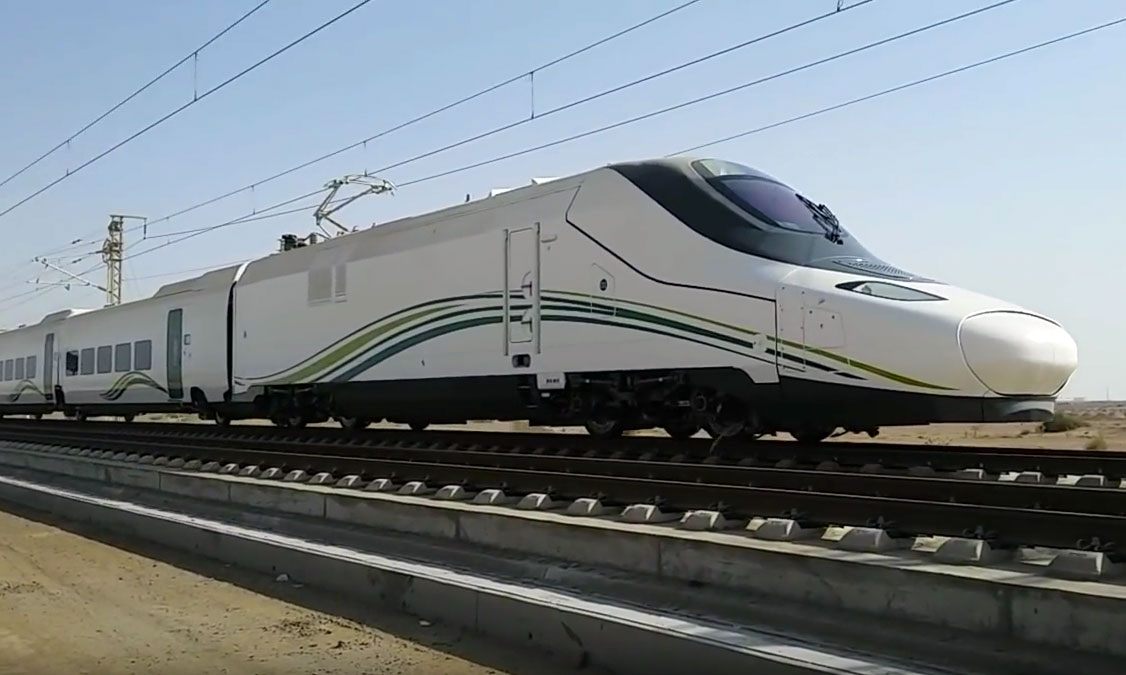
Key Routes and Fares
| Route | Journey Time | Economy Fare (from) | Business Fare (from) |
|---|---|---|---|
| Jeddah Airport → Makkah | ~54 minutes | SAR 35 (~USD 9) | SAR 55 (~USD 15) |
| Jeddah Airport → Madinah | ~2 hours | SAR 160 (~USD 43) | SAR 250 (~USD 67) |
| Jeddah Airport → KAEC | ~30 minutes | SAR 30 (~USD 8) | SAR 50 (~USD 13) |
Booking Tip: Tickets can be booked online through the official Haramain Railway website (sar.hhr.sa) or at the station ticket office. During Umrah and Hajj seasons, trains fill up fast — book at least 24 hours in advance if possible. Trains run from approximately noon to 11:00 PM from the airport station.
Getting to the Station
The Haramain station is integrated into Terminal 1 and accessible on foot from the arrivals hall. Follow signs for “Train Station” or “Haramain Railway.” If you are arriving at the North Terminal, you will need to take the inter-terminal shuttle or a taxi to Terminal 1 to access the station — allow an additional 20–30 minutes.
SIM Cards and Connectivity
Getting connected as soon as you land is important for booking taxis, navigating, and staying in touch. For a detailed comparison of all options across the country, see our Saudi Arabia phone and SIM card guide.
Where to Buy a SIM Card
All three major Saudi mobile operators — STC, Mobily, and Zain — have kiosks in the Terminal 1 arrivals hall. They are located near the exits leading to the train station, just past the aquarium. Staff will activate the SIM on the spot. You need your physical passport for registration — a photocopy or phone image will not be accepted.
Prepaid Tourist Plan Comparison
| Provider | Data | Calls | Validity | Price (SAR) |
|---|---|---|---|---|
| Zain | 30 GB + 30 GB social | 1,000 min | 28 days | 120 (~USD 32) |
| Zain | 70 GB + unlimited social | 1,400 min | 28 days | 180 (~USD 48) |
| Mobily | 10 GB + 10 GB social | 500 min | 28 days | 86 (~USD 23) |
| Mobily | 25 GB + 25 GB social | 500 min | 28 days | 115 (~USD 31) |
| STC | 1 GB + 1 GB social | 60 min | 28 days | 40 (~USD 11) |
eSIMs are also available from all three providers if your phone supports them — ask at the counter. Free Wi-Fi is available throughout Terminal 1, though speeds can be slow during peak hours.
Money, ATMs, and Currency Exchange
The official currency is the Saudi Riyal (SAR), pegged to the US dollar at approximately 3.75 SAR to 1 USD. For a complete guide to managing money during your trip, see our ATMs and banking in Saudi Arabia guide.
ATMs
Multiple ATMs are located in the Terminal 1 arrivals hall, slightly to the right of the Saudi Tourism Authority information booth. You will find machines from Al Rajhi Bank, Riyadh Bank, Saudi National Bank (SNB), and others. They accept Visa, Mastercard, and most international cards. The daily withdrawal limit is SAR 5,000 (approximately USD 1,333). When the ATM offers to charge you in your home currency, always decline and choose to be charged in Saudi Riyals — you will get a better exchange rate from your own bank.
Currency Exchange
Al Rajhi Bank operates a 24-hour exchange counter in Terminal 1, located near the international arrivals exit. The National Commerce Bank (NCB) also has a branch, open 9:30 AM to 4:30 PM. Airport exchange rates are consistently worse than what you will find at exchange houses in central Jeddah. Change only what you need for the taxi or bus fare and exchange the rest in the city. Contactless card payments are widely accepted throughout Saudi Arabia, including at taxis and small shops.
Lounges
Several lounges are available in Terminal 1 for passengers willing to pay for a quieter, more comfortable pre-flight experience.
Saudia AlFursan Lounge
The AlFursan Lounge in Terminal 1 is one of the largest SkyTeam lounges in the world. It is open to Saudia First and Business Class passengers, AlFursan gold and silver members, and SkyTeam Elite Plus members. Economy passengers can purchase entry for a fee. Priority Pass is not accepted. The lounge offers hot and cold buffet dining, showers, prayer rooms, and a business centre.
Plaza Premium Lounge
Located near Gate 39 on Level 2 of the international departures area in Terminal 1, the Plaza Premium Lounge is open to all passengers regardless of airline or cabin class. Entry can be purchased on a walk-in basis or pre-booked online. Priority Pass is accepted. Facilities include seating areas, a food and beverage selection, Wi-Fi, and flight information screens.
Aerotel Transit Hotel
For longer layovers, the Aerotel Transit Hotel is located inside the Terminal 1 transit area. Rooms range from 28 to 70 square metres, offering genuine beds, en-suite bathrooms, and a significantly better rest than sleeping in a chair. Hourly and overnight rates are available. Wassan Lounge sleep pods and Wellcome Lounge sleep rooms provide additional short-rest options for shorter layovers.
Dining and Shopping
Duty-Free Shopping
Terminal 1 features an 11,500-square-metre duty-free zone operated by JAH Heinemann, with more than 335 international brands across 35 retail outlets. Categories include perfumes and cosmetics, confectionery, electronics, fashion and accessories, and jewellery. A Swarovski boutique is among the standalone stores. Local souvenirs including Saudi dates, Arabic perfumes (oud), and traditional handicrafts are available. An arrivals duty-free section has also been introduced in Terminal 1, allowing you to shop after landing. The North Terminal has a smaller duty-free selection with fewer brand options.
Restaurants and Cafes
Terminal 1 has a central food court on the airside with a mix of international and local options. Fast food chains including McDonald’s and Subway are present. For something more local, look for Arabic coffee counters and fresh juice bars. The Social Bakery has a popular outlet in Terminal 1. Coffee lovers will find Costa, Starbucks, and Dunkin’ throughout both terminals. Landside dining options are more limited — most restaurants are located beyond security.
Practical Tips for Jeddah Airport
Arriving During Hajj and Umrah Season
The airport sees a massive surge in traffic during Hajj season and the Umrah peak months (Ramadan in particular). During these periods, immigration queues can stretch to 90 minutes or more, the Haramain train sells out days in advance, and taxi queues at the terminal exits can be long. If arriving during these periods, book your train ticket before you fly, pre-arrange your ground transport, and pack patience.
What to Wear
Saudi Arabia’s dress code has relaxed for tourists in recent years, but the airport is a public space and modest dress is expected. For practical guidance, see our guides to dress code for women and dress code for men in Saudi Arabia. If you are arriving for Umrah and plan to enter ihram, many male pilgrims change into ihram garments at the airport or on the train to Makkah — prayer rooms and changing facilities are available in Terminal 1.
Overnight at the Airport
If you have an overnight layover and do not want to leave the airport, the Aerotel Transit Hotel (inside Terminal 1 transit area) is your best option. Failing that, Terminal 1 has rest areas with reclining seats. The North Terminal is less comfortable for sleeping — seating is more limited and there is no transit hotel. Nearby hotels with free airport shuttles include the Holiday Inn Jeddah Gateway (approximately 8 km) and Al Basmah Coral Resort (approximately 10 km).
Departure Tips
Arrive at least 3 hours before international flights, especially during peak seasons. Terminal 1’s check-in hall opens early, and there is no shortage of things to do airside once you clear security. For domestic flights, 90 minutes is usually sufficient. If you are departing from the North Terminal, note that it is a separate building — do not go to Terminal 1 by mistake.
Airport Expansion: What Is Coming
Jeddah Airports Company (Jedco) has announced a SAR 115 billion (USD 31 billion) expansion programme to transform KAIA into one of the world’s largest airports, with a target capacity of 114 million passengers annually by 2031. The main expansion, due to start in 2026 and finish by 2031, involves a new terminal building, additional gates, expanded APM lines, new baggage handling systems, and a fourth runway (construction started 2025, completion expected 2029). A new Hajj and Umrah terminal for budget airlines, handling 15 million passengers per year, and a 3-square-kilometre logistics area are also in development. Expect ongoing construction activity at the airport over the coming years, though terminal operations continue as normal during the works.
Getting to Key Destinations from Jeddah Airport
| Destination | Distance | Best Transport | Approximate Time | Approximate Cost |
|---|---|---|---|---|
| Jeddah city centre | 19 km | Uber/Careem | 20–40 min | SAR 50–100 |
| Jeddah Corniche | 25 km | Taxi | 25–45 min | SAR 130–190 |
| Al-Balad (historic Jeddah) | 25 km | Taxi/Uber | 25–45 min | SAR 100–170 |
| Makkah | 80 km | Haramain train | 54 min | From SAR 35 |
| Madinah | 420 km | Haramain train | ~2 hours | From SAR 160 |
| King Abdullah Economic City | 100 km | Haramain train | ~30 min | From SAR 30 |
Useful Contacts and Resources
- Airport Information Desk: +966 12 685 1100
- Saudia Airlines: +966 9200 22222
- flynas: +966 9200 01234
- SAPTCO Bus: +966 9200 09898
- Haramain Railway Booking: sar.hhr.sa
- Saudi Tourism Authority: visitsaudi.com
- Jeddah Travel Guide 2026 — The complete guide to exploring Saudi Arabia’s Red Sea gateway city
- Jeddah Corniche — Walking the waterfront promenade, public art, and seaside dining
- Jeddah Al-Balad — UNESCO-listed coral-stone houses and the old city’s souks
- Jeddah Parks and Waterfront — Green spaces, gardens, and the Red Sea coast
- Riyadh Airport Guide — The same practical guide for King Khalid International Airport
- Hajj 2026 Guide — Everything you need to know about the pilgrimage to Makkah
- Saudi Arabia Travel Guide 2026 — The complete guide to visiting the Kingdom
- Saudi Arabia Visa Guide — Every visa type explained
For comprehensive trip planning including itinerary ideas, cultural tips, and seasonal advice, see the complete Saudi Arabia Travel Guide 2026.