
Jeddah’s relationship with the Red Sea defines everything about the city, and nowhere is that bond more tangible than along its waterfront promenades and in its landscaped public parks. The Jeddah Corniche stretches roughly 30 kilometres along the coast, threading together beaches, sculpture gardens, playgrounds, cycling tracks and some of the best open-air dining in the Gulf. Inland, a growing network of family-friendly parks offers shaded walking paths, children’s play zones and green relief from the city’s relentless heat. Whether you are planning a full Jeddah itinerary or simply looking for a sunset stroll during a layover, this guide covers every worthwhile park and promenade in the city, from the ROSHN Waterfront south of the city centre to the mangrove-fringed inlet at Obhur Creek in the north.
Best Time to Visit: October to March (evening temperatures 20-29 °C); summer visits best after sunset
Getting There: King Abdulaziz International Airport (JED), 19 km north of the central Corniche; taxis and Uber/Careem operate citywide
Visa Required: Yes — tourist e-visa available for 60+ nationalities
Budget: USD 0-20/day — most parks and the entire Corniche are free; only theme parks charge entry
Must-See: ROSHN Waterfront, King Fahd Fountain at night, Jeddah Sculpture Museum
Avoid: Midday visits from June to August when temperatures exceed 40 °C — plan for evenings instead
The Jeddah Corniche: An Overview
The Jeddah Corniche is the longest continuously developed urban waterfront in Saudi Arabia. The main promenade runs approximately 30 kilometres from the industrial port area in the south to the resort shoreline at Obhur in the north, although the total coastal road network extends beyond 100 kilometres when you include the approach roads and outer suburbs. The Corniche is divided into three distinct sections — South, Middle (Central), and North — each with its own character and attractions.
Development began in the 1970s under Mayor Mohamed Said Farsi, whose ambitious beautification programme commissioned monumental public sculptures from artists including Henry Moore, Joan Miro, Alexander Calder and Jean Arp. That legacy remains visible today in the open-air sculpture museum along the Middle Corniche. Under Vision 2030, Jeddah’s waterfront is undergoing a second transformation with several mega-projects — the Jeddah Central development, the South Corniche Project, the Al-Arbaeen Lagoon restoration, and the Jeddah Cove leisure district — adding marinas, beaches, cultural venues, and kilometres of new pedestrian space.
The entire Corniche is publicly accessible 24 hours a day and free to enter. It is connected to Jeddah’s main road network and easily reached by taxi or ride-hailing app from anywhere in the city. If you are visiting from abroad, check our Saudi Arabia visa guide for the latest entry requirements.
South Corniche: Sculpture Museum and Al Hamra Beach
Jeddah Sculpture Museum (Open-Air Museum)
The formal Jeddah Sculpture Museum occupies a seven-square-kilometre stretch of the South Corniche in the Al Hamra neighbourhood. In 2011, the municipality consolidated 20 monumental sculptures from the original 1970s beautification campaign into five thematic groups — Natural World, Human Form, Geometric, Islamic, and Transport — creating what is effectively the largest open-air sculpture museum in the Middle East.
Pieces by Henry Moore, Joan Miro, Jean Arp, and Alexander Calder have been restored by Abdul Latif Jameel Community Initiatives after decades of exposure to the maritime climate. The museum is free to visit, open at all hours, and is a particularly rewarding walk at sunset when the bronze and stone works catch the low Red Sea light. Combine it with a visit to Al Balad, Jeddah’s UNESCO-listed old quarter, which sits just inland from this stretch.
Al Hamra Beach Area
The Al Hamra Beach area flanks the sculpture museum with a public sandy shore, mid-range seafood restaurants, and the Al Hamra Mall. The beach is free to access and is one of the few south-side stretches with public facilities including showers, restrooms, and shaded seating. It offers direct views across the Red Sea, and the relatively quiet atmosphere makes it a good alternative to the busier central waterfront, especially on weekday mornings.
Central Corniche: ROSHN Waterfront and King Fahd Fountain
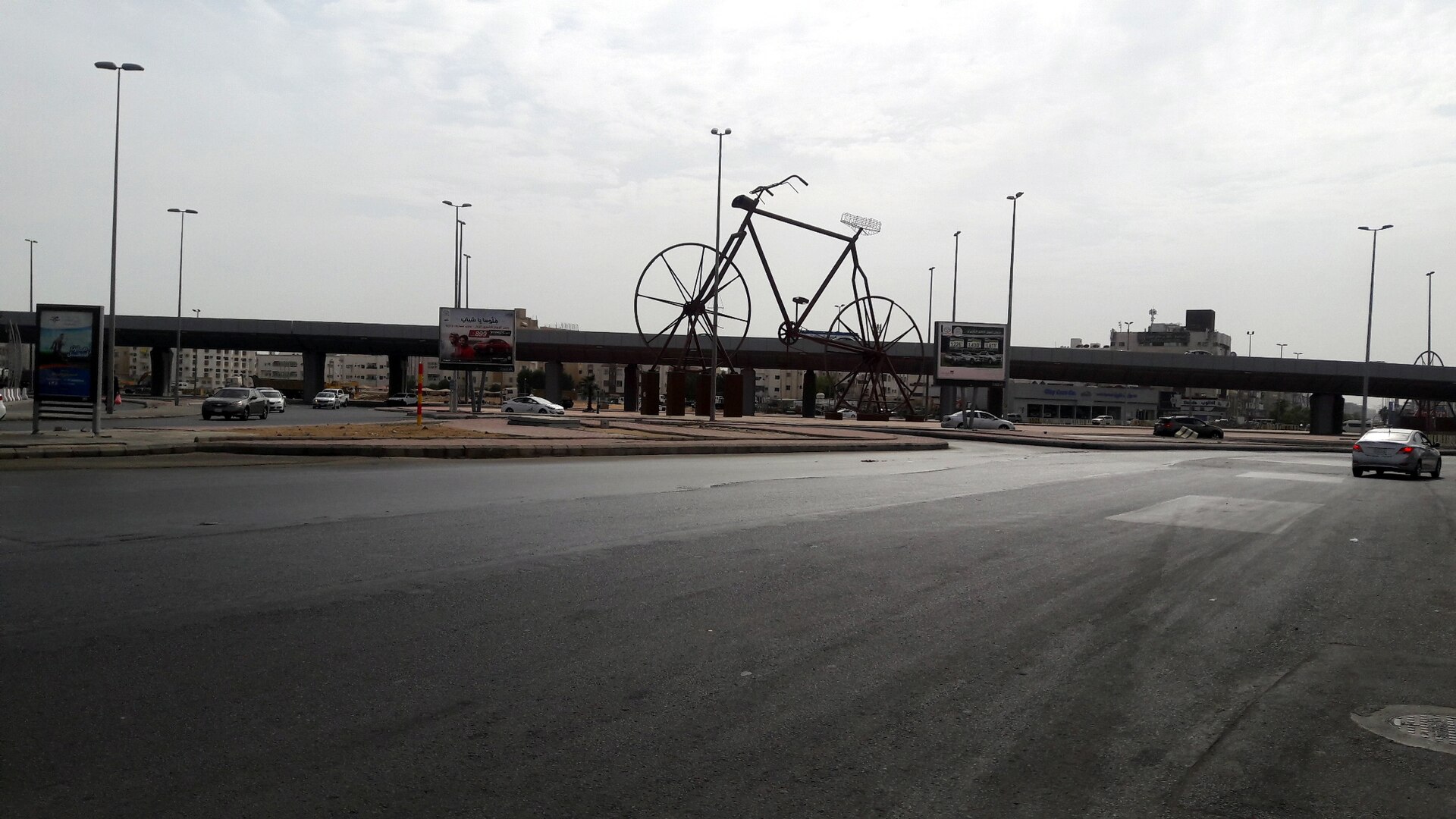
ROSHN Waterfront (Jeddah Waterfront)
The ROSHN Waterfront — originally opened as the Jeddah Waterfront in 2017 and rebranded following ROSHN Group’s sponsorship in 2022 — is the single most visited outdoor attraction in Jeddah. It draws more than 55 million visitors per year and can accommodate 120,000 people at any one time across its 730,000-square-metre footprint.
The 4.2-kilometre promenade is organised into seven distinct recreational zones, including:
- Children’s play parks — multiple age-graded playgrounds with rubber surfacing and shade structures
- Cycling and jogging corridors — separated lanes running the full length of the waterfront
- Skateboarding zones and outdoor fitness equipment stations
- Open green spaces and picnic lawns
- Restaurants and retail kiosks — cafes, street food vendors, and sit-down restaurants line the upper terrace
- Cultural centre and fountain plaza
- Phone charging stations, 100+ public restrooms, and full disability access
- Water: carry at least one litre, even for evening walks — the humidity dehydrates you faster than you expect
- Sun protection: broad-brimmed hat, sunglasses, and SPF 50 if visiting before sunset
- Comfortable shoes: the ROSHN Waterfront promenade is 4.2 km one way; sandals on pavement will slow you down
- Light jacket or shawl: the sea breeze can be surprisingly cool in winter evenings (down to 18-20 °C)
- Camera or phone with stabiliser: the fountain, sunset, and sculpture museum are all photogenic
- Jeddah Travel Guide 2026 — The complete guide to Saudi Arabia’s Red Sea gateway, from Al Balad to the F1 circuit
- Jeddah Corniche — In-depth guide to the full 30-kilometre waterfront, section by section
- Al Balad Jeddah — UNESCO-listed old city with coral-stone merchants’ houses and souks
- Shopping in Jeddah — Best malls, souks, and markets near the Corniche
- Jeddah F1 Grand Prix — Everything you need to know about the Corniche Circuit night race
- Saudi Arabia Travel Guide 2026 — The complete guide to visiting the Kingdom
- Saudi Arabia Visa Guide — Every visa type explained
In June 2024, ROSHN unveiled a renovated walkway featuring a 3,259-metre painted surface created by several hundred artists in a single week. The project earned a Guinness World Record for the longest painting on pavement, covering 16,000 square metres of the promenade with designs inspired by Jeddah’s culture and maritime heritage.
The waterfront is open 24 hours a day, seven days a week, with free entry for all visitors. It is at its liveliest between 6 PM and midnight, when families come out after the heat breaks. If you are exploring Jeddah’s food scene, many of the Corniche restaurants serve excellent grilled fish and Saudi flatbreads — see our Saudi Arabia food and dining guide for recommendations.
King Fahd Fountain
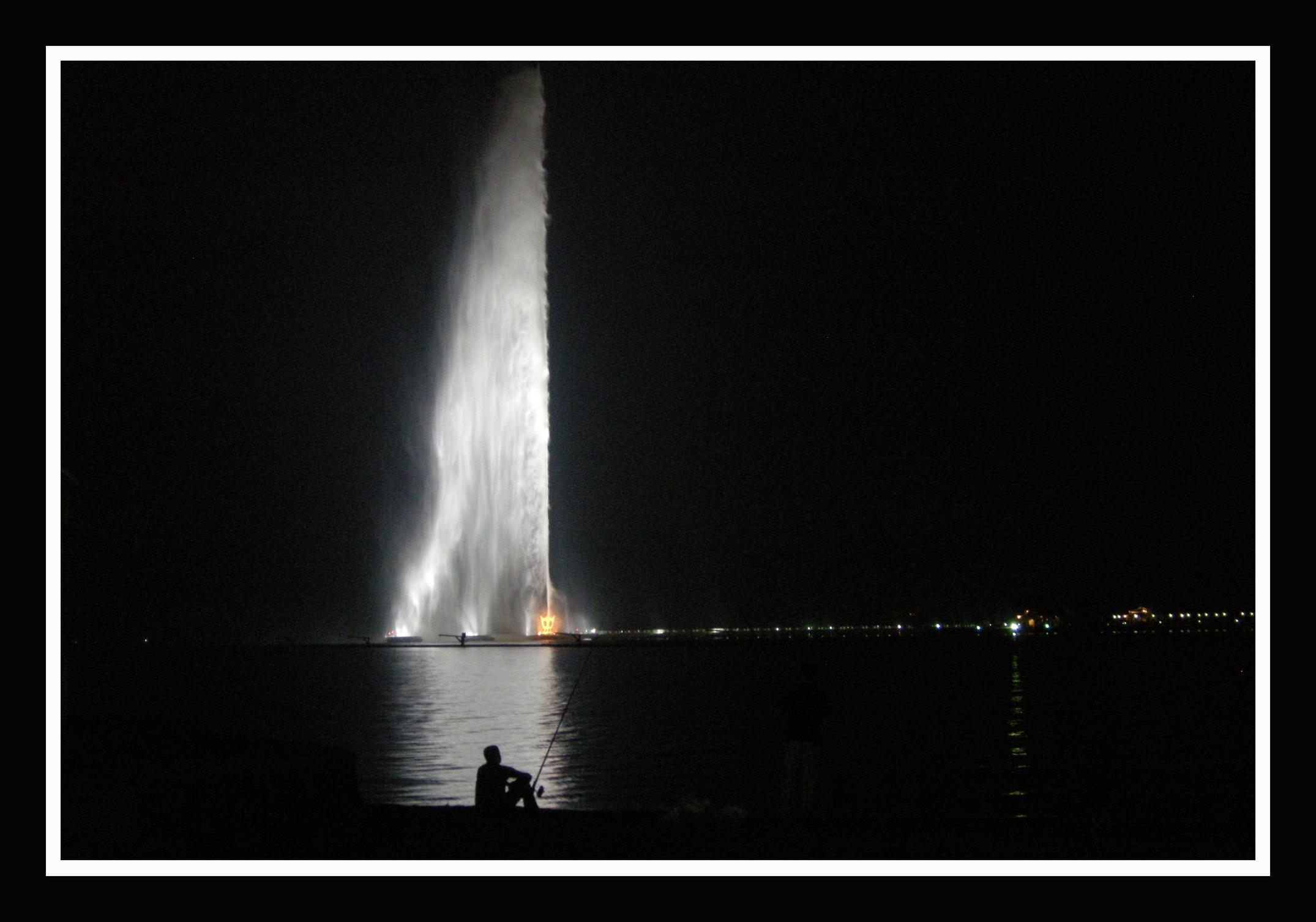
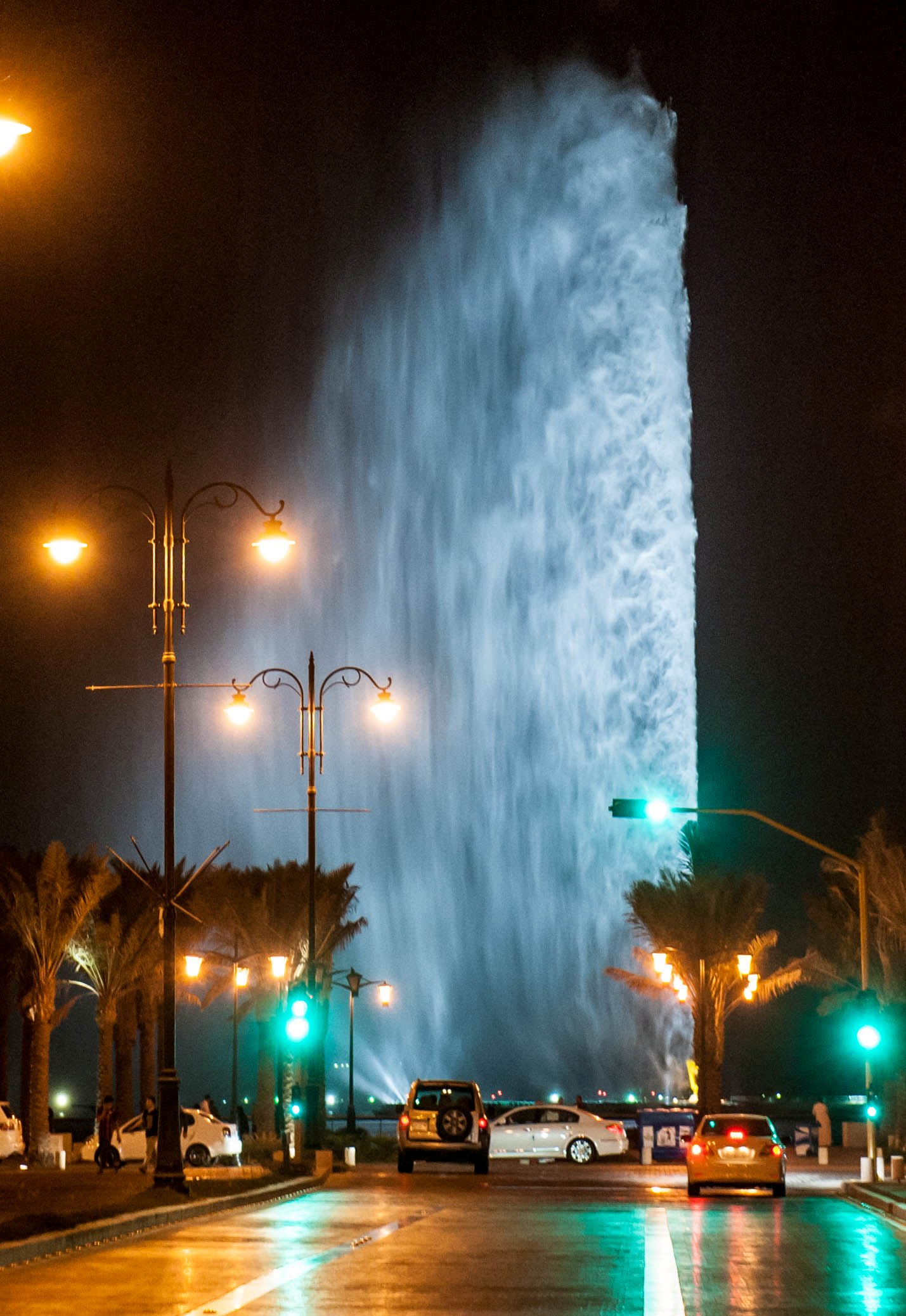
Positioned in the Red Sea just offshore from the central Corniche, King Fahd’s Fountain is the tallest water jet in the world. Inaugurated in 1985, it pumps saltwater at 375 km/h to a maximum height of 312 metres, though wind conditions typically produce a column between 240 and 260 metres. Over 500 spotlights illuminate the plume after dark, creating a shifting display of white and colour against the night sky.
The fountain operates daily, typically from sunset until midnight, and is visible from most points along the central and northern Corniche. The best vantage points are the ROSHN Waterfront promenade, the terrace of the Park Hyatt Jeddah, and the small viewing platforms near the Ritz-Carlton.
Tip: For photographs, arrive 15-20 minutes before sunset. The fountain against the deepening sky, with the Red Sea reflecting the last light, produces the most striking images. A tripod or phone stabiliser is worthwhile for night shots.
Middle Corniche Park
Wedged between the ROSHN Waterfront and the sculpture museum zone, Middle Corniche Park is a quieter stretch of green space offering wide lawns, mature shade trees, and ornamental water ponds. There are plenty of benches and picnic spots, and the park connects directly to the pedestrian walkway, making it a natural rest stop during a longer Corniche walk. It is especially popular with joggers and dog walkers in the early morning.
North Corniche: Al Rahmah Mosque and Obhur Creek
Al Rahmah Floating Mosque
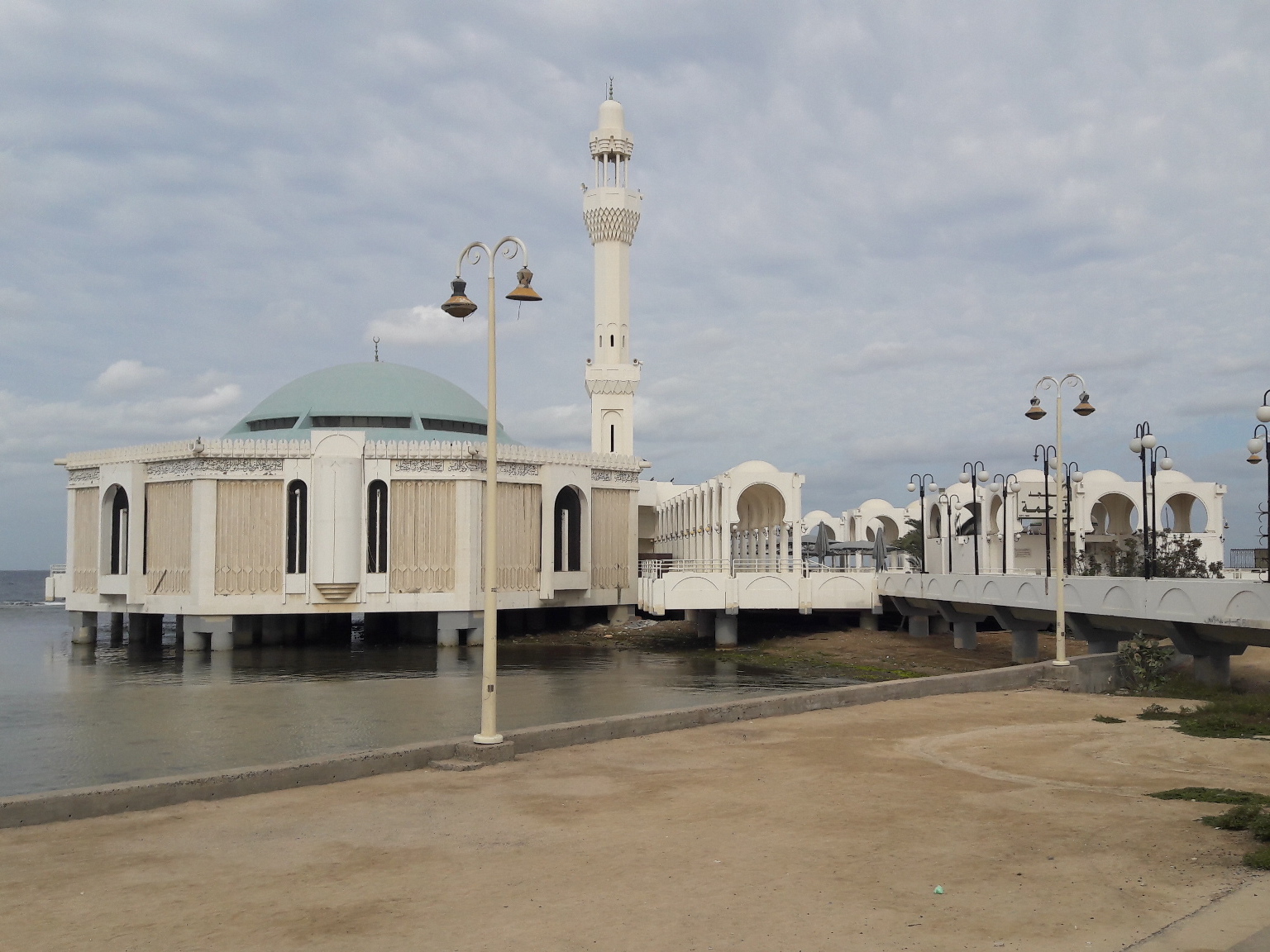
The defining landmark of the North Corniche is the Al Rahmah Mosque, commonly known as the Floating Mosque. Built in 1985 on stilts over the Red Sea, this white-domed structure with its slender minaret appears to hover above the waves at high tide. The mosque covers 2,400 square metres and features 52 outer domes and 23 external umbrellas engraved with Quranic verses.
Non-Muslims are welcome to visit outside prayer times, provided they observe the dress code — women should wear an abaya, and men should cover their arms and legs. The mosque is at its most photogenic during high tide at sunrise or sunset, when the water beneath the foundation catches the light and creates a genuine floating effect. For more on Jeddah’s Islamic heritage sites and mosques, see our dedicated walking tour guide.
Obhur Creek and North Shore
Obhur Creek is a natural tidal inlet roughly 30 kilometres north of the city centre, where the Red Sea pushes inland between mangrove-fringed banks. The creek splits the northern suburbs and provides some of the best opportunities for boating, kayaking, and jet-skiing in greater Jeddah. The South Obhur Waterfront, launched in 2023, redeveloped 205,000 square metres of coastline with a sea promenade, sandy beaches, cycling tracks, and a small marina.
North Obhur leans toward private resorts and villas, but the Mangrove Beach area is publicly accessible and offers a rare chance to walk among coastal mangroves — an increasingly protected ecosystem along the Red Sea. The area pairs well with a morning of Red Sea watersports, with boat rental and jet-ski operators stationed along the creek.
Best Inland Parks in Jeddah
The Corniche dominates Jeddah’s outdoor recreation, but the city also has several well-maintained inland parks that offer green space, children’s facilities, and evening gathering spots away from the coast. Most are free to enter and open daily.
Prince Majid Park
The largest park in Jeddah at 132,000 square metres, Prince Majid Park sits on Makrona Road in the Rabwah district. The park is anchored by a 30-metre interactive fountain — the tallest of its kind in any Jeddah public park — and Jeddah’s largest open children’s play area at 9,730 square metres. Other facilities include an amphitheatre seating over 1,000 spectators, artificial lakes, multiple food courts, prayer rooms, and free parking. Entry is free and the park is open around the clock, though it comes alive after Maghrib prayer when families arrive for evening picnics.
Fayhaa Park
Located in the Al Fayha’a neighbourhood, Fayhaa Park is a quieter option focused on fitness and relaxation. Its main feature is an 800-metre walking and jogging track looping through shaded green spaces, with exercise machines stationed at intervals. Bicycle rentals are available for visitors who prefer to ride. The park includes a children’s play area with swings and slides, free parking, and light refreshment kiosks. It is open 24 hours and free to enter — ideal for an early-morning run or a late-evening family walk.
Tihama Park
Set in the Aziziyah district, Tihama Park underwent significant renovations that added a modern children’s play area (shaded with canopy for daytime visits), a spacious coffee shop, and expanded seating areas surrounded by well-maintained green gardens. A small prayer room is provided on site. The park is free to enter and particularly popular on weekend evenings (Thursday and Friday nights), when local families spread picnic blankets across the lawns.
Attahlia Park
On Al Kurnaysh Road in Ash Shati, Attahlia Park covers 28,000 square metres of palm-shaded gardens with slides, swings, walking paths, and seating areas. It opens at 5 PM and stays open until 1 AM daily, making it a dedicated evening venue rather than an all-day park. Its location on the Corniche road means you can combine a visit with a waterfront walk in either direction.
Al Shallal Theme Park
For families seeking rides and indoor entertainment alongside their park visit, Al Shallal Theme Park occupies 60,000 square metres on the central Corniche. The park blends outdoor green space — ponds, artificial waterfalls, and landscaped gardens — with a full amusement park offering roller coasters, bumper cars, a flying carousel, and boat rides on an artificial lake.
Indoor attractions include one of Jeddah’s few ice-skating rinks, a bowling alley, and billiard halls. Entry costs SAR 50 for adults (approximately USD 13) and SAR 35 for children, with free admission for children under two. The park receives roughly one million visitors per year. Note that Wednesdays are designated as ladies-only days, when only women and young children may enter; all other days are open to everyone.
Tip: Al Shallal works best as a late-afternoon and evening visit. Arrive around 4 PM, ride the outdoor attractions while it is still light, then move indoors for ice skating and bowling as the temperature drops. The park’s waterfront position also offers good views of King Fahd Fountain after dark.
Mega-Projects Reshaping the Waterfront
Several Vision 2030 projects will significantly expand Jeddah’s waterfront park and promenade network over the next few years. While none are fully open yet, they are worth understanding if you are planning a visit from 2027 onward.
Jeddah Central
The most ambitious project is Jeddah Central, a 5.7-square-kilometre coastal redevelopment managed by the PIF-owned Jeddah Central Development Company with a total project value of SAR 75 billion (approximately USD 20 billion). Phase 1 is targeted for 2027. The masterplan includes a 9.5-kilometre waterfront with a world-class marina, a 2.1-kilometre sandy beach, and four landmark buildings — an opera house, a museum, a sports stadium, and an oceanarium with coral farm exhibits. For visitors, this will add a major new promenade and cultural destination to the south-central Corniche.
Al-Arbaeen Lagoon Restoration
Overseen by the Jeddah Historic District Programme (the same body restoring Al Balad), the Al-Arbaeen Lagoon project is excavating and reshaping a historic lagoon near the old port to reconnect the Red Sea with the Al Bunt area. Phase 2, now under way, involves dredging 350,000 cubic metres from the lagoon bed, constructing a 972-metre marine dock and 490-metre retaining seawalls, and building a 4.4-kilometre public park with playgrounds and cycling tracks. The project will also add water taxi stations linking the historic district to Obhur Creek and the wider Corniche.
Jeddah Cove
Jeddah Cove is a 137,000-square-metre mixed-use seafront leisure district being developed by Ezdihar Real Estate with financing from the Tourism Development Fund. Phased delivery is expected from 2026. The project will include a promenade, marina, boutique hotels, a cinema, over 100 commercial brands, and beachside restaurants. It is being positioned as Jeddah’s answer to global seaside leisure districts.
South Corniche Project
The broader South Corniche Project aims to revitalise more than 50 kilometres of Jeddah’s neglected southern coastline with a 3-to-5-kilometre main pedestrian promenade, extensive green spaces planted with hundreds of thousands of trees, children’s play areas, a swimming beach, smart restrooms, retail kiosks, and modern lighting and security infrastructure. The initial phase has already opened approximately three kilometres of coastline at Al Saif Beach.
Practical Tips for Visiting Jeddah’s Parks and Waterfront
Best Times and Seasons
The ideal months for outdoor exploration in Jeddah are October through March, when evening temperatures settle between 20 and 29 °C and the humidity drops to bearable levels. The peak of summer (June to August) sees daytime highs above 40 °C with oppressive humidity — if you visit during this period, limit outdoor time to after sunset, when the sea breeze makes the Corniche comfortable. The Red Sea water temperature stays between 26 °C in winter and 32 °C in summer, so swimming is pleasant year-round.
Getting Around
The Corniche is a single continuous road, but its 30-kilometre length means you will not walk the entire thing in one session. The practical approach is to pick a section — the ROSHN Waterfront and King Fahd Fountain area for a first-time visit, the sculpture museum for art lovers, or Obhur Creek for watersports — and explore on foot within that zone. Uber and Careem are the easiest way to move between sections. Public transport options are limited along the Corniche itself, though SAPTCO buses serve some inland routes.
What to Bring
Safety and Etiquette
Jeddah’s parks and Corniche are extremely safe, even late at night. Families with children are the dominant demographic on the waterfront after dark, and Saudi hospitality culture means you will often be offered tea or snacks by nearby groups. Dress modestly in public — swimwear is appropriate only at designated beach areas, not on the promenade. Ramadan hours affect some park amenities and food outlets, so check dates if you are visiting during the holy month.
Getting to Jeddah: King Abdulaziz International Airport (JED) receives direct flights from most major global hubs. If you are arriving from another Saudi city, the Haramain High-Speed Railway connects Jeddah to Mecca and Medina. For a complete overview of Jeddah’s transport, neighbourhoods, and attractions, see our main Jeddah Travel Guide 2026. For shopping, souks, and malls near the Corniche, see our Jeddah shopping guide.
Suggested Itineraries
Half-Day Evening Walk (3-4 hours)
Start at the ROSHN Waterfront around 5 PM. Walk the full 4.2-kilometre promenade south, stopping to watch the painted walkway and letting children use the play parks. Arrive at the King Fahd Fountain viewpoint by sunset. Eat dinner at one of the seafront restaurants, then take a taxi back to your hotel. This is the single best introduction to Jeddah’s waterfront.
Full-Day Art and Nature Circuit (6-8 hours)
Begin in the morning at the Jeddah Sculpture Museum on the South Corniche, spending 1-2 hours walking the five thematic sculpture groups. Continue north by taxi to the ROSHN Waterfront for a late lunch. After lunch, drive north to the Al Rahmah Floating Mosque for late afternoon photos. End the day at Obhur Creek for sunset views over the mangroves and, optionally, a short boat ride. This itinerary covers the full breadth of the Corniche and pairs well with a separate half-day exploring historic Al Balad.
Family Park Day (4-5 hours)
Start at Prince Majid Park in the late afternoon for the interactive fountain and Jeddah’s largest children’s play area. Around 6 PM, drive to Al Shallal Theme Park on the Corniche for rides, ice skating, and dinner. This works particularly well on a Thursday or Friday evening when both locations are at their liveliest.
Jeddah Corniche Compared to Other Saudi Waterfronts
| Feature | Jeddah Corniche | Dammam Corniche | Yanbu Waterfront |
|---|---|---|---|
| Total length | ~30 km (main promenade) | ~5 km | ~4 km |
| Annual visitors | 55+ million (ROSHN Waterfront alone) | Not published | Not published |
| Open-air sculpture museum | Yes (20+ works by major international artists) | No | No |
| Theme park on site | Yes (Al Shallal) | No | No |
| Swimming beaches | Multiple (Al Hamra, Al Saif, Obhur) | Limited | Yes (public beaches) |
| Best season | October-March | November-March | October-April |
| Entry fee | Free | Free | Free |
For a broader look at what each Saudi coastal city offers, including Dammam on the Gulf coast and Yanbu further up the Red Sea, see our Saudi Arabia beaches guide.