
NEOM was supposed to be the future. A $500 billion megaproject stretching across 26,500 square kilometres of Saudi Arabia’s northwestern Tabuk Province, it promised The Line — a 170-kilometre mirrored city with no cars and no streets — alongside a floating industrial port, a mountain ski resort, and a luxury island in the Red Sea. Seven years after Crown Prince Mohammed bin Salman’s announcement, the gap between the original vision and the 2026 reality is the most important story in Saudi development.
This guide separates what you can actually visit from what remains on the drawing board. If you are planning a trip to NEOM in 2026, read this before you book anything.
What Is NEOM — The Original Vision Versus 2026 Reality
NEOM was announced in October 2017 as the centrepiece of Saudi Arabia’s Vision 2030 programme, backed by the Public Investment Fund (PIF). The project encompasses four main components: The Line (a linear city), Trojena (a mountain resort), Oxagon (an industrial port city), and Sindalah (a luxury island). The total area is roughly the size of Belgium.
The ambition was staggering. The Line alone would house 9 million people in a structure 200 metres wide, 500 metres tall, and 170 kilometres long. Trojena would host outdoor skiing in the Arabian desert. Oxagon would become the world’s largest floating industrial complex. Sindalah would rival the Maldives as a superyacht destination.
By March 2026, almost none of this has materialised as planned. A PIF board meeting in December 2024 approved spending reductions of at least 20 per cent — and in some cases 60 per cent — across more than 100 portfolio companies, with NEOM entities among the most heavily affected, according to reporting by Semafor and the Wall Street Journal. The PIF recorded an $8 billion write-down on its giga-project valuations at the end of 2024, according to CNBC.
On 16 September 2025, the PIF suspended construction on The Line until further notice. Only 2.4 kilometres of foundation work had been completed — out of a planned 170 kilometres. The population target for 2030 was slashed from 1.5 million to fewer than 300,000, as reported by Bloomberg in July 2025.
Most critically, NEOM has been broken up. The major components — Oxagon, Trojena, and Sindalah — have been transferred to specialised state entities. Sindalah’s management is being shifted to Red Sea Global, another PIF subsidiary. NEOM is no longer a single unified megacity but a distributed portfolio of independent ventures operating under separate management structures.
The Line — Construction Paused, Future Uncertain
The Line remains the headline component of NEOM and the most dramatic example of ambition colliding with reality. Originally conceived in 2021 as a 170-kilometre mirrored linear city, the project has undergone a series of increasingly severe scale-backs.
The budget trajectory tells the story. Initial estimates placed the cost at $1.6 trillion. An updated internal estimate in 2022 raised that to $4.5 trillion. By 2025, an internal audit leaked to the Wall Street Journal projected total costs of $8.8 trillion, with a completion timeline stretching to 2080. These figures, if accurate, would make The Line the most expensive construction project in human history by a wide margin.
In practical terms, construction was scaled back in 2024 to cover only 2.4 kilometres — roughly 1.5 miles — by 2030. Even that reduced target was paused in September 2025 when the PIF halted work. Saudi officials told Bloomberg that The Line “remains a strategic priority,” but the project’s future scope and timeline are genuinely uncertain.
Semafor reported in July 2025 that NEOM was looking to cut its workforce and had relocated more than 1,000 employees to Riyadh to control costs and improve oversight. Saudi Arabia’s former investment minister indicated that NEOM and The Line have been pushed down the priority list as the state diverts spending towards infrastructure needed for the 2034 FIFA World Cup and Expo 2030 in Riyadh.
Can you visit The Line? No. There is nothing for tourists to see. The construction site is not open to visitors, and there are no completed habitable structures. Do not plan a trip to see The Line in 2026.
Sindalah Island — Open for VIPs, Closed to the Public
Sindalah is a 840,000-square-metre island in the Red Sea that was supposed to be the first NEOM component open to visitors. It held a high-profile “grand opening” party on 27 October 2024, with 65 superyachts and celebrities including Alicia Keys, Katherine Jenkins, and Chris Tucker, according to reporting by Dezeen and Elite Traveler.
However, the grand opening was three years behind its original schedule and cost nearly $4 billion — three times the initial budget. More importantly, despite the party, Sindalah was not open to the general public as of August 2025, according to multiple reports.
When it does fully open, Sindalah plans to offer 413 luxury hotel rooms and 333 apartments, with a marina capable of hosting superyachts up to 75 metres. The island is designed as an ultra-luxury destination with fine dining, beach clubs, and a yacht club.
The PIF’s decision to transfer Sindalah’s management from NEOM to Red Sea Global signals a loss of confidence in NEOM’s ability to manage hospitality operations. Red Sea Global already operates nine resorts along the Saudi Red Sea coast and has established operational credentials that NEOM lacks.
Can you visit Sindalah? Not yet as a regular tourist. The island may accept guests through private invitation or luxury travel agencies, but it is not operating as a conventional resort open to online bookings as of early 2026. Monitor official announcements from Red Sea Global for updates.
Trojena — The Desert Ski Resort Still Under Construction
Trojena is a mountain resort planned for the Sarawat Mountains within the NEOM zone, at elevations between 1,500 and 2,600 metres. The project includes year-round skiing — three months on real snow and the rest on synthetic dry-ski surfaces — plus luxury hotels, retail, mansions, apartments, and a planned 2.8-kilometre artificial lake.
Satellite imagery and construction reports show that work has progressed on roads, tunnels, and the main steel structure, with the world’s largest crane involved in construction. However, the project faces significant challenges that have led to delays and downsizing.
A 2023 internal review found that costs had surged by over $10 billion beyond original estimates, pushing the project below its internal rate of return. The Architects’ Journal reported that Trojena has been “downsized” as part of the broader NEOM scale-back. Most significantly, Trojena was ruled out as a venue for the 2029 Asian Winter Games, which it had originally been selected to host — a strong indicator that the facility will not be completed to its originally planned specification or timeline.
The core engineering challenges remain formidable: producing artificial snow in a desert climate, pumping water uphill to fill the artificial lake at an estimated cost of $5 billion, and building complex facilities at high altitude with limited existing infrastructure.
Can you visit Trojena? Not yet. Some travel sources suggest Trojena may open to visitors in late 2026, but given the project’s history of missed deadlines and the broader NEOM restructuring, this timeline should be treated with scepticism. No booking platform currently offers Trojena reservations.
Oxagon — The Quiet Survivor
While The Line and Trojena have dominated headlines with delays and scale-backs, Oxagon has quietly emerged as the most strategically coherent component of the NEOM project. Construction contracts totalling $9.3 billion have been awarded specifically for Oxagon, making it the single largest recipient of NEOM contract spending after The Line.
Oxagon’s port has reached 68 per cent completion, with cargo shipments already underway and full container terminal operations scheduled for 2026, according to Newsweek reporting on satellite imagery. The green hydrogen plant at Oxagon is 80 per cent complete. An industrial gases facility began construction in February 2026, with the first phase planned to become operational by the end of 2026. A $5 billion DataVolt hyperscale data centre campus was announced in February 2025, with first-phase operations targeted for 2028.
Oxagon’s pivot towards advanced manufacturing, green energy, logistics, and data centres positions it as the NEOM component most likely to generate actual economic returns. NEOM is increasingly being repositioned as a hub for hyperscale data centres and AI infrastructure, with officials preparing to refocus large parts of the development on industrial uses.
Can you visit Oxagon? No. Oxagon is an industrial zone, not a tourist destination. There are no visitor facilities and no plans for tourism infrastructure at this site.
NEOM Bay — The Gateway That Exists Today
The one piece of NEOM infrastructure that genuinely functions for visitors is NEOM Bay Airport (IATA: NUM), located near the town of Sharma on the Red Sea coast. The airport opened in 2019 and is the first in the Middle East to implement 5G technology.
As of March 2026, four airlines operate from NEOM Bay Airport: Saudia, flyadeal, Qatar Airways, and flyDubai. There are approximately 51 flights per month — roughly 14 per week — serving five airports. The busiest route is to Riyadh, with an average of seven flights per week. A new direct route to Dammam launched in March 2026 via flyadeal.
The airport has a 3,757-metre runway and a modern terminal with self-service check-in, baggage drop services, and free Wi-Fi. Ground transportation is available via taxi services and ride-hailing apps including Uber and Careem.
The surrounding NEOM Bay area includes temporary residential communities built with relocatable modular units to house construction workers. Over $5.6 billion has been invested in building ten residential communities to house 95,000 people across four million square metres. These are worker accommodations, not tourist facilities.
How to Get to NEOM
NEOM Bay Airport is the primary access point. Key connections include:
| Route | Airline | Frequency |
|---|---|---|
| Riyadh (RUH) to NEOM (NUM) | Saudia, flyadeal | 7 flights/week |
| Jeddah (JED) to NEOM (NUM) | Saudia | 2-3 flights/week |
| Dubai (DXB) to NEOM (NUM) | flyDubai | 2 flights/week |
| Doha (DOH) to NEOM (NUM) | Qatar Airways | 2 flights/week |
| Dammam (DMM) to NEOM (NUM) | flyadeal | New route — March 2026 |
The nearest alternative airports are Tabuk (TUU), approximately 150 kilometres east, and Sharm El Sheikh (SSH) in Egypt, 48 kilometres across the Red Sea — though no ferry service currently connects the two.
Visitors from 49 countries can obtain a one-year, multiple-entry eVisa for Saudi Arabia online. There are no special visa requirements for the NEOM area — a standard Saudi tourist visa is sufficient.
What You Can Actually Do in the NEOM Region in 2026
Visitors who fly into NEOM Bay Airport in 2026 will find a region that is still fundamentally a construction zone. However, the broader Tabuk Province coastline offers genuine attractions:
Red Sea beaches. The coastline near Sharma features pristine, largely undeveloped beaches with clear waters and healthy coral reefs. This is not a resort experience — there are limited facilities — but the natural environment is spectacular.
Diving and snorkelling. The northwestern Saudi Red Sea coast has some of the healthiest coral reefs in the region, with minimal human impact compared to the heavily developed Egyptian side. Independent dive operators are beginning to offer excursions from the area.
Historical sites. The wider Tabuk Province includes Al-Ula (a separate megaproject under the Royal Commission for AlUla) with the UNESCO World Heritage Site of Hegra (Mada’in Salih). Al-Ula is approximately 350 kilometres from NEOM Bay Airport and is a far more developed tourist destination with hotels, restaurants, and organised tours.
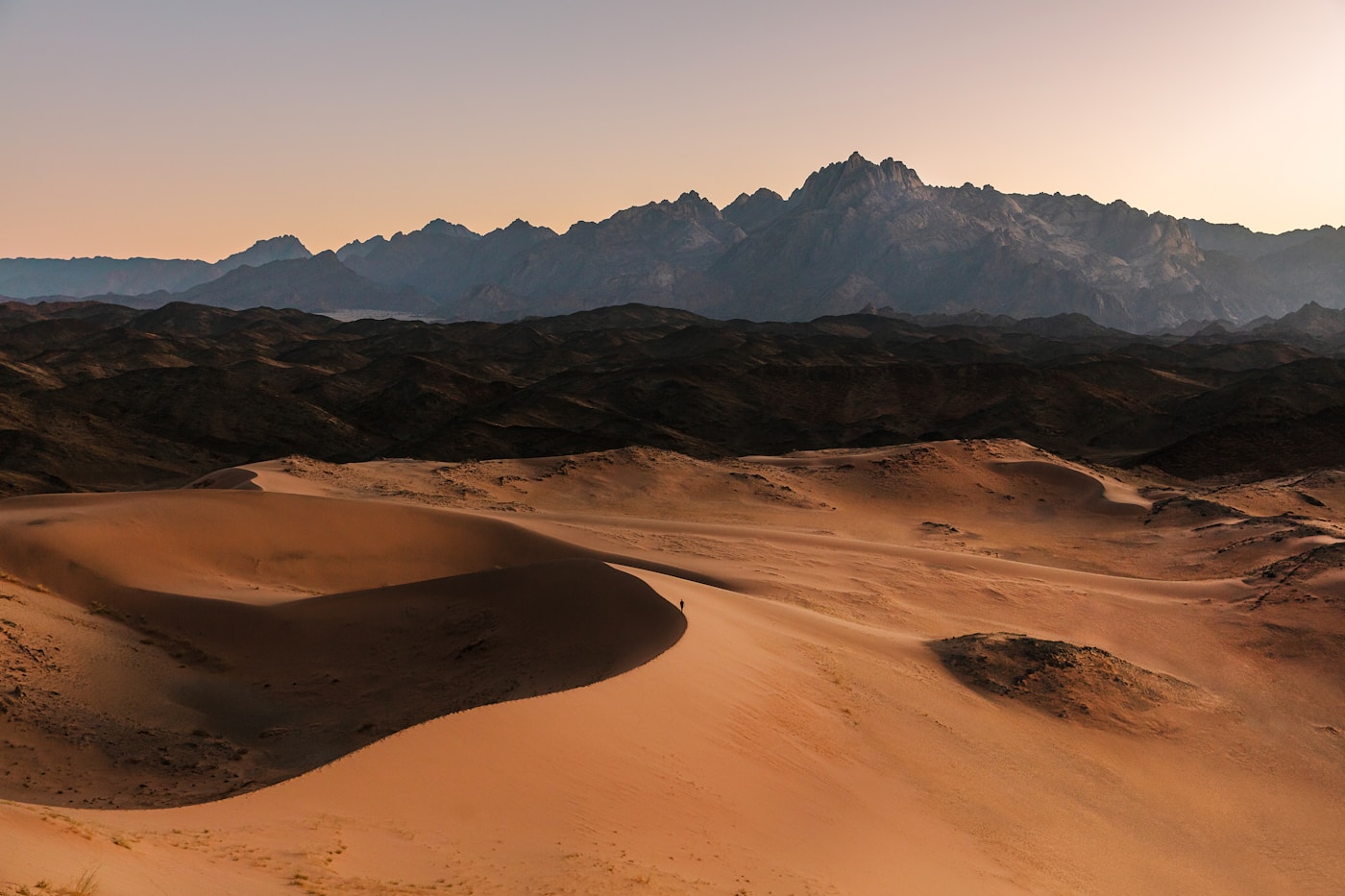
Desert landscapes. The Hisma Desert within the NEOM zone features dramatic sandstone formations similar to Wadi Rum in Jordan. Access may be limited due to ongoing construction in parts of the zone.
Practical Information for 2026 Visitors
| Detail | Information |
|---|---|
| Best time to visit | October to April (summer temperatures exceed 40°C) |
| Accommodation | Limited — basic hotels in Sharma and Haql. No luxury options until Sindalah fully opens |
| Currency | Saudi Riyal (SAR). Cards widely accepted at airport; cash useful in smaller settlements |
| Language | Arabic primary. English spoken at airport and by tourism staff |
| Dress code | Modest clothing recommended. Beachwear acceptable at beach areas but not in town |
| Mobile coverage | Good along coast and at NEOM Bay. Patchy in remote desert areas |
| Alcohol | Not available. Saudi Arabia does not permit alcohol sales |
The Honest Assessment — Should You Visit NEOM in 2026?
For most travellers, the answer is: not yet. NEOM in 2026 is a construction site attached to an airport, not a tourist destination. The components that were supposed to be open — Sindalah, Trojena, early sections of The Line — are either delayed, paused, or not accepting general visitors.
If you are a journalist, construction industry professional, or someone with a specific interest in megaproject development, a trip to the region offers a fascinating glimpse of the scale of Saudi Arabia’s ambitions and the challenges of executing them. The airport is functional, the coastline is beautiful, and the sheer scale of earthmoving and infrastructure work is visible from multiple vantage points.
If you are looking for a leisure holiday on the Saudi Red Sea coast, you will have a far better experience at the Red Sea Global resorts south of NEOM, which are actually open and operating, or at established destinations like Jeddah and Al-Ula.
If you want to witness one of the most ambitious and controversial construction projects in human history — even in its paused and restructured state — the NEOM region rewards a visit. Just calibrate your expectations to reality rather than the promotional videos.
NEOM Timeline — Key Dates
| Date | Event |
|---|---|
| October 2017 | Crown Prince Mohammed bin Salman announces NEOM |
| 2019 | NEOM Bay Airport opens |
| January 2021 | The Line announced as a 170-kilometre linear city |
| 2023 | Internal review finds Trojena costs surged by $10 billion+ |
| 2024 | The Line scaled back to 2.4 kilometres by 2030 |
| October 2024 | Sindalah holds “grand opening” party (not open to public) |
| December 2024 | PIF board approves 20-60% spending cuts across giga-projects |
| End of 2024 | PIF records $8 billion write-down on giga-project valuations (CNBC) |
| July 2025 | NEOM workforce cuts; 1,000+ employees relocated to Riyadh (Semafor) |
| September 2025 | PIF suspends construction on The Line |
| 2025-2026 | NEOM broken up — components transferred to specialised entities |
| March 2026 | Oxagon port nears completion; The Line remains paused |
NEOM remains one of the most watched development projects on earth. Its story is far from over — but the chapter being written in 2026 is about pragmatic restructuring rather than futuristic spectacle. We will update this guide as new developments emerge. For the latest NEOM news and analysis, see our NEOM intelligence hub.
Understanding NEOM’s Financial Reality
To understand why NEOM looks the way it does in 2026, you need to understand the financial pressures that forced the restructuring. Saudi Arabia’s fiscal position came under strain from multiple directions simultaneously.
Brent crude averaged approximately $62 per barrel through much of 2025 — well below the break-even price that Saudi Arabia needs to balance its budget. Foreign direct investment inflows into the Kingdom, while growing, fell short of the targets set under Vision 2030. Construction costs across the Gulf had escalated by 30 to 40 per cent since NEOM’s original budgets were established, driven by global inflation, supply chain disruptions, and competition for skilled labour across multiple Saudi megaprojects running concurrently.
The PIF, which manages Saudi Arabia’s sovereign wealth with assets under management exceeding $930 billion, had to make choices. The 2034 World Cup and Expo 2030 in Riyadh are fixed deadlines that cannot slip — stadiums and exhibition halls must be ready on time. NEOM’s components, by contrast, have no external deadline pressure. The rational decision was to pause NEOM and redirect resources to time-critical projects.
This does not mean NEOM is cancelled. The land is allocated, the airport is built, the port at Oxagon is nearly complete, and significant infrastructure work has been done across the zone. What it means is that NEOM’s timeline has shifted from “revolutionary city by 2030” to “long-term development zone over decades.” Visitors planning trips should set their expectations accordingly.
NEOM Versus Other Saudi Megaprojects — Where Should You Go Instead?
If NEOM is not yet ready for tourists, where should travellers interested in Saudi Arabia’s transformation actually go? Several alternatives offer more developed visitor experiences in 2026.
Al-Ula. Located approximately 350 kilometres from NEOM Bay Airport, Al-Ula is Saudi Arabia’s most polished heritage tourism destination. The UNESCO World Heritage Site of Hegra (Mada’in Salih) features well-preserved Nabataean tombs dating to the first century CE. Al-Ula has luxury hotels including Banyan Tree AlUla, Habitas AlUla, and Our Habitas Ula, plus organised tours, restaurants, and cultural programming including the annual Winter at Tantora festival. This is what “Saudi tourism done right” looks like in 2026.
The Red Sea resorts. Red Sea Global’s destination south of NEOM has nine operating resorts as of early 2026, with more opening through the year. Brands include St. Regis, Ritz-Carlton Reserve, Six Senses, and Rosewood. These are genuine luxury hospitality experiences with diving, snorkelling, and island excursions. See our Red Sea coast guide for full details.
Diriyah. On the outskirts of Riyadh, the Diriyah Gate project is transforming the UNESCO-listed birthplace of the first Saudi state into a cultural and hospitality district. Multiple luxury hotels, museums, and restaurants are scheduled to open through 2026-2027.
Jeddah. Saudi Arabia’s Red Sea gateway city offers the historic Al-Balad district (UNESCO World Heritage Site), the Jeddah Corniche, diving in the Red Sea, and a growing restaurant and café scene. See our Jeddah guide.
The Human Cost — A Note on NEOM’s Labour Controversies
Any honest travel guide to NEOM must acknowledge the human cost of the project’s construction. Reports by the Guardian, the BBC, and human rights organisations have documented concerns about the treatment of migrant workers involved in NEOM’s construction, including allegations of wage theft, unsafe working conditions, and inadequate housing.
In 2024, ALQST, a Saudi human rights organisation based in London, reported that members of the Huwaitat tribe — indigenous to the NEOM zone — had been forcibly displaced from their ancestral lands to make way for construction. In 2020, tribal member Abdul Rahim al-Huwaiti was shot dead by Saudi security forces after publicly refusing to leave his home. Several other tribe members received death sentences in connection with their resistance to the forced relocations, as reported by the Guardian and Amnesty International.
These issues are not unique to NEOM — labour rights concerns affect major construction projects across the Gulf — but the scale of NEOM’s ambitions and its high international profile have attracted particular scrutiny. Travellers should be aware of these controversies when deciding whether and how to engage with the project.
Photography and Social Media at NEOM
Saudi Arabia has relaxed many of its restrictions on tourism in recent years, but photographing military installations, government buildings, and construction sites without permission remains prohibited. Given that much of the NEOM zone is an active construction area, visitors should exercise caution about where they point their cameras.
The coastline, beaches, desert landscapes, and NEOM Bay Airport are generally fine to photograph. However, do not attempt to photograph construction sites for The Line, Oxagon, or other NEOM components without explicit permission. Security presence in the area is significant.
For social media content, the natural scenery of the Tabuk Province coastline — turquoise waters, red sandstone formations, and empty beaches — is genuinely spectacular and provides better content than construction fencing.
Frequently Asked Questions
Is NEOM cancelled? No. NEOM has been restructured and its timeline extended significantly, but the project has not been formally cancelled. Oxagon continues active construction, and the airport remains operational. However, The Line — the most publicised component — is paused indefinitely.
When will The Line be finished? There is no credible completion date. The original 2030 target is impossible given that construction is paused. Internal documents leaked to the Wall Street Journal projected a timeline stretching to 2080 for the full 170-kilometre vision. A realistic assessment suggests that some habitable section of The Line — perhaps a few kilometres — could be completed in the 2030s, but this depends on future PIF decisions and oil prices.
Is it safe to visit NEOM? The NEOM region is as safe as the rest of Saudi Arabia for tourists — which is generally very safe. Saudi Arabia has low crime rates and a strong security presence. The main risk for visitors is the limited infrastructure and services outside the airport area. Carry water, have a charged phone, and do not venture into restricted construction zones.
Do I need a special permit to visit NEOM? No. A standard Saudi tourist eVisa is sufficient. There are no special NEOM-specific permits required for visitors arriving at NEOM Bay Airport or travelling along the public roads in the area.
Are there hotels near NEOM? Limited options exist in the town of Sharma and the coastal settlement of Haql. These are basic accommodations, not luxury hotels. For upscale options, consider flying into Tabuk (which has more hotel choices) or combining a NEOM visit with time at the Red Sea Global resorts or Al-Ula.
Can I drive to NEOM? Yes. NEOM Bay is accessible by road from Tabuk (approximately 150 kilometres) or from the Jordan border crossing at Haql. The drive from Riyadh is approximately 1,200 kilometres (12+ hours). From Jeddah, it is roughly 1,000 kilometres. Flying is strongly recommended.
For the latest news on NEOM’s development and its impact on Saudi Arabia’s transformation, visit our homepage or browse our megaprojects coverage.
Last updated: March 2026. This guide is reviewed monthly and updated as new information becomes available.