
The Red Sea International Film Festival (RSIFF) has rapidly established itself as one of the most prestigious cultural events in the Middle East and a cornerstone of Jeddah’s evolving identity as a global arts destination. Held every December in the UNESCO-listed Al-Balad historic district, the festival brings together filmmakers, actors, and cinema enthusiasts from around the world for ten days of screenings, premieres, industry panels, and red-carpet spectacle. Whether you are a serious cinephile or a traveller looking for a unique reason to visit Saudi Arabia, RSIFF offers an experience unlike any other film festival on the planet.
Best Time to Visit: Early to mid-December (the festival typically runs for 10 days in the first half of the month)
Getting There: Fly into King Abdulaziz International Airport (JED), a major hub with direct flights from Europe, Asia, and the Americas. The Al-Balad festival district is about 20 minutes from the airport by car.
Visa Required: Yes — tourist e-visa available online for 60+ nationalities
Budget: USD 150–400 per day depending on accommodation tier. Public screenings can be free or low-cost; industry passes are more expensive.
Must-See: World and regional premieres in the open-air venues of Al-Balad, the red carpet at the festival’s main theatre, and the Souk Al Alawi night market nearby.
Avoid: Waiting until the last minute for accommodation — Jeddah hotels fill fast during RSIFF week. Book at least six to eight weeks in advance.
History and Founding of the Red Sea International Film Festival
The Red Sea International Film Festival was established in 2019 under Saudi Arabia’s broader cultural liberalisation programme. The Kingdom had only lifted its 35-year ban on commercial cinemas in 2018, and RSIFF was conceived as a statement of intent: Saudi Arabia would not merely allow its citizens to watch films but would actively build a world-class film culture from the ground up.
The festival was originally scheduled to debut in March 2020, but the COVID-19 pandemic forced its cancellation. The inaugural edition finally took place from 6 to 15 December 2021, opening with Joe Wright’s Cyrano and closing with the world premiere of Kabir Khan’s 83. That first edition screened 138 films from 67 countries, an ambitious programme for a brand-new festival.
The Red Sea Film Festival Foundation, a non-profit cultural organisation registered in Saudi Arabia, operates the event. The Foundation is chaired by Jomana Alrashid, CEO of the Saudi Research and Media Group (SRMG). Mohammed Al Turki, a Saudi film producer with credits in Hollywood and the Arab world, has served as the festival’s chairman and driving creative force, shaping its curatorial vision and forging relationships with major international film institutions.
Since its debut, RSIFF has grown rapidly. It is now a FIAPF-accredited festival and sits alongside Cairo, Marrakech, and El Gouna as one of the Arab world’s most significant cinema events — though its scale and celebrity drawing power already surpass most of those peers.
The Festival’s Location: Al-Balad Historic District
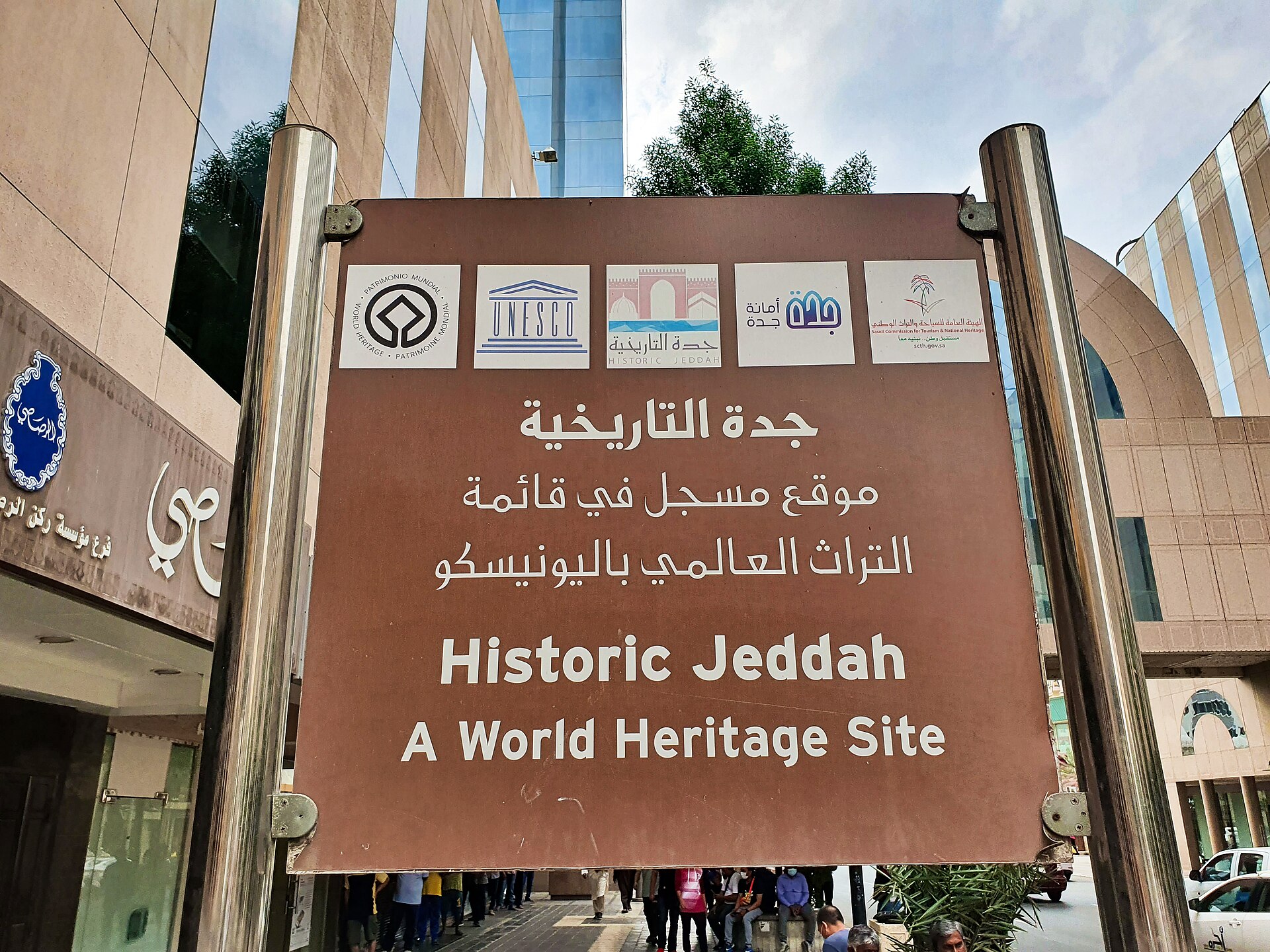
What sets RSIFF apart from virtually every other major film festival is its setting. While Cannes has the Croisette and Venice has the Lido, the Red Sea International Film Festival unfolds in Al-Balad, Jeddah’s historic core and a UNESCO World Heritage Site since 2014. The district’s coral-stone merchant houses, carved wooden rawasheen (latticed bay windows), and narrow alleyways date back centuries — and during RSIFF, they are transformed with projection screens, red carpets, and festival lighting.
Key festival venues within and around Al-Balad include:
- VOX Cinemas (Red Sea Mall and other locations): Indoor multiplex screenings for competition and out-of-competition films.
- Open-air screening areas in Al-Balad: Outdoor venues set against the backdrop of historic architecture, used for gala screenings and special presentations.
- Festival Village: A central gathering space with industry lounges, sponsor activations, and food stalls, typically set up along the Al-Balad waterfront area.
- Red Sea Souk (industry market): A dedicated space for film industry networking, co-production markets, and project pitches run by the Red Sea Film Festival Foundation.
- General rule: Smart-casual is appropriate for most screenings. Avoid very revealing clothing. Shoulders and knees should be covered in public spaces outside the festival venues.
- Red-carpet and gala events: Formal or semi-formal attire. International guests typically wear cocktail dresses and suits. An abaya is not required for female visitors, though some may choose to wear one as a gesture of cultural respect.
- December weather: Jeddah in December is pleasantly warm, with daytime temperatures around 28–30°C (82–86°F) and evenings around 20–22°C (68–72°F). Light layers for air-conditioned indoor venues and a light jacket for open-air evening screenings are advisable.
- Footwear: Al-Balad’s streets are uneven cobblestone in places. Comfortable walking shoes are essential for navigating the district, even if you change into formal shoes for events.
- Cairo International Film Festival (Egypt): Founded in 1976, Cairo is the oldest and longest-running film festival in the Arab world. It has deep institutional history but has faced periods of decline. RSIFF has already surpassed it in terms of international star power and industry market activity.
- Marrakech International Film Festival (Morocco): Backed by King Mohammed VI, Marrakech draws major stars and has a strong cinephile reputation. It operates on a similar prestige model to RSIFF but with a longer track record.
- El Gouna Film Festival (Egypt): Founded in 2017 by Naguib Sawiris, El Gouna is a boutique Red Sea resort festival with a strong programme. It is smaller and more intimate than RSIFF.
- Dubai International Film Festival (UAE): Once the Gulf’s premier festival, DIFF went on indefinite hiatus after 2017. Its absence created a vacuum that RSIFF has largely filled.
- Al-Balad beyond the festival: Even without RSIFF, Al-Balad is one of the most fascinating historic districts in the Middle East. Spend a morning exploring the coral-stone houses, the Shafei Mosque, Naseef House, and the restored alleyways.
- The Jeddah Corniche: The Corniche is a 30-kilometre waterfront promenade with parks, sculptures (including the famous Jeddah Flagpole), and sweeping Red Sea views.
- Jeddah Formula 1 Grand Prix: Depending on the calendar year, the Jeddah Corniche Circuit may host the Saudi Arabian Grand Prix in close proximity to RSIFF dates. Check both event calendars for possible overlap.
- MDL Beast Festival: The MDL Beast music festival, typically held in Riyadh in December, sometimes overlaps with RSIFF. Ambitious travellers can do both in one trip with an internal flight between Jeddah and Riyadh.
- Day trips: The mountain town of Taif is roughly 90 minutes from Jeddah by car and offers a cooler climate, rose gardens, and dramatic escarpments.
- Register early. Create an account on the RSIFF website (redseafilmfest.com) well before the festival. Ticket and accreditation announcements are sent to registered users first.
- Download the app. The RSIFF mobile app is essential for managing your screening schedule, viewing venue maps, and receiving real-time programme changes.
- Carry a portable charger. Long days moving between venues, taking photos, and using the app will drain your phone.
- Bring cash and cards. Most venues accept cards, but some traditional vendors in Souk Al Alawi prefer cash (Saudi riyals).
- Plan around prayer times. Saudi Arabia pauses for five daily prayers. During these brief periods, some shops close and service may pause. Festival screenings generally continue on schedule.
- Stay hydrated. Even in December, Jeddah is warm and humid. Carry water.
- Arrive early for popular screenings. Premieres and competition films with buzz will fill up. Arrive at least 30 minutes before the listed start time.
- Explore Al-Balad by day. Most festival events happen in the evening and at night. Use the daytime to explore the historic district, which is beautiful in morning light and less crowded than during evening events.
- Jeddah Travel Guide 2026 — Complete guide to Saudi Arabia’s Red Sea gateway
- Jeddah Al-Balad Guide — Exploring the UNESCO-listed historic district where RSIFF takes place
- Jeddah Corniche Guide — The 30-kilometre waterfront promenade and its attractions
- Jeddah Food Guide — Where to eat in Saudi Arabia’s culinary capital
- Where to Stay in Jeddah — Hotels and accommodation for every budget
- MDL Beast Festival Guide — Saudi Arabia’s mega music festival in Riyadh
- Saudi Arabia Travel Guide 2026 — The complete guide to visiting the Kingdom
- Saudi Arabia Visa Guide — Every visa type explained
The juxtaposition of ancient Hejazi architecture with contemporary cinema creates an atmosphere that festival-goers consistently describe as unlike anything at Cannes, Berlin, or Toronto. Walking from a screening of a Saudi debut feature through the lantern-lit streets of Souk Al Alawi is an experience unique to RSIFF.
Past Editions and Highlights
2021: The Inaugural Edition
The first RSIFF (6–15 December 2021) screened 138 films from 67 countries, with 16 films in the main competition. The opening film was Joe Wright’s Cyrano, and the festival closed with Kabir Khan’s 83. The Golden Yusr (the festival’s top award, named after the Arabic word for “ease”) for Best Film went to Levan Koguashvili’s Brighton 4th (Georgia). Panah Panahi’s Hit the Road (Iran) won the Jury Prize, and Darin J. Sallam’s Farha (Jordan) received a Special Mention. Hamzah K. Jamjoom’s Rupture won Best Saudi Film, marking an important milestone for the Kingdom’s nascent film industry.
2022 and 2023: Celebrity Power and Growing Prestige
Subsequent editions rapidly escalated RSIFF’s global profile. The festival became known for its ability to attract A-list Hollywood talent. According to Variety, stars such as Will Smith and Gwyneth Paltrow were paid USD 1 million or more to appear at the 2023 edition. Other past attendees across various editions have included Shah Rukh Khan, Oliver Stone, Guy Ritchie, Priyanka Chopra Jonas, and numerous Arab cinema luminaries.
The festival has also strengthened its curatorial reputation, programming a mix of world premieres, international competition titles, retrospectives, and a growing Saudi Shorts programme that showcases the Kingdom’s emerging filmmakers.
2024: The Fourth Edition
The fourth edition of RSIFF in December 2024 was presided over by legendary filmmaker Spike Lee as Jury President. Notable attendees included Cynthia Erivo, Ariana Grande, Jeremy Renner, Michael Douglas, Benedict Cumberbatch, and Hala Elkoussy. The edition further cemented RSIFF’s reputation as a festival that could attract the highest calibre of global talent while also championing Arab and African cinema.
2025: The Fifth Edition
The most recent edition ran from 4 to 13 December 2025, screening over 100 films from approximately 70 countries. The opening film was Giant, a biographical sports drama about boxer Prince Naseem Hamed, directed by Rowan Athale. Sean Baker, the Palme d’Or-winning director of Anora, served as Jury President.
Career honours went to French actress Juliette Binoche, French director Rachid Bouchareb, British actor Michael Caine, and Hong Kong director Stanley Tong. The Golden Globes presented its Horizon Award to Indian actress Alia Bhatt and its Omar Sharif Award to Tunisian actress Hend Sabry during the festival. The Golden Yusr for Best Feature went to Akio Fujimoto’s Lost Land, while Cherien Dabis’s All That’s Left of You took the Silver Yusr. Saudi filmmaker Shahad Ameen’s Hijra won the Jury Prize and the AlUla Audience Award for Saudi Film.
How to Attend: Tickets, Passes, and Accreditation
RSIFF offers several tiers of access. Understanding these in advance will help you plan your visit and budget accordingly.
Public Screenings
Many RSIFF screenings are open to the public. In past editions, the festival has offered free or low-cost tickets for select outdoor screenings, particularly those in the Al-Balad open-air venues. Public tickets for indoor screenings at VOX Cinemas and other partner venues are typically priced modestly (SAR 50–150, roughly USD 13–40). Tickets go on sale through the festival’s official website and app, usually two to three weeks before the event. Popular premieres sell out quickly, so book early.
Festival Passes
For those planning to attend multiple screenings over several days, the festival offers multi-day passes at various price points. These typically provide priority access to screenings and entry to some festival social events. Details and pricing are announced on the RSIFF website (redseafilmfest.com) each autumn ahead of the December edition.
Industry Accreditation
Film professionals — producers, directors, distributors, programmers, journalists — can apply for industry accreditation, which grants access to the Red Sea Souk (the industry market and co-production forum), industry screenings, networking events, and press conferences. Accreditation applications typically open in the summer months. Journalists should apply through the dedicated press portal on the RSIFF website.
Red Carpet and Gala Events
Gala screenings and red-carpet premieres are invitation-only or require specific pass tiers. If attending a gala is a priority, look for the higher-tier festival pass options when they are released.
The Red Sea Film Festival Foundation: Beyond the Festival
RSIFF is not just a ten-day event. The Red Sea Film Festival Foundation runs a year-round programme of film funding and talent development. The Red Sea Fund provides grants to filmmakers from Saudi Arabia, the Arab world, and Africa at various stages of production — development, production, and post-production. Since its launch, the fund has supported dozens of films, several of which have gone on to premiere at Cannes, Venice, and Berlin. For the Saudi film ecosystem, this is arguably as significant as the festival itself.
The Foundation also operates the Red Sea Lodge, an intensive training programme for emerging filmmakers, and hosts industry workshops and masterclasses throughout the festival.
Getting to Jeddah for the Festival
Jeddah is Saudi Arabia’s second-largest city and its primary gateway on the Red Sea coast. King Abdulaziz International Airport (IATA: JED) serves as a major international hub with direct connections to London, Paris, New York, Mumbai, Jakarta, Cairo, Dubai, and dozens of other cities via Saudia (the national carrier), flynas, and numerous international airlines.
You will need a Saudi tourist e-visa, which is available online for citizens of over 60 countries. The application process is straightforward and typically takes 24–48 hours. Citizens of GCC states do not need a visa.
From the Airport to Al-Balad
The Al-Balad historic district is roughly 20 kilometres south of King Abdulaziz International Airport. A taxi or ride-hailing app (Uber and Careem both operate in Jeddah) will cost approximately SAR 50–80 (USD 13–21) and take 15–25 minutes depending on traffic. During RSIFF, traffic around Al-Balad can be heavier than usual in the evenings.
Getting Around During the Festival
Within the festival zone, most venues are walkable. Al-Balad is a compact district best explored on foot, and the festival typically closes certain streets to vehicle traffic during event hours. For travel between your hotel and the festival area, ride-hailing apps are the most convenient option. Jeddah does not yet have a metro system, though bus services exist. For exploring the wider Jeddah Corniche or other parts of the city, taxis and ride-hailing are standard.
Where to Stay During RSIFF
Jeddah offers accommodation at every price point, but during RSIFF week rates rise and availability tightens. Book well in advance — six to eight weeks minimum, ideally more. For a full guide to Jeddah’s hotel landscape, see our Jeddah accommodation guide. Here are the key areas to consider:
Al-Balad and Nearby (Walking Distance to Venues)
A handful of boutique hotels and heritage guesthouses have opened in and around Al-Balad as part of the district’s restoration. These offer the most immersive festival experience — you can walk from your hotel to screenings in minutes. Availability is extremely limited, so book early.
Jeddah Corniche and Central Jeddah
The Corniche area, north of Al-Balad, has the highest concentration of international chain hotels: Rosewood Jeddah, Park Hyatt Jeddah, Waldorf Astoria, and Shangri-La. These are a 10–20 minute drive from the festival district. Many RSIFF guests and industry delegates stay in this area. Expect rates of SAR 800–2,500+ (USD 210–670+) per night during the festival.
Budget Options
Mid-range and budget hotels are available in the Al-Hamra and Al-Rawda districts, with rates starting from SAR 200–500 (USD 53–133) per night. These are further from Al-Balad but accessible by a 15–25 minute taxi ride. For broader Saudi Arabia hotel information, see our hotel guide.
What to Wear: Dress Code and Etiquette
Saudi Arabia’s dress code has relaxed considerably in recent years, but awareness of local norms is still important. During RSIFF, the atmosphere is cosmopolitan and the festival itself does not enforce a strict dress code, but here are practical guidelines:
General Etiquette
Saudi Arabia is a conservative country, and visitors should be respectful of local customs. Alcohol is not served at RSIFF events or anywhere in Saudi Arabia. Public displays of affection should be avoided. During the call to prayer, some shops may briefly close. Photography is generally welcome at the festival, but always ask before photographing individuals, especially Saudi women.
Food and Dining During the Festival
One of the great pleasures of attending RSIFF is eating your way through Jeddah. The city is widely regarded as Saudi Arabia’s culinary capital, and December is an excellent time to explore it. For a comprehensive overview, see our Jeddah food guide.
Within Al-Balad
The festival area itself has food stalls and pop-up dining options. The nearby Souk Al Alawi is a treasure trove of traditional Hejazi food: foul (fava beans), tamees bread, fresh juices, and roasted nuts. For a sit-down meal, several restaurants in and around Al-Balad serve Hejazi cuisine — think slow-cooked mandi lamb, saleeg (rice cooked in milk), and Red Sea seafood.
Fine Dining and International Cuisine
Jeddah’s restaurant scene has exploded in recent years. Along the Corniche and in the Tahlia Street district, you will find everything from Japanese omakase to Italian trattorias to contemporary Saudi fine dining. During RSIFF, many restaurants host special events and after-screening dinners. Reservations at popular spots like Mamasiti, Khayaal, and Twina are advisable.
Coffee Culture
Saudi Arabia takes coffee seriously. Jeddah has a thriving specialty coffee scene alongside traditional qahwa (Arabic coffee with cardamom). During long festival days, the area around Al-Balad and the Corniche has numerous cafés for refuelling between screenings.
RSIFF and Saudi Vision 2030
The Red Sea International Film Festival is one of the most visible cultural initiatives under Saudi Arabia’s Vision 2030 reform programme. The Kingdom’s entertainment and culture sector has undergone a dramatic transformation since 2016. The cinema ban was lifted in 2018, and since then hundreds of commercial cinemas have opened across the country. The General Entertainment Authority and the Film Commission under the Ministry of Culture have invested heavily in building a domestic film ecosystem — from production facilities and sound stages to tax incentives and training programmes.
RSIFF serves multiple strategic purposes within this framework. It positions Saudi Arabia as a cultural destination, not just a business or pilgrimage hub. It provides a global platform for Saudi filmmakers. It attracts international production spending — several films funded by the Red Sea Fund have been shot on location in Saudi Arabia. And it normalises Saudi Arabia as a place where global creative talent gathers, which supports the broader tourism and economic diversification goals of Vision 2030.
The growth of Saudi cinema itself has been remarkable. From essentially zero commercial film output in 2017, Saudi Arabia now produces dozens of features and shorts annually. Saudi films have competed at Cannes, Venice, and Berlin. Directors like Shahad Ameen (Hijra, Scales), Haifaa al-Mansour (Wadjda, the Kingdom’s first female-directed feature), and Hamzah K. Jamjoom are building an increasingly recognised national cinema.
How RSIFF Compares to Other Middle East Film Festivals
The Middle East and North Africa region has several established film festivals. Here is how RSIFF stacks up:
RSIFF’s distinct advantages are its setting (no other major festival uses a UNESCO World Heritage Site as its primary venue), its financial resources, and its alignment with a national cultural strategy that gives it strong institutional backing.
Combining RSIFF with Other Jeddah and Saudi Experiences
If you are travelling to Jeddah for RSIFF, you should consider extending your trip to explore more of the city and the Kingdom. December is one of the best months to visit Saudi Arabia, with mild temperatures across most of the country.
Practical Tips for First-Time RSIFF Attendees
Looking Ahead: RSIFF 2026
While the Red Sea International Film Festival Foundation has not yet announced official dates for the sixth edition in 2026, the festival has consistently been held in the first two weeks of December. Based on the pattern of previous years, expect RSIFF 2026 to take place approximately 4–13 December 2026. Official announcements are typically made in the spring or summer via the festival’s website and social media channels.
Given the festival’s trajectory — each edition has been larger and more prominent than the last — the 2026 edition is likely to continue expanding its programme, its industry market, and its roster of international guests. For travellers planning a visit to Jeddah in late 2026, timing your trip to coincide with RSIFF is one of the best cultural experiences the Kingdom has to offer.