
King Khalid International Airport (IATA: RUH, ICAO: OERK) is the main gateway to the Saudi capital and the second-busiest airport in the Kingdom. Located 35 kilometres north of central Riyadh, the airport handled more than 28.5 million passengers in 2024 and is on track to reach 56 million by the end of 2026 following a landmark terminal reorganisation. Whether you are arriving for business, connecting to the broader Riyadh Travel Guide 2026 itinerary we recommend, or transiting through on a longer journey, this guide covers everything you need to know: terminal assignments, the new Riyadh Metro link, transport options, lounges, visa formalities, and insider tips for a smooth experience at RUH.
IATA Code: RUH
Location: 35 km north of Riyadh city centre
Getting to City: Riyadh Metro Yellow Line (SAR 4, ~35 min), taxi (SAR 50–100, ~30–45 min), Uber/Careem via app
Visa Required: Yes — tourist e-visa or visa on arrival for 66 nationalities
Terminals: 5 passenger terminals (major reshuffle completed February 2026)
Key Airlines: Saudia, Riyadh Air, flyadeal, flynas, Emirates, Turkish Airlines, Lufthansa, British Airways, Air France
Avoid: Assuming your old terminal — the February 2026 reshuffle moved most airlines to different terminals
A Brief History
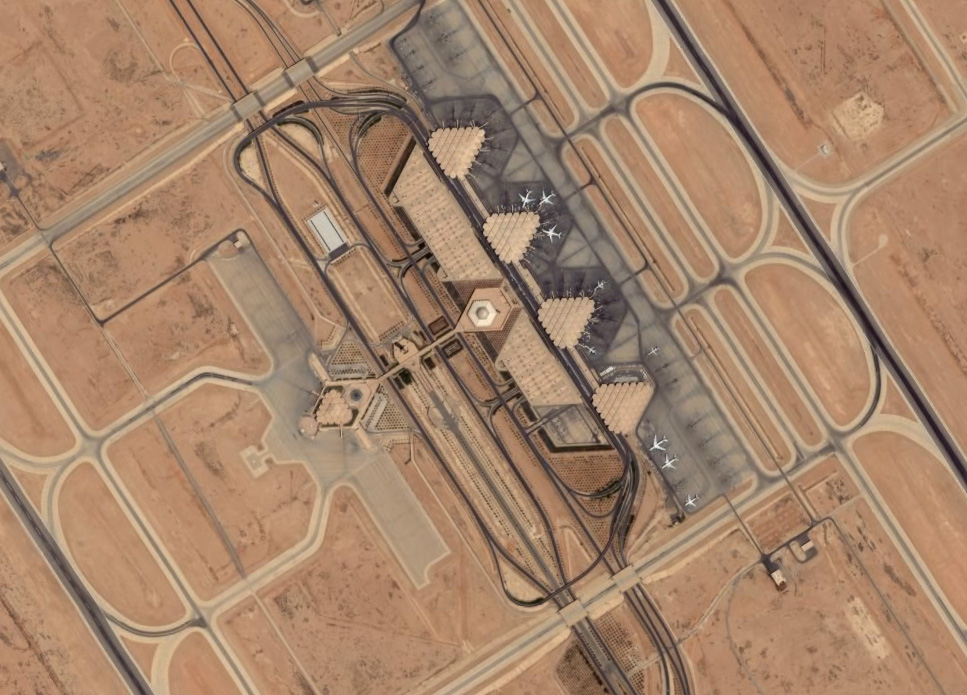
Opened on 16 November 1983 by King Fahd, King Khalid International Airport was designed by the American architectural firm Hellmuth, Obata & Kassabaum and named after King Khalid bin Abdulaziz Al Saud. The airport occupies an enormous 225-square-kilometre site — one of the largest airport footprints in the world — and features a distinctive triangular terminal design centred around a mosque. Four of the current terminals date from the original 1983 opening, while Terminal 5 was added in 2016 to handle growing international traffic. The airport has served as a crucial hub for pilgrims travelling to Mecca and Medina for Hajj and Umrah, as well as the primary business gateway to the Saudi capital.
Terminal Overview: The 2026 Reshuffle
In February 2026, Riyadh Airports completed the most ambitious terminal reorganisation in the airport’s 40-year history. The transition ran from 16 to 25 February and reassigned virtually every airline to a new terminal. If you have previously flown through RUH, do not rely on memory — always check your boarding pass or the airline’s website for current terminal information before heading to the airport.
Terminal 1 — International (Saudi Low-Cost Carriers)
The recently renovated Terminal 1, which reopened in December 2024, now handles international flights operated by flyadeal and flynas. It features modern check-in counters, automated passport gates, and expanded retail. Terminal 1 shares its landside facilities with Terminal 2 and is served by Riyadh Metro Station 20 on the Yellow Line.
Terminal 2 — International (Saudia and Riyadh Air)
Terminal 2 was redeveloped and reopened in 2024, increasing the combined capacity of Terminals 1 and 2 by 130 per cent to 14 million passengers per year. It now serves international flights operated by Saudia and Riyadh Air. The terminal includes the Plaza Premium Lounge, expanded duty-free shopping, and modern gate areas. It is also at Metro Station 20.
Terminals 3 and 4 — Domestic
All domestic flights operated by Saudia, flynas, and flyadeal are consolidated in Terminals 3 and 4. These terminals sit at Metro Station 19 on the Yellow Line. Domestic passengers will find the Al Fursan Lounge (Saudia’s frequent-flyer lounge, open 24 hours) in Terminal 4, along with the full range of dining and shopping options. If you are connecting from a domestic flight to an international departure, allow at least 90 minutes for the terminal transfer.
Terminal 5 — International (Foreign Airlines)
Terminal 5 is dedicated to all international flights operated by foreign carriers, including Emirates, flydubai, Turkish Airlines, Lufthansa, British Airways, Air France, KLM, Qatar Airways, Etihad, Air India, IndiGo, Cathay Pacific, Ethiopian Airlines, and others. This terminal sits at Metro Station 18 and is connected to the other terminals by a free shuttle bus running every 10 to 15 minutes.
| Terminal | Type | Airlines | Metro Station |
|---|---|---|---|
| Terminal 1 | International | flyadeal, flynas (international routes) | Station 20 |
| Terminal 2 | International | Saudia, Riyadh Air (international routes) | Station 20 |
| Terminal 3 | Domestic | Saudia, flynas, flyadeal (domestic routes) | Station 19 |
| Terminal 4 | Domestic | Saudia, flynas, flyadeal (domestic routes) | Station 19 |
| Terminal 5 | International | All foreign airlines (Emirates, Turkish, BA, Lufthansa, etc.) | Station 18 |
Important: The February 2026 reshuffle moved nearly every airline. Flight numbers have not changed, but terminals have. Always verify your terminal on your boarding pass, airline app, or the official KKIA website before you travel.
Arrivals: What to Expect When You Land
Immigration and Visa Processing
After disembarking, follow signs to Passport Control. Arrivals flow depends on your visa status:
- E-visa holders: Proceed directly to the automated e-gates or manned immigration counters. Your e-visa is linked to your passport electronically — have a printed or digital copy available as backup.
- Visa on arrival: Citizens of 66 eligible countries can obtain a visa on arrival. Look for dedicated self-service kiosks near immigration: scan your passport, select a medical-insurance provider on screen, pay the SAR 480 fee (approximately USD 128, credit card accepted), and print your receipt. Take the receipt and passport to an immigration officer for the entry stamp. Newer smart kiosks with biometric scanners can process applications in around 60 seconds.
- Saudi citizens and residents: Dedicated lanes are clearly marked and typically have shorter queues.
Allow 20 to 45 minutes for immigration depending on flight timing and queue length. Early-morning arrivals from South and Southeast Asia tend to create the longest waits.
Baggage and Customs
Baggage carousels are located immediately after immigration in all terminals. RUH handles baggage efficiently, and most bags arrive within 15 to 25 minutes of landing. Saudi customs is generally straightforward for tourists, but alcohol, pork products, and non-Islamic religious materials for proselytising purposes are prohibited. Declared goods exceeding SAR 3,000 in value are subject to customs duty.
Arrivals Duty Free
A notable feature at RUH is the arrivals duty-free zone in Terminals 3 and 4 — one of the first of its kind in the Kingdom. Passengers can shop for perfumes, electronics, dates, and Saudi souvenirs immediately after clearing customs, which is particularly convenient if you land on a late flight when city shops are closed.
Getting from the Airport to Riyadh City Centre
The 35-kilometre journey from King Khalid International Airport to central Riyadh is faster and more affordable than ever thanks to the metro, which opened its airport connection in late 2024. Here are your main options, from cheapest to most convenient.
Riyadh Metro (Yellow Line / Line 4)
The Riyadh Metro Yellow Line is the most affordable way to reach the city. Line 4 runs 29.6 kilometres from the airport to the King Abdullah Financial District (KAFD), with nine stations and four interchange points connecting to other metro lines.
- Airport stations: Terminals 1 & 2 at Station 20; Terminals 3 & 4 at Station 19; Terminal 5 at Station 18
- Journey time: Approximately 35 minutes to KAFD (with interchange options to other metro lines for destinations across Riyadh’s neighbourhoods)
- Fare: SAR 4 for a 2-hour standard ticket; SAR 10 for first class. Day passes (SAR 20 for 3 days), weekly (SAR 40), and monthly (SAR 140) options are available.
- Operating hours: 6:00 AM to midnight, seven days a week
- Payment: Purchase a DARB card at station vending machines or use contactless bank cards directly at the gate
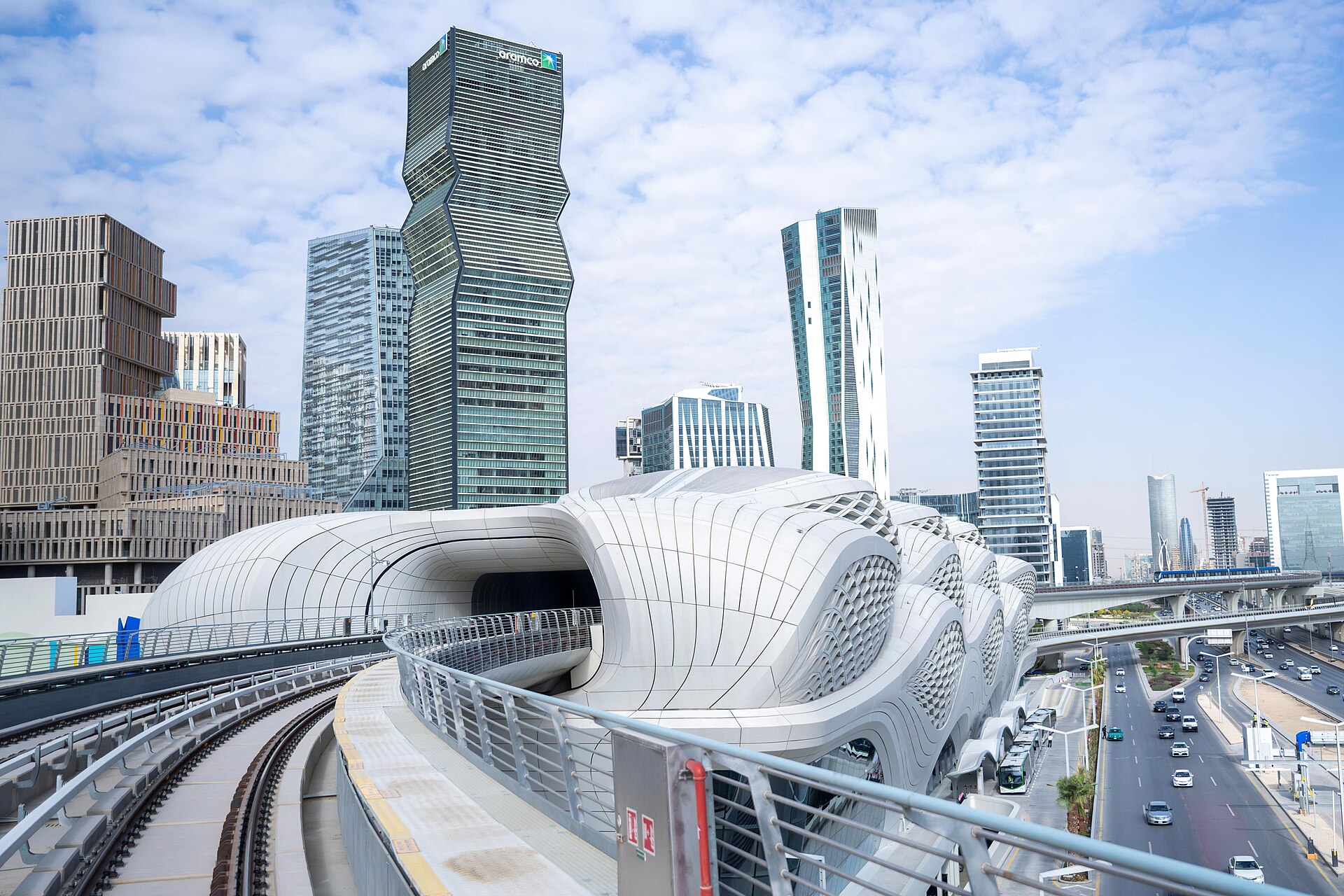
Tip: The metro is clean, air-conditioned, and remarkably quiet. First-class carriages at the front of the train cost SAR 10 per trip and offer wider seats with more space — a worthwhile upgrade after a long flight.
Taxi
Green SAFWA Taxis are the authorised airport taxi provider. Official taxi ranks are located in front of the arrival halls at Terminals 2, 4, and 5. Key details:
- Cost: SAR 50 to 100 to central Riyadh (metered)
- Journey time: 30 to 45 minutes depending on traffic and destination
- Payment: Cash (Saudi riyals) or card accepted in most vehicles
Taxis do not require advance booking. Simply join the queue at the rank and a dispatcher will assign the next available vehicle. Agree on or confirm the meter is running before departure.
Uber and Careem
Both Uber and Careem (the Middle Eastern ride-hailing app, now owned by Uber) operate at King Khalid Airport. Order through the app and follow directions to the designated pickup pillars, which are clearly signed at each terminal. Ride-hailing is typically 10 to 30 per cent cheaper than taxis during non-surge periods, and the app provides an upfront price before you confirm the ride. This is the most convenient option if you want door-to-door service to a specific hotel in Riyadh.
Hotel Shuttles and Private Transfers
Several hotels near the airport offer complimentary shuttle services, including the Riyadh Airport Marriott Hotel and Radisson Riyadh Airport, both located within five kilometres of the terminals. If you are staying at a city-centre hotel, check in advance whether a paid airport-transfer service is offered — many five-star properties in Olaya and KAFD provide this for a premium.
Car Rental
Major international car-rental companies including Hertz, Avis, Budget, Europcar, and local firm Yelo (formerly Theeb) have counters in the arrivals area. Driving in Riyadh requires either an international driving permit or a Saudi licence. Traffic in the city can be intense, particularly on the King Fahd Road corridor during rush hours, so first-time visitors may prefer public transport or ride-hailing.
Departures: Check-in and Security
For departing passengers, the process is straightforward but benefits from advance planning:
- Arrive early: Saudia and Riyadh Air recommend arriving 3 hours before international departures and 2 hours before domestic flights. During Hajj and Umrah season (especially May to July 2026), allow extra time.
- Online check-in: Most airlines operating at RUH offer online or app-based check-in 24 to 48 hours before departure. This allows you to proceed directly to bag drop.
- Security screening: Queues are generally efficient but can lengthen during peak hours (early morning and late evening international departures). Automated boarding-pass scanners speed the process.
- Exit formalities: There is no exit visa requirement for tourists. Simply proceed through passport control with your boarding pass.
Lounges
King Khalid International Airport offers a range of lounges across its five terminals, from airline-specific facilities to independent pay-per-use options:
- Plaza Premium Lounge (Terminal 1, Mezzanine Floor): Accommodates up to 210 guests. Arabian-hospitality-inspired design, hot food buffet, showers, Wi-Fi, and work desks. Walk-in access available for a fee or via Priority Pass / lounge-access credit cards.
- Welcome Lounge (Terminal 2): Open to all passengers, with comfortable seating, food service, and business facilities.
- Al Fursan Lounge (Terminal 4): Saudia’s dedicated frequent-flyer lounge, open 24 hours. Buffet dining, business centre, shower facilities, sleep rooms, and relaxation areas. Accessible to Alfursan Gold and Silver members, business-class passengers, and SkyTeam Elite Plus cardholders.
- naSmiles Lounge (Terminal 5): Flynas’s loyalty-programme lounge in the international terminal.
- Wasan Lounge: Offers futuristic sleeping pods with adjustable LED lighting, charging ports, luggage storage, and hotel-quality beds — ideal for long layovers or red-eye departures.
- Flynas Lounge: Includes comfortable seating, food and beverage area, VIP rooms, sleep rooms, and a prayer room.
Tip for transit passengers: If you have a layover of 4 hours or more, investing SAR 150 to 250 in lounge access is worthwhile for the showers, food, and rest areas alone. The Wasan Lounge sleeping pods are the closest thing to a nap room in the airport.
Food and Drink
Dining options span both global chains and Saudi favourites across all terminals:
- AlBaik — Saudi Arabia’s beloved fried-chicken chain, known for its crispy broasted chicken and garlic sauce. If you have not tried it before, your airport visit is a good opportunity.
- Starbucks, McDonald’s, Subway, Burger King, KFC — Familiar international options available across multiple terminals.
- Local cafes and restaurants — Several Saudi and Middle Eastern dining outlets serve shawarma, kabsa, and fresh juices.
- Coffee shops — Saudi specialty-coffee culture is strong; look for local roasters alongside global brands.
Note that alcohol is not served anywhere in the airport, in line with Saudi law. All restaurants offer halal food.
Shopping and Duty Free
Riyadh Duty Free operates shops in Terminals 1, 3, and 4, open 24/7. Product categories include:
- Perfumes and cosmetics — Premium international fragrances and Arabian oud blends
- Electronics — Smartphones, headphones, travel accessories
- Luxury watches and jewellery
- Al Waha — A Saudi-owned duty-free brand offering local specialities: premium dates, camel-milk chocolates, Arabic coffee, handcrafted gifts, and Saudi souvenirs
- Chocolates and confectionery
Remember: no alcohol or tobacco advertising is present in Saudi duty free, and alcohol is not available for purchase. Departing passengers with connecting flights should confirm that purchases comply with their final destination’s import rules.
SIM Cards and Connectivity
Getting connected immediately after landing is straightforward. The three major Saudi mobile operators all maintain kiosks or stores in the arrivals area:
- STC (Saudi Telecom Company): Store in the domestic terminal, open 24/7. Offers tourist SIM packages with data and local calling.
- Mobily: Stores in Terminal 1 and Terminal 5, open 24/7.
- Zain: Store in Terminal 1, open 24/7.
A tourist SIM with 10 to 20 GB of data typically costs SAR 50 to 100. You will need your passport for registration. Alternatively, purchase an eSIM before arrival through providers like Airalo or Holafly, which can be activated the moment you land without visiting a physical store.
Complimentary Wi-Fi is available throughout all five terminals — connect to the airport network and register with your phone number or email.
Currency Exchange and ATMs
Several banks operate currency-exchange counters at the airport, including Alinma Bank, Al Rajhi Bank, and Al Bilad Bank, primarily located in Terminal 2 airside. ATMs supporting Visa, Mastercard, and international networks are available in all terminals and offer multilingual interfaces.
The Saudi riyal (SAR) is pegged to the US dollar at a fixed rate of approximately SAR 3.75 per USD 1. Airport exchange rates typically carry a small commission; for larger amounts, you may get slightly better rates at exchange offices in central Riyadh. However, the convenience of withdrawing riyals from an ATM upon arrival is hard to beat for most visitors. Card payments are widely accepted throughout Saudi Arabia, including Apple Pay and Google Pay.
Prayer Rooms and Mosque
As befits the capital of Saudi Arabia, prayer facilities at King Khalid International Airport are extensive:
- Central Mosque: The airport’s large mosque sits at the centre of the terminal complex and serves both passengers and staff. It is visible from the exterior as the building between the terminal triangles.
- Terminal prayer rooms: Every terminal has dedicated men’s and women’s prayer rooms located close to boarding gates and staff concourses. These are well-maintained, carpeted, and equipped with ablution facilities.
- Qibla direction: Arrows indicating the direction of Mecca are clearly marked in all prayer areas.
Family Facilities
All terminals are equipped with nursing rooms, baby-changing stations, children’s play areas, and family restrooms. These facilities are particularly extensive in Terminals 3 and 4 (domestic), where Saudi families form a large proportion of passengers. Pushchairs and wheelchairs are available on request from airline ground-handling staff.
Transit and Layovers
If you are transiting through RUH with a layover, your options depend on its length and your visa status:
Short Layovers (Under 4 Hours)
Stay in the terminal. If your connecting flight departs from the same terminal, simply proceed to your departure gate after clearing transfer security. If you need to change terminals, use the free inter-terminal shuttle bus (every 10 to 15 minutes) or the metro, which connects all three terminal clusters.
Medium Layovers (4 to 8 Hours)
Consider purchasing lounge access for comfort during the wait. The Wasan Lounge sleeping pods are ideal for a nap. Dining and shopping options are available around the clock in most terminals.
Long Layovers (Over 8 Hours)
If you hold a valid Saudi tourist e-visa or are eligible for visa on arrival, you can exit the airport and explore Riyadh. The metro makes this feasible even for layovers of 8 to 12 hours — KAFD and central Riyadh are only 35 minutes away. Alternatively, airport-adjacent hotels including the Riyadh Airport Marriott Hotel and the Radisson Riyadh Airport offer day-use rooms and are within a five-minute taxi ride. Both provide 24-hour shuttle service, soundproofed rooms, and on-site dining.
Sleeping in the Airport
If you must sleep in the terminal, quieter gate-side areas in Terminals 1 and 2 tend to be calmer than the busier domestic terminals. Several 24-hour lounges accept walk-in payments and offer recliners, lower noise, and shower access. The airport is air-conditioned throughout, and security is present at all times.
The Future: King Salman International Airport
King Khalid International Airport is undergoing a broader transformation as part of the planned King Salman International Airport (KSIA) project, a cornerstone of Saudi Arabia’s Vision 2030 strategy. KSIA will be built around the existing King Khalid site, expanding the total footprint to 57 square kilometres with six parallel runways and a capacity of 120 million passengers per year. Construction of a new commercial terminal and Terminal 6 (for low-cost carriers) is scheduled to begin in 2026, with Bechtel serving as the lead project-management contractor. The target completion date is 2030, which would make KSIA one of the largest airports in the world.
In the interim, the current five-terminal setup at KKIA has been optimised to bridge the gap, with the February 2026 reshuffle specifically designed to maximise throughput during the transition period.
Practical Tips
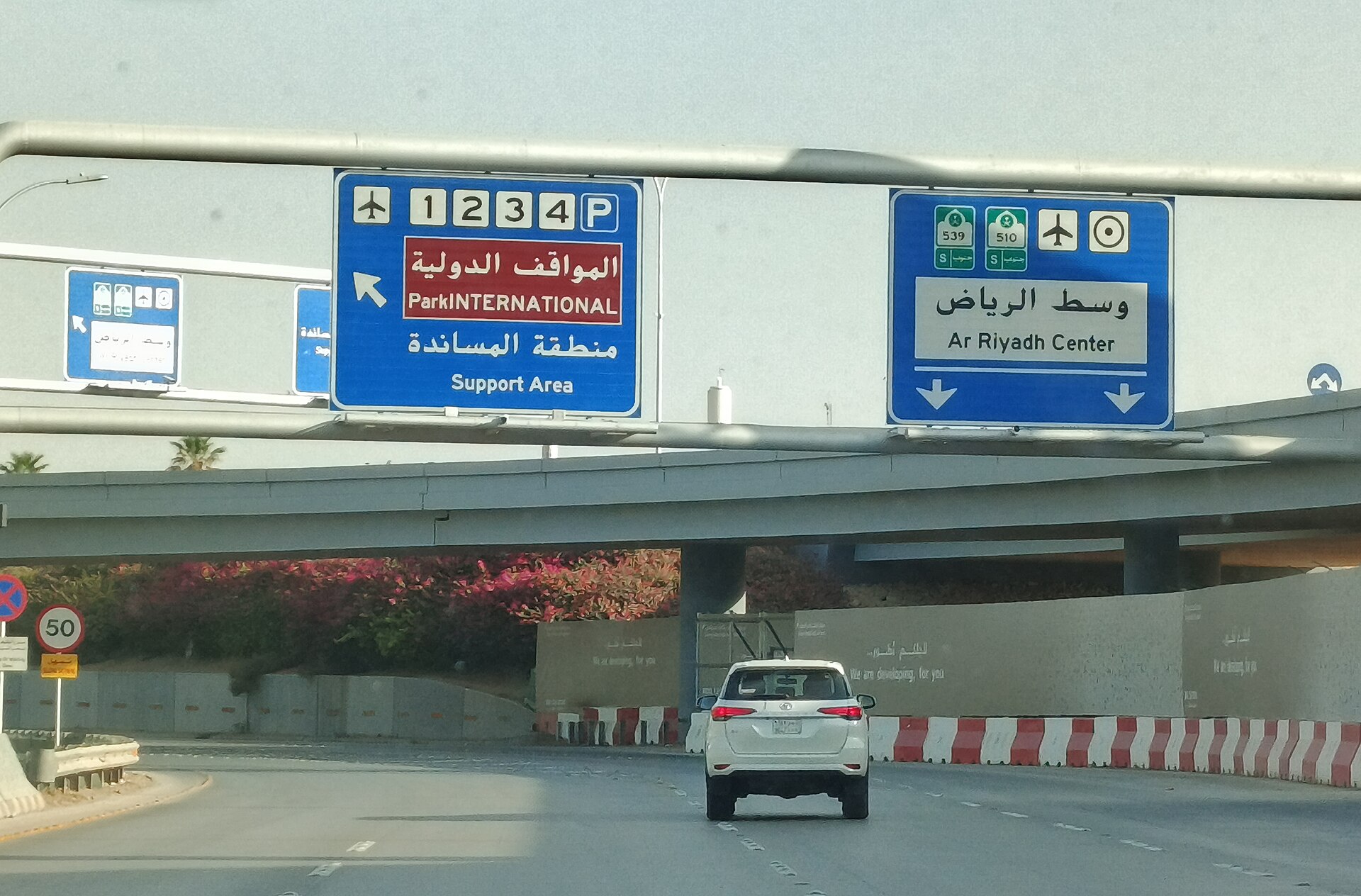
- Double-check your terminal. The February 2026 reshuffle has changed virtually every airline-terminal assignment. Verify on your boarding pass, airline app, or the KKIA website before travelling to the airport.
- Take the metro. At SAR 4 per trip, the Yellow Line is the fastest and cheapest way to reach the city. It is also a chance to see the spectacular KAFD station architecture.
- Download the apps. The Uber and Careem apps, plus the DARB app for the metro, will make your ground transport seamless. Download these before landing.
- Apply for your e-visa in advance. While visa on arrival is available, the e-visa process is quicker and lets you bypass the kiosks and head straight to immigration.
- Carry Saudi riyals for small purchases. While card payments are widely accepted, some smaller airport vendors prefer cash.
- Plan for Hajj and Umrah season. Between May and July, the airport is significantly busier with pilgrim traffic. Arrive earlier than usual and expect longer queues at immigration.
- Know the inter-terminal shuttle. A free shuttle bus connects Terminal 5 to Terminals 1 to 4 every 10 to 15 minutes. If connecting between a foreign carrier in Terminal 5 and a domestic Saudi flight in Terminals 3 or 4, allow at least 90 minutes for the transfer.
- Climate note. Riyadh’s airport sits in the Najd desert. From June to September, outdoor temperatures exceed 45 degrees Celsius. The terminals and metro are fully air-conditioned, but the walk between buildings or to the taxi rank can be intense during summer.
Explore More Saudi Arabia Travel Guides
- Riyadh Travel Guide 2026 — The complete guide to Riyadh’s neighbourhoods, sights, and practical tips
- Best Neighbourhoods in Riyadh — Where to stay and explore in Riyadh
- Saudi Arabia Hotels Guide — Best hotels and resorts across the Kingdom
- Saudi Arabia Visa Guide — Every visa type explained
- Saudi Arabia Travel Guide 2026 — The complete guide to visiting the Kingdom
- Hajj 2026 Guide — Complete guide for pilgrims visiting Mecca and Medina
- Dammam and Al Khobar Travel Guide — Explore Saudi Arabia’s Eastern Province