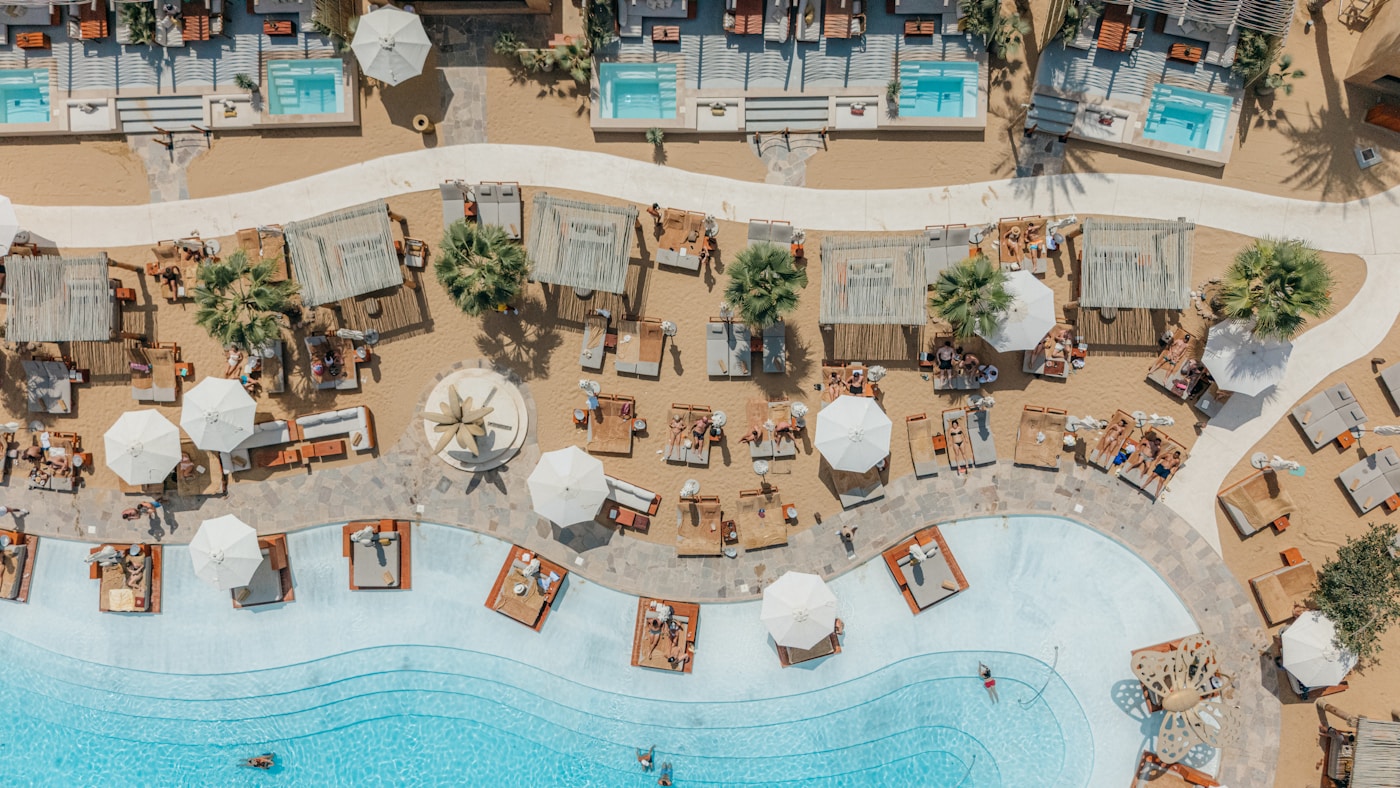

Saudi Arabia has emerged as one of the world’s most compelling luxury travel destinations, and the transformation is nothing short of extraordinary. Backed by more than $1 trillion in Vision 2030 investment, the Kingdom is building an entirely new tier of hospitality — overwater villas on untouched coral islands, desert resorts carved into ancient sandstone, yacht marinas rivalling the French Riviera, and a dining scene that earned its first Michelin Guide in 2026.
This is not Dubai. There are no replicated skylines or indoor ski slopes. Saudi luxury is rooted in something older and more visceral — 7,000 years of civilisation, the world’s largest sand desert, 1,800 kilometres of pristine Red Sea coastline with world-class diving and beaches, and a cultural depth that no amount of money can fabricate. For the discerning traveller, the Kingdom offers what few destinations still can: genuine discovery wrapped in world-class comfort.
This guide covers every luxury experience currently available in Saudi Arabia — from the Red Sea mega-resorts and AMAALA’s wellness retreats to AlUla’s desert camps, Riyadh’s palace hotels, and the private yacht charters now opening up the Kingdom’s untouched archipelagos.
Quick Facts — Luxury Travel in Saudi Arabia
- Best season: October to March (15-25°C daytime; summer exceeds 45°C)
- Visa: eVisa available for 66 nationalities — approved in minutes, valid 1 year, 90-day stays, ~$140
- Currency: Saudi Riyal (SAR); 1 USD ≈ 3.75 SAR
- Alcohol: Not available — Saudi Arabia is dry; luxury hotels serve mocktails and premium non-alcoholic beverages
- Dress code: Smart casual in hotels and resorts; modest dress in public areas (see our dress code guide)
- Price range: Luxury hotels from $400/night; ultra-luxury from $1,500-3,500/night
- Getting there: Direct flights to Riyadh (RUH) and Jeddah (JED) from most major hubs (see our flights guide)
- Language: Arabic; English widely spoken in luxury hospitality
The Red Sea — Saudi Arabia’s Luxury Coastline
The Red Sea destination, developed by Red Sea Global, is the centrepiece of Saudi Arabia’s luxury tourism ambitions. Spanning 28,000 square kilometres of coastline, islands, and desert hinterland along the Kingdom’s north-western shore, it is one of the most ambitious resort developments in history. Five properties are now fully operational, with 11 more scheduled to open by 2026 and a target of 50 hotels by 2030.
What sets the Red Sea apart from established beach destinations is its pristine ecology. The coral reefs here are among the last untouched systems in the world, home to over 300 species of coral and 900 species of fish. Water visibility regularly exceeds 30 metres. Development has followed strict environmental protocols — no more than 1 per cent of the islands may be developed, and the entire project is powered by renewable energy.
Nujuma, a Ritz-Carlton Reserve — The Middle East’s Most Exclusive Hotel
Opened in May 2024 on Ummahat Al Shaykh island, Nujuma is the crown jewel of the Red Sea and currently the most expensive hotel in the Middle East. The name means “stars” in Arabic, and the resort delivers on the promise — 63 overwater and beachfront villas, each with a private pool, set across a pristine island accessible only by speedboat or seaplane.
The Maldivian-style overwater villas hover above turquoise lagoons with glass floor panels, outdoor rain showers, and direct ocean access. Beachfront villas open onto white sand beaches where the only footprints will be your own. The resort includes five dining venues, an Ritz-Carlton Spa, a marine biology centre, and a dedicated kids’ club.
| Detail | Information |
|---|---|
| Location | Ummahat Al Shaykh island, Red Sea |
| Opened | May 2024 |
| Villas | 63 (overwater and beachfront, 1-3 bedrooms) |
| Starting price | From SAR 6,400/night (~$1,700) for beach villas; SAR 8,800+ (~$2,350) for overwater |
| All-in cost | Approximately $2,600-3,500/night including taxes and transfers |
| Access | Speedboat or seaplane from Red Sea International Airport (RSI) |
| Best for | Honeymoons, milestone celebrations, total seclusion |
The St. Regis Red Sea Resort
Opened in January 2024, the St. Regis Red Sea Resort brings the brand’s signature butler service to Saudi Arabia’s coastline. The property features 90 overwater and beachfront villas, each with private pools and outdoor living spaces designed to frame the Red Sea’s extraordinary sunsets. The resort’s architectural language draws on traditional Hejazi coral-stone building techniques, creating a sense of place that feels both contemporary and historically grounded.
Dining is a particular strength — the resort offers multiple restaurants including a signature seafood venue and a beachside grill. The Iridium Spa provides treatments using marine-derived ingredients sourced from the Red Sea’s own ecosystem.
Six Senses Southern Dunes
The first resort to open in the Red Sea destination (November 2023), Six Senses Southern Dunes takes a deliberately different approach. Rather than island luxury, this is an inland desert sanctuary — 76 rooms and pool villas set among Nabataean-inspired architecture where the dunes meet volcanic terrain. The aesthetic is earth-toned minimalism, with private plunge pools, outdoor showers, and uninterrupted desert horizons.
The Six Senses Integrated Wellness programme is the draw here: personalised health screenings, sleep optimisation, biohacking treatments, and traditional healing practices sit alongside more familiar spa offerings. Activities include sandboarding, desert trail running, mountain biking, and guided stargazing sessions with professional astronomers — the light pollution is essentially zero.
For a deeper exploration of the entire coastline, see our Red Sea coast guide.
AMAALA — The World’s New Ultra-Luxury Wellness Destination
If the Red Sea destination is Saudi Arabia’s answer to the Maldives, AMAALA is its answer to nothing — because nothing quite like it exists. Also developed by Red Sea Global, AMAALA occupies three naturally occurring bays where the Hijaz Mountains descend to the Red Sea, creating a landscape of dramatic cliffs, turquoise waters, and volcanic formations that has no equivalent anywhere in global hospitality.
AMAALA is scheduled to open in 2026 with six flagship resorts, a yacht club, a marine research institute, a Marina Village, and a 5-kilometre Wellness Route linear park connecting all properties through pristine coastal nature. Three additional resorts will follow, bringing the total to nine properties with 1,600 keys.
The Launch Resorts
| Resort | Focus | Expected Opening |
|---|---|---|
| Six Senses AMAALA | Holistic wellness, longevity programmes | 2026 |
| Four Seasons Resort and Residences AMAALA | Beachfront luxury, branded residences | 2026 |
| Rosewood AMAALA | Cultural immersion, sense of place | 2026 |
| Equinox Resort AMAALA | Fitness and active wellness | 2026 |
| Nammos AMAALA | Mediterranean beach club lifestyle | 2026 |
| AMAALA Hotel (RSG Signature) | Flagship destination property | 2026 |
| Clinique La Prairie Health Resort | Medical-grade longevity and aesthetics | Later phase |
| Jayasom Wellness Resort | Integrative wellness and healing | Later phase |
| The Ritz-Carlton AMAALA | Ultra-luxury coastal | Later phase |
The Clinique La Prairie Health Resort will bring the Swiss longevity clinic’s famed regenerative medicine programmes — including its signature Revitalisation programme, cellular therapy, and advanced diagnostics — to a purpose-built facility in the Saudi desert. This alone is expected to attract a significant medical wellness tourism market.
The AMAALA Yacht Club, designed to host major sailing events including the Grand Finale of The Ocean Race in 2027, will anchor the Marina Village — a waterfront precinct of restaurants, boutiques, and galleries. The entire destination operates with a zero-carbon footprint, powered entirely by renewable energy.
AlUla — Ancient Luxury in the Desert
AlUla is where Saudi luxury becomes truly singular. This vast desert valley in the Kingdom’s north-west — home to the UNESCO World Heritage Site of Hegra, with its 111 monumental Nabataean tombs — has been transformed into one of the world’s most atmospheric luxury destinations. The combination of 7,000-year-old archaeological heritage, towering sandstone formations, and five-star desert hospitality creates an experience that has no real comparison anywhere on earth.
For the full destination breakdown — including Hegra, Elephant Rock, and the Tantora festival calendar — see our AlUla travel guide.
Banyan Tree AlUla
Set in the Ashar Valley beneath towering sandstone cliffs, Banyan Tree AlUla is the benchmark luxury property in the region. Its 79 tented villas combine Arabian-inspired design with the brand’s signature Asian spa heritage. Each villa features a private pool, outdoor terrace, and unobstructed views across the desert canyon.
The resort offers three restaurants, a world-class spa with traditional and contemporary treatments, yoga sessions at dawn, and curated desert experiences including private helicopter tours over Hegra’s tombs. During winter season (November-February), the cool evening temperatures make fire-pit dining under the stars a particular highlight.
| Detail | Information |
|---|---|
| Location | Ashar Valley, AlUla |
| Villas | 79 tented villas with private pools |
| Starting price | From SAR 4,200/night (~$1,120) |
| Dining | 3 restaurants (international, Middle Eastern, poolside) |
| Best for | Couples, cultural travellers, photographers |
| Season | October–March (resort may close in summer) |
Our Habitas AlUla
For travellers who prefer design-forward minimalism over traditional opulence, Our Habitas AlUla is the counterpoint to Banyan Tree. Hidden among the palms of a millennia-old oasis in the same Ashar Valley, the resort’s 96 villas are built into the desert canyon landscape with a philosophy of treading lightly — sustainable materials, community integration, and experience over excess.
Three villa categories are available: Canyon Villas (45 sq m, intimate cliff-side retreats), Alcove Villas (expansive desert views from private terraces), and Celestial Villas (the largest, equipped with telescopes for private stargazing). Rates start from around $300/night in low season, rising to $1,000+ during peak winter months. The resort’s communal spaces — a central fire circle, a wellness hub with sound healing and breathwork sessions, and an open-air restaurant — foster a social energy that the more secluded Banyan Tree does not.
Sharaan Resort by Jean Nouvel — Coming Soon
The most anticipated hotel project in Saudi Arabia is Sharaan, designed by Pritzker Prize-winning architect Jean Nouvel. Carved directly into AlUla’s sandstone cliffs — in the manner of the ancient Nabataean tombs nearby — the resort will feature 40 suites, 2 villas, and 14 hospitality pavilions. Construction is underway, with an expected opening in 2026-2027. Aman will operate a separate property in the vicinity: Amansamar, combining hotel suites with branded villas and private estates.
Diriyah Gate — Riyadh’s Heritage Luxury District
Diriyah, the birthplace of the Saudi state and a UNESCO World Heritage Site, is being transformed into the Kingdom’s premier heritage luxury destination. The Diriyah Gate development, just 15 minutes from central Riyadh, will eventually house 14 luxury hotel brands surrounding the restored At-Turaif district — making it one of the highest concentrations of ultra-luxury hospitality anywhere in the world.
Construction is well underway. Groundbreaking has been completed for seven properties: Raffles, Armani, Orient Express, Baccarat, Corinthia, Fauchon L’Hotel, and Rosewood, offering a combined 877 rooms. Aman will operate two properties — Aman Wadi Safar (78 keys with 34 branded residences) and Janu Diriyah, the group’s more contemporary sister brand. The Anantara Diriyah, with 250 rooms, is expected to be among the first to open.
| Brand | Keys | Distinguishing Feature |
|---|---|---|
| Aman Wadi Safar | 78 rooms + 34 residences | Aman Spa, multiple restaurants, branded residences |
| Janu Diriyah | TBC | Aman’s contemporary sister brand |
| Orient Express | 80 rooms | First Middle East property; opening 2027 |
| Baccarat | TBC | Crystal-accented interiors, Baccarat design heritage |
| Fauchon L’Hotel | 80 rooms | Grand Café Fauchon, rooftop pool and bar, boutique |
| Raffles | TBC | Legendary service, suites with butler service |
| Armani | TBC | Giorgio Armani design aesthetic |
| Rosewood | TBC | Sense of place philosophy |
| Corinthia | TBC | Grand European hotel tradition |
| Anantara | 250 rooms | Thai-rooted luxury, eco-friendly focus; early opener |
When complete, Diriyah Gate will also feature over 100 dining outlets, a major retail precinct, museums, cultural venues, and the restored mudbrick architecture of At-Turaif — Saudi Arabia’s first UNESCO World Heritage Site. For visitors combining heritage with hospitality, this will be unmatched. For Riyadh trip planning, see our Riyadh travel guide.
NEOM Sindalah — The Yacht Set’s New Playground
Sindalah is the first completed component of NEOM, Saudi Arabia’s $500 billion futuristic mega-city project. This purpose-built island resort in the Gulf of Aqaba is designed specifically for the international yachting community — think Saint-Tropez rebuilt from scratch in the Red Sea, but with empty turquoise waters instead of crowded harbours.
The island features 440 hotel rooms, 88 villas, and 218 luxury serviced apartments across multiple properties, including a 277-key Four Seasons hotel scheduled for 2026 and three Marriott-operated properties (The Luxury Collection and Autograph Collection brands). An 86-berth marina accommodates everything from luxury yachts to superyachts, supported by a full-service yacht club designed by nautical architecture firm Luca Dini.
Sindalah held a high-profile soft launch in October 2024 — attended by 65 superyachts and headlined by Alicia Keys — though full public access is still being phased in. When fully operational, the island will offer world-class restaurants, retail, a beach club, and a golf course, all accessible primarily by sea and air. For more on the wider NEOM vision, see our NEOM travel guide.
Luxury Hotels in Riyadh
The Saudi capital’s luxury hotel scene has matured rapidly. Multiple properties hold Forbes Five-Star ratings, and the city’s transformation under Riyadh Season — the annual entertainment mega-festival running from October to March — has brought a wave of new dining, nightlife, and cultural attractions that complement the hotel experience.
The Ritz-Carlton, Riyadh
Perhaps the most storied hotel in the Middle East — not for its architecture, but for its role in the 2017 anti-corruption campaign when it served as a gilded detention facility for Saudi princes and billionaires. That chapter aside, the Ritz-Carlton Riyadh is a sprawling palace-style property set within 52 acres of landscaped gardens, offering 492 rooms, world-class dining, and a spa complex that ranks among the largest in the region. Forbes Five-Star rated in 2026.
Four Seasons Hotel Riyadh at Kingdom Centre
Occupying the upper floors of Kingdom Centre — the iconic skyscraper with the sky bridge visible from anywhere in Riyadh — the Four Seasons is the city’s premier business-luxury address. The Globe restaurant, set within the building’s famous golden sphere, offers 360-degree views and fine dining. Also Forbes Five-Star rated in 2026.
Mandarin Oriental, Riyadh
Now operating under the Mandarin Oriental banner at Kingdom Centre, this property combines the brand’s signature oriental luxury with prime positioning in the heart of the capital’s financial district. The Globe restaurant at the top of the tower is the city’s most celebrated dining room.
For comprehensive Riyadh planning, see our Riyadh travel guide.
Luxury Hotels in Jeddah
Jeddah, Saudi Arabia’s cosmopolitan Red Sea gateway, offers a different luxury experience — more relaxed, more waterfront-focused, and infused with the Hejazi merchant culture that has traded with the world for centuries. The new Jeddah Waterfront development has brought a wave of premium hotel openings.
Shangri-La Jeddah
Anchored on the new Jeddah Waterfront along the Red Sea shore, Shangri-La Jeddah sets the current standard for luxury in the city. The hotel features 220 bedrooms including 55 suites and 17 serviced apartments, all with floor-to-ceiling windows framing Red Sea views. The brand’s Chi Spa and signature Asian hospitality bring an East-meets-Arabia quality unique to the Jeddah market.
Waldorf Astoria Jeddah — Qasr Al Sharq
The Waldorf Astoria occupies a grand building designed in regal Arabian style, centred on a three-storey lobby dominated by a Swarovski crystal chandelier. Its 46 suites offer high-end Italian linens and personalised butler service — this is old-school Arabian palace hospitality at its most refined.
Park Hyatt Jeddah — Marina, Club and Spa
Located on the Corniche waterfront, the Park Hyatt combines a Marina Club, private beach, and understated luxury that appeals to travellers who prefer serene sophistication over opulent grandeur. The spa and swimming complex, set along the Red Sea, is among the best in the city.
For the complete city guide, see our Jeddah travel guide.
Private Desert Experiences
Saudi Arabia’s desert luxury goes well beyond hotel resorts. The Kingdom’s vast interior — including the Rub’ al Khali (Empty Quarter), the world’s largest contiguous sand desert — is increasingly accessible through curated private experiences that combine adventure, astronomy, and haute cuisine in profoundly remote settings.
Luxury desert safari camps in the Empty Quarter offer private astronomers, torchlit dune-top dining prepared by Michelin-calibre chefs, falconry demonstrations, and sunrise camel treks across landscapes that have remained essentially unchanged for millennia. In AlUla, private helicopter tours over the Nabataean tombs of Hegra followed by candlelit dinners in hidden canyon alcoves represent the pinnacle of experiential desert luxury.
Six Senses Southern Dunes has pioneered the wellness-desert concept, combining sunrise yoga, desert spa rituals, sandboarding, trail running, and guided night-sky photography with its Integrated Wellness programme. The absence of light pollution at these inland locations creates stargazing conditions that rival the Atacama Desert.
Red Sea Yacht Charters
The Red Sea is rapidly establishing itself as the Middle East’s premier yachting frontier. Unlike the crowded Mediterranean or the well-trodden Caribbean, Saudi Arabia’s Red Sea coastline offers 1,800 kilometres of largely unexplored territory — pristine coral reefs, uninhabited island archipelagos, and anchorages where you will not see another vessel.
Charter operators including Experiences by ROAM, YATCO, CharterWorld, and YachtZoo now offer both crewed luxury charters and expedition-style voyages. A typical 7-day Red Sea yacht expedition covers the northern islands, with stops for diving, snorkelling, and beach dining on uninhabited shores. Water temperatures hover around 26°C year-round, with air temperatures of 24-30°C during the optimal sailing season (October-May) and underwater visibility exceeding 30 metres.
Key departure points include Jeddah (for the central coast and Farasan Islands), the Red Sea International Airport area (for the resort islands), and eventually Sindalah and AMAALA’s dedicated marinas. Superyacht berths at Sindalah’s 86-slip marina and the forthcoming AMAALA Yacht Club represent the premium end of the market.
Fine Dining — Saudi Arabia’s Michelin Moment
Saudi Arabia’s culinary scene reached a milestone in 2026 with the inaugural MICHELIN Guide Saudi Arabia — the first for the Kingdom. The guide recognised 52 restaurants across Riyadh, Jeddah, and AlUla, with 11 earning the Bib Gourmand distinction. Michelin Star ratings will follow in the 2027 edition.
Riyadh Highlights
The capital leads with 26 recognised restaurants. Standouts include Julien by Daniel Boulud (contemporary French), Taleed by Michael Mina (Middle Eastern-American fine dining), The Globe at Al Faisaliah (the sky-high landmark), Café Boulud (French brasserie), Namu (contemporary Japanese), and HOCHO with its adjoining Rubi Room (modern omakase). The city’s dining scene spans Arabian, Japanese, French, and pan-Asian cuisines, with homegrown concepts competing credibly alongside international chef-driven imports.
Jeddah Highlights
Jeddah earned 14 entries, with inspectors praising its “standout culinary scene” — from lively seafood markets to sophisticated restaurants. Rasoi by Vineet (Indian fine dining), ROKA (contemporary Japanese robata), MYAZU (Japanese-Mediterranean), and Niyyali feature among the selections. Two Bib Gourmands went to Samia’s Dish (authentic Hijazi cuisine) and The Lucky Llama (Peruvian-Japanese Nikkei fusion).
AlUla
AlUla’s ancient desert setting adds atmosphere that no urban restaurant can match. Five restaurants were recognised, including two Bib Gourmands, with dining experiences often incorporating the dramatic canyon and tomb landscapes.
For a deeper dive into Saudi cuisine, see our food and dining guide.
What Makes Saudi Luxury Different
Travellers who have experienced luxury in Dubai, Abu Dhabi, and the wider Gulf will find Saudi Arabia offers something fundamentally different. Understanding these distinctions helps set expectations — and, for many, amplifies the appeal.
Cultural depth over manufactured spectacle. Dubai’s luxury is built on engineering marvels — artificial islands, the world’s tallest building, indoor ski slopes. Saudi Arabia’s luxury is layered onto 7,000 years of continuous civilisation. You dine in a desert canyon where Nabataean traders carved tombs 2,000 years ago. You sail past coral reefs untouched by mass tourism. The “wow factor” comes from what was already there.
No alcohol. Saudi Arabia is a dry country — there are no exceptions, even at the most expensive resort. For some travellers this is a dealbreaker; for others, particularly the growing wellness-luxury market, it is a positive draw. Luxury hotels have responded with elaborate mocktail programmes and premium non-alcoholic beverage lists that rival any bar menu.
Space and seclusion. The sheer scale of Saudi Arabia — 2.15 million square kilometres, roughly the size of Western Europe — means that luxury here comes with genuine emptiness. The Red Sea islands have zero permanent population. AlUla’s desert extends for hundreds of kilometres in every direction. Even Riyadh’s Ritz-Carlton sits within 52 acres of gardens. Privacy is not a premium add-on; it is the default condition.
Value relative to comparable experiences. While headline rates at Nujuma and Banyan Tree AlUla are undeniably premium, the overall cost of a luxury trip to Saudi Arabia can represent better value than equivalent experiences in the Maldives, French Polynesia, or the Swiss Alps. There is no alcohol tax (because there is no alcohol), dining prices are generally lower than Dubai or London, and private touring costs — particularly for heritage sites — remain competitive as the market develops.
A destination still being written. Perhaps the most compelling distinction is timing. Saudi Arabia’s luxury infrastructure is being built right now, and early visitors are experiencing properties and landscapes in a state of pristine newness that will not last. The Red Sea’s coral reefs are untouched. AlUla’s canyons are uncrowded. Sindalah’s marina is not yet booked out years in advance. For luxury travellers who prize discovery over familiarity, this window is significant.
Practical Planning — Luxury Trip Logistics
Getting There
Saudi Arabia’s two primary international airports — King Khalid International (RUH) in Riyadh and King Abdulaziz International (JED) in Jeddah — receive direct flights from London, New York, Paris, Singapore, Mumbai, and most major global hubs. Saudia (the national carrier), Emirates, Qatar Airways, Etihad, British Airways, and Lufthansa all serve Saudi routes. The new Red Sea International Airport (RSI) handles transfers to the Red Sea resorts and AMAALA.
For our complete airline, route, and booking guide, see Flights to Saudi Arabia.
Getting Around
Luxury travellers will typically use a combination of domestic flights (Saudia and flynas connect all major cities), private transfers arranged by hotels, and — for the more adventurous — self-drive between destinations. The road network is excellent, and distances between key luxury destinations can be significant: Riyadh to AlUla is approximately 1,000 km by road (or a 2-hour flight), while Jeddah to the Red Sea resorts is around 500 km north.
For transport details, see our getting around guide.
When to Go
The luxury season runs from October to March. December and January offer the most pleasant temperatures (20-25°C in Riyadh, 25-29°C on the Red Sea coast) and coincide with peak cultural programming — Riyadh Season, AlUla’s Tantora festival, and the Jeddah Red Sea International Film Festival. February and March remain comfortable but begin warming. Avoid June through September unless visiting exclusively coastal or indoor venues — interior temperatures regularly exceed 45°C.
For a month-by-month breakdown, see our best time to visit guide.
What to Wear
At luxury resorts and within hotel premises, dress codes are relaxed — swimwear at pools and beaches, smart casual for dining. In public areas and when visiting heritage sites, modest dress is expected: shoulders and knees covered for both men and women. Abayas are no longer required for female visitors but remain available and appreciated at religious and cultural sites. See our dress code guide for full details.
Sample Luxury Itineraries
| Duration | Suggested Route | Estimated Budget (per person) |
|---|---|---|
| 5 nights | Riyadh (2) → AlUla (3) | $5,000-10,000 |
| 7 nights | Jeddah (2) → Red Sea resort (3) → AlUla (2) | $8,000-18,000 |
| 10 nights | Riyadh (2) → AlUla (3) → Red Sea resort (3) → Jeddah (2) | $12,000-30,000 |
| 14 nights | Riyadh (3) → Diriyah (1) → AlUla (3) → AMAALA/Red Sea (4) → Jeddah (3) | $18,000-45,000 |
For detailed day-by-day planning, see our Saudi Arabia itinerary guide.
Luxury Travel Concierge and Private Tours
Several specialist operators now offer fully bespoke luxury travel planning for Saudi Arabia. These services handle everything from private jet transfers and VIP airport meet-and-greet to exclusive after-hours access at heritage sites, private chef experiences, and helicopter excursions.
Notable operators include Experiences by ROAM (the leading Saudi-based luxury destination management company), Artisans of Leisure (US-based, known for cultural deep-dive itineraries), Remote Lands (Asia-Pacific luxury specialist now covering Saudi Arabia), and Saudi Private Tours (locally owned, strong on AlUla and heritage experiences). Most high-end hotels also offer dedicated concierge desks that can arrange one-off experiences — from private Hegra tours at sunrise to desert dinner experiences in otherwise inaccessible locations.
Frequently Asked Questions
Can you drink alcohol at luxury hotels in Saudi Arabia?
No. Saudi Arabia is a dry country and alcohol is not served anywhere, including at five-star international hotels. Luxury resorts have developed sophisticated non-alcoholic beverage programmes, including craft mocktails, premium zero-alcohol wines, and artisan juice pairings. Many wellness-focused travellers consider this a benefit.
How much does a luxury trip to Saudi Arabia cost?
Budget $400-800 per night for five-star city hotels in Riyadh or Jeddah. Desert resorts like Banyan Tree AlUla start from $1,100/night. The Red Sea’s overwater villas range from $1,700-3,500/night. A week-long luxury itinerary covering two to three destinations typically costs $8,000-18,000 per person including flights, hotels, dining, and experiences.
Is Saudi Arabia safe for luxury travellers?
Yes. Saudi Arabia has one of the lowest crime rates in the world, and tourist areas — particularly luxury resorts — are exceptionally secure. The Kingdom has invested heavily in tourist infrastructure and hospitality training as part of Vision 2030. See our safety guide for detailed information.
Do I need a visa to visit Saudi Arabia?
Citizens of 66 countries (including the US, UK, EU nations, Australia, and most Asian nations) can obtain an eVisa online — typically approved within minutes. It costs approximately $140, is valid for one year, and allows multiple entries with stays up to 90 days. See our visa guide for country-specific details.
When is the best time to visit for luxury travel?
October to March is the prime season, with December to February offering the best combination of comfortable temperatures, cultural events, and resort availability. The Red Sea coast is pleasant year-round, though interior destinations like Riyadh and AlUla become uncomfortably hot from May to September. See our month-by-month guide.
How does Saudi luxury compare to Dubai?
Dubai offers manufactured spectacle, iconic skylines, and a party atmosphere. Saudi Arabia offers cultural depth, archaeological heritage, pristine natural environments, and genuine seclusion. Dubai’s luxury market is mature and crowded; Saudi Arabia’s is new, uncrowded, and still being built — which means both fresher properties and fewer crowds. The absence of alcohol in Saudi Arabia is the most significant practical difference.
Can women travel freely in Saudi Arabia?
Yes. Women can travel independently, drive, stay in hotels alone, and move freely throughout the country. At luxury resorts, the experience is indistinguishable from any international destination. Modest dress is expected in public areas. See our solo female travel guide for firsthand insights.
What luxury experiences are unique to Saudi Arabia?
Private sunrise tours of Hegra’s 2,000-year-old Nabataean tombs, overwater villa stays on uninhabited Red Sea islands, desert dining prepared by Michelin-recognised chefs in canyon settings, yacht charters through unexplored archipelagos, falconry experiences with trained Bedouin handlers, and stargazing in some of the darkest skies in the Middle East. Many of these cannot be replicated elsewhere at any price.