
Top Dishes: Kabsa, mandi, jareesh, mutabbaq, saleeg
Where: Riyadh, Jeddah, AlUla, private homes
Visa Required: Yes — tourist e-visa
Class Price From: SAR 220 (~$59) per person
Duration: 2–4 hours typical
Avoid: Classes during prayer times (may pause)
Saudi Arabia’s culinary tradition is one of the most underrated in the world. Built across centuries of Bedouin resourcefulness, Hijazi port commerce, and the spice trade that once ran through the Hejaz, it is a cuisine of extraordinary depth — and increasingly, one you can learn to make yourself. Whether you are exploring the kingdom as part of the Saudi Arabia Travel Guide 2026, or planning a dedicated food journey, a cooking class here is more than a kitchen lesson. It is a window into how Saudi families live, feast, and welcome guests.
Cooking classes for tourists across Riyadh, Jeddah, AlUla and the Red Sea coast have grown substantially since the kingdom opened its doors to leisure visitors in 2019. Today you can spend a morning learning to layer kabsa spices with a Najdi home cook, roll mutabbaq pastry in a Jeddah heritage house, or sit down to a Chef’s Table at a luxury desert resort. Prices range from SAR 220 (~$59) for group sessions to several hundred riyals for private or resort-based experiences.
Why Saudi Cooking Classes Are Worth Your Time
Saudi hospitality — diyafa — is not a performance. It is a deeply embedded cultural obligation. When a Saudi family invites you to eat, the table is spread wider than any restaurant could match: large platters of aromatic rice, slow-braised lamb, bread baked directly on coals, bowls of ghee and rose water. A cooking class puts you on the other side of that table, hands in the spice bowl, and changes your understanding of everything you subsequently eat during your trip.
Unlike the more commonly marketed food experiences — Saudi food tours, tasting walks, or restaurant dinners — a cooking class hands you agency. You discover why saleeg needs its broth reduced to a specific consistency before the milk goes in, or why kabsa spice blends differ between Riyadh and the Hijaz. That knowledge travels home with you.
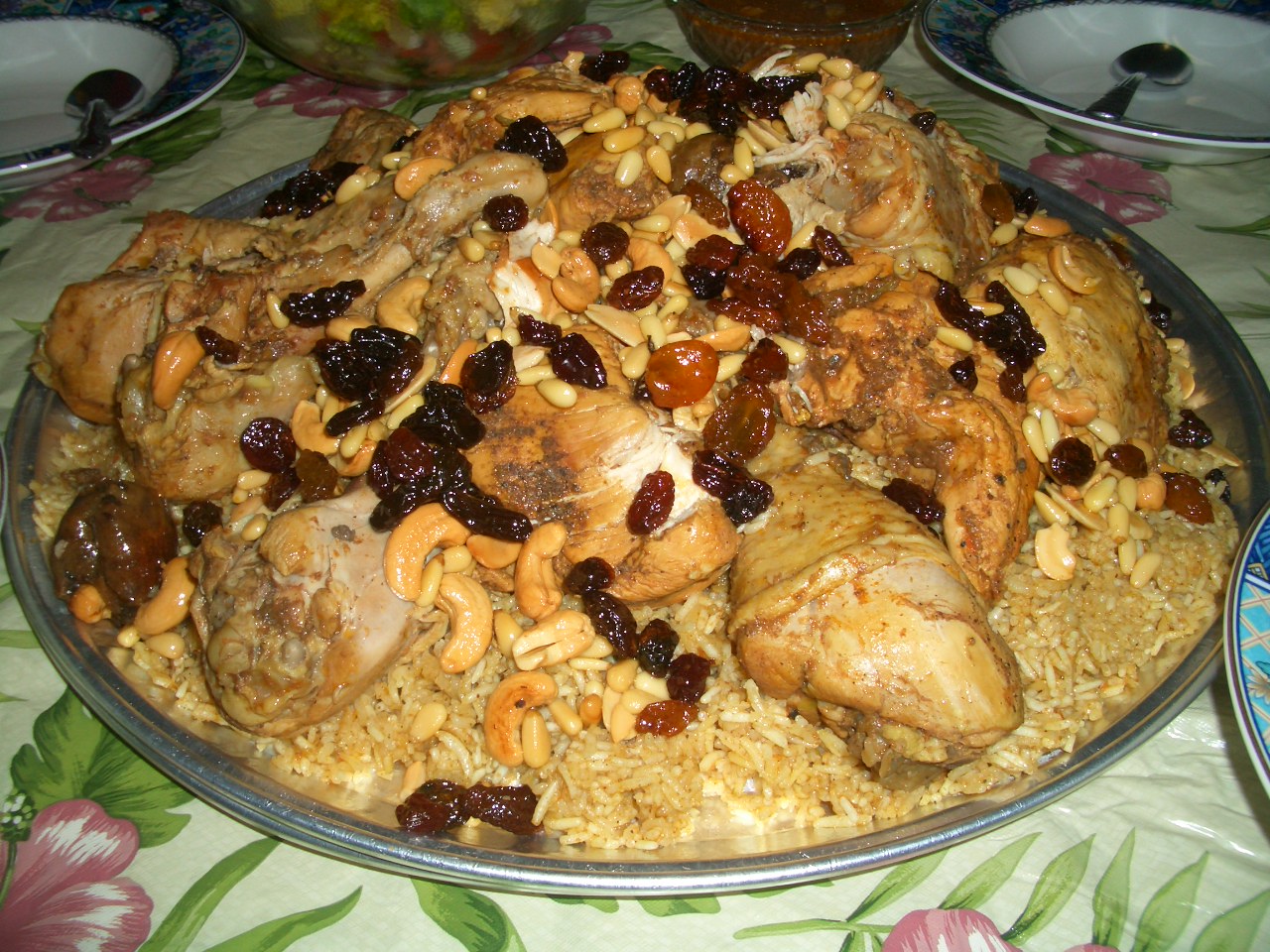
The Five Dishes You Will Most Likely Learn
Kabsa
Kabsa is the national dish of Saudi Arabia and the starting point for almost every cooking class in the country. Long-grain basmati rice is cooked in a broth scented with cardamom, cloves, cinnamon, black lime (loomi), bay leaf and nutmeg. Lamb, chicken or camel meat is braised separately — or layered directly on top — and the whole dish is finished with a scattering of fried onions, raisins and toasted nuts. The specific spice blend, called kabsa mix or hawaij, varies by family and region, and learning to build it from whole spices rather than a packet is often the central lesson of the class. For a deeper dive into this dish’s history and variations, see the Saudi kabsa guide.
Mandi
If kabsa is the daily feast dish, mandi is the occasion dish — reserved for weddings, large family gatherings, and landmark celebrations. Traditionally, the meat is suspended over charcoal in a sealed clay pit (tandoor), the rising smoke and heat cooking it to extraordinary tenderness over several hours. The rice below absorbs every dripping, then absorbs more stock enriched with saffron and turmeric. At home-based and boutique cooking classes, you will learn the adapted stovetop or oven method; at resort-level experiences, occasionally the real pit. For the full story of this dish, the Saudi mandi guide covers every regional variation.
Jareesh
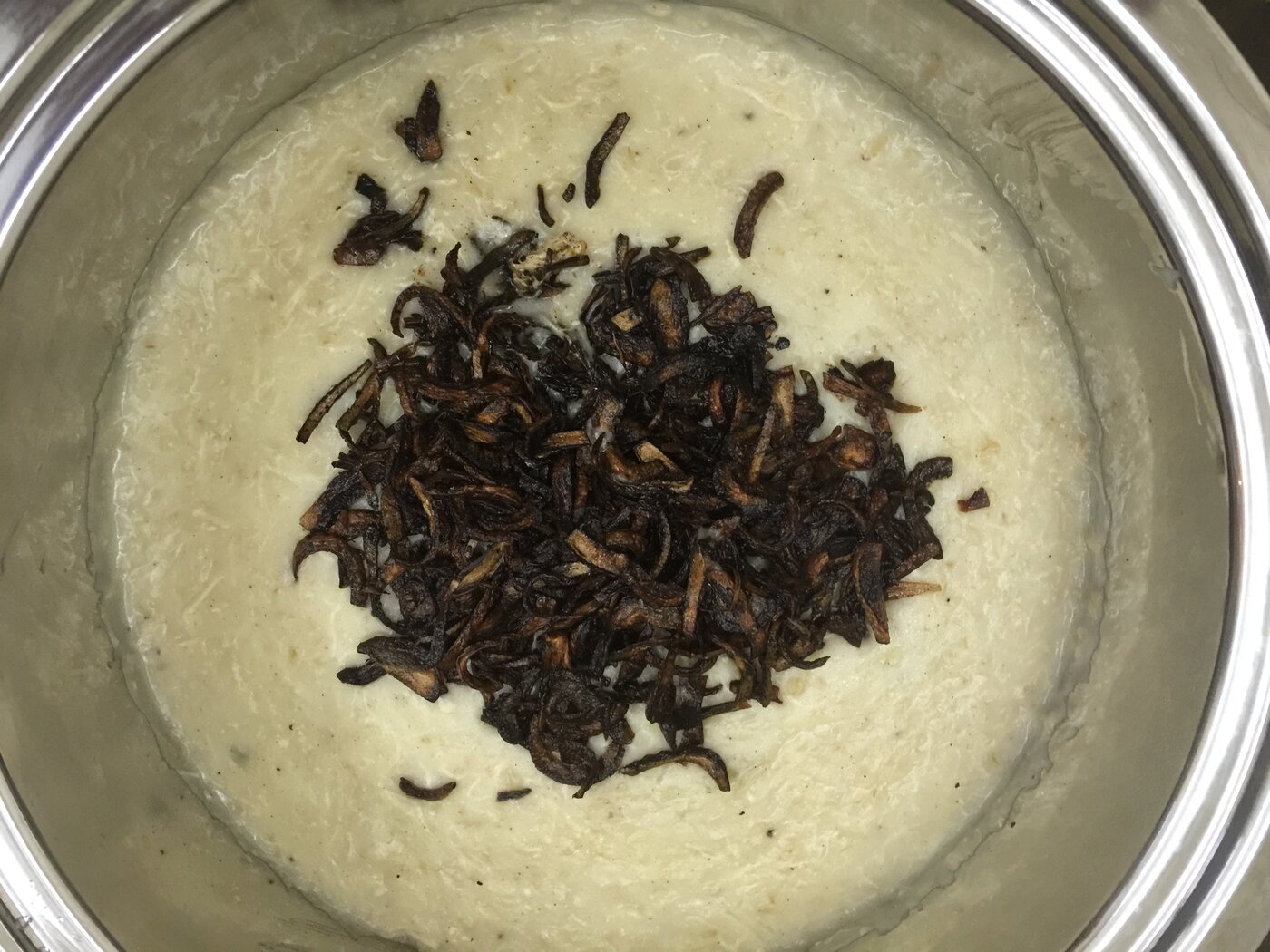
Jareesh is central Saudi Arabia’s most comforting winter dish — crushed wheat grains slow-cooked for two to three hours with lamb or chicken, yogurt, caramelised onions, and a warming mix of cumin, coriander, black pepper and cinnamon. The result is a thick, creamy porridge served with a generous ladle of clarified butter poured over the top. It has ancient roots in Najdi Bedouin cooking, where wheat was pounded by hand in stone mortars. Cooking classes that focus on Najdi or central Arabian cuisine — particularly those run out of Riyadh — almost always include jareesh alongside kabsa. The dish cannot be rushed, which makes the class a genuinely immersive few hours.
Saleeg
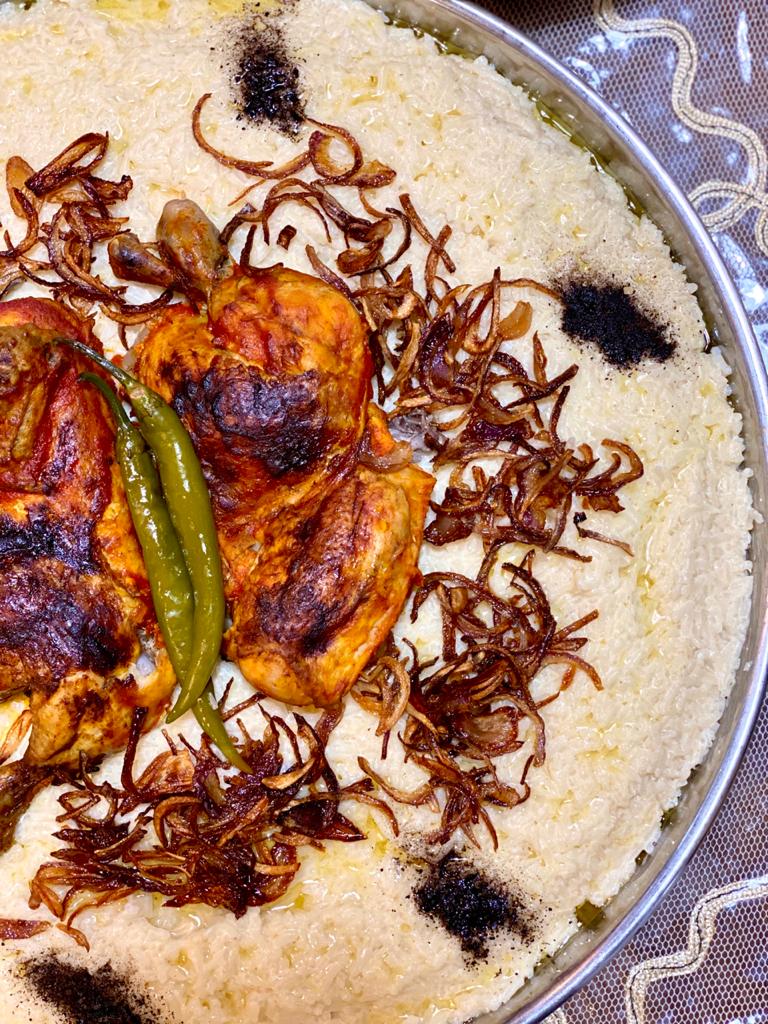
Saleeg is Jeddah’s answer to a rice dish: white rice cooked slowly in chicken broth and whole milk until it becomes creamy and slightly dense, then topped with a whole roasted chicken and finished with ghee and fresh lemon. Unlike the spiced complexity of kabsa, saleeg is about restraint — the skill is in the ratio of broth to milk and the slow reduction that creates the distinctive texture. It is the signature dish of Hijazi cooking and features prominently in Jeddah cooking classes. The dish’s whiteness and creaminess make it one of the most visually striking Saudi foods to photograph, which is part of its appeal for food tourists coming through Al-Balad.
Mutabbaq
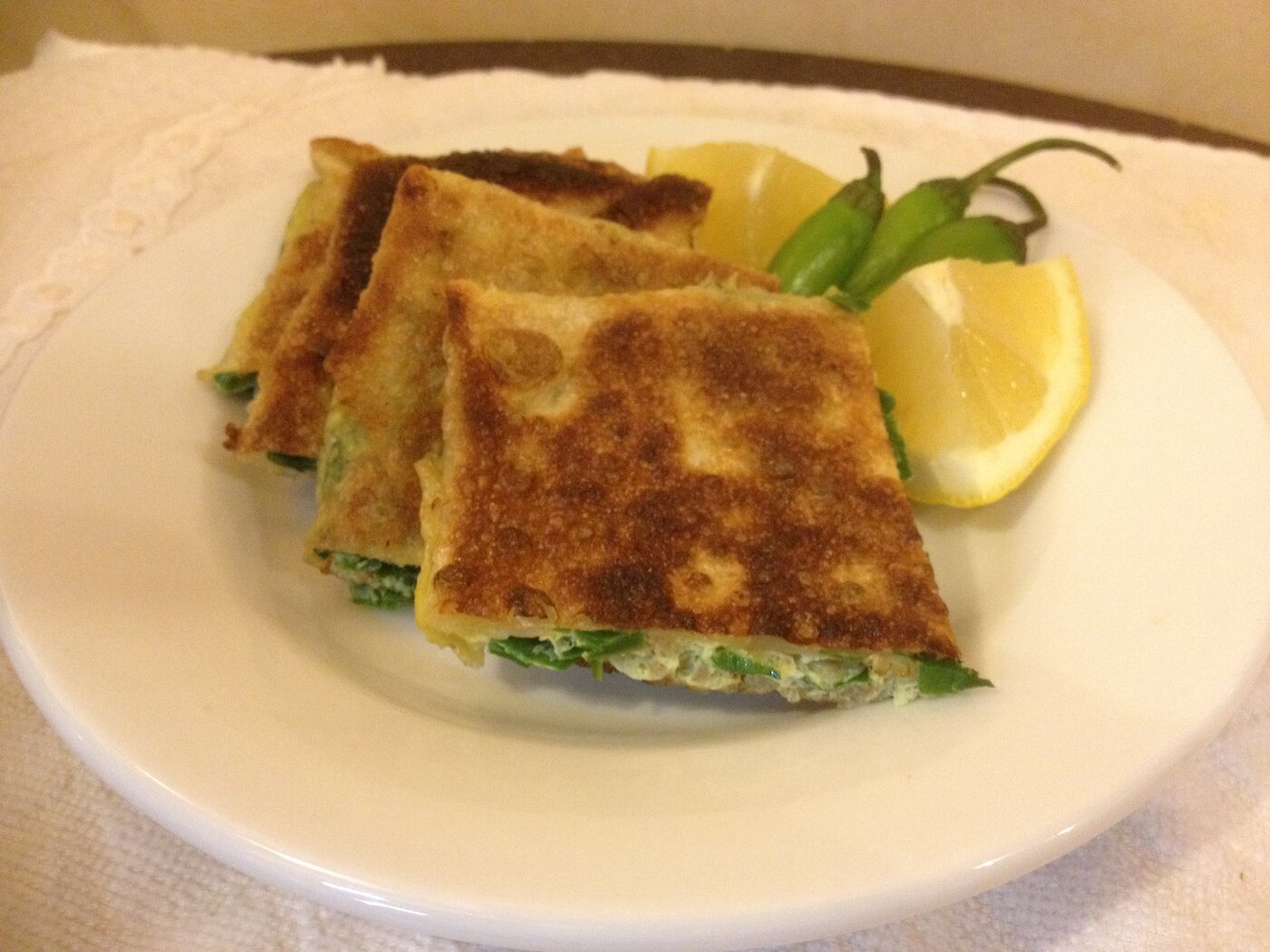
Mutabbaq — the name simply means “folded” in Arabic — is one of Saudi Arabia’s most beloved street foods: a thin pastry envelope stuffed with spiced minced lamb or beef, raw egg, onion and spring onion, then folded and fried in ghee until the casing blisters and crisps. The technique of stretching the dough thin without tearing it is the skill most participants find both challenging and satisfying to master. Some cooking classes, particularly those aimed at beginners and families, substitute a pre-made spring roll wrapper to focus attention on the filling and fold rather than the dough, but the more serious operators teach the full stretch-and-fill method. Mutabbaq also appears regularly in Saudi food tour itineraries as a street-side stop.
Where to Take a Saudi Cooking Class
Riyadh: The Najdi Heartland
Riyadh offers the widest selection of cooking class experiences, from small-group sessions in residential kitchens to hotel-run cultural programmes. Dunes & Dates (duneanddates.com) is one of the best-known operators targeting international tourists. Their flagship experience runs every Saturday and Sunday, lasts three hours, and costs SAR 750 (~$200) per person. The class teaches kabsa, jareesh, and sometimes falafel, with participants working in groups at individual stations before sitting down to eat what they have made. The format has attracted strong Tripadvisor reviews for its balance of hands-on cooking and cultural commentary from guides who explain the significance of each dish.
A second option is the Traditional Saudi Cuisine Cooking Class listed on Tripadvisor (based in the Almasiaf district, Northern Ring Road). This class teaches three dishes: sambosas, kabsa and msabeeb (a Najdi-style pancake). It offers free cancellation up to 24 hours in advance and can be booked through Tripadvisor’s experiences platform. The location in northern Riyadh is accessible by Uber from central hotels.
For something more theatrical, the Interactive Saudi Cuisine and Cultural Experience run by Dunes & Dates and bookable via Viator and Marriott Bonvoy Activities combines food preparation with cultural immersion: participants blend their own Medina spice mix, learn to tie a shemagh, and taste Saudi coffee and dates before getting into the kitchen. This is particularly well-suited to corporate groups or travellers with limited kitchen experience who want cultural context alongside the cooking.
Jeddah: Hijazi Home Cooking
Jeddah’s cooking class scene is centred on Hijazi home cuisine — the distinct culinary tradition of the western coastal region, influenced by centuries of pilgrimage trade from across the Islamic world. Tourist Saudi Arabia (touristsaudiarabia.com) lists a Traditional Private Cooking Class & Lunch in Jeddah, guided by a local chef in a private home setting. Participants learn three courses of traditional Hejaz cuisine including saleeg, with instruction covering the role of spices, the use of clarified butter, and the preparation of meat. The class operates as a private tour, making it suitable for couples or small groups seeking a more intimate experience than a large cooking school.
Jeddah is also an excellent base for informal cooking experiences arranged through local contacts. The city’s diverse food heritage — drawing on Persian, Indian, East African and Levantine influences brought by Hajj pilgrims — means that a home cook’s repertoire here differs substantially from Riyadh. Look for experiences advertised through Airbnb Experiences (search “Jeddah cooking”) or the Saudi Tourism Authority’s online portal for vetted operators. The historic district of Al-Balad is the ideal neighbourhood for this kind of experience.
AlUla: Farm-to-Table in the Ancient North
AlUla offers one of Saudi Arabia’s most distinctive food experiences: a Cooking Traditional Dishes and Farm Tour listed on Tripadvisor, which combines a working farm visit with a hands-on class preparing kabsa, jareesh, and qursan (a thin bread broken into lamb broth, a Najdi classic), as well as saj bread baked directly on a domed iron griddle over fire. The farm setting is unusual in Saudi Arabia — AlUla’s extraordinary microclimate in the Hejaz highlands produces dates, citrus, pomegranates and herbs that rarely grow elsewhere in the peninsula, and the best classes connect participants to this agricultural heritage.
The Dadan Culinary Arts Centre (experiencealula.com), affiliated with the Slow Food movement, runs interactive workshops on sustainable Saudi cooking and traditional farming techniques when open seasonally. Check experiencealula.com or call +966 920 025 003 for current schedules, as the centre operates on a seasonal basis aligned with AlUla’s main tourism window (October to March).
Red Sea Coast: Resort Cooking Schools
Six Senses Southern Dunes, The Red Sea (sixsenses.com) operates one of the kingdom’s most polished cooking school programmes, with daily classes from 10am to 6pm led by the resort’s culinary team. The menu changes daily and rotates between Saudi regional dishes, international options, and plant-based alternatives. The school can also be booked as an exclusive Chef’s Table experience with the full kitchen brigade, making it a memorable option for a special occasion. Contact [email protected] or +966 14 514 1414 for pricing and availability, noting that this is a guest-facing resort experience with rates calibrated accordingly.
What to Expect: Practical Tips
Booking and Timing
Most Saudi cooking classes require advance booking — walk-in kitchen sessions are rare outside resort hotels. Viator, Tripadvisor Experiences, and the operators’ own websites are the most reliable booking channels. Group sessions typically cap at 8–12 participants; private classes are available at a premium of roughly 50–80% above per-person group rates. Classes typically run 2–4 hours, often including a shared meal at the end.
Plan cooking classes for late morning or early afternoon. Friday is the Saudi weekend (Friday–Saturday), which affects some operators’ schedules — some close, others specifically offer weekend-only sessions. All classes pause briefly for the call to prayer, which is a normal part of the experience rather than an interruption.
Dress Code and Etiquette
Dress modestly for cooking class settings, particularly those in private homes or with female instructors. Women are not required to cover their hair during food preparation, but shoulders and knees should be covered. If a class takes place in a home, remove shoes at the entrance. Accept tea, Arabic coffee (qahwa) and dates if offered before the class begins — refusing is considered impolite.
Dietary Requirements
Saudi cuisine is structurally friendly for most dietary requirements. Pork is absent by default. Many dishes are naturally gluten-free (rice, grilled meats). Vegetarian variants of kabsa, saleeg and jareesh exist and most operators can accommodate them with notice. Vegan requests require more advance planning as ghee and yogurt appear in many traditional recipes — always flag this when booking.
The Dates Connection
Most cooking classes in Saudi Arabia incorporate dates in some form — as a pre-class snack, as an ingredient in desserts like hininy (a Najdi date-and-breadcrumb sweet), or as a standalone tasting. Saudi Arabia produces over 400 varieties of dates, and many operators make a point of introducing participants to regional cultivars. The Saudi dates guide covers the main varieties you are likely to encounter.
Costs and Budgeting
Pricing across the market in 2025–2026 generally falls into three tiers:
- Group cooking classes (6–12 people): SAR 220–400 (~$59–$107) per person. Typical duration: 2.5–3 hours. Includes meal.
- Semi-private or boutique sessions (2–5 people): SAR 500–750 (~$133–$200) per person. Typical duration: 3 hours. Dunes & Dates sits at the top of this tier.
- Private home or resort experiences: SAR 800–1,500+ (~$213–$400) per person. Duration varies. Six Senses, Chef’s Table formats, and custom culinary tours.
All operators accept credit cards for pre-booking. Cash is widely accepted for in-person payments. A service tip of SAR 20–50 per person is appreciated but not required in most class settings.
Beyond the Class: Taking Saudi Cooking Home
The spice blends are the thing to bring home. Every market in Riyadh’s Dira district, Jeddah’s Al-Bawadi market, or the AlUla souq sells small bags of pre-mixed kabsa spice, loomi (dried black lime), and bzar (a Gulf-wide spice mix used in rice and meat dishes). Most cooking class operators will tell you exactly where to buy the best local versions. You will need the spices — a kabsa made with supermarket mixed spice at home is a pale imitation.
The Saudi food tours page covers the best walking and market tours for sourcing ingredients, including trusted operators in both Riyadh and Jeddah who combine cooking with market visits.
Planning Your Visit
Saudi Arabia’s tourist visa is required for all international visitors and is available online as an e-visa. The Saudi Arabia visa guide covers the full application process, which is straightforward for most nationalities and costs around $130 for a single-entry tourist visa. The best season for cooking classes is October to April, when temperatures in Riyadh and Jeddah are comfortable enough to enjoy a morning in a kitchen without the summer heat.
For broader travel planning, the full Saudi Arabia Travel Guide 2026 covers itineraries, accommodation, transport and all major regions. The Jeddah Al-Balad guide is particularly useful context before booking a Hijazi cooking experience, as the neighbourhood’s architecture, history and food culture are deeply intertwined.