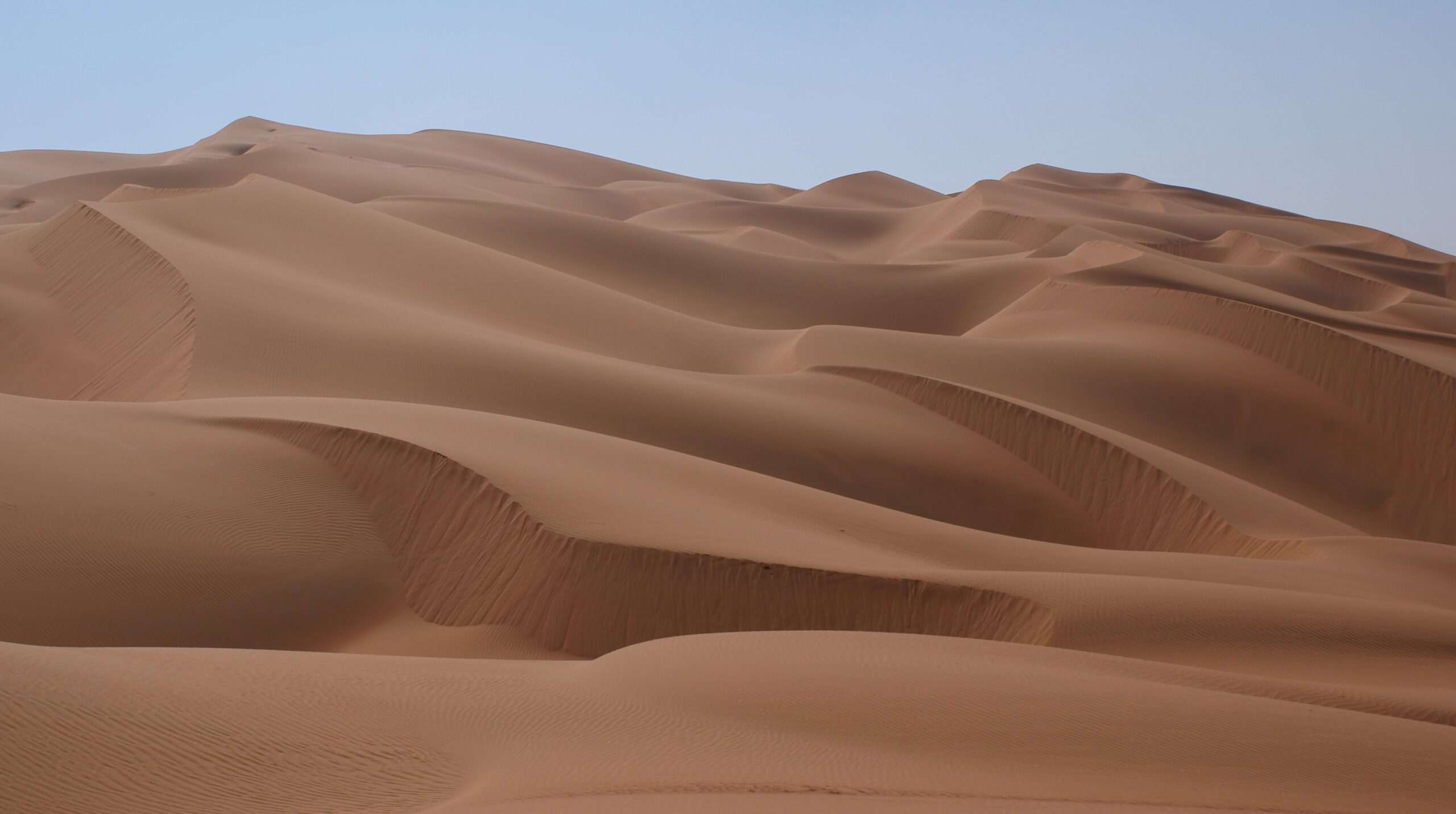

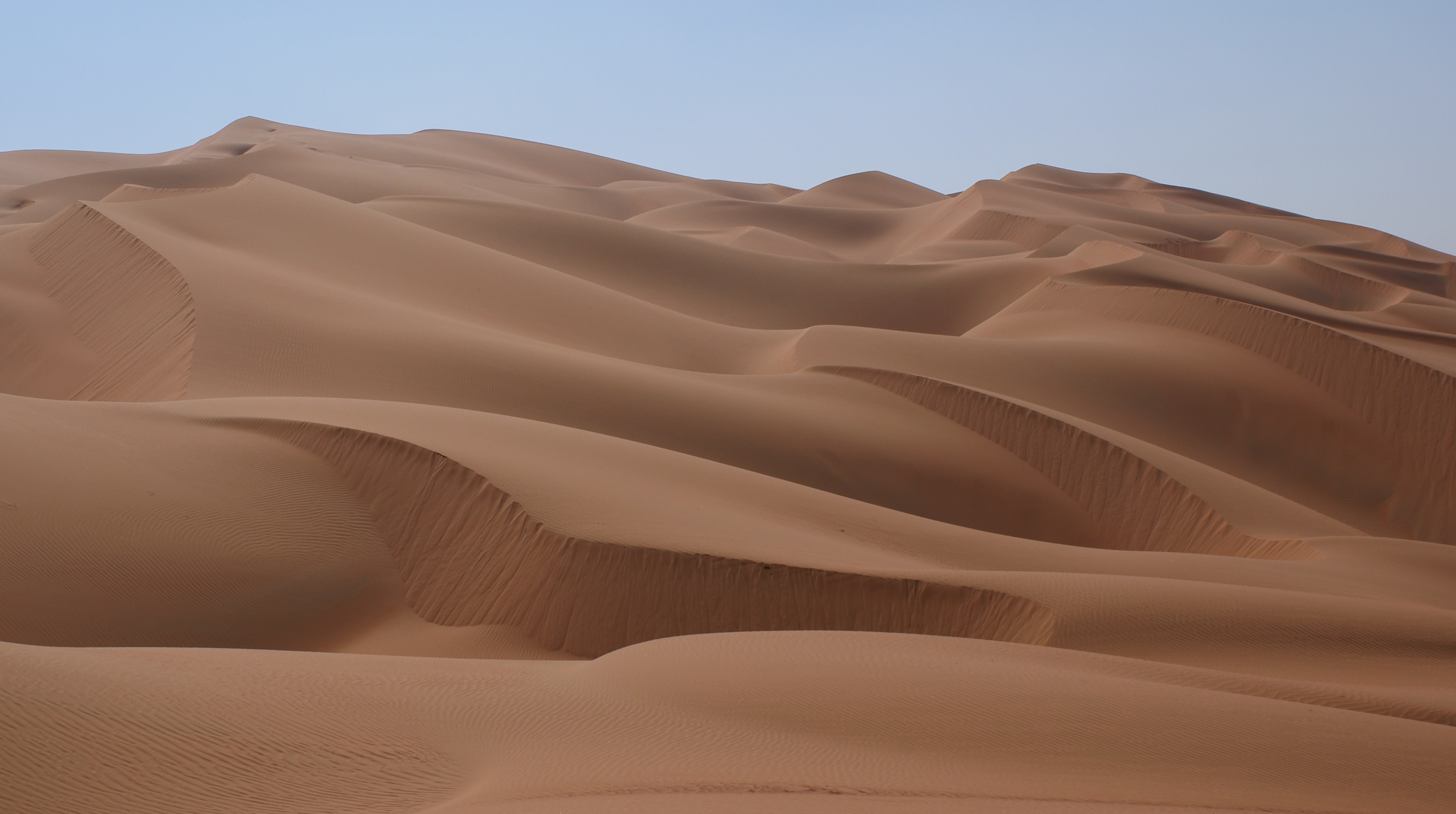
Saudi Arabia’s deserts are far from lifeless. Beneath the vast dunes of the Rub’ al-Khali and across the rocky escarpments of the Tuwayq, a remarkable cast of animals has adapted to some of the harshest conditions on Earth. From the iconic Arabian oryx — brought back from the brink of extinction — to the elusive sand cat, the Kingdom’s protected reserves now shelter species that were all but gone a generation ago. Whether you are planning a hiking and nature trip across Saudi Arabia or simply want to understand the country beyond its cities and megaprojects, this guide covers every species worth knowing, where to see them, and how to plan a desert wildlife trip as part of a wider Saudi Arabia travel itinerary.
Best Time to Visit: October to March (cooler temperatures, animals more active at dawn and dusk)
Getting There: Riyadh is the gateway to the Ibex Reserve (180 km south); Najran or Sharurah for Uruq Bani Ma’arid; Tabuk for the Prince Mohammed bin Salman Royal Reserve
Visa Required: Yes — tourist e-visa
Budget: USD 80–200/day depending on guided safari vs self-drive
Must-See: Arabian oryx at Uruq Bani Ma’arid (UNESCO World Heritage Site), Nubian ibex at the Ibex Reserve, sand cats at the Prince Mohammed bin Salman Royal Reserve
Avoid: Visiting in June–August when temperatures exceed 50°C and wildlife retreats underground
Why Saudi Arabia Matters for Desert Wildlife
Saudi Arabia occupies roughly 2.15 million square kilometres — about 95 percent of which is arid or semi-arid. That scale of desert might suggest ecological monotony, but the Kingdom actually spans multiple distinct ecoregions: the hyper-arid sand seas of the Empty Quarter, the limestone canyons of the Tuwayq Escarpment, the volcanic lava fields (harrat) of the Hejaz, and the juniper-clad highlands of the Asir Mountains near Abha. Each harbours different communities of mammals, reptiles, and birds adapted to specific conditions.
What makes Saudi Arabia’s wildlife story globally significant is the scale of its conservation reversal. The Arabian oryx was declared extinct in the wild in 1972. Today, free-ranging herds roam Uruq Bani Ma’arid — a UNESCO World Heritage Site since September 2023. The National Center for Wildlife (NCW) has reintroduced over 7,000 animals to their native habitats across the Kingdom, and six Royal Reserves now protect a combined area larger than Belgium.
The Arabian Oryx — Saudi Arabia’s Conservation Triumph
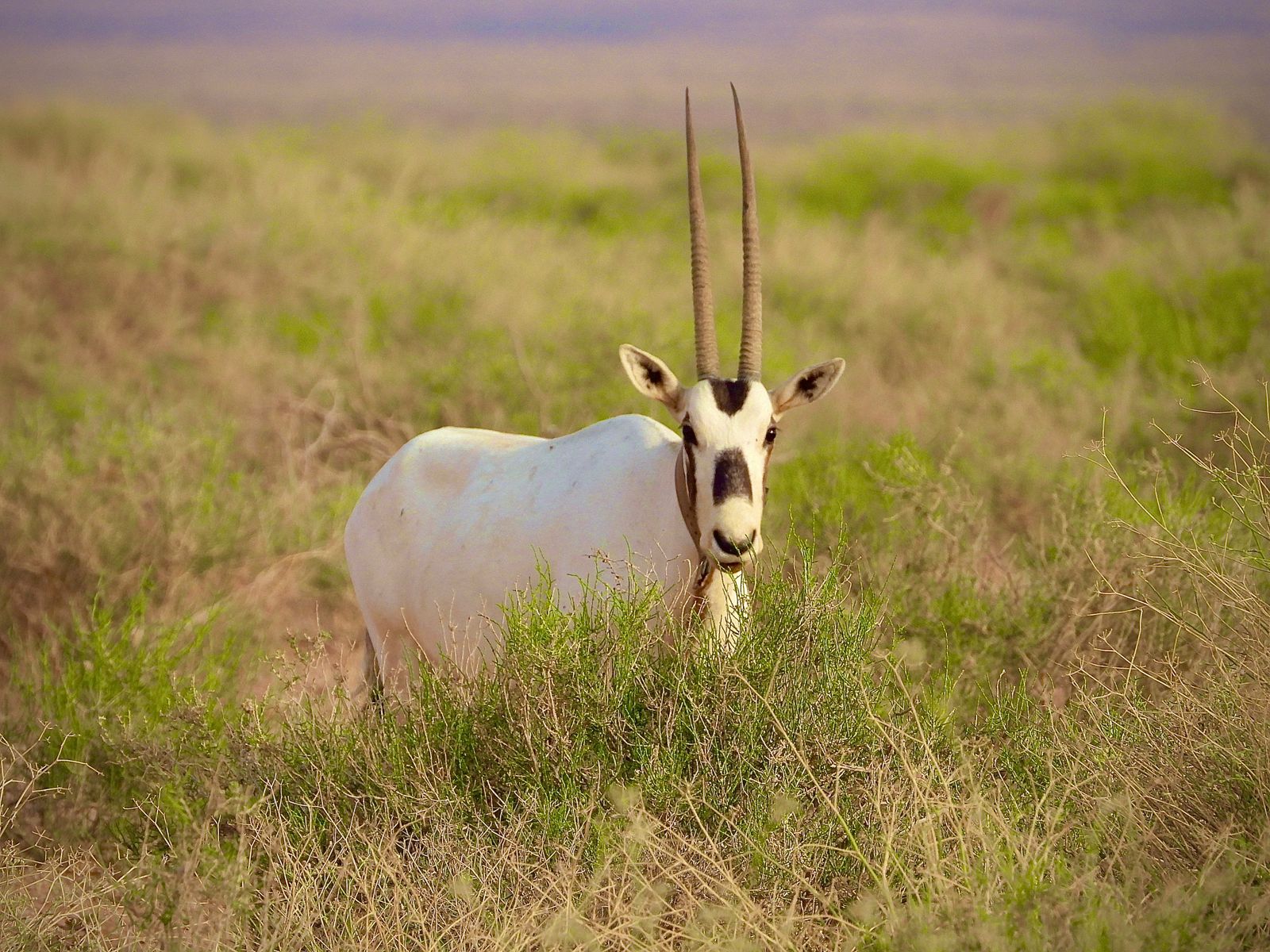
The Arabian oryx (Oryx leucoryx) is the animal most synonymous with Saudi desert wildlife, and its recovery is one of the great conservation stories of the 21st century. A medium-sized antelope with striking white fur, dark facial markings, and long, nearly straight horns, the oryx once ranged across the entire Arabian Peninsula. Overhunting with modern vehicles and firearms drove the species to extinction in the wild by 1972.
Where to See Arabian Oryx
Uruq Bani Ma’arid Reserve is the premier destination. Located on the western edge of the Rub’ al-Khali approximately 200 km north of Najran, this 12,765 km² protected area was inscribed as Saudi Arabia’s first Natural UNESCO World Heritage Site in September 2023. It is the only place on Earth where Arabian oryx roam freely in self-sustaining wild herds. As of 2024, the reserve’s population had reached 116 individuals, up from just a handful reintroduced in 1995. The reserve also supports Arabian sand gazelles and red-necked ostriches.
Shaybah Wildlife Sanctuary, operated by Saudi Aramco deep in the Empty Quarter near the UAE border, holds 351 Arabian oryx, 250 sand gazelles, and 62 red-necked ostriches as of 2025. The sanctuary is not generally open to independent tourists but can be visited through Aramco-arranged programmes.
King Salman bin Abdulaziz Royal Reserve in the Tabuk region is a newer conservation area spanning over 130,000 km² — one of the largest protected areas in the Middle East. Arabian oryx and sand gazelles have been reintroduced here, with 55 new births (9 oryx, 46 sand gazelles) recorded across the royal reserves in early 2026.
Oryx Viewing Tips
- Best time: Early morning (just after dawn) and late afternoon. Oryx rest during midday heat.
- Season: Winter months (November–February) are ideal — the desert greens up after autumn rains, and oryx are more active and visible.
- What to bring: Binoculars (8×42 minimum), a telephoto lens (300mm+), and at least 4 litres of water per person.
- Access: Uruq Bani Ma’arid requires a 4×4 vehicle and, ideally, a guide arranged through the NCW or local tour operators based in Najran or Sharurah.
The Sand Cat — Ghost of the Desert
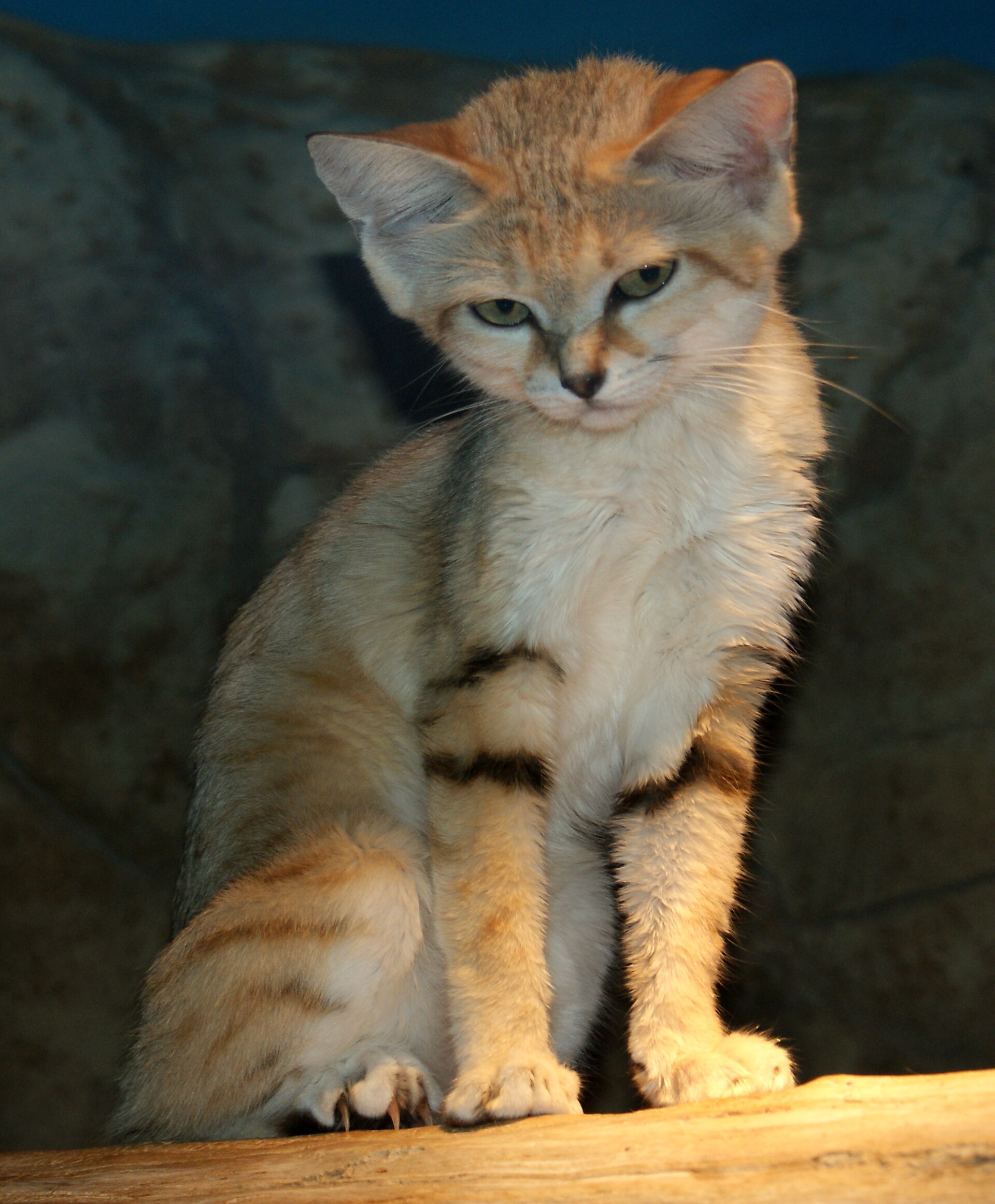
The sand cat (Felis margarita) is the only felid species that lives exclusively in desert environments year-round. Small, pale-furred, and with distinctive wide ears that help dissipate heat and detect underground prey, sand cats are almost impossible to spot in the wild. They leave virtually no footprints on soft sand, are strictly nocturnal, and instinctively freeze and close their eyes when caught in torchlight — earning them the nickname “ghost of the desert.”
Sand Cat Research in Saudi Arabia
In a global first, researchers at the Prince Mohammed bin Salman Royal Reserve (in the Tabuk region of northwest Saudi Arabia) successfully GPS-collared six sand cats — the first time this technology has been used on the species anywhere in the world. Working in partnership with the Royal Zoological Society of Scotland’s WildGenes laboratory, the team produced the most comprehensive genomic dataset ever assembled for sand cats, including a high-quality reference genome.
Tracking data revealed that individual sand cats travel an average of 6 km per night, with one individual ranging nearly 9 km in a single night across the reserve’s dunes and gravel plains. The research confirmed that sand cats in Saudi Arabia represent a genetically distinct population, underscoring the importance of Arabian reserves for the species’ global conservation.
Sand cats also thrive at the King Salman Royal Reserve, which hosts 350 documented wildlife species including mammals, birds, reptiles, and amphibians. The reserve’s combination of sandy desert, rocky wadis, and sparse acacia woodland provides ideal sand cat habitat.
Can You See Sand Cats in the Wild?
Realistically, spotting a wild sand cat is exceptionally difficult even for researchers. Your best chances are on guided night safari drives in the Prince Mohammed bin Salman Royal Reserve or the King Salman Royal Reserve near Tabuk. Some tour operators offer specialist nocturnal wildlife drives with thermal imaging equipment. Even with professional guidance, sightings are never guaranteed — but the attempt itself makes for an unforgettable desert night experience.
Nubian Ibex — Lords of the Sandstone Canyons
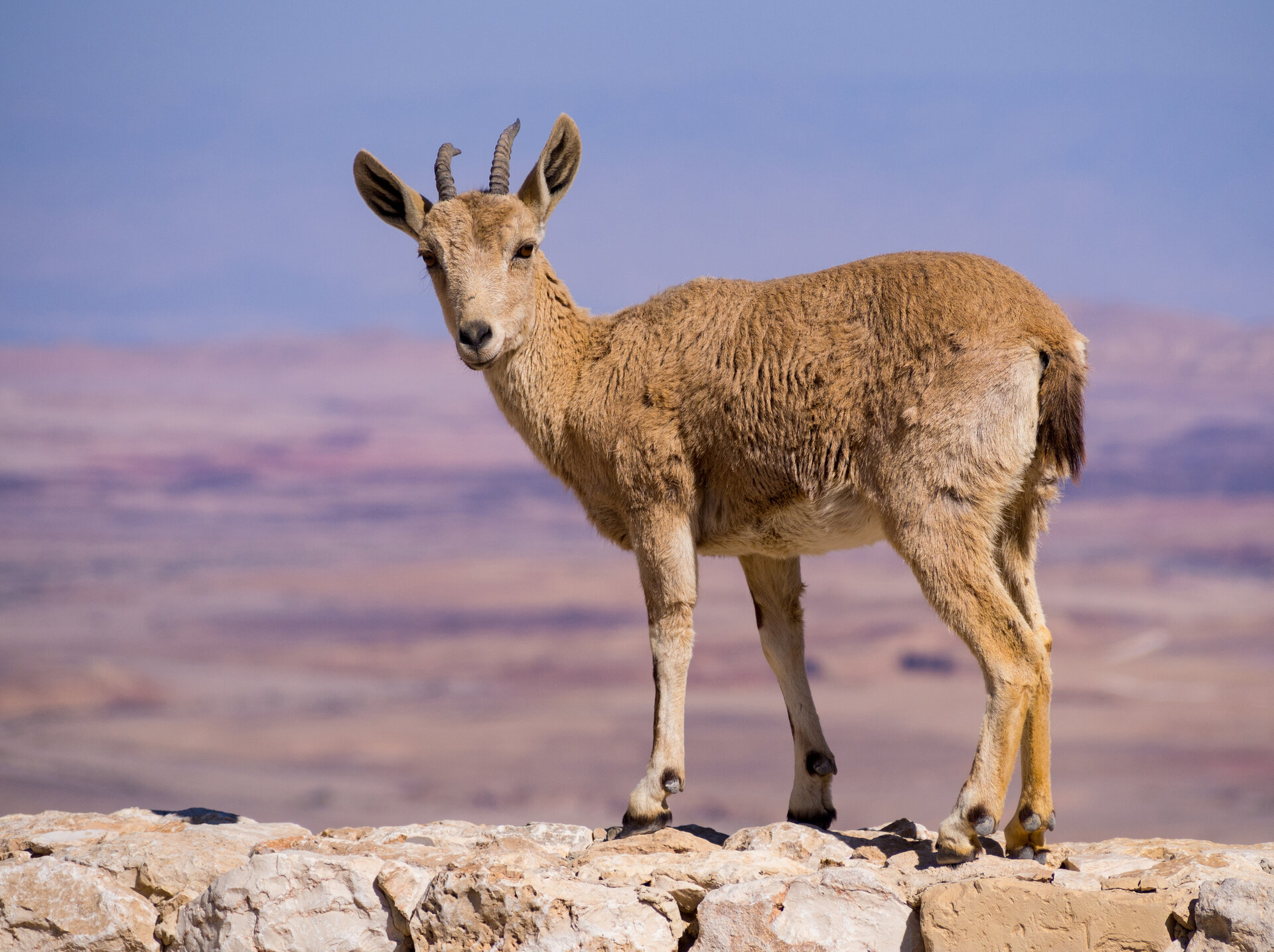
The Nubian ibex (Capra nubiana) is a stocky, sure-footed mountain goat that thrives on sheer cliff faces and rocky escarpments across the Middle East and northeast Africa. Males sport impressive backward-curving ridged horns that can exceed one metre in length. In Saudi Arabia, the ibex is most strongly associated with the Tuwayq Escarpment — a dramatic limestone ridge that runs for over 800 km through the heart of the country.
The Ibex Reserve
The Ibex Reserve Protected Area is located 180 km south of Riyadh, in the wildest section of the Tuwayq Escarpment between Al-Hariq and Hawtat Bani Tamim. Covering 1,841 km², the reserve is a rugged plateau dissected by deep canyons and ravines, rising to 1,097 metres at its western edge. It protects the largest population of Nubian ibex in Saudi Arabia.
The reserve has been recognised on the IUCN Green List — a global standard for effectively managed protected areas. Beyond ibex, the reserve shelters reintroduced Arabian mountain gazelles, rock hyrax (a small, rabbit-like mammal), Arabian wolves, Blanford’s fox, Arabian red fox, and Rueppell’s sand fox. Over 268 plant species have been documented within its boundaries.
Visiting the Ibex Reserve
- Access: The reserve is a roughly two-hour drive south from Riyadh via Highway 10. A 4×4 is recommended for unpaved roads within the reserve.
- Activities: Hiking, wildlife photography, camping, and picnicking are permitted in designated areas.
- Best viewing: Ibex are most active at dawn and dusk, especially along canyon rims. Scan cliff faces with binoculars — they are remarkably well camouflaged against limestone.
- Season: October to March for comfortable hiking temperatures. Summer visits are possible but extremely hot.
Other Desert Species Worth Knowing
Arabian Sand Gazelle (Reem)
The Arabian sand gazelle (Gazella marica) is the classic desert antelope — pale-coated, slender, and capable of surviving without drinking water for extended periods by extracting moisture from plants. Sand gazelles are more numerous than oryx and can be seen at Uruq Bani Ma’arid, the Shaybah Wildlife Sanctuary, the King Salman Royal Reserve, and the Imam Abdulaziz bin Mohammad Royal Reserve. In early 2026, 46 sand gazelle births were recorded across the royal reserves.
Red-Necked Ostrich
The Arabian ostrich went extinct in the 1960s. In its place, Saudi Arabia has introduced the closely related red-necked ostrich (Struthio camelus camelus) — the largest living bird, standing up to 2.7 metres tall. Fewer than 1,000 remain globally, making the Saudi breeding and reintroduction programme significant for the subspecies’ survival. Red-necked ostriches can be seen at the Prince Mohammed bin Salman Royal Reserve in the northwest and at Shaybah in the Empty Quarter, where 62 individuals were recorded as of 2025.
Arabian Leopard
The Arabian leopard (Panthera pardus nimr) is Critically Endangered, with fewer than 200 individuals estimated to survive in the wild across the Arabian Peninsula. In Saudi Arabia, a remnant population persists in the Asir Mountains in the southwest — remote, rugged terrain near Abha and the Asir highlands. The Royal Commission for AlUla operates a dedicated Arabian Leopard Breeding Programme, working toward eventual reintroduction into protected mountain habitat. Wild sightings are extraordinarily rare, but the species’ presence underscores the ecological diversity of Saudi Arabia’s southwestern highlands.
Arabian Wolf
The Arabian wolf (Canis lupus arabs) is a small, lean subspecies of grey wolf adapted to desert conditions. Found at both Uruq Bani Ma’arid and the Ibex Reserve, Arabian wolves are shy, nocturnal, and rarely seen. They typically hunt in pairs rather than packs, preying on hares, rodents, and young gazelles.
Striped Hyena
The striped hyena (Hyaena hyaena) is present across much of Saudi Arabia’s rocky desert and wadi systems. Primarily a scavenger, it is nocturnal and solitary. Camera-trap studies in several reserves have confirmed stable populations.
Desert Reptiles
Saudi Arabia’s deserts host a rich reptile fauna. The spiny-tailed lizard (Uromastyx spp.) is one of the most visible — a stocky, herbivorous lizard that basks on rocks in the morning sun before retreating to burrows. The desert monitor (Varanus griseus), reaching up to 1.5 metres, is the largest lizard in the Arabian Peninsula. Various species of sand vipers, including the Arabian horned viper (Cerastes gasperettii), are present but rarely encountered unless you’re walking through sand dunes at night.
Birds of the Desert
Birdwatchers will find Saudi deserts rewarding, particularly in winter when migratory species supplement the resident avifauna. Key species include:
- Houbara bustard — a large, ground-dwelling bird and a conservation priority species across the Gulf
- Lappet-faced vulture — the largest Old World vulture, occasionally seen soaring over the Empty Quarter
- Spotted sandgrouse and crowned sandgrouse — adapted to fly long distances to water sources each morning
- Egyptian vulture — present at Uruq Bani Ma’arid and the Ibex Reserve
- Various larks and wheatears — species such as the Temminck’s lark and desert wheatear are common across stony desert plains
Saudi Arabia’s Protected Area Network
The Kingdom’s approach to wildlife conservation has shifted dramatically under Vision 2030. Six Royal Reserves, managed by dedicated development authorities, now protect vast swathes of habitat:
| Reserve | Region | Area (km²) | Key Species |
|---|---|---|---|
| King Salman bin Abdulaziz Royal Reserve | Tabuk / Ha’il | 130,700 | Sand cat, sand gazelle, Arabian oryx, 350+ species total |
| Prince Mohammed bin Salman Royal Reserve | Tabuk (northwest) | 16,000 | Sand cat (GPS-tracked), red-necked ostrich, Arabian wolf |
| Imam Abdulaziz bin Mohammad Royal Reserve | Central | 15,400 | Arabian oryx, sand gazelle, Nubian ibex |
| King Khalid Royal Reserve | Central | 20,500 | Sand gazelle, Arabian oryx |
| Imam Turki bin Abdullah Royal Reserve | Northern Borders | 91,500 | Arabian wolf, sand gazelle, raptors |
| Imam Saud bin Abdulaziz Royal Reserve | Ha’il | 6,200 | Mountain gazelle, Arabian wolf |
In addition to the Royal Reserves, the NCW manages 15 protected areas including Uruq Bani Ma’arid and the Ibex Reserve. Six Saudi nature reserves were added to a global conservation list in April 2026, further cementing the Kingdom’s position as a serious player in international conservation.
How to Plan a Desert Wildlife Trip
Best Time to Go
The optimal window is October to March. Temperatures in the desert drop to 15–25°C during the day and can fall near freezing at night in elevated areas like the Tuwayq Escarpment. Winter rains (November–January) green the desert and bring wildlife out in greater numbers. Avoid June through August when daytime temperatures in the Empty Quarter regularly exceed 50°C.
Getting There
For the Ibex Reserve: Fly into Riyadh (King Khalid International Airport) and drive south via Highway 10 — about two hours.
For Uruq Bani Ma’arid: Fly into Najran or Sharurah, then drive north. The reserve is remote and requires a 4×4 with adequate fuel, water, and supplies. Guided tours from Najran are recommended.
For the Royal Reserves (Tabuk region): Fly into Tabuk or AlUla (NEOM Bay Airport also serves the northwest). The Prince Mohammed bin Salman Royal Reserve is accessible from Tabuk. If combining with an AlUla visit, the region offers both ancient heritage and desert wildlife in a single trip.
What to Pack
- Optics: Binoculars (8×42 or 10×42), spotting scope for distant ibex, telephoto lens for photography
- Clothing: Light, breathable layers in neutral colours. A warm fleece or down jacket for desert nights (temperatures can drop sharply after sunset)
- Sun protection: Wide-brimmed hat, high-SPF sunscreen, UV-blocking sunglasses
- Water: Carry a minimum of 4 litres per person per day. In remote areas, plan for more
- Navigation: Offline maps (Google Maps or Maps.me) — mobile coverage is unreliable in remote reserves
- Vehicle: A 4×4 with recovery gear, tyre deflators (for sand driving), and a shovel
Guided Safaris vs Self-Drive
For Uruq Bani Ma’arid and the Royal Reserves, guided safaris are strongly recommended. The terrain is remote, navigation is challenging, and local guides know where animals concentrate seasonally. Several Saudi-based operators now offer multi-day desert wildlife safaris, often combined with cultural experiences and stargazing. The Ibex Reserve, being closer to Riyadh and with better road access, is more feasible as a self-drive day trip.
Responsible Wildlife Viewing
Desert Wildlife Etiquette: Maintain at least 100 metres’ distance from oryx and gazelle herds — they are habituated to vehicles at a distance but will flee if approached too closely. Never chase animals with vehicles. Stay on designated tracks to avoid damaging fragile desert crusts and burrows. Carry out all rubbish. Campfires are prohibited in most reserves. Flash photography at night disturbs nocturnal species — use red-filter torches and available-light photography techniques.
Combining Wildlife with Other Saudi Experiences
A desert wildlife trip pairs naturally with several other Saudi travel experiences:
- AlUla and Hegra: The AlUla region in the northwest combines Nabataean archaeology with desert landscapes that support Arabian wolves, sand foxes, and raptors. It’s a natural add-on to a Tabuk-area wildlife itinerary.
- Hiking the Edge of the World: The Tuwayq Escarpment north of the Ibex Reserve includes the famous “Edge of the World” viewpoint near Riyadh — a hiking destination that also offers cliff-face ibex habitat.
- Asir Mountains: For Arabian leopard territory, combine a trip to Abha and the Asir highlands with its cooler climate, juniper forests, and dramatic escarpment views.
- Red Sea coast: After desert wildlife, the Saudi Arabia diving and snorkelling scene along the Red Sea coast offers a complete contrast — pristine coral reefs and marine megafauna.
- City bases: Riyadh works as a base for the Ibex Reserve, while Jeddah serves as a gateway to the Red Sea coast and western desert regions.
Practical Information
Visas
Most nationalities can obtain a Saudi tourist e-visa online — a multiple-entry visa valid for one year, allowing stays of up to 90 days per visit. The process takes minutes and costs approximately USD 120 including insurance.
Accommodation
Near the Ibex Reserve, accommodation options in Al-Hariq and Riyadh range from budget to luxury. For Uruq Bani Ma’arid, basic desert camp accommodation is available within the reserve — including traditional country houses developed as part of Saudi Arabia’s first desert tourism project, launched in 2018. In the Tabuk region, hotels in Tabuk city and the growing AlUla hotel infrastructure provide comfortable bases for Royal Reserve visits.
Costs
A self-drive day trip to the Ibex Reserve from Riyadh costs mainly fuel and supplies (USD 30–50). Multi-day guided desert safaris to Uruq Bani Ma’arid or the Royal Reserves typically run USD 200–500 per person per day depending on group size, inclusions, and level of comfort. Budget travellers can camp independently for USD 80–120/day including vehicle hire and fuel.
Safety
The main risks in Saudi desert wildlife areas are environmental: extreme heat, vehicle breakdowns in remote areas, and dehydration. Always travel with a fully charged satellite phone or personal locator beacon in remote reserves. Inform someone of your itinerary and expected return. Venomous snakes (horned vipers, saw-scaled vipers) are present but avoid humans — watch where you step at night and shake out boots in the morning.
Explore More Saudi Arabia Travel Guides
- Saudi Arabia Hiking Guide — Trails, trekking routes, and outdoor adventures across the Kingdom
- AlUla Travel Guide 2026 — Ancient Nabataean tombs, desert landscapes, and adventure tourism in the northwest
- Abha and Asir Travel Guide — Cool highlands, juniper forests, and Arabian leopard territory
- Riyadh Travel Guide 2026 — The capital city and gateway to the Ibex Reserve and Edge of the World
- Saudi Arabia Travel Guide 2026 — The complete guide to visiting the Kingdom
- Saudi Arabia Visa Guide — Every visa type explained