
Diriyah is where Saudi Arabia began. Tucked into the banks of Wadi Hanifa on the northwestern edge of Riyadh, this ancient oasis settlement was the capital of the First Saudi State and the birthplace of the Al Saud dynasty. Today it is a UNESCO World Heritage Site, a $63 billion mega-development, and one of the most important historical destinations in the Arabian Peninsula. Whether you are building a broader Riyadh travel itinerary or making a dedicated trip to understand Saudi history, Diriyah belongs at the top of your list. Its mud-brick palaces, restored courtyards, and world-class dining scene at Bujairi Terrace make it essential for anyone visiting Saudi Arabia in 2026.
Best Time to Visit: November to March (15–25°C, coincides with Diriyah Season)
Getting There: 20–30 minutes by car or Uber/Careem from central Riyadh
Visa Required: Yes — tourist e-visa
Budget: $15–50 USD per person (entry + dining)
Must-See: At-Turaif District, Salwa Palace, Bujairi Terrace
Avoid: Visiting June–September when temperatures exceed 45°C
The Founding of Diriyah: 1446 to the First Saudi State
Diriyah was founded in 1446 CE by Mani’ Al-Muraydi, an ancestor of the House of Saud who migrated from Al-Qatif in eastern Arabia to the fertile Wadi Hanifa valley. The location was strategic: the wadi provided year-round water, date palms grew in abundance, and the elevated terrain along the valley walls offered natural defenses. For nearly three centuries, Diriyah grew as a prosperous agricultural settlement and trading hub within the Najd region of central Arabia.
The transformation from regional town to political capital came in 1744, when Muhammad ibn Saud, the emir of Diriyah, formed an alliance with the religious scholar Muhammad ibn Abd al-Wahhab. Ibn Abd al-Wahhab had been expelled from the nearby town of Al-Uyaynah, roughly 30 miles upstream on the same wadi, and sought protection and patronage. The pact between the two men — political authority combined with religious reform — created the First Saudi State, with Diriyah as its capital. Under this alliance, the Saudi domain expanded rapidly to control all of Najd, and eventually extended its reach into eastern Arabia, the Hejaz, and parts of modern-day Iraq, Yemen, and Oman.
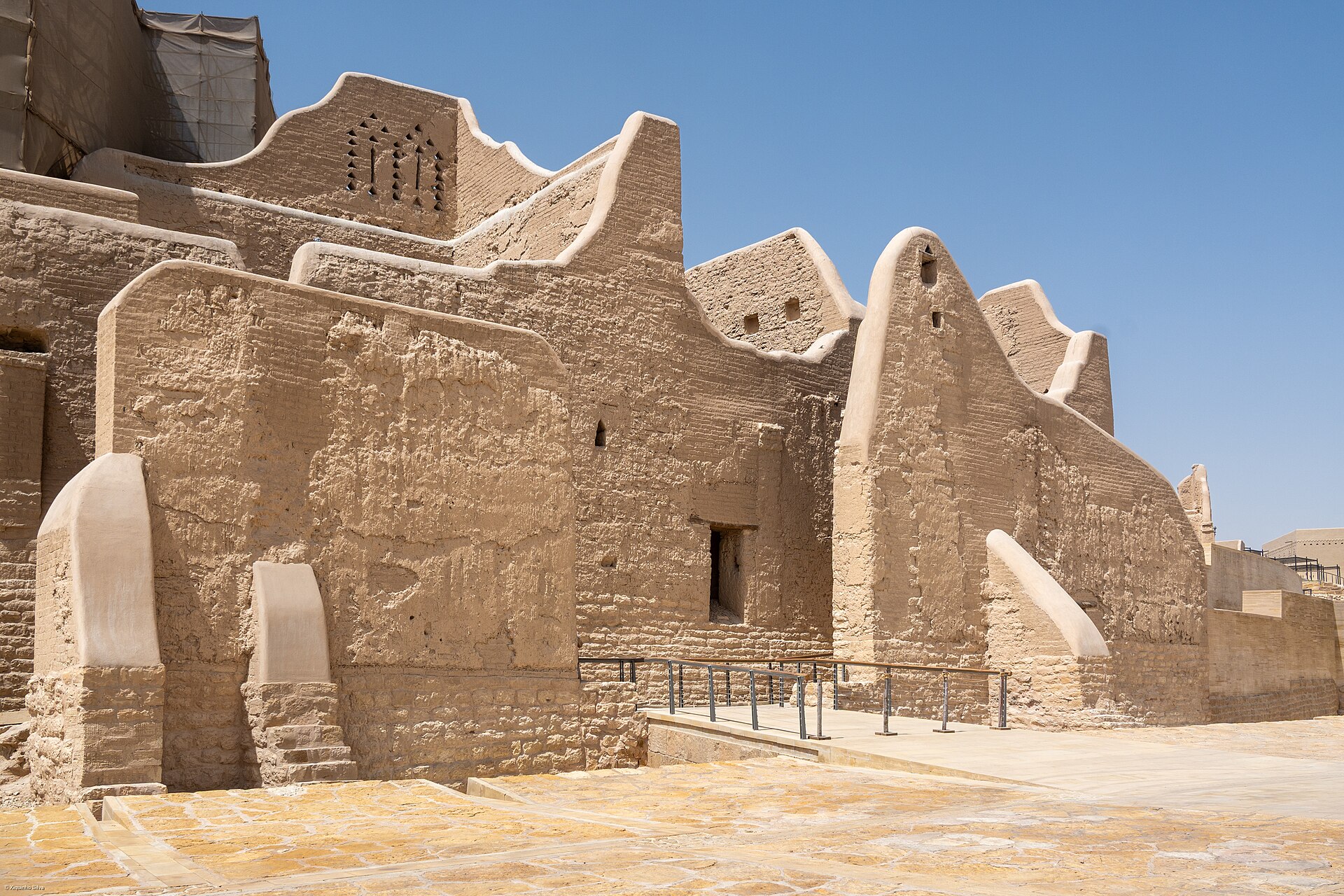
At its peak in the late 18th century, Diriyah was the largest town in the Najd and one of the most important cities in Arabia. Salwa Palace, the seat of Al Saud governance, grew to cover approximately 10,000 square metres and served as both a royal residence and administrative centre. The city’s wealth came from agriculture, trade routes, and the zakat (religious tax) collected from across the expanding state.
The Ottoman Destruction of 1818
The rapid expansion of the First Saudi State alarmed the Ottoman Empire, which nominally controlled the Hejaz and the holy cities of Mecca and Medina. In 1811, the Ottoman sultan dispatched Muhammad Ali Pasha of Egypt to suppress the Saudi-Wahhabi movement. After years of campaigning across Arabia, Egyptian forces under Ibrahim Pasha — Muhammad Ali’s son — besieged Diriyah in 1818.
The siege was brutal. Ibrahim Pasha’s forces reportedly lost approximately 10,000 men, while Saudi defenders lost around 1,800. When Diriyah finally fell, Ibrahim Pasha ordered the city systematically destroyed. Palaces were razed, fortifications were demolished, and the agricultural infrastructure that sustained the oasis was wrecked. The last imam of the First Saudi State, Abdullah ibn Saud, was captured and sent to Istanbul, where he was executed.
Diriyah was never rebuilt as a functioning capital. The Al Saud family eventually re-established themselves in nearby Riyadh, which became the seat of the Second Saudi State (1824–1891) and ultimately the capital of the modern Kingdom of Saudi Arabia, founded by Abdulaziz ibn Saud in 1932. But Diriyah retained its symbolic power as the place where it all started — a significance that Saudi Arabia’s leadership has invested billions to honour.
At-Turaif District: UNESCO World Heritage Site
The At-Turaif district, perched on a promontory overlooking Wadi Hanifa, is the historic heart of Diriyah and the site most visitors come to see. It was inscribed as a UNESCO World Heritage Site on 31 July 2010 under cultural criteria (iv), (v), and (vi) — recognising it as an outstanding example of the Najdi architectural tradition and the birthplace of a political and religious movement that shaped the modern Arabian Peninsula.
Salwa Palace
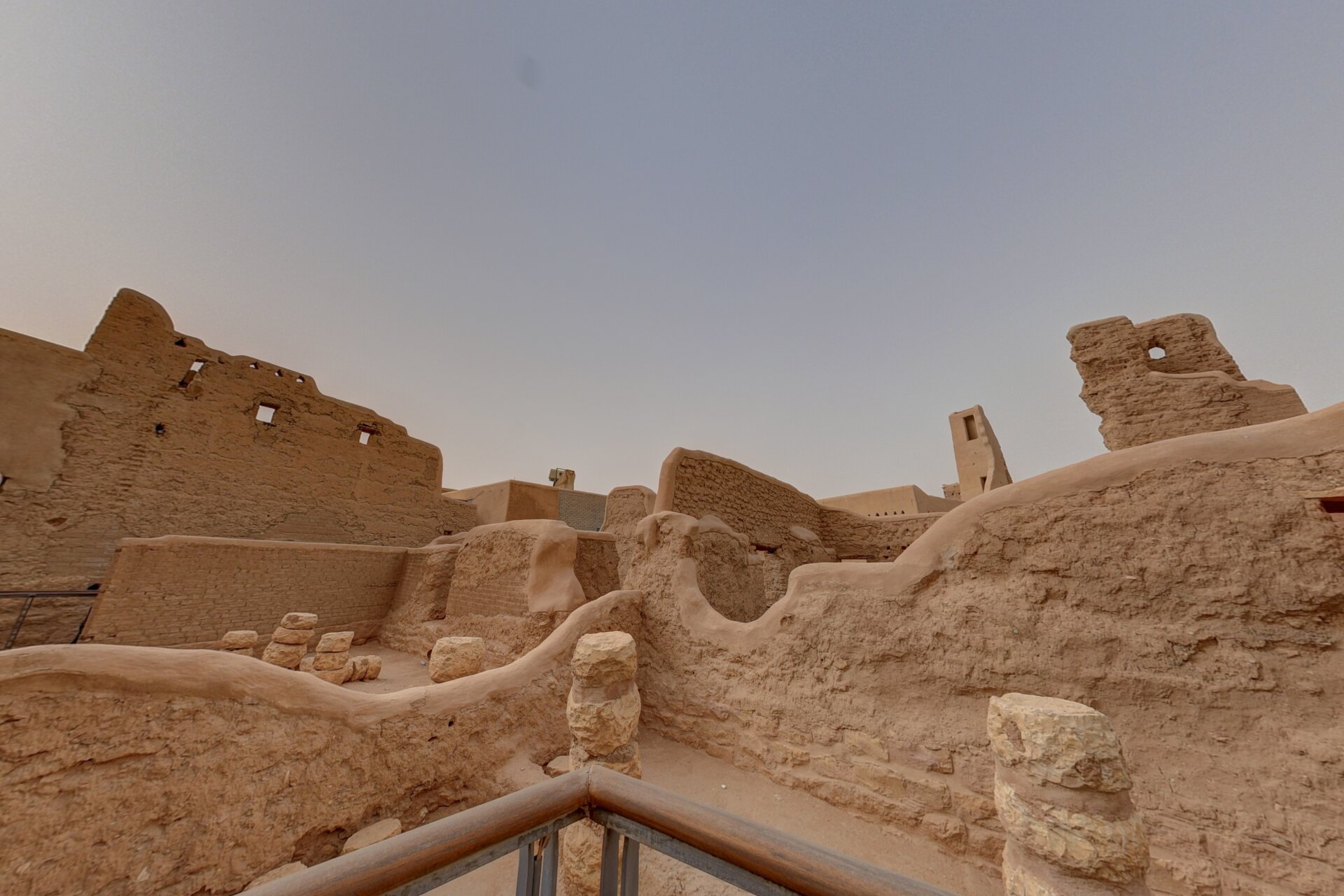
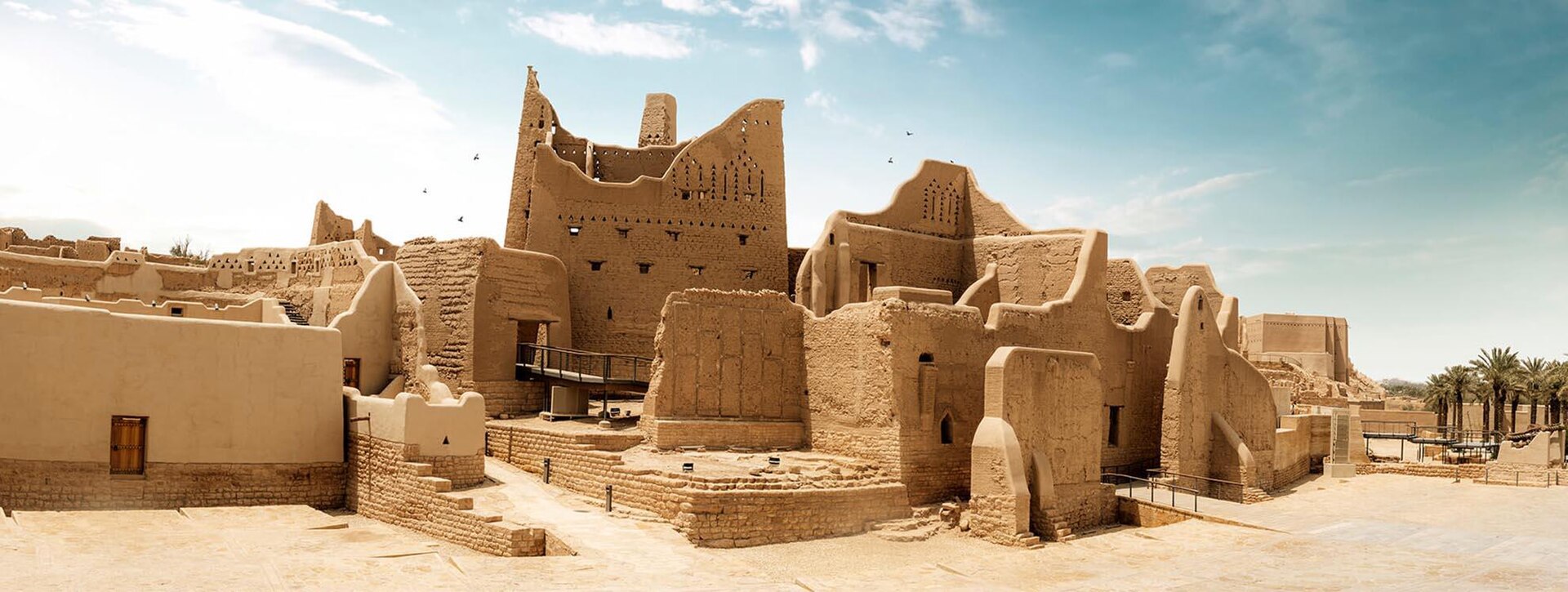
The largest and most important structure in At-Turaif, Salwa Palace was the seat of government during the First Saudi State. Built around 1765, the palace complex covers approximately 10,000 square metres and includes multiple storeys of rooms, reception halls, and private quarters. The architecture is classic Najdi style: load-bearing mud-brick walls up to a metre thick, palm-trunk ceiling beams, and geometric decorative patterns carved into the plaster. Triangular parapets crown the rooflines — a distinctive feature of Najdi construction that served both decorative and defensive purposes.
Other Key Structures
- Saad bin Saud Palace — a secondary royal residence adjacent to Salwa Palace, notable for its well-preserved courtyards and carved plaster decoration
- Imam Mohammad bin Saud Mosque — the congregational mosque where the founding alliance between Muhammad ibn Saud and Muhammad ibn Abd al-Wahhab was likely formalised
- The Guest House (Dar al-Diyafa) — where visiting dignitaries and tribal leaders were received, reflecting Diriyah’s role as a diplomatic hub
- At-Turaif Bath House — one of the few surviving examples of communal bathing facilities in Najdi architecture
Restoration and the Living Museum
In December 2018, Saudi Arabia launched a comprehensive restoration initiative as part of Vision 2030. The restoration follows strict UNESCO guidelines, using traditional construction techniques: mud-brick walls rebuilt to original specifications, palm-trunk beams sourced locally, and geometric patterns reproduced by hand. The At-Turaif Living Museum, which won the National Winner award for Social, Cultural and Heritage Project of the Year at the 2020 MEED Project Awards, now allows visitors to walk through the restored palaces, mosques, and streets of the 18th-century capital.
Bujairi Terrace: Dining Above the Ruins
Directly across Wadi Hanifa from At-Turaif, Bujairi Terrace opened in December 2022 as a premium dining and lifestyle destination overlooking the UNESCO site. The terrace hosts over 20 restaurants and cafes, blending international fine dining with Saudi culinary traditions — all set against the illuminated mud-brick skyline of Salwa Palace after dark.
Where to Eat at Bujairi Terrace
| Restaurant | Cuisine | Price Range |
|---|---|---|
| Hakkasan | Cantonese fine dining | $$$ |
| Long Chim | Thai street food (by David Thompson) | $$ |
| Tatel | Spanish (co-founded by Rafael Nadal) | $$$ |
| Chez Bruno | French truffle cuisine | $$$$ |
| Angelina | Parisian patisserie and cafe | $$ |
| Cafe de L’Esplanade | French brasserie | $$ |
| Sarabeth’s | American brunch | $$ |
Tip: The Diriyah Pass (50 SAR / ~$13 USD) grants access to both At-Turaif and Bujairi Terrace, and the pass cost can be redeemed as credit at participating Bujairi restaurants. Book online in advance, especially on weekends and during Riyadh Season.
The Diriyah Gate Mega-Project
The Diriyah Gate Development Authority (DGDA) is overseeing the transformation of 14 square kilometres surrounding the historic site into one of the world’s largest heritage-driven mixed-use developments. The total project budget is approximately $63 billion, confirmed by DGDA CEO Jerry Inzerillo, making it one of the flagship developments of Saudi Arabia’s Vision 2030 programme.
What Is Planned
- 38 hotels with 3,100+ rooms (contracts signed)
- 20,000 residential units across three phases
- 20+ cultural landmarks and museums
- 100+ restaurants and 1,000+ retail outlets (all open-air, no enclosed malls)
- 2 universities and 20 schools
- Wadi Safar — a resort and farm district with 10 large luxury resorts
The target is 27 million visitors annually by 2030, with 7 million visiting the UNESCO World Heritage Site specifically. As of mid-2025, Diriyah had already drawn over 3.6 million visits.
Cultural Events and Entertainment
Diriyah Season
The annual Diriyah Season runs from November through March, transforming the site into a festival venue with live music, art installations, culinary pop-ups, heritage exhibitions, and outdoor activities. The season coincides with Saudi Arabia’s pleasant winter weather, making it the ideal time to visit.
Formula E (Diriyah E-Prix)
Diriyah has hosted the Formula E electric racing series since Season 5 (2018–19). The 2025 E-Prix took place on 14–15 February on a brand-new circuit — the seventh time Diriyah hosted the event. The two-day fixture combines racing with music festivals and fan entertainment zones.
Boxing and Combat Sports
Diriyah entered the global sporting consciousness on 7 December 2019, when the “Clash on the Dunes” — Anthony Joshua versus Andy Ruiz Jr. II — was held at a purpose-built 15,000-seat outdoor arena. Joshua won by unanimous decision (118-110, 118-110, 119-109) to reclaim the WBA, IBF, and WBO heavyweight titles, establishing Saudi Arabia as a major international boxing venue.
Saudi Founding Day
On 22 February each year, Saudi Arabia celebrates Founding Day — commemorating Muhammad ibn Saud’s establishment of the First Saudi State. Diriyah is the spiritual centre of these celebrations, with special events, traditional Ardha sword dances, and public festivities held across the At-Turaif district.
Najdi Architecture: How to Read the Ruins
Understanding the architectural language of Diriyah deepens any visit. The Najdi building tradition visible throughout At-Turaif developed over centuries in response to the harsh central Arabian climate and the limited construction materials available in the Najd.
Key Architectural Features
- Mud-brick walls: Made from a mixture of clay, straw, and water, typically a metre thick. The thermal mass keeps interiors cool in summer and warm in winter — a natural climate control system.
- Palm-trunk beams: Date palm trunks serve as primary structural beams for ceilings and upper floors. Their availability dictated room widths, typically 3–4 metres.
- Triangular parapets: The distinctive stepped or triangular roofline profiles of Najdi buildings served as both decorative crowns and defensive positions — a guard could shelter behind the raised points during an attack.
- Geometric plaster carving: Interior and exterior walls feature intricate geometric patterns carved into wet plaster — the primary decorative art form in a tradition that avoided figurative imagery.
- Courtyard design: Buildings are organised around internal courtyards, providing private outdoor space, natural ventilation, and light to interior rooms without exposing the household to the street.
Wadi Hanifa: The Valley That Made Diriyah Possible
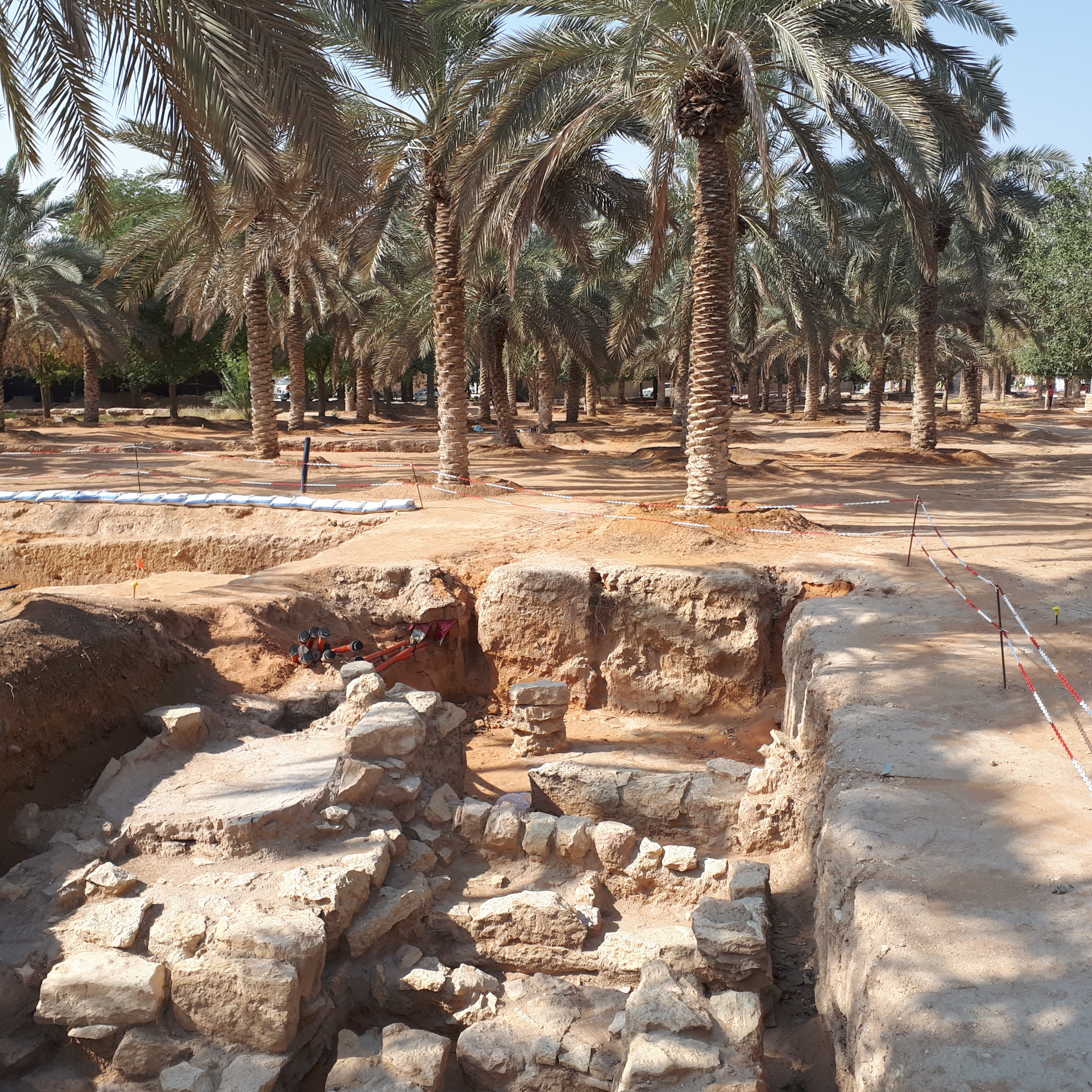
Diriyah exists because of Wadi Hanifa. This 120-kilometre valley runs north to south through Riyadh Province, and the section alongside Diriyah provided the water, fertile soil, and natural defences that made permanent settlement viable. Today the wadi has been extensively landscaped with over 30,000 desert trees and 7,000 date palms, offering walking trails, picnic areas, and birdwatching spots. Entry is free, and the wadi trails connect directly to the Diriyah heritage area — combine both for a full-day outing.
Practical Information for Visitors
Opening Hours and Tickets
- At-Turaif and Bujairi Terrace: Open 5:00 PM to 12:00 AM (hours may vary during Diriyah Season and Ramadan)
- Diriyah Pass: 50 SAR (~$13 USD) per person; children 12 and under enter free
- Parking: 30 SAR for 3 hours at Bujairi Parking or Samhan Parking
- Duration: Allow 2–3 hours for a thorough visit
Note: Hours and pricing may change. Check the official Diriyah website at diriyah.sa/en/plan-your-visit before your trip.
Getting There from Riyadh
Diriyah sits on the northwestern outskirts of Riyadh, approximately 20–30 minutes by car from the city centre depending on traffic. The most convenient options are Uber or Careem, which operate widely in Riyadh. If you are renting a car, parking is available on-site. Public transport options to Diriyah remain limited, though the expanding Riyadh Metro network may improve access in coming years.
If you are flying into Saudi Arabia, you will need a tourist e-visa, which can be obtained online in minutes. Riyadh’s King Khalid International Airport is the main gateway, located approximately 45 minutes from Diriyah.
Best Time to Visit
The optimal window is November through March, when temperatures range from 15–25°C (59–77°F). January is the coolest month, averaging 13.7°C. This period also coincides with Diriyah Season, so you get cultural programming and comfortable weather simultaneously. Avoid June through September, when temperatures regularly exceed 45°C (113°F) — the mud-brick ruins offer little shade.
What to Wear
Saudi Arabia’s dress code applies at Diriyah. Men should wear trousers or long shorts below the knee. Women are not required to wear an abaya at tourist sites but should dress modestly — shoulders and knees covered. Comfortable walking shoes are essential, as the At-Turaif district involves uneven stone paths and stairs.
Combining Diriyah with Other Riyadh Attractions
Diriyah pairs naturally with several other Riyadh attractions for a full day or multi-day heritage itinerary:
- Edge of the World — the dramatic Tuwaiq Escarpment cliff edge, roughly 90 minutes northwest of Riyadh, makes a spectacular half-day trip that contrasts Diriyah’s cultivated oasis with raw desert geology
- Masmak Fortress — in central Riyadh, this is where Abdulaziz ibn Saud recaptured the city in 1902, founding the modern Kingdom. Visiting both Diriyah and Masmak in sequence tells the complete story of Saudi state-building from 1446 to 1932.
- National Museum — adjacent to Masmak, the Saudi National Museum provides the broader archaeological and historical context for what you see at Diriyah
- Kingdom Centre and Sky Bridge — for the contrast between ancient Diriyah and modern Riyadh’s skyline
- Diplomatic Quarter — home to landscaped parks and the King Fahd Grand Mosque
Planning Tip: For a full Saudi Arabia itinerary, combine Riyadh and Diriyah (2–3 days) with AlUla (2–3 days) to see the two most important heritage sites in the Kingdom — the birthplace of the Saudi state and the ancient Nabataean capital at Hegra.
Why Diriyah Matters: History, Identity, and Vision 2030
Diriyah is more than a historical curiosity. It is the foundational myth of the Saudi state made tangible — the place where a local emir and a religious scholar shook hands and set in motion the political forces that would eventually produce the modern Kingdom of Saudi Arabia. The $63 billion investment in Diriyah Gate is not simply a tourism play; it is a deliberate statement that Saudi Arabia’s future is rooted in its past.
For visitors, this means Diriyah offers something rare: a genuine historical site that is being developed with serious resources but has not yet been overrun by mass tourism. The At-Turaif ruins are atmospheric and uncrowded. The Bujairi Terrace dining scene is world-class. And the ongoing archaeological work means that new discoveries continue to emerge. Visit now, while the site is still finding its final form.
Explore More Saudi Arabia Travel Guides
- Riyadh Travel Guide 2026 — The complete guide to Saudi Arabia’s capital city
- Diriyah Travel Guide — Practical visitor guide to Diriyah’s attractions and dining
- Best Day Trips from Riyadh — Ten escapes within three hours of the capital
- Saudi Arabia UNESCO Sites — All six of the Kingdom’s World Heritage Sites
- Saudi Founding Day — How the Kingdom celebrates its origins every 22 February
- Saudi Arabia Travel Guide 2026 — The complete guide to visiting the Kingdom
- Saudi Arabia Visa Guide — Every visa type explained