
Japan and Saudi Arabia share more cultural DNA than most travellers realise. Both societies prize hospitality as a near-sacred obligation, value indirect communication and face-saving, and attach deep meaning to the rituals of food and greeting. For Japanese visitors planning their first trip to the Kingdom, that common ground makes Saudi Arabia one of the most rewarding — and surprisingly comfortable — destinations in the Middle East. This guide, part of our complete Saudi Arabia travel guide, covers everything a Japanese traveller needs to know: cultural etiquette, practical logistics, language tips, and the destinations where Japan and Arabia have been quietly building bridges for decades.
Best Time to Visit: November to March (pleasant 18–28°C days, ideal for sightseeing)
Getting There: No direct flights — connect via Dubai, Doha, Istanbul, or Abu Dhabi from Tokyo Narita/Haneda or Osaka Kansai. Total travel time 14–18 hours.
Visa Required: Yes — tourist e-visa (Japan passport holders eligible; apply online at visitsaudi.com)
Budget: ¥15,000–40,000 / $100–270 USD per day (mid-range hotel, meals, transport)
Must-See: Diriyah At-Turaif (UNESCO), AlUla/Hegra, Jeddah Historic District (Al-Balad)
Avoid: Visiting during summer months (June–August) when temperatures regularly exceed 45°C
Why Saudi Arabia Appeals to Japanese Travellers
Saudi Arabia only opened to international tourism in September 2019, making it one of the world’s newest tourist destinations. For Japanese travellers accustomed to well-worn paths through Europe and Southeast Asia, the Kingdom offers something increasingly rare: genuine discovery. Archaeological sites that rival Petra in scale, a food culture built around communal generosity, and a society undergoing visible transformation under Vision 2030 — all with remarkably low tourist density.
The Japan–Saudi relationship also runs deeper than most visitors expect. Japan is Saudi Arabia’s third-largest trading partner, and Saudi Arabia has been Japan’s single largest source of crude oil for decades. In early 2026, the two countries signed 12 Memoranda of Understanding at the Saudi-Japanese Ministerial Investment Forum in Riyadh, covering AI, space technology, and tourism infrastructure. Over 2 million visitors passed through the Saudi Pavilion at Expo 2025 Osaka, underscoring the growing cultural curiosity between the two nations.
Visa and Entry Requirements for Japanese Passport Holders
Japanese citizens are eligible for the Saudi Arabia tourist e-visa, which can be applied for online through the official Visit Saudi portal (visitsaudi.com). The process is straightforward:
- Visa type: Multiple-entry tourist e-visa
- Validity: One year from date of issue
- Maximum stay: Up to 90 days total within the one-year validity period
- Cost: SAR 535 (approximately ¥21,000 / $140 USD) including insurance
- Processing time: Typically 5–30 minutes for online approval
- Passport requirement: At least 6 months validity remaining beyond planned travel dates, with at least two blank pages
- Women: Wearing an abaya is no longer mandatory for non-Saudi women. However, clothing should cover shoulders, arms to the elbows, and legs to the knees. Loose-fitting garments are preferred. Headscarves are not required in most public spaces but are mandatory inside mosques.
- Men: Long trousers and shirts with sleeves are expected. Shorts and sleeveless tops are acceptable only at resorts and beaches.
- For Japanese visitors specifically: The modesty standards are comparable to visiting a Japanese temple or shrine — respectful, covered clothing. Pack light layers in neutral or dark colours.
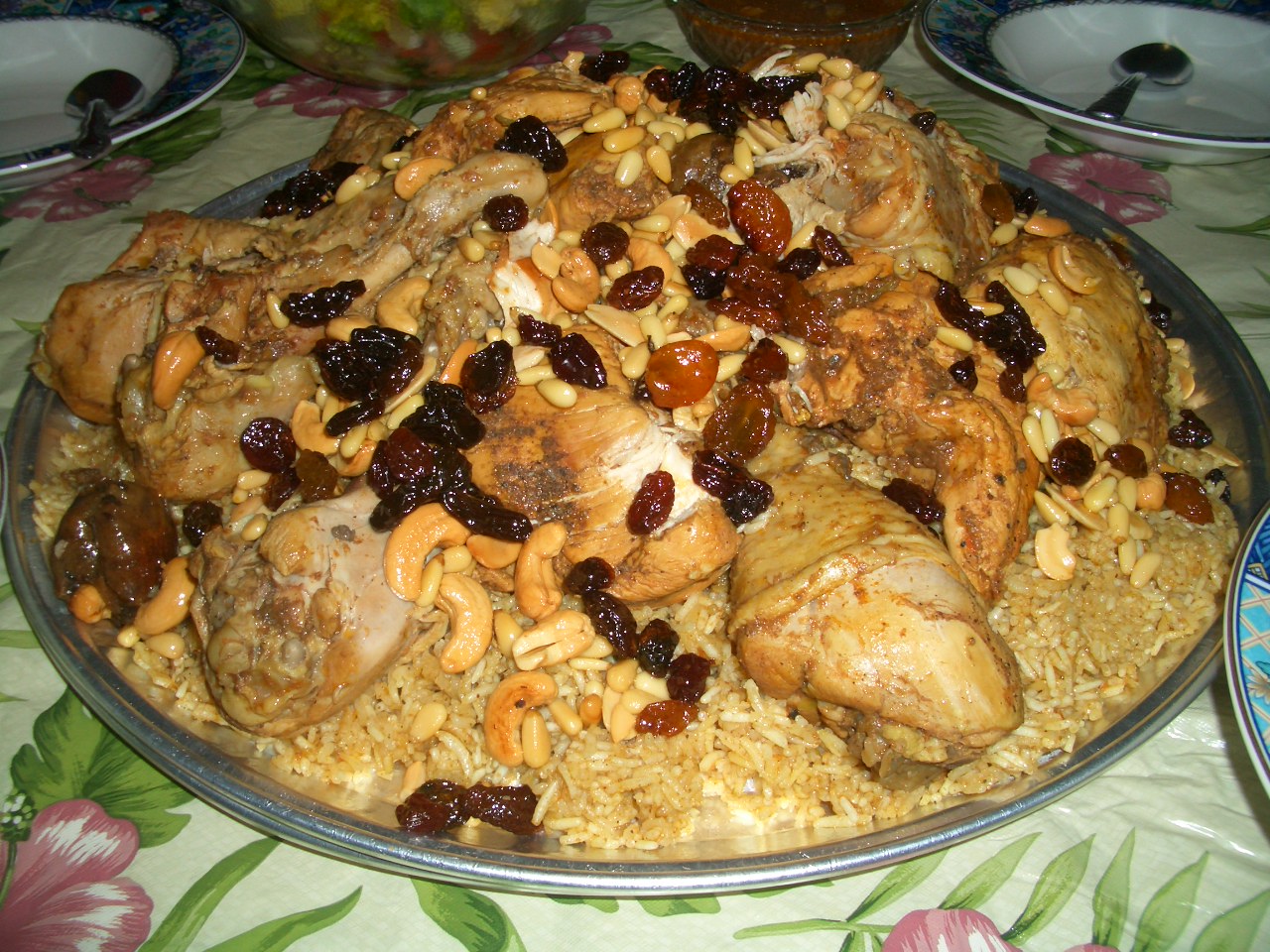
- Kabsa (كبسة): The national dish — aromatic basmati rice cooked with spices (cardamom, cinnamon, saffron, cloves), served with chicken, lamb, or goat. The rice is reminiscent of Japanese takikomi gohan in its layered flavour approach.
- Mandi (مندي): Slow-cooked meat and rice, originally from Hadhramaut. The smoky, tender meat recalls the depth of Japanese yakitori or sumibiyaki grilling.
- Jareesh (جريش): Crushed wheat porridge with yogurt and meat — a comfort food with the same soothing quality as Japanese okayu (rice porridge).
- Mutabbaq (مطبق): Stuffed pastry with spiced meat or egg — essentially a Saudi gyoza in concept, though pan-fried flat rather than pleated.
- Arabic coffee (qahwa) and dates: Served at every social interaction. The coffee is cardamom-forward and light, served in small cups. Accept at least one cup; gently shake the cup side to side to signal you’ve had enough.
- Communal platters: Traditional Saudi meals are served on a large shared platter (sufra). Eat from the portion directly in front of you — similar to the etiquette of a Japanese nabe or hot pot.
- No alcohol: Alcohol is strictly prohibited throughout Saudi Arabia. There is no duty-free allowance, no exceptions for tourists, and penalties are severe. Restaurants serve fresh juices, Saudi coffee, tea, and soft drinks.
- Tipping: Not mandatory but appreciated. A 10–15% tip at restaurants is generous. Service charges are sometimes included in the bill.
- Vegetarian options: Growing in availability, particularly in Riyadh and Jeddah. Foul medames (fava beans), hummus, fattoush salad, and kunafa (cheese pastry dessert) are all meat-free staples.
- For Japanese visitors: Wise, Revolut, or Sony Bank Wallet cards offer near-interbank exchange rates with minimal fees — saving 3–5% versus exchanging cash at airport counters.
- Cash: Carry SAR 100–300 daily for taxis, small vendors, and souks. ATMs are plentiful and dispense SAR 50 and SAR 100 notes.
- Suica/Pasmo: Not accepted. Saudi Arabia does not use IC card transit systems — ridesharing apps (Uber, Careem) and taxis are the primary urban transport.
- Ridesharing: Uber and Careem operate in all major Saudi cities. Careem is particularly reliable and often cheaper. Both apps work with international credit cards.
- Metro: Riyadh’s metro system (opened 2024) has six lines covering major districts. Clean, modern, and air-conditioned — Japanese visitors will find the standard familiar.
- Car rental: Available for visitors aged 21+ with an International Driving Permit (IDP). Japanese driving licences must be accompanied by an IDP. Driving is on the right side of the road.
- Inter-city travel: Saudi Railways (SAR) operates the Haramain High-Speed Railway between Mecca, Medina, Jeddah, and King Abdullah Economic City — a 300 km/h shinkansen-grade experience that Japanese visitors will appreciate.
- SIM cards: Available at airports from STC, Mobily, and Zain. Tourist SIM packages with 10–20 GB data cost SAR 75–150 (¥3,000–6,000). eSIM is also available from STC for compatible phones.
- Wi-Fi: Widely available in hotels, malls, and cafes. Quality varies at archaeological sites.
- Essential apps: Uber/Careem (transport), Google Maps (navigation — works well in Saudi Arabia), Tawakkalna (government services app, sometimes required for entry to venues), Visit Saudi (official tourism app).
- VPN note: VoIP calls (LINE, FaceTime Audio, WhatsApp calls) may be restricted. Download a VPN before departure if you rely on LINE for communication.
- Water: Tap water is desalinated and safe in most areas, but bottled water is inexpensive and universally available. Brands like NOVA and Hana are local standards.
- Healthcare: Modern hospitals and clinics are available in all cities. Travel insurance is mandatory for e-visa holders. Pharmacies stock most common medications, but bring prescriptions for any specialist drugs.
- Emergency number: 911 (police, ambulance, fire — unified system)
- Oud (عود): Agarwood-based perfume oil, prized in both Arabian and Japanese incense traditions. High-quality oud starts at SAR 200–500 for small bottles. The connection to Japanese koh (香) incense culture makes this a particularly resonant gift.
- Dates: Ajwa, Sukkari, and Safawi varieties from Medina are world-famous. Beautifully packaged gift boxes are available at airports and specialist shops. Check Japan’s import regulations — processed/packaged dates are generally permitted.
- Arabic calligraphy: Custom calligraphy pieces featuring your name in Arabic make unique souvenirs. Available in Jeddah’s Al-Balad and Riyadh’s souks.
- Sadu weaving: Traditional Bedouin textiles with geometric patterns — pillows, bags, and wall hangings. The geometric precision appeals to Japanese aesthetic sensibilities.
- Gold: Saudi gold jewellery is sold by weight with minimal markup on craftsmanship. The Riyadh Gold Souk and Dammam Gold Market offer excellent value.
- Over-scheduling: Japanese travellers tend to pack itineraries tightly. Saudi Arabia runs on a more flexible clock — prayer times interrupt schedules, midday heat forces indoor retreats, and Saudi hosts expect unhurried social interactions. Build 30–60 minute buffers into your daily plan.
- Photographing without permission: The Japanese instinct to photograph everything — food, architecture, daily life — must be tempered in Saudi Arabia. Always ask before photographing people, and never photograph women without explicit permission.
- Left-hand interactions: Handing items, eating, or greeting with the left hand is considered disrespectful. For Japanese visitors accustomed to two-handed business card exchanges, adapt by offering items and handshakes with the right hand only.
- Underestimating distances: Saudi Arabia is vast. Riyadh to AlUla is 900 km — the equivalent of Tokyo to Hiroshima. Domestic flights (Saudia, flynas, flyadeal) are essential for multi-destination trips.
- Ignoring the heat: Summers in Saudi Arabia are genuinely dangerous for those unaccustomed to extreme heat. Carry water at all times, seek shade during midday, and wear sun protection.
- Days 1–2: Riyadh — Diriyah At-Turaif, National Museum, Kingdom Centre Sky Bridge, Souq Al Zal
- Day 3: Fly to AlUla — check in, sunset at Elephant Rock
- Day 4: AlUla — Hegra (half-day tour), Dadan, AlUla Old Town
- Day 5: Fly to Jeddah — Al-Balad historic district, Corniche sunset walk
- Day 6: Jeddah — floating mosque, Red Sea snorkelling, Jeddah Waterfront
- Day 7: Departure from Jeddah
- Days 1–3: Riyadh — Diriyah, historic hotels, Edge of the World day trip, Saudi food tours
- Days 4–5: AlUla — Hegra, Elephant Rock, stargazing, Maraya concert hall
- Days 6–7: Tabuk — NEOM preview area, Wadi Disah canyon
- Days 8–9: Jeddah — Al-Balad, Corniche, Red Sea diving
- Day 10: Departure
- Saudi Arabia Travel Guide 2026 — The complete guide to visiting the Kingdom
- Saudi Arabia Visa Guide — Every visa type explained, including the e-visa for Japanese passport holders
- Riyadh Travel Guide — The capital city, including Diriyah and the National Museum
- Jeddah Travel Guide — Al-Balad, the Corniche, and gateway to the Red Sea
- AlUla Travel Guide — Hegra, Elephant Rock, and Saudi Arabia’s most dramatic landscape
- Non-Muslim Travel in Saudi Arabia — What to expect as a non-Muslim visitor
- Saudi Arabia Currency Guide — Exchange rates, tipping, and money-saving tips
Tip for Japanese travellers: The e-visa application is in English. Have your passport number, travel dates, and accommodation details ready. Payment is by credit card (Visa, Mastercard, or Amex). Unlike some countries, Saudi Arabia does not require proof of onward travel or hotel bookings at the time of application — but having them speeds the process.
Visa on arrival is also available at Saudi international airports for Japanese passport holders, but the e-visa is faster and avoids potential queues.
Getting There: Flights from Japan
As of 2026, there are no direct flights between Japan and Saudi Arabia. However, several excellent one-stop connections serve the route:
| Route | Airline(s) | Connection | Total Time |
|---|---|---|---|
| Tokyo Narita → Riyadh | Emirates | Dubai (DXB) | ~16 hours |
| Tokyo Narita → Jeddah | Qatar Airways | Doha (DOH) | ~17 hours |
| Tokyo Haneda → Riyadh | Turkish Airlines | Istanbul (IST) | ~18 hours |
| Osaka Kansai → Riyadh | Etihad Airways | Abu Dhabi (AUH) | ~16 hours |
| Tokyo Narita → Jeddah | Saudia + Turkish Airlines | Istanbul (IST) | ~18 hours |
Booking tip: Emirates and Qatar Airways generally offer the most competitive fares from Japan to Saudi Arabia. Round-trip economy fares from Tokyo typically range from ¥85,000 to ¥150,000 ($560–$1,000 USD), depending on season and booking lead time. Book 6–8 weeks in advance for the best prices.
Cultural Parallels: Where Japan and Saudi Arabia Align
Japanese travellers often find Saudi Arabia more culturally intuitive than expected. Several core values overlap in ways that smooth the visitor experience:
Hospitality as Obligation
Japan’s omotenashi (おもてなし) — the art of wholehearted, selfless hospitality — has a direct counterpart in Saudi Arabia’s diyafa (ضيافة). In both cultures, hosting a guest is not merely polite but morally obligatory. A Saudi host will press Arabic coffee (qahwa) and dates on you with the same quiet insistence a Japanese host might offer tea and wagashi. The ritual matters as much as the substance: accept graciously, and the host feels fulfilled.
Indirect Communication
Japanese travellers will recognise the Saudi preference for indirect speech. Direct refusal is considered impolite in both cultures. Where a Japanese person might say chotto muzukashii (ちょっと難しい — “it’s a bit difficult”) to decline politely, a Saudi counterpart might say inshallah (“God willing”) in a tone that signals the same gentle deflection. Reading between the lines is an essential skill in both societies.
Respect for Elders and Hierarchy
Both cultures place high value on deference to elders and social hierarchy. The Japanese senpai–kohai (先輩・後輩) dynamic echoes the respect Saudi society accords to tribal elders, religious scholars, and senior family members. Standing when an elder enters the room, offering them the best seat, and addressing them with formal titles are intuitive behaviours for Japanese visitors.
Cleanliness and Order
Saudi Arabia’s public spaces, particularly modern malls and mosques, are maintained to standards that Japanese visitors will appreciate. Shoes are removed before entering mosques and many private homes — a practice that requires no adjustment for anyone raised in Japan. Public washroom facilities at major tourist sites are generally clean and well-maintained.
Essential Etiquette: What Japanese Visitors Should Know
Greetings
The standard Saudi greeting is “As-salamu alaykum” (peace be upon you), with the response “Wa alaykum as-salam”. For Japanese visitors, this replaces the bow as the primary social greeting. Men shake hands with men; women greet women. In mixed-gender interactions, wait for the Saudi counterpart to extend their hand first. If they don’t, a slight head nod with a hand placed over the heart is the appropriate alternative — a gesture that parallels the Japanese bow in its restraint and warmth.
Dress Code
Saudi Arabia’s dress expectations have relaxed significantly since 2019, but modest clothing remains important:
Prayer Times
Five daily prayers structure the rhythm of Saudi life. During prayer times — typically lasting 20–30 minutes — smaller shops and restaurants may close temporarily. Large malls and chain restaurants usually remain open, but service may slow. For Japanese visitors accustomed to precision scheduling, this is the single biggest adjustment: build flexibility into your itinerary, and treat prayer pauses as natural intermissions rather than delays.
Practical tip: Download a prayer times app (such as Muslim Pro or Athan) to anticipate closures. The five prayers are: Fajr (dawn), Dhuhr (midday), Asr (afternoon), Maghrib (sunset), and Isha (evening). Timing shifts daily with the sun.
Photography Etiquette
Japanese visitors are often enthusiastic photographers, and Saudi Arabia offers extraordinary subjects. However, always ask permission before photographing people, particularly women. Photographing military installations, government buildings, and some religious sites is prohibited. Landscape and architectural photography is generally welcome — and Saudi hosts often enjoy having their hospitality documented.
Dining and the Right Hand
In Saudi culture, food is eaten with the right hand. The left hand is considered unclean for eating and greeting. For Japanese visitors who use chopsticks at home, this adjustment mainly matters when eating communal dishes by hand (such as kabsa served on a large platter) or when accepting items from others.
Food Guide: What Japanese Palates Will Love
Saudi cuisine rewards the same palate that appreciates Japanese cooking: emphasis on fresh ingredients, subtle spice layers, and communal dining rituals. All food in Saudi Arabia is halal, and pork is entirely unavailable. For Japanese travellers, this means no tonkatsu or nikuman — but the local alternatives are deeply satisfying.
Must-Try Dishes
Dining Customs for Japanese Visitors
Language Tips: Getting By Without Arabic
English is widely spoken in Saudi Arabia’s tourism, hospitality, and business sectors, particularly in Riyadh, Jeddah, and the Eastern Province. However, learning a few Arabic phrases earns enormous goodwill — much as a foreigner attempting Japanese in Tokyo delights locals.
Essential Arabic Phrases for Japanese Visitors
| Arabic | Romanisation | Japanese Equivalent | Meaning |
|---|---|---|---|
| السلام عليكم | As-salamu alaykum | こんにちは (Konnichiwa) | Peace be upon you (hello) |
| شكراً | Shukran | ありがとう (Arigatou) | Thank you |
| من فضلك | Min fadlak/ik | お願いします (Onegaishimasu) | Please |
| نعم / لا | Na’am / La | はい / いいえ (Hai / Iie) | Yes / No |
| كم الثمن؟ | Kam ath-thaman? | いくらですか?(Ikura desu ka?) | How much? |
| أين…؟ | Ayna…? | どこ…?(Doko…?) | Where is…? |
| ما شاء الله | Masha’Allah | すごい (Sugoi) | God has willed it (expressing admiration) |
| إن شاء الله | Insha’Allah | — | God willing (used for future plans) |
Language tip: Google Translate’s camera function works reasonably well for Arabic signs and menus. Download the Arabic language pack for offline use before your trip — connectivity can be spotty at remote archaeological sites like AlUla.
Top Destinations for Japanese Travellers
Diriyah and At-Turaif (Riyadh)
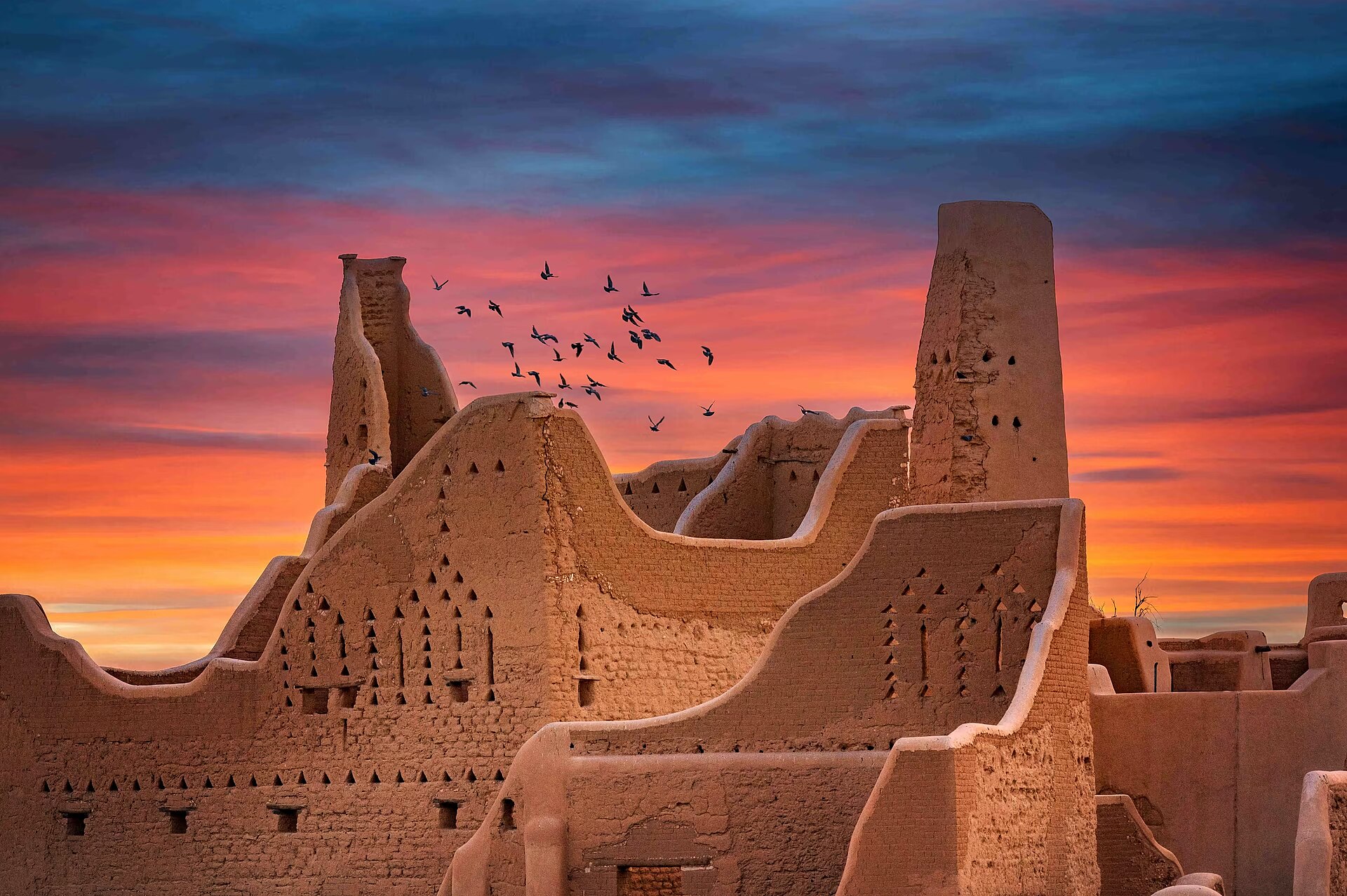
The birthplace of the first Saudi state, Diriyah’s At-Turaif District is a UNESCO World Heritage Site just 20 minutes from central Riyadh. The restored mud-brick architecture, dating to the 15th century, offers a visual experience reminiscent of visiting Japan’s own preserved historical districts like Takayama’s Sanmachi Suji. The adjacent Bujairi Terrace complex features high-end Saudi restaurants and cafes — ideal for experiencing modern Saudi hospitality in a heritage setting.
AlUla and Hegra
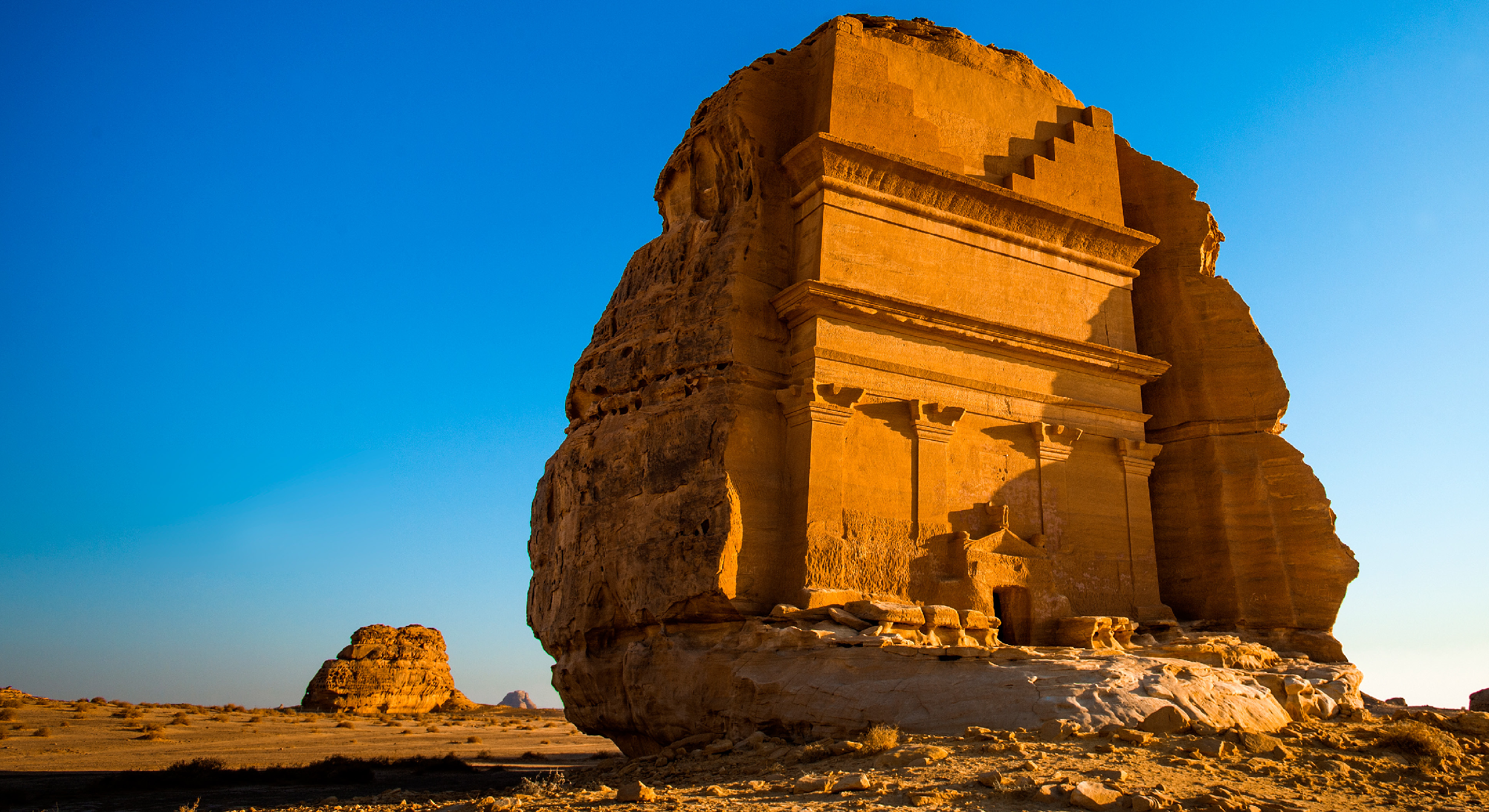
AlUla is Saudi Arabia’s flagship tourism destination, and its centrepiece — Hegra (Mada’in Saleh), the Kingdom’s first UNESCO World Heritage Site — is the Nabataean sister city of Jordan’s Petra. Over 100 monumental rock-cut tombs dating to the 1st century CE are scattered across a desert landscape of extraordinary beauty. For Japanese visitors familiar with the rock-carved Buddhas of Usuki or the temple caves of Nara, Hegra offers a similarly powerful encounter with ancient craftsmanship carved into living stone.
Jeddah Historic District (Al-Balad)
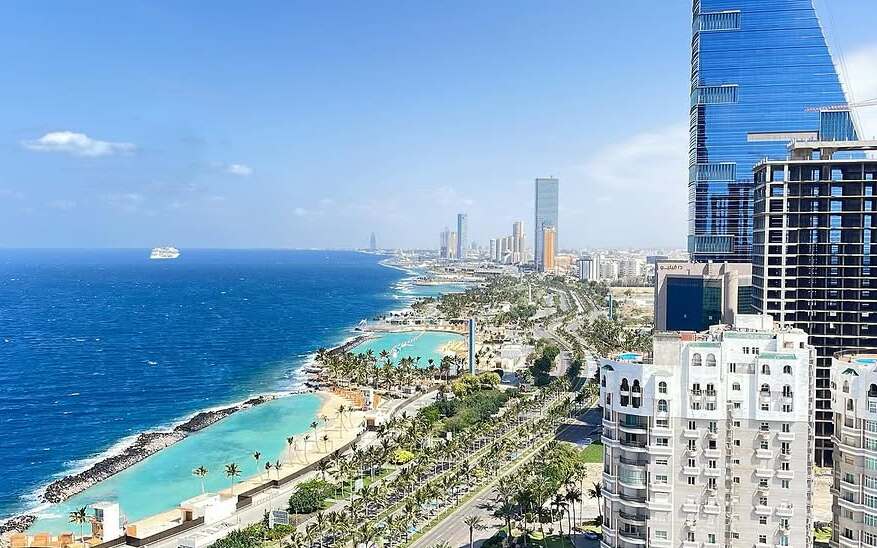
Jeddah’s historic Al-Balad district is a UNESCO World Heritage Site featuring coral-stone tower houses with elaborately carved wooden balconies (rawasheen). The dense, pedestrian-scale streets and artisan workshops recall the atmosphere of Kyoto’s Higashiyama district. The nearby Jeddah Corniche — a 30-kilometre waterfront promenade — is one of the best urban seaside walks in the Middle East, with sculptures, parks, and views of the Red Sea.
The Red Sea Coast
Saudi Arabia’s Red Sea diving is world-class and still largely undiscovered compared to Egypt’s heavily dived sites. Japanese divers — particularly those experienced in Okinawa’s warm-water diving — will find pristine coral reefs, whale sharks, manta rays, and visibility regularly exceeding 30 metres. The Red Sea Project resort development near Umluj is positioning itself as a luxury eco-tourism destination rivalling the Maldives.
Abha and the Asir Highlands
The Abha and Asir region in southwest Saudi Arabia sits at 2,200 metres elevation and offers cool mountain air, terraced agriculture, and juniper forests that feel a world away from the desert. The climate and scenery remind many Japanese visitors of Japan’s own mountain towns. The cable car from Abha to the Green Mountain (Jabal Akhdar) provides panoramic views across the Asir escarpment.
Practical Information
Currency and Payments
The Saudi Riyal (SAR) is pegged to the US dollar at a fixed rate of 3.75 SAR = 1 USD (approximately 1 SAR = 40 yen at current exchange rates). Credit cards (Visa and Mastercard) are widely accepted in cities. Apple Pay and Google Pay work at most modern retailers.
Transport
Connectivity and Apps
Climate and Packing
Saudi Arabia’s climate varies significantly by region and season:
| Season | Temperature (Riyadh) | Recommendation |
|---|---|---|
| November–February | 10–25°C | Best time to visit — pleasant, dry days. Pack layers for cool evenings. |
| March–April | 20–33°C | Still comfortable. Occasional sandstorms possible. |
| May–September | 35–48°C | Extreme heat. Limit outdoor activity to early mornings. Hydrate constantly. |
| October | 28–38°C | Transitional. Warming into comfort by late October. |
Packing list for Japanese visitors: Sunscreen (SPF 50+), sunglasses, a wide-brimmed hat, comfortable walking shoes, a lightweight scarf or shawl for mosque visits, and a portable fan or cooling towel. Japanese-brand sun protection products (Anessa, Biore UV) work excellently in the Saudi climate.
Health and Safety
Saudi Arabia is a very safe country for tourists, with low crime rates and a strong police presence. Japanese visitors consistently report feeling safe even when walking alone at night in major cities.
Ramadan: Special Considerations for Japanese Visitors
During the holy month of Ramadan, Muslims fast from dawn to sunset. Visitors are expected to refrain from eating, drinking, or smoking in public during daylight hours. Hotels typically offer private dining areas for non-fasting guests. Many restaurants close during the day but reopen after sunset for iftar (the breaking-of-fast meal), which is one of Saudi Arabia’s most spectacular communal dining experiences.
For Japanese visitors accustomed to quiet observation of others’ customs, Ramadan etiquette comes naturally. The experience of an iftar feast — tables laden with food, families gathered, and a palpable sense of communal celebration — is genuinely memorable and worth planning around.
Shopping and Souvenirs
Saudi Arabia offers distinctive souvenirs that Japanese visitors, with their appreciation for craftsmanship, will value:
Common Mistakes Japanese Tourists Make
Even culturally sensitive Japanese travellers can stumble on Saudi-specific norms. Here are the most common missteps — and how to avoid them:
Suggested Itineraries for Japanese Visitors
7-Day Highlights (First-Time Visitor)
10-Day Cultural Deep Dive
Japanese Community and Resources in Saudi Arabia
Saudi Arabia has a small but established Japanese community, primarily in Riyadh and the Eastern Province (Al Khobar/Dammam), centred around Japanese companies in the energy and industrial sectors. Japanese restaurants can be found in major cities — chains like Sakura and Tokyo in Riyadh serve familiar dishes adapted to Saudi dietary requirements (halal meat, no pork, no alcohol in cooking).
The Embassy of Japan in Riyadh and the Consulate-General in Jeddah provide consular assistance. Register your trip with the Ministry of Foreign Affairs’ Tabi-Reg (たびレジ) system for travel safety updates.