
Saudi Arabia is home to one of the largest volcanic landscapes on Earth. Stretching across approximately 90,000 square kilometres of the western Hejaz region, the Kingdom’s harrats — Arabic for lava fields — are a geological spectacle that most travellers never realise exists. From the towering white volcanoes of Harrat Khaybar to the vast black basalt plains of Harrat Rahat near Medina, these ancient and still-active volcanic fields offer some of the most otherworldly terrain anywhere in the Arabian Peninsula. If you are building a Saudi Arabia hiking itinerary, the harrats deserve a place at the top of your list — and they fit naturally into a broader Saudi Arabia travel plan that reaches beyond the cities.
Best Time to Visit: October – March (winter months; summer exceeds 50°C on exposed lava)
Getting There: Fly to Medina (Harrat Rahat, Harrat Khaybar), Jeddah or Taif (Harrat Kishb / Al Wahbah Crater), or Tabuk (Harrat Lunayyir)
Visa Required: Yes — tourist e-visa available online
Budget: $80–$150/day (guided 4WD tours from Medina or Taif from ~$200/day)
Must-See: Harrat Khaybar white volcanoes, Al Wahbah Crater, Umm Jirsan lava tube
Avoid: Visiting May–September without serious desert heat preparation; wearing thin-soled shoes on razor-sharp basalt
What Are Harrats? Saudi Arabia’s Volcanic Legacy
The word harrat (حرة) means a volcanic lava field in Arabic, and Saudi Arabia has at least 15 recognised Cenozoic harrat provinces running along the western edge of the Arabian plate. They formed in two phases: initial volcanism coincided with Red Sea rifting roughly 30 million years ago, and a second wave of activity began around 10 million years ago and has continued into historical times. The most recent confirmed eruption occurred in 1256 AD at Harrat Rahat, when a 52-day eruption sent lava flowing 23 kilometres to within 4 km of Medina.
These are not extinct landscapes. The Saudi Geological Survey (SGS) continuously monitors all major harrats with seismometer networks and operates a four-colour volcanic alert system. In 2009, Harrat Lunayyir generated over 30,000 earthquakes in a single swarm — a reminder that the geology beneath these lava fields remains very much alive.
Harrat Khaybar: The White Volcanoes
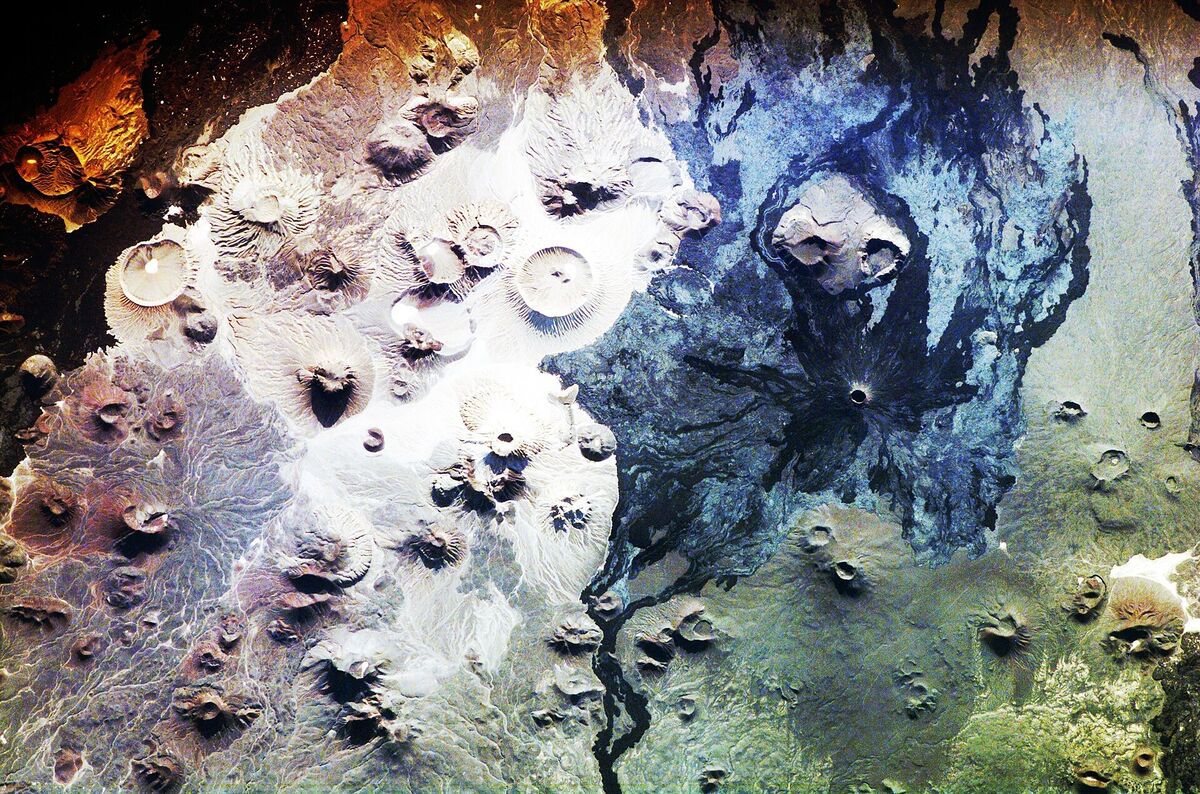
Harrat Khaybar is the most visually spectacular of Saudi Arabia’s lava fields and increasingly the most accessible to tourism. Located approximately 170 km north of Medina, this 14,000 sq km volcanic field contains a geological feature found almost nowhere else on the planet: the white volcanoes.
Jabal Abyad and Jabal Bayda
Jabal Abyad (White Mountain) rises to 2,093 metres — making it the tallest volcano in Saudi Arabia. Its pale colour comes from comendite, a silica- and alkali-rich igneous rock that stands in stark contrast to the surrounding black basalt. Beside it sits Jabal Bayda (White Hill), a 1.5 km diameter tuff cone made of the same pale rock. From the air or satellite imagery, the effect is extraordinary: brilliant white cones emerging from an ocean of black lava.
The dark counterpart, Jabal Qidr, is a basalt stratovolcano recognised by the International Union of Geological Sciences as a site of geological significance. Together, these three peaks create one of the most photographically striking volcanic landscapes on Earth.
Umm Jirsan Lava Tube
At 1,481 metres, Umm Jirsan is Saudi Arabia’s longest known lava tube. It runs in three sections separated by collapsed roof segments that admit daylight. A 2024 archaeological study published in PLoS ONE revealed that humans used this cave continuously for at least 7,000 years — researchers recovered over 600 animal and human bones, obsidian and chert tools, and evidence of Neolithic pastoralist habitation. Striped hyenas also inhabited the tube for millennia, dragging prey inside and leaving bone accumulations that archaeologists initially mistook for human deposits.
Visiting Umm Jirsan requires a local guide and proper equipment: a headlamp, sturdy boots, and a helmet for low-ceiling sections. The collapsed roof openings create dramatic shafts of light that make the tube one of the most photogenic underground sites in the Kingdom.
Ancient Stone Structures
Across Harrat Khaybar, over 900 desert kites — V-shaped stone structures likely used as animal corrals or hunting traps — have been identified from satellite imagery. Many are approximately 7,000 years old, placing them among the oldest large-scale stone constructions in the world. The field also contains mustatils, rectangular Neolithic monuments that predate both the Egyptian pyramids and Stonehenge. These structures are a reminder that the harrats have been at the centre of human activity for far longer than Saudi Arabia’s modern cities.
Getting to Harrat Khaybar
From Medina, drive north on Highway 15 toward Khaybar town (approximately 2–2.5 hours on paved road). The ancient Khaybar Oasis, surrounded by date palm groves and set against the black lava backdrop, is worth a stop in its own right. From Khaybar, graded tracks lead 20–60 minutes into the harrat toward the main volcanic sites. A 4WD vehicle is essential beyond the paved highway. The Khaybar Volcano Camp now offers guided volcanic excursions and accommodation for visitors who want more than a day trip.
Tip: Harrat Khaybar pairs naturally with AlUla — the Hegra UNESCO World Heritage Site is roughly 4 hours northwest of Medina. A 5–7 day Medina–Khaybar–AlUla circuit covers volcanic geology, Nabataean archaeology, and modern art installations in a single trip.
Harrat Rahat: Saudi Arabia’s Largest Lava Field
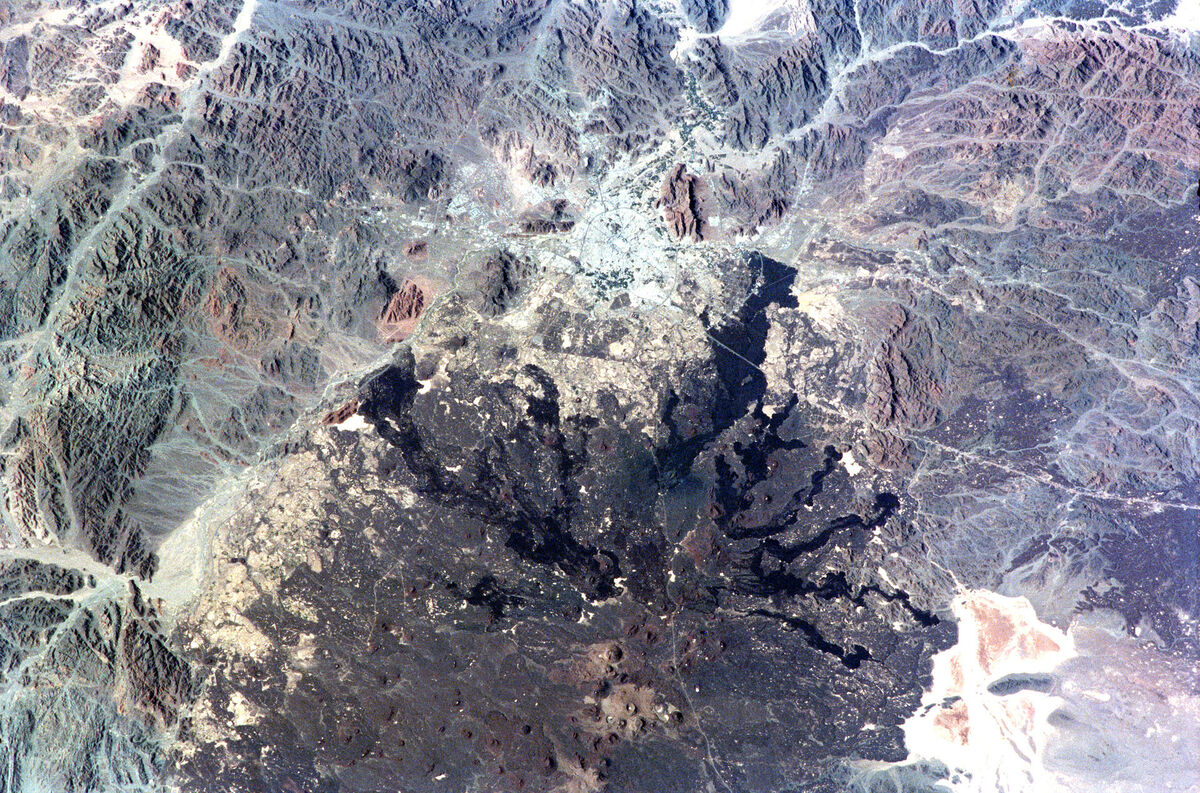
At roughly 20,000 square kilometres, Harrat Rahat is the largest volcanic field in Saudi Arabia and one of the largest on the Arabian plate. It stretches over 300 km from north of Mecca to south of Medina, with a volume estimated at 2,000 cubic kilometres of lava. Over 900 volcanic vents have been identified across its surface.
The 1256 AD Eruption
The most significant historical eruption in the Arabian Peninsula occurred here in 1256 AD (654 AH). A 2.25-km fissure opened, building six aligned scoria cones and producing approximately 0.5 cubic kilometres of alkali-olivine basalt over 52 days. The lava flow travelled 23 km and stopped just 4 km south of Medina — the event is recorded in Islamic historical sources and the flow remains clearly visible today. An earlier eruption in 641 AD produced flows east of the 1256 deposit.
The eruption site, centred on the vent known as Al-Malsa volcano, is the most accessible harrat site in Saudi Arabia due to its proximity to Medina. The dark, ropy lava flows contrast sharply with the sandy desert floor and can be visited on a half-day trip from the city.
Practical Details for Harrat Rahat
Because Harrat Rahat extends to the outskirts of Medina, it is the easiest harrat to visit. The 1256 AD lava flow is accessible by road south of the city. No special permits are required for the accessible edges of the field. However, venturing deep into the harrat requires a 4WD vehicle and ideally a guide — the terrain is rough, unmarked, and mobile phone coverage is unreliable.
Important: Non-Muslims cannot enter the Haram zone of Medina, but Harrat Rahat lies outside this restricted area. Check current boundaries before planning your route. See our non-Muslim travel guide for details on navigating restricted areas.
Al Wahbah Crater: Harrat Kishb’s Centrepiece
If you only visit one volcanic site in Saudi Arabia, many geologists would point you toward Al Wahbah Crater in Harrat Kishb. This massive maar crater — formed by a phreatomagmatic explosion when rising magma hit groundwater — measures 2–2.3 km in diameter and drops 250 metres to a flat floor covered in brilliant white sodium phosphate crystals. The visual effect is surreal: a vast white disc sitting at the bottom of a dark volcanic bowl.
Hiking Al Wahbah
The crater is accessible from the rim, where a paved road delivers you to a viewpoint. From the north side, a marked trail descends to the crater floor in approximately 45–60 minutes. The return climb takes 60–90 minutes and is steep — bring at least 2 litres of water per person. Walking the full rim circumference takes roughly 3 hours and offers changing perspectives on the crystal floor below.
There are no facilities at the crater — no water, no shade shelters, no shops. Wild camping is permitted on the rim and is spectacular for stargazing, as the site is far from any light pollution.
Getting to Al Wahbah Crater
Al Wahbah is approximately 250 km from Taif (2 hours by car) and 4 hours from Jeddah. The road is paved to the rim — no 4WD required to reach the viewpoint, though you will want one if exploring the broader Harrat Kishb area. A hired car with driver from Jeddah costs approximately $200/day.
Harrat Lunayyir: The Seismically Active Field
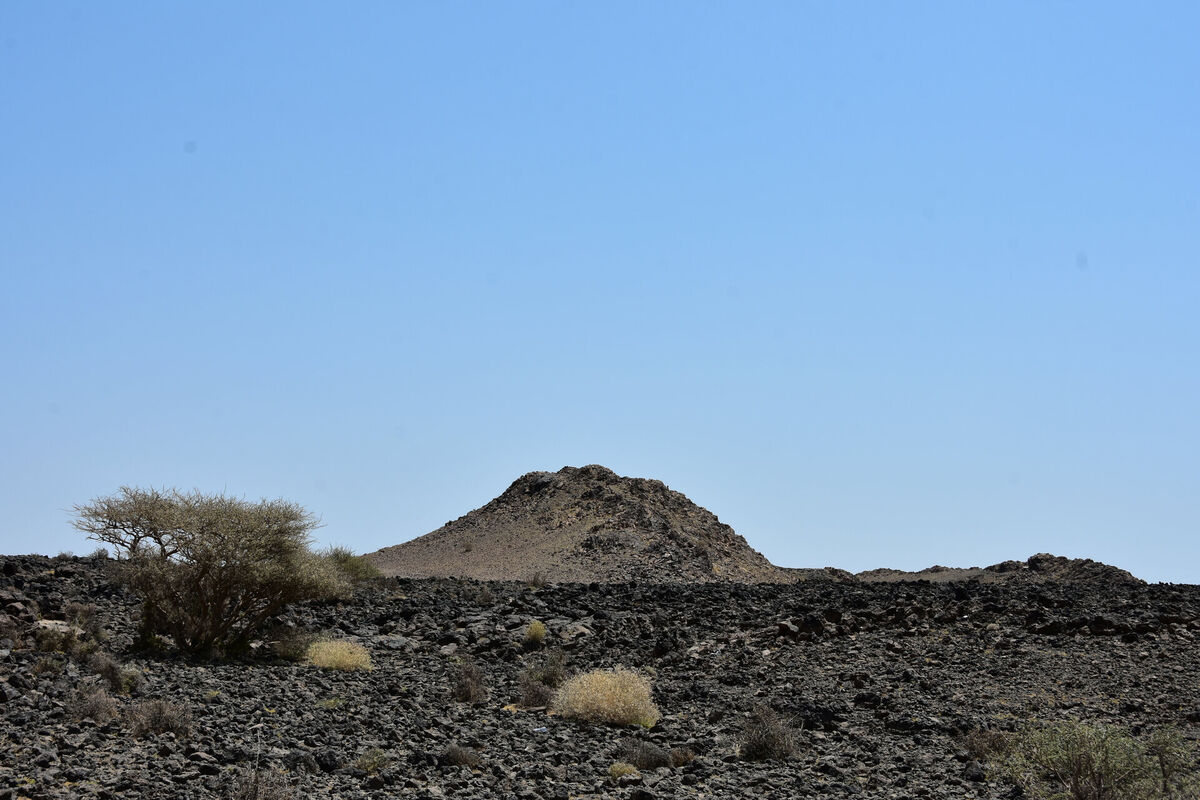
Located in the northwest, roughly 50 km inland from the Red Sea port town of Umm Lajj, Harrat Lunayyir is smaller than Khaybar or Rahat but geologically significant for a different reason: it is arguably the most seismically active volcanic field in Saudi Arabia today.
The 2009 Earthquake Swarm
In May–June 2009, Harrat Lunayyir produced over 30,000 earthquakes in a single swarm, with the largest reaching magnitude 5.4–5.7. More than 30,000 residents were evacuated from surrounding areas. The cause was a dike intrusion — magma rising through the crust along an 8 km fracture that never quite reached the surface. The event created a visible surface rupture that can still be traced today and was one of the strongest pieces of evidence that Saudi volcanism is not merely historical but ongoing.
Visiting Harrat Lunayyir
Harrat Lunayyir is the least developed for tourism of the major harrats, which is part of its appeal for adventurous travellers. The field contains approximately 150 volcanoes from around 700 vents, with pristine pahoehoe and a’a lava flows, spatter ramparts, and multi-crater scoria cones. Access is via Umm Lajj, which connects to Tabuk by road. Academic studies have assessed the field for formal UNESCO Global Geopark designation — Saudi Arabia’s first two geoparks (Salma and North Riyadh) were accepted by UNESCO in 2025, and Lunayyir may follow.
Other Notable Harrats
Harrat al-Harrah (Northern Border)
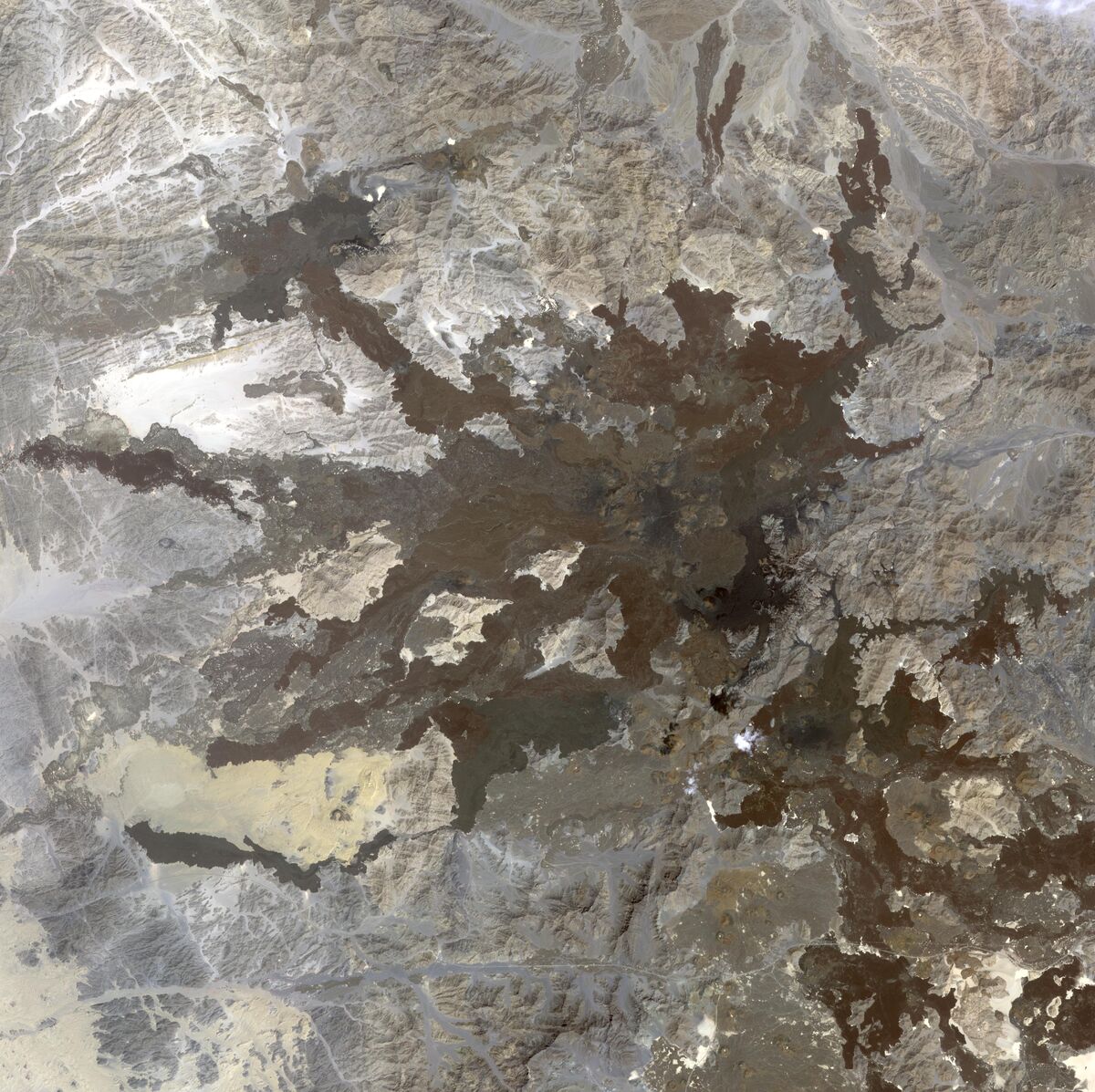
Extending from northern Saudi Arabia toward the Jordanian border, Harrat al-Harrah is one of the larger volcanic fields by area. It is remote and largely unvisited, but forms part of a trans-border volcanic system shared with Jordan. Access is difficult and typically requires expedition-level planning.
Harrat Ithnayn
Located between the Medina and Ha’il provinces, Harrat Ithnayn merges with Harrat Khaybar to the south. It contains surveyed lava tubes exceeding 530 metres and lava flows dated to less than 4,500 years ago — geologically very recent.
Harrat Nawasif / Al Buqum
Approximately 245 km southeast of Makkah, this field contains Ghar Al Hibashi, a notable lava tube that has attracted speleological research. The surrounding terrain is dotted with basaltic scoria cones and tuff rings.
Planning Your Harrat Trip
Best Time to Visit
The only sensible window is October through March. Summer temperatures on exposed lava regularly exceed 50°C, and the black basalt absorbs and radiates heat far more intensely than sand. Even in winter, midday sun is fierce — plan active exploration for early morning or late afternoon.
What to Bring
- Footwear: Sturdy hiking boots with thick soles are non-negotiable. Lava rock — especially a’a type — is razor-sharp and will shred thin-soled shoes. See our Saudi Arabia packing list for complete gear recommendations.
- Water: Minimum 3 litres per person per day. There are zero water sources on any harrat.
- Navigation: Download offline maps. Mobile coverage is absent across most harrat terrain.
- Vehicle: 4WD with high clearance, full spare tyre, and recovery gear. Travel with two vehicles in remote areas.
- Sun protection: Hat, high-SPF sunscreen, lightweight long sleeves. The black basalt reflects additional heat upward.
- Headlamp: Essential for any lava tube exploration.
Guided Tours vs Self-Drive
For Harrat Khaybar and Harrat Rahat, guided 4WD tours from Medina are increasingly available. The Khaybar Volcano Camp offers structured multi-day volcanic excursions. For Al Wahbah Crater, self-drive is straightforward since the road is paved to the rim. Harrat Lunayyir and the northern fields are expedition territory — hire a local guide with desert experience.
Safety
All major Saudi harrats are classified as active or potentially active. The practical risk to individual visitors is extremely low, but be aware:
- Collapsed lava tube edges can be unstable — stay back from unmarked openings
- The SGS monitors seismic activity continuously; check their alert status before visiting Harrat Lunayyir
- Volcanic terrain is unforgiving for ankle injuries — a twisted ankle 20 km from the nearest road is a serious situation
- Carry a satellite communicator (InReach or similar) in remote areas where mobile coverage is absent
The Harrats and Vision 2030
Saudi Arabia’s volcanic heritage is increasingly recognised as a tourism asset under the Kingdom’s broader tourism strategy. UNESCO accepted Saudi Arabia’s first two Global Geopark nominations in 2025 (Salma and North Riyadh), and academic assessments have been completed for geopark designation at both Harrat Khaybar and Harrat Lunayyir. Five geosites have been formally identified at Harrat Al-Madinah alone, including the 1256 AD eruption site and surrounding volcanic formations.
The Saudi Tourism Authority already promotes Al Wahbah Crater as a headline natural attraction, and the Khaybar Volcano Camp represents the first dedicated tourism infrastructure on an active harrat. Expect more formalised access, marked trails, and interpretive facilities in the coming years — but for now, much of the harrat landscape remains raw, unmarked, and magnificently empty.
Suggested Itineraries
3-Day Medina Volcanic Circuit
- Day 1: Arrive Medina. Afternoon visit to the 1256 AD lava flow at Harrat Rahat (half-day trip from city)
- Day 2: Full-day drive to Harrat Khaybar. Visit Khaybar Oasis, white volcanoes viewpoint, Jabal Qidr. Overnight at Khaybar Volcano Camp or return to Medina
- Day 3: Morning at Umm Jirsan lava tube with guide. Return to Medina via Highway 15
5–7 Day Hejaz Geology and Archaeology Loop
- Days 1–2: Medina — Harrat Rahat, Harrat Khaybar (white volcanoes, Umm Jirsan)
- Days 3–4: Drive northwest to AlUla — Elephant Rock, Hegra, Dadan archaeological sites
- Days 5–6: Continue to Tabuk — Wadi Disah, optional side trip to Harrat Lunayyir via Umm Lajj
- Day 7: Fly out from Tabuk or return south
Al Wahbah Weekend Trip
- Day 1: Drive from Jeddah (4 hours) or Taif (2 hours) to Al Wahbah Crater. Sunset on the rim, wild camping overnight for stargazing
- Day 2: Dawn descent into the crater, morning exploration of the sodium phosphate crystal floor. Return to Jeddah or Taif
Explore More Saudi Arabia Travel Guides
- Best Hiking Trails in Saudi Arabia — From Asir to AlUla, the Kingdom’s top treks and trail routes
- AlUla Travel Guide 2026 — Hegra, Elephant Rock, and Saudi Arabia’s open-air museum
- Tabuk Travel Guide — Gateway to NEOM, Wadi Disah, and northwest Saudi Arabia
- Medina Travel Guide 2026 — The Prophet’s city and your base for Harrat Rahat and Khaybar
- Saudi Arabia Weather by Region — When to visit each part of the Kingdom
- Saudi Arabia Travel Guide 2026 — The complete guide to visiting the Kingdom
- Saudi Arabia Visa Guide — Every visa type explained