
Saudi Arabia holds more Islamic heritage per square kilometre than anywhere else on Earth. From the Grand Mosque in Mecca — where revelation began — to the Prophet’s Mosque in Medina, from the ancient coral-stone mosques of Jeddah’s Al-Balad to the Nabataean tombs of Hegra mentioned in the Quran, the Kingdom offers a journey through 1,400 years of Muslim civilisation that no other country can match. This 10-day Muslim heritage itinerary is designed as a companion to our Hajj 2026 Guide, offering a deeper exploration of Saudi Arabia’s Islamic sites for travellers performing Umrah or simply seeking to walk in the footsteps of the Prophet Muhammad (peace be upon him). Whether you are visiting for the first time or returning after Hajj, this route covers the essential sacred sites, historic battlefields, and cultural landmarks that define the Muslim world’s spiritual heartland.
Best Time to Visit: October – March (cooler weather, Al-Ula season open)
Getting There: Fly into Jeddah (JED); depart from Riyadh (RUH)
Visa Required: Yes — tourist e-visa or Umrah visa
Budget: $100–250 per day mid-range (SAR 375–940)
Must-See: Masjid al-Haram, Prophet’s Mosque & Rawdah, Diriyah At-Turaif
Avoid: Visiting during Hajj season (late May–June 2026) unless performing Hajj — holy cities are restricted and accommodation is scarce
Why a Muslim Heritage Itinerary?
Most visitors to Saudi Arabia come for Hajj or Umrah and spend their entire trip within the precincts of Mecca and Medina. That misses extraordinary depth. The Kingdom’s Islamic heritage extends far beyond the two Holy Mosques — encompassing the battlefield where 313 companions defeated 1,000 at Badr, the cave on Jabal al-Nour where the first verses of the Quran were revealed, the UNESCO-listed ruins of Hegra where the Thamud once lived, and the mud-brick citadel of Diriyah where the Saudi state was born. This itinerary connects those dots across four cities in 10 carefully paced days.
If you want a broader overview of Saudi travel options, see our Saudi Arabia itinerary guide for 7, 10, and 14-day plans covering the entire Kingdom. This particular route focuses exclusively on sites of Islamic significance and Muslim cultural heritage.
Itinerary Overview
| Day | City | Highlights |
|---|---|---|
| 1 | Jeddah | Al-Balad UNESCO district, Al-Shafi’i Mosque, Souq al-Alawi |
| 2 | Jeddah → Mecca | Al-Rahma Floating Mosque, Haramain train to Mecca, first Tawaf |
| 3 | Mecca | Umrah rituals, Masjid al-Haram, Zamzam, Safa and Marwa |
| 4 | Mecca | Jabal al-Nour (Cave of Hira), Jabal Thawr, Mina & Arafat |
| 5 | Mecca → Medina | Haramain train, Prophet’s Mosque, Jannat al-Baqi |
| 6 | Medina | Rawdah visit, Masjid Quba, Masjid al-Qiblatain, Seven Mosques |
| 7 | Medina | Mount Uhud, Martyrs’ Cemetery, Dar al-Madinah Museum |
| 8 | Medina → Riyadh | Flight to Riyadh, Diriyah At-Turaif, Al Bujairi |
| 9 | Riyadh | National Museum, Al-Masmak Palace, King Abdulaziz Mosque |
| 10 | Riyadh | Morning exploration, departure (or Al-Ula extension) |
Day 1 — Jeddah: Gateway to the Holy Land
Arrive at King Abdulaziz International Airport in Jeddah, the historic sea gateway to Mecca since the Caliph Uthman ibn Affan designated it as the official port for pilgrims in the 7th century CE. Check into your hotel — budget and mid-range options are plentiful near Al-Balad and the Corniche. For hotel recommendations across the Kingdom, see our Saudi Arabia hotels guide.
Al-Balad: Jeddah’s UNESCO Historic District
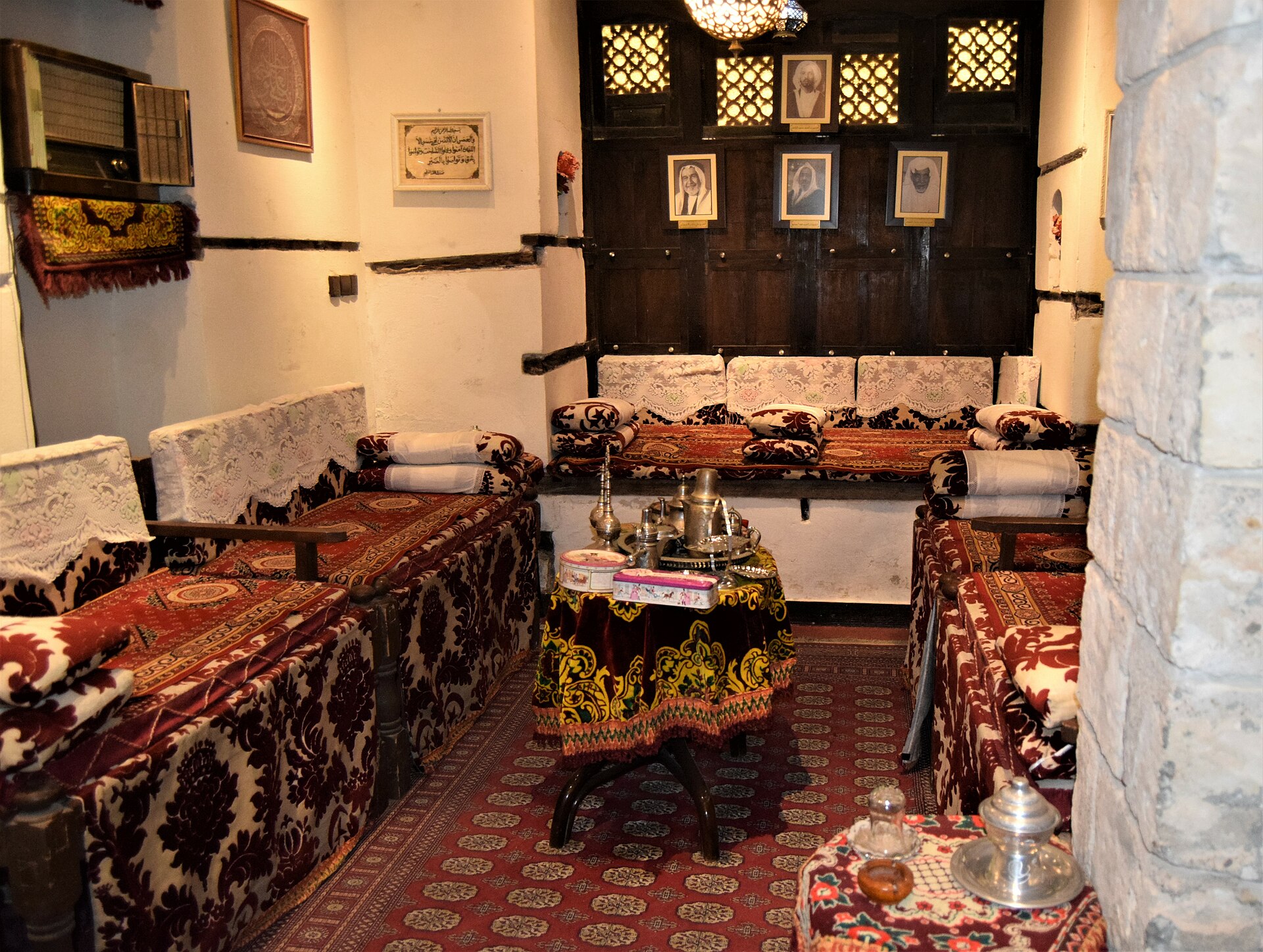
Spend the afternoon walking the narrow lanes of Al-Balad, inscribed as a UNESCO World Heritage Site in 2014. This 2.5-square-kilometre district contains over 650 historic buildings constructed from coral stone, with the distinctive rawasheen — ornate carved wooden lattice bay windows — that define Hejazi architecture. The district holds more than 36 historical mosques and five traditional souqs.
Start at the Al-Shafi’i Mosque, the oldest mosque in Jeddah, dating to approximately 1000 CE and named after Imam al-Shafi’i, founder of the Shafi’i school of jurisprudence. The mosque has been fully restored to its original mud-and-wood form and offers free 30-minute guided tours.
Nearby stands the Mosque of Uthman ibn Affan, one of the oldest surviving mosques in the world — studies indicate it is over 1,400 years old. Walk through Souq al-Alawi, where vendors sell oud, incense, textiles, and traditional Hejazi goods, then visit Bayt Nassif, a restored coral-stone merchant’s house that once hosted King Abdulaziz himself.
Tip: Al-Balad is best explored on foot in the late afternoon when the heat drops and the golden light illuminates the rawasheen. Wear comfortable shoes — the lanes are uneven. No entrance fee for the district itself.
Day 2 — Jeddah to Mecca: The Floating Mosque and First Tawaf
Al-Rahma Mosque: The Floating Mosque
Start the morning at Al-Rahma Mosque (formally Fatima al-Zahra Mosque), built in 1985 on a platform directly over the Red Sea. At high tide, the mosque appears to float on water — an unforgettable sight. The 2,400-square-metre structure features a central dome supported by eight columns, surrounded by 52 smaller domes, with 56 stained glass windows bearing Quranic calligraphy. Entry is free; check local tide tables and aim for high tide for the full floating effect.
Haramain High Speed Railway to Mecca
In the early afternoon, take the Haramain High Speed Railway from Jeddah to Mecca — a 40-minute journey at speeds up to 300 km/h. Economy class tickets cost approximately SAR 46 ($12). Book in advance at haramainrailway.com, especially during Ramadan season when trains sell out weeks ahead.
Check into accommodation near Masjid al-Haram. Hotels within walking distance of the Grand Mosque command premium rates (SAR 500–2,000+ per night mid-range), but the convenience is worth it for a short stay.
First Tawaf at Masjid al-Haram
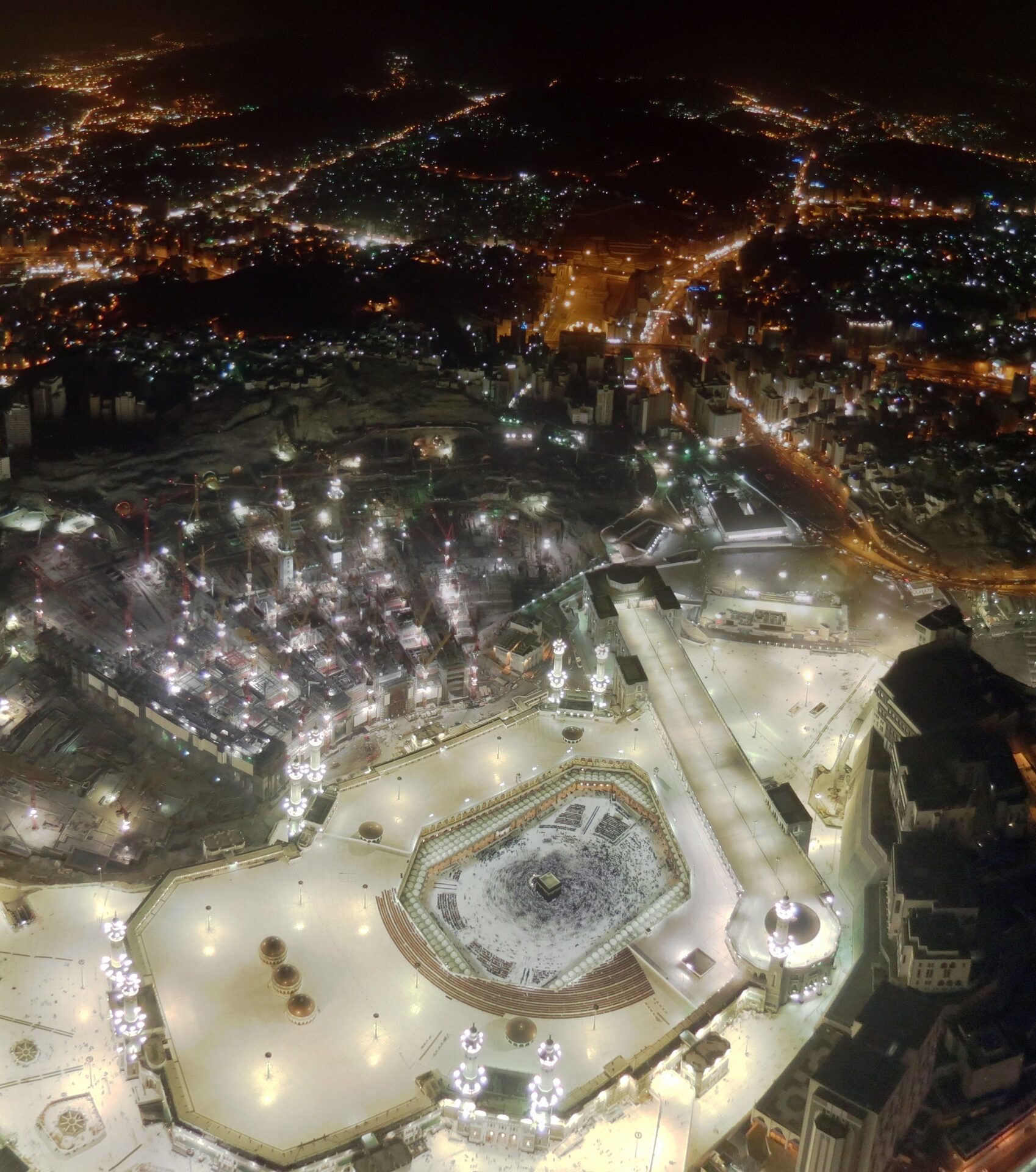
Perform your first Tawaf — the seven counterclockwise circuits around the Kaaba — in the evening, when the Grand Mosque is illuminated and the crowds thin compared to daytime. If performing Umrah, complete the Sa’i (walking seven times between Safa and Marwa) and the other Umrah rituals. The atmosphere of Masjid al-Haram at night, with the Kaaba draped in its black kiswa under floodlights, is profoundly moving regardless of how many times you have visited.
Day 3 — Mecca: Umrah and the Grand Mosque
Dedicate this day to worship and reflection within the precincts of Masjid al-Haram. If you did not complete Umrah the previous evening, perform the rituals now — Tawaf around the Kaaba, Sa’i between Safa and Marwa, and the symbolic hair cutting.
Key Sites Within Masjid al-Haram
- The Kaaba: The cubic structure at the centre of the mosque, towards which all Muslims pray. The Black Stone (Al-Hajar al-Aswad), believed to have been given by the Angel Gabriel to Prophet Ibrahim, is set in its eastern corner.
- Maqam Ibrahim: A glass-encased rock bearing the footprint of Prophet Ibrahim, located near the Kaaba. Pray two raka’ah behind it after Tawaf.
- Hijr Ismail (Hateem): The semicircular area adjacent to the Kaaba, considered part of the original structure built by Ibrahim and Ismail. Praying within it is considered equivalent to praying inside the Kaaba itself.
- Zamzam Well: The ancient groundwater source linked to Hagar and Ismail. The well is now sealed and mechanised; Zamzam water is freely available through dispensers and fountains throughout the mosque.
- Safa and Marwa: Two small hills connected by the enclosed, air-conditioned al-Mas’a walkway. The Sa’i ritual covers approximately 3.5 km total.
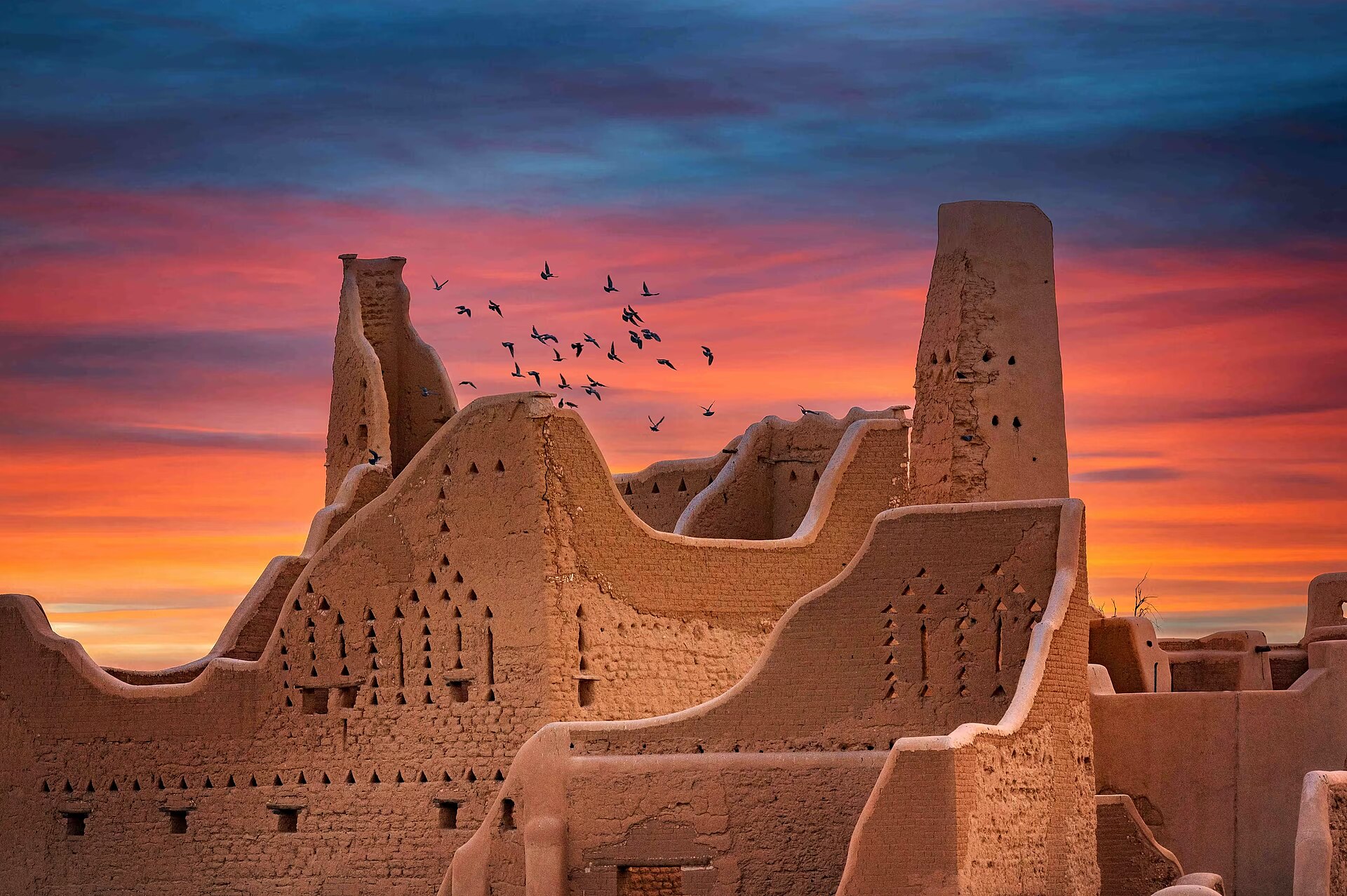
- Salwa Palace: The largest structure in the citadel, once home to the kings and leaders of the First Saudi State including Mohammed bin Saud
- Architecture Gallery: Documents Najdi building techniques through scale models and construction demonstrations
- Wadi Hanifah viewpoints: Panoramic views across the valley — arrive in the late afternoon for golden-hour light
- King Fahd Grand Mosque: One of Saudi Arabia’s largest mosques, located in central Riyadh, with impressive modern Islamic architecture
- JAX District in Diriyah: A creative hub housing SAMoCA (Saudi Arabia Museum of Contemporary Art) — an interesting counterpoint to the historical sites
- Souvenir shopping at Al-Zal Market: Traditional market near Al-Masmak selling dates, Arabian perfumes, handcrafts, and textiles
- Haramain High Speed Railway: The backbone of western Saudi travel. Mecca–Jeddah in 40 minutes (SAR 46); Mecca–Medina in 2.5 hours (SAR 225). Book at haramainrailway.com.
- Domestic flights: Medina–Riyadh in 1 hour 20 minutes; Riyadh–Al-Ula in 2 hours. Airlines: Saudia, Flynas, Flyadeal.
- Taxis and ride-hailing: Uber and Careem operate throughout Saudi Arabia. Taxis are metered in major cities.
- Car hire: Available at all airports; useful for day trips to Badr, Taif, or remote sites. International driving licenses are accepted.
- Nusuk: Mandatory for Rawdah permits and Umrah registration. Download and create an account before departure.
- Haramain Railway: For train bookings between Mecca, Jeddah, and Medina.
- Uber / Careem: Ride-hailing throughout the Kingdom.
- Darb Al-Ula: Official transport app for Al-Ula visitors.
- Ihram garments (men) or modest Umrah clothing (women) — required for entering the state of Ihram before Umrah
- Comfortable walking shoes — you will walk extensively at every site, especially during Tawaf and Sa’i
- Prayer mat — useful for praying at outdoor sites like Uhud and Badr
- Sunscreen and hat — even in cooler months, the Saudi sun is intense
- At least 2 litres of water per person for any hiking (Jabal al-Nour, Jabal Thawr)
- Modest clothing throughout — full abaya/hijab for women in all public spaces; long trousers for men at all mosques
- Vaccination records — meningococcal vaccination is required for Umrah; polio vaccination may be required depending on nationality
- Remove shoes before entering all mosques
- Photography is not permitted inside Masjid an-Nabawi’s prayer halls; check signage at all sacred sites
- Photography of women without consent is prohibited throughout Saudi Arabia
- Lower your voice in all mosques, especially in the Rawdah area
- Most businesses pause for 20–30 minutes during each of the five daily prayers — plan visits accordingly
- Tipping is not mandatory but appreciated (10%)
- Masjid Abdullah ibn Abbas: Named after the Prophet’s cousin and renowned Quran scholar. Originally built in 630 CE; the mosque and adjacent tomb are open to visitors.
- Masjid Addas: Named after Addas, a Christian slave who brought grapes to the wounded Prophet after the stoning and subsequently accepted Islam.
- Wadi Waj: The valley where the Prophet rested after the Taif incident; traditionally where the Jinn accepted Islam after hearing Quranic recitation.
- Hajj 2026: The Complete Guide — Dates, costs, packages, rituals, and everything you need for Hajj
- Saudi Arabia Pilgrimage History Tour — Islamic heritage sites beyond Mecca and Medina
- Saudi Arabia Itinerary: 7, 10 & 14-Day Plans — Flexible travel plans covering the entire Kingdom
- Saudi Arabia Hotels Guide — Where to stay in every major city
- Saudi Arabia Travel Guide 2026 — The complete guide to visiting the Kingdom
- Saudi Arabia Visa Guide — Every visa type explained
2025 Expansion Update: The completion of the King Abdullah Third Expansion Project in March 2025 nearly doubled the prayer area to 912,000 square metres, with a peak capacity of 2.5 million worshippers. New facilities include AI guidance robots, cooling sprayers, 16,726 restrooms, smart entry gates, and electric wheelchairs.
Day 4 — Mecca: Caves of Revelation and Refuge
Jabal al-Nour and the Cave of Hira
Rise before dawn and head to Jabal al-Nour, 4 km northeast of Masjid al-Haram. The Cave of Hira — a small grotto near the summit — is where the Angel Jibril first appeared to Prophet Muhammad in 610 CE, revealing the opening verses of Surah Al-Alaq: “Read, in the name of your Lord who created.” This is where Islam began.
The hike involves approximately 1,750 steps and takes 1.5–2 hours at a moderate pace. Start by 5 AM to avoid the midday heat. The cave itself is small and intimate — a place for quiet reflection. Outside Hajj season, you may have it largely to yourself in the early morning.
Jabal Thawr and the Cave of Thawr
In the late morning, visit Jabal Thawr to the south of Mecca, where the Prophet Muhammad and Abu Bakr al-Siddiq took refuge for three days during the Hijra — the migration to Medina in 622 CE. According to tradition, a spider spun a web and a dove nested at the cave entrance, concealing them from the Quraysh pursuers. The hike is comparable in difficulty to Jabal al-Nour.
Mina and Arafat (Drive-By)
In the afternoon, hire a taxi to drive past Mina (the tent city and Jamarat Bridge where the symbolic stoning takes place during Hajj) and the Plain of Arafat, where the Prophet delivered his Farewell Sermon. These sites are accessible to Umrah visitors outside Hajj season, though the formal rituals are Hajj-specific. For the full Hajj experience, see our complete Hajj 2026 guide covering dates, costs, and day-by-day rituals.
Fitness Warning: Both Jabal al-Nour and Jabal Thawr are strenuous hikes with no shade. Bring at least 2 litres of water per person, wear sturdy shoes, and do not attempt them in the summer months (June–September) when temperatures exceed 45°C.
Day 5 — Mecca to Medina: The City of the Prophet
Haramain Train to Medina
Take the morning Haramain High Speed Railway from Mecca to Medina — approximately 2 hours 30 minutes, with tickets costing SAR 225 ($60) in economy. The train passes through Jeddah and King Abdullah Economic City before arriving at Medina’s modern station. Book in advance; this route is popular year-round.
Masjid an-Nabawi: The Prophet’s Mosque
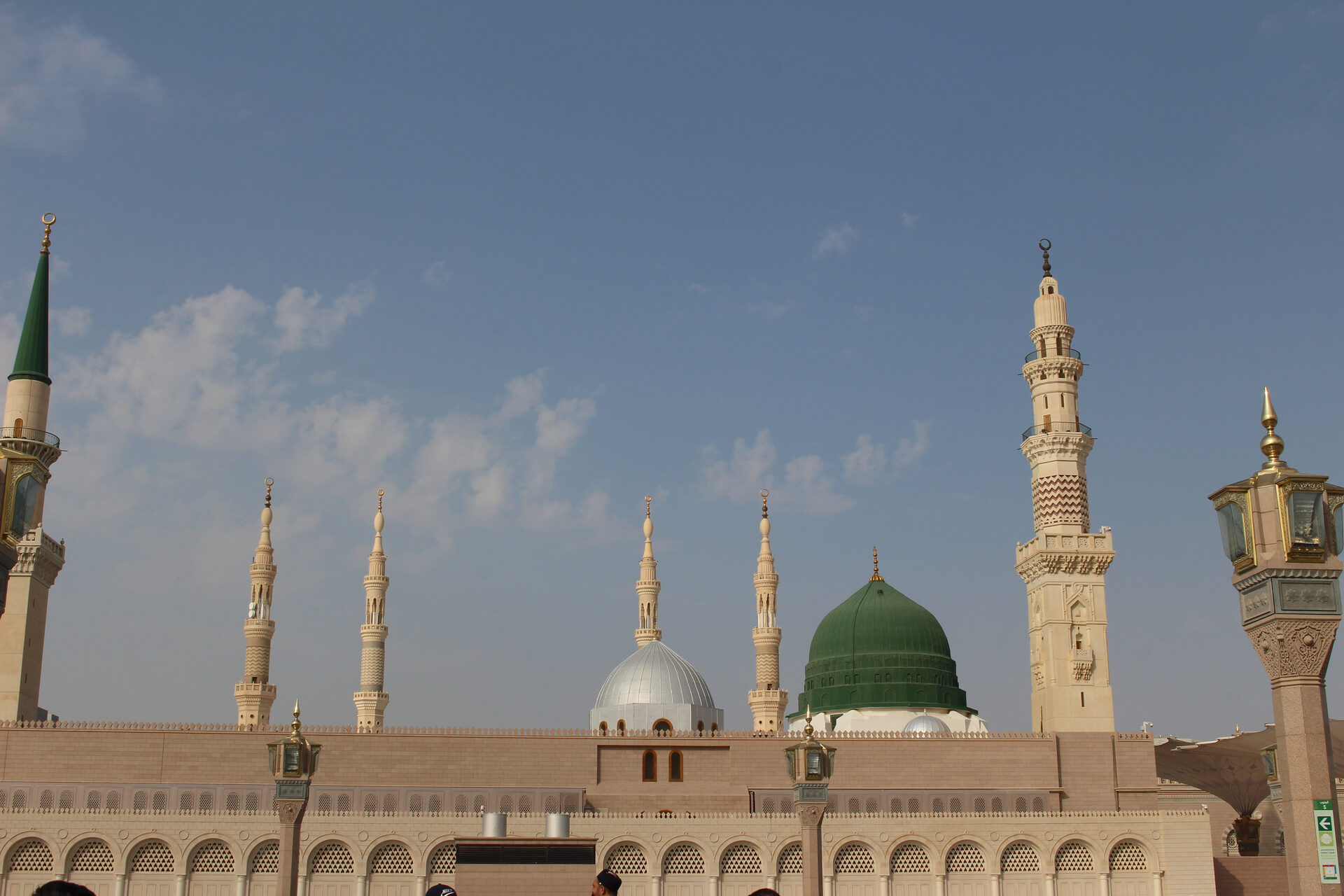
Check into accommodation near Masjid an-Nabawi and head straight to the mosque. Built by the Prophet himself in 622 CE after the Hijra, it is the second holiest mosque in Islam and now open 24 hours daily following King Salman’s 2025 directive. Entry is free and no tickets are required for general prayer.
Pray in the main halls and take in the scale of the mosque — its distinctive green dome marks the location of the Prophet’s tomb beneath. In the evening, visit Jannat al-Baqi, the ancient cemetery adjacent to the mosque’s eastern wall, containing the graves of many of the Prophet’s family members and companions, including Uthman ibn Affan (the third Caliph), Imam Hasan ibn Ali, and Imam Malik ibn Anas. The cemetery is open for men in the mornings; check current rules for women’s access.
Important: Download the Nusuk app immediately and book a Rawdah visit slot for the next day. The Rawdah (Riyad al-Jannah) — the area between the Prophet’s minbar and his tomb — requires a timed permit. Slots are limited to approximately 10 minutes and fill quickly.
Day 6 — Medina: The Rawdah, Quba, and the Mosques of History
Rawdah Visit (Riyad al-Jannah)
Attend your booked Rawdah slot. The Rawdah — described by the Prophet as “a garden from the gardens of Paradise” — is the small area between his minbar (pulpit) and his tomb. Men typically enter via Gate 37 (Bab al-Salam) with slots between 7 AM–10 AM and after Isha until midnight. Women enter via Gate 25 with morning slots from 9 AM–11 AM. Visits are capped at approximately 10 minutes. Etiquette requires modest dress (thobe preferred for men, full hijab and abaya for women), low voices, and no photography.
While in the Rawdah area, offer salutations (salawat) at the Prophet’s tomb and at the adjacent tombs of Abu Bakr al-Siddiq and Umar ibn al-Khattab.
Masjid Quba
After the Rawdah visit, take a taxi approximately 5 km south to Masjid Quba — the first mosque ever built in Islam, constructed by the Prophet upon his arrival in Medina in 622 CE. It is explicitly mentioned in the Quran (Surah At-Tawbah 9:108) as “a mosque founded on piety from the first day.” According to hadith, praying two raka’ah here equals the reward of one Umrah. The mosque has been recently renovated and can accommodate tens of thousands of worshippers. Free entry.
Masjid al-Qiblatain
Continue northwest to Masjid al-Qiblatain — the Mosque of the Two Qiblas — where the direction of prayer was changed from Jerusalem to Mecca during the Prophet’s lifetime in 624 CE (2 AH). This moment marked a turning point in early Islamic identity, and the mosque commemorates both directions of prayer.
The Seven Mosques (Masjid al-Fath)
In the late afternoon, visit the cluster of small mosques on the western side of Medina near Jabal Sala’, collectively known as the Seven Mosques. The largest, Masjid al-Fath (Mosque of Victory), marks the site of the Battle of the Trench (627 CE / 5 AH), where 10,000 confederate forces besieged Medina. The trench — dug on the advice of the Persian companion Salman al-Farisi — was an unprecedented defensive strategy that ultimately saved the Muslim community. The surrounding mosques mark the positions of different commanders during the siege.
Day 7 — Medina: Uhud and the Battlefields of Faith
Mount Uhud and the Martyrs’ Cemetery
Drive approximately 5 km north of Masjid an-Nabawi to Mount Uhud, site of the Battle of Uhud on 23 March 625 CE (7 Shawwal 3 AH). A Muslim force of around 700 faced 3,000 Quraysh warriors; 70 companions were martyred, including Hamza ibn Abd al-Muttalib, the Prophet’s uncle, known as the “Lion of God.” The Prophet himself was wounded.
Visit the Martyrs’ Cemetery where the 70 fallen companions are buried — Hamza’s grave is particularly prominent. The Prophet visited Uhud regularly to pray for the martyrs, making this a sunnah practice. The mountain itself, with its distinctive red-brown volcanic rock, is visible for miles and remains one of the most emotionally powerful sites in the Islamic world.
Dar al-Madinah Museum
Return to the city for a visit to the Dar al-Madinah Museum, located near the Haramain train station. Founded by Abdulaziz Kaki and inaugurated in 2011, the museum houses approximately 2,000 items across two main halls: the Hall of the Prophet’s Sirah and the Hall of Urban and Cultural Heritage. Exhibits include archaeological artefacts, detailed scale models of historical Medina, Islamic manuscripts, rare coins, kiswa samples from different eras, and Umayyad-period pottery. Allow 1.5–2 hours.
Optional: Badr Day Trip
For travellers with deep interest in early Islamic history, a day trip to Badr — 155 km southwest of Medina — is profoundly rewarding but logistically demanding (2–3 hours each way). The Battle of Badr on 13 March 624 CE (17 Ramadan 2 AH) was the first major battle in Islamic history: 313 Muslims under the Prophet defeated approximately 1,000 Quraysh warriors in a victory the Quran references in multiple verses (3:123 among others). Visit the wells where the battle was fought, the cemetery of the Badr martyrs, and the site of the Prophet’s command post. Guided tours are available from Medina through specialised operators. If you choose Badr, dedicate a full day and skip the museum visit, moving it to the morning of Day 8 instead.
Day 8 — Medina to Riyadh: The First Saudi State
Flight to Riyadh
Fly from Madinah Airport (MED) to Riyadh’s King Khalid International Airport (RUH) — approximately 1 hour 20 minutes. Multiple daily flights operate on Saudia, Flynas, and Flyadeal, with budget fares starting from SAR 200 ($55). Alternatively, fly via Jeddah if schedules suit better.
Diriyah: At-Turaif UNESCO World Heritage Site
After checking in, head northwest of Riyadh to Diriyah, the ancestral seat of the House of Saud and capital of the First Saudi State (1727–1818). The At-Turaif district, inscribed as a UNESCO World Heritage Site in 2010, is a stunning example of Najdi mud-brick architecture perched on the edge of Wadi Hanifah.
Key sites within At-Turaif include:
For lunch or dinner, walk to the adjacent Al Bujairi Heritage Quarter, a 15,000-square-metre dining complex with over 20 restaurants set in a heritage landscape overlooking At-Turaif. Diriyah has drawn over 3.6 million cumulative visitors under the Vision 2030 development programme.
Day 9 — Riyadh: Museums and the Unification Story
King Abdulaziz Historical Center and National Museum
Spend the morning at the King Abdulaziz Historical Center in central Riyadh, a sprawling complex containing the National Museum, Murabba Palace, King Abdulaziz Mosque, and six parks. The National Museum of Saudi Arabia features eight themed exhibition halls tracing Arabian history from prehistory through the Prophet’s mission, the Islamic caliphates, and the formation of the modern Saudi state. Two halls are dedicated specifically to Islamic history — the Prophet’s Mission hall and the Islam in the Arabian Peninsula hall. Allow 2–3 hours. Entry is free.
Al-Masmak Palace Museum
After the National Museum, visit the Al-Masmak Palace in Riyadh’s historic Al-Dirah district. This clay fortress, constructed in 1865 CE, was the site of the famous Battle of Riyadh in 1902, when the young Abdulaziz ibn Saud retook the city from the Rashidi dynasty and launched the unification of modern Saudi Arabia. The spearhead embedded in the main gate from that battle remains visible today. The palace was extensively renovated and reopened in 2025. Free entry; open daily 8 AM–9 PM.
Explore the surrounding Souq Dira market for traditional goods, dates, and oud — a good opportunity to pick up souvenirs before departure.
Day 10 — Riyadh: Final Morning and Departure
Morning Options
Use the final morning for any sites you may have missed, or choose from:
Depart from King Khalid International Airport (RUH) in the afternoon or evening.
Optional Extension: Al-Ula and Hegra (2 Extra Days)
If your schedule allows, add two days to visit Al-Ula — Saudi Arabia’s flagship heritage destination and home to sites of deep Quranic significance. Fly from Riyadh to Al-Ula (approximately 2 hours; flights on Saudia and Flynas from SAR 200).
Hegra (Mada’in Saleh)
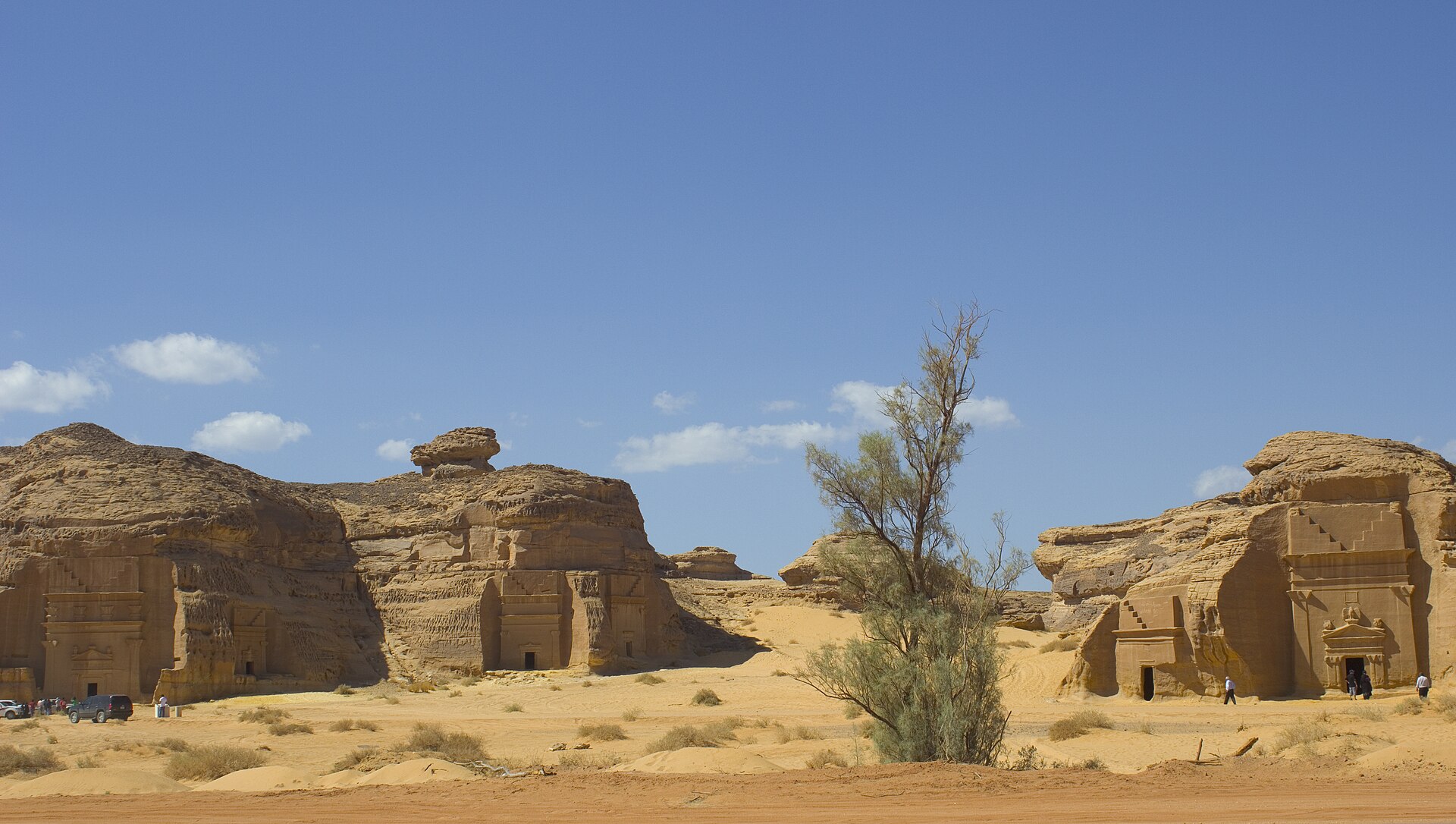
Hegra, Saudi Arabia’s first UNESCO World Heritage Site (inscribed 2008), is the ancient Nabataean city contemporaneous with Petra in Jordan. More significantly for Muslim travellers, Al-Hijr — the area’s ancient name — is mentioned directly in the Quran in Surah Al-Hijr (15:80–84) and Surah Al-A’raf (7:73–79) in relation to the people of Thamud and the Prophet Salih. The Quran describes how the Thamud rejected the Prophet Salih and were destroyed by divine punishment.
The site features over 100 monumental rock-cut tombs with elaborate facades carved into rose-sandstone outcrops. The Hop-On Hop-Off Tour runs from November to February, daily 8 AM–5 PM, with adult admission at SAR 150 ($40). Allow at least 3 hours. For more on Al-Ula’s attractions, see our Al-Ula travel guide.
Practical Information
Visa and Entry
Citizens of 66 eligible countries can obtain a Saudi tourist e-visa online — a one-year, multiple-entry visa allowing up to 90 days of cumulative stay. Since January 2023, tourist visa holders may also perform Umrah. Alternatively, apply for a dedicated Umrah visa through the Nusuk platform if travelling primarily for pilgrimage. Both visa types require a passport valid for at least six months. Full details on every visa type, costs, and application steps are covered in our Saudi Arabia visa guide.
Budget Breakdown
| Category | Budget | Mid-Range | Comfortable |
|---|---|---|---|
| Accommodation | $30–50/night | $70–120/night | $135–270+/night |
| Meals | $10–15/day | $20–40/day | $40–80+/day |
| Local transport | $4–11/day | $11–27/day | $27–55+/day |
| Site admissions | $0–15/day | $15–40/day | $40–80/day |
| Daily total | $40–80 | $100–200 | $200–400+ |
Most Islamic heritage sites have no admission fee — Masjid al-Haram, Masjid an-Nabawi, Jannat al-Baqi, Masjid Quba, Mount Uhud, Al-Masmak Palace, and the National Museum are all free. Major transport costs include the Haramain train (approximately SAR 700 / $185 total for Jeddah–Mecca–Medina legs) and the Medina–Riyadh flight (from SAR 200 / $55).
Mecca accommodation note: Hotels within walking distance of Masjid al-Haram are significantly more expensive than elsewhere in Saudi Arabia, especially during Ramadan. Budget SAR 500–1,200/night for mid-range properties near the Haram; prices can exceed SAR 5,000/night during peak season.
Getting Around
Essential Apps
What to Pack
Best Time to Go
The ideal window is October through March, when temperatures range from 15–25°C and outdoor sites like Jabal al-Nour, Uhud, and Hegra are comfortable. Avoid June through September, when temperatures regularly exceed 45°C and outdoor hiking becomes dangerous. Be aware that 2026 Ramadan falls approximately late February to late March (excellent for spiritual depth, but holy-city accommodation is scarce and expensive), and 2026 Hajj falls in late May to early June (Mecca is restricted to Hajj permit holders only).
Etiquette and Respect
Alternative: Adding Taif
If you have flexibility in your itinerary, consider swapping one Riyadh day for a Taif side trip from Mecca (1.5 hours by car, 75 km via scenic mountain highway). Taif holds deep significance in the Prophet’s life: in 619 CE, during the “Year of Sorrow” after the deaths of Khadijah and Abu Talib, the Prophet travelled to Taif seeking support for Islam and was rejected and stoned by its people. Key Islamic sites include:
If visiting between March and April, Taif’s famous rose farms in the Al-Hada and Al-Shafa mountains are in bloom — over 900 farms produce the oud rose attar that has perfumed the Muslim world for centuries. Our Abha and Asir guide covers the broader Hejaz highlands region.
This Itinerary on a Map
The route follows a logical geographic arc: Jeddah (Red Sea coast) → Mecca (80 km inland) → Medina (450 km north via Haramain train) → Riyadh (flight east to the Najd plateau). Optional extensions to Taif (from Mecca, 75 km south into the mountains) or Al-Ula (flight north from Riyadh or Medina) add geographic variety without excessive backtracking.
For other itinerary options — including a 7-day express route and a 14-day comprehensive tour — see our Saudi Arabia itinerary planning guide. Travellers interested in sites beyond the standard pilgrimage circuit should also explore our Saudi pilgrimage history tour, which covers lesser-known heritage sites across the Kingdom.