
Most Muslim visitors to Saudi Arabia see Mecca, Medina, and the road between them. But the Kingdom holds an extraordinary network of sites where early Islamic history unfolded — battlefields where the faith was defended, oases where treaties reshaped the Arabian Peninsula, ancient trade cities mentioned in the Quran, and pilgrimage routes walked for over a thousand years. This guide maps the most significant Islamic heritage sites across Saudi Arabia that lie beyond the two holy cities, giving you a deeper, historically grounded Hajj or Umrah pilgrimage experience. Whether you are extending a pilgrimage trip or planning a dedicated history tour, these destinations connect you to the events that shaped Islam from its earliest days to the rise of the Saudi state.
Best Time to Visit: October to March (cooler temperatures for outdoor sites)
Getting There: Fly into Jeddah or Medina; rent a car for the full circuit
Visa Required: Yes — tourist e-visa or Umrah visa
Budget: SAR 400–800 / USD 105–215 per day (mid-range, with car rental)
Must-See: Battle of Badr site, Hegra (Madain Saleh), Taif ziyarat mosques
Avoid: Visiting outdoor sites between June and August — temperatures regularly exceed 45°C
Why Extend Your Pilgrimage Beyond Mecca and Medina
Saudi Arabia recorded over 30 million international arrivals in 2024, and a growing number of those visitors are Muslim travellers seeking more than the standard Hajj or Umrah itinerary. The Kingdom’s investment in heritage tourism under Vision 2030 has opened sites that were difficult or impossible to visit a decade ago. Ancient pilgrimage routes are being excavated and signposted. Battlefields have informational markers. Historic mosques have been restored.
The sites in this guide span the full arc of early Islamic history — from the Prophet Muhammad’s mission in Taif around 619 CE, through the decisive battles at Badr and Khaybar, to the Nabataean tombs at Hegra that the Quran describes as a warning to the faithless. Visiting them adds historical depth that transforms a pilgrimage from ritual observance into a lived encounter with the faith’s origins.
Taif — The Prophet’s Most Difficult Day
Perched at 1,879 metres in the Hejaz Mountains, Taif is where the Prophet Muhammad experienced what he later described as the most difficult day of his life. In 619 CE, with opposition growing in Mecca following the deaths of his wife Khadijah and uncle Abu Talib, he walked roughly 70 miles southeast to seek support from the Banu Thaqif tribe. The three chiefs of Taif rejected his message and rallied the townspeople against him, pelting him with stones until his sandals filled with blood.
That painful journey left a constellation of Islamic heritage sites across the city of Taif that pilgrims visit today as ziyarat — places of spiritual reflection.
Abdullah ibn Abbas Mosque
The grandest Islamic landmark in Taif, this mosque in the Al-Markaziya district houses the tomb of Abdullah ibn Abbas, the Prophet’s paternal cousin and one of the foremost early commentators on the Quran. The original structure dates to approximately 630 CE, though it was extensively reconstructed in 1958. Ibn Abbas was known as the “scholar of the Ummah” for his vast knowledge of Quranic interpretation, and his burial site draws scholars and pilgrims year-round.
Masjid Addas
After being driven from Taif, the wounded Prophet rested in a vineyard where a Christian servant named Addas offered him grapes and a moment of kindness. The mosque built on this spot commemorates that brief encounter — a small but moving episode that pilgrims find deeply resonant. Addas reportedly accepted Islam after recognising Muhammad’s prophetic mission when he mentioned the prophet Jonah.
Al-Kou Mosque
During his mission in Taif, the exhausted Prophet leaned his elbow against a stone to rest. The Ottoman-era mosque built at this location — approximately 162 years old — takes its name from the Arabic word for “elbow.” Its architecture reflects Abbasid-period design influences, and it remains an active place of worship.
Wadi Waj
Wadi Waj is traditionally identified as the place where the Prophet took refuge after being harmed by the people of Taif. It was here, according to Islamic tradition, that he made his famous supplication to God, asking for strength despite the rejection. The valley is known for its flowing water and quiet surroundings — a natural setting for reflection.
Practical Tip: Taif is a 90-minute drive from Mecca via the scenic Hada mountain road. Many pilgrims combine a Taif ziyarat day trip with an Umrah visit. Hire a local guide through your hotel — they can pinpoint exact locations and share authenticated narrations that signage alone cannot convey.
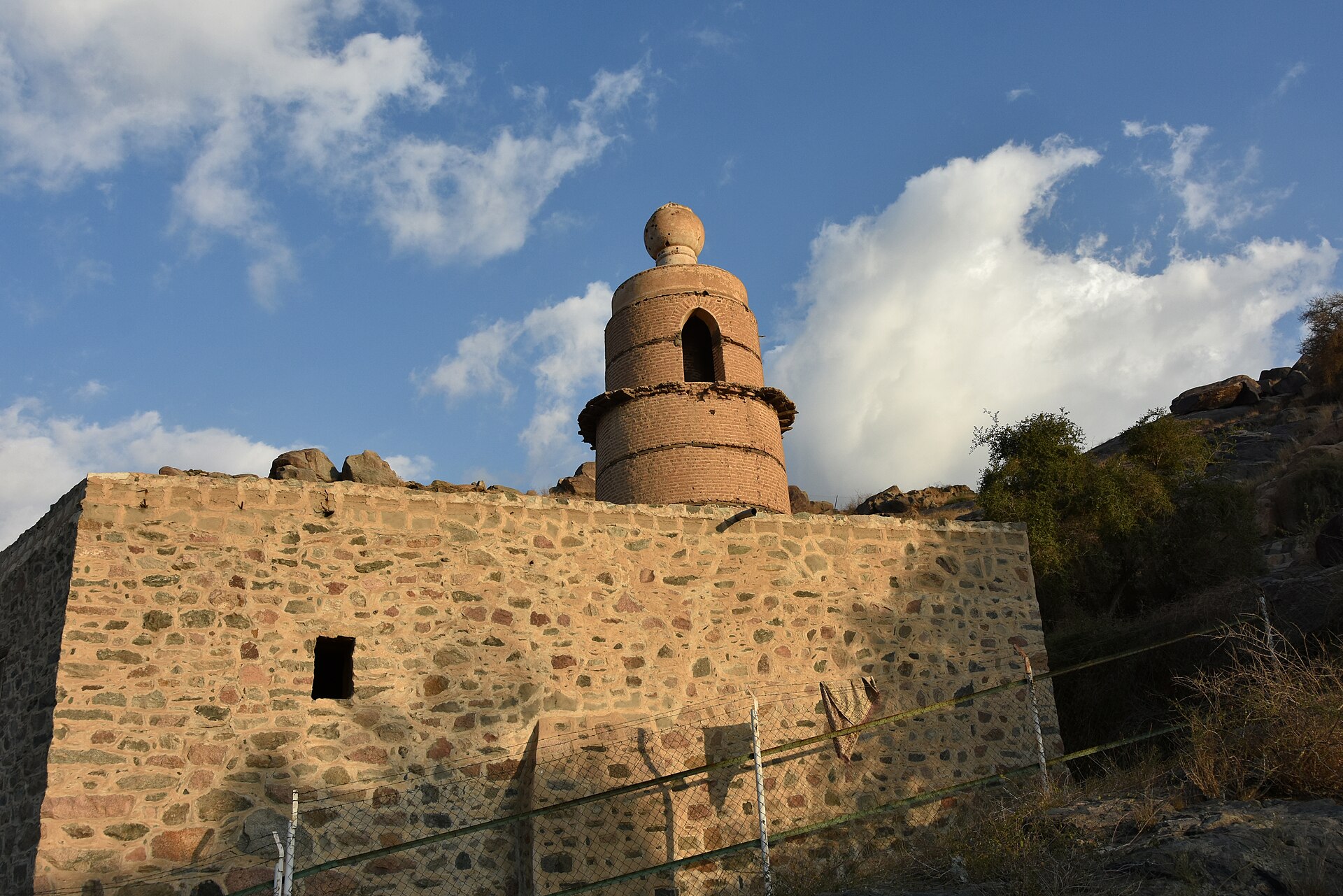
Badr — Islam’s First Decisive Victory
On Friday, 17 Ramadan 2 AH (approximately 13 March 624 CE), a Muslim force of around 313 confronted a Quraysh army of roughly 1,000 at the wells of Badr. The resulting battle was Islam’s first major military engagement, and its outcome — a decisive Muslim victory — cemented the community’s survival and confirmed to the faithful that divine support was real. The Quran refers to this event in Surah Al-Imran (3:123): “Already has Allah given you victory at Badr when you were few in number.”
What to See at Badr
The town of Badr lies approximately 150 kilometres southwest of Medina, reachable in roughly 2–3 hours by car. Key sites include:
- The Battlefield: The terrain where the engagement took place is marked and identifiable. Low hills and the dry watercourse give a tangible sense of the tactical landscape.
- Martyrs’ Cemetery (Maqbarat Shuhada’ Badr): A sacred enclosure holding the graves of 13 of the 14 Muslim martyrs from the battle. Visitors should maintain silence and a dignified demeanour.
- Al-Arish Mosque: Marks the position where the Prophet directed the battle. A simple structure with immense historical weight.
- Al-Adwa al-Dunya and Al-Adwa al-Quswa: The two banks of the wadi that defined the opposing armies’ positions, referenced in Surah Al-Anfal (8:42).
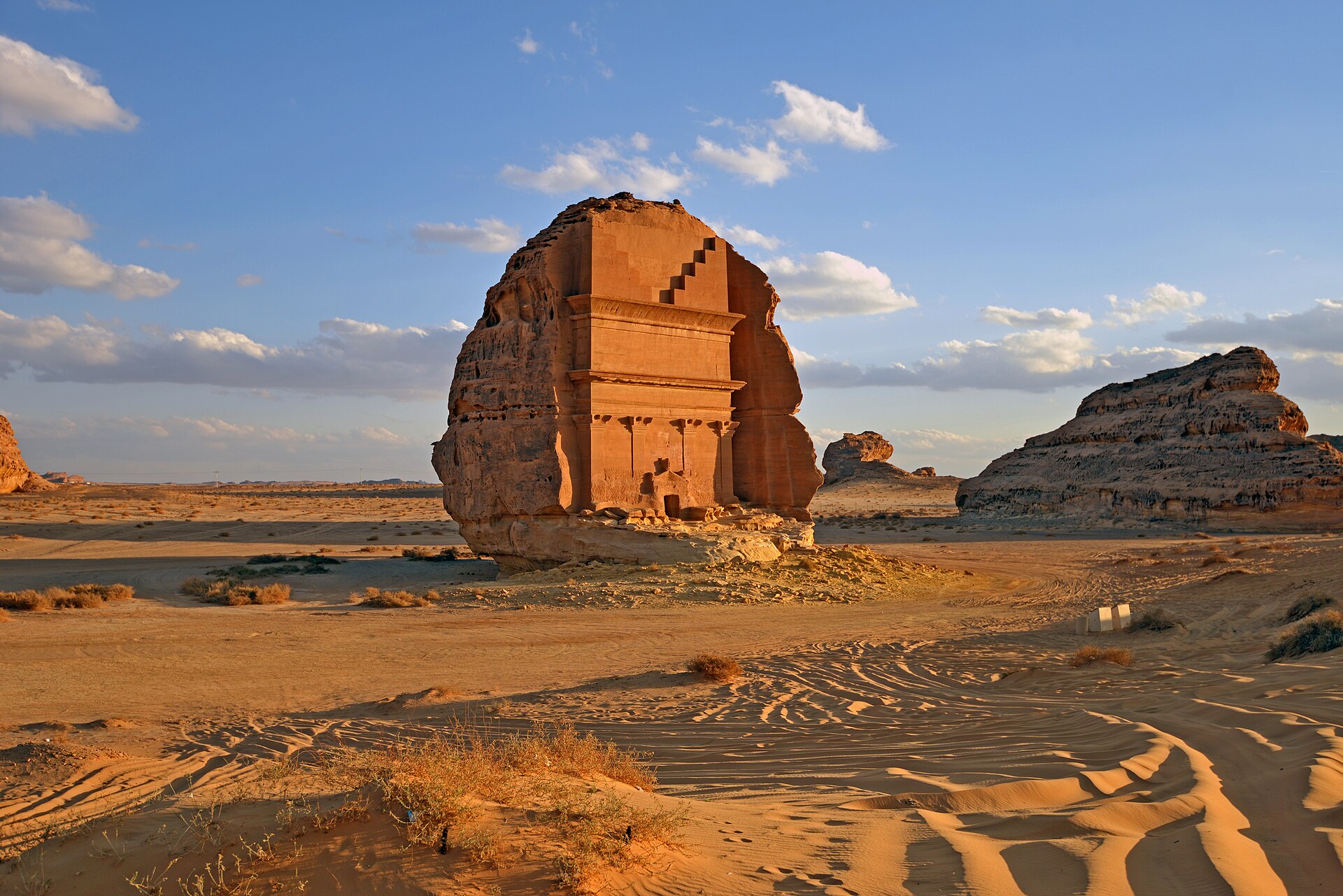
- Qasr al-Farid (The Lonely Castle): A single monumental tomb carved from a standalone rock outcrop — the most photographed structure at the site.
- Jabal Ithlib: A natural rock formation that served as a sacred precinct for the Nabataeans, with carved niches and a processional way.
- The Diwan: A carved chamber within Jabal Ithlib that functioned as a banqueting hall for religious ceremonies.
- Hijaz Railway Station: An Ottoman-era station from the Damascus-to-Medina railway, with restored locomotives and buildings.
- Al-Shafi’i Mosque: One of the oldest mosques in Jeddah, with a minaret dating to the 7th century Hijri (13th century CE) — a rare surviving specimen of early Islamic architecture on the Arabian Peninsula.
- Mosque of Uthman ibn Affan (Masjid Othman bin Affan): Over 1,300 years old and located at the heart of Historic Jeddah. Recent excavations uncovered ebony wood columns from the 7th century CE, confirming its early origins.
- The Floating Mosque (Masjid Al-Rahma): Built on the edge of the Red Sea and appearing to float during high tide, this is one of Jeddah’s most iconic landmarks.
- Bab Makkah (Mecca Gate): The historic gate through which pilgrims passed on their way from Jeddah’s port to Mecca — the physical embodiment of the city’s role as Islam’s maritime gateway.
- Al-Rabadha: One of the best-preserved stations, located southeast of Medina. Excavations have uncovered a small mosque, residential buildings, and an extensive water management system.
- Al-Hajr (near AlUla): The route passed through the Hegra area, connecting the ancient Nabataean city to the broader pilgrimage infrastructure.
- Fayd: A major junction station in the Ha’il region where the Darb Zubaydah intersected with routes from Egypt and Yemen. Excavations have revealed a fortified town with a mosque, governor’s palace, and market.
- Khadijah bint Khuwaylid — the Prophet’s first wife and the first person to accept Islam
- Abdul Muttalib — the Prophet’s grandfather who raised him after the deaths of his parents
- Abu Talib — the Prophet’s uncle and the father of Ali, the fourth caliph
- Qasim — the Prophet’s infant son
- Water: At least 2 litres per person for any outdoor site visit. More for remote locations.
- Sun protection: Hat, sunscreen, and lightweight long-sleeved clothing.
- Sturdy footwear: Especially for Badr, Khaybar, and Darb Zubaydah stations where terrain is uneven.
- Prayer mat: Several sites have mosques, but others are open locations where you may wish to pray.
- Camera: Photography is permitted at all sites except within active mosques during prayer times.
- Dress modestly at all religious and historical sites — long sleeves, long trousers or skirts, and head coverings for women.
- Maintain silence and a respectful demeanour at cemeteries and martyrs’ memorials.
- Ask permission before photographing people, especially at active worship sites.
- Do not touch or climb on archaeological remains at Hegra, Khaybar, or Darb Zubaydah stations.
- During Ramadan, do not eat or drink in public during daylight hours, even at non-religious sites.
- Hajj 2026 Guide — Complete guide to performing Hajj in Saudi Arabia
- Mecca for Muslim Travellers — The complete Hajj and Umrah city guide
- Medina Travel Guide — The Prophet’s city for Muslim visitors
- The Prophet’s Mosque Visitor Guide — Everything you need to know about visiting Al-Masjid an-Nabawi
- Umrah for First Timers — The complete step-by-step guide
- Taif Travel Guide — City of roses, mountains, and ancient poetry
- AlUla Travel Guide — Hegra, Elephant Rock, Dadan, and the desert canyon
- Diriyah Travel Guide — Birthplace of the Saudi state
- Saudi Arabia UNESCO Sites — The complete visitor guide to all heritage sites
- Saudi Arabia Travel Guide 2026 — The complete guide to visiting the Kingdom
- Saudi Arabia Visa Guide — Every visa type explained
Getting There: Drive from Medina on Route 60 toward Yanbu, then turn south. There is no public transport to Badr. Start early, bring water and sun protection, and plan for a full day to visit all sites without rushing.
Khaybar — Oasis Fortress of the Early Islamic Era
About 153 kilometres north of Medina, the ancient oasis of Khaybar was the site of a pivotal series of sieges in 628 CE (7 AH). The Jewish tribes of Khaybar, particularly the Banu Nadir who had been expelled from Medina, had fortified the oasis with a network of castles and strongholds. The Muslim forces under Prophet Muhammad besieged and eventually conquered the fortresses, with Ali ibn Abi Talib famously breaching the main gate.
The fall of Khaybar secured the northern approaches to Medina and established an economic arrangement — the inhabitants continued farming in exchange for half their produce — that became a model for later Islamic governance of conquered territories.
Visiting Khaybar Today
The ruins of Khaybar are preserved as an antiquities site by the Saudi government. While barbed wire prevents access to the elevated fortress remains, the cemetery and lower-lying ruins are accessible. The landscape itself — date palms, volcanic rock formations (harrat), and ancient water channels — evokes the strategic importance of this oasis in the arid Hejaz.
Khaybar is best reached by car from Medina, heading north on Route 15. Allow half a day for the round trip and site exploration. There are no formal visitor facilities, so bring provisions.
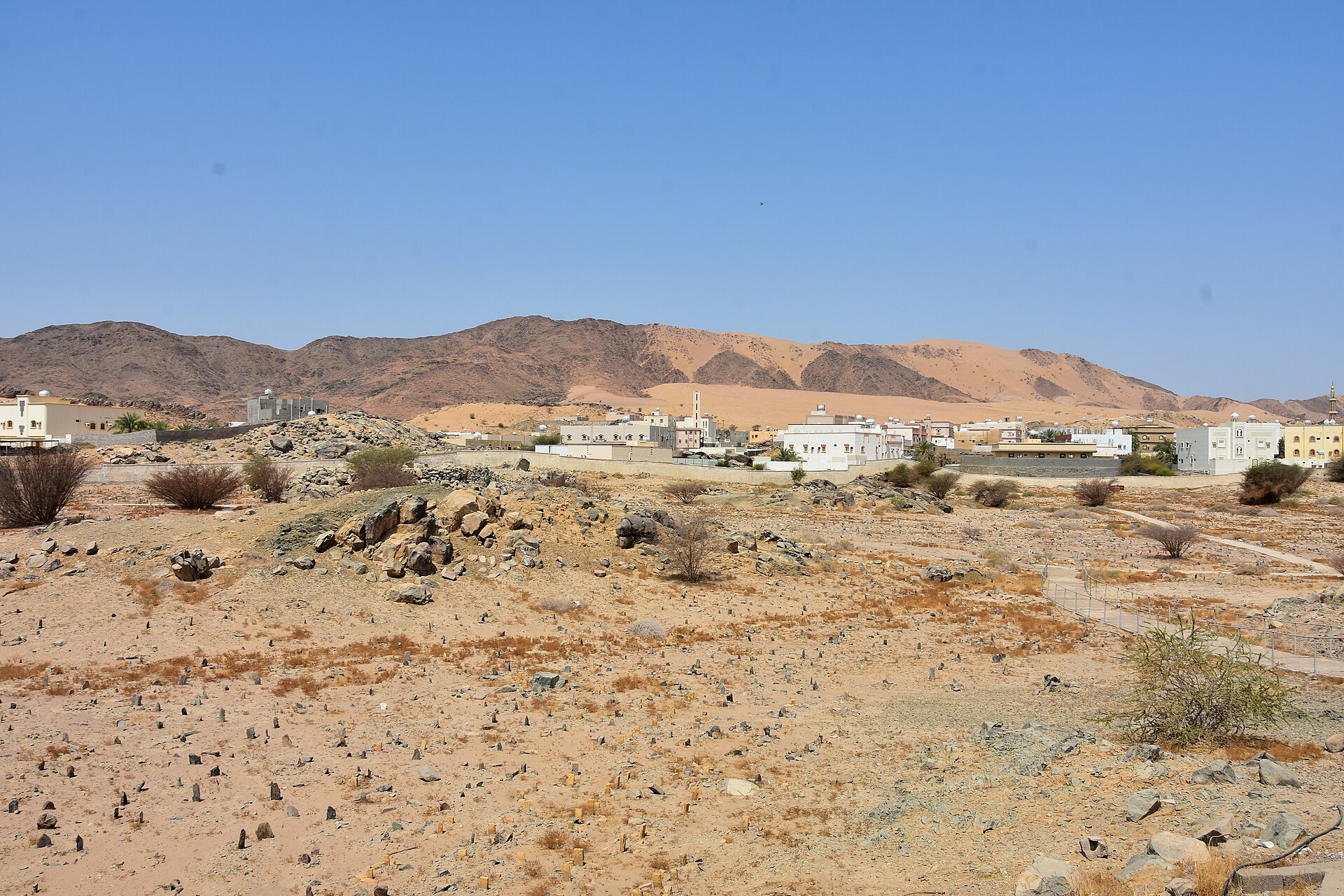
Al-Hudaybiyyah — Where a Treaty Changed History
In March 628 CE (6 AH), the Prophet Muhammad set out from Medina with approximately 1,400 followers intending to perform Umrah. The Quraysh of Mecca blocked their path at a place called Hudaybiyyah, roughly 24 kilometres from Masjid al-Haram on the old Jeddah road, in the area now known as Al-Shumaisi. Rather than fight, the two sides negotiated the Treaty of Hudaybiyyah — a ten-year peace agreement that allowed Muslims to return the following year for pilgrimage.
Though some companions initially viewed the treaty’s terms as unfavourable, the Quran described it as a “manifest victory” (Surah Al-Fath, 48:1). The peace enabled the rapid spread of Islam across the Arabian Peninsula and directly led to the eventual peaceful conquest of Mecca two years later.
Masjid Al-Hudaibiyah
A new mosque structure has been built adjacent to the ruins of the original, marking the site of the treaty negotiations. Hudaybiyyah also serves as a miqat — a designated boundary point where pilgrims entering from the Jeddah road may enter the state of ihram for Hajj or Umrah. This dual function as both a historical site and an active pilgrimage boundary makes it uniquely significant.
Practical Tip: The site is easily accessible from both Jeddah and Mecca. If you are arriving from Jeddah for Umrah, you will likely pass through this area — ask your driver to stop briefly so you can appreciate the historical weight of the location.
Hegra (Madain Saleh) — The Quran’s Warning in Stone
Saudi Arabia’s first UNESCO World Heritage Site (inscribed 2008), Hegra is one of the most visually stunning and theologically significant sites in the Kingdom. Known in Arabic as Madain Salih — “the cities of Salih” — the site takes its name from the Quranic prophet who was sent to the people of Thamud.
According to the Quran (Surah Al-A’raf, 7:73–79), the Thamud carved grand dwellings from rock and were blessed with prosperity, but rejected the prophet Salih and his divine message. They were destroyed by an earthquake and thunderbolt as divine punishment. The monumental rock-cut tombs at Hegra — 131 elaborately carved Nabataean façades dating from the 1st century BCE to the 1st century CE — are the physical remnants that the Quran references when it speaks of those who “carved homes from the mountains.”
What to See
The site is located near the town of AlUla in northwest Saudi Arabia, and is now managed as part of the Royal Commission for AlUla’s tourism development. Key areas include:
Hegra also served as a station along the Levantine Hajj route, providing water and supplies for pilgrims travelling south to Mecca. This practical role means the site connects to Islamic pilgrimage history even beyond its Quranic associations.
Note on Local Tradition: Some traditional scholars considered Hegra a cursed site due to the Quranic account of divine punishment on the Thamud. The Saudi government has actively worked to reframe the site as a place of historical learning and reflection. Today it is fully open to visitors and represents one of the Kingdom’s flagship heritage tourism destinations.
Historic Jeddah (Al-Balad) — The Gateway to Mecca
Jeddah has served as the gateway to Mecca since the 7th century AH (13th century CE), when the third Caliph Uthman ibn Affan designated it as the official port of the holy city. For centuries, pilgrims arriving by sea from Africa, South Asia, and Southeast Asia passed through Jeddah’s old quarter before continuing their journey inland. That layered history is preserved in Al-Balad, the UNESCO World Heritage Site at the city’s historic core.
Al-Balad’s urban fabric includes over 650 historic buildings, 36 historical mosques, and five traditional souqs. Crown Prince Mohammed bin Salman allocated $13.3 million for the initial repair of 56 ancient structures, with craftsmen skilled in coral masonry, rawasheen carpentry, and traditional plasterwork restoring them to their original character.
Key Mosques and Sites
Visiting Tip: Al-Balad is best explored on foot in the early morning or late evening when temperatures are bearable. The narrow alleyways, ornate coral-stone buildings with their wooden rawasheen (projecting windows), and the scent of oud from the souqs create an atmosphere that modern Jeddah cannot replicate.
Diriyah — Birthplace of the Saudi-Wahhabi Alliance
On the outskirts of Riyadh, Diriyah is where modern Saudi religious and political identity was forged. In 1744, the Islamic reformer Sheikh Muhammad ibn Abd al-Wahhab formed an alliance with Prince Muhammad ibn Saud to establish a state that would purify Arabian Islam of what they considered heretical practices. Diriyah became the capital of the First Saudi State.
Al-Bujairi Heritage Park
The al-Bujairi district was the religious centre of historical Diriyah, and its chief building was the mosque of Sheikh Muhammad ibn Abd al-Wahhab — now rebuilt and set within the al-Bujairi Heritage Park. This is where the Sheikh delivered lessons on his reformed interpretation of Islam, trained a generation of clerics, and dispatched preachers and judges to settlements across the expanding Saudi state. The mosque functioned as the engine room of the movement that eventually shaped the religious character of the modern Kingdom.
Across the wadi from al-Bujairi stands At-Turaif, the UNESCO World Heritage Site containing the mud-brick ruins of the original Saudi royal quarter. Together, the two sites tell the story of how religious reform and political authority merged to create a movement that unified much of the Arabian Peninsula.
The Darb Zubaydah — Walking the Ancient Pilgrimage Road
Long before highways and airports, pilgrims walked to Mecca. The most famous of these routes is the Darb Zubaydah, a 1,300-kilometre road linking the Iraqi city of Kufa to Mecca via a chain of purpose-built stations. The route is named after Zubaydah bint Jafar, wife of the Abbasid Caliph Harun al-Rashid, who financed the construction of wells, cisterns, rest houses, and small mosques along the route in the late 8th and early 9th centuries CE.
The Darb Zubaydah has been included on Saudi Arabia’s UNESCO Tentative List since January 2022. The Saudi segment — roughly four-fifths of the total route — contains nine major stations with surviving Abbasid-period architecture, including fortified enclosures, water storage systems, and way-markers that trace the route across desert and mountain terrain.
Stations You Can Visit
Several stations along the route are accessible by 4×4 vehicle from the main highway network:
Note: Most Darb Zubaydah stations are remote desert locations without visitor facilities. A knowledgeable guide, a reliable 4×4 vehicle, and adequate supplies are essential. The Saudi Heritage Commission is gradually developing interpretation and access infrastructure, but this remains an adventurous undertaking — best suited for history enthusiasts with some desert travel experience.
Jannat al-Mualla — The Sacred Cemetery of Mecca
While technically within Mecca, Jannat al-Mualla is often overlooked by pilgrims focused on the Masjid al-Haram rituals. Located one kilometre north of the Grand Mosque near the Mosque of the Jinn, this ancient cemetery has been a burial ground since pre-Islamic times. It holds the graves of several of the Prophet Muhammad’s closest family members:
The cemetery is enclosed by a long white-stone wall, with neat rows of small stone piles marking burial locations. Many original grave markers were removed in 1925. There is no admission fee, and the cemetery is open year-round. Visitors should observe silence and maintain modest, respectful behaviour.
Planning Your Pilgrimage History Tour
The sites in this guide can be visited as extensions to a standard Hajj or Umrah trip, or as a dedicated heritage itinerary. Here are two suggested routes:
7-Day Extended Pilgrimage Route
| Day | Base | Sites |
|---|---|---|
| 1–2 | Mecca | Umrah rituals, Jannat al-Mualla, Hudaybiyyah |
| 3 | Taif | Abdullah ibn Abbas Mosque, Masjid Addas, Al-Kou Mosque, Wadi Waj |
| 4 | Jeddah | Al-Balad: Al-Shafi’i Mosque, Uthman ibn Affan Mosque, Masjid Al-Rahma |
| 5 | Medina | Prophet’s Mosque, Jannat al-Baqi |
| 6 | Medina | Battle of Badr site (day trip), Martyrs’ Cemetery |
| 7 | Medina | Khaybar oasis (day trip) |
10-Day Heritage Circuit
| Day | Base | Sites |
|---|---|---|
| 1–2 | Mecca | Umrah rituals, Jannat al-Mualla, Hudaybiyyah |
| 3 | Taif | All Taif ziyarat sites |
| 4 | Jeddah | Al-Balad historic district |
| 5 | Medina | Prophet’s Mosque, Jannat al-Baqi |
| 6 | Medina | Battle of Badr site (day trip) |
| 7 | Medina | Khaybar oasis (day trip) |
| 8 | AlUla | Drive to AlUla, Hegra/Madain Saleh |
| 9 | AlUla | Old Town, Dadan, Hijaz Railway Museum |
| 10 | Riyadh | Fly to Riyadh, Diriyah and At-Turaif |
Practical Information
Visa and Entry
Non-Saudi Muslims can visit all the sites in this guide using either an e-visa (tourist visa) or an Umrah/Hajj visa. The tourist e-visa is available to citizens of over 60 countries and allows stays of up to 90 days. Note that non-Muslims are prohibited from entering the Haram areas of Mecca and Medina, but all other sites in this guide — Taif, Badr, Khaybar, Jeddah Al-Balad, AlUla, Diriyah — are open to visitors of all faiths.
Getting Around
A rental car is essential for this itinerary. Many of these sites — Badr, Khaybar, Darb Zubaydah stations — have no public transport links. Saudi Arabia’s highways are well-maintained and clearly signposted in Arabic and English. A 4×4 is helpful for remote sites like Khaybar and the Darb Zubaydah stations but is not strictly necessary for paved-road destinations.
Guides and Local Knowledge
At sites like Badr and the Taif ziyarat mosques, hiring a local guide is strongly recommended. Many historical locations lack detailed signage, and a knowledgeable guide can identify exact positions, share authenticated hadith narrations, and provide context that enhances the experience immeasurably. Hotels in Medina and Taif can arrange guides, or book through licensed tour operators.
What to Bring
Accommodation
Base yourself in Mecca, Medina, and Jeddah for most of this itinerary — all three cities have extensive hotel options at every budget level. For the AlUla segment, book well in advance, particularly during winter months when tourism peaks. Taif has a growing range of mid-range hotels, and some pilgrims choose to day-trip from Mecca rather than stay overnight.