
Saudi Arabia’s electrical system is unlike any other country in the world. It combines British-style Type G plugs with a frequency of 60 Hz borrowed from the American grid that originally powered the Kingdom. If you are planning a trip, this guide — part of our comprehensive Saudi Arabia Travel Guide 2026 — explains exactly which adapter you need, whether your devices are safe to plug in, and where to buy one if you forget to pack it. Getting this right before you leave saves real hassle on the ground, whether you are checking into a Riyadh business hotel or arriving in Jeddah for Hajj or Umrah.
Plug Types: Type G (standard since 2010) — Type A, B, and C sockets also found in older buildings
Voltage: 220–240V / 60 Hz
Visa Required: Yes — tourist e-visa available online
Adapter Needed: Yes for US, EU, and Australian travelers; No for UK, Malaysian, and Singaporean travelers
Voltage Converter: Rarely needed — most modern electronics are dual-voltage (110–240V)
Best Buy: Universal adapter before you travel; also available at Extra, Jarir, and major Saudi malls
Understanding Saudi Arabia’s Plug Types
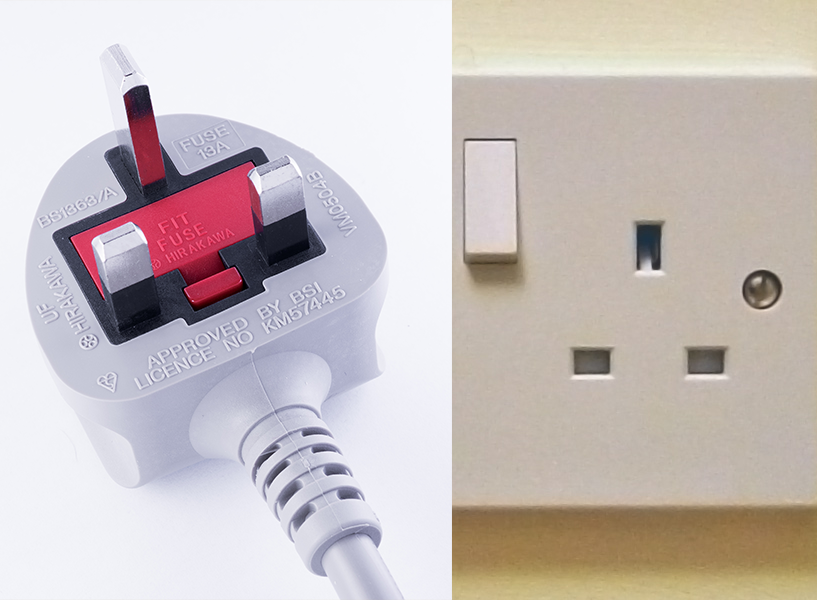
Saudi Arabia officially uses Type G plugs and sockets as its national standard. This is the same three-rectangular-pin plug used in the United Kingdom, Ireland, Malaysia, Singapore, Hong Kong, and most Gulf states. The switch to Type G was formalized in 2010 when the Kingdom adopted the BS 1363 standard to align with its Gulf neighbours.
However, Saudi Arabia’s electrical history means you may encounter other socket types, particularly in older buildings constructed before the 2010 standardization:
- Type A — Two flat parallel prongs (American-style, ungrounded). Common in older residential buildings, particularly those built before 2000 in the Eastern Province where Aramco’s American equipment first electrified the country.
- Type B — Three prongs including a grounding pin (American-style, grounded). Found alongside Type A in older infrastructure.
- Type C — Two round pins (Europlug). Occasionally found in buildings that used European equipment.
- Type G — Three rectangular pins (British-style). The current national standard, used in all new construction since 2010 and in most hotels, malls, and airports.
- Phone chargers, laptop chargers, tablet chargers, and USB adapters: These are switching power supplies that accept any frequency between 50 Hz and 60 Hz. Check the label — it will read something like “INPUT: 100–240V, 50/60Hz.” You are fine.
- Camera battery chargers: Almost all modern ones are dual-voltage and dual-frequency. Safe to use with just an adapter.
- Hair dryers and straighteners: This is where problems arise. Many are designed for a single voltage (either 110V or 220V). A 110V American hair dryer plugged into a 220V Saudi outlet will burn out immediately. Always check the label.
- Electric shavers: Most modern ones are dual-voltage. Verify on the device itself.
- Motorized appliances (clocks, record players, some fans): Devices with AC motors designed for 50 Hz will run 20% faster on Saudi Arabia’s 60 Hz supply. For most travelers this is irrelevant, but it matters for precision timing devices.
- Extra (eXtra) stores — Saudi Arabia’s largest electronics chain with locations in every major city. They carry universal adapters, country-specific adapters, and power strips with USB ports. Prices typically range from SAR 15–60 (USD 4–16) depending on the type. You can browse their selection on extra.com and check store locations in Riyadh, Jeddah, and the Eastern Province.
- Jarir Bookstore — Despite the name, Jarir is a major electronics retailer. Most branches carry travel adapters in their accessories section.
- Noon.com — Saudi Arabia’s largest e-commerce platform offers same-day or next-day delivery on adapters in Riyadh and Jeddah. Useful if you can wait a day.
- Both King Khalid International Airport (Riyadh) and King Abdulaziz International Airport (Jeddah) have electronics kiosks in the arrivals hall and duty-free areas that sell adapters, though prices are typically 50–100% higher than mall prices.
- Large malls like Riyadh Park, Kingdom Centre, Red Sea Mall (Jeddah), and Mall of Dhahran all have electronics sections or dedicated phone accessory shops that carry adapters.
- Some Carrefour and Lulu Hypermarket locations stock basic adapters in their electrical aisle.
- Socket type: Type G exclusively in rooms built or renovated since 2010.
- Bedside USB ports: Increasingly common in newer properties, particularly at brands like Hilton, Marriott, IHG, and Accor. Many newer rooms have USB-A and USB-C ports built into bedside tables or desk lamps.
- Bathroom outlets: Some hotels install two-pin (Type C or shaver-style) sockets in bathrooms for shavers, typically at 110V or dual-voltage. These are low-amperage and should only be used for shavers, not hair dryers.
- Adapter lending: Most 4- and 5-star hotels will lend you a plug adapter at reception free of charge. Ask at check-in if you have forgotten yours.
- Expect Type G sockets in most cases, but older properties may have a mix of Type A, B, or C alongside Type G.
- USB ports in rooms are less common at this level.
- Adapter lending is less reliable — bring your own.
- Hotels in the Haram area tend to use Type G sockets. During Hajj season, shared accommodation and tented camps in Mina may have limited outlets. A travel power strip is highly recommended.
- Charging phones is a critical concern during Hajj when you are away from your room for extended periods. Carry a portable power bank.
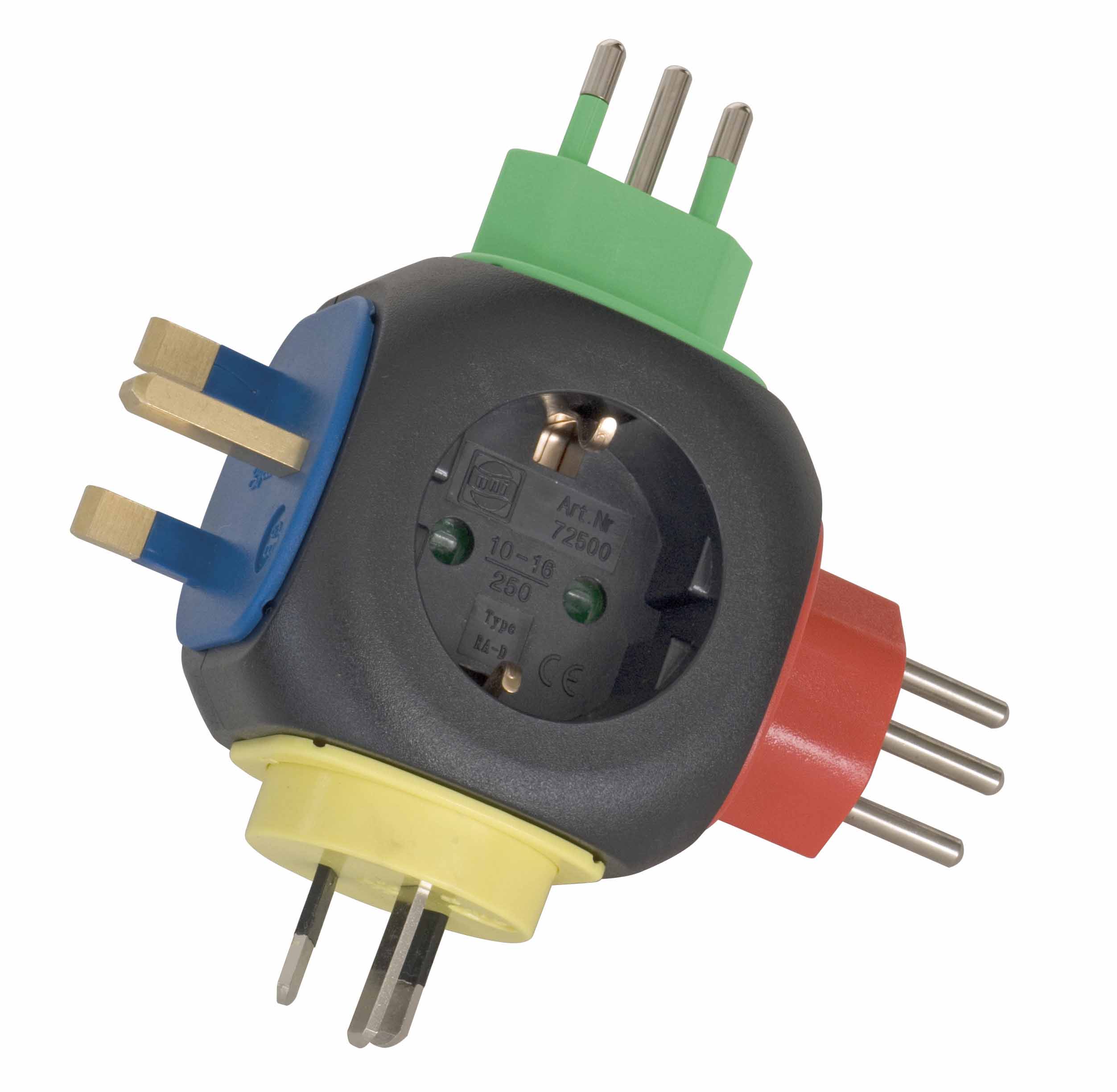
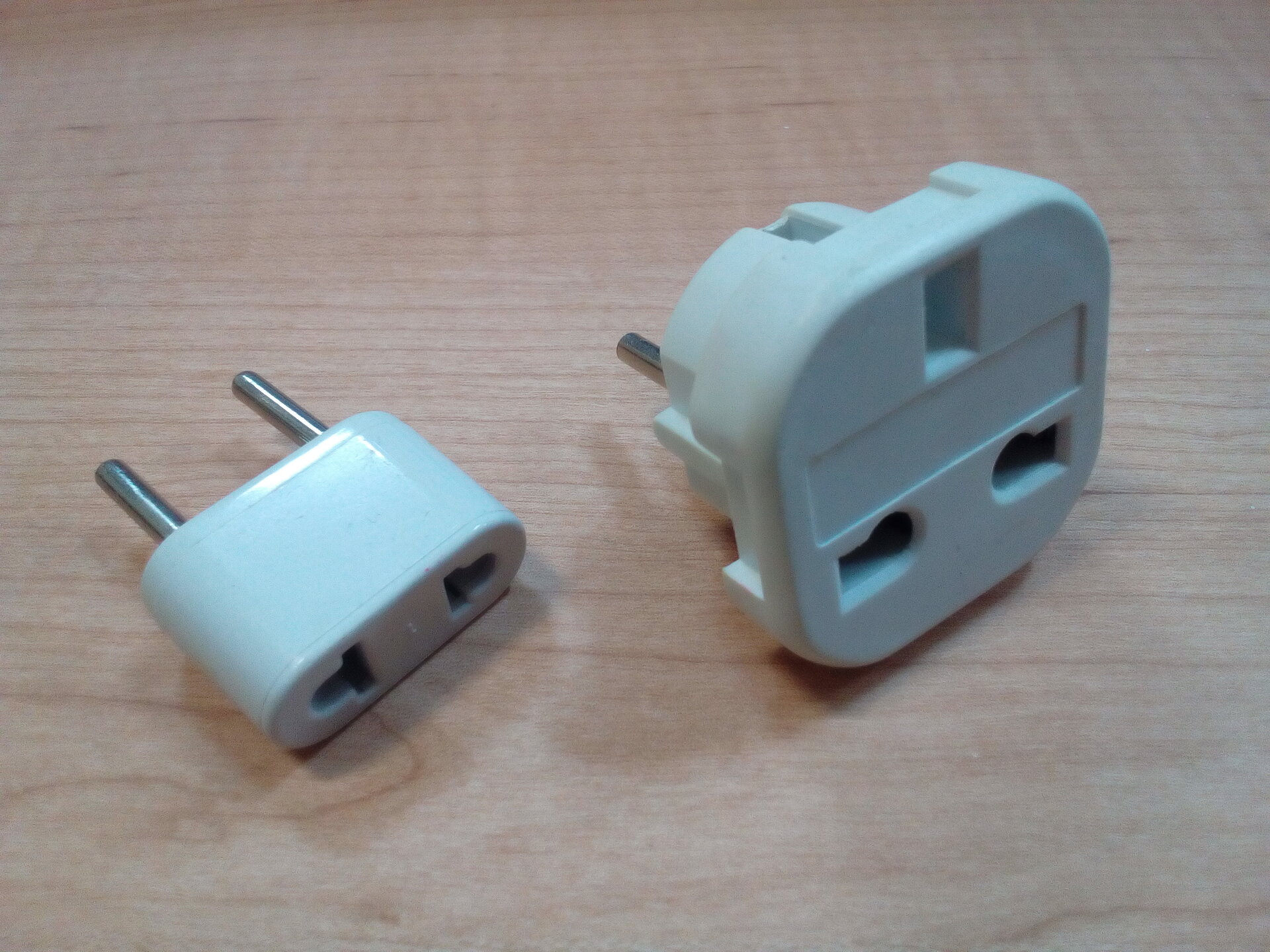
- A universal travel adapter — Choose one that includes Type G output (three rectangular pins). Universal adapters that cover US/EU/UK/AU plugs cost USD 10–25 and are available from Amazon, airport shops, and electronics retailers worldwide. Look for one with built-in USB-A and USB-C ports to reduce the total number of adapters you need.
- A short travel power strip — A power strip with a Type G plug and 3–4 outlets plus USB ports solves the problem of limited hotel outlets. You plug one adapter into the wall and get multiple charging points. This is especially useful for families or anyone traveling with multiple devices.
- A portable power bank (10,000–20,000 mAh) — Essential for long days of sightseeing in AlUla, desert excursions, or the extended hours of Hajj rituals. Keep it charged overnight and carry it during the day.
- A USB-C cable — Most modern hotels with USB ports use USB-A. If your phone charges via USB-C, bring your cable.
- A dual-voltage hair dryer or flat iron (if you need one) — Far simpler than carrying a bulky voltage converter. Check the label: “INPUT: 100–240V” means it is dual-voltage.
- A voltage converter/transformer — Modern consumer electronics are dual-voltage. Unless you plan to bring a vintage American appliance, skip the converter. They are heavy, expensive, and rarely necessary.
- Multiple country-specific adapters — One universal adapter covers everything. Saudi Arabia’s mix of old socket types (A, B, C) alongside the standard Type G means a universal adapter is more useful than a single-country adapter anyway.
- Post-2012 buildings: All wired for 220–240V with Type G sockets. This includes every modern hotel, shopping mall, airport terminal, and commercial building.
- Older residential buildings: May still have a mix of 127V and 220V circuits. In some older villas, lighting runs on 127V while air conditioning and large appliances run on 220V. This is a concern mainly for expats or long-stay visitors in older housing, not for hotel-based tourists.
- Saudi Electricity Company (SEC) transition: A Council of Ministers resolution mandated a gradual transition to 230/400V across the entire Kingdom, aligned with the IEC international standard. This process is ongoing.
- Type G sockets have built-in safety shutters. The socket openings are covered by internal shutters that only open when the earth pin (the top pin) is inserted first. This prevents accidental contact with live parts. Do not defeat this mechanism with objects.
- Type G plugs contain a fuse. Unlike most other plug standards, Type G plugs include a cartridge fuse (typically 3A or 13A) inside the plug itself. This provides an extra layer of protection. If a device stops working, the plug fuse may have blown — a replacement fuse costs less than SAR 5.
- Do not use cheap, ungrounded adapters for high-power devices. For phone chargers and laptops, any adapter is fine. For devices that draw significant power (kettles, heaters, hair dryers), use a grounded adapter or one rated for the appropriate amperage.
- Avoid daisy-chaining adapters. Plugging one adapter into another creates loose connections and potential fire hazards. Use a single adapter or a power strip with the correct plug type.
- SIM Cards in Saudi Arabia — How to get connected with STC, Mobily, or Zain the moment you land. Essential for navigation, ride-hailing, and staying in touch.
- Dress Code in Saudi Arabia — What to wear as a tourist, including what is required and what is simply recommended. Important for both men and women.
- Tipping in Saudi Arabia — Who to tip, how much, and when it is expected.
- Saudi Arabia Visa Guide — Everything you need to know about tourist e-visas, including which nationalities qualify.
- Saudi Arabia Travel Guide 2026 — The complete guide to visiting the Kingdom
- Saudi Arabia Visa Guide — Every visa type explained
- SIM Cards in Saudi Arabia — How to stay connected
- Currency and Money in Saudi Arabia — SAR, ATMs, and tipping
- Dress Code in Saudi Arabia — What to wear as a tourist
- Riyadh Travel Guide — Complete guide to the capital
Practical tip: If you are staying in a hotel built or renovated within the last 15 years — which includes virtually every international chain hotel in Riyadh, Jeddah, and Dammam — expect Type G sockets exclusively. The older socket types are a concern mainly for budget accommodation or residential stays.
Voltage and Frequency: The Saudi Difference
This is where Saudi Arabia gets genuinely unusual. The standard voltage is 220–240V, which is comparable to Europe, the UK, and Australia. But the frequency is 60 Hz, not the 50 Hz used by virtually every other 220V country on earth.
Why 60 Hz?
The answer lies in Aramco. When the Arabian American Oil Company (later Saudi Aramco) built the Kingdom’s first power grid in the mid-20th century, it used American equipment running at 120V and 60 Hz. Saudi Arabia’s neighbours — Kuwait, Bahrain, Qatar, the UAE, and Oman — were British protectorates that inherited the 230V/50 Hz British standard. Saudi Arabia was never colonized and developed its infrastructure independently through American oil companies.
In 2010, the Kingdom began transitioning from 127V to 230V to match the regional voltage standard, but kept the 60 Hz frequency because converting an entire national grid’s frequency would be prohibitively expensive. The result: Saudi Arabia operates at 220–240V / 60 Hz, a combination found in very few countries worldwide.
What Does This Mean for Your Devices?
For the vast majority of travelers, the 60 Hz frequency makes no practical difference. Here is why:
Key rule: Look at the label on every device you plan to bring. If it reads “INPUT: 100–240V, 50/60Hz,” you only need a plug adapter. If it reads a single voltage like “120V” or “220V 50Hz only,” you may need a voltage converter or should leave it at home.
Which Adapter Do You Need? A Guide by Country
Since Saudi Arabia’s standard is Type G, here is what travelers from each major origin country need:
| Your Country | Your Plug Type | Adapter Needed? | Voltage Converter? | What to Buy |
|---|---|---|---|---|
| United States / Canada | Type A / B | Yes | No (if dual-voltage device) | Type A/B to Type G adapter |
| United Kingdom / Ireland | Type G | No | No | Nothing needed |
| European Union (most) | Type C / F | Yes | No | Type C/F to Type G adapter |
| Australia / New Zealand | Type I | Yes | No | Type I to Type G adapter |
| India | Type C / D / M | Yes | No | Universal adapter recommended |
| Malaysia / Singapore / Hong Kong | Type G | No | No | Nothing needed |
| Japan | Type A | Yes | No (if dual-voltage) | Type A to Type G adapter |
| South Korea | Type C / F | Yes | No | Type C/F to Type G adapter |
| China | Type A / C / I | Yes | No | Universal adapter recommended |
| Brazil | Type N | Yes | No (if dual-voltage) | Type N to Type G adapter |
| South Africa | Type M / N | Yes | No | Type M to Type G adapter |
| Pakistan / Bangladesh | Type C / D / G | Maybe | No | Check your specific plug; Type G devices work directly |
| Egypt / Jordan | Type C / F | Yes | No | Type C/F to Type G adapter |
| Indonesia / Philippines | Type A / B / C | Yes | No (if dual-voltage) | Universal adapter recommended |
A Note for American Travelers
If you are traveling from the United States or Canada, your devices will encounter a voltage roughly double what they are designed for if they are 110V-only appliances. Modern electronics — laptops, phones, tablets, cameras — are virtually always dual-voltage and will work perfectly with just a plug adapter. The items to watch out for are older hair dryers, curling irons, and any device with a heating element. If the label says “120V only,” either leave it behind or pack a step-down voltage converter. Most travelers find it simpler to buy a dual-voltage hair dryer or use the one provided by the hotel.
A Note for European Travelers
Your devices are already rated for 220–240V, so the voltage is identical. You only need a simple Type C/F to Type G plug adapter, which costs a few euros. The 60 Hz frequency (versus Europe’s 50 Hz) will not affect any consumer electronics.
Where to Buy Adapters in Saudi Arabia
If you arrive without an adapter, you can buy one easily at multiple locations across the Kingdom:
Electronics Retailers
Airports
Malls and Supermarkets
Money tip: Adapters in Saudi Arabia are priced in Saudi Riyals (SAR). A basic single-plug adapter costs SAR 10–25 (USD 3–7). A universal adapter with USB ports costs SAR 30–80 (USD 8–21). Paying by card is accepted everywhere — see our currency guide for more on money matters.
What to Expect in Saudi Hotels
Most international-standard hotels in Saudi Arabia have standardized on Type G sockets throughout their rooms. Here is what you can generally expect:
Five-Star and International Chain Hotels
Budget and Mid-Range Hotels
Hajj and Umrah Accommodation in Mecca and Medina
What to Pack: The Essential Checklist
Based on the realities of Saudi Arabia’s electrical system, here is what we recommend packing:
Essential for All Travelers (Not from UK/Malaysia/Singapore)
Recommended Additions
You Probably Do NOT Need
The Saudi Voltage Transition: What Travelers Should Know
Saudi Arabia is in the middle of a multi-decade voltage transition. Understanding this helps explain why you might encounter different voltages in different settings:
For tourists, the practical takeaway is simple: hotels and public venues operate at 220–240V with Type G sockets. The voltage transition is a background process that does not affect short-term visitors.
Safety Considerations
A few important safety notes when dealing with Saudi Arabia’s electrical system:
Frequently Asked Questions
Can I charge my iPhone or Android phone in Saudi Arabia without a converter?
Yes. All Apple and Samsung chargers (and virtually all phone chargers from any manufacturer) are dual-voltage, accepting 100–240V at 50/60 Hz. You only need a plug adapter to physically fit the Type G socket. The charger handles the voltage difference automatically.
Will my laptop work in Saudi Arabia?
Yes. Laptop power supplies are universally dual-voltage. Check the power brick — it will show “INPUT: 100–240V, 50/60Hz.” You need only a plug adapter.
Do I need a different adapter for different cities?
No. The same Type G socket is standard across the entire Kingdom — Riyadh, Jeddah, Mecca, Medina, Dammam, AlUla, Abha, and Tabuk. One adapter works everywhere.
I am coming from the UK. Do I need anything?
No. Saudi Arabia uses the same Type G plug as the United Kingdom. Your devices will plug directly into Saudi sockets without any adapter.
Can I buy a universal adapter at the airport?
Yes, both Riyadh and Jeddah airports sell adapters, but expect to pay a premium of 50–100% over mall prices. If possible, buy one before your flight or order from Noon.com for next-day delivery to your hotel.
What about the older American-style (Type A/B) sockets?
If you encounter Type A or B sockets in older buildings, American and Japanese plugs will fit directly. However, be cautious about voltage — these old sockets may be on either 127V or 220V circuits. Modern dual-voltage devices handle both, but single-voltage 110V appliances could be damaged on a 220V circuit.
Packing for Saudi Arabia: Related Guides
Electrical adapters are just one part of preparing for a trip to Saudi Arabia. For a complete packing and planning experience, see these related guides: