
Saudi Arabia has invested hundreds of billions of riyals in public transport infrastructure over the past decade, and the results are now visible to every visitor. The Kingdom’s first automated metro system opened in Riyadh in late 2024, a 300 km/h high-speed railway already connects the holy cities, and a nationwide bus network reaches even remote provinces. This guide — part of our Saudi Arabia Travel Guide 2026 — covers every mode of public transport available to tourists: the Riyadh Metro, the Haramain High Speed Railway, SAR intercity trains, SAPTCO buses, city bus networks in Riyadh and Jeddah, and the ride-hailing apps that fill the gaps in between. Whether you are heading from Riyadh to Dammam, or from Jeddah to the Holy Mosque, this page explains exactly how to get there, what it costs, and what to expect.
Best Urban Network: Riyadh Metro (6 lines, 85 stations, 176 km)
Long-Distance Rail: Haramain High Speed Railway (Mecca–Jeddah–Medina, 300 km/h)
Intercity Buses: SAPTCO / SAT (nationwide network, 4,500+ vehicles)
Ride-Hailing Apps: Careem, Uber, Bolt, Jeeny
Visa Required: Yes — tourist e-visa available
Payment: Darb card or app (metro), bank cards, Mada, Apple Pay, cash
Top Tip: Never take an unmarked taxi without agreeing a fare first — always use an app
Riyadh Metro — The World’s Longest Driverless Network
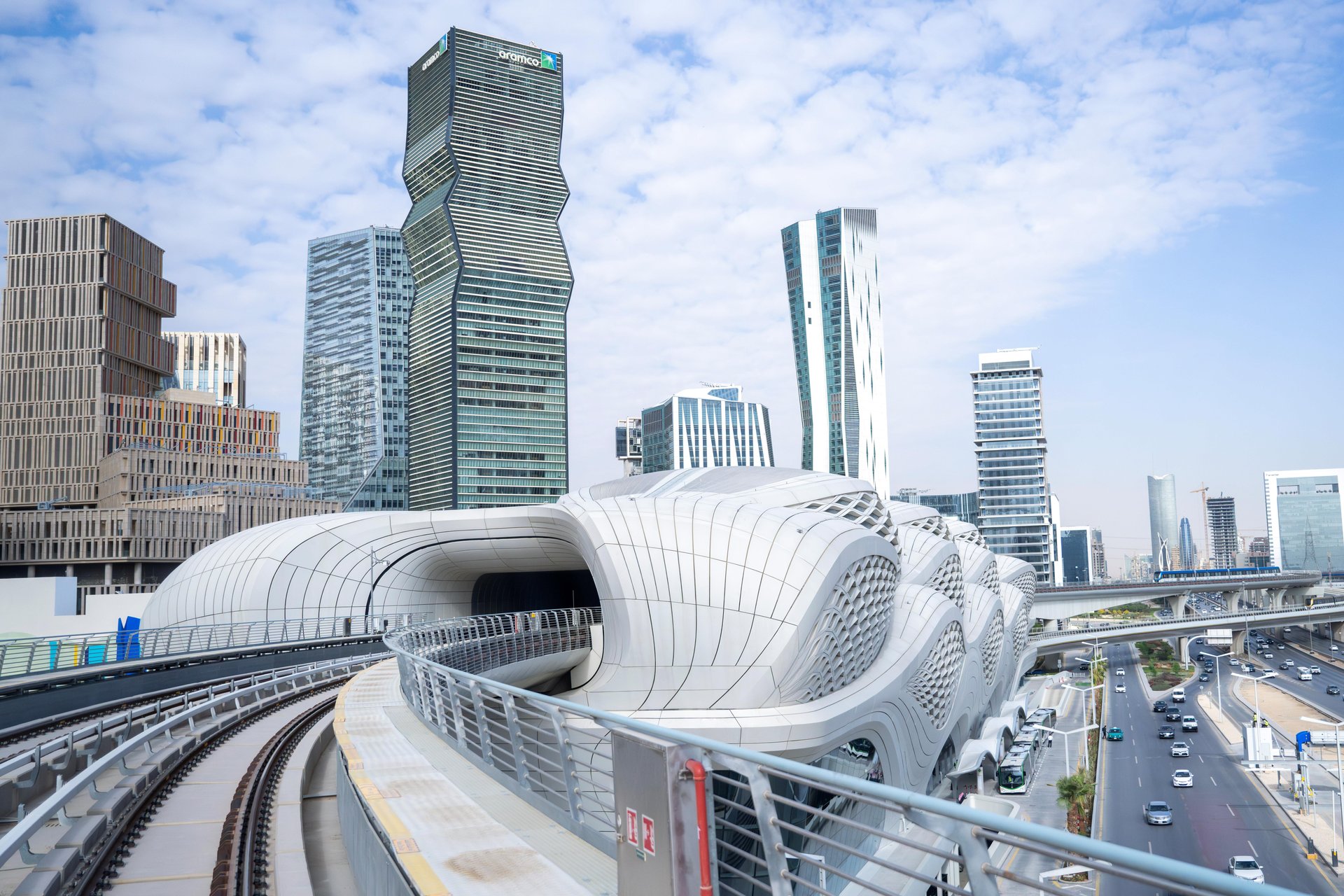
Inaugurated by King Salman on 27 November 2024 and opened to the public on 1 December 2024, the Riyadh Metro holds the Guinness World Record as the longest fully automated, driverless metro network in the world. Spanning 176 kilometres across six colour-coded lines and 85 stations, it has transformed how residents and visitors move around the Saudi capital. If you are visiting Riyadh for the first time, the metro is the easiest way to reach major landmarks, shopping districts, and government buildings without getting stuck in the capital’s famously dense traffic.
The Six Lines at a Glance
| Line | Colour | Length | Stations | Key Stops | Opened |
|---|---|---|---|---|---|
| Line 1 | Blue | 38 km | 25 | Olaya, Al Batha, Ad Dar Al-Baida | 1 Dec 2024 |
| Line 2 | Red | 25.1 km | 15 | King Fahd Sports City, King Saud University, Convention Centre | 15 Dec 2024 |
| Line 3 | Orange | 40.7 km | 22 | Jeddah Expressway, Al-Madinah Al-Munawarah Road | 5 Jan 2025 |
| Line 4 | Yellow | 29.6 km | 10 | King Khalid International Airport, KAFD | 1 Dec 2024 |
| Line 5 | Green | 13.3 km | 7 | King Abdulaziz Road, National Museum, Ministry of Education | 15 Dec 2024 |
| Line 6 | Purple | 29.7 km | 6 | An Naseem, King Abdullah Financial District | 1 Dec 2024 |
The Yellow Line (Line 4) is the most important for tourists arriving by air, as it connects King Khalid International Airport directly to the King Abdullah Financial District (KAFD). The Blue Line (Line 1) is the backbone for everyday sightseeing, running north-south through the commercial heart of the city along Olaya Street and Al Batha. The longest line, the Orange Line (Line 3) at 40.7 km, stretches east to west and opened last in January 2025.
Fares and Ticketing
The Riyadh Metro uses a simple, flat-rate fare structure:
- Single ride (2-hour pass): SAR 4 (~USD 1.07)
- 3-day pass: SAR 20 (~USD 5.33) — best value for tourists on a short visit
- Weekly pass: SAR 40 (~USD 10.67)
- Monthly pass: SAR 140 (~USD 37.33)
- Annual pass: SAR 1,260 (regular) / SAR 3,150 (First Class)
- Makkah Station — Ar Rusayfah District, approximately 3.5 km from Masjid al-Haram
- Jeddah (Al-Sulimaniyah) Station — An Nassim District, 20 km from the airport
- King Abdulaziz International Airport (KAIA) Station — integrated within the main airport terminal
- King Abdullah Economic City (KAEC) Station — near the Hejaz Gate, 18 km from King Abdullah Port
- Madinah Station — Al Hadra District, about 9 km from the city centre
- Careem — The most widely used app in Saudi Arabia. Originally a Dubai-based startup (now owned by Uber), Careem functions as an “everything app” offering rides, food delivery, grocery shopping, and even inter-city transport. It has the largest driver pool outside central Riyadh and Jeddah, making it the most reliable option in smaller cities.
- Uber — Operates independently alongside Careem despite owning it. Popular with international tourists who already have the app installed. Service quality and driver availability are strong in Riyadh, Jeddah, and Dammam.
- Bolt — Growing rapidly in Saudi Arabia with competitive pricing, often slightly cheaper than Careem or Uber for the same route.
- Jeeny — A local favourite in Riyadh and Jeddah, particularly for shorter trips. Offers fixed fares with no surge pricing.
- inDrive — Lets riders and drivers negotiate fares, which can be useful when demand is high and other apps apply surge pricing.
- Download apps in advance: Get Darb (for Riyadh Metro/bus), Careem, Uber, and the HHR Train app before you arrive. All are available in English.
- Mada is king: The Saudi debit card system, Mada, is accepted almost universally at ticket machines and on apps. International Visa and Mastercard cards also work on most apps and for online train bookings.
- Carry some cash: While digital payments are widespread, SAPTCO bus station counters in smaller cities may only accept cash. Keep SAR 50–100 in small bills for emergencies.
- Free Wi-Fi: Riyadh Metro stations and Haramain Railway trains offer free Wi-Fi. City buses generally do not.
- Dress modestly: Public transport in Saudi Arabia is shared space. Both men and women should dress conservatively, covering shoulders and knees.
- Family sections: Some SAPTCO buses and SAR trains have designated family sections. Solo women may prefer these areas for longer journeys, though there is no legal requirement to sit separately.
- Prayer times: While the Riyadh Metro and Haramain Railway run continuously through prayer times, some bus services may pause briefly. Station shops and food outlets close during prayer.
- Summer heat: If you are waiting for a bus at an outdoor stop between May and September, the temperature can exceed 45 degrees Celsius. Carry water, use the sheltered waiting areas where available, and consider travelling early morning or after sunset.
- Riyadh Metro Red Line extension: Adding 8.4 km and five new stations to Line 2, including connections to Historic Diriyah and Medical City.
- Jeddah Metro: A planned metro system for Jeddah has been in the design phase as part of the broader Jeddah Public Transport Program, though no construction start date has been confirmed.
- Landbridge railway: A proposed east-west rail link connecting Riyadh to Jeddah across the peninsula, which would dramatically reduce overland travel times between the two coasts.
- Jeddah BRT expansion: The full JPTP programme envisions 67 bus routes covering 2,700 km, which will make Jeddah’s bus network one of the largest in the Middle East.
- Electric bus fleets: Both Riyadh and Jeddah are introducing electric buses, with Jeddah already deploying its first three electric vehicles.
- Saudi Arabia Travel Guide 2026 — The complete guide to visiting the Kingdom
- Riyadh Travel Guide 2026 — Everything you need to know about the capital
- Jeddah Travel Guide 2026 — The Red Sea gateway city explored
- Dammam & Al Khobar Travel Guide — The Eastern Province for visitors
- Saudi Arabia Hotels Guide — Where to stay across the Kingdom
- Saudi Arabia Visa Guide — Every visa type explained
Tickets are purchased through the Darb app (available on iOS and Android in English and Arabic) or at ticket vending machines inside every station. You can also buy a physical Darb contactless card for SAR 10 (non-refundable) and reload it with SAR 5–200 at machines using cash, Mada, or Apple Pay. Alternatively, the Darb app generates QR-code tickets on your phone, eliminating the need for a physical card entirely.
Tourist tip: The 3-day pass at SAR 20 is the most practical option for visitors. It allows unlimited rides across all six lines for 72 hours from activation. Download the Darb app before you arrive to avoid queues at station machines.
Operating Hours
The Riyadh Metro runs daily from 6:00 AM to midnight. Trains operate at intervals of approximately 3–5 minutes during peak hours and 5–10 minutes during off-peak times. Prayer-time closures do not apply to the metro system — it operates continuously within its published hours.
Future Expansion
The Red Line (Line 2) is being extended by 8.4 km with five new stations, connecting additional destinations including Medical City and Historic Diriyah. This expansion will further improve the metro’s coverage of western Riyadh.
Haramain High Speed Railway — Mecca to Medina in Two Hours
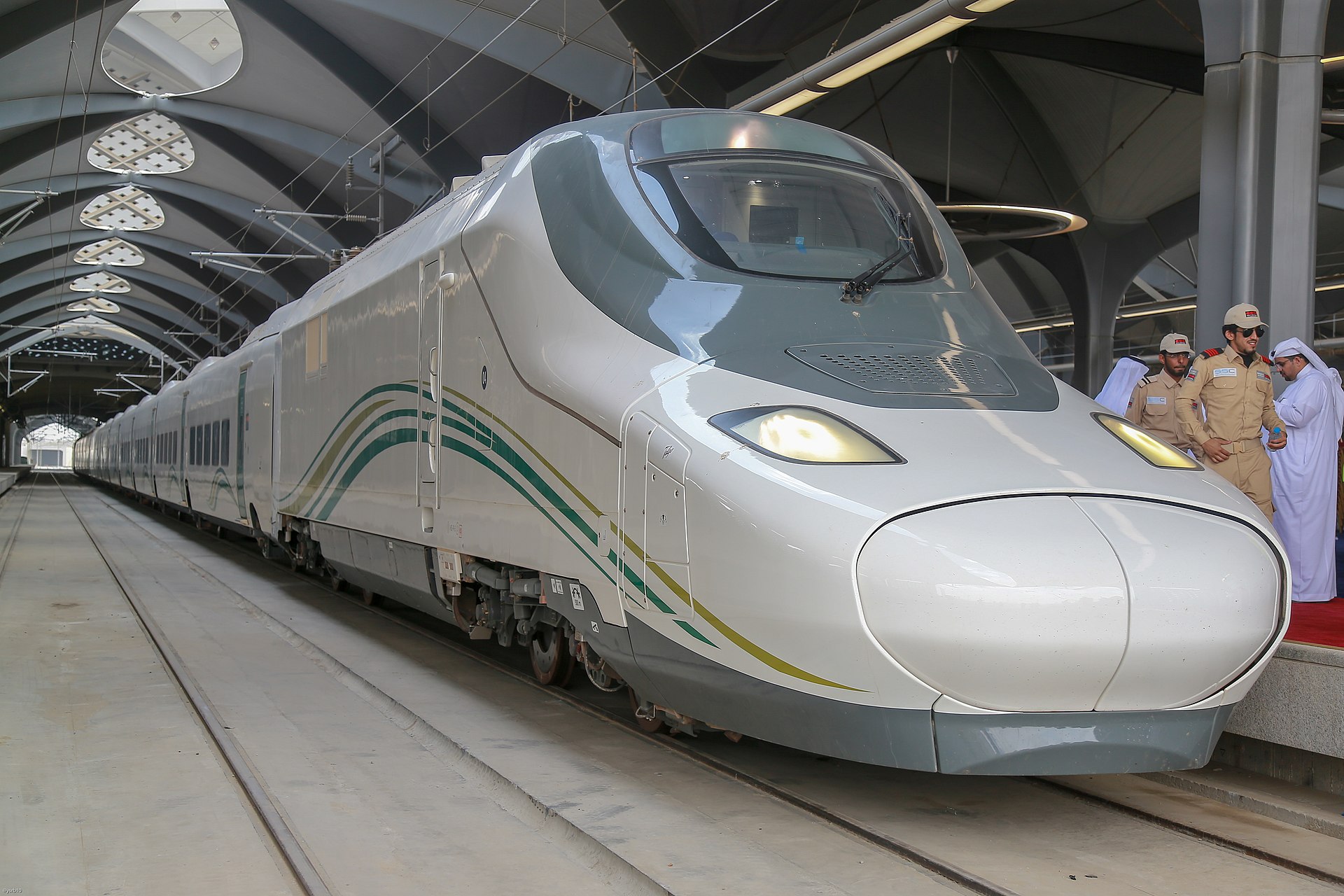
The Haramain High Speed Railway (HHR) is the Middle East’s fastest train and the only high-speed rail service in the Gulf region. Running at speeds of up to 300 km/h along a 450-kilometre route, it connects the two holiest cities in Islam — Mecca and Medina — via Jeddah and King Abdullah Economic City. For pilgrims and tourists alike, it replaces what was once a five-hour drive with a comfortable two-hour-twenty-minute train journey.
Stations
The HHR serves five stations along its route:
The KAIA station is particularly useful for international travellers arriving at Jeddah airport, as you can step off your flight and board a high-speed train to Mecca or Medina without leaving the terminal complex.
Fares
| Route | Economy (SAR) | Business (SAR) | Journey Time |
|---|---|---|---|
| Jeddah Airport → Makkah | 34 | 78 | ~30 min |
| Jeddah (Sulaimaniyah) → Makkah | 46 | 82 | ~20 min |
| Jeddah → Madinah | 150 | 210 | ~1 hr 40 min |
| Makkah → KAEC | 115 | 265 | ~1 hr |
| Makkah → Madinah | 225 | 380 | ~2 hr 20 min |
Booking tip: Tickets can be booked online through the official HHR portal at sar.hhr.sa or via the HHR Train app. During Hajj and Umrah peak seasons, trains fill up fast — book at least a week in advance. Schedules may vary slightly around prayer times and during Ramadan.
Onboard Experience
Haramain trains are built by Talgo (Spain) and offer two classes. Economy class features comfortable reclining seats with charging ports and onboard Wi-Fi. Business class adds wider seats, extra legroom, and complimentary refreshments. Luggage allowances are generous — each passenger may bring two suitcases and a carry-on bag, which is especially convenient for pilgrims with Zamzam water containers.
SAR Intercity Trains — East Line and North Line
Saudi Arabia Railways (SAR) operates two conventional rail corridors that are essential for travellers visiting the eastern and northern provinces. These are not high-speed services but offer a comfortable and affordable alternative to long-distance driving or bus travel.
East Line: Riyadh to Dammam
The East Line connects Riyadh to Dammam on the Arabian Gulf coast, a distance of approximately 420 km. The journey takes around four and a half hours. One or two daytime trains run in each direction daily, plus an overnight sleeper service with four-berth private compartments — a particularly good option if you want to save on a night’s accommodation.
| Route | Economy (SAR) | Business (SAR) | Time |
|---|---|---|---|
| Riyadh → Dammam | 85 | ~170+ | ~4 hr 30 min |
| Riyadh → Hofuf | 60 | ~120+ | ~3 hr |
| Riyadh → Abqaiq | 70 | ~140+ | ~3 hr 30 min |
Economy fares shown above are for advance booking; last-minute tickets cost approximately 50–60% more (e.g., Riyadh–Dammam rises to SAR 135 if booked close to departure). Business class fares are roughly double economy. Booking opens 30 days before departure at tickets.sar.com.sa.
North Line: Riyadh to Qurayyat
The North Line is Saudi Arabia’s longest passenger rail route, stretching 1,200 km from Riyadh through the Qassim region, Hail, and the Jawf area all the way to Qurayyat near the Jordanian border. This is a genuine long-distance train experience, covering terrain from central desert plateau to the volcanic landscapes of northern Arabia.
| Route | Economy (SAR) | Late Booking (SAR) | Approx. Time |
|---|---|---|---|
| Riyadh → Al Majmaah | 60 | 105 | ~1 hr 30 min |
| Riyadh → Qassim (Buraydah) | 105 | 175 | ~3 hr |
| Riyadh → Hail | 140 | 215 | ~5 hr |
| Riyadh → Jawf (Sakaka) | 220 | 290 | ~8 hr |
| Riyadh → Qurayyat | 275 | 420 | ~10 hr |
Practical note: The North Line departs Riyadh in the afternoon (earliest at approximately 15:05), meaning it arrives at northern destinations in the late evening or overnight. For Hail and beyond, plan to arrive in darkness. You can save up to 55% by booking early through the SAR website rather than purchasing at the station.
SAPTCO Intercity Buses — The Budget Backbone
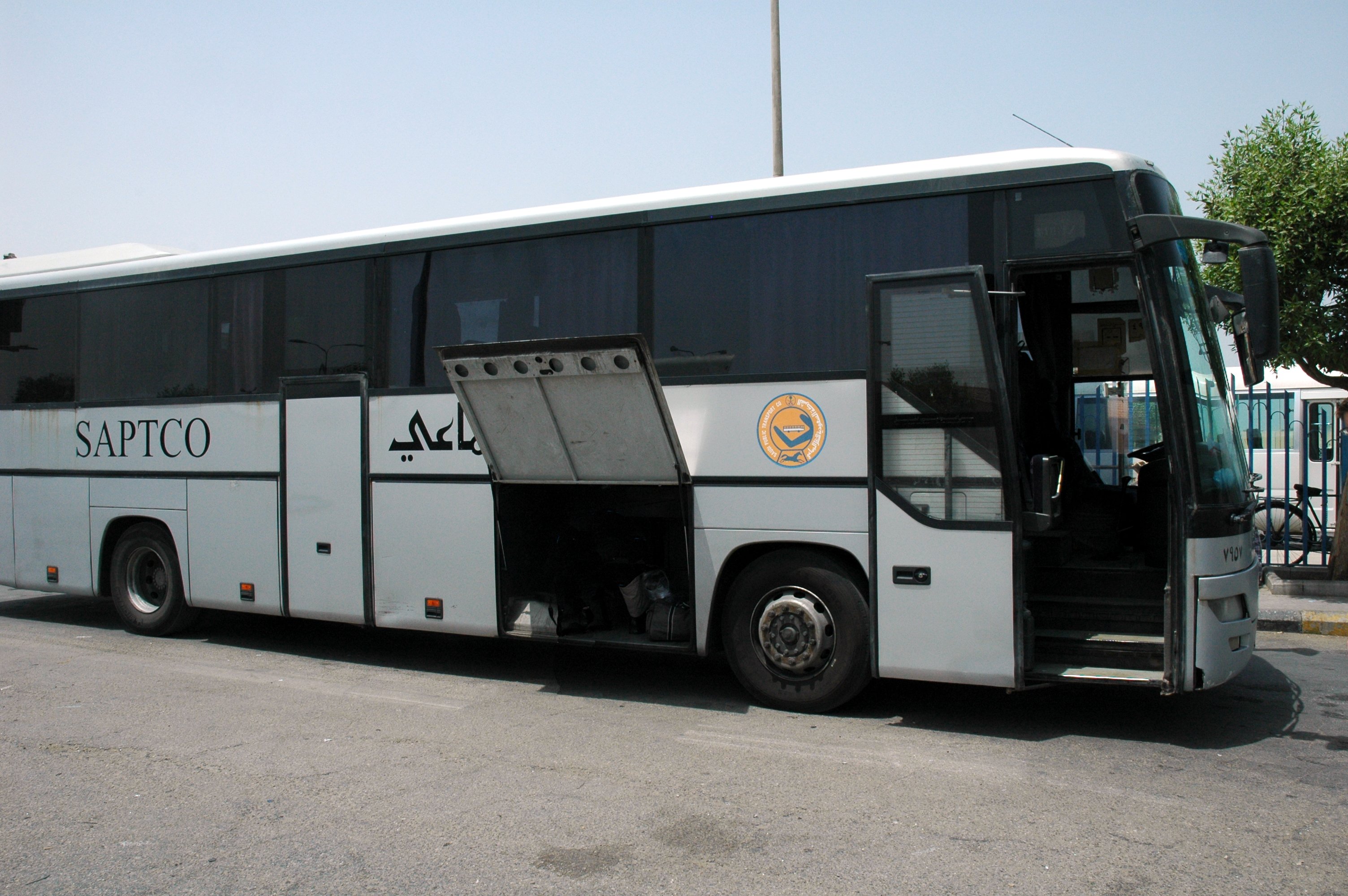
The Saudi Public Transport Company (SAPTCO, also branded as SAT) is the Kingdom’s largest bus operator, running over 4,500 vehicles on routes that connect virtually every city and major town. For budget-conscious travellers, SAPTCO is the most affordable way to cross the country, and it reaches many destinations that trains do not serve — including Abha, Tabuk, and Jizan.
Key Routes and Fares
| Route | Fare (SAR) | Approx. USD | Travel Time |
|---|---|---|---|
| Riyadh → Jeddah | 207 | ~55 | ~10 hr |
| Riyadh → Makkah | 184 | ~49 | ~9 hr |
| Riyadh → Dammam | 105 | ~28 | ~5 hr |
| Riyadh → Abha | 209 | ~56 | ~10 hr |
| Jeddah → Makkah | 20 | ~5 | ~1 hr |
| Makkah → Madinah | 69 | ~18 | ~5 hr |
| Jeddah → Abha | 160 | ~43 | ~8 hr |
| Jeddah → Dammam | 302 | ~81 | ~14 hr |
| Dammam → Makkah | 276 | ~74 | ~12 hr |
| Tabuk → Makkah | 243 | ~65 | ~12 hr |
Fares shown are economy class. SAPTCO also offers Business and VIP classes on popular routes, with wider seats, extra legroom, and refreshment service at a premium of roughly 30–80% above economy. Prices may increase during peak periods (Hajj, Ramadan, school holidays).
Booking and Payment
Tickets can be booked up to 30 days in advance through the SAPTCO website (saptco.com.sa) or the SAT mobile app. Payment options include Mada, Visa, Mastercard, SADAD, STC Pay, and cash at bus station counters. During Hajj season, routes connecting Jeddah, Mecca, and Medina sell out days ahead — book early.
Comfort tip: For overnight journeys (Riyadh–Jeddah, Riyadh–Abha), the VIP class is worth the upgrade. Seats recline almost flat, and the buses are equipped with personal screens and USB charging. Bring a light blanket — the air conditioning can be fierce.
City Buses — Riyadh and Jeddah
Riyadh Bus Network
Complementing the metro, Riyadh’s city bus network now operates 87 routes across 3,000 stops. Buses run from approximately 5:30 AM to 11:30 PM daily, making them a useful option for reaching destinations beyond walking distance of metro stations. Fares are low — typically SAR 2–4 per ride — and can be paid using the same Darb card or app that you use for the metro. The Riyadh Bus app and website (riyadhbus.sa) provide real-time tracking and route planning.
Jeddah City Buses
Jeddah’s public bus system has expanded significantly under the Jeddah Public Transport Program (JPTP). As of April 2026, the network operates 14 routes with 91 buses (including three electric vehicles) and 383 stops, with a goal of serving 9 million riders annually. Phase one of the larger JPTP rollout is introducing 25 routes covering over 1,000 km of service. A dedicated Bus Rapid Transit (BRT) corridor runs 26 km along Sari Street, offering faster, traffic-separated service. Jeddah’s bus network is particularly useful for reaching the Corniche, Al Balad historical district, and the airport.
Taxis and Ride-Hailing Apps
In a country where distances between destinations can be large and public transport does not yet reach every neighbourhood, ride-hailing apps are an essential tool for tourists. Saudi Arabia has a competitive market with several major platforms.
The Main Apps
Traditional Taxis
Traditional metered taxis (white sedans with a green roof) still operate in major cities, but they are increasingly uncommon compared to app-based services. If you do hail a taxi on the street, be aware that meters may not always be used. Always agree on the fare before getting in, or better yet, open Careem or Uber to check the estimated fare and use that as your negotiating benchmark.
Safety note: Ride-hailing apps are strongly recommended over unmarked private cars. Licensed drivers undergo background checks, trips are GPS-tracked, and fare disputes are handled through the platform. Women can travel alone in ride-hailing vehicles without restriction — Saudi Arabia lifted its female driving ban in 2018, and the ride-hailing industry has since normalised solo female passengers.
Approximate Ride-Hailing Costs
As a rough guide, short urban trips within Riyadh or Jeddah cost SAR 15–30 (USD 4–8) via app. Airport transfers tend to be SAR 50–100 depending on distance and time of day. Surge pricing applies during rush hours (7–9 AM, 4–7 PM) and after major events. Inter-city rides are possible via Careem but are substantially more expensive than bus or train; a Riyadh-to-Dammam Careem ride costs approximately SAR 700–900.
Comparing Your Transport Options
The table below summarises the main ways to get around Saudi Arabia, helping you choose the right mode for your journey.
| Mode | Best For | Speed | Cost | Comfort | Booking |
|---|---|---|---|---|---|
| Riyadh Metro | Getting around Riyadh | Fast | SAR 4/ride | High | Darb app / station machines |
| Haramain Railway | Jeddah–Mecca–Medina corridor | Very fast (300 km/h) | SAR 34–380 | Very high | sar.hhr.sa / HHR app |
| SAR East Line | Riyadh to Eastern Province | Moderate | SAR 60–135 | Good | tickets.sar.com.sa |
| SAR North Line | Riyadh to Hail, Jawf, Qurayyat | Moderate | SAR 60–420 | Good | tickets.sar.com.sa |
| SAPTCO Bus | Budget intercity travel nationwide | Slow | SAR 20–302 | Varies | saptco.com.sa / SAT app |
| City Bus (Riyadh) | Filling metro gaps | Slow–moderate | SAR 2–4 | Basic | Darb app |
| Ride-hailing (Careem/Uber) | Door-to-door, flexibility | Fast | SAR 15–100+ | High | Careem / Uber / Bolt app |
Practical Tips for Tourists Using Public Transport
Payment and Connectivity
Cultural Considerations
Accessibility
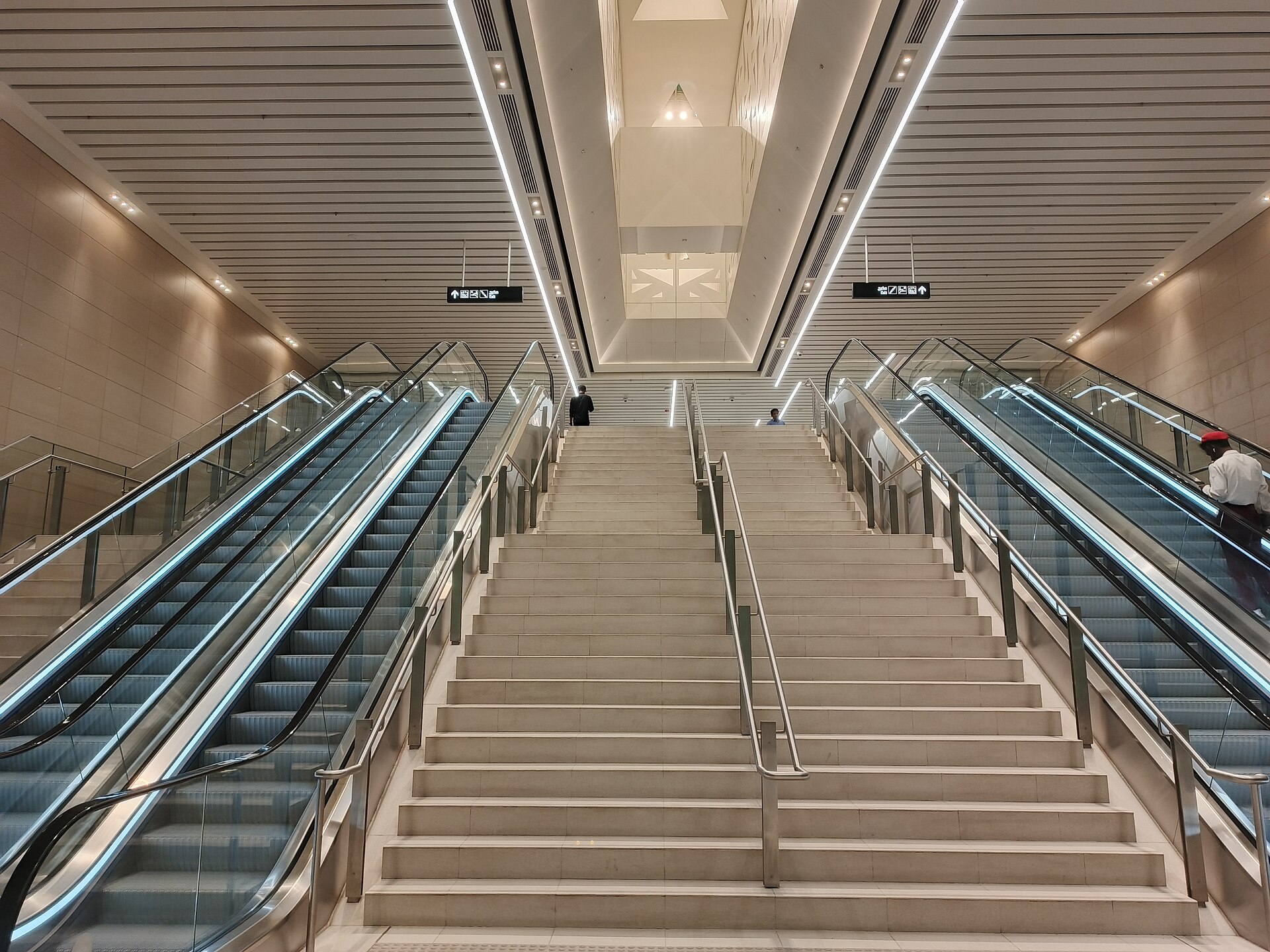
The Riyadh Metro was designed to modern accessibility standards, with lifts, tactile paving, and priority seating at all 85 stations. Haramain Railway stations are also fully accessible. SAPTCO’s newer intercity coaches have wheelchair-accessible boarding on select routes, but availability is not guaranteed — call SAPTCO customer service (920027227) in advance to confirm.
Getting from the Airport
At King Khalid International Airport in Riyadh, the Yellow Line (Line 4) of the metro provides a direct connection to KAFD and the wider metro network. At King Abdulaziz International Airport in Jeddah, the Haramain Railway station is integrated into the terminal, with trains running to Mecca, KAEC, and Medina. At King Fahd International Airport in Dammam, there is no direct rail link — use a ride-hailing app (SAR 30–50 to central Dammam or Al Khobar).
Planned Expansions and Future Transport
Saudi Arabia’s transport infrastructure is still expanding rapidly under Vision 2030. Key developments to watch include:
Getting to Accommodation from Transport Hubs
Once you arrive at a major transport hub, connecting to your hotel is straightforward. In Riyadh, the metro connects to all major hotel districts — Olaya Street (Line 1), KAFD (Lines 4 and 6), and Diplomatic Quarter (Line 3). In Jeddah, SAPTCO buses and ride-hailing apps cover the Corniche, Al Hamra, and Palestine Street hotel clusters. In the Eastern Province, ride-hailing is the simplest last-mile option from Dammam train station to hotels in Al Khobar (approximately SAR 30–40, 20 minutes).