
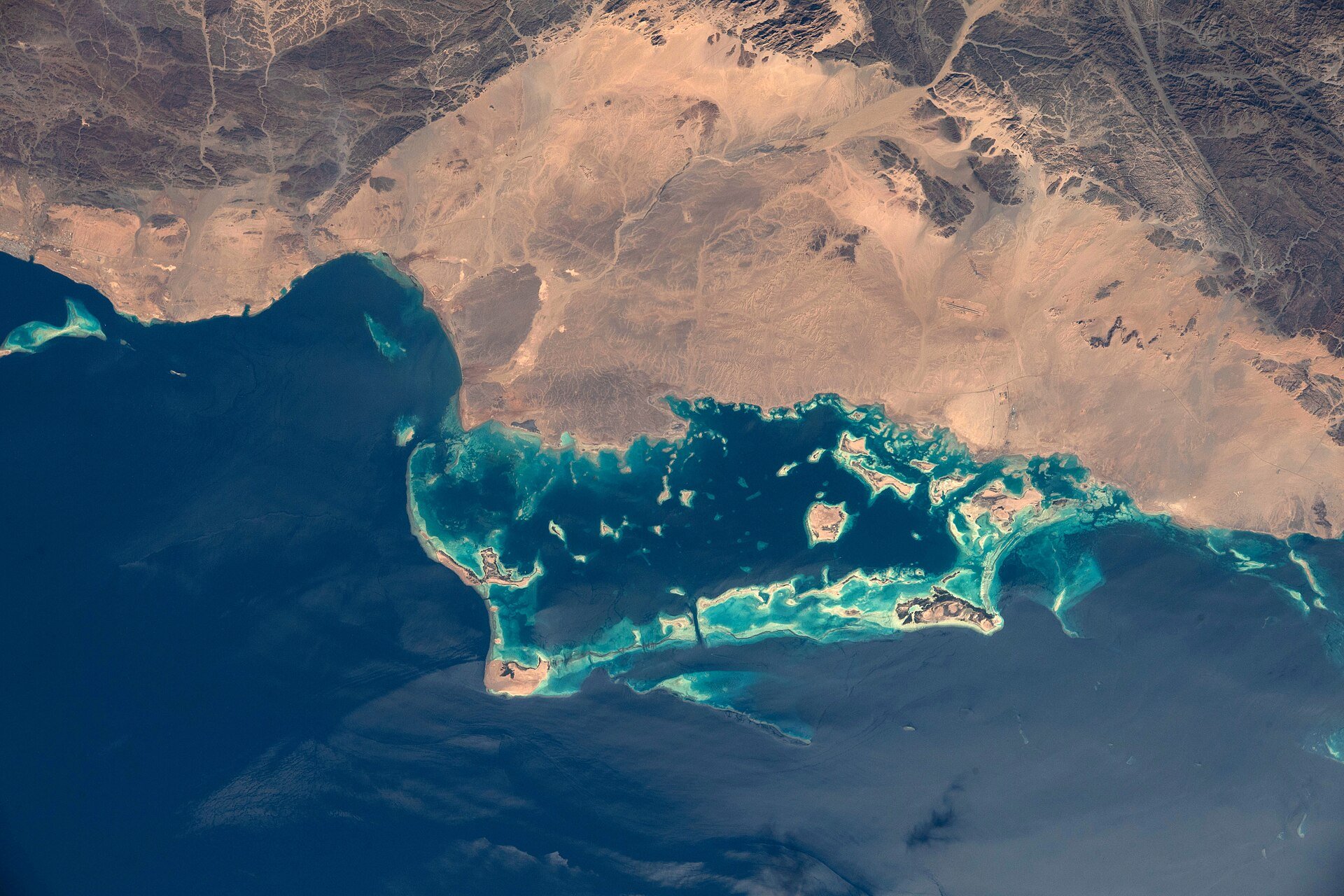
Umluj is one of Saudi Arabia’s best-kept coastal secrets — a remote archipelago of more than 100 islands scattered across turquoise Red Sea shallows, where visibility stretches to 40 metres and wild dugongs drift past untouched coral gardens. Often called the Maldives of Saudi Arabia, Umluj sits in the far northwest of the Kingdom’s Red Sea coast, inside Tabuk Province, roughly 540 kilometres north of Jeddah. For anyone building a comprehensive Saudi Arabia itinerary, this is the stretch of coast that rewards patience — the roads are long, the towns are quiet, and the reward is some of the finest snorkelling and island-hopping in the entire Arabian Peninsula.
Best Time to Visit: October to April — mild temperatures (20–30°C), calm seas, excellent underwater visibility
Getting There: ~6-hour drive from Jeddah (540 km on Highway 55); fly to Yanbu Airport (YNB) then drive ~3 hours north; SAPTCO bus from Riyadh (~16 hours)
Visa Required: Yes — tourist e-visa, apply online before travel
Budget: $60–150/day (budget to mid-range); add $50–100 for a shared boat tour
Must-See: Jabal Hassan Island archipelago, Umm Sahar Island beaches, sunset from Al Alhasi Beach
Avoid: Visiting in summer (May–September) — temperatures exceed 40°C and seas can be rough
Why Umluj?
Saudi Arabia’s Red Sea coastline runs for more than 1,800 kilometres, and the section around Umluj is arguably its most visually spectacular. Unlike the more-developed resorts further south, Umluj remains genuinely off the beaten path. There are no mega-resorts here, no beach clubs pumping music at sunset — just sand, coral, and open water. That is precisely the point.
The Umluj archipelago contains more than 100 islands, ranging from tiny sandbars you can wade around in ten minutes to larger landmasses like Jabal Hassan Island, which features both mountain terrain and reef-fringed shores. The water is extraordinarily clear: visibility regularly reaches 30–40 metres, and the colour — that particular shade of electric turquoise over white sand — photographs as though a filter has been applied. It hasn’t.
The town of Umluj itself is a modest fishing community of around 20,000 people. It provides the necessary infrastructure — hotels, restaurants, a small marina — but the real draw is always the water. This is a destination for those who want nature, not nightlife.
Who is Umluj for? Snorkellers, divers, photographers, families who want uncrowded beaches, and anyone curious about Saudi Arabia beyond its cities. It is not for travellers expecting luxury resort infrastructure — the closest five-star options are the Red Sea Project resorts (still being developed), located further south along the coast.
The Umluj Islands
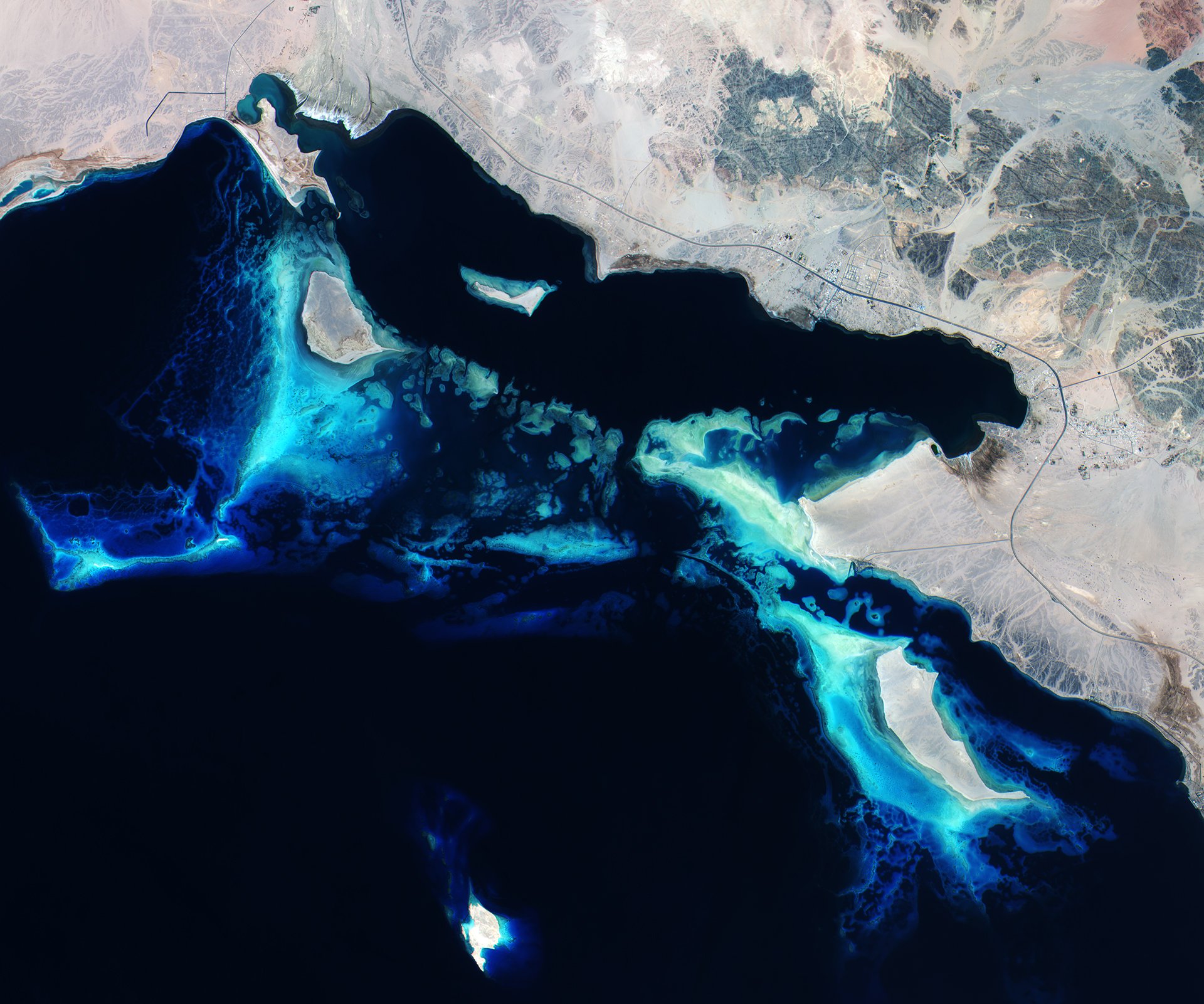
The archipelago spreads across roughly 200 square kilometres of shallow reef-studded sea. No two islands are identical; each has its own character, depth profile, and marine highlights. A good boat captain — and there are many operating out of the Umluj marina — will read the conditions and tide to build the ideal day.
Jabal Hassan Island
Jabal Hassan is the largest and most dramatic of the Umluj islands. Its name (“Mountain of Hassan”) references the rocky ridgeline that rises from the sea, giving the island an unusual silhouette. The underwater terrain around the island is equally striking: coral formations drop away steeply on the eastern side, creating a wall dive environment with resident populations of green sea turtles, hawksbill turtles, and occasional dugongs. Dolphins are frequently spotted in the passage between Jabal Hassan and the smaller surrounding islands.
Umm Sahar Island
Umm Sahar is the island most commonly included in half-day boat tours from Umluj marina. Its defining feature is a long, powdery white beach — the kind that appears in promotional videos for tropical destinations. The surrounding shallows are perfect for beginner snorkellers: the reef is close to the surface, the water rarely exceeds two metres depth near shore, and the fish life is dense and colourful. Clownfish shelter in anemones, parrotfish graze the coral, and lionfish drift beneath overhangs.
Jazirat Barda
Jazirat Barda is a smaller, quieter island known for especially clear water — a consequence of its position away from any river sediment input. Underwater photographers come here specifically for the light conditions in the morning hours. The reef crest runs close to the island’s northern beach, making it one of the most accessible snorkelling spots in the archipelago without a boat (though a short boat ride still gets you there faster).
Umm Al Malik and Umm Al Qamari Islands
Umm Al Malik and Umm Al Qamari are smaller sand islands used primarily as picnic and swimming stops on longer boat tours. Their beaches are genuinely pristine — no development, no services, just sand and sea. The lack of facilities means you must bring everything you need: water, food, sunscreen, and shade. Many tour operators include a prepared meal stop at one of these islands on their full-day itineraries.
Snorkelling and Diving at Umluj
Umluj is, at heart, a water sports destination. The reef systems surrounding the archipelago are among the most biodiverse in the Red Sea, and the accessibility of good snorkelling from the surface (without needing scuba certification) makes it unusually welcoming for non-divers. For those who do dive, the sites around Jabal Hassan Island offer wall and drift dive conditions that compare favourably with better-known Red Sea destinations in Egypt or Jordan.
What You’ll See Underwater
The Umluj reefs support approximately 200 coral species and an estimated 1,200 fish species. Regular sightings include:
- Sea turtles — both green and hawksbill turtles are resident and frequently encountered at Jabal Hassan Island
- Dugongs — the Arabian Sea dugong population uses the seagrass beds north of Umluj; sightings are not guaranteed but are reported regularly by boat captains
- Dolphins — spinner and bottlenose dolphins are common in the open water passages between islands
- Reef fish — dense shoals of surgeonfish, parrotfish, wrasse, grouper, and snapper; resident clownfish-and-anemone pairings are easily spotted in shallow water
- Manta rays — seasonal (most likely October–December); experienced divers report encounters at the deeper sites
- Sweet Land Hotel — Clean, central, and good value. Popular with families on road trips from Jeddah. From approximately $54/night.
- Seaview Hotel — As the name suggests, there are Red Sea views from several rooms. Basic but reliable. From approximately $59/night.
- Enala Hotel-Umluj — A modern mid-budget option with air conditioning and Wi-Fi. From approximately $79/night.
- Waves Hotel — Direct beach access, ocean views, and a step up in quality from the budget options. Well-positioned for early morning marina departures.
- Furnished apartment rentals — Available through platforms like Booking.com and local operators. A furnished apartment for a family of four often works out cheaper than two hotel rooms and gives you kitchen access for self-catering.
- The marina area has several informal fish restaurants where you can select your fish at the counter and have it grilled to order.
- The town centre has a mix of traditional Saudi diners (traditional bread, lamb, rice) and simple Lebanese-style restaurants.
- Self-catering — there is a supermarket in town for provisions if you are in a furnished apartment or planning to take lunch to the islands.
- Drive or fly-and-drive to Umluj; arrive by afternoon
- Check in and walk the Corniche at sunset
- Fresh fish dinner at one of the marina restaurants
- Book your island boat tour for tomorrow through the hotel
- 0830 — Depart Umluj marina on full-day island tour
- 0930–1130 — Snorkelling at Umm Sahar Island reef
- 1130–1200 — Boat transfer to Jabal Hassan Island
- 1200–1430 — Snorkelling the eastern wall; turtle sightings likely
- 1430–1530 — Lunch stop at Umm Al Malik sandspit
- 1530–1700 — Return via Jazirat Barda for afternoon light photography
- 1700 — Return to marina
- Morning swim and shore snorkelling at Al Alhasi Beach
- Browse the town centre; pick up local honey, dates, or dried fish as gifts
- Depart for Yanbu airport or begin the coastal drive south
- Saudi Arabia Diving and Snorkelling Guide — Full coverage of Red Sea dive sites from Aqaba to Farasan Islands
- Tabuk Travel Guide — Gateway city to NEOM, Wadi Disah, and the northwest coast
- Wadi Disah, Tabuk — Saudi Arabia’s Grand Canyon: dramatic sandstone gorge hiking
- Saudi Arabia Hiking Guide — Best trails across the Kingdom, from Asir highlands to Tabuk mountains
- Saudi Arabia Travel Guide 2026 — The complete guide to visiting the Kingdom
- Saudi Arabia Visa Guide — Every visa type explained, from tourist e-visa to pilgrimage visas
Best Snorkelling Sites
Al Alhasi Beach is the primary shore-accessible snorkelling spot — a long beach with a reef running parallel to the shoreline in 1–3 metres of water. Ideal for beginners and families, as no boat is needed.
For the best offshore snorkelling, the reefs around Umm Sahar Island and the northern face of Jabal Hassan Island are consistently rated highest by visitors. Both require a boat to reach.
Snorkelling tip: Bring your own mask and fins. Rental gear is available through boat tour operators at the marina, but quality varies. A well-fitting mask makes an enormous difference to your experience — it is worth the investment before you travel.
Diving at Umluj
As of 2026, Umluj does not have a large established dive centre with full PADI courses and certification infrastructure. The diving scene is informal: experienced local boat operators know the sites and can accompany divers to the right spots. Visitors who are already certified should bring their own equipment where possible. The development of the broader Red Sea tourism project is expected to bring dedicated dive operations to the area, but for now this remains a destination for adventurous, self-sufficient divers.
For a more developed diving infrastructure on the Saudi Red Sea coast, see the Saudi Arabia Diving and Snorkelling Guide for a full comparison of sites from the Gulf of Aqaba down to Farasan Islands.
Getting to Umluj
Umluj is remote. That is part of its appeal. It requires genuine travel, not a short taxi from an airport. Plan accordingly.
From Jeddah
The most common approach is a road trip from Jeddah along the Red Sea coastal highway (Route 55 / King Fahd Road). The distance is approximately 540 km and the drive takes 5.5 to 6.5 hours depending on traffic and stops. The road runs directly along the coast for much of the journey, passing through Rabigh, Yanbu, and Al Wajh — a beautiful drive with regular Red Sea views. Many Saudi travellers turn this into a two-day road trip, stopping overnight in Yanbu.
Fly-and-drive: Fly to Yanbu Airport (YNB) — Saudia and flynas operate regular services from Jeddah (King Abdulaziz International, JED) and Riyadh (King Khalid International, RUH) — then hire a car and drive approximately 3 hours north to Umluj. This cuts the total journey time significantly from Riyadh.
From Riyadh
Riyadh to Umluj by road is a significant journey: approximately 1,190 km with a drive time of 12–13 hours. Most travellers from Riyadh fly to Yanbu (approximately 1.5 hours) and drive from there. SAPTCO operates a bus service from Riyadh to Umluj, but journey times of 16+ hours make this practical only for those travelling on a tight budget.
Visa and entry: International visitors need a Saudi tourist e-visa, which is available online for nationals of more than 60 countries. Apply at least a week before travel. The e-visa permits multiple entries and is valid for one year from issue.
Getting Around Umluj
Within Umluj, car rental is the most practical option for exploring the coastline and reaching the marina. The town is small enough to walk in the centre. For the islands, everything is accessible by boat — arrange through your hotel or directly at the marina on the southern edge of town.
Boat Tours: What to Expect and What to Pay
The boat tour is the centrepiece of any Umluj visit. All tours depart from Umluj marina. A good tour will take you to three or four islands, with time for swimming and snorkelling at each stop. The captain will typically provide the route based on sea conditions and time of year.
Tour Types
| Tour Type | Duration | What’s Included | Approx. Cost (SAR) |
|---|---|---|---|
| Half-Day Island Hop | 4–5 hours | 2–3 islands, snorkelling stops, bottled water | SAR 100–200 per person (group) |
| Full-Day Tour | 7–8 hours | 4–5 islands, beach lunch, snorkelling gear | SAR 200–350 per person (group) |
| Private Boat Charter | Half or full day | Flexible itinerary, private group only | SAR 1,000–2,000 per boat |
| Sunset Cruise | 2–3 hours | Open-water cruise at sunset | SAR 80–120 per person |
Booking tip: Book via your hotel the evening before — the marina fills up on weekends (Thursday–Friday in Saudi Arabia). Prices above are approximate and negotiable, particularly for larger groups or multi-day stays. Always confirm what is included before boarding.
Best Beaches in Umluj
Even without boarding a boat, Umluj has accessible beaches along the town’s coastline. These are less dramatic than the offshore islands but perfectly pleasant for a late afternoon swim.
Al Alhasi Beach
Al Alhasi Beach is the most popular shore-side beach — a long stretch of sand with a reef running parallel to the shoreline. It is shallow, calm, and safe for children. The snorkelling from shore here is genuinely good: the reef begins within 50 metres of the beach and is accessible in 1–2 metres of water.
Umluj Corniche
The Umluj Corniche (waterfront promenade) lines the western edge of town and is a pleasant spot for evening walks. It is not a beach per se but offers Red Sea views and is where many local families gather in the evenings, particularly during Ramadan and public holidays.
Where to Stay in Umluj
Umluj is not a luxury destination in the traditional sense. The town’s accommodation options are primarily budget to mid-range hotels and furnished apartments. The Red Sea Project, currently under development to the south, will bring high-end resort infrastructure to this stretch of coast in coming years — but as of 2026, Umluj itself remains practical rather than plush.
Budget Options (Under SAR 300/night)
Mid-Range Options (SAR 300–600/night)
Luxury (Further Afield)
The nearest luxury options — Six Senses Southern Dunes, Nujuma, A Ritz-Carlton Reserve, and other Red Sea Project properties — are located within the broader Red Sea destination development, approximately 30–60 minutes south of Umluj by road. These are spectacular properties (from $748/night at Six Senses), but they function as self-contained resorts rather than as a base for Umluj town. If staying at a Red Sea Project resort, day trips to Umluj marina for independent boat tours are entirely possible.
Where to Eat in Umluj
Umluj is a fishing town, and fresh seafood is the undisputed highlight of eating here. Fish caught that morning is available at local restaurants by lunchtime — grilled hammour (grouper), shrimp, and crab are the local specialities.
Ramadan note: Eating in public during daylight hours during Ramadan is not permitted in Saudi Arabia. Restaurants open after iftar (sunset). Plan food and water accordingly if visiting during Ramadan.
Best Time to Visit Umluj
The best time to visit Umluj is October through April. During these months, daytime temperatures range from 20°C to 30°C, the seas are calm, and underwater visibility is at its best. December, January, and February are the most comfortable months for outdoor activities.
| Month | Air Temp (°C) | Sea Temp (°C) | Conditions |
|---|---|---|---|
| October–November | 25–32 | 28–30 | Excellent — warm but manageable |
| December–February | 18–26 | 24–26 | Best — mild, calm, clearest water |
| March–April | 24–32 | 25–27 | Very good — busier during Eid |
| May–September | 35–45+ | 30–32 | Avoid — extreme heat, hazy visibility |
Saudi public holidays and Eid al-Fitr bring large domestic crowds to Umluj — book accommodation and boat tours well in advance if your dates coincide with these periods. During Saudi National Day (September 23), the heat is still extreme but the town gets busy nonetheless.
Practical Information
Dress Code and Cultural Etiquette
Umluj follows general Saudi cultural norms. On the beach and water, swimwear is acceptable (mixed beaches are not the norm; public beaches are generally family-oriented with some gender-separated areas). Away from the water, cover shoulders and knees in town. Women do not need to wear abaya, but modest dress is appropriate. Loud music in public is frowned upon; keep it to your hotel or rental.
Currency and Payments
The Saudi Riyal (SAR) is the only currency. ATMs are available in Umluj town centre. Card payments are accepted at hotels but cash is preferred at the marina and smaller restaurants. Bring enough cash for boat tours and smaller purchases.
Connectivity
Mobile coverage (STC, Mobily, Zain) is adequate in town but patchy on some of the outer islands. Download offline maps before you go. Wi-Fi is available at most hotels but can be slow.
Medical Facilities
There is a government hospital in Umluj, adequate for basic treatment. For serious medical needs, the nearest well-equipped facilities are in Yanbu (approximately 3 hours south) or Tabuk city (approximately 4 hours north). Travel insurance with medical evacuation cover is strongly recommended for diving or remote island activities.
Combining Umluj with Other Destinations
Umluj works well as part of a longer Tabuk Province road trip. From Umluj, you can continue north along the coast to Al Wajh and eventually to Tabuk city (gateway to Wadi Disah and NEOM). Heading south, the coastal road passes Yanbu before reaching Jeddah.
For hikers and adventure travellers, the mountains of northwest Saudi Arabia are within range — the dramatic landscapes of Wadi Disah, Wadi Al Disa, and the Tabuk highlands are all accessible from this part of the coast.