
Performing Umrah for the first time is one of the most profound spiritual experiences a Muslim can have. Standing before the Kaaba, circling it with millions of fellow believers, and walking the same path that Hajar walked thousands of years ago — nothing quite prepares you for it. But the rituals, logistics, and unfamiliar rules can feel overwhelming before you arrive. This guide walks you through every step, from obtaining your visa to completing your final rite, so you can focus on what matters: your connection with Allah. Whether you are planning your pilgrimage as part of a broader Hajj 2026 journey or performing Umrah independently, this is everything a first-timer needs to know.
Best Time to Visit: October–April (cooler months); Ramadan for maximum spiritual reward
Getting There: Fly to Jeddah (IATA: JED) or directly to Taif, then transfer to Makkah — roughly 80 km
Visa Required: Yes — Umrah e-visa or tourist e-visa (66 eligible nationalities)
Budget: $1,500–$5,000 USD total from the US/UK (flights, hotels, visa, transport)
Must-See: Masjid al-Haram (the Grand Mosque), the Kaaba, Masjid an-Nabawi in Madinah
Avoid: Travelling during peak Hajj season (Dhul Hijjah) unless performing Hajj — extreme crowds and inflated prices
What Is Umrah — and How Is It Different from Hajj?
Umrah is an Islamic pilgrimage to Makkah (Mecca) that can be performed at almost any time of the year. It involves four essential rituals — Ihram, Tawaf, Sa’i, and Halq/Taqsir — and typically takes 3 to 5 hours to complete, though your full trip will span several days.
The key differences from Hajj are:
| Feature | Umrah | Hajj |
|---|---|---|
| Timing | Any time of year | Fixed dates in Dhul Hijjah (12th Islamic month) |
| Obligation | Sunnah (highly recommended) | Fard (obligatory once in a lifetime for those who can) |
| Duration | 3–5 hours for rituals | 5–6 days of rituals |
| Rituals | 4 steps: Ihram, Tawaf, Sa’i, Halq/Taqsir | Additional rituals at Mina, Arafat, and Muzdalifah |
| Cost | $1,500–$5,000 | $5,000–$15,000+ |
| Crowd level | Manageable outside Ramadan | 2–3 million pilgrims |
For a complete breakdown of the Hajj pilgrimage, see our Hajj 2026 Guide. For a broader overview of Umrah timing, costs, and seasonal tips, our Umrah Guide 2026 covers everything beyond the step-by-step ritual walkthrough in this page.
Before You Go: Essential Preparation
Visa and Nusuk Registration
Citizens of 66 countries — including the US, UK, EU nations, Australia, and several Asian countries — can obtain a Saudi tourist e-visa online, which permits Umrah outside Hajj season. The e-visa is a one-year, multiple-entry visa allowing stays of up to 90 days. You can apply directly through the Saudi e-visa system. Your passport must be valid for at least six months from your entry date.
Alternatively, you can obtain a dedicated Umrah visa through a licensed travel agent, which is required for nationals not eligible for the e-visa. Processing takes 1–2 working days for the e-visa, or longer through agents.
Critical Step: Register on Nusuk
The Nusuk app (published by the Saudi Ministry of Hajj and Umrah) is mandatory for all international pilgrims, regardless of visa type. Without a confirmed Nusuk-linked booking, your Umrah permit will not be issued — even with a valid visa. Download the app, register with your visa number and passport number, and book your Umrah permit. A QR code will be generated that is scanned at Haram entry gates. Tip: Wait 24–48 hours after your visa is issued before registering on Nusuk to ensure your details are synced in the Saudi system.
Health Requirements
Saudi Arabia enforces specific health rules for all Umrah pilgrims:
- Meningitis (ACWY) vaccination — compulsory; must be taken at least 10 days before travel. You will need proof of vaccination
- Seasonal influenza vaccine — strongly recommended by the WHO for all Umrah pilgrims
- COVID-19 vaccination — up-to-date vaccination recommended but not required as of 2026
- Yellow fever certificate — required if arriving from an endemic country
- Dhul Hulayfah (Abyar Ali) — for those coming from Madinah (the farthest Miqat, about 450 km from Makkah)
- Al-Juhfah (Rabigh) — for those coming from the direction of Syria, Egypt, and North/West Africa. This is also the nearest Miqat to Jeddah (about 160 km northwest)
- Qarn al-Manazil (As-Sayl al-Kabeer) — for those coming from Najd (central Arabia) and the direction of the UAE, Oman
- Yalamlam (As-Sadiyah) — for those coming from Yemen and the direction of southern Asia
- Dhat Irq — for those coming from Iraq and the direction of Iran
- Perform ghusl (full ritual bathing) — or at minimum, wudu
- Trim your nails, remove underarm and pubic hair
- Men may apply perfume to their body (not the Ihram garments) before making the intention — any fragrance applied after Niyyah is prohibited
- Pray two rak’ah of Sunnah prayer if possible
- Applying perfume or scented products — no cologne, scented soap, shampoo, or deodorant
- Cutting hair or trimming nails
- Covering the head (men only) — no caps, turbans, or hoods
- Wearing stitched/fitted clothing (men only) — only the two Ihram cloths
- Covering the face or wearing gloves (women only)
- Hunting or harming animals
- Sexual relations or intimate behaviour
- Arguing, fighting, or engaging in sinful behaviour
- Ensure you are in a state of wudu (ablution). If your wudu breaks at any point during Tawaf, you must perform it again before resuming
- Men: Perform Idtiba — uncover your right shoulder by passing the rida under the right arm and over the left shoulder. Keep this throughout Tawaf only
- Stop reciting the Talbiyah when you reach the Black Stone to begin Tawaf
- Position yourself in line with the Black Stone (Hajar al-Aswad), which is set into the eastern corner of the Kaaba. A green light on the wall of the mosque marks the line
- Face the Black Stone, raise your right hand, and say: “Bismillāhi Allāhu Akbar” (In the name of Allah, Allah is the Greatest)
- If possible, kiss the Black Stone or touch it with your hand. If the crowd prevents this (which is likely), simply point toward it with your right hand from a distance — this is perfectly valid
- Turn right so the Kaaba is on your left side and begin walking counter-clockwise
- Men: Perform Ramal in the first three circuits — walk briskly with short steps and chest out. Walk normally for circuits 4–7
- There are no fixed duas prescribed for each circuit. You are free to make personal supplications in any language, recite Quran, or use recommended duas from the Sunnah
- When you pass the Yemeni Corner (Rukn al-Yamani, the corner before the Black Stone), touch it with your right hand if you can reach it — do not kiss it. If you cannot reach it, continue without gesturing toward it
- Between the Yemeni Corner and the Black Stone, recite: “Rabbanā ātinā fid-dunyā ḥasanah wa fil-ākhirati ḥasanah wa qinā ‘adhāban-nār” (Our Lord, give us good in this world and good in the Hereafter, and protect us from the punishment of the Fire)
- Each time you pass the Black Stone, face it, say “Allāhu Akbar”, and gesture toward it if you cannot touch it. This marks the start of a new circuit
- Men should cover their right shoulder again (end of Idtiba)
- Pray two rak’ah behind Maqam Ibrahim (the Station of Abraham) if possible — or anywhere in the mosque if the area is crowded. Recite Surah Al-Kafirun in the first rak’ah and Surah Al-Ikhlas in the second
- Drink Zamzam water — available from coolers throughout the mosque. Make dua while drinking, as the Prophet (peace be upon him) said Zamzam water is for whatever purpose it is drunk for
- After completing Tawaf and your two rak’ah, proceed to Mount Safa. The Masa’a (the enclosed corridor between Safa and Marwah) is now a multi-level, air-conditioned walkway inside the mosque
- As you approach Safa, recite: “Innas-Safā wal-Marwata min sha’ā’irillāh” (Indeed, Safa and Marwah are among the Signs of Allah) — Quran 2:158
- Climb Safa until you can see the Kaaba (or face its direction). Raise your hands and make dua. Recite: “Allāhu Akbar, Allāhu Akbar, Allāhu Akbar, wa lillāhil-ḥamd”
- Walk from Safa toward Marwah. Men should jog lightly between the two green fluorescent markers (this section is marked clearly) — women walk at a normal pace throughout
- Upon reaching Marwah, climb it, face the Kaaba direction, and repeat the same duas you made at Safa
- This completes one lap. Walk back to Safa — that is lap two. Continue until you have completed seven laps, ending at Marwah
- Halq (shaving the head completely) — for men, this is considered more virtuous and carries greater reward
- Taqsir (trimming the hair) — cutting at least an inch (roughly a fingertip’s length) from all over the head. This is the only option for women, who trim 1–2 cm from the ends of their hair
- The Rawdah — the area between the Prophet’s tomb and his pulpit, described as a garden of Paradise. Entry requires a permit booked through the Nusuk app
- Masjid Quba — the first mosque built in Islam. Praying two rak’ah here equals the reward of Umrah
- Mount Uhud — site of the Battle of Uhud and the graves of the martyrs
- Jannat al-Baqi — the historic cemetery where many companions of the Prophet are buried
- Ramadan — the most spiritually rewarding time. The Prophet (peace be upon him) said Umrah during Ramadan is equal in reward to Hajj. However, crowds are at their peak and prices are highest
- October–February — the best balance of comfortable weather (20–30°C), moderate crowds, and reasonable prices
- March–May — warming up but still manageable. Good deals available
- June–September — extreme heat (40–50°C) makes outdoor movement challenging, but hotels are cheapest and crowds thinnest
- SAPTCO bus — the cheapest option at around 30–50 SAR ($8–$13). Buses run frequently from the airport to Makkah
- Private taxi or ride-hailing (Uber/Careem) — approximately 150–250 SAR ($40–$65). Book through the app for transparency on pricing
- Hotel shuttle — many mid-range and luxury hotels offer complimentary airport transfers
- Haramain High-Speed Train — connects Jeddah to Makkah in about 30 minutes, with fares from 50 SAR ($13)
- Crossing the Miqat without Ihram — if flying, be ready before the captain announces the Miqat boundary. Changing into Ihram at Jeddah airport requires going to the Miqat in Rabigh and back
- Forgetting the Niyyah or Talbiyah — both are essential. The Talbiyah must be recited at least once after making your intention
- Using scented products in Ihram — check that your soap, shampoo, and deodorant are fragrance-free before you travel
- Men covering their heads in Ihram — no cap, hat, turban, or hood. An umbrella held above is permissible
- Starting Tawaf from the wrong point — you must begin at the Black Stone line (marked by a green light). Starting mid-wall makes that circuit invalid
- Losing count of circuits — use a tally counter or phone app. If genuinely unsure, take the lower number and add a circuit
- Breaking wudu during Tawaf and continuing — Tawaf requires wudu. If it breaks, perform ablution and resume from where you stopped
- Skipping the two rak’ah after Tawaf — this is a confirmed Sunnah. Pray behind Maqam Ibrahim if possible
- Rushing through the rituals — Umrah is not a race. Take your time, especially during dua at Safa and Marwah
- Not booking Nusuk permits — you will be turned away at the gates without a valid QR code
- Wearing inappropriate footwear — you will walk extensively. Blisters from new sandals are the most common physical complaint
- Arguing or losing your temper in crowds — patience is part of worship. Expect pushing, especially near the Black Stone
- Not drinking enough water — dehydration is serious, especially in warmer months. Zamzam water coolers are everywhere — use them
- Spending hotel time on social media — this is a once-in-a-lifetime spiritual journey. Be present
- Not registering on Nusuk early enough — wait 24–48 hours after visa issuance, but do not leave it until the last day
- Wheelchairs are available for rent inside Masjid al-Haram (approximately 50–100 SAR). Volunteer pushers are also available, though tipping is expected
- The upper floors of the Mataf (Tawaf area) and the Masa’a (Sa’i corridor) are less crowded and fully accessible
- Electric scooters are not permitted inside the mosque
- If a pilgrim is physically unable to perform Sa’i, some scholars permit it to be performed by proxy — consult a qualified scholar before your trip
- During Ihram, wear normal modest clothing — there is no special garment required
- Do not cover your face with a niqab or wear gloves while in Ihram
- Walk at a normal pace during Tawaf and Sa’i — the Ramal (brisk walking) is for men only
- For Taqsir, trim 1–2 cm from the ends of your hair. Women do not shave their heads
- Menstruation: you may perform all acts of Umrah except Tawaf while menstruating. Wait until you are in a state of purity, perform ghusl, and then complete Tawaf. Sa’i does not require a state of purity
- Dedicated women-only prayer areas are available in the Haram, though the entire mosque is open to all
- Learn the rituals in advance — understanding the spiritual significance of each step transforms the experience from a series of physical actions into genuine worship
- Prepare a dua list — write down everything you want to ask Allah for. You will be at some of the holiest sites in Islam, and there are moments when prayers are especially answered (first sight of the Kaaba, during Tawaf, at Safa and Marwah, while drinking Zamzam)
- Recite Quran daily — carry a pocket Quran or use an app. The reward for Quran recitation in Masjid al-Haram is multiplied
- Pray every salah in the Haram — one prayer in Masjid al-Haram equals 100,000 prayers elsewhere
- Make Tawaf outside of Umrah too — you can perform voluntary Tawaf as many times as you wish during your stay
- Give charity — there are donation boxes throughout the Haram, and Makkah has many people in need
- Stay off your phone during rituals — take photos if you must, but the spiritual moments are irreplaceable
- Hajj 2026 Guide — Everything you need to know about the 2026 Hajj pilgrimage
- Umrah Guide 2026 — Costs, best times, packages, and seasonal tips for Umrah
- Mecca Travel Guide 2026 — The complete guide to visiting the holiest city in Islam
- Medina Travel Guide 2026 — The Prophet’s City and what to see beyond the mosque
- Travelling During Ramadan — What to expect visiting Saudi Arabia during the holy month
- Saudi Arabia Travel Guide 2026 — The complete guide to visiting the Kingdom
- Saudi Arabia Visa Guide — Every visa type explained
Carry a small first-aid kit with blister plasters, painkillers, rehydration salts, and any personal medications. The walking distances during Umrah are significant — expect 8–15 km on the day you perform your rituals.
What to Pack
Packing for Umrah requires thought because of Ihram rules. Here is what to bring:
| Item | Men | Women |
|---|---|---|
| Ihram garments | 2 sets of white unstitched cloths (izar + rida) | Loose, modest clothing (abaya + hijab) — no specific colour required |
| Everyday clothing | Thobes or loose shirts and trousers | 2–3 abayas and hijabs |
| Footwear | Open-toed sandals (no stitching for Ihram) + comfortable walking shoes | Comfortable slip-on shoes, sandals |
| Toiletries | Fragrance-free soap, shampoo, deodorant, toothpaste, and moisturiser (scented products prohibited in Ihram) | |
| Essentials | Ihram belt or safety pins, small prayer rug, dua book or app, portable phone charger, money belt, sunscreen | |
For detailed guidance on what to wear in Saudi Arabia outside of Ihram, see our Saudi Arabia dress code guide.
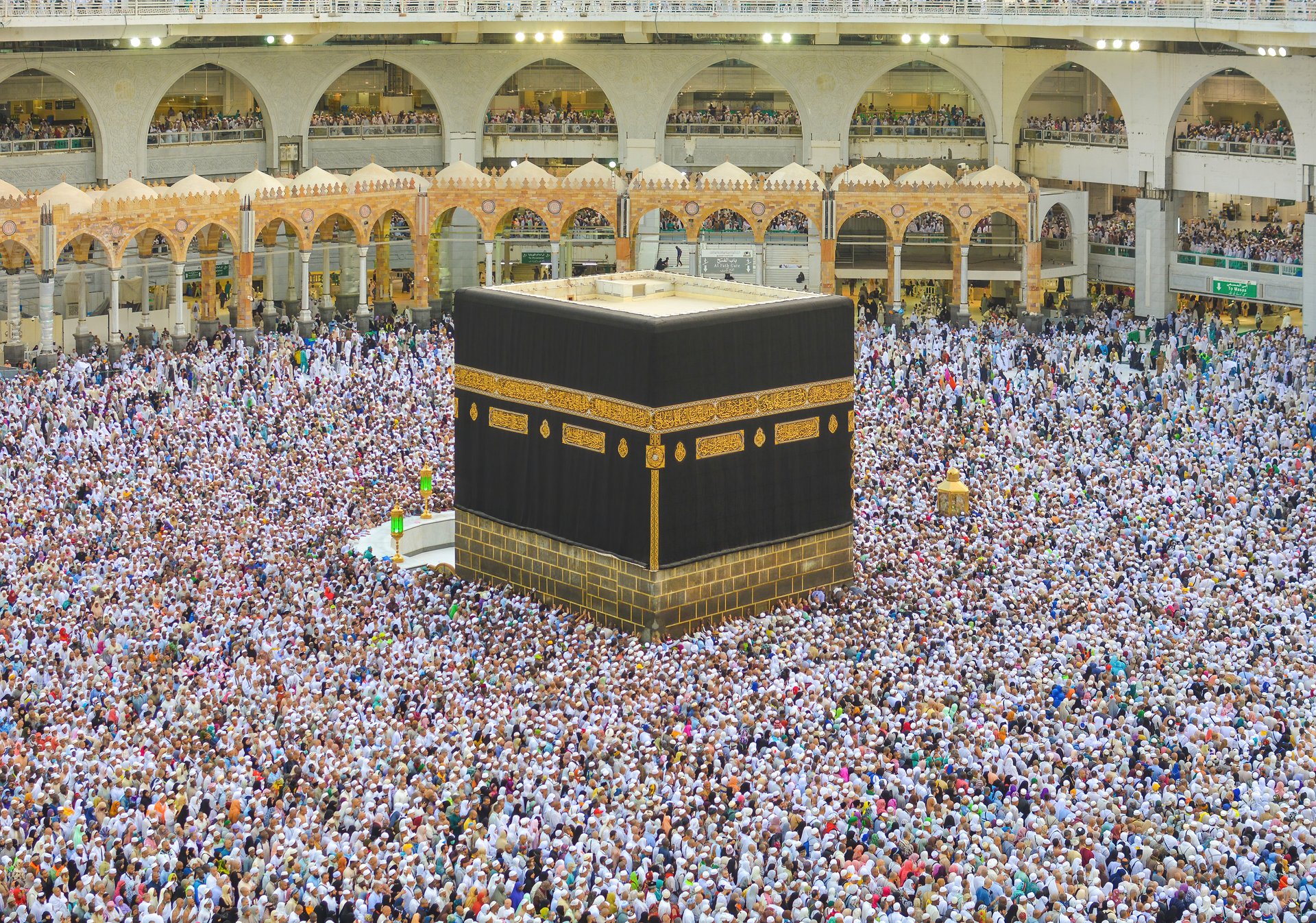
Understanding the Miqat Boundaries
Before performing Umrah, you must enter the state of Ihram at or before the Miqat — a set of boundary points designated by the Prophet Muhammad (peace be upon him) that surround Makkah. Crossing the Miqat without being in Ihram invalidates your Umrah unless you return and re-enter properly.
The five principal Miqat locations are:
Flying into Jeddah? Most international pilgrims land at King Abdulaziz International Airport in Jeddah. Jeddah itself is not a Miqat for visitors (only for Jeddah residents). Airlines carrying pilgrims typically announce when the aircraft is approaching the Miqat boundary — usually about 30 minutes before landing. You should be in your Ihram garments and make your intention (Niyyah) at that point. Many pilgrims change into Ihram at the airport of departure before boarding, which is the safest approach.
Step 1: Entering Ihram — The Sacred State
Ihram is both a physical state and a spiritual intention. It marks the beginning of your Umrah and imposes specific rules on your behaviour and dress until you complete all four rituals.
Preparation Before Ihram
Before reaching the Miqat, complete these preparations (they are Sunnah, not obligatory, but highly recommended):
Ihram Clothing
For men: Wear two plain, white, unstitched sheets of cloth. The izar wraps around the waist to cover the lower body. The rida drapes over the left shoulder, leaving the right shoulder initially covered (you will uncover it later for Tawaf). Wear open-toed sandals — no socks or closed shoes.
For women: There is no special Ihram garment. Wear your normal loose, modest clothing — typically an abaya and hijab. Your face and hands must remain uncovered during Ihram (no niqab or gloves, though you may use a face shield that does not touch the skin). Any colour is permitted.
Making the Intention (Niyyah) and Reciting the Talbiyah
At the Miqat, make your intention for Umrah in your heart and say aloud:
لَبَّيْكَ اللَّهُمَّ عُمْرَةً
Labbaika Allāhumma ‘Umrah
“Here I am, O Allah, for Umrah.”
Then recite the Talbiyah — this is essential and must be recited at least once for your Umrah to be valid:
لَبَّيْكَ اللَّهُمَّ لَبَّيْكَ، لَبَّيْكَ لَا شَرِيكَ لَكَ لَبَّيْكَ، إِنَّ الْحَمْدَ وَالنِّعْمَةَ لَكَ وَالْمُلْكَ، لَا شَرِيكَ لَكَ
Labbaika Allāhumma labbaik, labbaika lā sharīka laka labbaik, innal-ḥamda wan-ni’mata laka wal-mulk, lā sharīka lak
“Here I am, O Allah, here I am. Here I am, You have no partner, here I am. Indeed, all praise and grace belong to You, and the dominion. You have no partner.”
Continue reciting the Talbiyah frequently from this point until you begin Tawaf.
What Is Prohibited During Ihram
Once you are in Ihram, the following are strictly forbidden until you complete all four rituals:
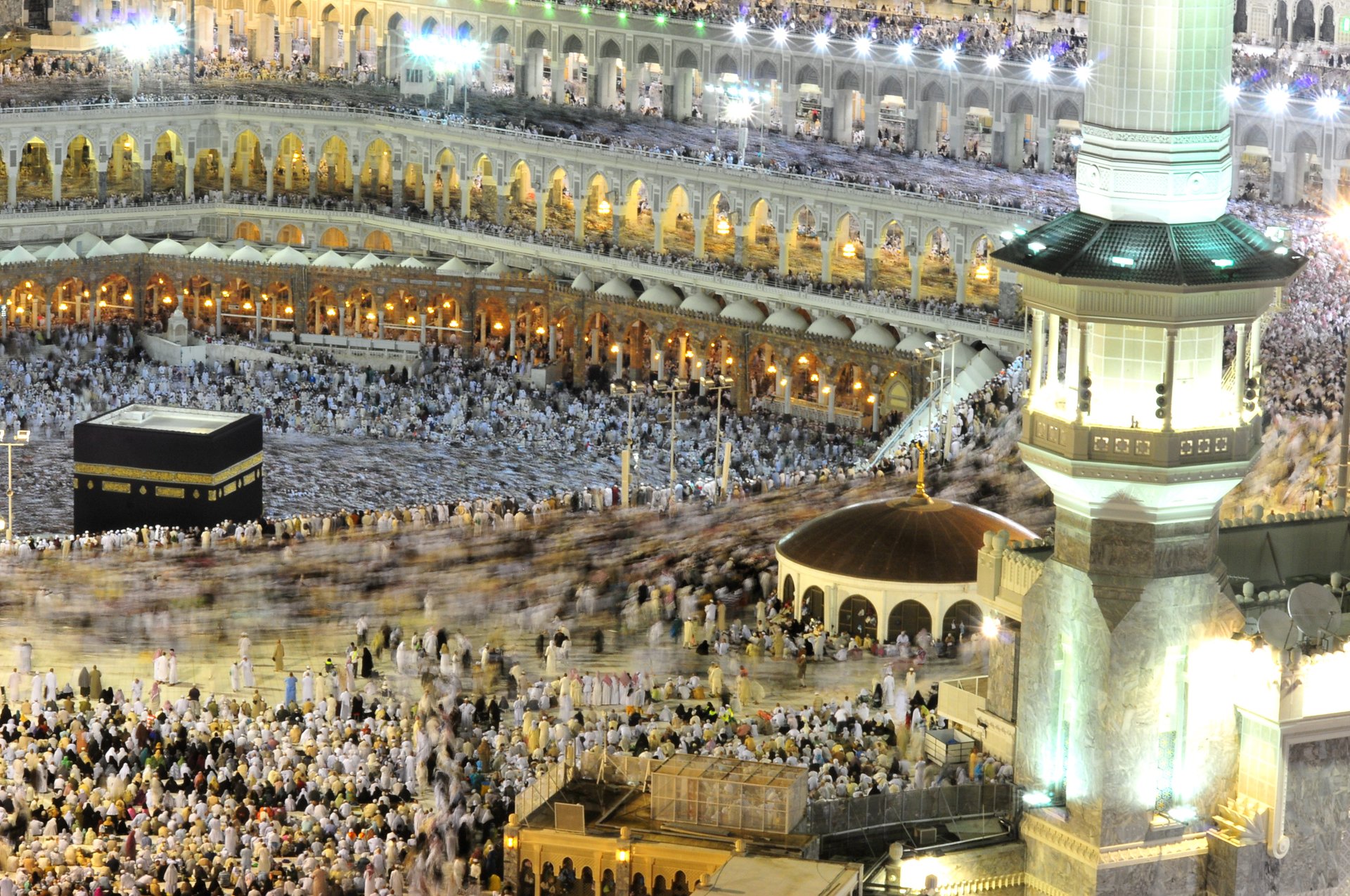
Step 2: Tawaf — Circumambulating the Kaaba
Tawaf is the second rite of Umrah and, for most first-timers, the most emotionally overwhelming. You will circle the Kaaba seven times in a counter-clockwise direction, beginning and ending at the Black Stone (Hajar al-Aswad).
Entering Masjid al-Haram
Enter the Grand Mosque through any gate — there is no specific gate required. Step in with your right foot and recite the dua for entering a mosque:
Bismillāh, was-salātu was-salāmu ‘alā Rasūlillāh. Allāhummaf-taḥ lī abwāba raḥmatik.
“In the name of Allah, and peace and blessings be upon the Messenger of Allah. O Allah, open for me the doors of Your mercy.”
When you see the Kaaba for the first time, raise your hands and make dua — this is one of the moments when prayers are answered. Take your time. There is no rush.
How to Perform Tawaf
Before starting:
Starting Tawaf:
During each circuit:
After completing seven circuits:
Step 3: Sa’i — Walking Between Safa and Marwah
Sa’i commemorates the actions of Hajar (may Allah be pleased with her), the wife of Prophet Ibrahim (peace be upon him), who ran seven times between the hills of Safa and Marwah searching for water for her infant son Isma’il. Allah rewarded her perseverance by causing the well of Zamzam to spring forth.
How to Perform Sa’i
Counting tip: Safa to Marwah = 1, Marwah to Safa = 2, and so on. You start at Safa and finish at Marwah after seven laps. Many first-timers lose count — use a tally counter or a phone app.
There are no fixed supplications for Sa’i. Make heartfelt personal dua, recite Quran, or use recommended Sunnah supplications throughout. Sa’i does not require wudu, though being in a state of purity is preferred.
Step 4: Halq or Taqsir — Completing Your Umrah
The final ritual of Umrah is cutting your hair, which symbolises humility and spiritual renewal.
Barber shops are available just outside the Haram gates in Makkah, typically charging 10–20 SAR ($3–$5 USD). Many pilgrims also carry small scissors to trim their own hair.
Once you have completed Halq or Taqsir, your Umrah is complete and all Ihram restrictions are lifted. You may change out of your Ihram garments, use scented products, and resume normal activities. Congratulations — may Allah accept your Umrah.
After Umrah: Visiting Madinah
While not part of Umrah itself, most pilgrims visit Madinah (Medina) either before or after their Umrah. The Prophet’s Mosque (Masjid an-Nabawi) is the second holiest mosque in Islam, and praying there carries immense reward — one prayer in Masjid an-Nabawi is equivalent to 1,000 prayers elsewhere.
Key sites in Madinah include:
The Haramain High-Speed Train connects Makkah to Madinah via Jeddah in approximately 2 hours and 30 minutes, making the journey between the two holy cities comfortable and fast. For more transport options, see our guide to getting around Saudi Arabia.
Where to Stay in Makkah
Your hotel choice in Makkah largely depends on your budget and how close you want to be to the Haram. Being within walking distance makes a significant difference — you will likely visit Masjid al-Haram multiple times a day.
Budget Hotels (SAR 200–550 / $50–$150 per night)
Located further from the Haram, typically requiring a 15–20 minute walk or shuttle service. Clean and functional, these are a good option for budget-conscious pilgrims. Areas like Ajyad and Al-Aziziyah have many budget options.
Mid-Range Hotels (SAR 550–1,100 / $150–$300 per night)
Usually a 5–10 minute walk from the Haram, with improved amenities and often buffet meals included. The Ibrahim Al-Khalil Road area has strong mid-range options.
Luxury Hotels (SAR 1,100+ / $300+ per night)
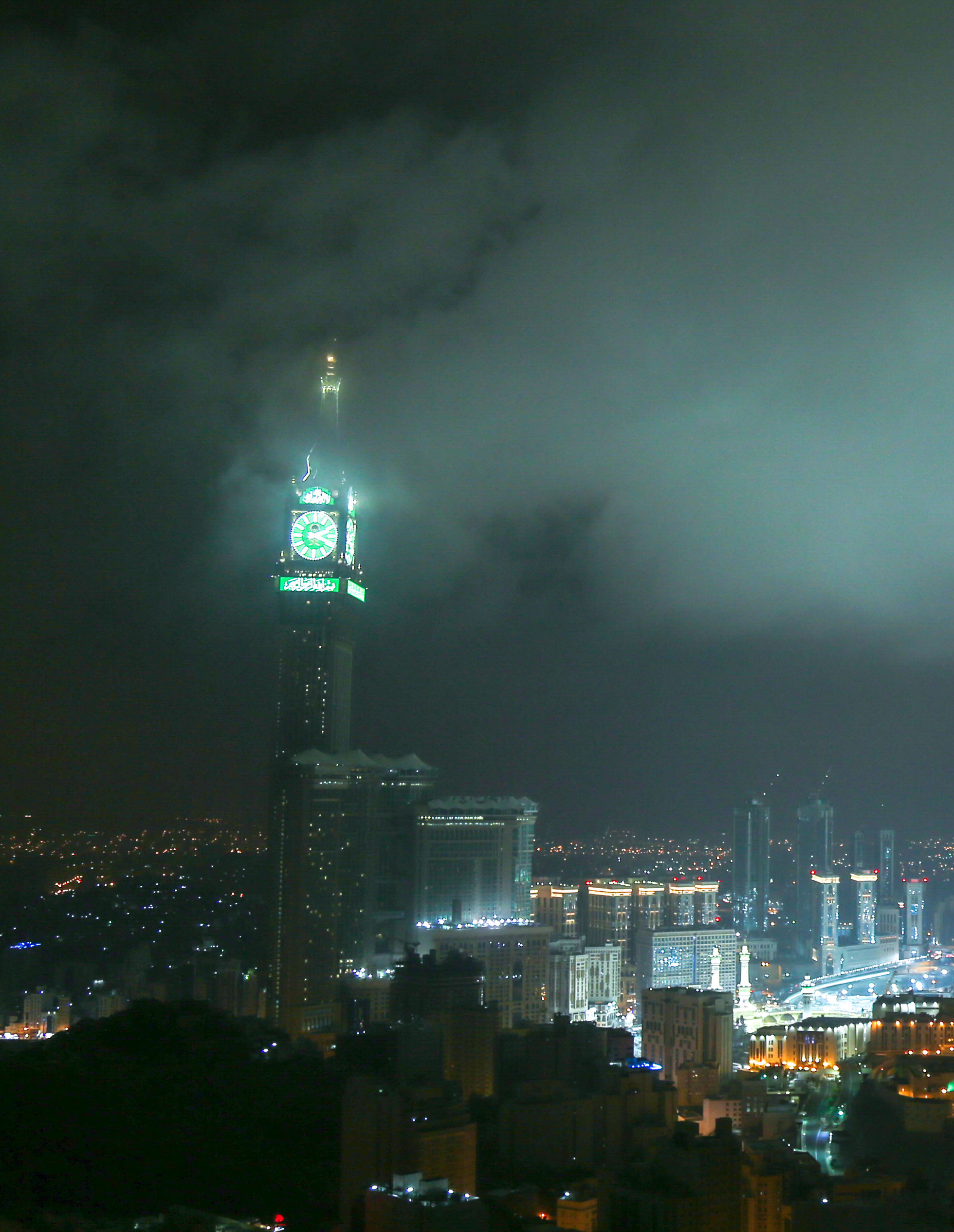
The closest hotels to the Haram are in the Abraj Al-Bait (Clock Tower) complex: Swissotel Al Maqam (connected directly), Fairmont Makkah Clock Royal Tower (2-minute walk), and Pullman ZamZam Makkah (1-minute walk). All offer private entrances to the Haram courtyard.
For a broader look at accommodation across the Kingdom, see our Saudi Arabia hotels guide.
Booking tip: Book 4–6 months in advance for the best prices. During off-peak season (summer months), even 5-star hotels can drop to $150/night. During Ramadan and school holidays, prices can double or triple.
How Much Does Umrah Cost?
The total cost of Umrah varies dramatically depending on your country of departure, travel season, and comfort level. Here is a realistic breakdown:
| Expense | Budget | Mid-Range | Luxury |
|---|---|---|---|
| Return flights | $400–$700 | $700–$1,200 | $1,500–$3,000+ |
| Visa | $80–$120 | $80–$120 | $80–$120 |
| Hotel (7 nights) | $350–$1,000 | $1,000–$2,100 | $2,100–$5,000+ |
| Food (7 days) | $100–$200 | $200–$400 | $400+ |
| Transport | $50–$100 | $100–$200 | $200–$500 |
| Total (approx.) | $1,000–$2,100 | $2,100–$4,000 | $4,300–$8,600+ |
Package deals through licensed Umrah travel agents often provide better value than booking independently, especially for first-timers. They handle visa processing, airport transfers, hotel bookings, and often include guided Umrah walk-throughs. For flight information, see our flights to Saudi Arabia guide.
Best Time to Perform Umrah
Umrah can be performed year-round except during the days of Hajj. Each season has trade-offs:
For a month-by-month breakdown of weather and events across Saudi Arabia, consult our best time to visit Saudi Arabia guide. If you are considering performing Umrah during Ramadan, our Ramadan travel guide covers what to expect.
Getting to Makkah
Most international pilgrims arrive at King Abdulaziz International Airport (JED) in Jeddah, which has a dedicated Hajj terminal. From Jeddah, Makkah is approximately 80 km east:
For those flying into Prince Mohammed bin Abdulaziz Airport (MED) in Madinah, the Haramain train connects Madinah to Makkah via Jeddah in roughly 2.5 hours. Our airport guide has terminal-by-terminal details.
Important: Non-Muslims are not permitted to enter Makkah. If you are travelling with non-Muslim companions, they must remain in Jeddah or Madinah (where non-Muslims can visit all areas except the inner Haram of the Prophet’s Mosque). Jeddah makes an excellent base with its historic Al-Balad district, Red Sea waterfront, and vibrant food scene.
15 Common Mistakes First-Timers Make
Avoid these pitfalls to ensure your Umrah is valid and spiritually fulfilling:
Umrah with Children and Elderly Pilgrims
Umrah is open to pilgrims of all ages. Children who have not reached puberty can perform Umrah with a parent or guardian acting as their guide through the rituals. The reward goes to the accompanying adult.
For elderly pilgrims or those with mobility issues:
Travelling with family? Our Saudi Arabia with kids guide covers practical family travel tips across the Kingdom.
Women Performing Umrah
Women can now perform Umrah without a mahram (male guardian), provided they are travelling in a group or are over 45 years of age, depending on their country’s regulations. Saudi Arabia lifted the mahram requirement for women over 45 in recent years, and many countries’ Umrah visa provisions now reflect this.
Key points for women:
For broader advice on travelling in Saudi Arabia as a woman, see our solo female travel guide.
Spiritual Tips for a Meaningful Umrah
Beyond the logistics, these practices will help you get the most from your journey:
Practical Information
Currency and Payments
Saudi Arabia uses the Saudi Riyal (SAR), pegged at 3.75 to the US dollar. Credit cards and Apple Pay/Google Pay are accepted virtually everywhere in Makkah, including small shops near the Haram. ATMs are plentiful. Carry some cash for barbers, taxis, and small tips. For detailed currency and money guidance, see our Saudi Arabia currency guide.
Connectivity
Purchase a local SIM card or eSIM on arrival for data and calls. Providers like STC, Mobily, and Zain offer pilgrim-specific data packages. Wi-Fi is available in most hotels and inside Masjid al-Haram. See our SIM card and eSIM guide for details.
Safety
Makkah is extremely safe. Saudi security forces maintain a visible presence around the Haram and throughout the city. The biggest risks are dehydration, heat exhaustion, and crowd-related injuries. Keep a charged phone, drink water constantly, and know your hotel’s location relative to the Haram.