
Saudi Arabia lifted its ban on women driving on 24 June 2018, ending a prohibition that had made the Kingdom the last country on earth where women could not legally get behind the wheel. For female tourists planning a trip to Saudi Arabia in 2026, the change means total driving equality: women rent cars, fill up at petrol stations, and navigate highways on exactly the same terms as men. No special permits, no chaperone requirement, no gender-specific paperwork. This guide explains what changed, what the rules are today, and how to make the most of self-drive travel as a woman in the Kingdom.
Ban Lifted: 24 June 2018, by royal decree of King Salman
Documents Needed: Valid home-country licence + International Driving Permit (IDP)
Visa Required: Yes — tourist e-visa available for 60+ nationalities
Driving Side: Right-hand side of the road (left-hand-drive vehicles)
Fuel Cost: ~SAR 2.33/litre for premium 95 (~US $0.62/litre)
Must-Know: 8,200+ AI speed cameras nationwide; fines issued within 24 hours via Absher
Avoid: Driving without a physical licence copy — digital-only earns a SAR 150 fine
The History: How Saudi Arabia Lifted the Driving Ban
For nearly three decades, Saudi Arabia was the only nation on earth that prohibited women from driving. The ban had no explicit basis in Saudi statutory law or Sharia — it was enforced through a combination of ministerial regulation, social custom, and the refusal to issue driving licences to women.
The Women-to-Drive Movement
The campaign for women’s driving rights began publicly in November 1990, when approximately 47 women drove their cars through central Riyadh in a coordinated protest. They were detained, lost their passports, and several were suspended from government jobs. Over the following decades, activists continued to challenge the ban. In 2011, Manal al-Sharif filmed herself driving in Khobar and posted the video online, sparking the #Women2Drive campaign that drew global attention. In October 2013, dozens of women drove across the Kingdom in another organised protest.
The Royal Decree of September 2017
On 26 September 2017, King Salman bin Abdulaziz issued a royal order directing the formation of a ministerial committee to prepare regulations allowing women to drive. The decree gave the government nine months to implement the change. Crown Prince Mohammed bin Salman framed the decision as part of the broader Vision 2030 reform agenda, which aimed to increase women’s workforce participation from 22% to 30% and reduce the Kingdom’s dependence on oil revenue.
24 June 2018: The Ban Ends
At midnight on 24 June 2018, the ban officially ended. Saudi transport authorities had begun issuing driving licences to women on 4 June, and ten women received the first batch. Unlike the old system, women did not need permission from a male guardian to obtain a licence and did not need a guardian present in the vehicle while driving. The Saudi driving school for women at Princess Nourah University in Riyadh received more than 165,000 applications within three days of launching.
What Changed for Female Tourists
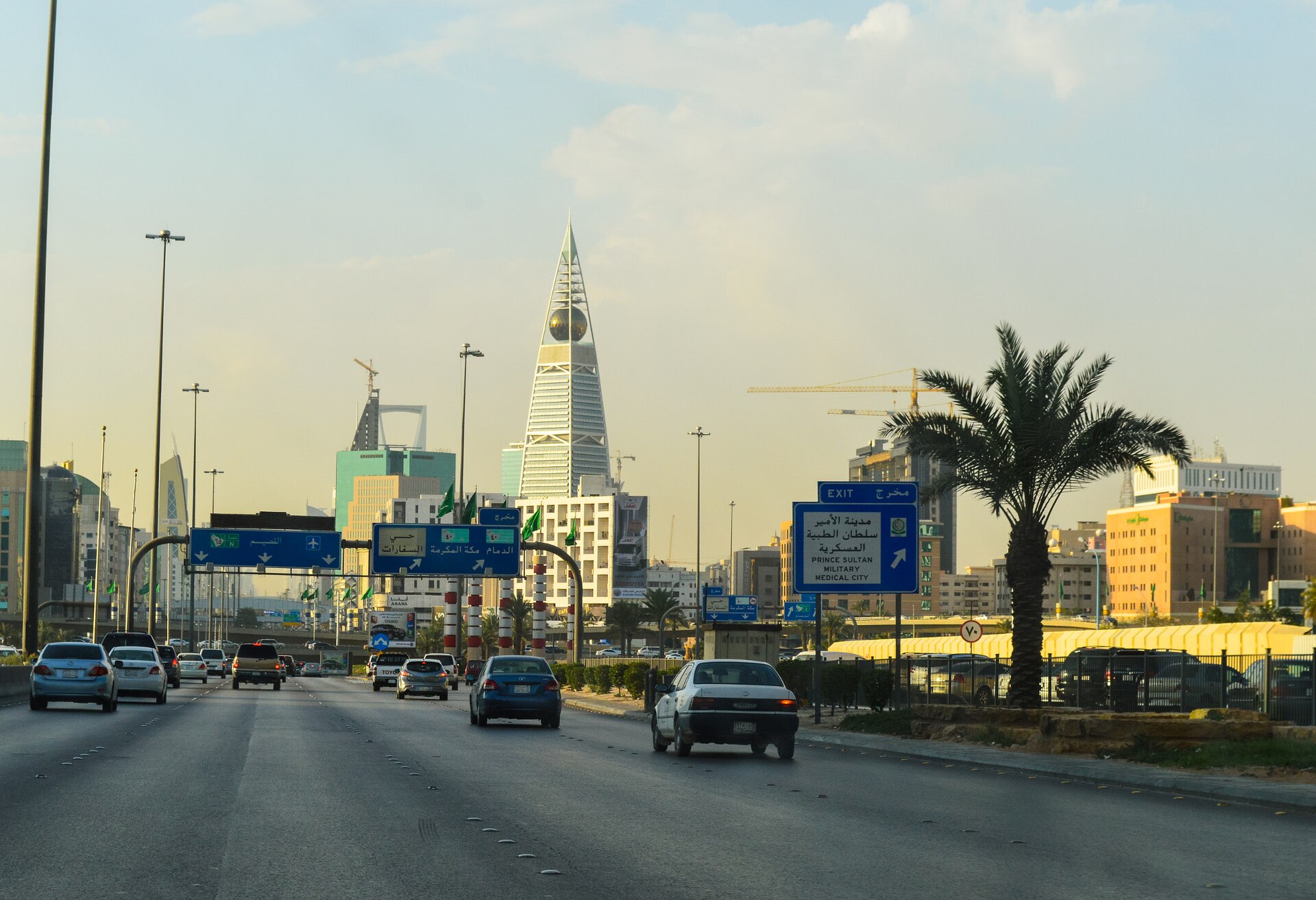
The 2018 reform was not limited to Saudi citizens. Foreign women — whether residents or short-term visitors on a tourist e-visa — gained the same driving rights as everyone else. There are no gender-specific restrictions, no additional documents, and no requirement for a male companion in the car.
Complete Driving Equality
Today, women in Saudi Arabia face exactly the same requirements as men when it comes to driving and renting cars. All rental agencies serve women equally, and no company may refuse service based on gender. This applies at every airport counter, city office, and online booking platform in the Kingdom.
The Numbers
As of 2025, Saudi Arabia has approximately 2.5 million female drivers holding valid licences — roughly 728,000 in Riyadh, 801,000 in the Mecca region, 427,000 in the Eastern Province, and 204,000 in Medina. Female drivers now represent an estimated 28% of all licensed drivers nationally. The automotive market has grown an estimated 9% annually since the ban was lifted, driven significantly by first-time female car buyers.
Practical Guide: Renting a Car as a Woman in Saudi Arabia
Renting a car as a female tourist in Saudi Arabia is straightforward. The process is identical to renting as a male tourist. Here is everything you need.
Documents Required
- Valid driving licence from your home country — must be current and in Latin script. If your licence uses Arabic, Chinese, Cyrillic, or another non-Latin script, you will need a certified Arabic translation or a notarised English translation.
- International Driving Permit (IDP) — while Saudi law technically allows visitors to drive with a home-country licence for up to 90 days, most rental companies and insurers require an IDP regardless. Obtain one from your national automobile association before departure.
- Passport — with a valid Saudi tourist visa or e-visa.
- Credit card — required for deposits and holds at most rental agencies.
- Collision Damage Waiver (CDW) — reduces your liability if the car is damaged
- Theft protection — covers vehicle theft (rare but worth having for peace of mind)
- Extended liability coverage — higher limits for personal injury claims
- Aggressive driving: Saudi highways can be intimidating. Tailgating and high-speed undertaking are common. Stay in the middle lanes, let faster vehicles pass, and avoid engaging with aggressive drivers.
- Sandstorms: Visibility can drop to near zero during sandstorms, particularly in the spring months (March–May). If caught in a storm, pull off the road completely, turn on hazard lights, and wait for it to pass.
- Camels and livestock: On desert roads, particularly at dawn and dusk, camels and other livestock may wander onto unlit roads. Drive with high beams where permitted and stay alert.
- Summer heat: Between June and September, daytime temperatures exceed 45°C (113°F) in many areas. Ensure the air conditioning works before setting out. Carry at least two litres of water per person.
- Flash floods: Rare but dangerous, particularly in wadis (dry riverbeds) and the Asir highlands near Abha. Never attempt to drive through standing water.
- Riyadh to Edge of the World (Jebel Fihrayn): ~90 km northwest of Riyadh. A spectacular desert escarpment with panoramic views. Requires a 4WD for the last section. Part of a wider Riyadh day-trip itinerary.
- Jeddah to AlUla: ~850 km via Highway 15. One of the Kingdom’s great road trips, passing through the Hejaz landscape to the UNESCO-listed tombs of Hegra.
- Dammam to Al Hofuf (Al-Ahsa): ~150 km through the Eastern Province to the UNESCO World Heritage oasis of Al-Ahsa.
- Taif to Abha via the Hejaz Mountains: ~450 km of winding mountain roads through the dramatic Asir highlands, often called the most scenic drive in Saudi Arabia.
- City driving is safe: Women routinely drive alone in all Saudi cities at all hours. There are no areas where women are restricted from driving.
- Rural areas: In small towns and villages, a foreign woman driving may draw some curiosity, but harassment is extremely rare. Saudi hospitality culture means you are more likely to be offered help than hassled.
- Dress code: There is no legal dress code for driving. However, modest clothing is expected in public throughout Saudi Arabia. An abaya is no longer legally required for women, but dressing conservatively — covering shoulders and knees — is recommended, particularly in smaller towns.
- Emergency numbers: Call 999 for police, 997 for ambulance, and 993 for traffic accidents. Roadside assistance from the Saudi Red Crescent can be reached at 920009999.
- Ride-hailing alternative: If you prefer not to drive, Uber and Careem (a locally-founded app) operate in all major cities. Both have dedicated safety features for female passengers.
- Google Maps / Waze: Both work reliably in Saudi Arabia with accurate real-time traffic data in major cities. Google Maps has the most comprehensive coverage of Saudi roads, including remote desert routes.
- Absher: The Saudi government services app where traffic fines are recorded and paid. Tourists may not need this, but it is useful to know that any speed-camera fines will be routed through the rental company.
- Tawakkalna: Originally launched for COVID tracking, this government app now serves as a digital ID and services hub. Not required for driving.
- Saudi Aramco fuel station locator: Useful for finding petrol stations on remote routes.
- Saudi Arabia Travel Guide 2026 — The complete guide to visiting the Kingdom
- Riyadh Travel Guide 2026 — Explore the capital’s museums, souks, and modern skyline
- Jeddah Travel Guide 2026 — Red Sea coast, Al Balad heritage district, and F1 circuit
- AlUla Travel Guide 2026 — Hegra, Elephant Rock, and ancient Nabataean tombs
- Saudi Arabia Visa Guide 2026 — Every visa type explained, from tourist e-visa to Hajj permits
- Saudi Arabia Hiking Guide — Mountain trails, desert treks, and canyon walks
Practical tip: Carry a physical copy of your driving licence at all times. Since 2025, driving with only a digital copy on your phone can result in a SAR 150 fine. Keep your IDP in the glove compartment alongside your passport copy.
Major Rental Companies
International brands including Hertz, Sixt, Budget, and Europcar all operate in Saudi Arabia, with desks at King Khalid International Airport (Riyadh), King Abdulaziz International Airport (Jeddah), and King Fahd International Airport (Dammam). Local companies such as Yahma Rent a Car, Theeb, and Al Mujahid often offer competitive rates. Online booking platforms hold roughly 80% of the market and frequently offer GPS-equipped vehicles, multi-lingual support, and competitive pricing.
Insurance and Vehicle Inspection
Basic third-party liability insurance is typically included by default. However, this offers limited protection for damage to your rental vehicle. Consider adding:
Always inspect the vehicle thoroughly before departure. Note every existing scratch, dent, and mark on the rental form, and take timestamped photographs. Saudi city parking can be tight, and minor cosmetic damage is not uncommon.
Rules of the Road: What Every Driver Needs to Know
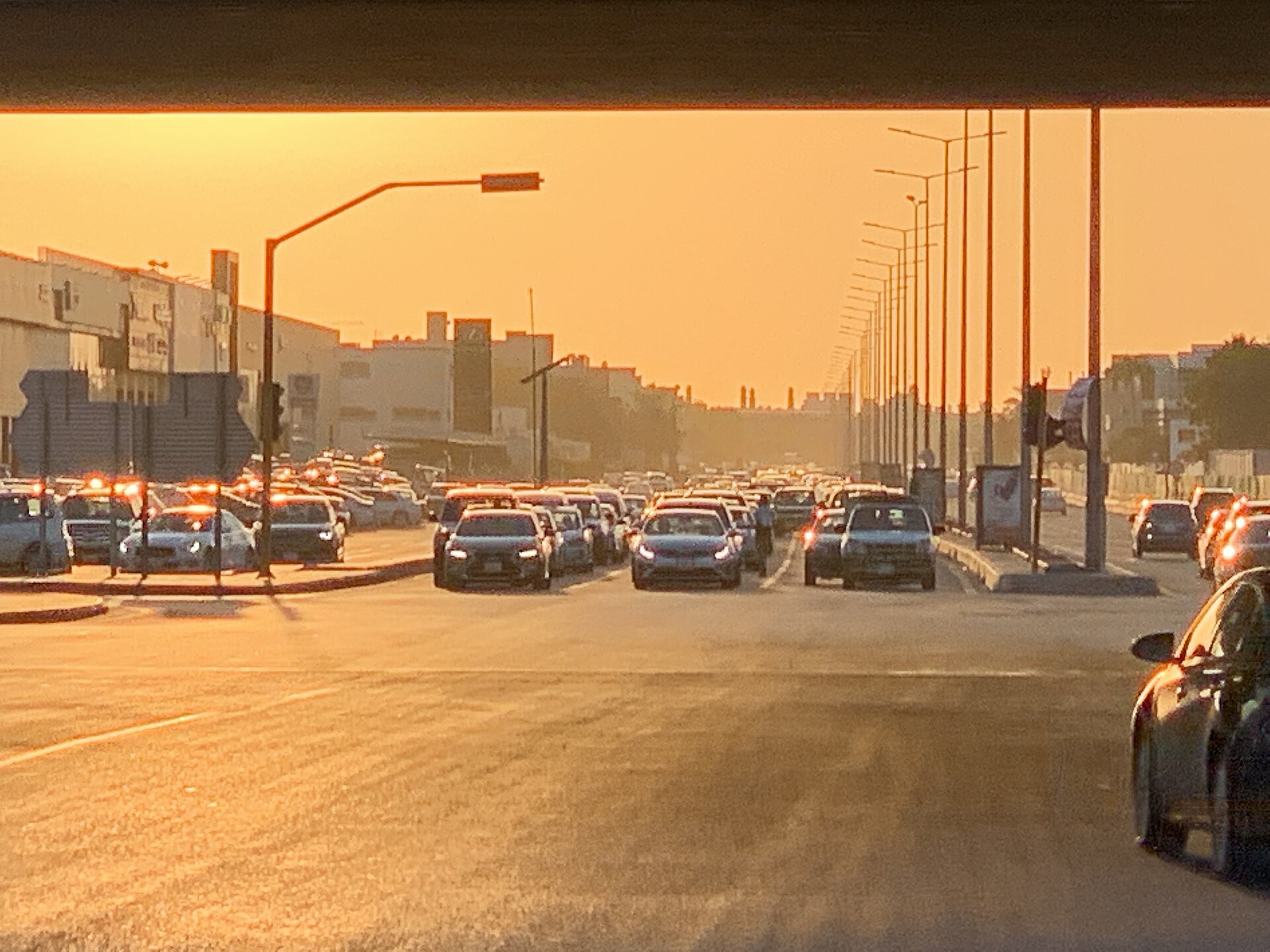
Saudi Arabia follows international conventions for road rules, with a few local specifics every visitor should understand before turning the key.
Basic Rules
| Rule | Detail |
|---|---|
| Driving side | Right-hand side of the road |
| Seat belts | Mandatory for driver and all passengers |
| Children under 10 | Must be in an appropriate car seat in the rear |
| Mobile phones | Hands-free only; using a handheld device while driving is fineable |
| Overtaking | Left-hand side only; no overtaking across double solid lines |
| DUI penalty (2025) | SAR 10,000 fine + 6-month licence suspension |
| Alcohol | Alcohol is prohibited nationwide; there is zero tolerance for drink-driving |
Speed Limits
| Road Type | Speed Limit |
|---|---|
| Highways / Expressways | 120–140 km/h (75–87 mph) |
| Urban main roads | 80 km/h (50 mph) |
| Residential areas | 50 km/h (31 mph) |
| School zones | 40 km/h (25 mph) |
Saudi Arabia operates over 8,200 AI-powered speed cameras (2025 Ministry of Interior data) that automatically issue fines within 24 hours. Fines are linked to the vehicle registration and will appear on the rental company’s system, which will charge them to your credit card. Drive at or below the posted limit.
Fuel and Petrol Stations
Fuel in Saudi Arabia is inexpensive by global standards. Premium 95 petrol costs approximately SAR 2.33 per litre (roughly US $0.62), making long-distance road trips remarkably affordable. Petrol stations are abundant in cities and along major highways. However, if you are driving to remote areas — such as the route between Tabuk and NEOM, or desert roads near Tayma — stations can be 150 km or more apart. Keep your tank at least one-quarter full at all times when outside urban areas.
Road Conditions and Long-Distance Driving
Saudi Arabia has invested heavily in its road network, and the Kingdom now operates over 12,500 km of smart highways. Major intercity routes — including Riyadh to Jeddah, Riyadh to Dammam, and Jeddah to Medina — are multi-lane expressways with excellent surfaces, clear signage in Arabic and English, and rest areas at regular intervals.
Challenges to Be Aware Of
Best Self-Drive Routes for Tourists
Saudi Arabia is a vast country — the size of Western Europe — and self-driving is one of the best ways to experience its diversity. Some of the top routes for tourists include:
Safety for Women Drivers
Saudi Arabia is generally safe for women driving alone. In major cities — Riyadh, Jeddah, Dammam, and beyond — women driving is entirely normal and unremarkable. You will see Saudi women driving everywhere: school runs, commutes, highway road trips, and late-night errands. The novelty wore off years ago.
Practical Safety Tips
Safety note: Saudi Arabia ranks as one of the safest countries in the Middle East for tourists. Violent crime against visitors is exceptionally rare. The main driving risks are the same ones men face: speed, aggressive lane changes, and highway fatigue on long desert stretches.
What Women Still Cannot Do (and What They Can)
The 2018 driving reform was part of a broader series of changes under Vision 2030. Here is a quick snapshot of where things stand for women visiting Saudi Arabia in 2026:
| Activity | Status in 2026 |
|---|---|
| Driving a car | Fully legal since June 2018 |
| Renting a car (without male companion) | Fully legal; no restrictions |
| Travelling without male guardian permission | Legal for women over 21 since August 2019 |
| Booking a hotel room solo | Legal since 2019; all major hotels comply |
| Entering restaurants and cafes alone | Legal; separate “family” and “singles” sections abolished in most establishments |
| Attending sporting events | Legal since 2018; women attend F1, football, boxing, and other events |
| Wearing an abaya in public | No longer legally required; modest dress expected |
| Swimming at public beaches | Permitted; some beaches have women-only hours or sections |
For female travellers, Saudi Arabia in 2026 is a dramatically different country from what it was even a decade ago. Solo female travel is routine, and the infrastructure — from hotel check-in to car rental to restaurant dining — treats men and women identically.
Getting Your Documents in Order
Before your trip, ensure you have the following documents prepared:
International Driving Permit (IDP)
An IDP translates your home licence into multiple languages and is recognised worldwide under the 1949 and 1968 Geneva Conventions. In Saudi Arabia, it is not technically mandatory for holders of licences from the 67 approved nations, but in practice nearly every rental company requires one. IDPs are inexpensive (typically US $15–20) and can be obtained from your national automobile association (AAA in the US, AA in the UK, NRMA in Australia, CAA in Canada, etc.) in a matter of days. You must have a valid home-country licence to obtain an IDP.
Visa
Most visitors need a Saudi tourist e-visa, which can be obtained online in minutes. Citizens of approximately 60 countries are eligible for the e-visa, which allows multiple entries and a stay of up to 90 days per visit within a one-year validity period. The e-visa costs SAR 535 (approximately US $142), including medical insurance.
For Longer Stays
If you are staying in Saudi Arabia for more than 90 days (on a residency visa), you will need to convert your foreign licence to a Saudi driving licence. Women from 47 approved countries can do a direct licence swap. Others must enrol in a Saudi driving school. Several women-focused driving schools now operate across the Kingdom, including facilities at Princess Nourah University in Riyadh and the Jeddah Advanced Driving School.
Navigating Saudi Roads: Apps and Technology
Saudi Arabia is a tech-forward country, and several apps make driving easier:
Costs of Driving in Saudi Arabia
Driving in Saudi Arabia is notably affordable compared to Europe, North America, or even neighbouring Gulf states:
| Item | Approximate Cost (2026) |
|---|---|
| Car rental (economy, per day) | SAR 100–180 (US $27–48) |
| Car rental (SUV/4WD, per day) | SAR 250–450 (US $67–120) |
| Fuel (premium 95, per litre) | SAR 2.33 (US $0.62) |
| Highway tolls | None (Saudi highways are toll-free) |
| Parking (city centres) | SAR 2–5/hour; many areas free |
| Speeding fine (10–20 km/h over) | SAR 500–900 |
| IDP (before trip) | US $15–20 |
Budget tip: Fuel alone for a 1,000 km road trip (such as Jeddah to AlUla and back) costs roughly SAR 175 (US $47) in an average sedan. Saudi Arabia is one of the cheapest countries in the world for self-drive tourism.
Frequently Asked Questions
Can a woman drive alone in Saudi Arabia?
Yes. Women — both Saudi nationals and foreign visitors — can drive alone anywhere in the Kingdom. No male companion is required in the vehicle.
Do I need a special licence to drive as a woman?
No. The same licence and IDP requirements apply to all drivers regardless of gender.
Can I drive in rural areas as a solo female tourist?
Yes. There are no areas where women are restricted from driving. In rural areas, locals may be curious about a foreign visitor but are overwhelmingly hospitable. Take normal precautions — tell someone your route, keep your phone charged, and carry water.
What should I wear while driving?
There is no legal dress code specifically for driving. Modest clothing (covering shoulders and knees) is expected in public. An abaya is not required.
Is ride-hailing available if I prefer not to drive?
Yes. Uber and Careem operate in all major Saudi cities, including Riyadh, Jeddah, Dammam and Al Khobar, Medina, and Mecca (for non-Hajj periods). Both apps have female-driver options and safety features.
What if I get into an accident?
Call 993 for traffic accidents. Do not move the vehicle until police arrive (unless it is blocking traffic dangerously). Take photographs and exchange details with the other driver. Your rental company should have a 24-hour helpline. Saudi traffic police treat male and female drivers identically in accident procedures.
The Bigger Picture: Women and Vision 2030
The driving ban’s end was one element of a sweeping transformation of women’s rights under Saudi Arabia’s Vision 2030 reform programme. Since 2017, women have gained the right to travel without male guardian permission (for those over 21), attend sporting events, join the military, hold senior government positions, and start businesses without a male sponsor. Women’s labour force participation has risen from 17% in 2017 to over 33% by 2025, exceeding the original Vision 2030 target of 30%. The Kingdom appointed its first female ambassador (to the US) in 2019, and women now serve as deputy ministers, bank CEOs, and airline pilots.
For tourists, these changes have created a country that is far more accessible and welcoming to women travellers than it was a decade ago. The Saudi Arabia travel experience in 2026 is shaped by this momentum — from mixed-gender hotel lobbies to women staffing tourism desks at AlUla’s Hegra visitor centre.