
Yanbu, known as the Pearl of the Red Sea, is widely regarded as Saudi Arabia’s premier diving destination. Located roughly 350 kilometres north of Jeddah on the kingdom’s western coast, this industrial port city opens onto some of the most pristine coral reef systems in the entire Red Sea basin. While Egypt’s Sharm el-Sheikh and Hurghada have absorbed decades of international diving traffic, Yanbu’s offshore reefs have benefited from relative obscurity, producing underwater environments in exceptional condition with visibility that regularly exceeds 20 metres. This guide is part of our wider Saudi Arabia Diving and Snorkelling Guide, which covers every major dive region in the kingdom. Here we focus specifically on Yanbu: the best dive sites, the operators who will take you there, what marine life to expect, and every practical detail you need to plan a diving trip.
Best Time to Dive: October to April (peak visibility November to March)
Getting There: Fly to Yanbu Airport (YNB) from Riyadh (1 hr 45 min) or Jeddah (1 hr 5 min), or drive 3.5 hours north from Jeddah
Visa Required: Yes — tourist e-visa available for 60+ nationalities
Budget: $80–$135 per two-tank boat dive; $400–$530 for PADI Open Water certification; $2,040–$3,880 for liveaboard trips
Must-See: Seven Sisters Reef, the Iona Wreck, Abu Galawa
Avoid: June to August — water temperatures exceed 30°C and surface conditions deteriorate
Why Dive Yanbu?
Saudi Arabia’s Red Sea coast stretches for over 1,700 kilometres, but Yanbu occupies a special position within it. The city sits at the point where the Red Sea’s central trough pushes nutrient-rich deep water close to the continental shelf, supporting an extraordinary density of hard and soft corals. Where other Red Sea destinations have suffered from overtourism and anchor damage, Yanbu’s reef systems remain largely untouched. The Seven Sisters reef complex, located about 18 kilometres offshore, is routinely described by dive professionals as one of the finest reef systems in the world.
What sets Yanbu apart from other destinations in our scuba diving guide to Saudi Arabia is the combination of accessibility and raw marine quality. Divers who have worked the Egyptian Red Sea for years consistently describe Yanbu’s reefs as what Ras Mohammed looked like 30 years ago. The coral cover is dense and healthy, the fish populations are large and unafraid of divers, and encounters with large pelagic species — hammerhead sharks, manta rays, whale sharks — are a realistic expectation rather than a lucky sighting.
Yanbu also works well as part of a broader Yanbu travel itinerary. The city has comfortable hotels, a historic old quarter worth exploring, and easy connections to both Jeddah and Medina. Divers can combine a week of underwater exploration with Saudi Arabia’s best beaches and cultural sites.
Best Dive Sites in Yanbu
Yanbu’s dive sites divide into two broad categories: the offshore reef complexes reached by boat (typically a 45-minute to one-hour journey) and shore-accessible sites suited to training dives and snorkelling. The offshore sites are the main attraction and the reason divers travel to Yanbu from across the Gulf and beyond.
Seven Sisters Reef
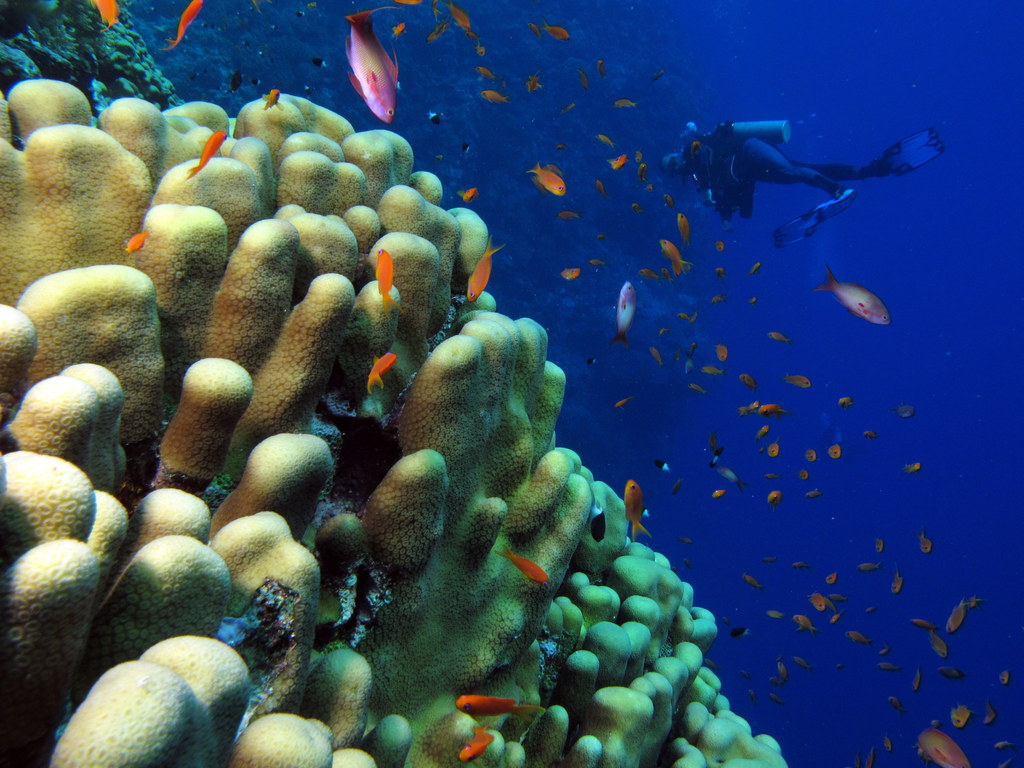
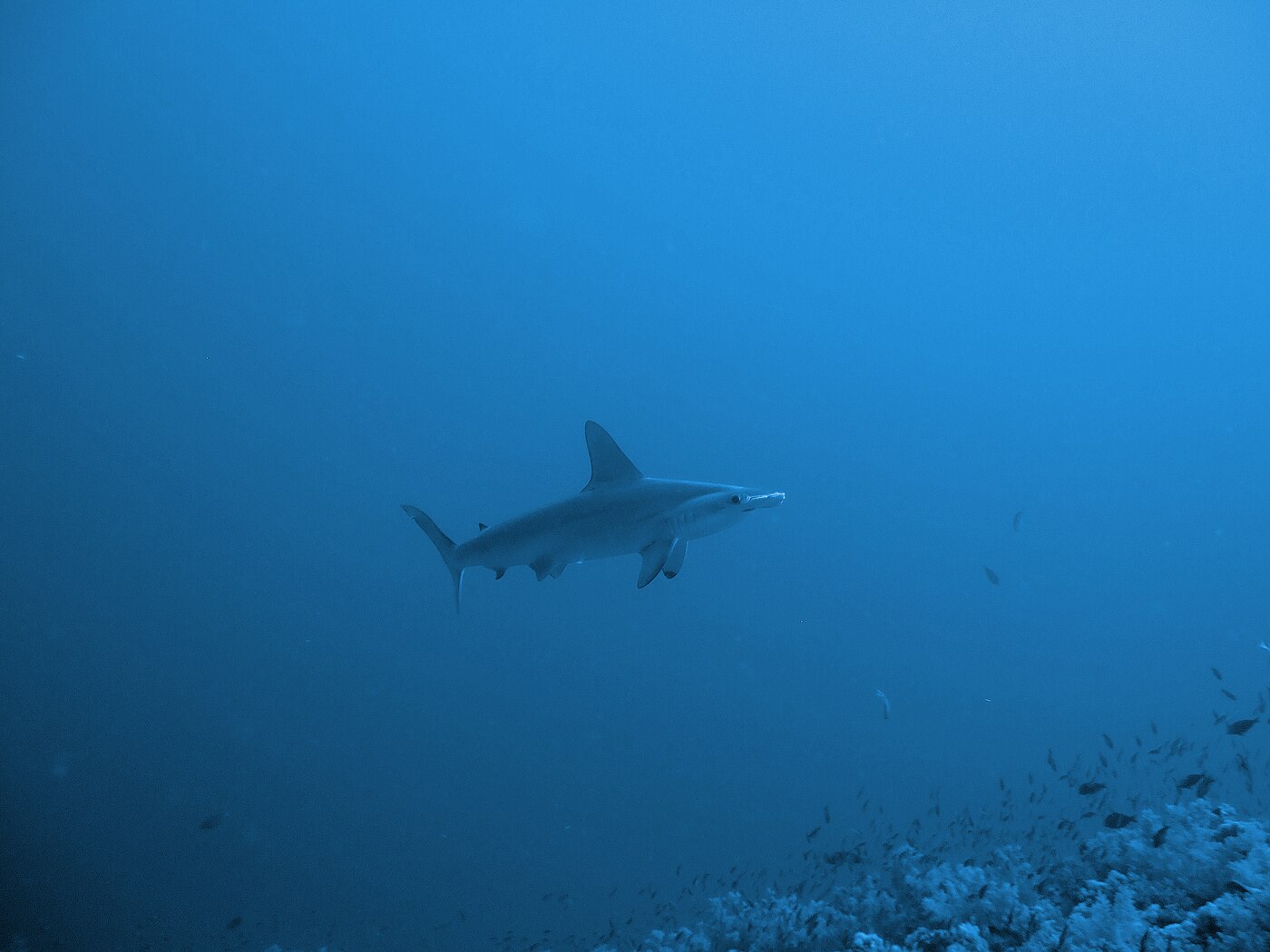
The crown jewel of Yanbu diving, the Seven Sisters (also called the Seven Reefs) is a chain of reef islands roughly 18 kilometres west of Yanbu’s port. The complex supports an extraordinary diversity of marine life across multiple individual sites, each with its own character. Hammerhead sharks patrol the deeper waters here almost year-round, making the Seven Sisters one of the most reliable hammerhead encounters in the entire Red Sea.
The reef walls are covered with sea fans, soft corals, and gorgonians, while the shallower sections are carpeted with healthy hard corals — brain corals, table corals, and staghorn formations. Visibility at the Seven Sisters typically ranges from 20 to 30 metres, and on the best days can push beyond 40 metres. Depths vary from 5 metres at the reef tops to well beyond 40 metres on the walls, making the Sisters suitable for divers of all certification levels.
Tip: If hammerhead sharks are your primary goal, plan your trip between November and February when schools are most reliably sighted at the Seven Sisters. Early morning dives offer the best chance, as hammerheads tend to patrol the deeper sections before sunrise disperses the schools.
Abu Galawa
Located within the Seven Sisters complex, Abu Galawa is widely considered one of the single most beautiful dive sites in the Yanbu area. The site features underwater grottos, dramatic drop-offs, and a sandy plateau close to the wall where coral formations extend to around 30 metres depth on the edge of the southern slope. Average depth ranges from 12 to 40 metres.
Marine life at Abu Galawa is exceptional: expect dense clouds of barracuda, large groupers, and several species of Red Sea shark including grey reef sharks, whitetip reef sharks, and silky sharks. The coral cover at this site is particularly vibrant, with swaying gorgonian forests and colourful soft corals creating one of the most photogenic reef scenes in Saudi Arabia.
Marker 32
Marker 32 is a soft coral reef known for its larger predator encounters. Tiger sharks have been sighted here, along with yellowfin tuna, whitetip reef sharks, and grey reef sharks. The site gets its name from the navigation marker that helps boats locate it. The soft coral formations are dense and colourful, making this a favourite with underwater photographers.
Marker 34 and Marker 39
Two more sites within the Seven Sisters area, Marker 34 and Marker 39 offer the same high-quality reef structures with different topographies. Each has its own character — different wall angles, different coral compositions, and slightly different resident fish populations. Divers on multi-day trips or liveaboards will typically visit several marker sites to experience the full variety of the Seven Sisters complex.
The Iona Wreck
The SS Iona is the most famous wreck dive in Saudi Arabia and one of the best in the entire Red Sea. Located approximately 17 kilometres from shore, the wreck lies between 14 and 46 metres depth, making it accessible to Advanced Open Water divers with the deeper sections reserved for those with deep or technical diving qualifications.
The ship’s history is contested. One theory holds that it was captured by the Germans during the First World War and handed to their Ottoman Turkish allies, after which it ran onto a reef off the coast of Yanbu. The wreck was discovered in 1980, purely by accident. Among the artefacts found were champagne bottles — both empty and unopened — though testing revealed the unopened bottles contained seawater rather than anything drinkable.
Today the Iona is heavily encrusted with soft and hard corals, making it both a wreck dive and a reef dive in one. Penetration is possible with appropriate training. The wreck attracts large schools of fish, and barracuda, lionfish, and moray eels are commonly spotted among the structure. The Iona is frequently the highlight of scuba diving itineraries in Saudi Arabia.
Five Corals (Five Sisters)
Located between Yanbu and Rabigh (south of Yanbu, toward Jeddah), the Five Corals reef complex is typically visited on liveaboard itineraries that combine both the Seven Sisters and Five Corals. The site is known for incredible densities of reef fish and walls covered in purple soft corals. At the centre of the plateau, at approximately 25 metres depth, a large formation draped in soft corals creates one of the most dramatic underwater landscapes in the region.
The Five Corals is a particularly strong site for pelagic encounters. Schools of hammerhead sharks, silvertip sharks, and silky sharks patrol these waters, while jacks, trevally, and barracuda form dense shoals around the reef edges.
Barracuda Beach (Shore Dive)
For divers who want to avoid the boat journey, or for snorkellers exploring the Red Sea coast, Barracuda Beach offers coral formations that begin close to shore. Located approximately 30 kilometres north of Yanbu Airport (plus 12 kilometres of off-road driving), this site is famous for its rich living coral system. Expect to see tuna, jacks, barracuda, sharks, squirrelfish, and red snappers within the reef network. The shallow water makes it ideal for training dives, Discover Scuba Diving sessions, and family snorkelling.
Marine Life: What You Will See
Yanbu’s waters support a full spectrum of Red Sea marine life, from tiny nudibranchs hiding in the coral to large pelagic species cruising the blue water beyond the reef edges. Here is what to expect by category.
Sharks
Yanbu is one of the best shark-diving destinations in the Red Sea. The scalloped hammerhead is the headline species, with schools regularly sighted at the Seven Sisters reef complex. Grey reef sharks, whitetip reef sharks, and blacktip reef sharks are common residents of most dive sites. Tiger sharks are occasionally spotted at Marker 32 and other deeper sites. Silky sharks and silvertip sharks patrol the open water around the reef edges.
Rays and Large Pelagic Fish
Manta rays pass through Yanbu’s waters seasonally, with sightings most common between October and February. Eagle rays are more regular residents. Whale sharks — the world’s largest fish — are sighted periodically, particularly in the winter months. Large schools of yellowfin tuna, giant trevally, and barracuda are a near-constant presence at the offshore sites.
Turtles
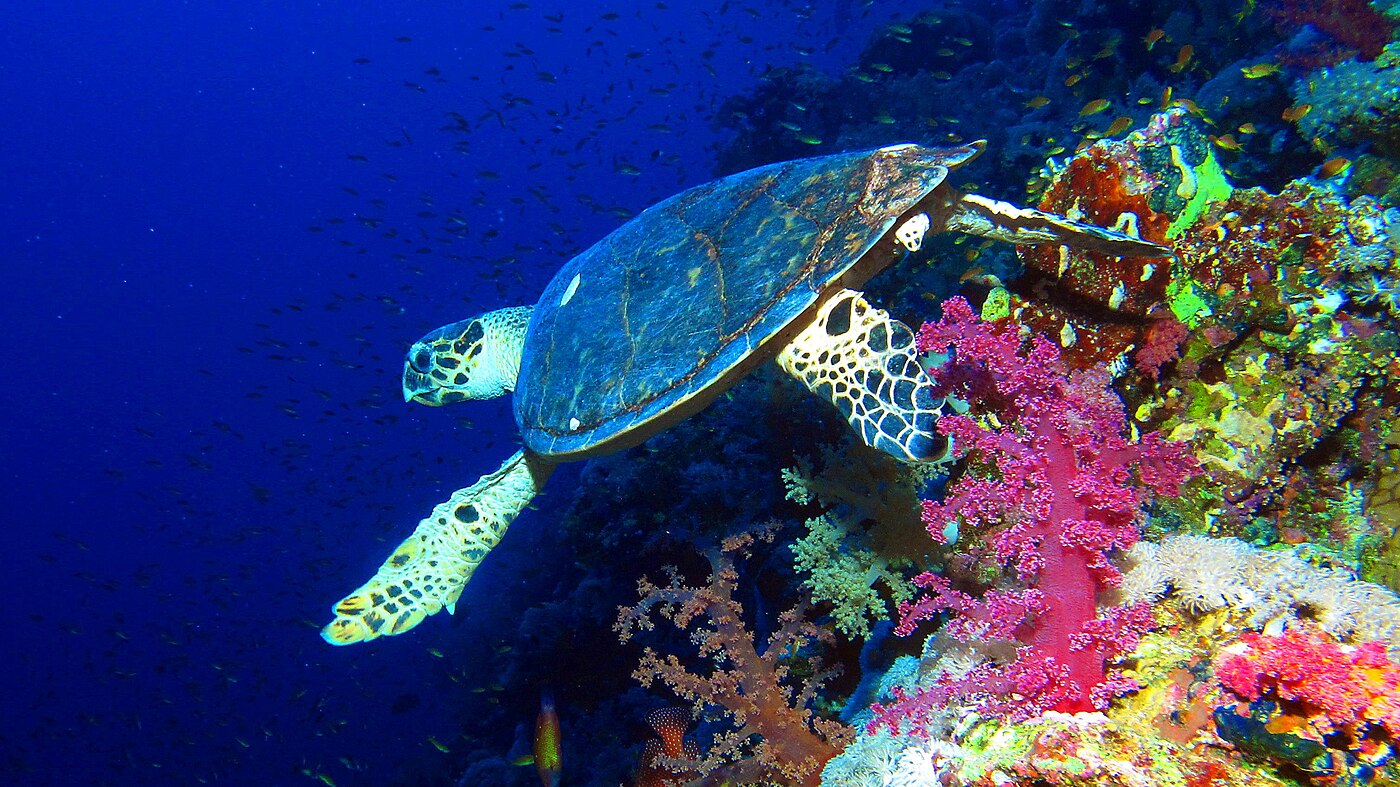
Both hawksbill and green sea turtles are common in Yanbu’s waters. They are frequently spotted resting on reef ledges or grazing on sponges and soft corals. Turtle encounters are among the most reliable in the Red Sea, with sightings possible on almost every dive.
Reef Fish
The reef fish populations at Yanbu are dense and diverse. Schools of vibrant anthias cloud the reef edges in orange and pink. Angelfish, butterflyfish, parrotfish, surgeonfish, clownfish, and wrasses are present in high numbers. Lionfish patrol the overhangs, moray eels peer out from crevices, and pufferfish drift along the reef tops. The healthy coral cover provides habitat for an exceptionally high density of small reef fish, which in turn attracts the larger predators.
Coral
Yanbu’s coral diversity is one of its strongest selling points. Hard corals — brain corals, table corals, staghorn formations, and massive porites — form the structural backbone of the reefs. Soft corals, including dendronephthya and sinularia species, add dramatic colour to the reef walls. Gorgonian sea fans reach impressive sizes on the deeper sections of the Seven Sisters walls, and black coral bushes grow in the deeper grottos.
Dive Operators in Yanbu
Yanbu has a growing number of professional dive centres, all operating under international certification standards (primarily PADI). Below are the most established operators. Booking in advance is strongly recommended during the peak season (November to March), particularly for multi-day boat trips and liveaboards.
Diving Bubbles
Diving Bubbles is a PADI 5-Star Dive Centre in Yanbu, the highest PADI rating available. They offer the full range of PADI courses from Discover Scuba Diving through to Divemaster, along with guided dive trips to the Seven Sisters, Iona Wreck, and other sites. Facilities include an on-site training pool, classroom, and their own dive boat. Courses and trips can be booked online.
- Contact: [email protected]
- Phone: +966 56 081 0339
- Certification: PADI 5-Star Dive Centre
- Novotel Yanbu — 4-star hotel on the Corniche Road, 10 minutes from the airport and 20 minutes from the commercial port. Seaside location with pool.
- Holiday Inn Yanbu — 4-star hotel 5 miles from the airport with complimentary airport shuttle on request.
- Radisson Blu Hotel Yanbu — Well-located chain hotel with business-class amenities and easy access to the waterfront.
- ibis Yanbu — Reliable budget option popular with divers. Dream Divers operates from the nearby Ibis International Hotel.
- Canary Beach Hotel — Budget-friendly beachfront option.
- Never skip your safety stop. A three-minute stop at 5 metres is standard practice on every dive.
- Respect your certification limits. If you are Open Water certified (18m max), do not attempt deep wreck dives.
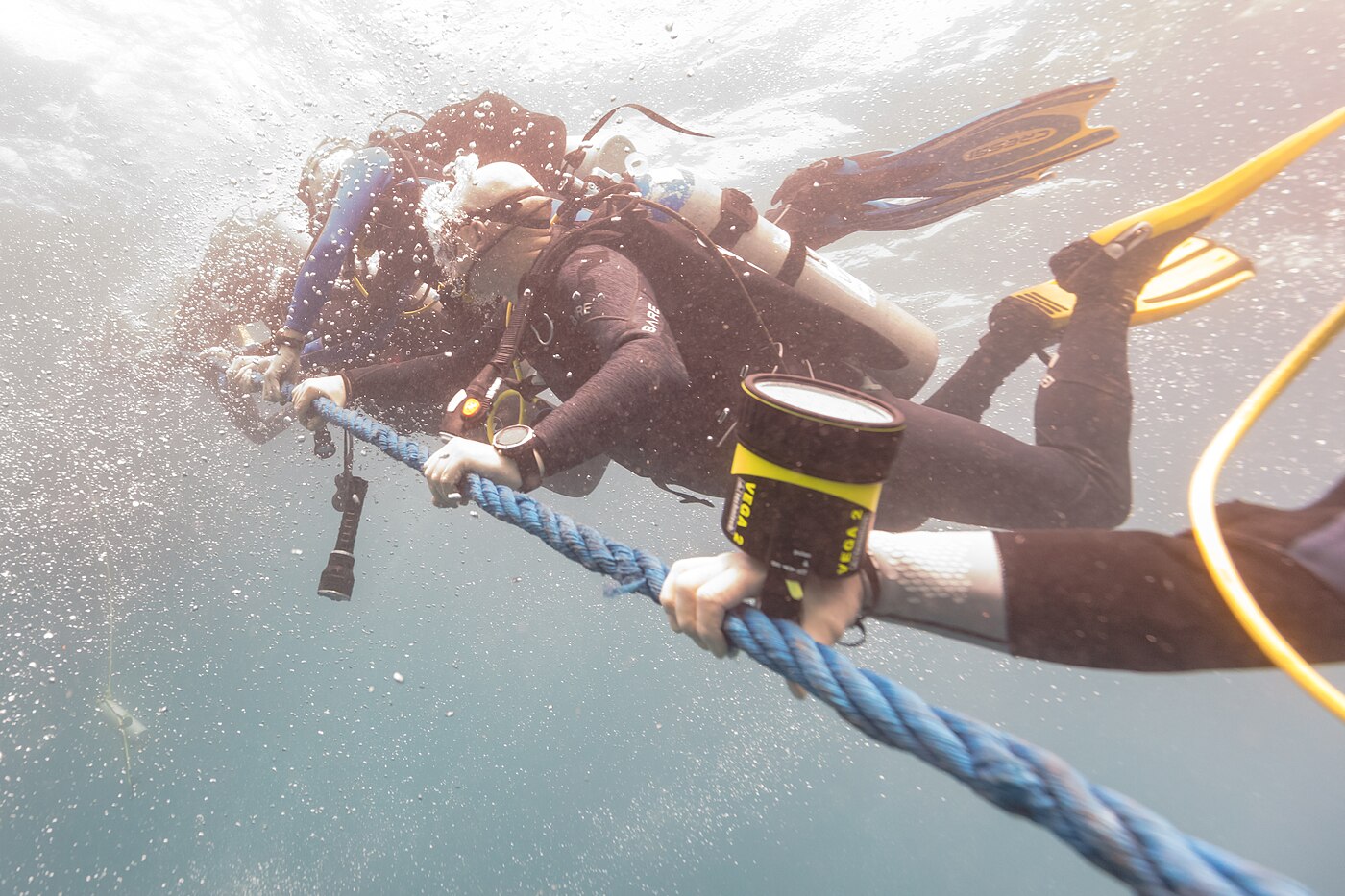
- Carry a surface marker buoy (SMB). Currents can pick up around the Seven Sisters, and a visible SMB ensures the boat can locate you.
- Wait 18–24 hours after your last dive before flying. This is a non-negotiable rule to prevent decompression sickness.
- Stay hydrated. The Saudi climate is intensely dry, and dehydration increases the risk of decompression illness.
- Do not touch, stand on, or break coral.
- Maintain good buoyancy control — careless fin kicks destroy more coral than any other diver behaviour.
- Do not feed fish or remove any marine life.
- Use reef-safe sunscreen (mineral-based, not chemical).
- Report any violations to your dive operator.
- Dive certification card (PADI, SSI, or equivalent)
- Dive logbook
- Personal dive computer (optional but recommended — rental available)
- Reef-safe sunscreen
- Underwater camera or housing (GoPro is popular)
- Light clothing for surface intervals (it is hot even in winter)
- Cash (SAR) for smaller operators; larger centres accept cards
- Saudi Arabia Diving and Snorkelling Guide — The complete guide to Red Sea diving across the kingdom
- Scuba Diving in Saudi Arabia — Sites, operators, and certification advice for every major dive region
- Snorkeling in Saudi Arabia — The best Red Sea sites for non-divers and beginners
- Freediving in Saudi Arabia — Red Sea schools, sites, and how to start breath-hold diving
- Yanbu Travel Guide — Everything to see and do in Saudi Arabia’s Red Sea diving capital
- Umluj Guide — The Maldives of Saudi Arabia, 2.5 hours north of Yanbu
- Saudi Arabia Beaches — The best coastal escapes across the kingdom
- Saudi Arabia Travel Guide 2026 — The complete guide to visiting the Kingdom
- Saudi Arabia Visa Guide — Every visa type explained
Blue Diver Diving Club
Blue Diver is one of Yanbu’s most established diving operations, offering access to more than 19 dive sites in the Yanbu area plus additional sites around Jeddah. They run a range of PADI programmes including Bubblemaker (for children), Seal Team, and Discover Scuba Diving, as well as full certification courses. Their website at bluediver.com.sa lists current schedules and pricing.
Adventure Diver
Adventure Diver is another PADI-certified dive centre in Yanbu offering courses, guided dive trips, and snorkelling excursions. They provide equipment rental and run regular boat trips to the offshore reef systems.
Scuba Diver
Scuba Diver is a PADI dive centre in Yanbu Al-Bahr (the old coastal district) offering professional training and guided dives for all levels. Services include air fills, nitrox, equipment sales and rental, and a retail shop.
Dream Divers
Dream Divers is a larger operation headquartered in Jeddah with a Yanbu outlet at the Ibis International Hotel in downtown Yanbu. They are one of the pioneers of marine tourism in Saudi Arabia, operating multiple dive boats including purpose-built liveaboard vessels. Their Dream Master and Dream Island boats serve the Seven Sisters and other offshore sites. Dream Divers is a strong choice for multi-day liveaboard trips departing from Yanbu.
Yanbu Diving
Yanbu Diving (yanbudiving.com) offers private diving tours, snorkelling excursions, and certification courses. Private dive trips depart from Dreams Marina in Sharm Yanbu at 7:00 AM, with full equipment included. They also run combination trips including desert safaris and cultural excursions. Participants must be 12 years or older and hold a valid diving licence.
Liveaboard Options
For the most comprehensive Yanbu diving experience, liveaboard trips are the clear winner. Multi-day itineraries typically cover the Seven Sisters, Five Corals, the Iona Wreck, and additional sites that day boats cannot reach. Liveaboard prices range from $2,040 to $3,880 per trip, typically covering 5 to 7 nights with three to four dives per day, all meals, cabin accommodation, tanks, and weights.
Major liveaboard operators serving Yanbu include the Saudi Pioneer and Saudi Explorer. The Saudi Explorer’s itineraries visit the Seven Sisters, Five Sisters, and Farasan Banks, offering a comprehensive survey of Saudi Arabia’s best diving. For those interested in combining diving with other marine activities, our yacht charter guide covers private boat options along the Red Sea coast.
| Operator | Type | Sites Covered | Price Range |
|---|---|---|---|
| Diving Bubbles | Day trips | Seven Sisters, Iona Wreck, local sites | SAR 300–900 per trip |
| Blue Diver | Day trips | 19+ sites around Yanbu | Contact for rates |
| Dream Divers | Day trips & liveaboards | Seven Sisters, offshore sites | Contact for rates |
| Saudi Explorer | Liveaboard (5–7 nights) | Seven Sisters, Five Corals, Farasan Banks | $2,040–$3,880 |
| Saudi Pioneer | Liveaboard (5–7 nights) | Yanbu, Farasan, southern reefs | $2,040–$3,880 |
Dive Costs and What to Budget
Yanbu diving is excellent value compared to most Red Sea destinations. Below is a breakdown of typical costs in 2026.
| Item | Cost (SAR) | Cost (USD approx.) |
|---|---|---|
| Single boat dive (guided) | SAR 250–400 | $65–$105 |
| Two-tank boat dive | SAR 300–500 | $80–$135 |
| Full-day boat trip (Seven Sisters) | SAR 600–900 | $160–$240 |
| Snorkelling excursion | SAR 150–300 | $40–$80 |
| Equipment rental (full set) | SAR 100–200/day | $25–$55/day |
| PADI Open Water course | SAR 1,500–2,000 | $400–$530 |
| PADI Advanced Open Water | SAR 1,200–1,800 | $320–$480 |
| Liveaboard (5–7 nights, all-inclusive) | SAR 7,650–14,550 | $2,040–$3,880 |
Budget Tip: Multi-dive packages offer significant savings over single-dive pricing. Most operators offer 5-dive and 10-dive packages at discounted rates. If you are spending more than two days diving, ask about package pricing before booking individual dives.
Certification and Requirements
To dive in Yanbu, you will need a recognised scuba diving certification (PADI, SSI, NAUI, or equivalent). If you do not have one, multiple Yanbu operators offer the PADI Open Water Diver course, which can be completed in 3 to 4 days.
PADI Open Water Diver Course
The entry-level certification requires you to be at least 10 years old, have adequate swimming skills, and be in good physical health. The course includes theory sessions, confined water training in a pool, and four open water dives (the first two to a maximum of 12 metres, the final two to 18 metres). Completion earns you a lifetime certification recognised worldwide.
Advanced Open Water and Specialties
To dive the deeper sections of the Seven Sisters and the Iona Wreck (below 18 metres), you will need an Advanced Open Water certification or equivalent. Several Yanbu operators also offer specialty courses including Deep Diver, Wreck Diver, and Nitrox (Enriched Air) — all of which enhance your Yanbu diving experience.
Do You Need a Saudi Dive Permit?
If you are visiting on a tourist visa, you do not need a separate Saudi dive permit. Your PADI card (or equivalent) and passport are sufficient. The dive permit requirement applies only to holders of an iqama (Saudi residence permit).
Best Time to Dive Yanbu
Yanbu is diveable year-round, but conditions vary significantly by season. The sweet spot for diving is October to April, with the absolute peak being November to March.
| Season | Air Temp | Water Temp | Visibility | Notes |
|---|---|---|---|---|
| Nov–Mar (Peak) | 22–30°C | 24–26°C | 20–30+ metres | Best visibility, hammerhead season, comfortable topside |
| Apr–May | 30–38°C | 26–28°C | 15–25 metres | Still good diving; getting hot topside by late April |
| Jun–Aug | 38–45°C | 29–32°C | 10–20 metres | Extreme heat, some coral bleaching risk; not recommended |
| Sep–Oct | 32–38°C | 28–30°C | 15–25 metres | Heat easing; manta ray season begins |
A 3mm or 5mm wetsuit is appropriate for the peak season (November to March). During summer months, a rash guard or thin 2mm suit is sufficient. Most dive operators include wetsuit rental in their equipment packages, but if you have your own, bring it — the fit will be better and the dive more comfortable.
Getting to Yanbu
By Air
Yanbu Airport (YNB) receives domestic flights from Riyadh (approximately 1 hour 45 minutes, operated by Saudia and flynas) and Jeddah (approximately 1 hour 5 minutes). Flydubai operates seasonal services to Dubai. Flight prices from Riyadh start at around $150 return. The airport is modern and located about 10 minutes by car from the city centre.
By Road
Yanbu is approximately 330 kilometres north of Jeddah via Highway 5, a well-maintained motorway that takes about 3.5 hours to drive. From Medina, the drive is roughly 240 kilometres (2.5 hours). Car rental is available at both Jeddah and Yanbu airports. The road from Jeddah passes through Rabigh and runs along the coast for much of the journey, with Umluj further north if you want to extend your coastal exploration.
Getting Around Yanbu
Dive operators typically provide transfers from central Yanbu hotels to the marina or departure point. Sharm Yanbu Bay, south of the main city, is the primary launching point for offshore dive trips. If you are self-driving, parking is available at the marinas. Ride-hailing apps (Uber and Careem) operate in Yanbu but availability can be limited compared to Riyadh or Jeddah.
Where to Stay
Yanbu offers a range of accommodation options from budget hotels to international chains. For divers, proximity to the waterfront or Sharm Yanbu Bay is ideal. Average nightly rates range from $50 to $220 depending on season and hotel category.
Premium Hotels
Mid-Range and Budget
Tip: September is the cheapest month for hotels in Yanbu (average around $110/night), while January is the most expensive (around $216/night), coinciding with peak dive season. Book early for the November–March window.
Safety and Practical Advice
Diving Safety
Yanbu’s offshore sites involve boat diving in open water, and some sites — particularly the Iona Wreck — reach depths that demand respect. Follow these guidelines:
Insurance
Dive insurance is strongly recommended. Divers Alert Network (DAN) provides global dive accident insurance covering evacuation, hyperbaric treatment, and medical expenses. Many dive operators in Yanbu will accept you without insurance, but you would be responsible for the full cost of any hyperbaric treatment, which can exceed $10,000.
Environmental Responsibility
Yanbu’s reefs are pristine in part because they have had less visitor pressure than Egyptian dive sites. Help keep them that way:
What to Bring
Combining Yanbu Diving with Other Activities
Yanbu is more than just a dive destination. Between dives (or on non-diving days), there is plenty to explore both on the coast and inland.
Snorkelling: If you are travelling with non-divers or want a lighter day, Yanbu’s nearshore reefs offer excellent snorkelling opportunities. Barracuda Beach is the standout shore-accessible site.
Freediving: Saudi Arabia’s freediving scene is growing, and Yanbu’s clear waters and moderate depths make it a natural training ground for breath-hold diving.
Yanbu Old Town: The historic heart of Yanbu features traditional Hejazi architecture, coral-block houses, and a waterfront promenade. It is a pleasant half-day excursion.
Umluj: Often called the Maldives of Saudi Arabia, Umluj is a 2.5-hour drive north from Yanbu and offers turquoise lagoons, white sand islands, and additional snorkelling and diving opportunities.
Day Trips: Medina is a 2.5-hour drive inland from Yanbu, making it possible to combine coastal diving with a visit to one of Islam’s holiest cities (non-Muslims should note access restrictions around the Haram area).