
RIYADH — The United States launched a naval blockade of Iranian ports on April 13 without a coalition, without a United Nations mandate, and without a formal request from any Gulf state. President Trump announced the operation as though allies were lining up behind it; the United Kingdom denied participation the same day, Australia said it had not been asked, and Saudi Arabia — the country whose cooperation would determine whether the blockade is enforceable or performative — said nothing at all. The silence is not ambiguity. It is a structural trap. CENTCOM’s operational scope covers only vessels approaching Iranian ports, not the full Hormuz transit Trump’s rhetoric implied, and the gap between those two definitions is the space in which every allied government justified its refusal. Saudi Arabia now faces a binary choice with hard deadlines: tacit endorsement of the blockade makes Aramco infrastructure a co-belligerent target under IRGC doctrine already activated on April 7; public distancing fractures the American security umbrella five days before 1.8 million Hajj pilgrims begin arriving and nine days before the ceasefire expires.
Table of Contents
- What Did CENTCOM Actually Announce?
- The Coalition That Does Not Exist
- Why Did the UK Refuse to Join the Blockade?
- Operation Earnest Will and the Invitation That Never Came
- The Three-Layer Saudi Trap
- How Does the Blockade Change Saudi Arabia’s Fiscal Arithmetic?
- What Happens When the Ceasefire Expires on April 22?
- Hajj as a Temporal Cage
- Frequently Asked Questions
What Did CENTCOM Actually Announce?
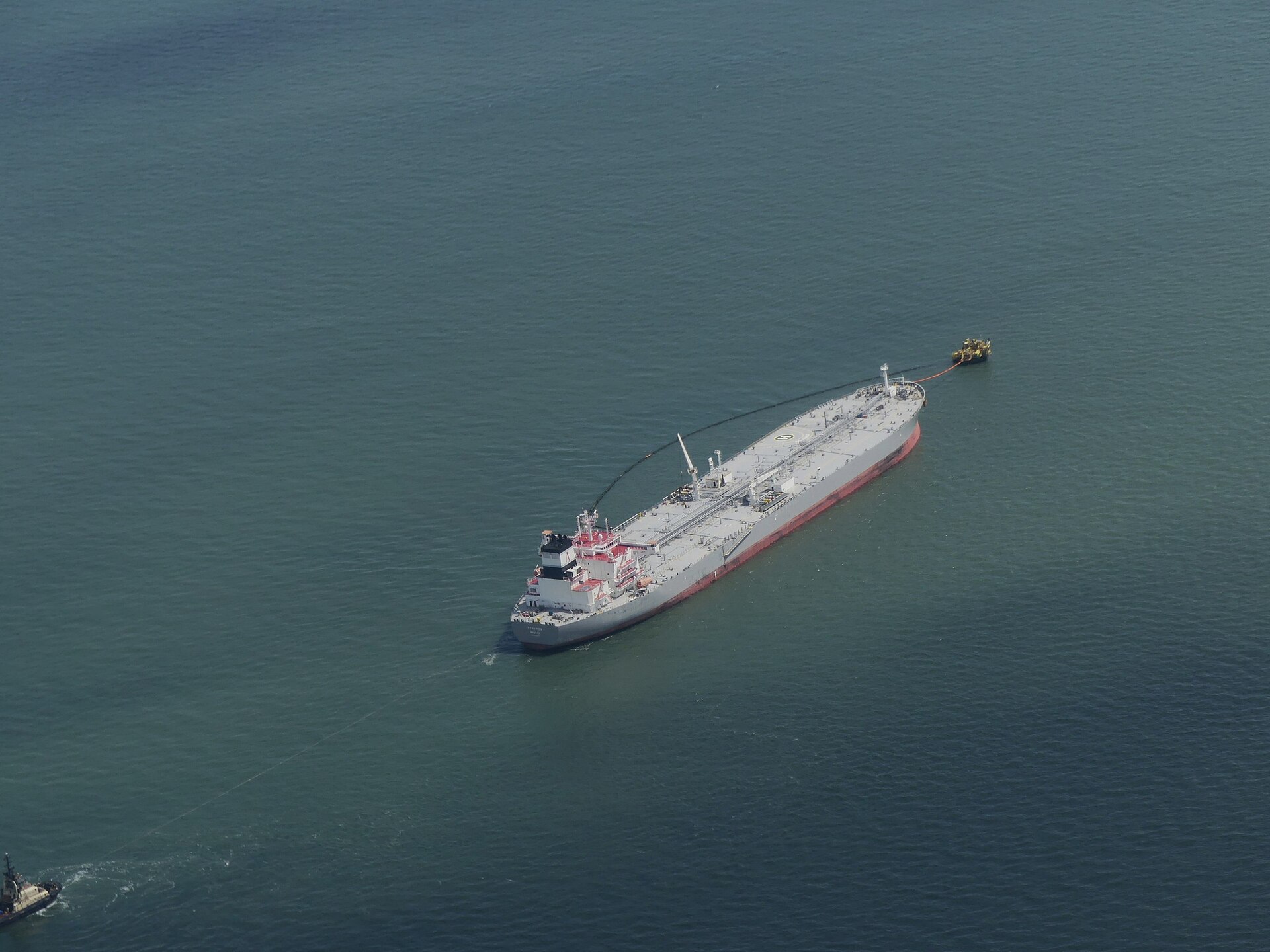
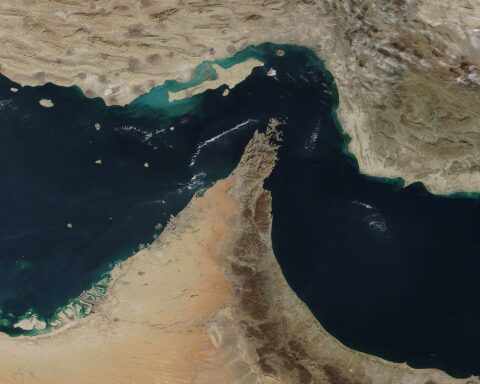
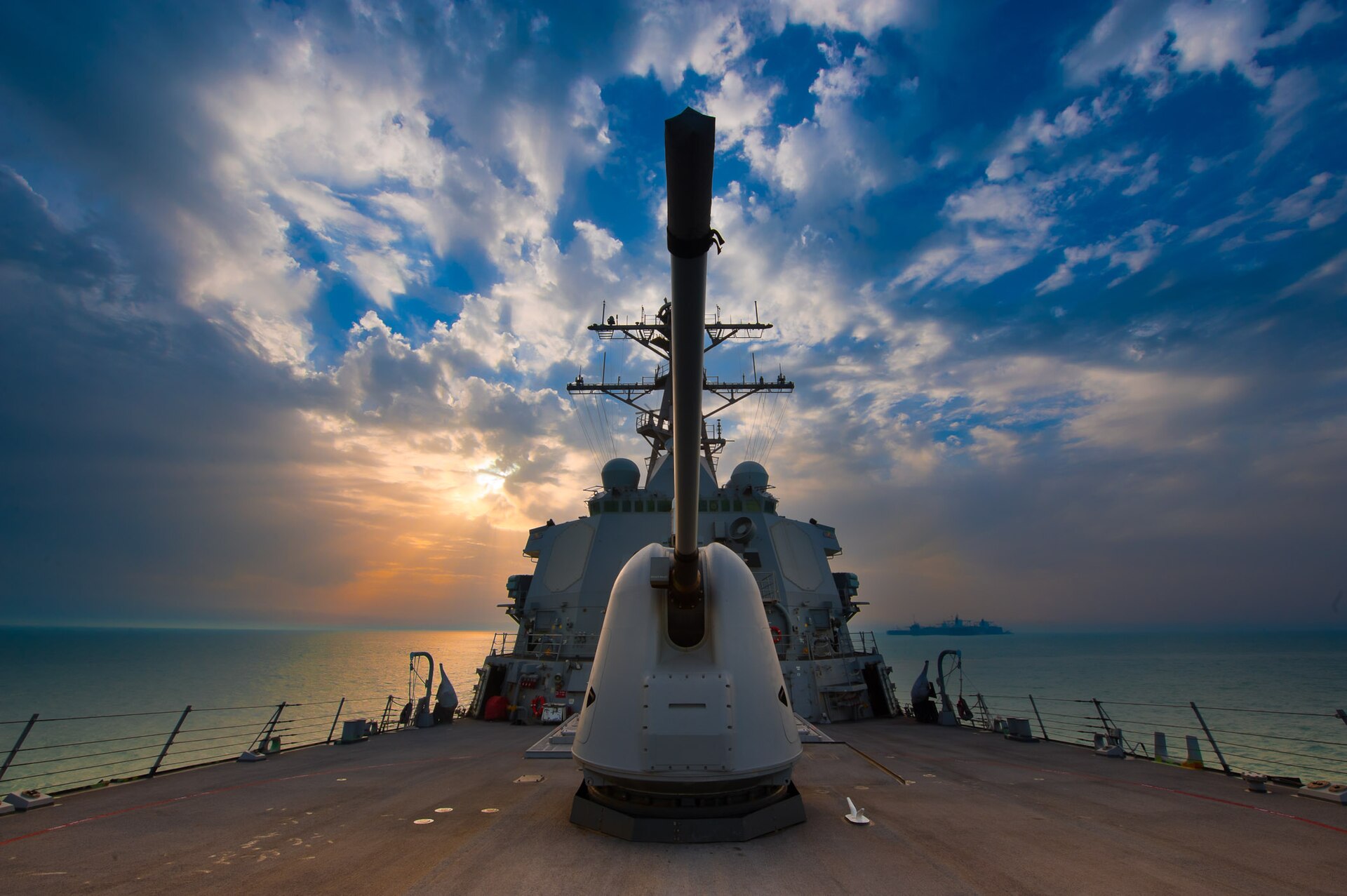
The blockade that commenced at 10:00 AM Eastern Time on April 13 is not the operation Trump described. CENTCOM’s April 12 statement specifies interdiction of “all vessels of all nations calling at Iranian ports” in the Arabian Gulf and the Gulf of Oman, enforced “impartially” according to CENTCOM’s own language. Freedom of navigation for vessels transiting to and from non-Iranian ports is explicitly preserved. Trump told Fox News the United States would “blockade the Strait of Hormuz.” CENTCOM operationalized a port-specific interdiction that does not close the strait.
This is two different strategic logics operating under the same label. Trump’s version — a full Hormuz closure — would strand 20 million barrels per day of global oil throughput and trigger an immediate energy crisis across Asia and Europe. CENTCOM’s version targets Iran’s $139 million per day in oil revenue (Bloomberg, March 2026) without — in theory — disrupting Saudi, Emirati, Kuwaiti, Qatari, Bahraini, or Iraqi crude shipments that transit the same waterway.
The distinction matters operationally because it determines who suffers. A port blockade primarily affects China, India, and other Iranian crude buyers. Vessels loading at Ras Tanura, Ju’aymah, Fujairah, or Al Shaheen remain legally exempt. Saudi crude moving west via the East-West Pipeline to Yanbu bypasses the blocked zone entirely. The CENTCOM version of the blockade, in other words, was designed to preserve allied commercial traffic — which is precisely why Trump’s rhetoric had to promise something bigger than what his military was willing to execute.
The practical consequence of that gap — whether CENTCOM’s exemption for non-Iranian-port vessels survives contact with the IRGC’s own operational logic — is examined in The Blockade Has a Loophole. The IRGC Does Not..
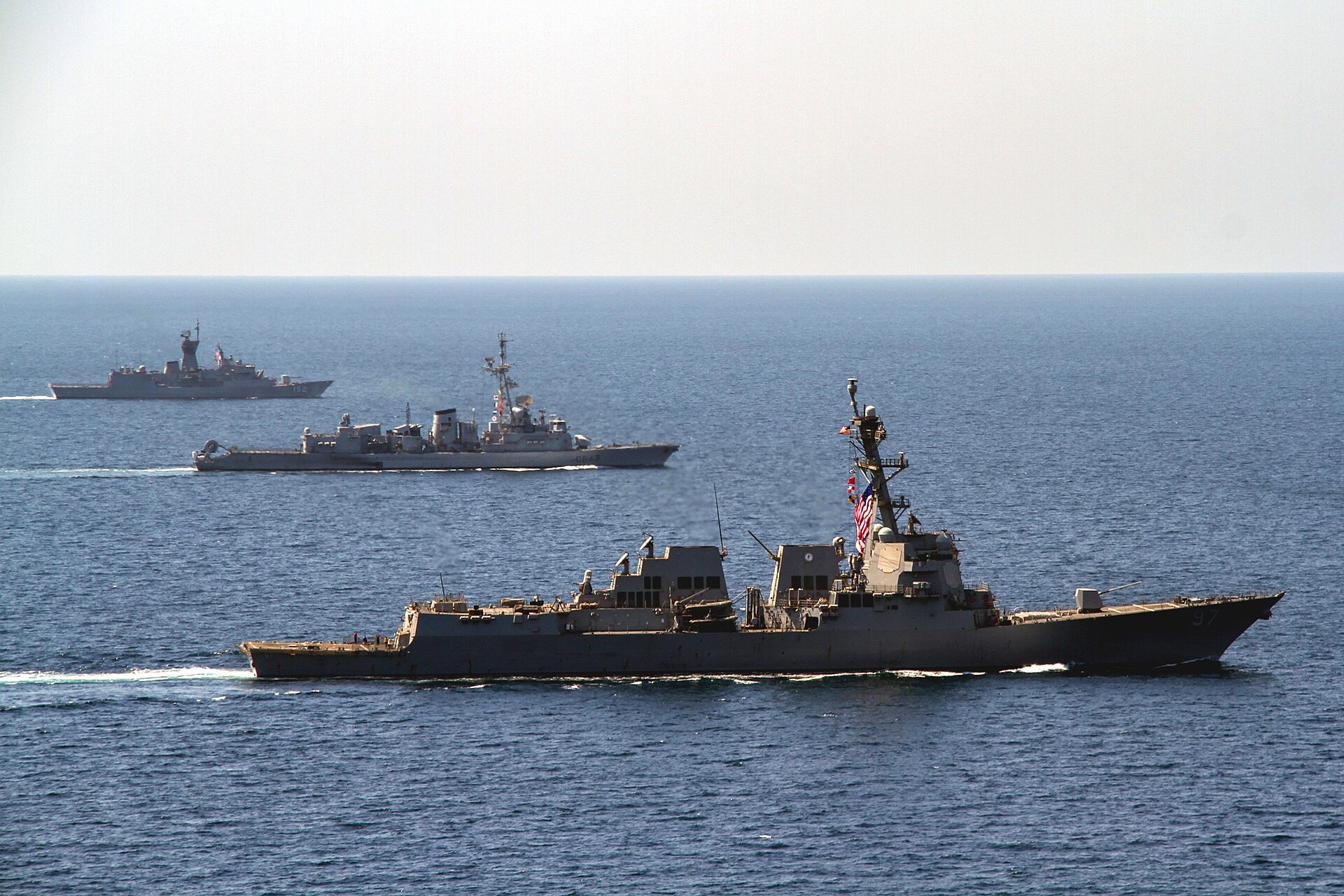
Under the San Remo Manual on International Law Applicable to Armed Conflicts at Sea, a lawful blockade requires formal declaration, notification to all belligerents and neutral states, actual enforcement capability, and impartial application. CENTCOM’s announcement meets the first two criteria. The third — actual enforcement capability — is where retired Admiral James Stavridis’s assessment becomes operative. Enforcement, he told Fortune on April 12, requires “two aircraft carrier strike groups, a dozen destroyers and frigates outside the Gulf, plus a half-dozen US warships and UAE/Saudi navy vessels inside.” He called the initiative “a big task, and a big gamble.”
The Middle East briefing 3,000+ readers start their day with.
One email. Every weekday morning. Free.
The fourth criterion — impartial application — depends on whether Washington will actually interdict Chinese-flagged tankers lifting Iranian crude. Beijing vetoed the UNSC Hormuz resolution on April 7 and is running joint naval exercises with Iran under the Maritime Security Belt 2026 framework. China’s UN Envoy Fu Cong said that adopting the resolution “when the US was threatening the survival of a civilisation would have sent the wrong message,” according to Al Jazeera. The question is not whether CENTCOM can declare impartiality. It is whether the US Navy will board a vessel flying the Chinese flag in waters where Chinese warships are conducting exercises.
The Coalition That Does Not Exist
Trump’s blockade announcement carried an implicit claim of multilateral backing that collapsed within hours. The United Kingdom — which Trump specifically named on Fox News as sending minesweepers — formally denied participation the same day. Prime Minister Keir Starmer said the Iran conflict is “not Britain’s war” and urged both sides to “find a way through.” Australia publicly stated it had not been approached about joining, contradicting any suggestion of a multilateral framework even in preliminary construction. Of the Five Eyes partners, none signed on.
The only Gulf state to join is the UAE, whose participation was confirmed on April 12. Saudi Arabia stayed out. The GCC fracture this reveals is not the familiar hawk-versus-dove split between UAE and Qatar; it is a fracture within the hawkish axis itself. The UAE — which moved its primary crude export capacity to Fujairah on the Gulf of Oman side before the war, reducing its Hormuz exposure — can afford to join because its oil reaches market without transiting the blockade zone’s most contested waters. Saudi Arabia cannot make that calculation. Aramco’s Eastern Province terminals at Ras Tanura and Ju’aymah remain inside the Gulf, and the East-West Pipeline to Yanbu has already been struck once, on the first day of the ceasefire.
Saudi silence is not indecision. It is the only posture that avoids both of the available traps. Joining forces Riyadh into the IRGC targeting frame. Publicly refusing fractures the bilateral security relationship at its most vulnerable moment. But the blockade converts silence from a deferral into a decision with consequences — because the IRGC does not distinguish between coalition membership and tacit non-objection when selecting targets.
| Country | Status | Stated Position |
|---|---|---|
| United States | Lead operator | Port blockade of Iran; full Hormuz closure implied by Trump |
| UAE | Joined | Participating in US-led coalition |
| United Kingdom | Refused | “Not Britain’s war”; convening separate 40-nation freedom-of-navigation coalition |
| Australia | Not approached | Publicly stated it was never asked to participate |
| Saudi Arabia | Silent | No public statement as of April 13 |
| France | Separate track | Participating in UK-led 40-nation navigation coalition |
| China | Opposed | Vetoed UNSC Hormuz resolution; joint exercises with Iran |
| Russia | Opposed | Co-vetoed UNSC resolution; proposed alternative; joint exercises with Iran |
Why Did the UK Refuse to Join the Blockade?
London’s refusal to participate is not a break with Washington on Iran policy. It is a deliberate construction of an alternative legal and operational framework that lets the UK remain present in the Gulf without being subordinate to an American enforcement operation that lacks multilateral legitimacy. Starmer’s government has instead convened two multilateral meetings of more than 40 nations focused on freedom of navigation — open passage through Hormuz, not enforcement against Iranian ports.
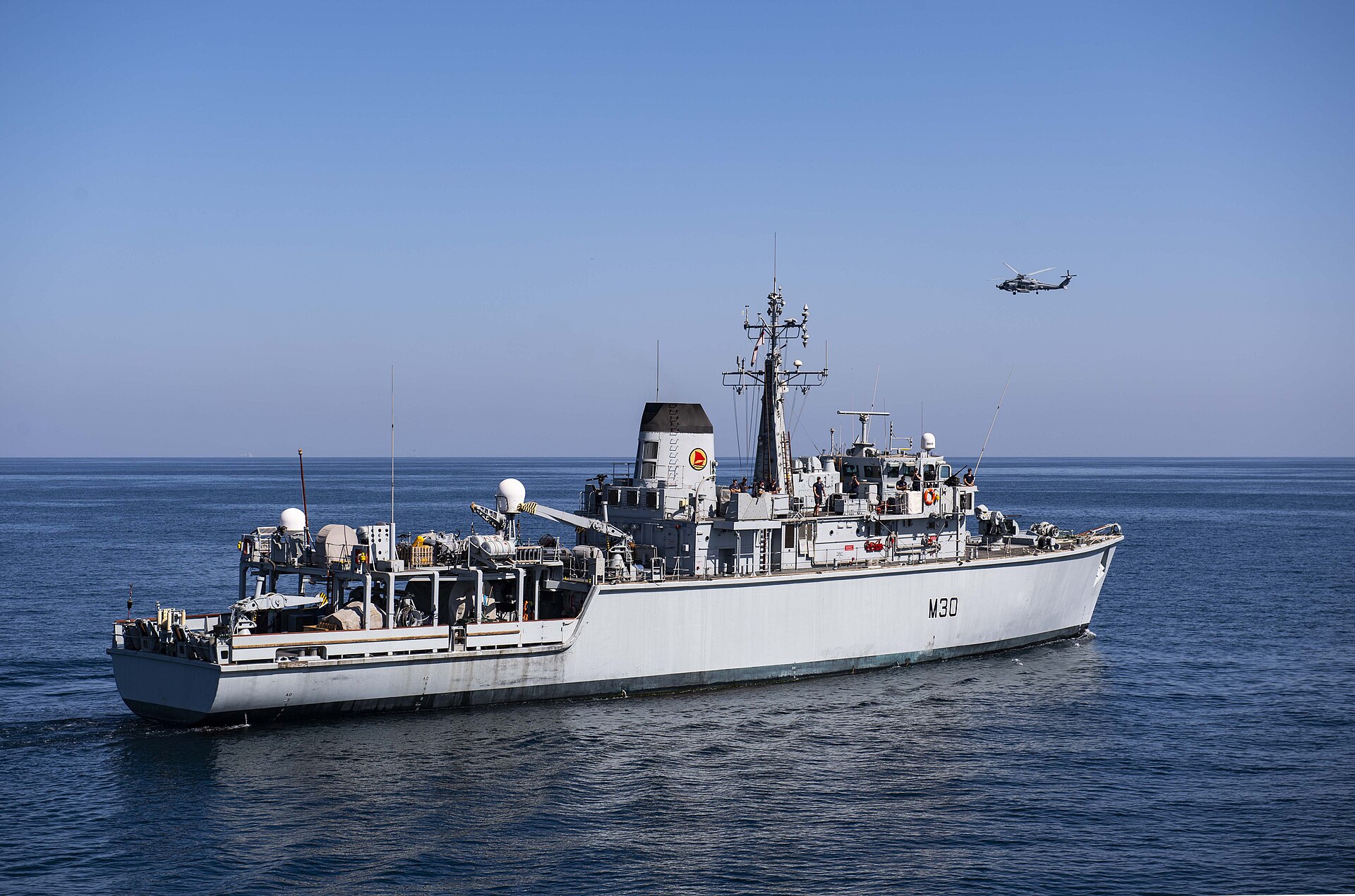
The operational separation is harder than the diplomatic language suggests. UK mine-hunting autonomous drone systems are, by Starmer’s own admission, already “in the region,” deployed for mine clearance — a mission the UK frames as distinct from blockade enforcement. Whether that distinction survives contact with reality is uncertain. Once American and British vessels operate in the same waters under different mandates — one enforcing a blockade, the other clearing mines to enable transit — the functional overlap becomes difficult for Iran to parse and difficult for London to explain if an IRGC mine strikes a British autonomous system operating near a US blockade line.
The UK refusal also reflects a specific calculation about Saudi Arabia. London’s Gulf diplomacy in 2026 has been organized around bilateral defense and trade ties with Riyadh — the Sky Sabre battery deployed in late March, the £16.6 billion trade relationship targeted to reach £30 billion by 2030, the PIF-UKEF $6.8 billion memorandum of understanding. Joining the blockade would force Saudi Arabia to respond publicly, which is precisely the outcome Riyadh is trying to avoid. By staying off the coalition roster, the UK avoids being the actor that collapses Saudi ambiguity.
Operation Earnest Will and the Invitation That Never Came
The closest historical precedent for what the United States is attempting is Operation Earnest Will, the 1987–88 naval convoy operation that became the largest American maritime deployment since World War II. It consumed 30 warships at peak. It produced the USS Samuel B. Roberts mine strike on April 14, 1988 — one day short of 38 years before this blockade — and culminated in Operation Praying Mantis, the largest US naval surface engagement since 1945.
Earnest Will was also effectively unilateral. Western European allies declined to join the convoy operation directly, though the UK, France, Italy, Belgium, and the Netherlands deployed minesweepers independently. But Earnest Will had one structural element that the 2026 blockade does not: Kuwait asked for it. The Kuwaiti government formally requested US reflagging of its tankers after the Soviet Union offered to do the same. The request gave the Reagan administration a legal and political foundation — a Gulf state inviting American naval protection — that insulated the operation from accusations of American unilateralism.
No GCC member has requested this blockade. The absence of a formal request is not a detail; it is the structural gap that the Earnest Will precedent reveals. In 1987, American naval power in the Gulf operated under the fiction of Kuwaiti invitation. In 2026, it operates under no invitation at all. The legal framework is thinner, the coalition smaller, and the adversary — an Iran that has already demonstrated the ability to strike Saudi petrochemical infrastructure, close Hormuz to 85% of pre-war traffic, and sustain oil exports throughout wartime — is more operationally capable than the Iran of the Tanker War era.
The Reagan administration also avoided the War Powers Resolution’s 60-day clock through a narrow interpretation of what constituted “hostilities.” The current blockade has no explicit Authorization for Use of Military Force and no UN Security Council resolution backing. Russia’s UN Ambassador Vasily Nebenzya said on April 7 that Moscow and Beijing were “proposing an alternative resolution on the situation in the Middle East, including maritime security,” according to PBS NewsHour — an alternative that would constrain, not authorize, American enforcement operations. Any multilateral legal framework for the blockade at the UN level is structurally blocked by the Russia-China veto.
The Three-Layer Saudi Trap
Saudi Arabia’s predicament is not a diplomatic awkwardness. It is a three-layered structural trap in which each layer tightens independently and all three compress simultaneously against the same set of deadlines.
The IRGC Doctrine Layer
The first layer was activated before the blockade existed. On April 7 — six days before CENTCOM’s announcement — Brigadier General Ebrahim Zolfaqari of the IRGC Khatam al-Anbiya Central Headquarters issued a statement carried by PressTV and the West Asia News Agency: “Regional American partners should know that, until now we have exercised significant restraint for the sake of good neighborliness and have taken precautions in selecting retaliatory targets, but from now on, all such precautions have been removed.”
The Zolfaqari doctrine was not abstract. It was paired with strikes on Sadara (Jubail), SABIC, and Chevron Phillips (Ju’aymah) — the first confirmed attacks in this conflict on Saudi facilities specifically because of their American corporate equity. The targeting logic is not about Saudi military cooperation with the United States. It is about the physical presence of US assets on Saudi soil. Sadara is a joint venture between Saudi Aramco and Dow Chemical. Chevron Phillips operates out of Ju’aymah. The IRGC targeted them not because Saudi Arabia fired on Iran but because American corporate equity resided there.
This doctrine predates the blockade by nearly a week. Saudi Arabia was already inside the targeting frame. What the blockade does is intensify and publicize it.
The Co-Belligerency Classification Layer
Under the Zolfaqari doctrine, the threshold for targeting is not active Saudi military participation in the blockade. It is proximity to US assets and the absence of public Saudi opposition. Before the blockade, Saudi Arabia’s passive non-objection to American military operations from its territory had already — in IRGC logic — justified strikes on Ras Tanura (March 2), the East-West Pipeline (April 8), and the petrochemical complexes at Jubail and Ju’aymah (April 7).
The blockade raises the stakes of that same logic. If Saudi Arabia stays silent, the Zolfaqari doctrine makes Aramco loading terminals at Ras Tanura and Ju’aymah a continuation of the existing target chain. If Saudi Arabia publicly distances itself from the blockade, it fractures the American security umbrella at the precise moment when Riyadh needs it most — with an air defense stockpile that cannot be replenished before Hajj. Poland refused a Patriot battery transfer on March 31. The $16.5 billion emergency arms package approved by Congress went to the UAE, Kuwait, and Jordan — not Saudi Arabia.
The Hajj Temporal Compression Layer
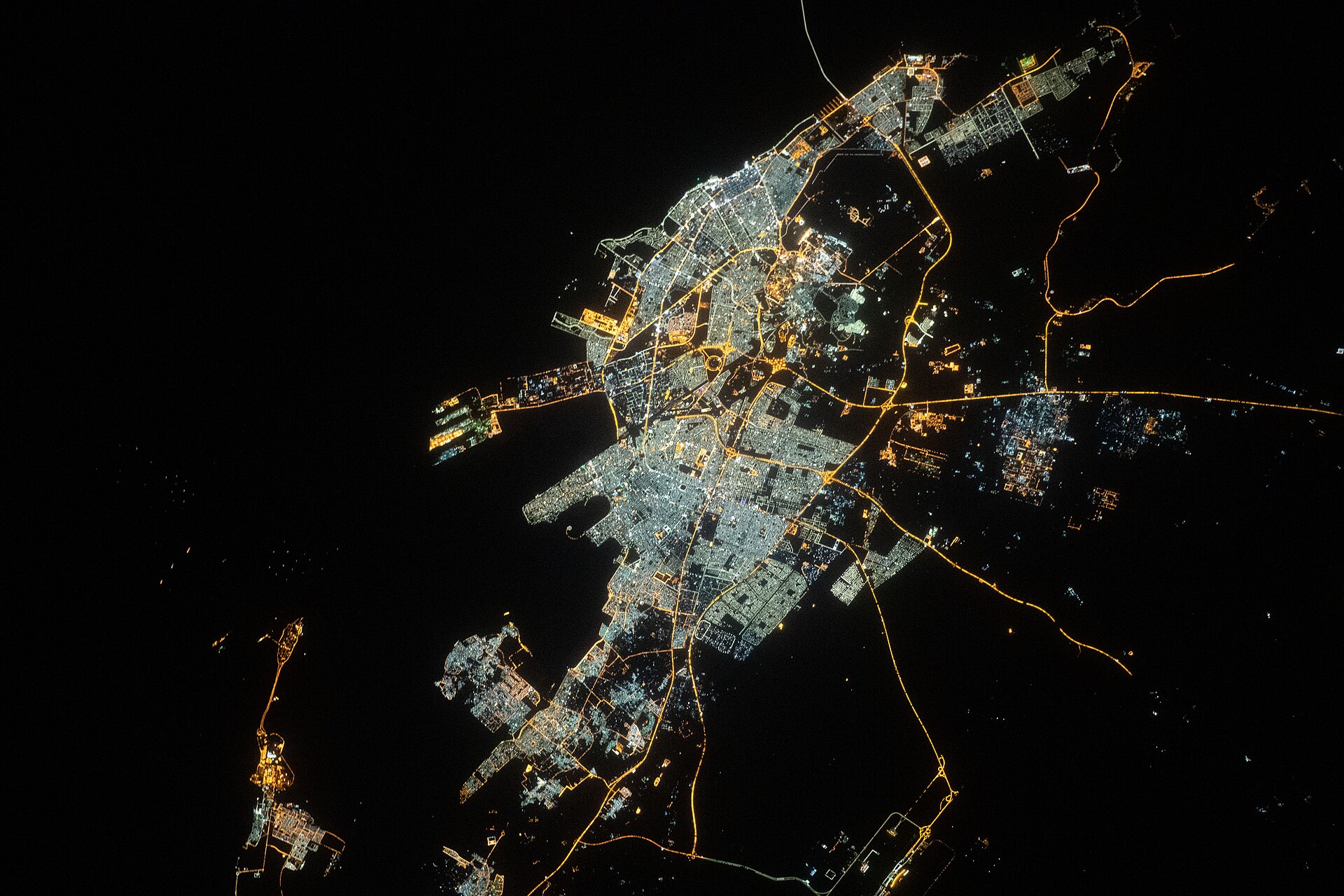
The third layer is time. Saudi Arabia has five days before Hajj pilgrim arrivals begin on April 18. Nine days before the ceasefire nominally expires on April 22. Forty-three days before the Day of Arafah on May 26, when 1.8 million pilgrims will stand on an open plain outside Mecca — the single largest concentration of unprotected civilians in the Muslim world.
Hajj logistics are irreversible once initiated. Once the pilgrim flow starts, Saudi Arabia cannot pause it, redirect it, or reverse it without a diplomatic crisis with every Muslim-majority country on earth.
Saudi silence was a sustainable posture before April 13. It carried ambiguity, which is the most valuable commodity in wartime diplomacy. The blockade strips that ambiguity because it forces every actor in the region — including the IRGC — to classify Saudi Arabia’s position. And the Hajj calendar means the classification has to happen within days, not weeks.
How Does the Blockade Change Saudi Arabia’s Fiscal Arithmetic?
The blockade’s effect on oil prices partially helps Saudi Arabia and partially deepens its exposure. Brent crude recovered to approximately $103 per barrel by April 13, driven by blockade-related supply fears — a significant recovery from the $91.70 trough on April 8, when the IRGC struck the East-West Pipeline on the first day of the ceasefire and Brent collapsed $17.57 in a single session. But Saudi Arabia’s fiscal break-even sits at $108–111 per barrel according to Bloomberg’s PIF-inclusive estimate. At $103 Brent, the kingdom is running a deficit of $5–8 per barrel on every barrel it exports — better than the $15–17 gap at the trough, but still firmly in deficit territory.
The structural problem is volume, not price. Saudi Arabia’s effective export capacity through Yanbu — the only route that bypasses both the Hormuz restrictions and the blockade zone — is approximately 5.9 million barrels per day. Pre-war Saudi Hormuz throughput was 7–7.5 million bpd, according to data referenced in the IRGC’s full-authority declaration coverage. That is a structural gap of 1.1–1.6 million bpd that the blockade does not close, because the blockade targets Iranian ports, not Hormuz transit — and the IRGC’s pre-existing restrictions on non-Iranian Hormuz transit remain the binding constraint on Saudi Eastern Province exports.
| Metric | Value | Source |
|---|---|---|
| Brent crude (April 13) | ~$103/bbl | Bloomberg |
| Saudi fiscal break-even | $108–111/bbl (PIF-inclusive) | Bloomberg |
| Per-barrel deficit | $5–8/bbl | Derived |
| Yanbu effective capacity | ~5.9M bpd | Aramco / HoS analysis |
| Pre-war Saudi Hormuz throughput | 7–7.5M bpd | Kpler / industry data |
| Volume gap (Yanbu vs. pre-war) | 1.1–1.6M bpd | Derived |
| PAC-3 MSE remaining | ~400 rounds | HoS Post 26007 |
| Camden production rate | ~620 rounds/year | Lockheed Martin / HoS |
| Brent trough (April 8) | $91.70/bbl | Bloomberg |
The paradox is that the blockade’s upward pressure on oil prices benefits Saudi Arabia only if Aramco can export at full capacity — and full capacity is constrained by exactly the IRGC Hormuz restrictions that the blockade is supposed to address but does not directly target. CENTCOM’s port interdiction cuts Iran’s $139 million per day oil revenue (if enforced against Chinese buyers, which is uncertain). It does not reopen Hormuz to pre-war traffic levels. The 15–20 ships per day currently transiting the strait, versus the pre-war norm of 138 per day (Windward), will not increase because the port blockade addresses Iranian ports, not the IRGC restrictions on non-Iranian commercial transit.
Goldman Sachs estimated a Saudi budget deficit of $80–90 billion for 2026, versus the official projection of $44 billion, even before the blockade and the pipeline strike. The blockade-driven price recovery narrows the gap but does not close it — and every IRGC escalation that damages export infrastructure or forces cargo rerouting widens it again.
What Happens When the Ceasefire Expires on April 22?
The ceasefire nominally expires in nine days. It has no extension mechanism. The Soufan Center assessed that the Islamabad framework contains no procedural pathway for renewal — the ten-day void between the framework’s collapse and the expiry date is a period in which no diplomatic structure exists to prevent resumption of hostilities. Pakistan, which moved from venue to sole enforcement mechanism overnight on April 8–9, lacks the capacity to adjudicate the violations that have already occurred: Speaker Ghalibaf’s three breaches (the Lebanon strikes, the Lar drone launch, and the enrichment acceleration) all fall outside Pakistan’s power to address.
The blockade launched nine days before ceasefire expiry. If the ceasefire collapses on April 22, the US blockade becomes the baseline military posture in the Gulf — not an escalation from a state of conflict but the ambient condition under which any resumed hostilities operate. The IRGC declared on April 12 — via two semi-official news agencies reported by NPR — that military vessels approaching Hormuz constitute a ceasefire violation and would receive “a forceful response.” If the ceasefire expires, that declaration loses its ceasefire framing but not its operational content. The IRGC is not going to permit US Navy blockade enforcement near Hormuz whether or not a ceasefire technically exists.
The Tasnim News Agency’s assessment on April 12 was blunt: the strait “would not return to pre-war levels of travel” regardless of the blockade, and the blockade threats “no longer have weight and credibility.” The phrasing — “if they were effective, Trump would not have desperately sought a truce during the war” — reveals the IRGC’s core calculation: the blockade is evidence of American failure to achieve war aims through direct military action, not evidence of escalatory resolve. Whether that assessment is correct matters less than the fact that it will drive IRGC operational decisions through the ceasefire expiry window.
Iran’s IRNA positioned Tehran as “open to continuing dialogue” on April 12 — the same day the blockade was announced. The diplomatic track and the military track are running simultaneously and in opposite directions, and the ceasefire expiry is the date on which one of them wins.
Hajj as a Temporal Cage
The convergence of the blockade, the ceasefire expiry, and the Hajj calendar is not coincidence — it is the structural condition under which Saudi Arabia must make every decision for the next six weeks. The Hajj cordon activates on April 18. Indonesia’s 221,000 pilgrims depart on April 22. The Day of Arafah falls on May 26. Each date is a ratchet that reduces Saudi Arabia’s freedom of action.
The Custodianship of the Two Holy Mosques is not a ceremonial title. It is the foundational legitimacy claim of Saudi governance, formalized in 1986 when King Fahd adopted it to replace “His Majesty.” The 1987 Hajj massacre — in which 402 people died, 87 percent of the quota was cut, and Iran launched a three-year boycott — remains the template for what happens when Hajj security fails. Indonesia published its Scenario 3 contingency for full Hajj suspension. That contingency exists because the risk is not theoretical.
Saudi Arabia’s air defense posture heading into Hajj is the weakest it has been since the war began. The approximately 400 remaining PAC-3 MSE rounds represent a supply that, at the interception rates sustained during March and early April — 799 drones and 95 missiles intercepted between March 3 and April 7 — would be exhausted in days under a sustained IRGC barrage. The Camden plant’s 620 rounds per year translates to roughly 52 rounds per month. The IRGC’s internal fractures — including President Pezeshkian’s public accusation that IRGC commanders were operating outside civilian authority — do not reduce the threat; they increase unpredictability.
The blockade forces a Hajj security calculation that did not exist before April 13. Under the pre-blockade ceasefire, Saudi Arabia could plausibly argue that its neutrality in the US-Iran conflict reduced targeting risk during the pilgrimage. Under the blockade, that argument requires Saudi Arabia to publicly state its non-participation — which is itself a geopolitical act with consequences for the US bilateral relationship. Silence, which preserved ambiguity before, now functions as tacit endorsement in the IRGC classification system. And the Hajj pilgrims — 1.8 million of them — arrive regardless of which classification Saudi Arabia receives.
The war risk insurance market has already priced the Gulf as a conflict zone. Seven of twelve International Group P&I clubs issued 72-hour cancellation notices for war risk coverage across the Persian Gulf, according to S&P Global and Lloyd’s List. Premiums moved from approximately 0.2 percent to 1.5–3 percent of hull value; US, UK, and Israeli-connected vessels reached 5 percent. Those premiums apply to every vessel carrying every pilgrim arriving by sea or transiting Gulf airspace whose insurance coverage links to the same risk pools.
Stavridis’s force estimate — two carrier strike groups, a dozen destroyers and frigates, half a dozen warships inside the Gulf, plus UAE and Saudi naval assets — assumes Saudi participation that has not been offered and may not come. Without Saudi naval cooperation, the inside-the-Gulf component of blockade enforcement falls to the UAE navy and whatever US Fifth Fleet assets can operate from NSA Bahrain, whose SATCOM terminals were destroyed on February 28 and whose operational capacity has been degraded since. The 230 loaded tankers anchored inside the Gulf as of April 9 (Kpler) are not going anywhere. The 800 vessels trapped by Hormuz restrictions are not going anywhere. The blockade adds a new layer of immobility on top of a shipping crisis that was already the worst since 1987.
There is no clean exit. The blockade cannot be quietly dropped without confirming the Tasnim assessment that American threats “no longer have weight.” It cannot be enforced at the scale Stavridis described without Saudi naval assets that have not been offered. And Saudi Arabia cannot maintain silence indefinitely — the IRGC does not defer classification while waiting for a public statement that never comes. Stavridis gave his estimate to Fortune on April 12. Saudi Arabia said nothing. The Hajj cordon seals in five days.
Frequently Asked Questions
Does the US blockade close the Strait of Hormuz to all shipping?
No. CENTCOM’s operational scope covers only vessels calling at Iranian ports along the Arabian Gulf and Gulf of Oman coasts. Non-Iranian commercial traffic — Saudi, Emirati, Kuwaiti, Qatari, Iraqi, and Bahraini crude shipments — is explicitly exempt. However, the IRGC’s pre-existing transit restrictions, which reduced Hormuz traffic from 138 ships per day to 15–20, remain in effect independently of the blockade and are the binding constraint on non-Iranian shipping.
Has any Gulf state formally requested the blockade?
No Gulf Cooperation Council member has publicly requested or endorsed the blockade. This distinguishes the 2026 operation from Operation Earnest Will (1987–88), where Kuwait’s formal request for US tanker reflagging provided legal and political justification. The absence of a GCC request also means the blockade lacks a regional legal anchor under collective self-defense provisions (Article 51 of the UN Charter), which typically require an invitation from the threatened state. Oman, which has maintained its own bilateral navigation protocol with Iran, has been particularly careful to distance itself from enforcement framing.
Can China realistically undermine blockade enforcement?
China has multiple mechanisms. Beijing vetoed the UNSC Hormuz resolution, removing any multilateral legal basis. The Maritime Security Belt 2026 joint naval exercises with Iran and Russia place Chinese warships in the same waters where US blockade enforcement operates. China is also Iran’s largest remaining crude buyer; Chinese-flagged tankers have been the primary vessels calling at Iranian ports throughout the war. Interdicting a Chinese-flagged vessel would be an act with consequences far beyond the Gulf — touching Taiwan Strait dynamics, trade relations, and US Treasury holdings simultaneously. CENTCOM’s “impartial enforcement” claim will be tested first and hardest against Chinese shipping.
What is the IRGC’s stated response to the blockade?
The IRGC issued two distinct responses on April 12. Through semi-official agencies reported by NPR, the Revolutionary Guard declared the strait under Iran’s “full control,” open for non-military vessels, with military transit classified as a ceasefire violation warranting “a forceful response.” Separately, a Tasnim News Agency source dismissed the blockade as lacking “weight and credibility,” arguing that “if they were effective, Trump would not have desperately sought a truce during the war.” The dismissive framing may be more operationally consequential than the threat — it suggests the IRGC will test the blockade’s enforcement capacity rather than preemptively escalate against it.
How many warships does the US currently have in the Gulf region?
Exact current deployments are classified, but the Soufan Center estimated approximately 20,000 US troops in the theater as of early April. Stavridis’s minimum enforcement estimate — two carrier strike groups, a dozen destroyers and frigates, plus inside-the-Gulf assets — exceeds the force posture that was in place before the blockade announcement. The USS Eisenhower carrier strike group has been operating in the region since before the war. Whether a second strike group has been deployed or ordered is not publicly confirmed, and the gap between Stavridis’s minimum and the actual force in theater is itself a measure of the blockade’s enforceability.