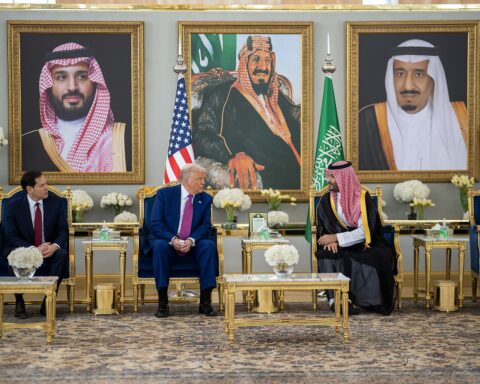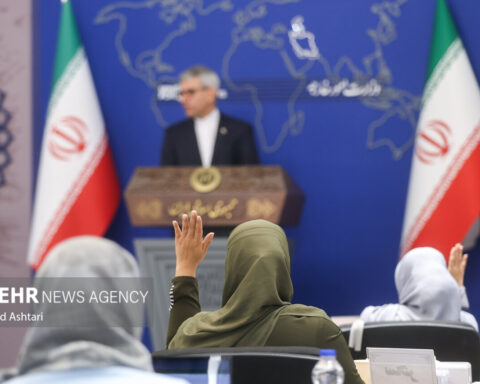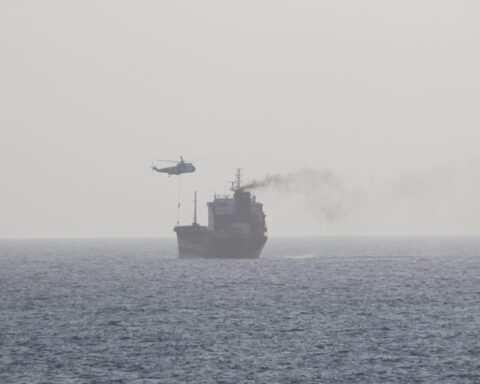

LONDON — Britain is sending warships, fighter jets, and intelligence assets to defend Saudi Arabia from Iranian missile and drone strikes, marking the most significant British military commitment to the Persian Gulf since the withdrawal from East of Suez more than half a century ago. On March 6, 2026, Prime Minister Keir Starmer told Crown Prince Mohammed bin Salman that additional Typhoon jets, an air defense destroyer, and armed helicopters were being deployed to the region, with Britain standing “ready to support the defence of the Kingdom of Saudi Arabia should it be needed.” The pledge transforms a century-old diplomatic relationship into an active military partnership under live fire.
The deployments follow a week of sustained Iranian retaliatory strikes across the Gulf Cooperation Council states, triggered by coordinated US-Israeli attacks on Iran that began February 28. Saudi Arabia has intercepted dozens of missiles and drones targeting military bases, oil infrastructure, and even the US Embassy in Riyadh. With approximately 140,000 British nationals in the Gulf region, an estimated 30,000 in Saudi Arabia alone, and bilateral trade exceeding £17.2 billion, Starmer’s government faces an inescapable reality: Britain’s prosperity is tied to Saudi security in ways that neither side has publicly acknowledged until now.
Table of Contents
- What Did Starmer Promise MBS on March 6?
- Why Is Britain Sending Military Forces to the Gulf?
- HMS Dragon — The Air Defense Shield Heading for Saudi Waters
- The Typhoon Connection — Britain’s Most Expensive Export
- How Did Britain Lose the Gulf — and Why Did It Come Back?
- What Role Does GCHQ Play in the Gulf?
- Where Are British Forces Stationed in the Middle East?
- BAE Systems and the Kingdom — A Corporate Alliance Older Than Most Countries
- The Starmer Paradox — From Arms Embargo Pledge to Defense Partner
- The Gulf Dependency Matrix — Measuring Britain’s Exposure
- Is Britain Being Dragged Into a War It Cannot Afford?
- The Royal Signal — What Prince William’s Saudi Visit Revealed
- Frequently Asked Questions
What Did Starmer Promise MBS on March 6?
Keir Starmer’s phone call with Mohammed bin Salman on March 6, 2026, represented the most explicit British defense commitment to Saudi Arabia in living memory. The Prime Minister told the Crown Prince that additional British fighter jets, helicopters, and a destroyer were being sent to the region, and that Britain stood ready to support the defense of the Kingdom. The two leaders also agreed to step up intelligence cooperation to support defensive operations and protect civilians, according to the official Downing Street readout.
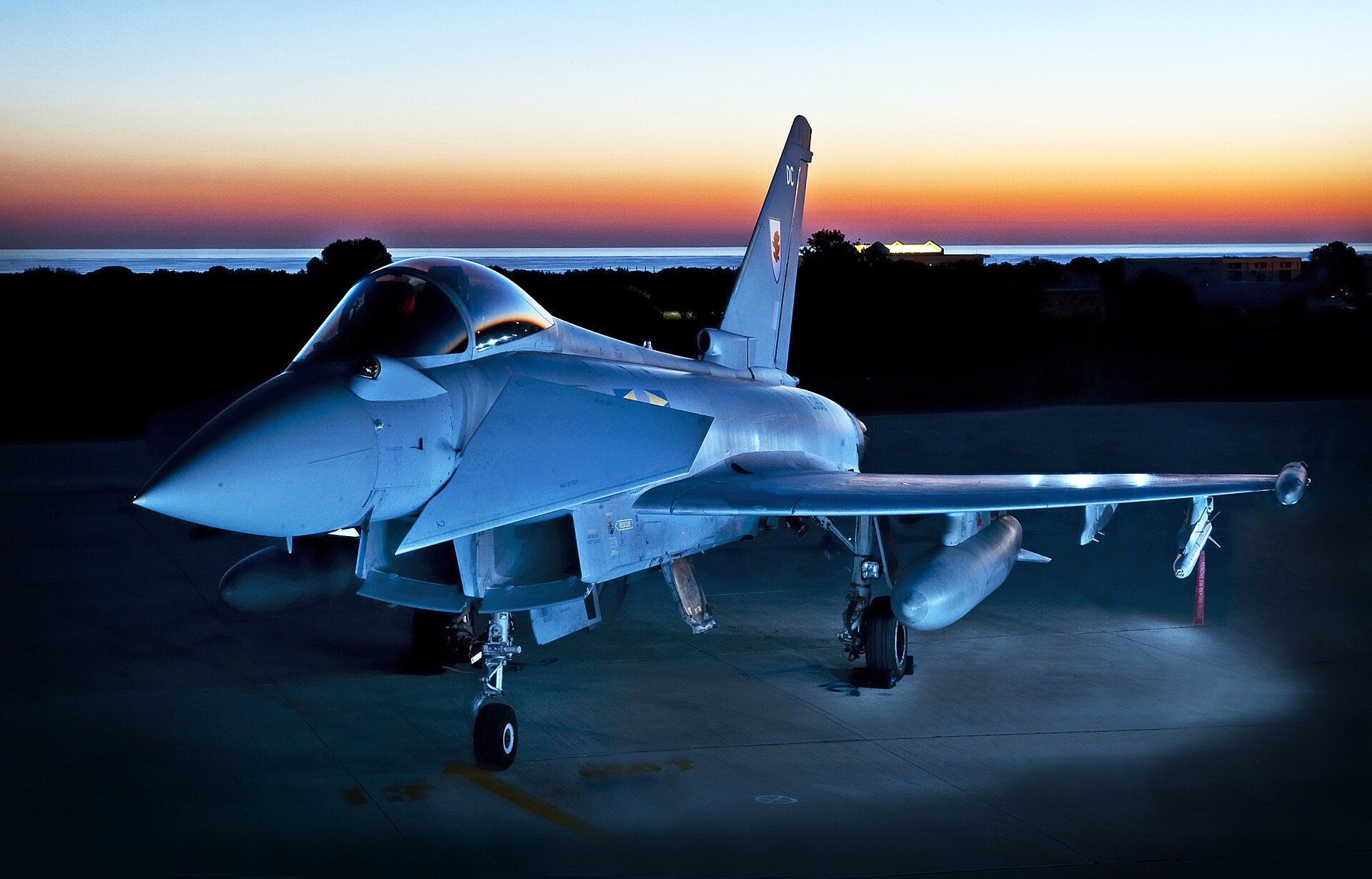
The specific military deployments announced on March 5 and reinforced in the March 6 call are substantial by British standards. Four additional Typhoon fighter jets are being sent to join the existing RAF squadron at Al Udeid airbase in Qatar, effectively doubling Britain’s fast-jet presence in the Gulf. HMS Dragon, a Type 45 air defense destroyer equipped with the Sea Viper missile system, has been ordered to the Mediterranean and is expected to transit to Gulf waters. Two Wildcat helicopters armed with Martlet anti-drone missiles are deploying to RAF Akrotiri in Cyprus, the staging base for Middle East operations. Rapid Deployment Teams have been placed on the ground in Oman and Saudi Arabia for evacuation coordination of British nationals.
Beyond the hardware, Starmer confirmed that British bases would be available to US forces for “defensive strikes” on Iran. The Crown Prince, for his part, discussed Saudi Arabia’s efforts to stabilise global energy supplies — a subject of acute interest to London given the Strait of Hormuz closure and the resulting chaos in oil markets. Both leaders agreed to stay in close contact in the coming days and weeks.
The language was carefully calibrated. “Ready to support” is not the same as a mutual defense treaty. Britain has not committed to offensive action against Iran. The deployment is framed as defensive — air defense, anti-drone capability, intelligence sharing. Yet the ambiguity is the point. For Riyadh, even the suggestion of British military backing carries weight, signaling to Tehran that Saudi Arabia is not isolated. For London, the careful framing provides political cover should the situation escalate further.
The Middle East briefing 3,000+ readers start their day with.
One email. Every weekday morning. Free.
Why Is Britain Sending Military Forces to the Gulf?
Britain’s military deployment to the Gulf is driven by three converging imperatives: protecting approximately 140,000 British nationals in the region, safeguarding an economic relationship worth over £17 billion annually, and preserving a defense-industrial partnership that sustains tens of thousands of British jobs. None of these can be achieved from Whitehall alone.
The immediate trigger was Iran’s retaliatory strikes following the US-Israeli attacks that began February 28, 2026. Within days, Iranian missiles and drones hit targets across every GCC state. Saudi Arabia intercepted projectiles aimed at Prince Sultan Air Base, Riyadh airport, and the Ras Tanura oil refinery. A drone struck the CIA station in the Saudi capital. The US Embassy in Riyadh took fire. Iranian proxies escalated across multiple fronts. Britain’s network of Gulf bases, including RAF Akrotiri in Cyprus, came under direct threat.
The economic exposure is enormous. Saudi Arabia is the single largest recipient of British arms export licences, worth £2.9 billion in 2024 alone, according to Campaign Against Arms Trade data. BAE Systems, Britain’s largest defense company, employs 7,300 people in the Kingdom and has earned an estimated £43 billion from Saudi contracts over four decades. The bilateral trade relationship — £17.2 billion in the year to June 2025, with a £9.7 billion UK surplus — makes Saudi Arabia the UK’s most commercially significant partner in the Middle East.
Then there are the people. An estimated 30,000 British nationals live and work in Saudi Arabia, many employed by BAE Systems, defense contractors, and oil companies. Across the wider Gulf, that figure rises to approximately 140,000. If the security situation deteriorates, Britain would face a mass evacuation rivaling the scale of the 2006 Lebanon crisis, but in a far more hostile air environment. The Rapid Deployment Teams placed in Oman and Saudi Arabia on March 5 are there precisely because London is planning for that contingency.
HMS Dragon — The Air Defense Shield Heading for Saudi Waters
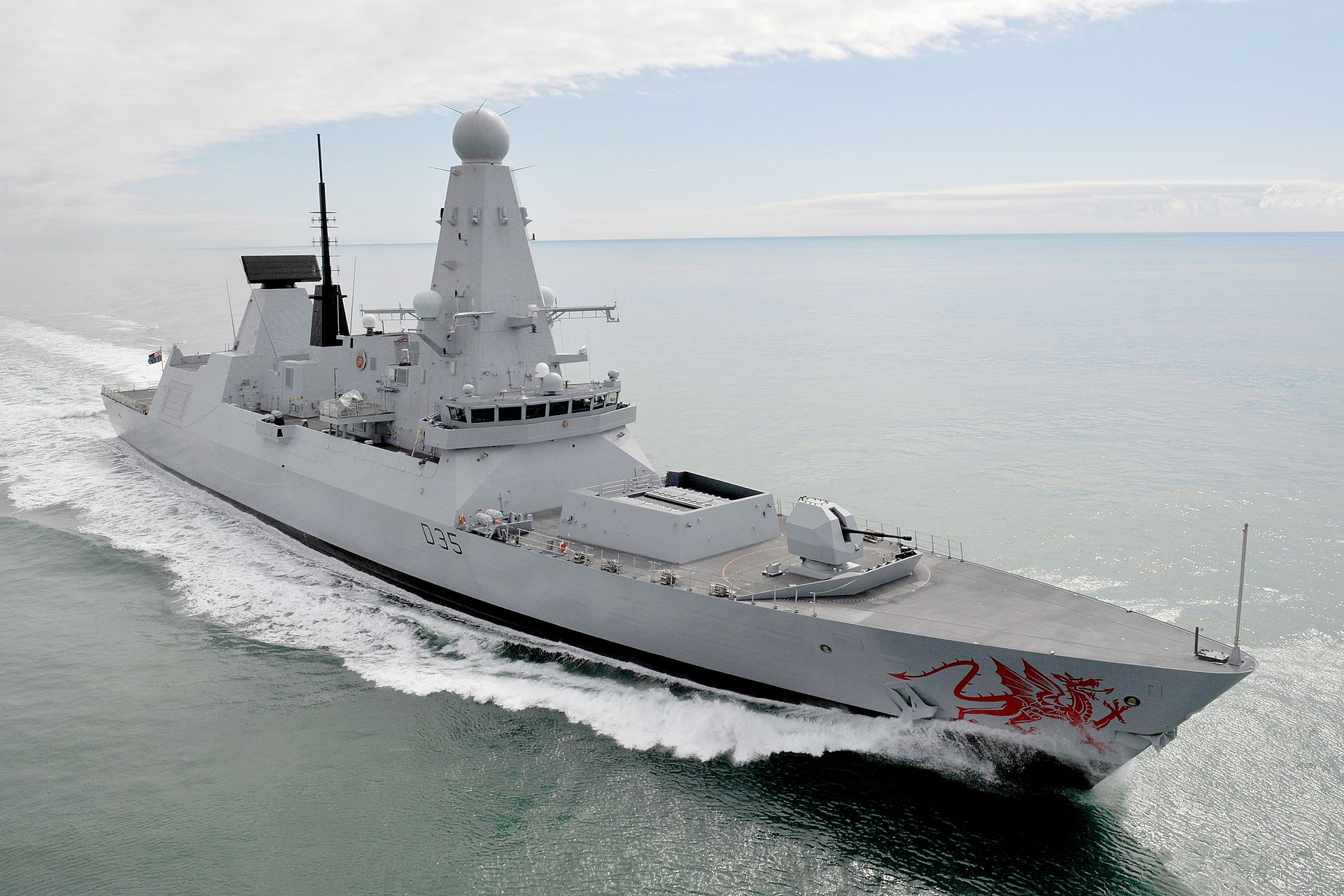
The deployment of HMS Dragon to the region is the most consequential element of Britain’s response to the Gulf crisis. The Type 45 destroyer is one of six in the Royal Navy and is described by the Ministry of Defence as “one of the most capable air defence warships in the world.” In the current threat environment — where Iranian ballistic missiles, cruise missiles, and swarms of low-cost drones are hitting targets across the Gulf — that capability is precisely what Saudi Arabia and its allies need.
HMS Dragon (hull number D35), the fourth ship of the Daring class, was commissioned on April 20, 2012, and carries a crew of more than 200. The ship is recognisable by the large red Welsh dragon painted on its bow, a reference to its Cardiff affiliations. At 152 metres in length and 8,000 tonnes displacement, the Type 45 is the most advanced surface combatant in Royal Navy service.
The ship’s primary weapon is the Sea Viper missile system, manufactured by MBDA. Sea Viper can launch eight missiles in under ten seconds and simultaneously guide up to 16 missiles to separate targets at ranges exceeding 120 kilometres. The system uses a 48-cell Sylver Vertical Launching System loaded with a mix of Aster 15 short-range and Aster 30 long-range interceptors. MBDA describes the Aster family as “hit-to-kill” missiles capable of intercepting all types of high-performance air threats, including supersonic anti-ship missiles and ballistic missile warheads in their terminal phase.
The destroyer’s Sampson multifunction radar — the distinctive rotating sphere atop the main mast — can detect air and surface targets from 250 miles and track hundreds of targets simultaneously. In the congested Gulf airspace, where commercial aviation, military aircraft, and incoming threats share overlapping corridors, this discrimination capability is critical.
| System | Capability | Relevance to Gulf Threat |
|---|---|---|
| Sea Viper (Aster 30) | 120+ km range, Mach 4.5 speed | Counters Iranian ballistic and cruise missiles |
| Sea Viper (Aster 15) | 30 km range, rapid reaction | Terminal defense against close-range threats |
| Sampson Radar | 250-mile detection, tracks 1,000+ targets | Airspace management in contested Gulf environment |
| 48-cell VLS | 8 missiles launched in under 10 seconds | Saturation attack defense against drone swarms |
| Wildcat Helicopters (attached) | Martlet anti-drone missiles | Short-range counter-drone and surface warfare |
For the Gulf mission, HMS Dragon has been paired with two Wildcat helicopters armed with Martlet missiles. The Martlet is a lightweight precision-guided missile designed specifically for the counter-drone role that has become the defining challenge of the Iran war. While the Sea Viper system excels against conventional missiles, the combination with Wildcat-launched Martlets creates a layered defense capable of addressing the full spectrum of Iranian threats, from Shahab-3 ballistic missiles to Shahed-136 one-way attack drones.
The Typhoon Connection — Britain’s Most Expensive Export
The four additional Typhoon fighter jets heading to Qatar represent far more than a temporary reinforcement. The Eurofighter Typhoon is the physical embodiment of the UK-Saudi defense relationship — a £20 billion contract that has shaped both nations’ industrial and military strategies for two decades, and a follow-on deal worth an estimated $13 billion that remains the most valuable pending arms contract in British history.
Saudi Arabia’s Typhoon fleet traces back to Project Salam, signed on August 29, 2007. The contract delivered 72 Eurofighter Typhoons to the Royal Saudi Air Force at an initial cost of £4.4 to £4.5 billion, with a projected lifetime support value of £20 billion. All 72 aircraft were delivered by June 2017. Today, the RSAF operates these aircraft as a core component of its air superiority and strike capabilities, alongside American F-15 Eagles.
The Typhoon deal was itself the successor to an even larger contract. The Al-Yamamah arms deal, signed on September 26, 1985, was Britain’s largest-ever export agreement. It delivered 48 Tornado IDS ground-attack aircraft, 24 Tornado ADV air-defense variants, 30 Hawk trainers, plus weapons, radar, spares, and pilot training to Saudi Arabia. What made Al-Yamamah unique was its payment mechanism: Saudi Arabia paid in crude oil, delivering up to 600,000 barrels per day to a dedicated UK Ministry of Defence account. By 2005, BAE Systems CEO Mike Turner stated the company had earned £43 billion from Al-Yamamah over twenty years and projected £40 billion more in future revenues.
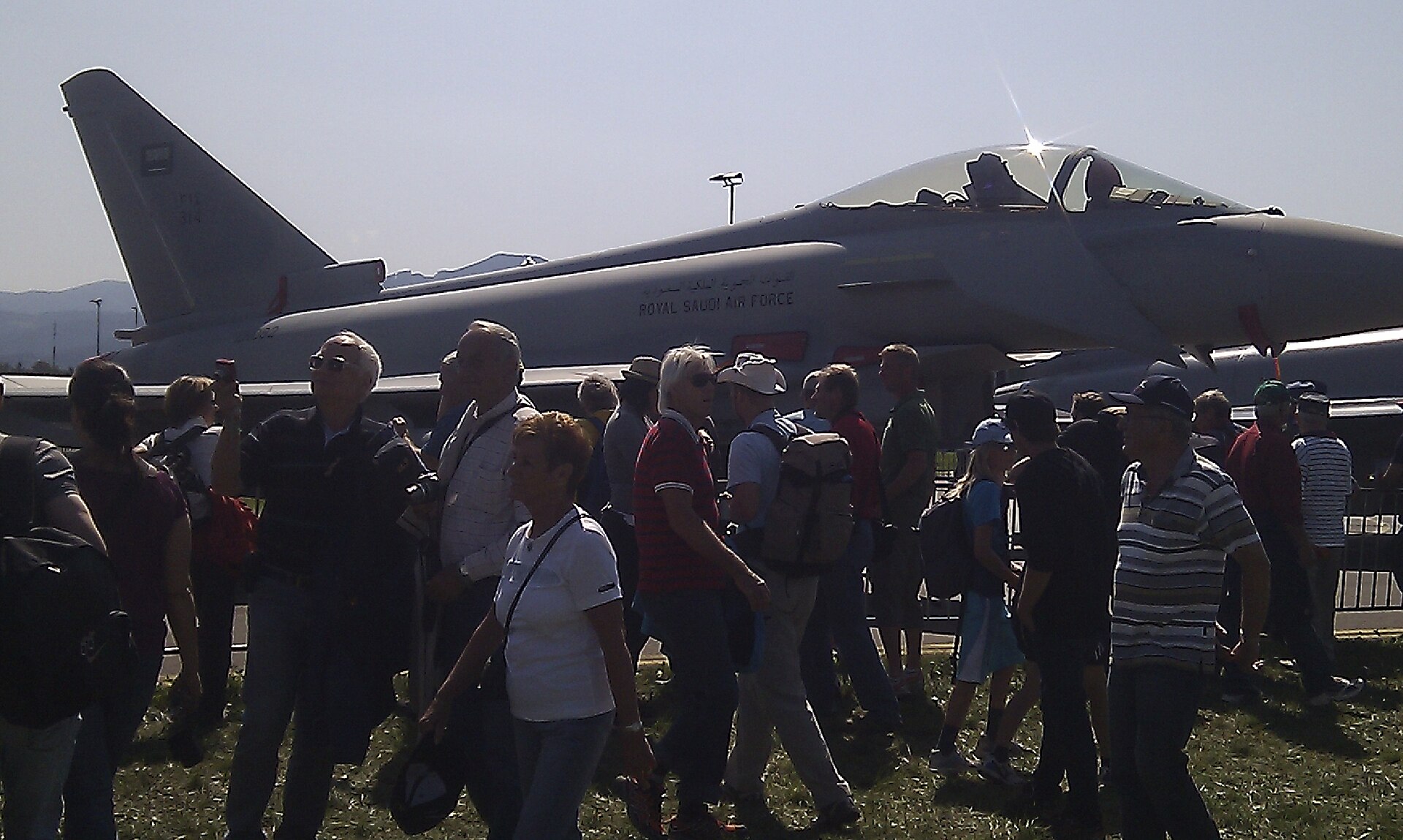
The pending second Typhoon order is perhaps the most consequential element of the relationship going forward. A memorandum of intent for 48 additional Typhoons was signed on March 9, 2018, during Mohammed bin Salman’s visit to London. The estimated value is $13 billion. Germany, a consortium partner in the Eurofighter programme alongside Britain, Spain, and Italy, blocked the sale following the Khashoggi assassination in November 2018. Germany lifted that block in January 2024, and BAE Systems confirmed it was working with the UK government on a formal Statement of Requirements.
The second batch would include something Al-Yamamah never offered: in-country final assembly in Saudi Arabia, supporting Vision 2030’s localisation objectives. For Riyadh, this is not merely an arms purchase but a technology transfer programme that could seed a domestic aerospace industry. For BAE Systems, it represents a generation of guaranteed revenue. For the British government, it is the single most important defense export deal on the table — one that the current crisis may accelerate.
How Did Britain Lose the Gulf — and Why Did It Come Back?
Britain’s withdrawal from the Gulf in 1971 was one of the most consequential strategic retreats of the twentieth century. In January 1968, Prime Minister Harold Wilson and Defence Secretary Denis Healey announced that British troops would be withdrawn from all major military bases east of Aden by the early 1970s. The decision was driven not by strategic logic but by economic desperation. The November 1967 devaluation of the pound from $2.80 to $2.40 had exposed Britain’s fiscal fragility, and Chancellor Roy Jenkins earmarked defense as one of the budgets to be cut. The withdrawal timetable was accelerated from the mid-1970s to 1971.
The consequences were immediate and far-reaching. The Trucial States, which had relied on British security guarantees since the nineteenth century, formed the United Arab Emirates in December 1971, partly in response to the British withdrawal. Bahrain and Qatar became independent sovereign states. The power vacuum invited external competition. The Soviet Union increased its naval presence in the Indian Ocean. Iraq’s Baathist government grew more assertive, eventually invading Kuwait in 1990 — an outcome that some historians trace directly to the absence of the British security umbrella that had constrained Iraqi ambitions for decades.
For the Gulf states, the British departure was a rupture. HMS Jufair in Bahrain, the Royal Navy’s primary Gulf base since its establishment on April 13, 1935, was vacated. The base had served as the nerve centre for British Gulf operations for 36 years — through the Second World War, the Iranian nationalisation crisis of 1951, the Suez crisis, and the Aden Emergency. Within weeks of the British withdrawal in December 1971, the United States completed an agreement to establish its own naval base in Bahrain, moving into the same 10-acre facility the Royal Navy had occupied. The transition was seamless for Washington but humiliating for London. For half a century, Britain had been the dominant external power in the Gulf. Overnight, it became an observer.
The irony is that the retreat was unnecessary. Britain’s Gulf presence was relatively cheap to maintain — far less expensive than commitments in Germany or the Far East. Military planners at the time opposed the withdrawal. The Chiefs of Staff argued that the Gulf deployments provided strategic influence wildly disproportionate to their cost. But the decision was driven by Treasury arithmetic, not strategic calculus. It took Britain 47 years to reverse it.
The return began slowly. The 2010 Strategic Defence and Security Review, conducted under the Cameron government, identified the Gulf as a priority region for British engagement. In December 2014, the UK announced that HMS Jufair would be re-established as a permanent Royal Navy base. The facility officially opened on April 5, 2018, becoming Britain’s first permanent military base east of Suez since the 1971 withdrawal. The opening ceremony was attended by the Crown Prince of Bahrain and the Duke of York, a symbolic bookend to a 47-year absence.
The return accelerated under successive governments. A permanent joint support facility opened at Duqm, Oman, in 2018, capable of supporting aircraft carriers in the Indian Ocean. New RAF facilities opened at Al Minhad airbase in the UAE in 2024. The Ministry of Defence announced the development of a “strategic hub” in Oman to provide a platform for projecting assets and increasing training operations with regional partners. By the time Iranian missiles began falling on the Gulf states in February 2026, Britain had quietly rebuilt a military presence that, while modest compared to its Cold War footprint, positioned it as the only European power capable of contributing meaningfully to Gulf security.
What Role Does GCHQ Play in the Gulf?
The intelligence dimension of the UK-Saudi relationship is the least discussed and arguably the most strategically significant component of the partnership. While the Typhoon deliveries and naval deployments make headlines, Britain’s signals intelligence infrastructure in the Gulf provides Saudi Arabia with a capability it cannot replicate domestically — and one that justifies London’s outsized influence in Riyadh relative to Britain’s actual military strength.
GCHQ, Britain’s signals intelligence agency, operates three listening posts in Oman, codenamed TIMPANI, GUITAR, and CLARINET, according to reporting by Declassified UK and investigative journalist Duncan Campbell. These facilities form part of a region-wide communications interception programme codenamed CIRCUIT. The primary installation is located in Seeb, in northeastern Oman. Its operational purpose is to monitor undersea telecommunications cables passing through the Strait of Hormuz, which carry internet and telephone traffic serving the Arabian Sea and Persian Gulf regions.
Through the CIRCUIT programme, the UK has gained access to nearly a dozen underwater cables linking Iraq, Iran, Saudi Arabia, the UAE, and Kuwait. In practical terms, this means GCHQ can intercept Iranian military and government communications, monitor IRGC planning, and track cyber operations in near-real time. Satellite imagery has shown recent building and expansion work at the GCHQ site in Oman, suggesting the facility’s role has grown in response to Houthi activity in the Red Sea and, now, the full-scale Iran conflict. The expansion is significant: the Omani stations provide coverage of Iranian naval communications in the Strait of Hormuz, IRGC Quds Force coordination with proxy groups in Iraq and Yemen, and Iranian Air Force command-and-control networks — all intelligence of immediate operational value as Saudi Arabia defends against continued strikes.
GCHQ also operates a listening post at Ayios Nikolaos, within the British Sovereign Base Area at Dhekelia, Cyprus. This facility provides coverage of the eastern Mediterranean and can intercept communications from Syria, Lebanon, and the western approach to the Strait of Hormuz. Combined with the Oman stations, Britain maintains a signals intelligence arc stretching from the Mediterranean to the Indian Ocean — a capability that complements American NSA facilities but operates under British control and British analytical priorities.
When Starmer told MBS that the two nations would step up intelligence cooperation, this was not an abstract promise. The infrastructure already exists. The question is the degree of access Saudi Arabia is granted to British-collected intelligence, and the reciprocal arrangements — Saudi human intelligence and regional knowledge in exchange for British electronic surveillance capabilities. In a region where the US has dominated intelligence sharing through the Five Eyes framework (which does not include Saudi Arabia), Britain’s willingness to deepen bilateral intelligence cooperation outside Five Eyes channels represents a significant strategic choice.
For Saudi Arabia, the value of British signals intelligence is difficult to overstate. The Kingdom has invested heavily in its own surveillance capabilities, including the controversial Pegasus spyware programme, but it lacks the global signals infrastructure that GCHQ has built over decades. British-intercepted communications could provide advance warning of Iranian missile launches, identify IRGC command nodes for potential targeting, and track the movement of Iranian proxy forces in Iraq and Yemen. In a war where minutes of early warning can mean the difference between successful interception and a refinery explosion, this intelligence represents a tangible military advantage that Britain can offer without firing a single shot.
Where Are British Forces Stationed in the Middle East?
Britain’s military footprint in the Middle East is distributed across six countries and two sovereign base areas, creating a network of facilities that, while individually modest, collectively provides significant capability for power projection, intelligence collection, and regional security operations.
| Location | Facility | Forces | Primary Role |
|---|---|---|---|
| Bahrain | HMS Jufair (UK Naval Support Facility) | ~300 personnel, 4 mine countermeasure vessels, 1 Type 23 frigate, 1 RFA vessel | Maritime security (Operation Kipion) |
| Qatar | Al Udeid Air Base | RAF 12 Squadron (Typhoons), now reinforced with 4 additional Typhoons | Air operations, defensive patrols |
| Oman | Duqm Joint Support Facility | Royal Marines forward operating base | Carrier support, training, power projection |
| Oman | Al Musannah Airbase | Periodic RAF deployments | Air operations, training exercises |
| UAE | Al Minhad Air Base | ~100 personnel | Air logistics, regional access |
| Cyprus | RAF Akrotiri (Sovereign Base Area) | Major RAF station, now reinforced with 2 Wildcat helicopters | Staging base for Middle East operations |
| Cyprus | Dhekelia (Sovereign Base Area) | British Army garrison | Signals intelligence, logistics |
| Saudi Arabia | Rapid Deployment Teams (temporary) | Small teams, deployed March 2026 | Evacuation coordination for British nationals |
The Bahrain facility is the cornerstone of the Gulf presence. HMS Jufair supports Operation Kipion, the Royal Navy’s standing maritime security mission that has run continuously since the 1980s. The base sits near the US Fifth Fleet headquarters, and its proximity to Iranian missile strikes targeting the American installation on February 28 underscored the vulnerability of forward-deployed British forces. The four mine countermeasure vessels permanently stationed there would be critical in any scenario involving Iranian attempts to mine the Strait of Hormuz, a tactic Tehran has employed before.
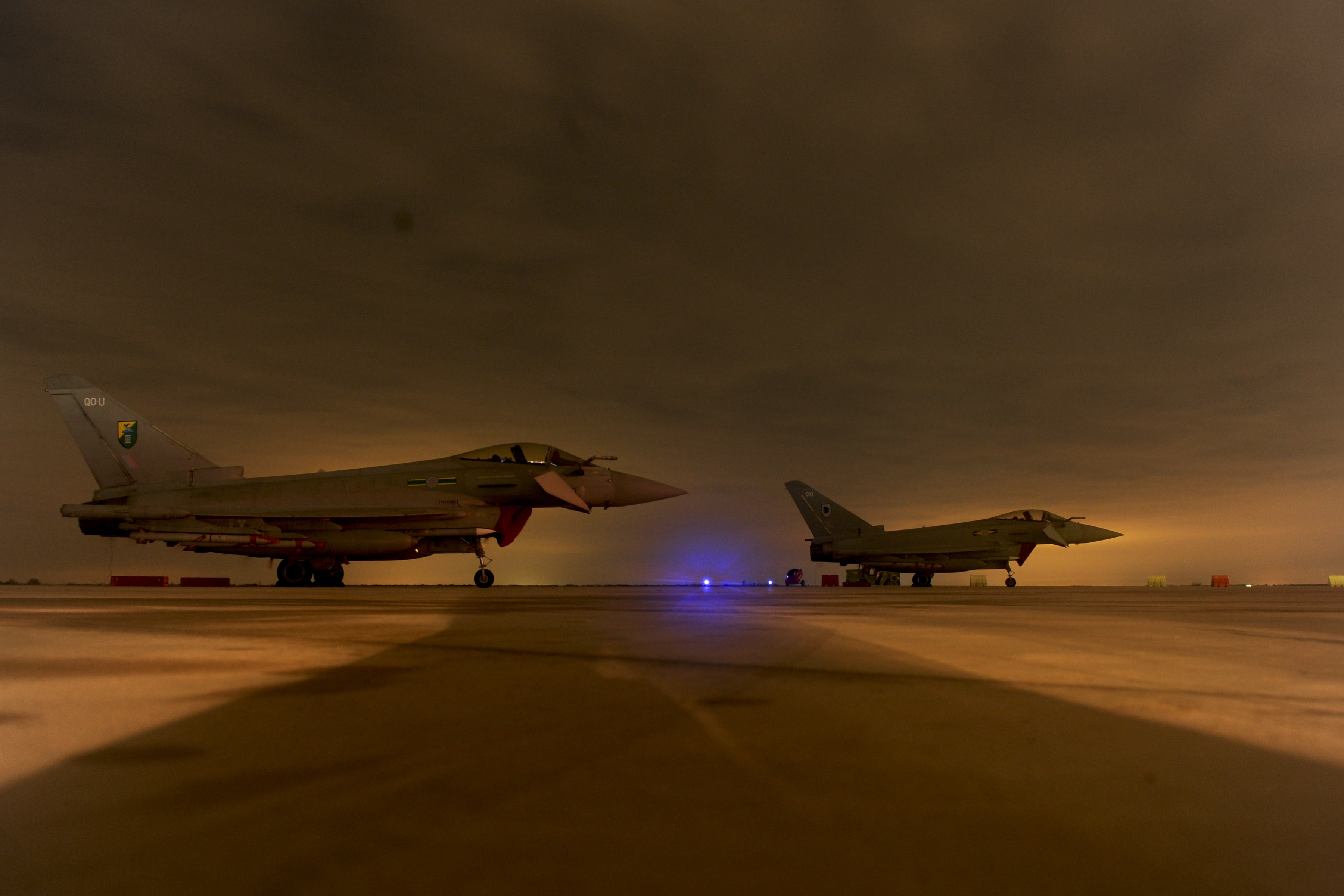
The Qatar deployment is now the most operationally significant. RAF 12 Squadron at Al Udeid operates Typhoons alongside the Qatari Emiri Air Force. The four additional Typhoons announced by Starmer on March 5 approximately double Britain’s fast-jet presence in the Gulf, providing air defense and potentially ground-attack capability if the mission expands. Al Udeid itself has been targeted by Iranian missiles, making the RAF deployment a calculated risk — British jets and personnel operating from a base already under fire.
The Oman facilities represent Britain’s strategic depth in the region. Duqm, on the Omani coast facing the Indian Ocean, is positioned outside the Persian Gulf chokepoint. The facility can support aircraft carriers and was designed to provide Britain with a hub that does not depend on access through the Strait of Hormuz. The Ministry of Defence has described its Oman presence as a “strategic hub” from which it can “project assets and increase training operations with regional partners with greater frequency.” In the current crisis, Oman’s traditional neutrality and its location on the Arabian Sea make it the most secure British position in the region.
BAE Systems and the Kingdom — A Corporate Alliance Older Than Most Countries
No British corporation is more embedded in Saudi Arabia than BAE Systems. The defense giant employs 7,300 people in the Kingdom, of whom 74 percent are Saudi nationals, making it one of the world’s leading private-sector employers of Saudis. The company has invested in multiple Saudi enterprises, including Advanced Electronics Company, International Systems Engineering, Saudi Development and Training, and Saudi Maintenance and Supply Chain Management Company. It maintains major facilities in Dhahran, Riyadh, and Al-Majma’ah.
BAE’s presence dates to the Al-Yamamah deal of 1985 and has been continuous for nearly 50 years. The Al-Yamamah contracts alone employ at least 5,000 people providing technical support, training, and maintenance to the Royal Saudi Air Force. The relationship is so deep that BAE’s Saudi operation functions as a quasi-independent entity — BAE Systems Saudi Arabia — with its own leadership, workforce development programmes, and industrial partnerships aligned with Vision 2030 localisation targets.
The commercial scale is staggering. Between the Al-Yamamah and Project Salam contracts, BAE has generated revenues from Saudi Arabia exceeding £60 billion over four decades. The pending 48-Typhoon follow-on deal, if signed, would add another $13 billion. No other bilateral defense-industrial relationship between a European company and a Gulf state comes close. The French Rafale programme has competed aggressively, as has the American F-15EX, but BAE’s installed base — 72 operational Typhoons requiring parts, maintenance, upgrades, and pilot training for decades — creates a lock-in effect that competitors struggle to overcome.
This lock-in works both ways. BAE Systems’ share price is sensitive to the health of the Saudi relationship. Roughly 20 percent of BAE’s global revenue comes from Saudi Arabia, making the Kingdom the company’s single largest market outside the UK and US. Any disruption to Saudi defense spending, or any political decision in London to restrict arms sales, reverberates through BAE’s order book and ultimately through the British defense-industrial base. The approximately 40,000 UK-based jobs that depend directly or indirectly on BAE Systems’ Saudi contracts give the relationship a political constituency in parliamentary seats from Lancashire to the Clyde.
The Al-Yamamah contract also left a complicated legacy. The UK Serious Fraud Office uncovered alleged commission payments totaling up to £6 billion paid to members of the Saudi royal family. The investigation was controversially halted in 2006 by Attorney General Lord Goldsmith, citing national security concerns — widely interpreted as a decision to protect the arms deal at any cost. In 2010, BAE Systems pleaded guilty in a US court to false accounting charges. The corruption allegations have never been fully resolved, and they cast a shadow over every subsequent deal. The pending 48-Typhoon contract has been conducted with notably greater transparency, though critics argue that the structural incentives for improper payments remain unchanged.
The current war, paradoxically, may accelerate the Typhoon follow-on deal. Saudi Arabia’s air defenses have been tested under real combat conditions for the first time since the 2019 Abqaiq-Khurais attacks, and the Typhoon has performed well in its air defense role. The RSAF’s 72 Typhoons have been flying defensive combat air patrols over Saudi cities alongside American F-15s. If the war demonstrates the platform’s value under fire, the political and commercial arguments for the second batch become stronger. Saudi defense expenditure, already rising from $53.9 billion in 2021 to $72.5 billion in 2025 according to ResearchAndMarkets.com, is likely to increase further as the Kingdom absorbs the lessons of the Iranian campaign.
The Starmer Paradox — From Arms Embargo Pledge to Defense Partner
The trajectory of Keir Starmer’s position on Saudi Arabia is among the most dramatic reversals in recent British political history. In 2020, during the Labour leadership contest, Starmer explicitly pledged that Britain “should stop the sale of arms to Saudi Arabia.” He tweeted his support for a complete halt to arms sales and committed to a review of the policy as part of his leadership platform. Labour conference delegates unanimously backed demands that a Labour government would completely halt arms sales to Riyadh.
By December 2024, now Prime Minister, Starmer flew to Saudi Arabia and met Mohammed bin Salman. The official government press release hailed an increased “strategic partnership” that would “pave the way for greater defence industrial cooperation.” Starmer stated he was in Riyadh to “accelerate progress on the GCC Free Trade Agreement, deepen research and development collaboration, and partner on future-focused projects in areas such as artificial intelligence and defense.” The arms embargo pledge had been quietly retired, replaced by a commitment to “review” export licences — a process that, in practice, has resulted in £2.9 billion of approved licences in a single year.
By March 2026, the transformation was complete. The same leader who had called for stopping arms sales to Saudi Arabia was now pledging to defend the Kingdom militarily, deploying fighter jets and destroyers, offering intelligence cooperation, and permitting US forces to use British bases for strikes on Iran. The shift reflects a structural reality that transcends party politics: British prosperity depends on Gulf stability, and Gulf stability depends on Saudi security, and Saudi security depends in part on British arms, technology, and intelligence.
Starmer’s trip conspicuously sidestepped any mention of Mohammed bin Salman’s human rights abuses, instead signalling the UK’s quiet complicity, prioritising arms sales and economic ties over accountability.
Declassified UK analysis, December 2024
The paradox is not unique to Starmer. Every British prime minister since Margaret Thatcher has navigated the tension between the commercial value of the Saudi relationship and the political cost of association with the Kingdom’s human rights record. What the Iran war has done is resolve the tension decisively in favour of security and commerce. With Iranian missiles falling on allied capitals, human rights concerns have been displaced by survival imperatives. The question is whether that displacement is temporary — a wartime exception — or permanent.
The Gulf Dependency Matrix — Measuring Britain’s Exposure
The depth of Britain’s exposure to the Gulf, and to Saudi Arabia specifically, can be measured across five dimensions: military, economic, energy, human, and intelligence. Each dimension creates dependency, and the dependencies are mutually reinforcing. A disruption in one affects all others. Three factors determine whether Britain can disengage from the Gulf: whether alternative markets exist for British defense exports, whether alternative energy supply routes can be secured, and whether 140,000 British nationals can be evacuated under fire. The current evidence suggests that none of these conditions can be met quickly.
| Dimension | Key Metric | Dependency Level | Disengagement Feasibility |
|---|---|---|---|
| Defense-Industrial | £2.9bn in export licences (2024); 40,000+ UK jobs dependent on BAE-Saudi contracts | Critical | Low — no alternative customer at this scale |
| Economic | £17.2bn bilateral trade; £9.7bn UK surplus; 200+ joint ventures worth $17.5bn | High | Medium — trade diversifiable over a decade |
| Energy | 40-45% of UK crude from OPEC; Saudi production decisions affect UK fuel prices | High | Low — North Sea in decline, energy self-sufficiency at 0.59 |
| Human | 30,000 British nationals in Saudi Arabia; 140,000 across the Gulf | Critical | Very Low — evacuation under fire is a worst-case scenario |
| Intelligence | 3 GCHQ listening posts in Oman; CIRCUIT programme covering Gulf cables | High | Low — no alternative location provides equivalent coverage |
The defense-industrial dimension is the hardest to replace. Saudi Arabia has accounted for 40 to 50 percent of all UK arms exports in recent years, according to SIPRI data for the period 2012-2016. Between 2015 and 2022, the published value of UK arms export licences to Saudi Arabia totaled £7.1 billion. No other single customer approaches this scale. If Saudi Arabia shifted its procurement to France, the United States, or a combination of competitors, the impact on BAE Systems — and through BAE on the wider UK defense supply chain — would be severe.
The energy dimension is more indirect but equally binding. While Saudi Arabia is not the UK’s largest direct crude supplier (that distinction belongs to the United States with 16.2 million metric tons in 2024), Saudi production decisions through OPEC directly shape global oil prices and therefore UK fuel costs. A temporary Saudi export cut in 2024 caused a 7 percent spike in UK fuel prices. The UK’s energy self-sufficiency score fell to 0.59 in 2024, a 12 percent decrease from the prior year, as North Sea production hit a record low. Britain imports 40 to 45 percent of its crude from OPEC countries, of which Saudi Arabia is the dominant member and swing producer.
The human dimension is perhaps the most politically explosive. The 140,000 registered British nationals in the Gulf represent the largest concentration of British citizens in any active conflict zone since the Second World War. An uncontrolled evacuation — triggered by, say, an Iranian missile hitting a civilian area in Dubai or Riyadh — would dominate British politics for months. The Rapid Deployment Teams placed in Saudi Arabia and Oman are the visible element of an evacuation architecture that Whitehall has been quietly building since the crisis began.
Is Britain Being Dragged Into a War It Cannot Afford?
The conventional view — articulated by opposition MPs, anti-war groups, and a segment of the media — holds that Britain is sleepwalking into another Middle Eastern conflict it cannot afford, driven by commercial interests and political expediency. The argument runs that Britain’s shrinking defense budget (below the 2.5 percent of GDP pledged by Starmer), its overstretched armed forces, and its traumatic experience in Iraq and Afghanistan make another Gulf commitment reckless.
The evidence suggests a different reading. Britain’s Gulf deployment is calibrated, limited, and defensive. Four additional Typhoons and one destroyer do not constitute a war footing. Compared to the US deployment of carrier strike groups, hundreds of aircraft, and tens of thousands of troops, Britain’s contribution is a rounding error. The strategic value lies not in the hardware but in the signal: Britain is telling Saudi Arabia, and by extension the Gulf states, that the Western security guarantee extends beyond Washington.
This matters because the United States, under the Trump administration, has pursued an explicitly transactional approach to Gulf security. The Starmer government’s willingness to commit forces independently — not as a subordinate element of a US-led coalition but as a bilateral partner to Saudi Arabia — gives Riyadh an alternative interlocutor in a way that France, Germany, or any other European power cannot currently match. Britain has the bases, the intelligence infrastructure, the defense-industrial relationship, and the historical credibility to play this role. No other European state has all four. The broader European response to the Iran war has fractured into at least five distinct camps, with France, Germany, Spain, and Italy each pursuing conflicting strategies that highlight London’s relative strategic clarity.
The financial arithmetic also favors engagement. Britain’s defense exports to Saudi Arabia generate a trade surplus of nearly £10 billion. The cost of deploying HMS Dragon and four Typhoons for a six-month operation is measured in the tens of millions. The return on that investment — in continued arms contracts, energy price stability, intelligence access, and political influence — is measured in the billions. This is not a charitable contribution to Saudi security. It is an investment in British interests that happens to align with Saudi needs.
The conventional objection collapses further under scrutiny of the alternatives. The UK’s defense budget — even at the 2.5 percent target — is too small to maintain an independent global posture. Britain’s strategic relevance depends on its ability to contribute to alliances and coalitions. Disengaging from the Gulf would not save money; it would eliminate Britain’s most profitable defense-export market while doing nothing to reduce its energy vulnerability. The North Sea is in terminal decline. The UK’s energy self-sufficiency score dropped to 0.59 in 2024, a 12 percent fall from the prior year. Without Gulf oil flowing at stable prices, British households feel the impact at the petrol pump within weeks.
The risk is escalation. If Iran directly targets British forces — a Typhoon shot down, a missile hitting HMS Dragon — the calculus changes entirely. Britain would face a choice between absorbing the loss (politically devastating) and retaliating (militarily costly and strategically uncertain). The Starmer government is betting that Iran’s incentive structure does not include deliberately targeting a NATO nuclear-armed state. That bet may be correct. But it is still a bet. On March 15, that bet was reinforced when GCC and UK foreign ministers held an extraordinary summit condemning Iran’s aggression, affirming the Gulf states’ right to collective self-defense under Article 51 of the UN Charter.
There is also a subtler risk: mission creep. The deployment is framed as defensive, but the line between defensive and offensive in an air war is inherently blurred. A Typhoon intercepting an Iranian drone approaching Saudi airspace is defensive. A Typhoon striking an Iranian drone launch facility in Yemen is offensive. The distinction matters legally under the War Powers Act and politically in the House of Commons. Starmer has been careful to avoid requesting a parliamentary vote — his predecessors’ experience with Syria in 2013 and Iraq in 2003 taught him that such votes can fail. But if British forces fire weapons in anger, the demand for a vote will become irresistible.
The Royal Signal — What Prince William’s Saudi Visit Revealed
Three weeks before Iranian missiles hit Riyadh, the Prince of Wales was touring the Kingdom. Prince William’s three-day visit from February 9 to 11, 2026, his first official visit to Saudi Arabia, was timed to mark 100 years of diplomatic relations between the United Kingdom and the Kingdom of Saudi Arabia. Kensington Palace said the trip would “celebrate growing trade, energy and investment ties” and strengthen bilateral relations.
The itinerary was revealing. William met Crown Prince Mohammed bin Salman, who gave him a private tour of the At-Turaif UNESCO World Heritage Site at Diriyah, the first capital of the Saudi state, followed by a presentation on the Diriyah project’s master plan. The choice of Diriyah was pointed: this is the birthplace of the House of Saud, and inviting William to tour it was an act of familial intimacy between two royal houses that have been intertwined since the Treaty of Darin in 1915.
William also visited AlUla, the ancient Nabatean city in northwestern Saudi Arabia, to learn about conservation efforts. But the diplomatic substance was concentrated elsewhere. The visit coincided precisely with the World Defence Show 2026 in Riyadh, where Britain was seeking to enlist Saudi backing for its sixth-generation Tempest fighter jet programme — the successor to the Typhoon and potentially the next £50 billion defense contract between the two nations.
The trade figures cited during the visit — £17.2 billion ($23.5 billion) in bilateral trade — understated the relationship’s strategic value. The UK and Saudi Arabia have reaffirmed a target of reaching £30 billion in bilateral trade by 2030. UK foreign direct investment stock in Saudi Arabia stood at £6.5 billion at the end of 2024. There are more than 200 joint ventures between British and Saudi companies worth $17.5 billion. Approximately 100,000 Saudi nationals live in the UK, many as students, creating people-to-people links that reinforce the governmental relationship.
The royal visit now reads as a precursor to the military commitment that followed. The diplomatic groundwork — the personal relationship between William and MBS, the trade agreements, the defense industry discussions — created the political conditions for Starmer’s March 6 phone call. When Britain deployed military assets to defend Saudi Arabia, it was not an improvised response to a crisis. It was the activation of a relationship that had been deliberately strengthened for precisely this scenario.
The century of diplomatic relations that the visit marked began with the Treaty of Jeddah, signed on May 20, 1927, in which Britain recognised Saudi sovereignty over the Hejaz and Najd regions. But the relationship’s roots extend further back, to the Treaty of Darin in 1915, when Ibn Saud accepted British protection during the First World War. In 1930, Saudi Arabia opened its embassy in London — only its second official foreign affairs office abroad, led by Ambassador Hafiz Wahba. By 1932, when the Hejaz and Najd were unified into the Kingdom of Saudi Arabia, Britain was the most important external partner of the nascent state. The House of Saud and the British Crown have maintained this connection through two world wars, the Cold War, the oil shocks, the Gulf Wars, and now the Iran conflict. Few bilateral relationships in the Middle East have survived so many geopolitical convulsions.
Frequently Asked Questions
What military assets has Britain deployed to the Gulf in response to the Iran crisis?
Britain has deployed four additional Typhoon fighter jets to Al Udeid Air Base in Qatar, HMS Dragon (a Type 45 air defense destroyer) to the Mediterranean transit toward the Gulf, two Wildcat helicopters armed with Martlet anti-drone missiles to RAF Akrotiri in Cyprus, and Rapid Deployment Teams to Saudi Arabia and Oman for evacuation coordination. PM Starmer has also authorised US forces to use British bases for defensive strikes on Iran.
How long has the UK-Saudi defense relationship existed?
The relationship dates to the Treaty of Darin in 1915, when Ibn Saud signed an agreement with the British government. The Treaty of Jeddah in 1927 established formal diplomatic relations. The modern defense-industrial partnership began with the Al-Yamamah arms deal in 1985, which delivered Tornado jets and earned BAE Systems an estimated £43 billion over 20 years. The relationship has been continuous for over a century, making it one of the longest-standing bilateral partnerships in the Middle East.
How many British nationals are in Saudi Arabia and the Gulf?
Approximately 30,000 British nationals live and work in Saudi Arabia, many employed by BAE Systems and other defense contractors. Across the wider Gulf region, the figure rises to approximately 140,000 registered British nationals. The UK government has deployed Rapid Deployment Teams to Saudi Arabia and Oman to coordinate potential evacuations should the security situation deteriorate further.
What is HMS Dragon and why is it significant?
HMS Dragon is a Type 45 Daring-class air defense destroyer, described by the Ministry of Defence as one of the most capable air defense warships in the world. Its Sea Viper missile system can launch eight missiles in under ten seconds, guide 16 missiles simultaneously, and intercept targets at ranges exceeding 120 kilometres. The Sampson radar can track hundreds of targets from 250 miles. In the Gulf, it provides a mobile air defense shield against Iranian ballistic missiles, cruise missiles, and drone swarms.
How much are UK arms sales to Saudi Arabia worth?
In 2024, Saudi Arabia was the single largest recipient of UK arms export licences at £2.9 billion. Over the period 2015-2022, the UK approved £7.1 billion in arms export licences to Saudi Arabia. The pending second Typhoon order for 48 aircraft is estimated at $13 billion. BAE Systems, the primary contractor, employs 7,300 people in Saudi Arabia and has earned over £60 billion from Saudi contracts across the Al-Yamamah and Project Salam programmes over four decades.
Does Britain have a permanent military base in the Gulf?
Yes. The United Kingdom Naval Support Facility at HMS Jufair in Bahrain was re-established in 2014 and officially opened in April 2018, becoming Britain’s first permanent military base east of Suez since the withdrawal from the Gulf in 1971. The facility has capacity for approximately 500 personnel, with around 300 currently stationed there, and supports Operation Kipion, the Royal Navy’s continuous maritime security mission. It permanently hosts four mine countermeasure vessels, one Type 23 frigate, and a Royal Fleet Auxiliary support vessel. Britain also maintains military facilities at Al Udeid Air Base in Qatar, Duqm in Oman, Al Minhad in the UAE, and the Sovereign Base Areas in Cyprus. These facilities collectively give Britain the most extensive European military footprint in the Gulf region.
What role does GCHQ play in the Gulf region?
GCHQ operates three signals intelligence listening posts in Oman, codenamed TIMPANI, GUITAR, and CLARINET, as part of the CIRCUIT communications interception programme. These facilities monitor undersea telecommunications cables passing through the Strait of Hormuz. A fourth station operates at Ayios Nikolaos in Cyprus. Together, they provide Britain with the ability to intercept Iranian military communications and monitor IRGC operations across the Gulf, a capability that Starmer offered to share more extensively with Saudi Arabia in the March 6 call.