
DHAHRAN — Iran’s Kharg Island oil terminal, which handles more than 90% of the country’s crude exports, reached effective storage capacity on Saturday, April 26, thirteen days after the US naval blockade of Iranian ports took effect. With 31 million barrels of onshore tank space now full and exports at near-zero, Tehran faces a choice it has spent two months trying to avoid: shut in wells that may never fully reopen.
US Treasury Secretary Scott Bessent framed the moment in advance. Storage at Kharg, he said, “will be full and the fragile Iranian oil wells will be shut in.” The arithmetic bore him out. At the blockade’s start on April 13, Kharg held roughly 18 million barrels against 31 million barrels of total capacity, according to Kpler data. Net inflow — production minus the trickle still leaving through Jask and floating transfers — was running at 1.0 to 1.1 million barrels per day. Thirteen days of accumulation consumed the remaining 13 million barrels of headroom.
The storage crisis is not the endgame. It is the trigger for a different and more permanent kind of damage: the destruction of reservoir capacity in Iran’s aging, water-injection-dependent oil fields. The Foundation for Defense of Democracies estimates that forced shut-ins will permanently eliminate 300,000 to 500,000 barrels per day of Iranian production capacity — worth $9 billion to $15 billion in annual revenue, gone not for the duration of the war but for years afterward. For Saudi Arabia, which holds more than half of all OPEC+ spare capacity and is lobbying Washington to end the blockade, the implications for post-war market structure are as large as they are uncomfortable.
Table of Contents
The Storage Math: Thirteen Days From Blockade to Capacity
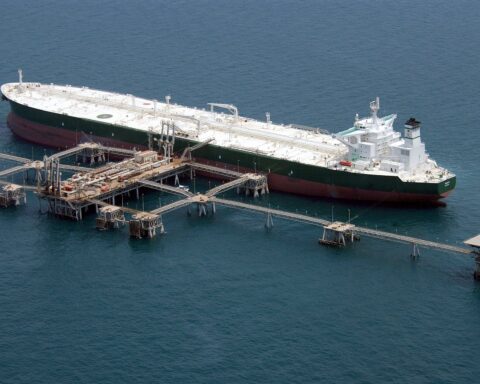
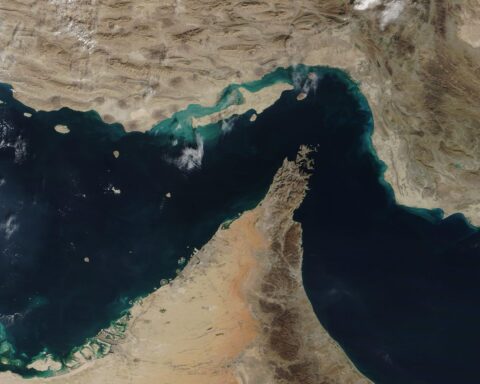
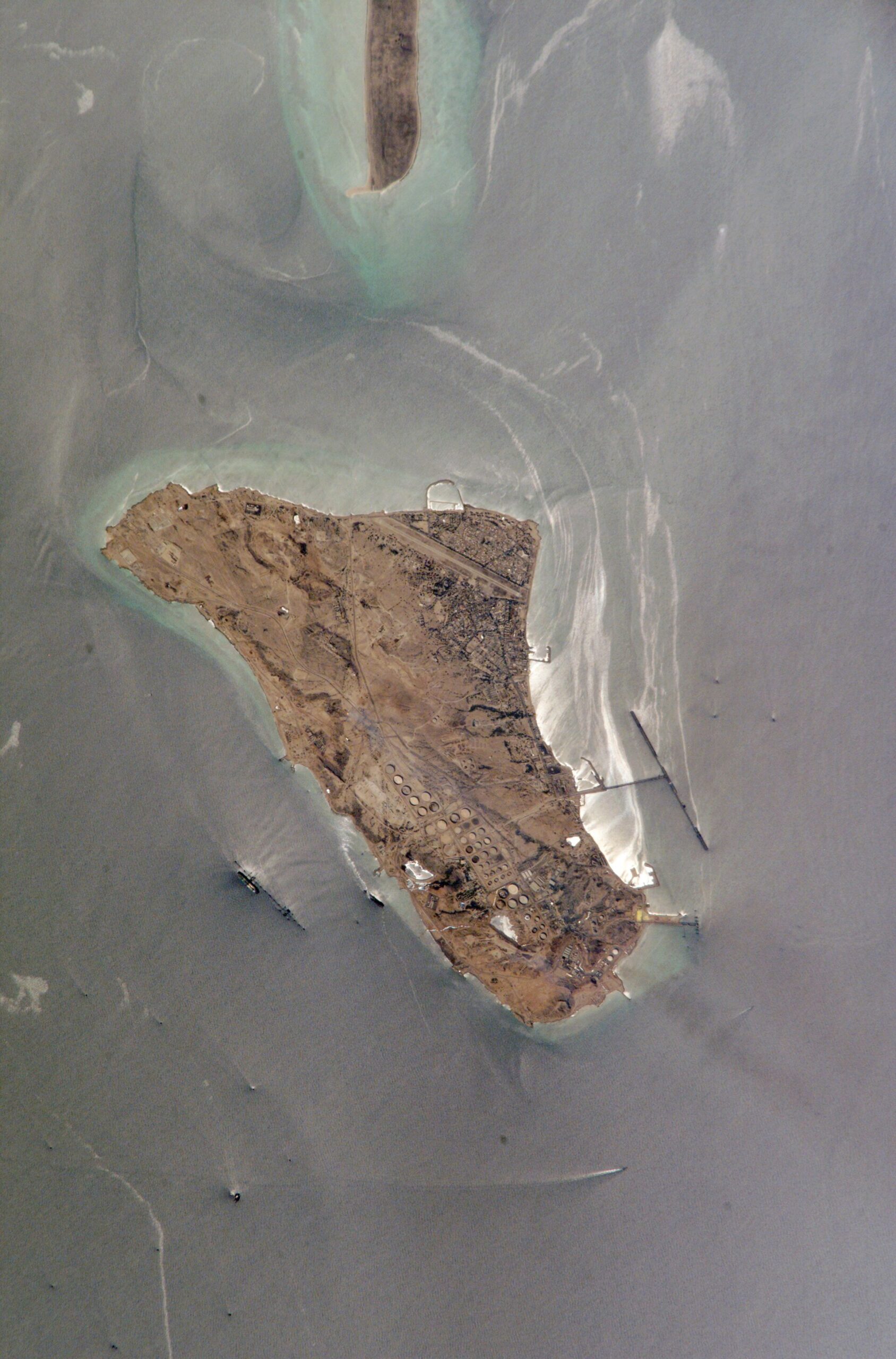
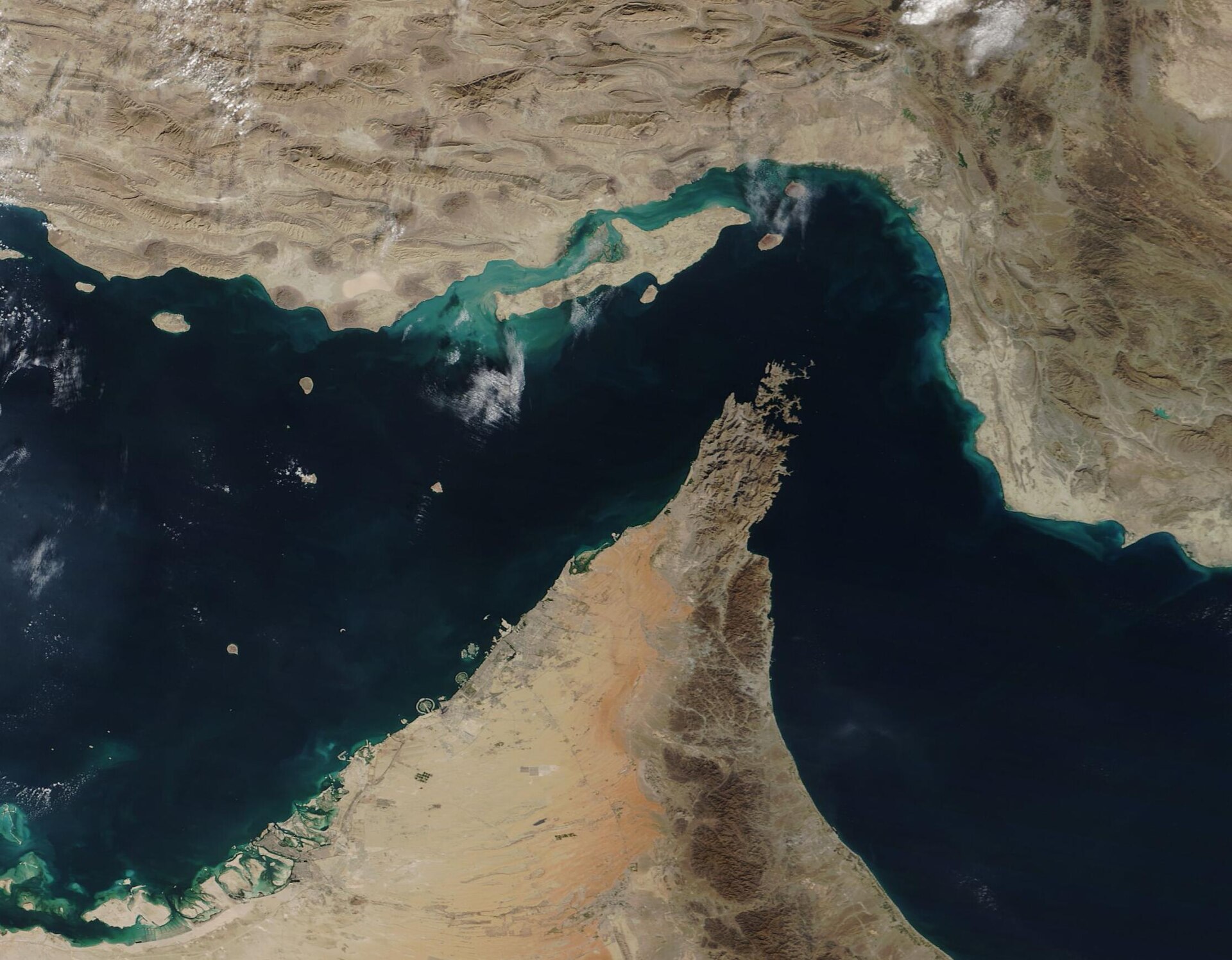
Kharg Island sits 25 kilometers off Iran’s southwestern coast in the Persian Gulf. A 1984 CIA assessment called it “the most vital” node in Iran’s oil system. That description has not aged. In March 2026, the island accounted for 84% of Iranian crude loadings, according to Kpler, with the Goreh-Jask pipeline terminal on the Gulf of Oman handling just 4.4%.
Before the blockade, Iran was producing approximately 3.68 million barrels per day and exporting 1.5 to 2.15 million bpd through Hormuz, according to Al-Monitor and Bloomberg. Domestic refining capacity absorbs roughly 2.6 million bpd. The gap between production and refining-plus-exports determined how fast Kharg filled.
The Middle East briefing 3,000+ readers start their day with.
One email. Every weekday morning. Free.
When the US blockade took effect on April 13, exports through Hormuz dropped to near zero. Bloomberg reported on April 26 that traffic through the strait had become “virtually impossible for the first time in history.” With exports halted, net inflow into Kharg storage ran at 1.0 to 1.1 million bpd — the residual after subtracting refinery intake and the small volumes still trickling through Jask.
| Metric | Value | Source |
|---|---|---|
| Kharg total storage capacity | 31 million barrels | Kpler |
| Inventory at blockade start (April 13) | ~18 million barrels (58%) | Kpler (last reported March 7; no subsequent fill between US strikes) |
| Spare capacity at blockade start (April 13) | ~13 million barrels | Calculated |
| Net daily inflow | 1.0–1.1 million bpd | Al-Monitor, Bloomberg |
| Days to capacity from April 13 | ~12–13 days | Calculated |
| Projected saturation date | April 25–26 | Calculated |
Muyu Xu, senior analyst at Kpler, assessed that Iran had approximately 20 days of onshore storage remaining at current inflow rates and that production reductions would be “gradual over the coming week, with higher likelihood of acceleration into May.” Arne Lohmann Rasmussen, chief analyst at Global Risk Management, said Iran “was expected to run out of storage capacity within approximately one month, but it may already be forced to shut in part of its oil production within a couple of weeks.”
The Nasha: A 30-Year-Old VLCC Buying 48 Hours
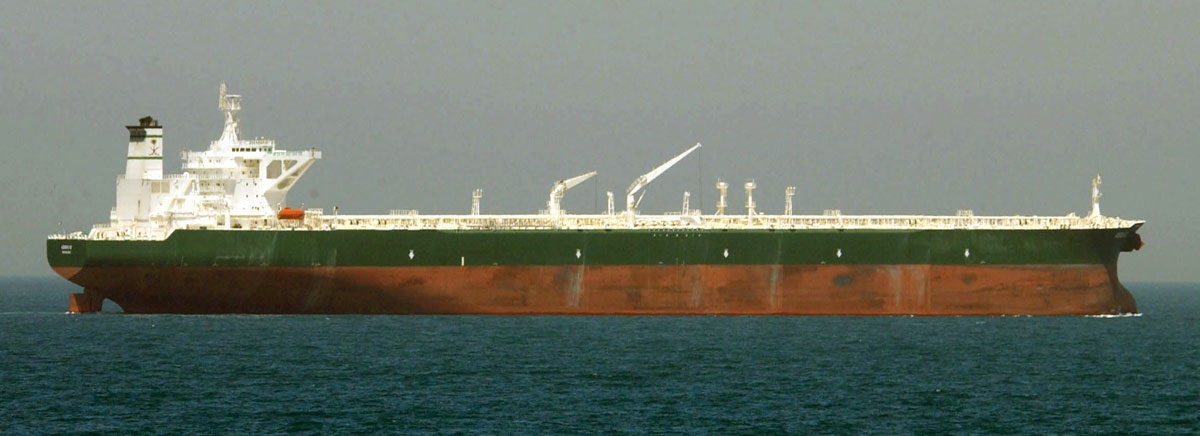
Iran’s most visible response to the storage crunch was the reactivation of the Nasha, a very large crude carrier built in 1996 and previously decommissioned. Maritime intelligence sources, including TankerTrackers.com, identified the vessel repositioning toward Kharg Island in mid-April as floating storage. Iranian state media did not acknowledge the deployment.
The Nasha carries approximately 2 million barrels. At 1.0 to 1.1 million bpd of net inflow, that capacity buys roughly 48 hours. Multiple outlets reported the ship was moving so slowly that a voyage expected to take 36 hours stretched to four days — a detail consistent with a vessel that has been idle for years and is operating at minimal crew and mechanical capacity.
Floating storage elsewhere in Iran’s system is already at saturation. Kpler estimates 183 million barrels of Iranian crude sitting on tankers globally; Kenneth Katzman, formerly of the Congressional Research Service, put the figure at 160 to 170 million. Neither figure changes the Kharg arithmetic. The island’s tank farm is the bottleneck between wellhead and tanker, and that bottleneck is now full.
What Happens When You Shut In a Water-Flooded Field?
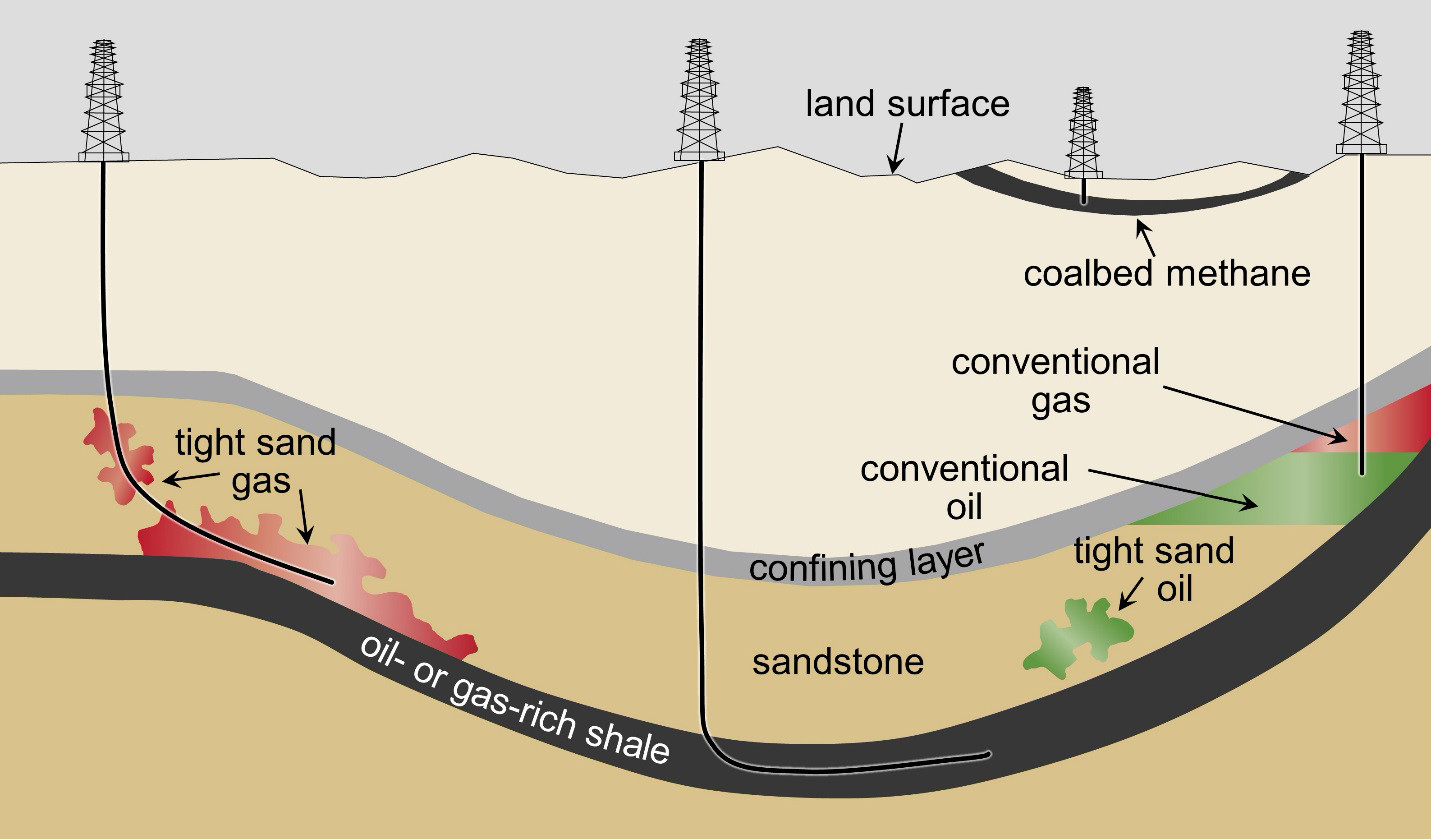
Iran’s major oil fields have been producing for four to five decades and most rely on water injection to maintain reservoir pressure — pumping water into the formation below the oil zone to push crude toward production wells. Without continuous production to maintain the pressure balance, shutting in these fields triggers a sequence of damage mechanisms that are well-documented in petroleum engineering literature.
The first is pressure imbalance. When production wells close but injection wells are also shut down — or, worse, when injection continues briefly while production stops — the equilibrium between water, oil, and gas phases in the reservoir breaks down. Water, which is denser, begins migrating upward through paths of least resistance, a phenomenon called water coning. Once water invades the near-wellbore area and the perforation intervals, it permanently traps oil in rock pores. The well produces water instead of oil when it restarts.
The second mechanism is gas migration. Dissolved gas comes out of solution as pressure drops, forming a gas cap that pushes down on the oil column from above while water pushes up from below. The producible oil zone shrinks from both directions.
The third, and most physically destructive, is wax and asphaltene precipitation. As fluids cool in a shut-in wellbore, paraffin wax and asphaltenes — heavy hydrocarbon compounds — solidify and deposit on tubing walls and in the near-wellbore rock matrix. In severe cases, this plugging is irreversible without a full workover operation involving a drilling rig. Cleaning costs run $10,000 to $20,000 per well for mild cases, according to Society of Petroleum Engineers data cited by Energy News Beat. Severe cases can render a well uneconomic to remediate.
Iran’s fields were already declining at 5% to 8% per year before the war, according to Al Jazeera and industry assessments. The country has been locked out of Western oilfield services technology — Schlumberger, Halliburton, Baker Hughes — since 2012. Russian and Chinese equipment filled part of the gap; both supply chains are now disrupted by the conflict.
How Much Iranian Capacity Dies Permanently?
The Foundation for Defense of Democracies, in an analysis published the day the blockade took effect, estimated that forced shut-ins would permanently eliminate 300,000 to 500,000 bpd of Iranian production capacity. At an average Brent price of $100 per barrel, that translates to $9 billion to $15 billion in annual export revenue — destroyed not by sanctions or diplomacy but by the physics of reservoir management.
Iran’s March production stood at 3.68 million bpd, according to Al-Monitor. April production was expected to fall a further 420,000 bpd to approximately 3.43 million bpd. With domestic refining consuming 2.6 million bpd, Iran needs to shut in a minimum of 830,000 to 1.08 million bpd even if it could somehow maintain refinery throughput at full rates.
“If the blockade lasts for more than two or three months, it can cause more damage” to Iran, though damage to Gulf nations would be greater.Saeed Laylaz, economist, Shahid Beheshti University, Tehran — Al-Monitor
Petroleum engineering literature and the 1991 Gulf War precedent both point to a minimum of four to six months for full production restoration after a prolonged shut-in, with 20% to 30% average productivity decline in oil rate and sharp increases in water cut. Iran’s fields are in a more mature, water-flood-dependent state than Iraq’s were in 1991, making them more vulnerable to pressure collapse.
Jamie Ingram, managing editor of the Middle East Economic Survey, offered a more cautious timeline for the storage crunch itself. The saturation would arrive in “weeks rather than days,” he told AFP, adding that Kharg “shouldn’t be a particular bottleneck” because Iran can divert crude to inland storage facilities before routing it to the island. He also noted that Iran “has previously shown a high threshold for pain.” But diverting crude to inland depots does not solve the wellhead problem. It delays it. Every barrel stored inland is a barrel that still cannot leave the country.
| Damage Mechanism | Effect | Reversibility |
|---|---|---|
| Water coning | Water invades oil zone, traps crude in pores | Partially reversible; elevated water cut persists |
| Gas cap formation | Oil zone compressed between water and gas | Slow re-dissolution; months to years |
| Paraffin/wax plugging | Tubing and near-wellbore blockage | $10K–$20K per well; severe cases uneconomic |
| Asphaltene deposition | Permanent permeability reduction | Often irreversible without full workover |
| Existing decline (5–8%/yr) | Compounded by shut-in damage | Requires sustained investment Iran cannot access |
Saudi Arabia’s Post-War Pricing Power
The permanent destruction of 300,000 to 500,000 bpd of Iranian capacity reshapes the OPEC+ balance sheet in ways that favor Riyadh — but not as cleanly as headline numbers suggest.
Saudi Arabia currently holds 3 to 3.5 million bpd of spare capacity, more than half of all OPEC+ spare, according to the IEA. Aramco’s Q1 2026 results showed a 57% profit surge built on 30% less oil — price doing the work that volume could not. Production stands at 7.25 million bpd, down from 10.4 million before the war. The Yanbu loading corridor, Saudi Arabia’s bypass around the closed Strait of Hormuz, has a structural ceiling of 4 to 5.9 million bpd against the East-West Pipeline’s 7 million bpd design capacity.
Iran’s pre-war OPEC+ quota stood at approximately 3.2 to 3.4 million bpd. If 300,000 to 500,000 bpd of that capacity is physically gone, Tehran’s negotiating position in any post-war quota restructuring weakens by exactly the amount it can no longer produce. Saudi Arabia, with the largest spare capacity buffer and the most flexible production infrastructure in the cartel, becomes the swing producer not by agreement but by elimination.
Brent closed at $104.40 per barrel on April 24. Saudi Arabia’s fiscal break-even — the price needed to balance the national budget, including PIF spending commitments — sits at $108 to $111 per barrel, according to Bloomberg. At $104 Brent, the kingdom is still running a deficit. The IEA’s April report described the current disruption as the “largest on record,” with global supply falling 10.1 million bpd to 97 million bpd — exceeding the combined impact of the 1973 and 1979 oil crises. IEA Executive Director Fatih Birol described it as “the biggest energy security threat in history.”
The paradox is that Saudi Arabia needs high prices to fund its budget but needs Hormuz open to sell the volume that earns those prices. Riyadh has been lobbying Washington to lift the blockade because the math of exporting through Yanbu alone does not close the gap. Every month the blockade persists, Iranian capacity degrades — strengthening Saudi’s long-term market share but deepening its short-term fiscal hole.
Iran’s Counter-Narrative and the Tanker Float
Tehran has not publicly acknowledged a storage crisis. PressTV reported on April 21 that Iranian crude exports “remained at elevated levels” in April and that Chinese refiners were purchasing Iranian Light crude at premiums of $1.50 to $2.00 per barrel above Brent. The report cited three tankers — Deep Sea, Sonia I, and Diona — that exited Hormuz on April 17 as evidence the blockade was porous.
Those three vessels, even if laden, represent roughly 6 million barrels — less than six days of net inflow at current rates. Bloomberg reported on April 24 that Iran continued loading crude at Kharg “even as the US blocks the exit route,” noting the 183 million barrels already sitting on tankers with no destination.
Kenneth Katzman argued that Iran could sustain revenue flows “until August” by selling oil already afloat. But revenue from tanker sales does not prevent wellhead shut-ins. Oil already on ships is oil already produced; the storage crisis is about new production that has nowhere to go.
Ali Vaez of the International Crisis Group said Iran’s leadership likely calculates its Hormuz counter-blockade — enforced by IRGC “mosquito fleet” gunboats, as Bloomberg described on April 26 — creates “mutually assured disruption,” a deterrence framework rather than a path to capitulation. Frederic Schneider of the Middle East Council on Global Affairs assessed that Iran “seems to be playing the longer game” and that the “blockade has added economic strain” without triggering the immediate collapse Washington projects.
Iran’s longer game, however, runs through the same reservoir physics. Every day of shut-in is a day of water coning, gas migration, and wax deposition. Araghchi cannot open Hormuz even if he wants to — the IRGC controls operational authority over the strait. And the IRGC’s mine warfare command vacuum, with no named successor to the killed Admiral Tangsiri, means the counter-blockade operates without a single commander who could order it stopped.
Background
The US naval blockade of Iranian ports took effect on April 13, 2026, as part of Operation Epic Fury. The FDD estimated combined blockade damage at $435 million per day — $276 million in lost exports and $159 million in blocked imports. Iran’s Central Bank has projected 180% inflation and a 12-year reconstruction window.
Kharg Island has been Iran’s primary export terminal for nearly seven decades. The US struck the island on March 13 (90-plus targets) and April 7 (50-plus targets, with oil prices spiking 3% to approximately $116 per barrel on the news). The Goreh-Jask pipeline, designed as a Hormuz bypass, operates at roughly 0.3 million bpd effective capacity — less than a third of its 1 million bpd design rate.
The OFAC General License U expired on April 19 with no renewal, cutting the last legal pathway for non-sanctioned entities to purchase Iranian crude. Indian refiners had been settling Iranian oil purchases in yuan via ICICI Bank’s Shanghai branch. The expiry, combined with the physical blockade, closed both the legal and logistical corridors for Iranian exports simultaneously.
Shipowners told Bloomberg on April 26 that “a return to normal shipments is months away, at best.” The mine clearance timeline for Hormuz — an estimated 51 days minimum based on the 1991 Kuwait benchmark, with four Avenger-class minesweepers already decommissioned from Bahrain in September 2025 — means that even a ceasefire signed tomorrow would not reopen the strait for months.
FAQ
Can Iran divert crude to inland storage facilities to avoid shutting in wells?
Partially and temporarily. Iran operates refinery tank farms and strategic reserve depots at Isfahan, Tehran, Tabriz, and Abadan, with aggregate capacity estimated at 40 to 60 million barrels including strategic reserves. But the bulk of that space is already allocated to refinery buffer stock. Diverting export-grade crude inland buys days to weeks before those tanks also fill, at which point the shut-in decision reverts to the wellhead. The pipeline corridor from southern fields to inland depots also constrains throughput: Iran’s north-south crude trunk lines were built for refinery supply, not emergency export-grade diversion at scale.
Why can’t Iran simply reduce production gradually to match refinery demand?
Iran is already reducing production, but the arithmetic has a floor it cannot reach without wellhead damage. Domestic refining capacity is 2.6 million bpd by design, and processing additional export-grade crude would require diverting feed streams away from refinery product slates already allocated to domestic fuel supply. The fields most likely to face early shut-in are heavy, sour crude producers — Ahvaz, Marun, Gachsaran — because their high-viscosity crude is hardest to store and most susceptible to paraffin deposition. Lighter fields in the Zagros and offshore have marginally more flexibility, but they contribute a smaller share of Iran’s total output and cannot offset the volume gap.
What would it cost Iran to restore production capacity after a prolonged shut-in?
Well cleaning for mild paraffin cases runs $10,000 to $20,000 per well, according to Society of Petroleum Engineers data cited by Energy News Beat. Severe asphaltene plugging requiring a full workover rig is substantially costlier, and that is before re-perforating intervals where water has invaded the formation. Iran operates hundreds of active production wells across its major fields; even a modest severe-damage rate implies restoration costs running into the hundreds of millions of dollars — before accounting for the time cost of sequencing workover rigs across multiple fields simultaneously. Iran’s Central Bank has projected a 12-year reconstruction window for the broader economy; the oilfield services backlog would compete directly with that timeline for scarce hard-currency capital.
How does the Kharg storage crisis affect global oil prices?
The saturation itself is largely priced in; Bessent telegraphed it publicly, and Brent has already adjusted. The market’s next focal point is the permanence of capacity loss, not the storage event. If the FDD’s 300,000 to 500,000 bpd estimate proves accurate, that volume never returns to market — post-war supply forecasts must be revised downward regardless of whether Iran and the US reach an agreement. The parallel to watch is the post-2003 Iraq production trajectory: Iraqi capacity took seven years to recover to pre-war levels, and Iraq had access to Western service companies throughout. Iran will not. The specific well-by-well damage now under way as storage saturation hits its April 26 deadline — water coning, sand ingress, wax deposition — is assessed in Iran’s Wellhead Overflow Crisis Hits Its Deadline.
Does this change OPEC+’s post-war quota negotiations?
Quota allocation in OPEC+ is historically based on proven capacity, not historical entitlements. Iraq contested its post-2003 quota for years by demonstrating restored production rather than claiming pre-war rights. Iran will face the same test — but with a worse starting position, no access to Western rehabilitation services, and a war-damaged export infrastructure. The deeper complication is that Saudi Arabia has continued expanding capacity during the war, with spare production already at 3 to 3.5 million bpd — more than 50% of OPEC+’s total identified spare, according to IEA data. If post-war demand recovers while Iranian supply remains constrained, the Gulf producers holding spare capacity control the pace of market rebalancing — and the pricing that comes with it.