
Riyadh is not one city — it is a dozen cities layered on top of each other. The Saudi capital sprawls across more than 1,900 square kilometres, and where you base yourself determines what kind of Riyadh you experience. A week in Al Olaya’s glass-tower corridor feels nothing like a week wandering Ad Dirah’s mud-brick souks or strolling the Diplomatic Quarter’s manicured parkways. This guide breaks down Riyadh’s most distinctive neighbourhoods for travellers, expats scouting a home, and anyone trying to decode the capital’s geography before they land. Whether you are visiting Riyadh for the first time or relocating for work, understanding the city’s neighbourhoods is the single most useful thing you can do before arrival. For a broader overview of the city, see our full Riyadh travel guide.
Best Time to Visit: October to March (temperatures drop to a pleasant 15–25°C)
Getting There: King Khalid International Airport (RUH), 35 km north of downtown — connected by Riyadh Metro Line 4
Visa Required: Yes — eVisa or visa on arrival for 63+ nationalities (full visa guide)
Budget: $80–$150/day mid-range; $200+ for upscale areas like Hittin or the DQ
Must-See: Ad Dirah’s Masmak Fort, Diriyah’s At-Turaif UNESCO site, Kingdom Tower sky bridge
Avoid: Choosing a hotel in the wrong neighbourhood — Riyadh’s distances are brutal without planning
How Riyadh’s Neighbourhoods Are Organised
Riyadh fans outward from a historic core near Ad Dirah and Al Murabba, with modern development pushing relentlessly northward. The city’s geography divides roughly into four zones:
- Central Riyadh (Al Olaya, Al Sulaimaniyah, Tahlia Street) — the commercial and dining spine, anchored by Kingdom Tower and Al Faisaliyah Tower
- Historic South (Ad Dirah, Al Malaz, Al Murabba) — the original Riyadh, where mud-brick forts, the National Museum, and traditional souks cluster
- North Riyadh (Hittin, Al Malqa, Al Nakheel, Al Yasmin) — modern, upscale, family-oriented residential districts where most expats settle
- West Riyadh (Diplomatic Quarter, Diriyah) — the green, secure diplomatic enclave and the UNESCO-listed birthplace of the Saudi state
The Riyadh Metro, which opened in stages between December 2024 and January 2025, now connects many of these areas across six lines and 85 stations spanning 176 km — the world’s longest fully automated driverless metro network. It has transformed how visitors navigate the city, though ride-hailing apps (Uber and Careem) remain essential for last-mile connections.
Al Olaya — The Business and Skyscraper District
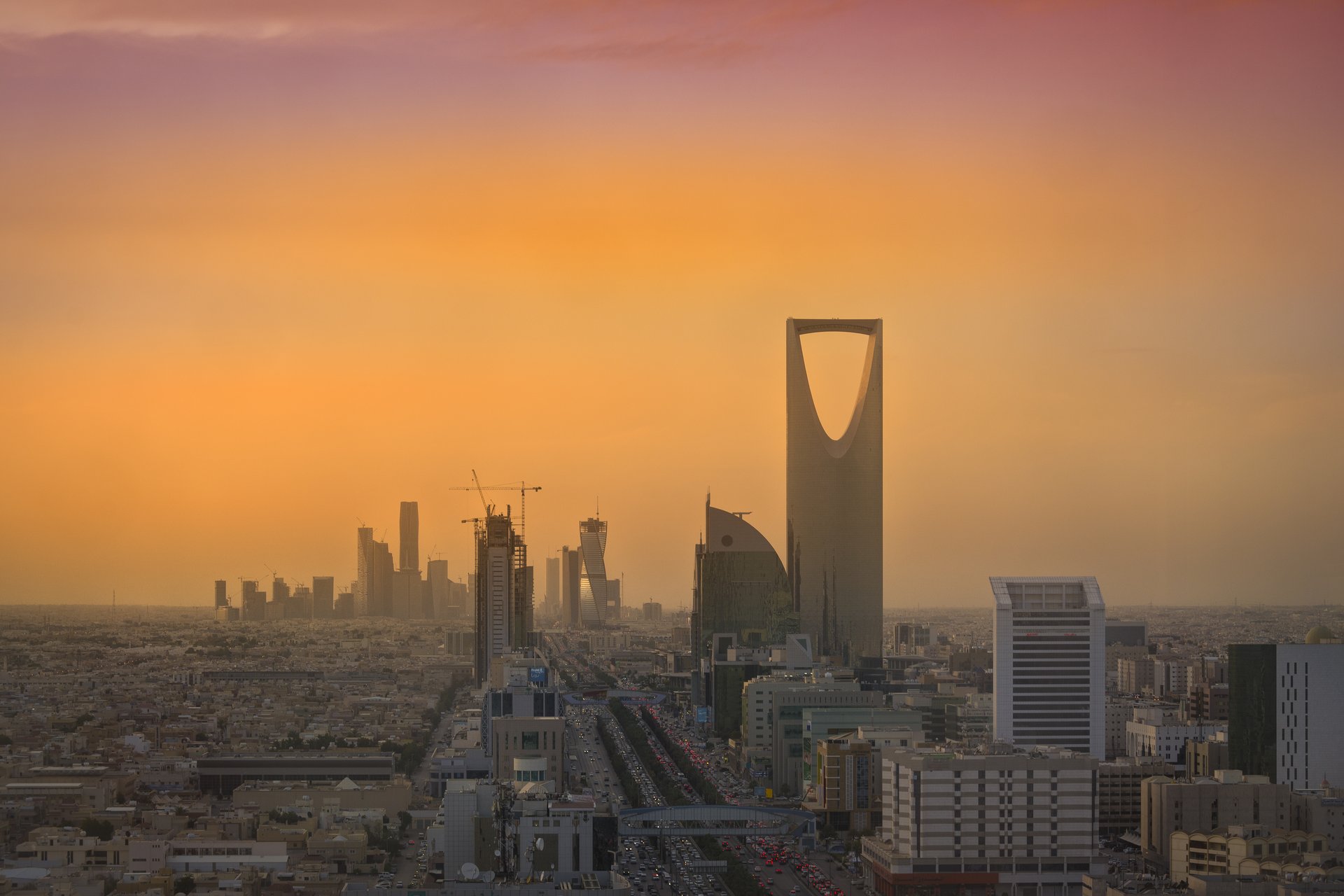
Al Olaya is Riyadh’s unmistakable centre of gravity. The neighbourhood runs along Olaya Street (also called King Fahd Road in stretches), forming a north–south corridor of glass towers, five-star hotels, and shopping malls that constitutes the city’s CBD. If you have seen a photograph of the Riyadh skyline, you were looking at Al Olaya.
Landmarks and Attractions
Two towers define the district. Kingdom Centre — 99 floors, 300,000 square metres — is topped by its famous sky bridge, an open-air viewing platform 300 metres above the city that offers panoramic views stretching to the desert horizon. Below it, Kingdom Centre Mall houses international luxury brands across three floors. The second icon, Al Faisaliyah Tower, features a globe-shaped restaurant at its summit and houses the Mandarin Oriental hotel, whose restaurants are consistently ranked among Riyadh’s best.
Where to Stay
Al Olaya has Riyadh’s densest concentration of international hotels. The Four Seasons Riyadh occupies Kingdom Centre itself. The Mandarin Oriental Al Faisaliah anchors the southern end. Mid-range options include the Hyatt Regency Riyadh Olaya and the Holiday Inn Riyadh – Olaya. Budget travellers can find serviced apartments along side streets for SAR 200–400/night. For a comprehensive hotel comparison, see our Saudi Arabia hotel guide.
Dining and Nightlife
Al Olaya’s dining scene skews international and upscale. The Mandarin Oriental’s restaurants — spanning Japanese, Italian, and Lebanese cuisine — are destination dining. For something more casual, the streets around Al Faisaliyah Mall are packed with cafes and mid-range restaurants. The neighbourhood is also home to several of Riyadh’s emerging lounge and cafe-bar concepts, where elaborate mocktails and live music draw a cosmopolitan evening crowd.
Getting Around
Metro Line 1 (Blue Line) runs directly through Al Olaya along Olaya Street, with multiple stations including the KAFD interchange. This is one of the most metro-connected neighbourhoods in the city.
Tip: Al Olaya is ideal for business travellers and first-time visitors who want everything within reach. The trade-off is noise, traffic, and higher hotel prices. If you prefer peace over convenience, look north to Al Nakheel or west to the Diplomatic Quarter.
Ad Dirah — The Historic Old Town
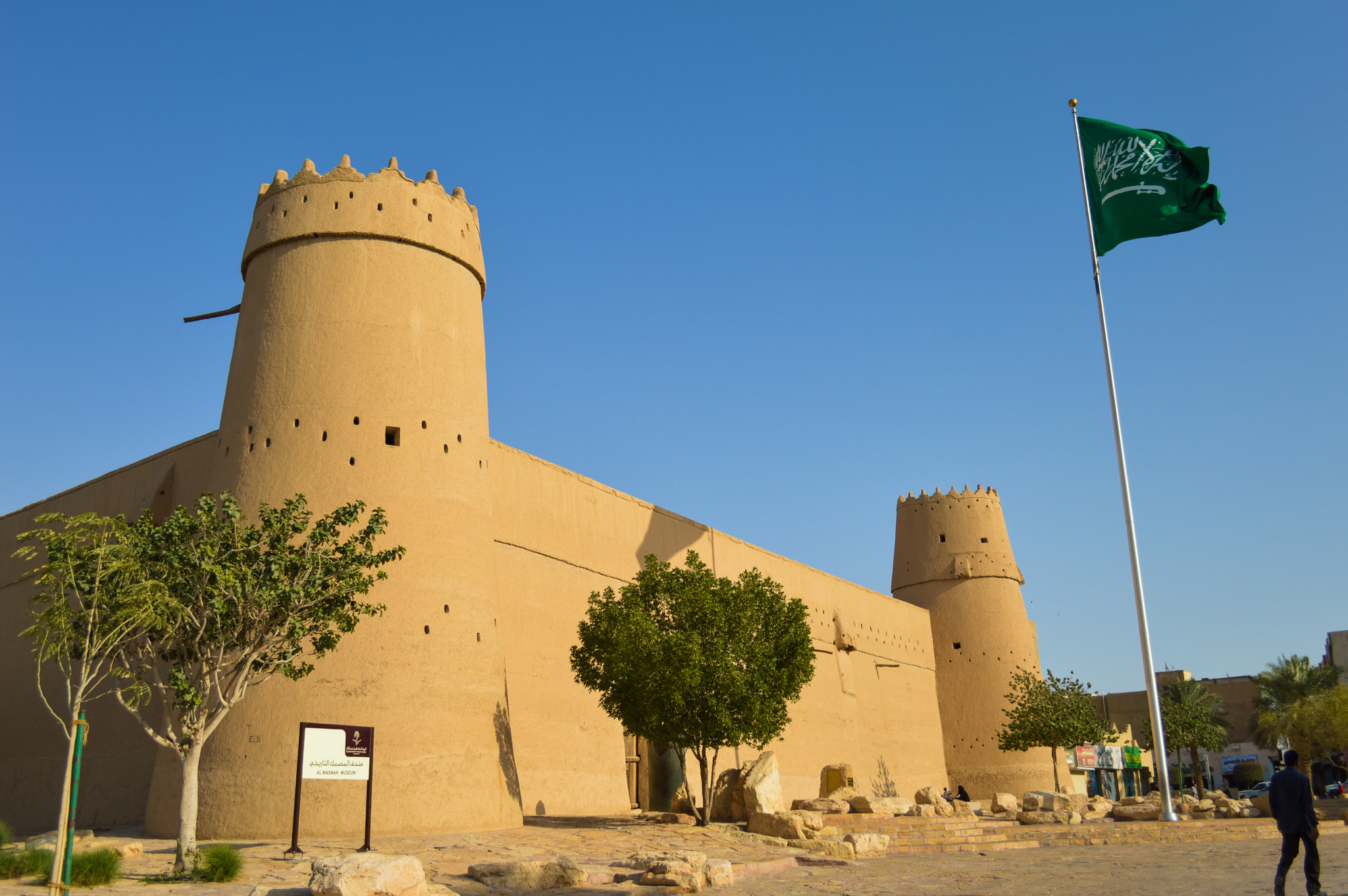
If Al Olaya is the Riyadh of Vision 2030, Ad Dirah is the Riyadh of 1902. This compact, walkable neighbourhood in the city’s south is where modern Saudi Arabia began — literally. It was here that the young Abdulaziz ibn Saud stormed Masmak Fort in January 1902, recapturing Riyadh from the Rashidi dynasty and launching the unification of the Kingdom.
Masmak Fort
The Masmak Fort (also called Masmak Palace) is Ad Dirah’s centrepiece. Built from clay and mudbrick in 1865 and completed in 1895, this thick-walled fortress now operates as a museum documenting the 1902 raid and the founding of the Saudi state. Entry is free. You can still see the spear tip embedded in the main gate from the night of the raid — it is one of Riyadh’s most visceral historical artefacts.
Souq Al-Zal
Souq Al-Zal, established in 1901, is Riyadh’s oldest traditional market. Covering 38,000 square metres in the heart of Ad Dirah, it sells antiques, rare coins, vintage utensils, traditional daggers (khanjar), old record players, and curios that feel like they belong in a museum of Arabian folk culture. The narrow lanes and traditional architecture offer the kind of authentic commercial atmosphere that has largely vanished from modern Saudi cities. Visit in the late afternoon when the market comes alive.
Getting Around
Metro Line 5 (Green Line) runs along King Abdulaziz Road through this area, with stations near key landmarks. Ad Dirah is also an easy Uber ride from Al Olaya — roughly 15 minutes outside rush hour.
Tip: Ad Dirah is a must-visit for history but not an ideal base. Hotels here are limited and the area quietens significantly after dark. Stay in Al Olaya and visit Ad Dirah as a half-day excursion.
Al Murabba and Al Malaz — The Cultural Corridor
Just north of Ad Dirah, the adjacent neighbourhoods of Al Murabba and Al Malaz form Riyadh’s cultural spine. If you are interested in museums, history, and the story of modern Saudi Arabia, this is where to spend a full day.
Al Murabba: The King’s Quarter
Murabba Palace, built in the 1930s for King Abdulaziz as his primary residence after moving from Masmak Fort, is now a museum showcasing the founder’s personal belongings, photographs, and the modest quarters from which he governed a young nation. The palace complex sits within the larger King Abdulaziz Historical Center, which also contains the Saudi National Museum — the country’s most important museum, housing 3,700 artefacts spanning from prehistoric Arabia through the Islamic period to the modern state.
Al Malaz: Riyadh’s First Planned Suburb
Al Malaz was built in the 1950s by King Saud as a housing project for government employees — making it Riyadh’s first purpose-planned residential district. The name “Malaz” originates from the area’s earlier use as royal horse stables under King Abdulaziz. Today the neighbourhood spans 8.67 square kilometres and retains a distinctive character: less glossy than the northern districts, more lived-in, with a mix of government buildings, old-school restaurants, and genuine neighbourhood life.
Key attractions include King Abdullah Park, which hosts a spectacular fountain show in the evenings, and Riyadh Zoo, where visitors can see flamingos and tigers while riding a miniature train. The first campus of King Saud University was established here in 1957, giving the area a student-quarter energy that persists today.
Tip: Combine Ad Dirah, Al Murabba, and Al Malaz into a single south-Riyadh cultural day. Start at Masmak Fort, walk north to the National Museum, then finish at King Abdullah Park for the evening fountain show.
Diplomatic Quarter (DQ) — The Green Oasis
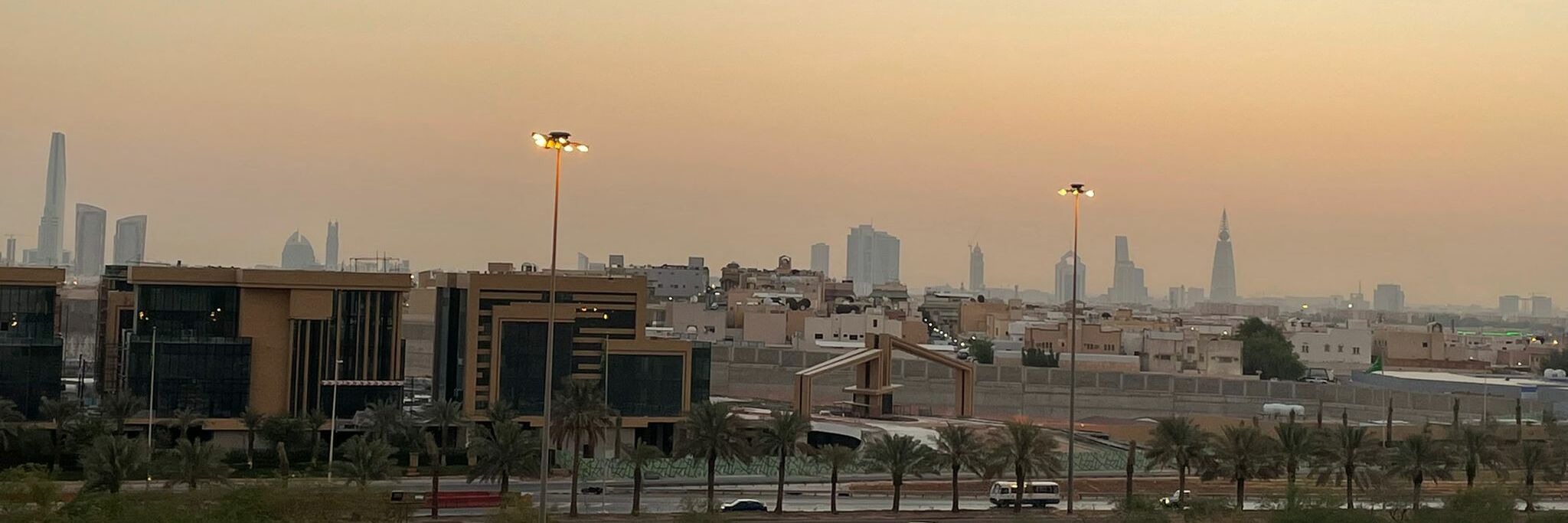
The Diplomatic Quarter is unlike any other part of Riyadh. This 8-square-kilometre enclave in northwestern Riyadh was purpose-built to house embassies, diplomatic residences, and international organisations. The result is a secure, green, walkable district that feels imported from another climate entirely — manicured parkways, mature trees, jogging paths, and a tranquillity that contrasts sharply with the rest of the city.
Character and Lifestyle
The DQ is one of the only neighbourhoods in Riyadh where you can comfortably walk. Gated entry points control access (visitors need valid ID), creating a quiet, almost campus-like atmosphere. Streets are wide and calm. Diplomats, expats, and affluent Saudi families share the space. Children play in gated parks — a sight rare elsewhere in the capital.
Key Attractions
Tuwaiq Palace is the DQ’s architectural centrepiece — a cultural hub with Bedouin-inspired arches that hosts state summits, exhibitions, and cultural events. Wadi Hanifah, the restored valley running along the DQ’s western edge, offers walking trails and picnic spots — a rare patch of green relief in a desert city. Al-Kindi Plaza, the DQ’s largest public square, features fountains, landscaped gardens, and pedestrian arcades lined with restaurants and cafes.
Where to Stay
The Riyadh Marriott Diplomatic Quarter Hotel is the district’s anchor property, with 80 rooms, 140 serviced apartments, and conference facilities. Several other mid-range and boutique options have opened as the DQ evolves from a purely diplomatic enclave into a broader residential and lifestyle destination.
Schools and Services
The DQ’s proximity to international schools (including the British International School Riyadh) and major hospitals like King Faisal Specialist Hospital makes it a top choice for expat families with children.
Tip: The Diplomatic Quarter is excellent for families and long-stay visitors who value green space and walkability over nightlife. It connects to central Riyadh via King Abdullah Road (about 15 minutes to Al Olaya by car). The Riyadh Metro’s expansion is improving connections further.
Diriyah — The Birthplace of Saudi Arabia
Diriyah, on Riyadh’s northwestern fringe along Wadi Hanifah, is where the first Saudi state was founded in 1727. Today it is the city’s most significant heritage destination and one of the most exciting development projects in the Kingdom. For travellers, Diriyah offers a unique combination: genuine UNESCO-listed history alongside world-class dining and emerging luxury hospitality.
At-Turaif: The UNESCO World Heritage Site
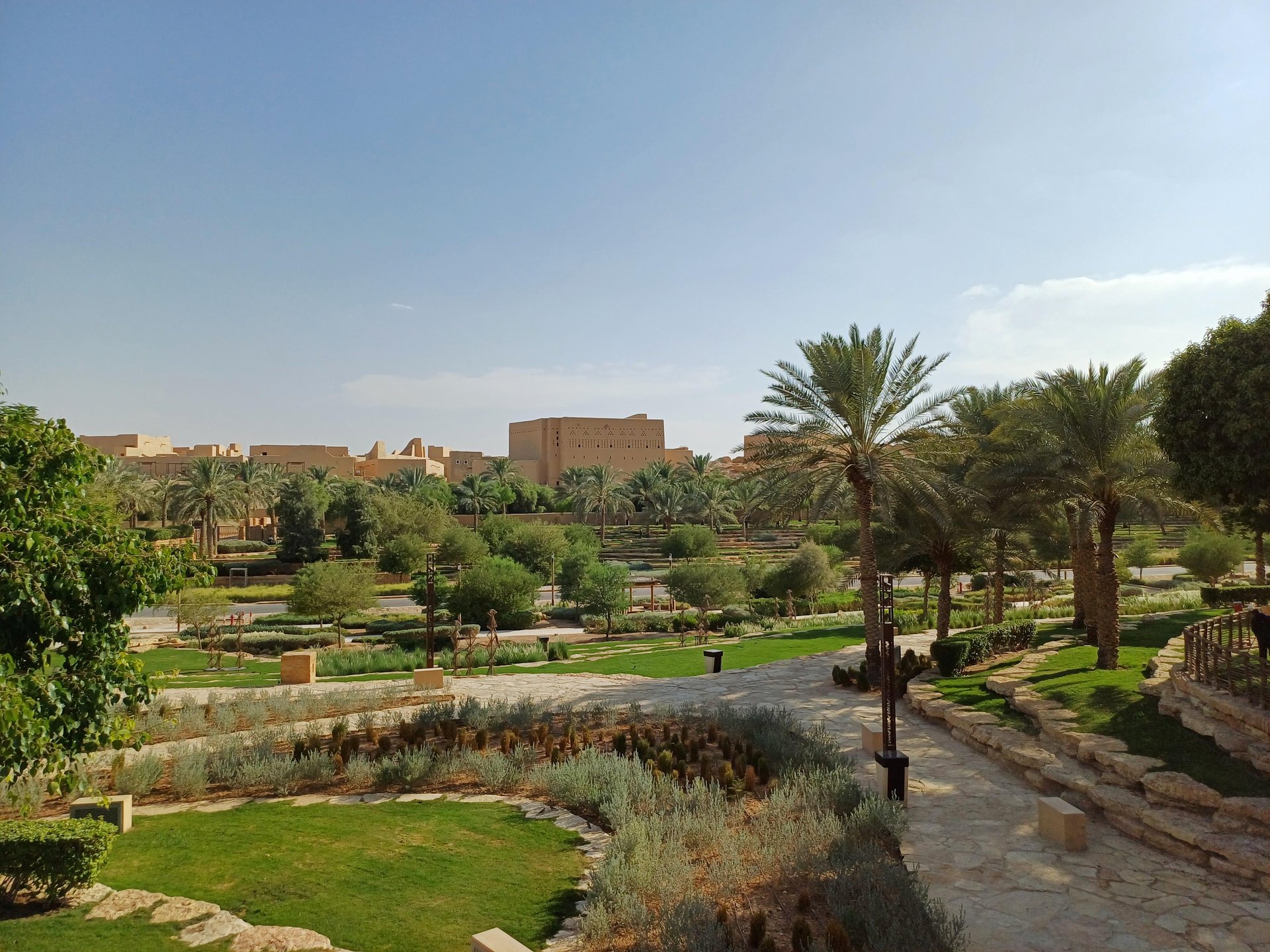
At-Turaif, inscribed as a UNESCO World Heritage Site in 2010, is the original seat of Saudi power. The mud-brick ruins showcase traditional Najdi architecture — thick-walled compounds, narrow lanes, and defensive towers that evoke the desert kingdom’s origins. The site is beautifully maintained and illuminated at night.
Bujairi Terrace
Bujairi Terrace, a 15,000-square-metre dining and leisure complex opened in December 2022, overlooks At-Turaif from across a shallow valley. It houses more than 20 restaurants, including international names like Hakkasan, Angelina Paris, and Flamingo Room by tashas. Dining here at sunset with the illuminated UNESCO site in the background is one of Riyadh’s defining experiences.
Diriyah Season and Future Development
The annual Diriyah Season runs from November through March, featuring cultural programmes, performances, and exhibitions. The 2025–2026 season, themed “Your Pride, Your Place,” includes events across At-Turaif, Al-Bujairi, Samhan, and Malwi historic neighbourhoods. A landmark cultural partnership is bringing the Metropolitan Opera to the Royal Diriyah Opera House as a winter stage for five consecutive years.
The wider Diriyah Gate development — a USD 63 billion megaproject — is targeting substantial completion by late 2027. Luxury hotels from Aman, Faena, and Corinthia are in development. By 2030, Diriyah aims to be a fully integrated heritage, hospitality, and culture district. For more details, see our dedicated Diriyah travel guide.
Tip: Visit Diriyah during cooler months (October to March) for comfortable walking. Evenings are magical but crowded during Season. A proposed Metro Line 7 will eventually connect Diriyah directly to the airport and Qiddiya.
Hittin — Upscale Family Living
Hittin is one of Riyadh’s newest and most desirable residential districts, located in the city’s northwest near Exit 2. If you are an expat relocating to Riyadh with a family and a comfortable budget, Hittin will likely be on your shortlist — and it should be.
Character
The district is characterised by luxurious villas, modern apartment complexes, wide streets, and organised urban planning. It draws higher-income Saudi families and senior expats who want privacy, calm, and proximity to good schools. Think of it as Riyadh’s equivalent of a gated suburban community, minus the suburban sprawl — it remains well connected to the city via King Salman Road and the Northern Ring Road.
Amenities
Hittin delivers a full package of family infrastructure:
- Schools: British International School, Najd National Schools
- Healthcare: Kingdom Hospital, Al Habib Hospital (Olaya branch)
- Shopping: Riyadh Front, Riverwalk Mall
- Green space: Hittin Park, walking trails, children’s playgrounds
Costs
Hittin commands some of Riyadh’s highest residential rents. As of early 2026, property prices range from SAR 9,000 to SAR 16,000 per square metre. The neighbourhood has seen roughly 50–60% total appreciation since 2020, driven by sustained high-income demand. Expect to pay SAR 5,000–8,000/month for a modern two-bedroom apartment.
Tip: Hittin is ideal for long-term residents, not short-stay tourists. There are few hotels within the district itself — it is purely residential. Base yourself in Al Olaya for a holiday and visit Hittin only if you are scouting for a future home.
Al Nakheel — The Expat Family Hub
Al Nakheel sits in Riyadh’s northern sector, stretching across roughly 10 square kilometres of wide boulevards, gated compounds, and green spaces. It is quieter than Al Olaya and less exclusive than Hittin — a comfortable middle ground that has made it one of the most popular neighbourhoods for expat families in the city.
Why Expats Choose Al Nakheel
Several factors converge: proximity to international schools (Dar Jana International and others are minutes away, with compound bus services), reliable healthcare (Dallah Hospital on Imam Saud bin Abdulaziz Road), and a genuine sense of community within the gated residential compounds. Many compounds include their own preschools, pools, and recreation facilities.
Shopping and Recreation
Al Nakheel Mall — a 71,000-square-metre complex with 140+ stores, dining options, and a cinema — anchors the district’s commercial life. Al Nakheel Park offers jogging tracks, picnic spots, and family-friendly green space. For day-to-day errands, the neighbourhood is well-served by supermarkets, pharmacies, and small restaurants.
Costs
Rents in Al Nakheel are moderate by north Riyadh standards. A three-bedroom compound villa typically runs SAR 80,000–120,000/year, while apartments start around SAR 30,000–45,000/year depending on the compound and amenities.
Al Malqa — Modern North Riyadh
Al Malqa is one of north Riyadh’s largest and most modern districts, covering 21 million square metres. Established with a contemporary urban vision, it features wide streets, modern architecture, and integrated services — schools, hospitals, parks, and upscale commercial centres all planned from the ground up rather than retrofitted.
Key Features
The district contains more than 10 schools across all levels, over 70 mosques, and five parks including Al Malqa Park and Al Malqa Walkway. Entertainment options include Sky Zone, family amusement centres, and the area’s growing restaurant scene. Al Malqa sits 18 minutes from King Khalid International Airport and 17 minutes from Kingdom Tower.
Who It Suits
Al Malqa appeals to families and young professionals who want newer buildings with modern amenities at slightly lower prices than Hittin. It is particularly popular with expats who want the north Riyadh lifestyle (good schools, clean infrastructure, easy highway access) without the premium pricing of the most exclusive districts. Rents here run 40–50% above city averages but below Hittin levels.
KAFD — The Future Financial Hub
The King Abdullah Financial District (KAFD) occupies the Al-Aqeeq area and represents Riyadh’s bid to become a global financial capital. This is not a traditional neighbourhood — it is a purpose-built district of 95 buildings across 1.6 million square metres, including office towers, residential blocks, hotels, and entertainment facilities. As of 2026, KAFD hosts more than 140 office tenants and over 75 regional headquarters for multinational companies.
What Makes KAFD Different
KAFD is the largest LEED Platinum-certified mixed-use district in the world, with climate-controlled skywalks connecting buildings in a “10-minute city” concept. The KAFD Metro station is a major interchange connecting Lines 1, 4, and 6, making it one of the best-connected points on the entire network.
For Visitors
KAFD’s public spaces, restaurants, and event venues are increasingly open to visitors. The architecture alone — a forest of angular glass towers designed by international firms — is worth a walk-through. Several hotels have opened or are opening within the district, making it a practical base for business travellers who want to be at the centre of Saudi Arabia’s financial pivot.
Tahlia Street and Al Sulaimaniyah — The Dining and Cafe Strip
Tahlia Street (officially Prince Mohammed bin Abdulaziz Street) runs through the Al Sulaimaniyah neighbourhood and is widely considered the social heart of Riyadh. If Al Olaya is where Riyadh works, Tahlia Street is where Riyadh eats, sips coffee, and stays up late.
Dining Scene
The street is packed end-to-end with restaurants, cafes, and lounges representing every cuisine from Japanese to Lebanese to Italian. Fine dining sits alongside casual shawarma joints. Cafe Bateel offers elegant European-style brunch with Saudi date-based pastries. The concentration and quality of dining options here rivals any food street in the Gulf.
Evening Culture
Saudi Arabia does not serve alcohol, but Tahlia Street has developed its own nightlife culture around specialty coffee, elaborate mocktails, live music venues, and shisha lounges. Evenings — especially Thursday and Friday nights — see the street transform into a buzzing promenade. Outdoor terraces fill up, car culture takes over parts of the road, and the atmosphere is unmistakably festive. For a full guide to Saudi Arabia’s evolving evening culture, see our Saudi Arabia nightlife guide.
Accommodation
Several hotels dot the Tahlia Street corridor, ranging from mid-range business hotels to boutique properties. One-bedroom apartments in Al Sulaimaniyah rent for SAR 3,000–5,000/month — making this one of the more accessible central neighbourhoods for young professionals.
Tip: Tahlia Street is best experienced on a Thursday evening (the start of the Saudi weekend). Arrive around 8 PM, wander, pick a restaurant, and stay out late. This is Riyadh at its most social and energetic.
Al Yasmin — The Rising North
Al Yasmin (also spelled Al Yasmeen) is a large, 12.78-square-kilometre district in north Riyadh at Exit 5 that represents the city’s newest wave of residential development. While it lacks the established reputation of Hittin or Al Malqa, it is precisely this newness that appeals — modern buildings, competitive pricing, and several luxury projects that signal the area’s trajectory.
Development Projects
A major mixed-use development by Erth Real Estate — valued at SAR 4.2 billion — is rising at the intersection of King Fahd Road and King Salman Road. It will include 34-storey and 42-storey towers housing Raffles Riyadh and Sofitel Extended Stay properties, managed by Accor. These will be among north Riyadh’s most prominent hotel addresses when completed.
Who It Suits
Al Yasmin appeals to families seeking quiet, modern living with strong infrastructure. The district has schools, hospitals, shopping centres, and restaurants, but retains a low-density, residential feel. It is a practical choice for expats on a moderate budget who want a north Riyadh postcode without paying Hittin or Al Malqa premiums.
Neighbourhood Comparison Table
| Neighbourhood | Best For | Vibe | Avg. 2BR Rent (SAR/yr) | Metro Access |
|---|---|---|---|---|
| Al Olaya | Business travellers, first-time visitors | Urban, busy, skyscrapers | 50,000–80,000 | Line 1 (Blue) |
| Ad Dirah | History buffs (day visit) | Historic, quiet, traditional | 20,000–30,000 | Line 5 (Green) |
| Al Malaz | Culture, museums, budget | Lived-in, local, cultural | 25,000–40,000 | Line 5 (Green) |
| Diplomatic Quarter | Families, long stays, peace | Green, quiet, international | 60,000–100,000 | Limited (improving) |
| Diriyah | Heritage tourism, fine dining | Historic, emerging luxury | N/A (few rentals) | Planned (Line 7) |
| Hittin | Affluent families, senior expats | Upscale, residential, calm | 70,000–110,000 | Limited |
| Al Nakheel | Expat families, compounds | Family-friendly, moderate | 45,000–75,000 | Limited |
| Al Malqa | Modern living, young families | New, spacious, connected | 55,000–85,000 | Improving |
| KAFD | Business, architecture | Futuristic, corporate | 65,000–95,000 | Lines 1, 4, 6 |
| Tahlia / Al Sulaimaniyah | Dining, social, young professionals | Lively, cosmopolitan | 40,000–60,000 | Line 1 (Blue) |
| Al Yasmin | Budget-conscious families | Emerging, quiet, modern | 35,000–55,000 | Limited |
Which Neighbourhood Should You Choose?
Your ideal Riyadh neighbourhood depends entirely on why you are there:
For a Short Holiday (3–5 Days)
Base yourself in Al Olaya. You will be central to everything — the metro, malls, restaurants, and easy taxi access to Diriyah, Ad Dirah, and the museums. Book a hotel on or near Olaya Street and use the metro or Uber for day trips.
For Business Travel
Al Olaya or KAFD. Both have excellent hotel options and direct metro connections. KAFD is purpose-built for corporate visitors and has the added benefit of climate-controlled skywalks between buildings — a genuine comfort in the Saudi summer.
For Expats Relocating with Family
Shortlist Al Nakheel (best compound living and school access on a moderate budget), Hittin (premium quality, higher cost), or Al Malqa (good balance of modern amenities and value). If your workplace is in the DQ or your children will attend British International School, the Diplomatic Quarter itself may make the most sense.
For Budget Travellers
Look at serviced apartments in Al Sulaimaniyah or Al Malaz. Both offer genuine neighbourhood character, decent food options, and easy metro access at a fraction of Al Olaya prices. Southern and western districts like Al Aziziyah offer rents starting from SAR 1,500/month, though they are farther from main attractions.
For Heritage and Culture
Plan your days around Ad Dirah (Masmak Fort, Souq Al-Zal), Al Murabba (National Museum, Murabba Palace), and Diriyah (At-Turaif, Bujairi Terrace). You do not need to stay in these areas — they are all accessible by metro or a short ride from Al Olaya.
Getting Between Neighbourhoods
Riyadh is a spread-out city. Without the metro, getting from Diriyah to Al Malaz could take 45 minutes or more by car in traffic. The Riyadh Metro has changed this equation significantly since its full opening in January 2025:
- Line 1 (Blue): 38 km north–south along Olaya and Batha Streets — connects KAFD, Al Olaya, and southern districts
- Line 2 (Red): 25.1 km along King Abdullah Road — reaches King Saud University
- Line 3 (Orange): 40.7 km along Al-Madinah Al-Munawarah Road — the longest line
- Line 4 (Yellow): 29.6 km to King Khalid International Airport — essential for airport transfers
- Line 5 (Green): 12.9 km along King Abdulaziz Road — reaches the National Museum and historic areas
- Line 6 (Purple): Serves eastern areas including Granada
Supplement the metro with Uber and Careem (the region’s dominant ride-hailing app). A cross-city ride rarely exceeds SAR 30–50. For visitors who prefer flexibility, rental cars are widely available — see our Saudi Arabia flights and transport guide for more on getting around.
Warning: Riyadh traffic during peak hours (7–9 AM and 4–7 PM) is severe, especially on King Fahd Road and the Northern Ring Road. Plan metro trips or schedule taxi rides outside these windows where possible.
Practical Tips for Choosing Your Base
- Check Google Maps distances before booking accommodation. Two neighbourhoods that look close on a map may be 30 minutes apart by car in traffic.
- Riyadh’s summer (June to September) pushes temperatures above 45°C. Walkability matters less when you will be moving between air-conditioned spaces — in which case, Al Olaya or KAFD’s skywalks have a genuine practical advantage.
- Compound living in Al Nakheel or Hittin typically includes utilities, gym, pool, and security in the rent — factor this into cost comparisons with standalone apartments.
- Friday is the weekend (the Saudi weekend runs Friday–Saturday). Many restaurants and attractions have different hours. Tahlia Street and Diriyah’s Bujairi Terrace are particularly vibrant on Thursday and Friday evenings.
- Visa considerations: Tourist eVisas are valid for one year with 90-day stays. If you are planning a longer relocation, your employer will arrange a work visa (iqama). See our complete visa guide for current requirements.
Final Word
Riyadh rewards those who do their homework on neighbourhoods. The difference between a great trip and a frustrating one often comes down to where you sleep. Business travellers belong in Al Olaya or KAFD. Families thrive in the DQ, Al Nakheel, or Hittin. Culture seekers should orbit Ad Dirah and Diriyah. And everyone — regardless of base — should spend at least one evening on Tahlia Street and one sunset at Bujairi Terrace. Riyadh is changing faster than any city in the Middle East, and its neighbourhoods are the lens through which that transformation becomes visible. Explore our full Saudi Arabia travel hub for more guides covering Jeddah, AlUla, and beyond.